
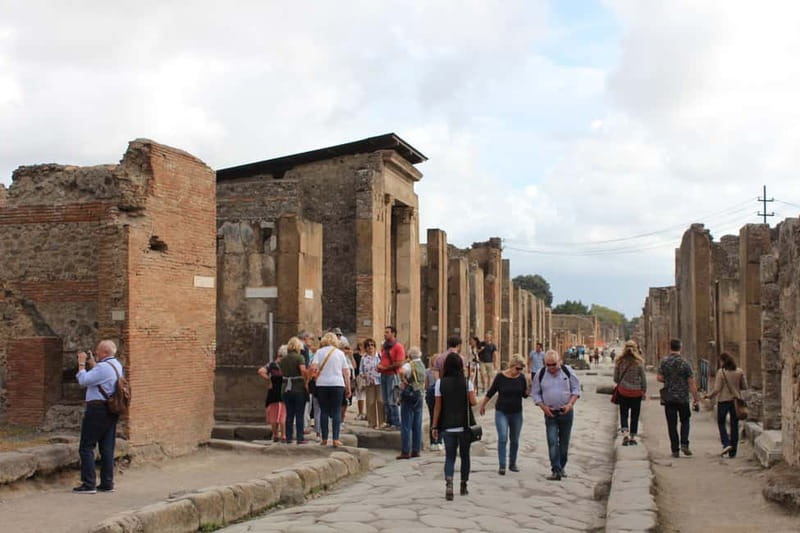
Review · POMPEII TOURS
Pompeii: The Ultimate Skip-the-Line Archaeological Adventure
Pompeii is history you can feel. This skip-the-line Pompeii adventure is led by a professional archaeologist guide, and I like how the story stays focused on real daily life, not vague names. One thing to know up front: at just 2 hours, you’ll move at a brisk pace and some corners of Pompeii won’t be lingered over.
You meet in a practical spot right in Pompeii, then get ushered into the site with priority access. Along the way, you’ll see standout public spaces and elite homes, with enough time in fresco-filled rooms to understand why Pompeii mattered to people living there in 79 AD. The tour is monolingual (English or Spanish), so you’ll get a clean, uninterrupted explanation throughout.
In This Review
- Pompeii Priority Entry: Where You Meet and What to Expect First
- The Archaeologist Guide Setup: Small Group, Clear Listening, Real Explanations
- Garden of the Fugitives: A Photo Stop That Sets the Tone
- Forum Baths and Pompeii’s Public Power: Where Everyone Met
- Amphitheater Photo Stop: How Spectacle Worked in Pompeii
- Lupanare: Street-Level Reality, Handled with Care
- House of the Vettii: Frescoes, Status, and the Fun Part of Elite Homes
- Vetutius Placidus House and Thermopolium: Food, People, and Daily Routine
- What the 2 Hours Really Feels Like: Walking, Timing, and Best Use of Your Energy
- Price and Value: What $39 Buys You in Pompeii
- Who Should Book This Pompeii Tour (and Who Should Skip It)
- Quick Practical Notes Before You Go
- Should You Book This Skip-the-Line Pompeii Adventure?
- FAQ
- How long is the Pompeii tour?
- Where does the tour start?
- What languages are offered?
- Is there still a security check even with skip-the-line?
- What should I bring?
- What bag or luggage is allowed?
- Is the tour suitable for wheelchair users or limited mobility?
- Are pets allowed?
Pompeii Priority Entry: Where You Meet and What to Expect First
The tour meets at Towns of Italy–Vox Kiosk in Piazza Esedra, right next to Coffeeshop Vittoria. This matters because Pompeii is spread out, and you don’t want to lose time hunting for the exact kiosk. Show up at least 15 minutes early, because latecomers can’t join and refunds aren’t provided.
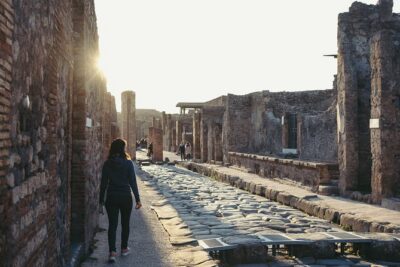
Even with the priority benefit, there’s still a compulsory security check. Think of it like express entry, not instant magic. Once inside, you’ll be walking a lot on uneven ancient stone paths, so good shoes aren’t a nice-to-have. I also recommend a hat and sunscreen, since Pompeii can feel sunny and exposed even when you’re grateful to be outside.
Before you arrive, check the dress code rules for the Pompeii Archaeological Park. Shirtless or other non-compliant clothing can get you refused entry, and that’s the kind of problem that ruins a morning. Also plan your bag situation: big items aren’t allowed (and anything oversized must be deposited in the cloakroom).
Which Pompeii ticket and guide? Compare a few more.
- Pompeii: Entry Ticket with Audio Guide★ 4.1 · 13,491 reviews
- Pompeii: Group Tour with an Archeologist Guide★ 4.4 · 2,361 reviews
- Pompeii Ruins Private Tour with Optional Skip-the-Line Entry★ 4.9 · 732 reviews
- Pompeii: All-Inclusive Group Tour with an Archeologist Guide★ 4.4 · 617 reviews
The Archaeologist Guide Setup: Small Group, Clear Listening, Real Explanations
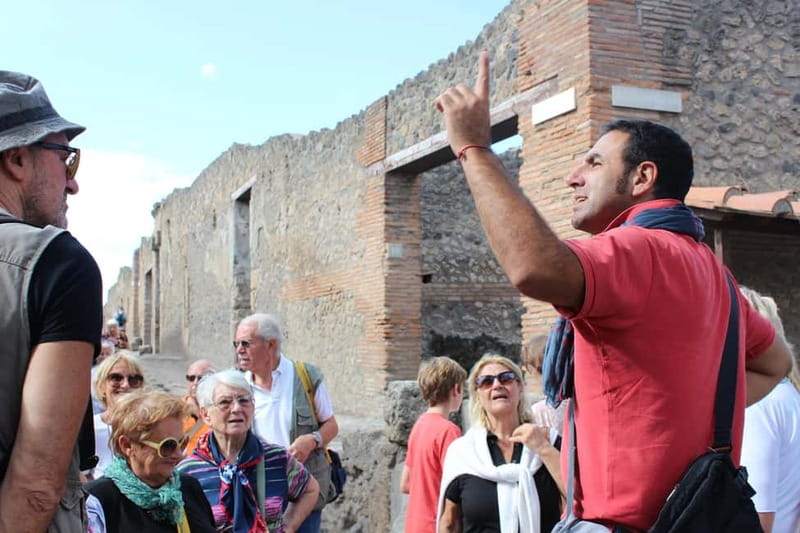
This is archaeologist-led, not a slideshow tour. The guide uses English or Spanish, and the setup is monolingual to keep the audio and explanations sharp.
A detail I genuinely like: you get earphones for groups of max 5 people. That means you’re less likely to miss key context when the guide steps aside to point out carvings, street layouts, or building details. It’s also easier to keep your attention where it belongs—on what you’re standing in front of—rather than constantly turning your head to catch every sentence.
From the way the tour runs, the guide tells you what you’re seeing and why it mattered: how public spaces functioned, how wealthy homes displayed status, and what daily routines looked like in a city built to impress. You’ll still see the major sights, but the guide is also helping you connect the dots across them.
Garden of the Fugitives: A Photo Stop That Sets the Tone
Right away, you’ll take a short stop at the Garden of the Fugitives—a quick photo moment followed by brief guiding. Even in a short window, this area helps set Pompeii’s tone. It’s one of those places where the city starts to feel like a real human story instead of a museum display.
Because it’s brief, don’t treat it like a sightseeing break. Treat it like a warm-up. Look around at the layout and imagine the streets and homes nearby, then pay attention to what the guide tells you about why certain areas were associated with panic and flight. It’s the kind of contrast that makes the later ruins feel more immediate.
Forum Baths and Pompeii’s Public Power: Where Everyone Met
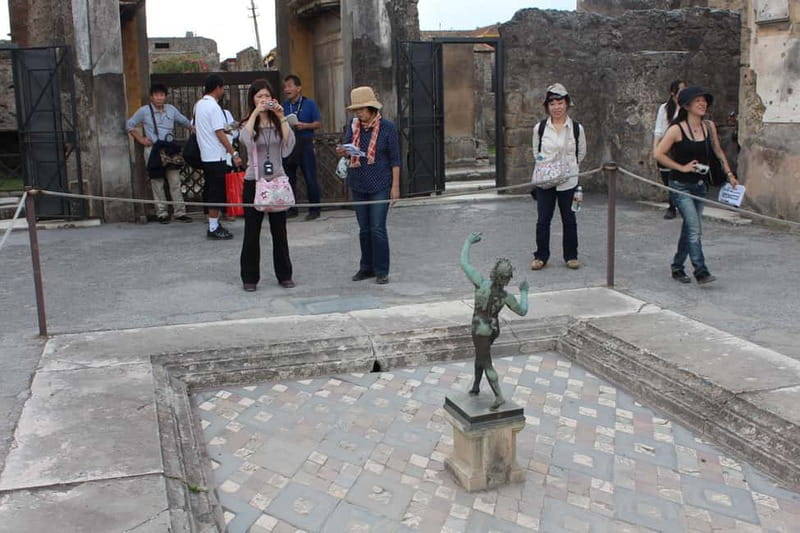
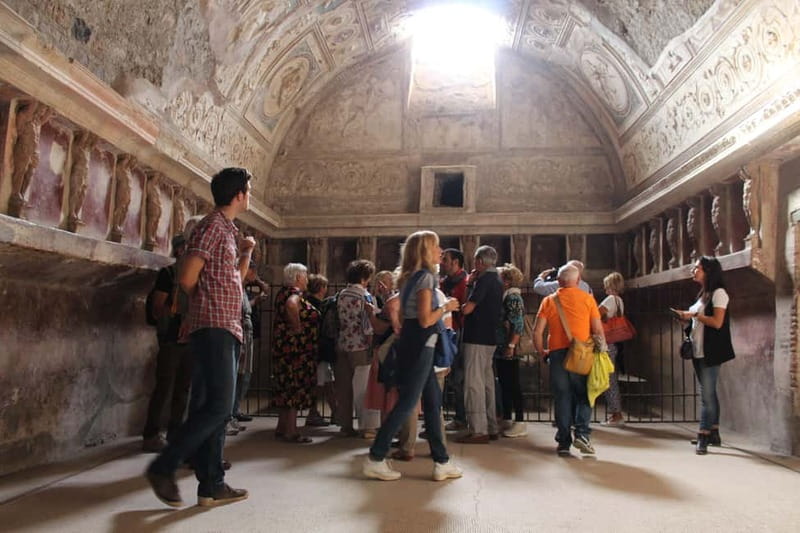
Next you’ll pass through the Forum Baths area with another short photo stop and guide-led explanation. This is where you get a sense of Pompeii as a civic machine. Baths weren’t just for hygiene. They were social hubs where people met, talked, and stayed in the rhythm of the city.
The practical payoff for me is that the guide connects building function to everyday behavior. You start noticing how the city’s public spaces work together: where people would move, where they’d pause, and how architecture supports crowd life. If you’re visiting Pompeii for the first time, this kind of framing turns scattered ruins into a believable city.
You’ll also be watching the guide’s pacing here. The tour moves fast, but the stops are timed so you still get the meaning, not just the photos.
Amphitheater Photo Stop: How Spectacle Worked in Pompeii
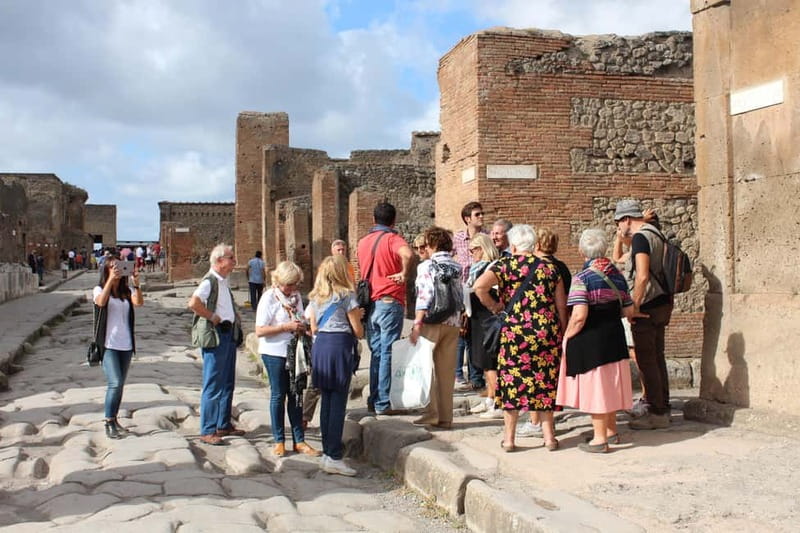
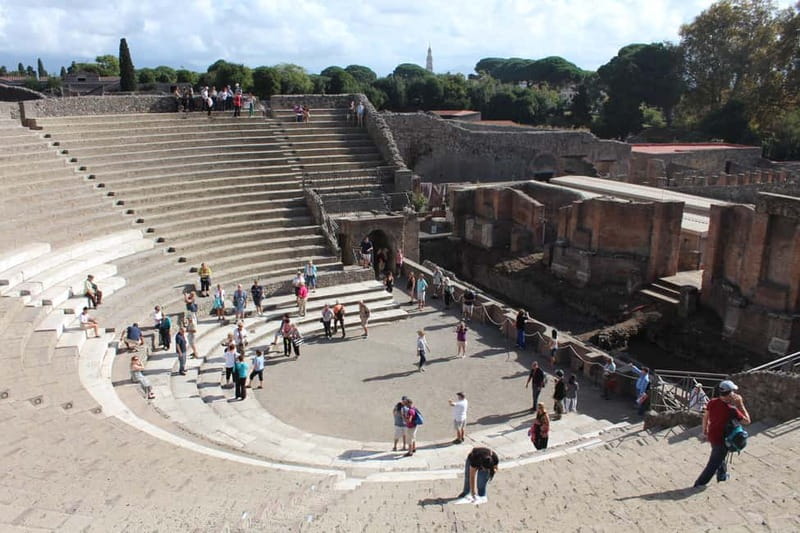
The Amphitheater of Pompeii is another short stop, mostly structured for seeing and photographing the scale. Even if you just spend a few minutes, the big win is context: the guide helps you understand what events would have meant in a city that loved public spectacle.
If you love architecture and how people gathered, you’ll get value here. If you’re the type who likes slow wandering, you might wish you had more time inside. Still, the tour’s design keeps the momentum, which is exactly why it works well for a 2-hour visit.
Tip: take a moment to look for how seating sections would funnel sightlines. Even without going deep, you can get a strong feel for what the crowd experience would have been.
More skip-the-line entries around Pompeii Archaeological Site

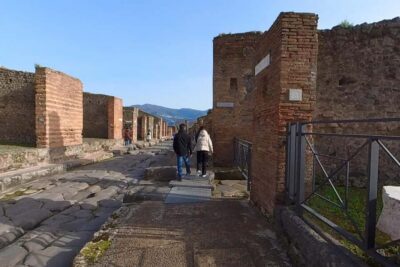
Lupanare: Street-Level Reality, Handled with Care
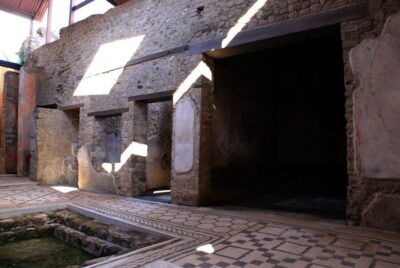
The Lupanare stop is longer than some of the others and includes guidance, not just walking past. This is the brothel area, and it comes with a special kind of sensitivity: Pompeii’s erotic art and sexual imagery exist in the real archaeological record, and the tour treats them as evidence of how people lived.
What I appreciate is the balance. This is not a shock tactic. You’ll get interpretation rather than gossip. The guide is helping you understand the role of this kind of business in the city’s economy and the way art functioned as advertising and messaging.
Important note: because the park has a strict dress code, don’t show up in anything that risks refusal. It would be a brutal way to lose your whole visit.
House of the Vettii: Frescoes, Status, and the Fun Part of Elite Homes
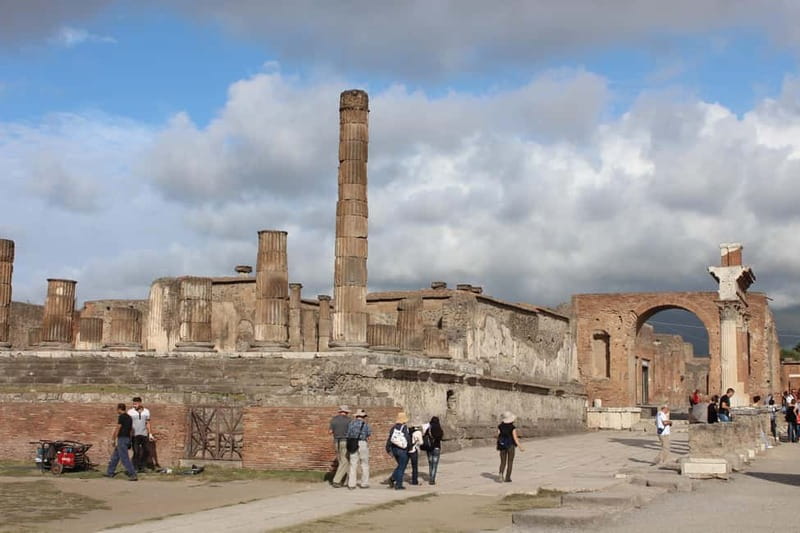
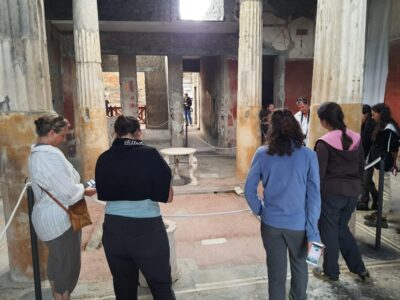
Now you shift from public spaces into elite private life. The House of the Vettii is a guided visit with time to actually look. This is where Pompeii can feel like more than stone walls: you’re seeing how wealth expressed itself through decoration and planning.
Villas like this are useful because they show how art and daily living overlapped. The guide points out features that help you read the home as a social statement. You’ll look closely at interior details and frescoes, and the explanation helps you grasp why the visuals weren’t just pretty—they communicated status and taste.
This is also where the tour’s 2-hour limit becomes most noticeable. A house like this deserves longer. But the way the guide focuses your attention makes the short visit feel more complete than you’d expect.
Vetutius Placidus House and Thermopolium: Food, People, and Daily Routine
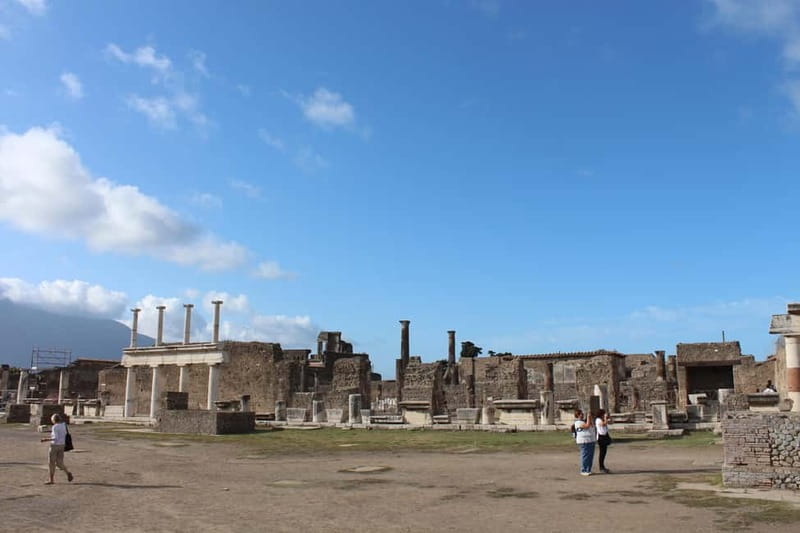
The final stop is Vetutius Placidus House and Thermopolium. You’ll get another guided visit, plus a chance to see how commerce and meals fit into everyday life.
A thermopolium is essentially a Roman fast-food setup, and it’s one of those features that makes Pompeii feel relatable. Instead of only thinking about grand monuments, you can imagine a person grabbing something hot, stepping out, and continuing their day. The guide typically brings this to life by explaining how these spaces worked in the city rhythm.
The house side of the stop also keeps the contrast strong. Now you’re comparing private wealth and public street life. That contrast is part of what makes Pompeii so fascinating: it’s not just the rich that matter, and it’s not just big monuments that tell the story.
What the 2 Hours Really Feels Like: Walking, Timing, and Best Use of Your Energy
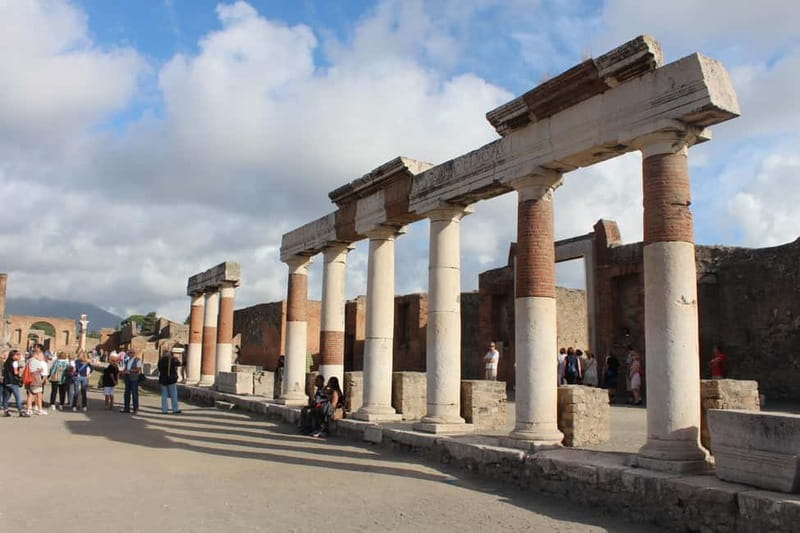
A 2-hour tour is perfect if you want the Pompeii story without spending a whole day. It’s also short enough that you’ll feel the structure. Most stops are photo-based and guide-supported, with only a couple of longer looks inside buildings.
Here’s how to get more out of it:
- Stay close to the guide during short photo stops so you don’t miss the explanation.
- Save your phone camera time for the moments the guide points out specific details.
- Wear shoes that can handle uneven surfaces. No flip-flops.
- Keep an eye on the weather and hydrate. Pompeii can tire you faster than expected.
If you’re sensitive to walking or have mobility issues, this isn’t the right format. The tour is not suitable for people with back problems, mobility impairments, heart problems, or wheelchair users. Pompeii is a place that demands physical footing.
Price and Value: What $39 Buys You in Pompeii
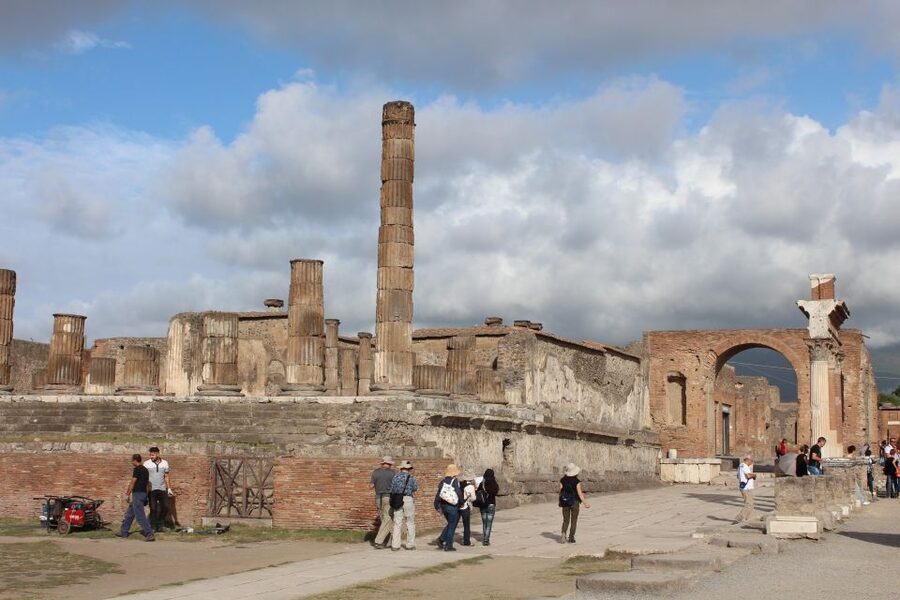
At $39 per person for a 2-hour archaeologist-led Pompeii experience, you’re paying for three things: priority access, expert interpretation, and a tight visit plan that covers key zones.
If you’re the kind of traveler who would otherwise wander and end up with half-understood ruins, the guide is the main value. The priority entry also saves time and reduces the stress of waiting in a longer queue setup. And because you get earphones for small groups, the experience feels more like guided education than mass-tour chaos.
On the flip side, if you’re hoping for a slow, deep, museum-style visit with lots of free time, you might feel rushed. That’s the tradeoff you’re making to fit Pompeii into a couple of hours while still getting real context.
For many first-timers and time-limited day-trippers from Naples and the wider Campania region, this price-to-structure ratio is a smart deal.
Who Should Book This Pompeii Tour (and Who Should Skip It)
Book it if you:
- Want an archaeologist-led explanation in English or Spanish
- Prefer a plan that hits major highlights without you needing to research every building
- Like small-group listening with earphones
- Need Pompeii in a 2-hour window
Skip or think twice if you:
- Have mobility limitations, back problems, heart concerns, or need a wheelchair-friendly route
- Want long indoor stops and lots of unstructured wandering
- Are arriving without checking the dress code and bag rules (you can lose your entry)
Also, pets aren’t allowed, so plan for a service animal situation only if it fits the specific rules on the day.
Quick Practical Notes Before You Go
Bring passport or ID card. Leave pets at home. Avoid backpacks and big bags; the maximum size listed is 30×30×15, and anything larger must be deposited. If you’re carrying professional optical or audio equipment, treat that as off-limits. Drones are also not allowed.
And yes, you’ll still pass through a security check even with priority entry. Plan your day with that in mind so you don’t run late and miss the start.
Should You Book This Skip-the-Line Pompeii Adventure?
If your goal is Pompeii with real interpretation, good listening, and a plan that respects your time, I’d book this. The combination of archaeologist-led guidance, priority entry, and small-group earphones turns a fast visit into something more meaningful.
If you crave a slow pace and deeper time inside every building, consider whether 2 hours will feel too tight. But for most people seeing Pompeii for the first time, this tour offers a strong “first taste” that makes it easier to explore on your own after.
FAQ
How long is the Pompeii tour?
The tour lasts 2 hours.
Where does the tour start?
Meet your guide at Towns of Italy–Vox Kiosk, Piazza Esedra, next to Coffeeshop Vittoria (80045 Pompeii, NA).
What languages are offered?
The tour is monolingual in English or Spanish.
Is there still a security check even with skip-the-line?
Yes. There is a compulsory security check even with the express skip-the-line access.
What should I bring?
Bring your passport or ID card. Wear good walking shoes and consider hat and sunscreen.
What bag or luggage is allowed?
No backpacks and no large bags are allowed. The maximum bag size stated is 30×30×15; larger items must be deposited in the cloakroom.
Is the tour suitable for wheelchair users or limited mobility?
No. It is not suitable for wheelchair users and also not suitable for people with mobility impairments.
Are pets allowed?
No, pets are not allowed on the tour.
More Skip-the-Line Tickets in Pompeii Archaeological Site

More Tour Reviews in Pompeii Archaeological Site

More Pompeii Tours to Compare
More Pompeii Archaeological Site tours, freshly reviewed


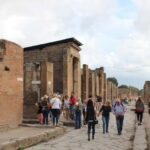
Pompeii Tours, compared.
 ★ 4.8Pompeii: Entry Ticket and Guided Tour with an ArchaeologistFrom $3519,459 reviews
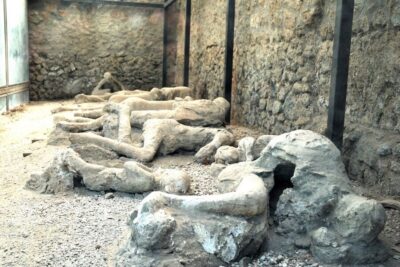 ★ 4.1Pompeii: Entry Ticket with Audio GuideFrom $4013,491 reviews
 ★ 4.8Pompeii: Small Group Tour with an ArchaeologistFrom $4012,264 reviews
 ★ 4.3Pompeii Ruins & Mount Vesuvius Day TourFrom $12011,459 reviews
★ 5.0Pompeii Small Group Tour with an ArchaeologistFrom $356,593 reviews
★ 4.3Pompeii Ruins & Mount Vesuvius Day TourFrom $12011,459 reviews
★ 5.0Pompeii Small Group Tour with an ArchaeologistFrom $356,593 reviews
 ★ 4.5Skip-the-line Pompeii – Small Group TourFrom $544,401 reviews
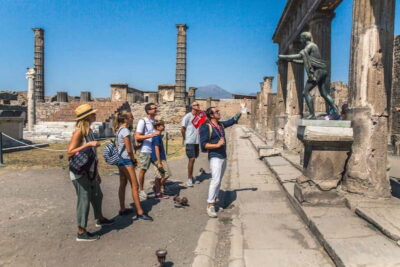 ★ 4.6Naples or Sorrento: Full-Day Pompeii and Mount Vesuvius TourFrom $1044,235 reviews
 ★ 3.9Pompeii: Skip-the-line Entry Ticket with Audio Guide & MapFrom $433,153 reviews