
Review · POMPEII TOURS
Pompeii: Entry Ticket and Guided Tour with an Archaeologist
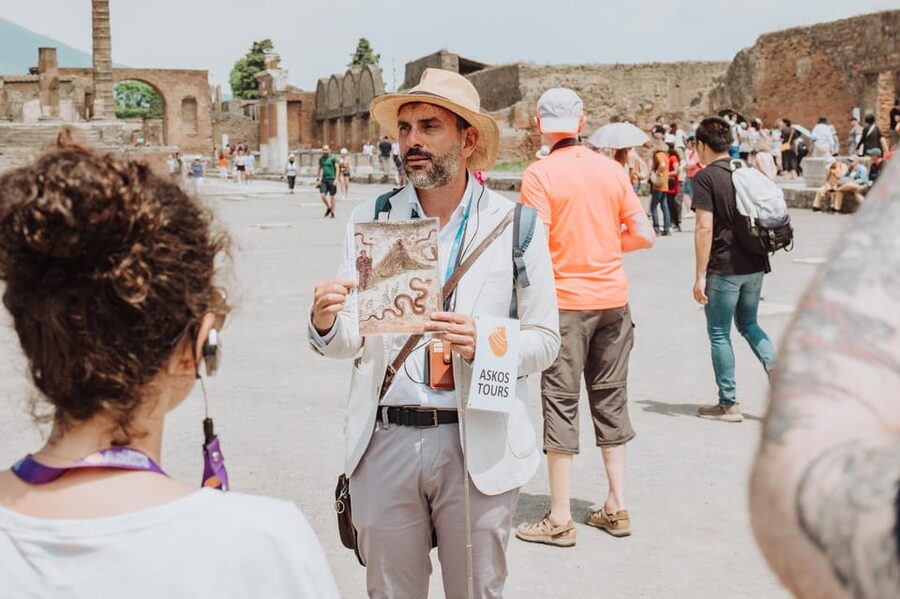
Pompeii feels bigger when you have the right guide. This 2-hour walk through Campania’s ruined streets is led by an archaeologist, and you get skip-the-line entry so you spend less time waiting and more time seeing. I love how the stories connect buildings to daily life, especially when you’re standing in the exact spots where Roman routines played out.
I also like the small-group setup (up to 20), which keeps things moving without turning the site into a blur. The one real drawback: Pompeii is rough on your feet, with uneven paths and a few steps along the way, so comfortable, well-gripped shoes matter.
In This Review
- Key Takeaways
- Pompeii in Two Hours: What This Tour Gets Right
- Your Guide Matters More Than You Think (Archaeologist-Led, Small-Group Style)
- Getting Oriented: Meeting Up and Starting at the Right Place
- Foro Civile di Pompei: The Public Heart You’ll Understand After This Stop
- House of the Faun: Why Pompeii’s Star House Still Hits Hard
- Lupanar: A Famous Spot With Real Context (Not Just Shock Value)
- House of Menander: Art, Style, and How to Read the Rooms
- Macellum and Food Culture: The Commercial Side You Don’t Want to Miss
- Forum Baths: Where Pompeii Showers Its Secrets
- What the Skip-The-Line Ticket and Headsets Change
- Price and Value: Is $35 Actually a Good Deal Here?
- Practical Tips Before You Go (So You Enjoy the Ruins, Not Your Discomfort)
- Who Should Book This Tour, and Who Might Rethink It
- Should You Book the Archaeologist Tour? My Decision Rule
- FAQ
- How long is the Pompeii tour?
- Does this tour include skip-the-line entry?
- What’s included in the price?
- What languages are available?
- Is the tour suitable for wheelchair users or mobility impairments?
- Are unaccompanied minors allowed?
- Can I cancel for a refund?
Key Takeaways
- Archaeologist guidance: you’ll understand what you’re looking at, not just where it is.
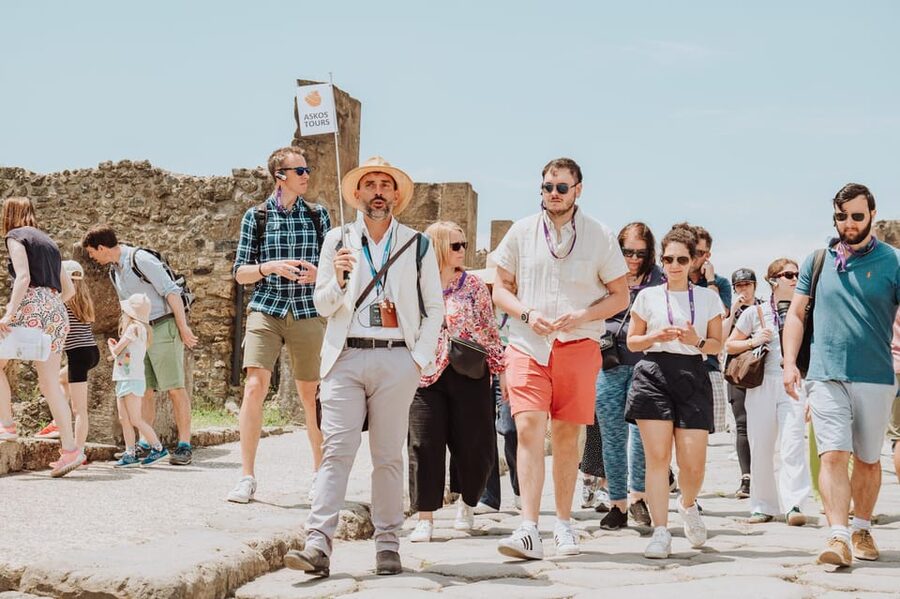
- Small group size (up to 20): easier pacing, more chances to ask questions.
- Skip-the-line entry: more time on the ground, less time in queues.
- Headsets for 10+ people: clearer audio during busy stretches.
- Hits major stops fast: Marina Gate area, civic spaces, and major houses and baths.
Which Pompeii ticket and guide? Compare a few more.
- Pompeii: Entry Ticket and Guided Tour with an Archaeologist★ 4.8 · 19,459 reviews
- Pompeii: Small Group Tour with an Archaeologist★ 4.8 · 12,264 reviews
- Pompeii: Skip-the-line Entry Ticket with Audio Guide & Map★ 3.9 · 3,153 reviews
- Naples: Pompeii and Mt. Vesuvius with Lunch and Wine Tasting★ 4.5 · 2,454 reviews
Pompeii in Two Hours: What This Tour Gets Right
Pompeii is the kind of place that punishes you for rushing. Without help, you can end up walking past doorways, counters, and wall paintings without knowing what’s important. With this tour, the pacing is built for a short visit: you move through the site with an expert in the room, translating stone and signage into a real sense of 1st-century life.
The big win is that you’re not just collecting highlights. You’re learning how the town worked—where people met, ate, bathed, shopped, worked, and even where the uncomfortable details fit into the everyday rhythm. And since this is designed as a guided walking tour, you get that “this makes sense now” feeling as you go.
Your Guide Matters More Than You Think (Archaeologist-Led, Small-Group Style)
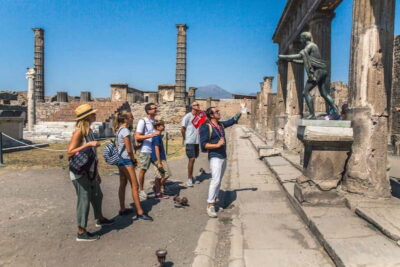
This is a small group tour—up to 20 people—which changes the entire experience. Larger tours often turn into line-following. Here, the route is paced for actual understanding, and you’re more likely to catch the meaning behind a doorway, a mosaic, or a public space.
The headsets help, too. If your group is 10 people or more, you’ll get headsets for clearer narration. That’s especially useful when crowds pack in or when the tour moves near busier parts of the site. One practical note from the tour experience: if you’re sensitive to audio distance, you may need to adjust the earpiece so it stays easy to hear.
You’ll also be guided in multiple languages—English, Spanish, French, Italian, Portuguese, and German—so it’s easier to stay synced with the explanations.
Getting Oriented: Meeting Up and Starting at the Right Place
Your meeting point can vary depending on the option you book, but it’s in Pompeii’s area around Via Villa dei Misteri, 2. Before you leave, double-check the exact pickup spot shown in your confirmation. With Pompeii, being off by even a few blocks can cost time—and you don’t want to lose your first moments of orientation.
Once you start, the tour begins near Porta Marina (Marina Gate). You’ll pass it relatively quickly (around 10 minutes), but that short stop is smart. It gives you a “where am I in town” anchor before you move toward the civic and religious core.
Next comes the Temple of Apollo area (also about 10 minutes as you pass through). Even if you only catch parts of the structure from the outside, the guide’s framing helps you see why temples weren’t just religious landmarks. They were part of the identity of the city—where community beliefs were made visible in stone.
Foro Civile di Pompei: The Public Heart You’ll Understand After This Stop
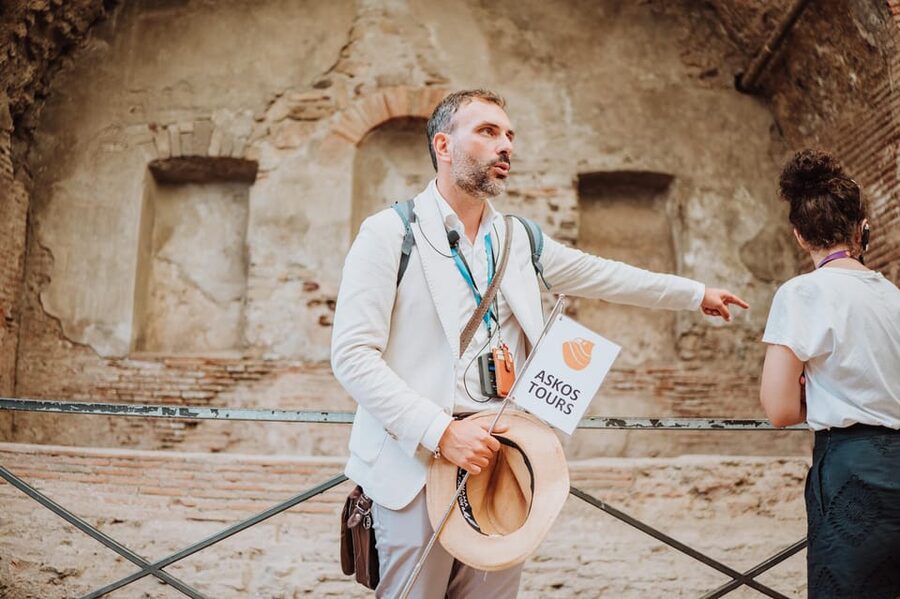
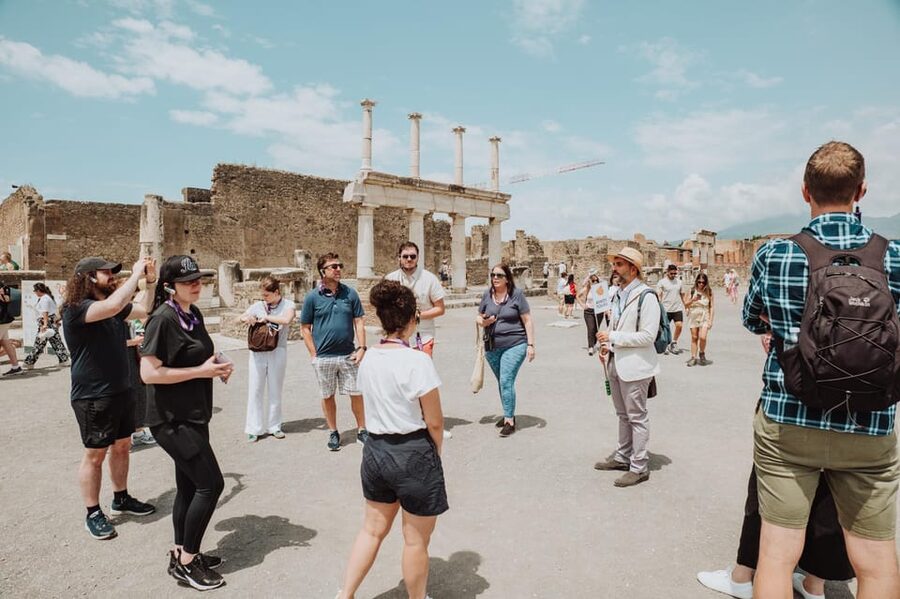
A lot of Pompeii’s power is in its public spaces, and the tour spends time in the Foro Civile di Pompei (about 20 minutes). This is where the town’s structure shows itself: the idea of a civic center, the rhythm of gatherings, and the relationship between commerce, religion, and administration.
This is also where you start to feel the difference between “seeing ruins” and “reading a functioning city.” The guide’s job is to point out what those layouts meant to people who lived there, so you can connect the physical remains to the social behavior they supported.
If you’re the type who likes explanations (and wants to stop guessing), this is the moment you’ll probably enjoy most early on. You can always go back later with your own pace, but starting here makes the later houses and quieter corners much easier to understand.
Other tickets and entries for Pompei Campania





House of the Faun: Why Pompeii’s Star House Still Hits Hard
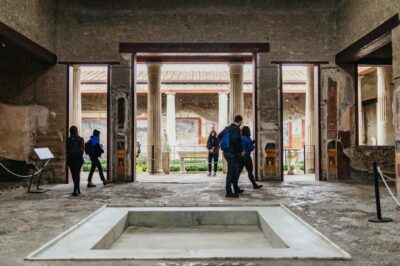
You’ll then head to the House of the Faun (Casa del Fauno) for about 20 minutes. This is one of the big-name homes for a reason. The exterior and entry area alone communicate wealth—Pompeii wasn’t just a town of small, uniform streets. It had real social differences, and elite houses were built to show that off.
What makes this stop valuable on a guided tour is the interpretation. You’re not just looking at rooms. You’re learning what kinds of spaces mattered, how circulation worked, and why certain decorations were worth the money and effort. The guide helps you see this as a lived-in environment rather than a museum display.
A practical note: Pompeii buildings can feel visually similar at first glance. Having a guide here prevents you from thinking you’ve “already got it” after seeing one courtyard. The House of the Faun is where you learn to look more closely.
Lupanar: A Famous Spot With Real Context (Not Just Shock Value)
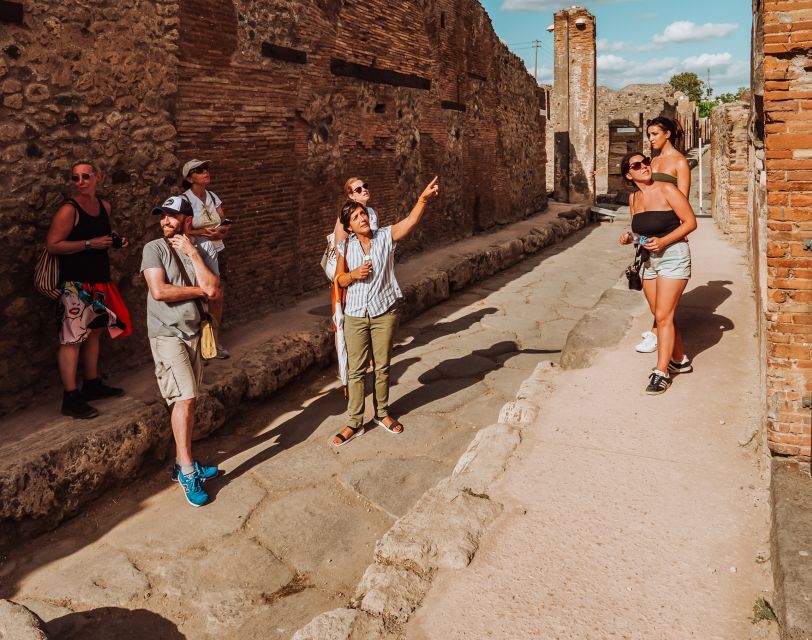
Next is the Lupanar, typically about 20 minutes. This is one of Pompeii’s most talked-about sites because it’s tied to the town’s sex work. On this tour, the point isn’t just to make you stare at the idea. You get the context for how it operated and how such a place fit into the city’s economy and daily patterns.
The guide’s explanations matter here. Without them, it’s easy to reduce the site to a headline. With them, you start to understand how signage, layout, and the surrounding street setting worked together. It’s still a tough subject, but it becomes more human and less sensational.
If you prefer tours that treat uncomfortable history with clear context, this stop is a strong reason to book. Just remember: you’re walking, and you may be moving between areas that feel busy and dense.
House of Menander: Art, Style, and How to Read the Rooms
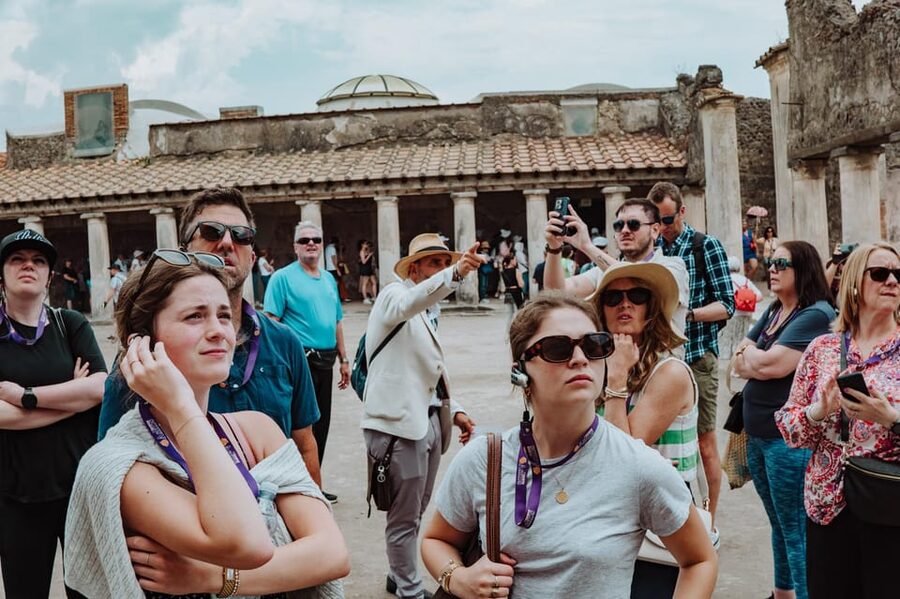
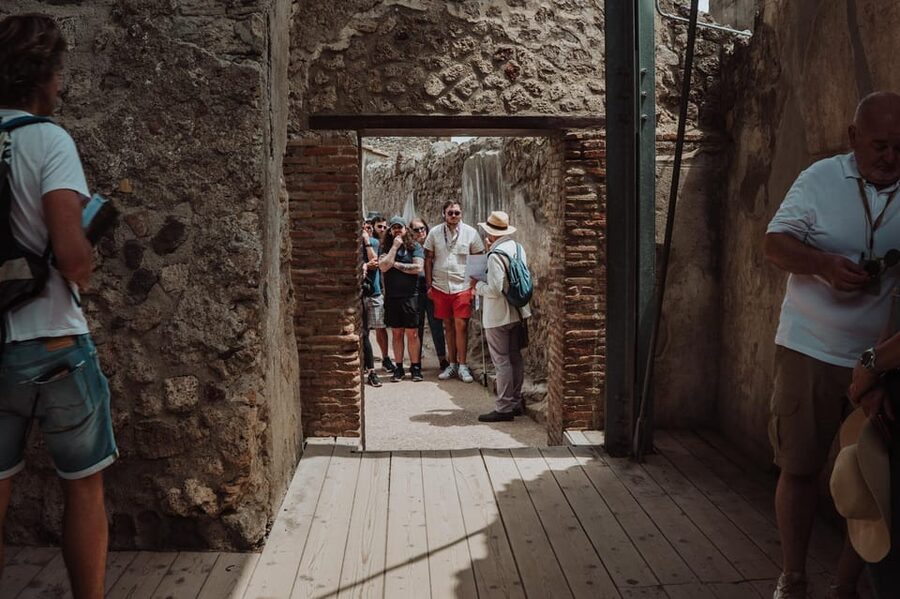
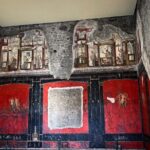
After the Lupanar, you’ll visit the House of Menander (about 20 minutes). This is another standout home, and it’s a great pairing with the House of the Faun. You start to notice contrasts—how different elite homes expressed status, taste, and identity.
This is also where the tour’s pacing works in your favor. You get enough time to step into the logic of the rooms and decorations, but not so much that you lose energy. You’ll leave with clearer mental images you can revisit on your own later.
From guide examples shared in the tour experience, you might get narration that ties art and architecture to how people actually lived—who would use what spaces, how privacy worked, and how daily life would have felt inside these walls.
Macellum and Food Culture: The Commercial Side You Don’t Want to Miss
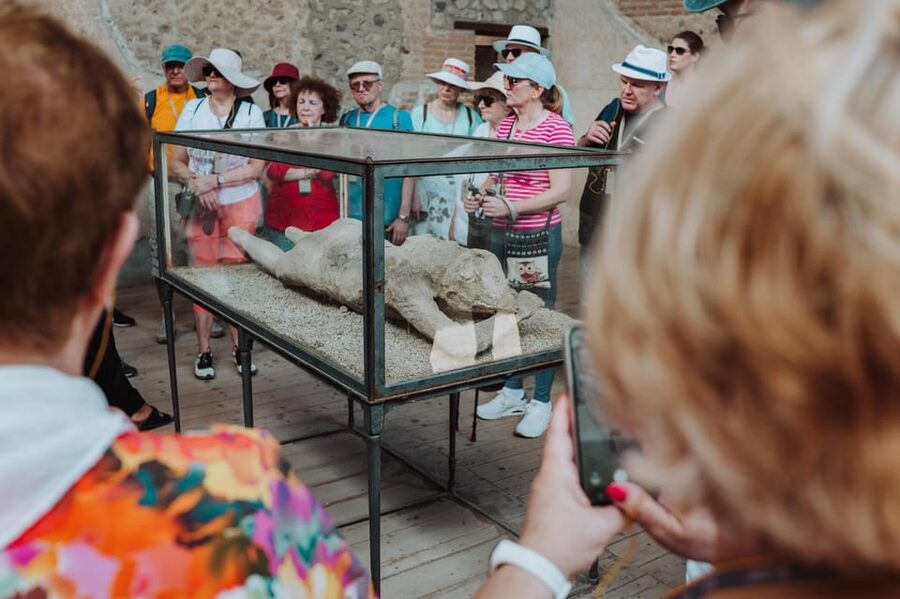
The tour then moves to the Macellum of Pompeii (about 10 minutes). This is the market area, and it matters because it grounds the city in ordinary needs. Food wasn’t occasional. It was routine.
This is where the tour helps you shift perspective. Instead of only thinking about ruins as “history objects,” you start thinking about food as an engine of social life. You’ll also hear about everyday eating culture, including references to a termopolium (a fast-food counter style) as part of how Pompeii fed itself.
The short time here is both a pro and a con. Pro: the tour keeps the day moving and doesn’t leave you stranded at one spot. Con: if markets are your thing, you’ll probably want to return after the tour ends with a longer, self-guided stroll.
Forum Baths: Where Pompeii Showers Its Secrets
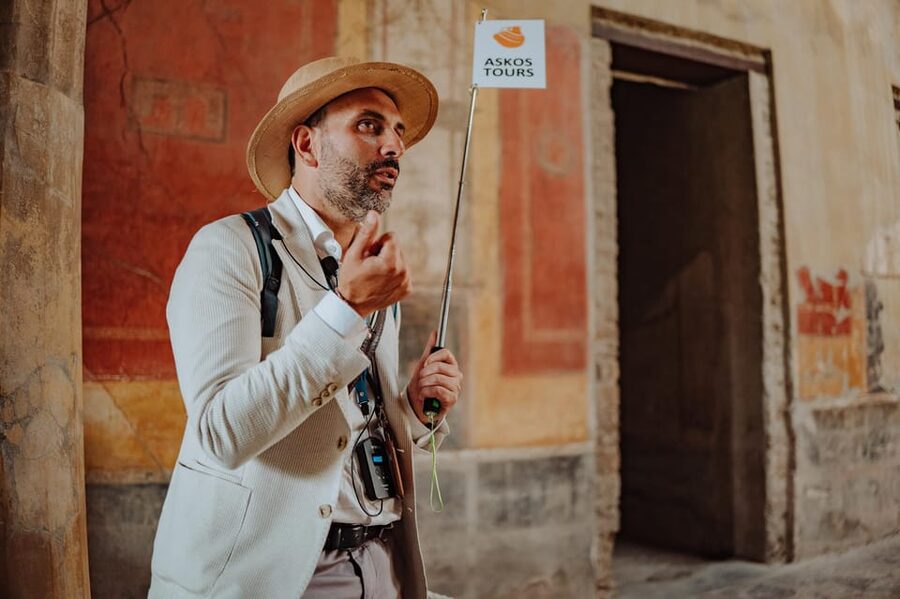
Last in the main sequence are the Forum Baths (about 10 minutes). Baths sound simple until you realize what they represent in Roman life: cleanliness, conversation, leisure, and social mixing. They were a daily hub, not a luxury splurge for a small group.
A guided stop here helps you notice the details you’d otherwise walk past. The layout and usage patterns make more sense when explained. And once you understand the function, the stones stop looking like decoration and start acting like a schedule of human routine.
If you’re someone who likes the “how people lived” side of history more than the “who ruled” side, this part can feel surprisingly satisfying.
What the Skip-The-Line Ticket and Headsets Change
Pompeii’s popularity can mean long lines at entry. This tour includes an entrance ticket via Pompei Express and provides skip-the-line access, which is a practical advantage when you have only a day (or only a couple of hours) in town.
Headsets for groups of 10+ people are also a big deal. They reduce the stress of trying to hear a guide over foot traffic, while keeping you from drifting too far behind. One real-world caution: audio quality can depend on fit, and in crowded moments you might need to adjust so the narration stays clear.
Also, plan for walking time that adds up. Pompeii isn’t level and polished. It’s stone paths, occasional steps, and uneven ground. Bring water even if it’s not included, and don’t underestimate how warm the stones can feel.
Price and Value: Is $35 Actually a Good Deal Here?
At $35 per person for a 2-hour archaeologist-led tour, you’re paying for more than a ticket. The value is in the combination of:
- entrance included (Pompei Express ticket),
- an archaeologist guide (expert interpretation),
- a small-group route (up to 20),
- and headsets when the group is larger.
If you’re the type who likes to stand in front of something and understand it, this price can feel like a bargain because it buys you interpretation you would struggle to piece together alone. If you’re more of a wander-first, read-later visitor, you might prefer a self-guided visit and spend time with a good guidebook. But for many people, a short Pompeii window makes guided time worth it.
And since you get a wrap-up with recommendations for where to go next, the tour can function like a smart “first pass,” so your extra time (if you have it) becomes more targeted.
Practical Tips Before You Go (So You Enjoy the Ruins, Not Your Discomfort)
Here’s what I’d plan around based on how this kind of Pompeii walk tends to feel:
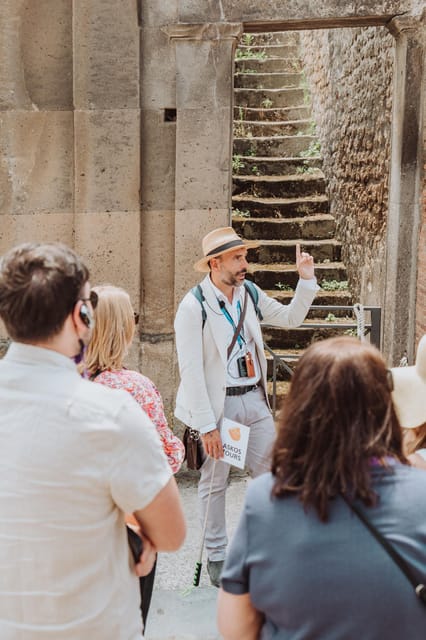
- Wear shoes with traction. Paths are uneven, and you may climb a few steps.
- Bring water. Even with headsets and a smooth route, you can end up feeling tired and dehydrated if you skip it.
- Expect a lot of stops in a short time. The tour is built to cover major landmarks without lingering too long.
- Use the headset if provided. Keep it adjusted so you hear clearly in crowded sections.
As for guides, the tour experience includes strong feedback on specific people such as Teresa, Anna, Alfredo, Giancarlo, Mario, Diego, Jolanda, and Alexandra—often praised for making Pompeii feel alive through clear explanations and a sense of humor.
Who Should Book This Tour, and Who Might Rethink It
This tour is a good fit if you:
- want a structured route through Pompeii’s key areas in 2 hours,
- enjoy explanations that connect artifacts and buildings to real daily life,
- prefer small-group pacing over large-bus vibes.
It’s not suitable for people with mobility impairments or wheelchair users, and mobility scooters are not allowed. Also, unaccompanied minors aren’t permitted.
If you’re bringing a dog, only small dogs are allowed: up to 10 kg and maximum height of 40 cm, on a leash, and held in the arms inside buildings. You must collect excrement as required.
Should You Book the Archaeologist Tour? My Decision Rule
Book it if you want Pompeii to make sense fast—especially if this is your first time there or you’re short on time. The archaeologist-led format, skip-the-line entry, and small-group route are a smart combination for getting real understanding without spending your day playing catch-up.
Skip it only if you’re comfortable reading Pompeii on your own and you don’t mind walking around without explanations. Pompeii is impressive either way, but this tour helps you see more of the meaning, not just the shapes.
FAQ
How long is the Pompeii tour?
It lasts about 2 hours.
Does this tour include skip-the-line entry?
Yes. It includes skip-the-line access and the entrance ticket is included.
What’s included in the price?
The price includes the Pompei Express entrance ticket, an archaeologist guide, a small group tour, and headsets for groups of 10 people or more.
What languages are available?
The live guide is available in English, Spanish, French, Italian, Portuguese, and German.
Is the tour suitable for wheelchair users or mobility impairments?
No. It’s listed as not suitable for people with mobility impairments and wheelchair users, and mobility scooters are not allowed.
Are unaccompanied minors allowed?
No. Unaccompanied minors are not allowed.
Can I cancel for a refund?
Yes. There is free cancellation up to 24 hours in advance for a full refund.
More Tours in Pompei Campania




More Tour Reviews in Pompei Campania



More Pompeii Tours to Compare
More Pompei Campania tours, freshly reviewed




Pompeii Tours, compared.
 ★ 4.1Pompeii: Entry Ticket with Audio GuideFrom $4013,491 reviews
 ★ 4.8Pompeii: Small Group Tour with an ArchaeologistFrom $4012,264 reviews
 ★ 4.3Pompeii Ruins & Mount Vesuvius Day TourFrom $12011,459 reviews
★ 5.0Pompeii Small Group Tour with an ArchaeologistFrom $356,593 reviews
★ 4.3Pompeii Ruins & Mount Vesuvius Day TourFrom $12011,459 reviews
★ 5.0Pompeii Small Group Tour with an ArchaeologistFrom $356,593 reviews
 ★ 4.5Skip-the-line Pompeii – Small Group TourFrom $544,401 reviews
 ★ 4.6Naples or Sorrento: Full-Day Pompeii and Mount Vesuvius TourFrom $1044,235 reviews
 ★ 3.9Pompeii: Skip-the-line Entry Ticket with Audio Guide & MapFrom $433,153 reviews
 ★ 4.0Pompeii & Mt.Vesuvius Day Tour from Naples with Pizza LunchFrom $1492,901 reviews