
Review · POMPEII TOURS
Pompeii: Exclusive Tour with Archaeologist and Entry Tickets
Pompeii is huge, and time disappears fast. This 2-hour archaeologist-led tour tackles the most important parts of the ruins without the ticket chaos, starting right at Porta Marina and guiding you through streets shaped by the 79 AD eruption. I like that you get skip-the-line entry plus an Express ticket, so you spend more time walking and less time waiting.
What I really like is the guide setup. You’re not just hearing facts—you’re hearing interpretations and excavation stories, with a headset so you can catch every detail even when the site is busy. One possible drawback: at 2 hours, this is a highlights-focused route, not a full-day wanderer’s dream—so you may want extra time afterward if you love getting lost.
In This Review
- Key things to know before you go
- Pompeii in 2 hours: what this archaeologist-led route really gives you
- Meeting at Porta Marina: how to find your Pompei VIP guide
- Skip-the-line entry and Express ticket: saving time where it counts
- Start at Porta Marina Superiore: the gate that frames the whole story
- Forum and Basilica: civic power in the Foro Civile di Pompei
- Temples of Jupiter, Venus, and Apollo: religion you can point to
- Baths and market life: Forum Baths and the Macellum
- Houses you can actually read: House of the Tragic Poet, Vettii, and House of the Faun
- Lupanare and Theatre District: the street-level contrast
- What to look for: frescoes, mosaics, and the small visual clues
- Guide quality and group pacing: why it matters at Pompeii
- Price and value: is $50 per person a good deal?
- Practical tips: what to bring and the ID name rule
- Should you book the Pompeii VIP archaeologist tour?
- FAQ
- How long is the Pompeii archaeologist tour?
- Where do I meet my guide?
- Are entry tickets included, and do I skip the ticket line?
- Is this tour private or small group?
- What languages are available for the live guide?
- What should I bring to Pompeii?
- Is the tour suitable for wheelchair users or mobility impairments?
Key things to know before you go

- Skip-the-line entry and Express ticket: you start the visit quickly at Porta Marina.
- Licensed archaeologist guide: expert explanations tied to what you’re seeing on the ground.
- Headset audio: helps you hear clearly across a large, open site.
- A tight hit list: Forum, major temples, baths, markets, key houses, and the Theatre District.
- Small group feel (and private option): more attention, quicker stops, easier questions.
Which Pompeii ticket and guide? Compare a few more.
- Pompeii: Entry Ticket with Audio Guide★ 4.1 · 13,491 reviews
- Pompeii: Group Tour with an Archeologist Guide★ 4.4 · 2,361 reviews
- Pompeii Ruins Private Tour with Optional Skip-the-Line Entry★ 4.9 · 732 reviews
- Pompeii: Exclusive Tour with Archaeologist and Entry Tickets★ 4.9 · 634 reviews
Pompeii in 2 hours: what this archaeologist-led route really gives you
Pompeii can feel like drinking from a fire hose. The ruins are spread out, signage can be confusing, and if you go alone you’ll bounce between landmarks without understanding why they mattered. This tour is built as a focused introduction: it gets you into the right places fast, then explains what you’re looking at in plain language.
The value is in the combination. You get tickets included and skip the long entry snarl, then you get a real guide who can point out the differences between big public spaces and everyday neighborhoods. Guides in this format often save you from common mistakes—like rushing past a house façade with no clue what you’re seeing.
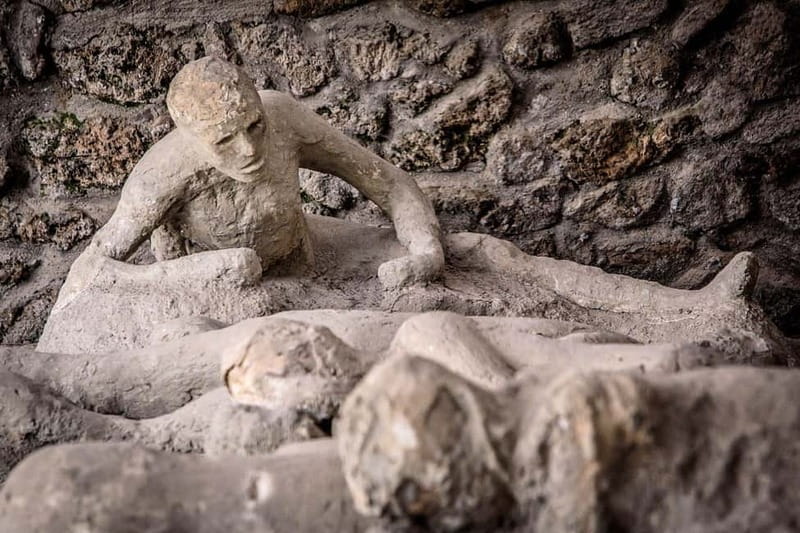
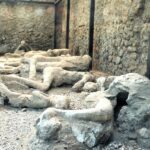
And yes, it’s still Pompeii. Even with a tight route, the city hits hard. You’ll move through civic spaces, homes with floor mosaics, and the darker side of daily life—then you’ll see how plaster casts bring the human side of the eruption into sharp focus.
Meeting at Porta Marina: how to find your Pompei VIP guide
Your meeting point is outside Pompeii’s Porta Marina entrance, in front of Pompei Scavi – Villa dei Misteri on the Circumvesuviana line. Your guide holds a sign reading Pompei VIP. This matters more than people think, because stations and entry points around Pompeii can be confusing if you’re coming in by train.
Plan to arrive a few minutes early with your ID or passport ready. You’ll also want to be wearing comfortable shoes—Pompeii’s ground is uneven, and you’ll be walking steadily through the site rather than stopping and starting every ten steps.
The tour has two drop-off locations after the walk: Pompeii Ruins and Piazza Esedra. That flexibility can help if you’re continuing your day elsewhere on foot.
Skip-the-line entry and Express ticket: saving time where it counts
Pompeii is famous, which means it’s also crowded. The big win here is that your admission is handled so you can walk into the ruins quickly instead of losing your momentum at the ticket line.
This isn’t just about convenience. When you start earlier in the flow of the site, you’re more likely to enjoy calmer moments at major stops and spend less time trying to “catch up” to your own schedule. And because the tour is only 2 hours long, that time cushion is real value.
You’ll also have an entry ticket that’s specifically labeled as an Express option, and your guide uses the allowed access process so you don’t have to worry about logistics once you’re in.
Start at Porta Marina Superiore: the gate that frames the whole story
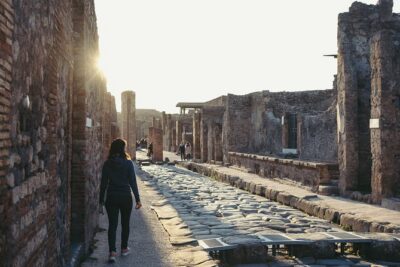
The tour begins at Porta Marina Superiore, the original Roman gate that still stands as a proud entrance to the city. This is a smart starting point because it anchors your visit: you’re not just wandering ruins, you’re entering a real Roman threshold.
From there, you ease into the layout and rhythm of the town. The guide helps you read what you’re seeing—where people would have moved through daily life, and how the public buildings shape the feel of the city. It sets up everything that comes next: Pompeii’s civic center, the religious spaces, and then the domestic and commercial zones.
Other tickets and entries for Pompeii Archaeological Site

Forum and Basilica: civic power in the Foro Civile di Pompei
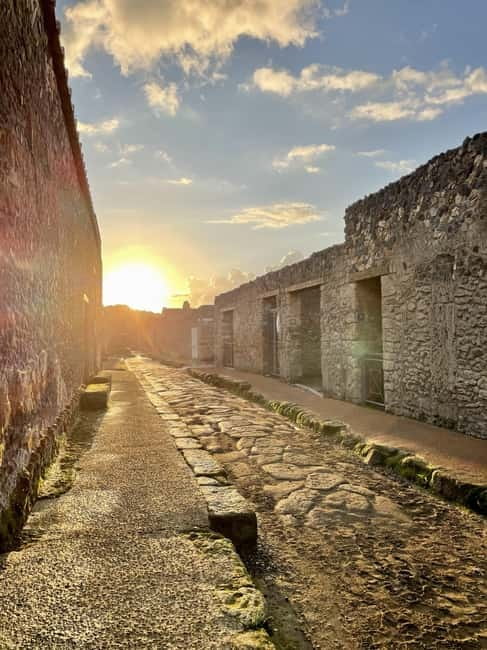
Next, you’ll get to the heart of civic life: the Roman Forum and Basilica, plus the Foro Civile di Pompei area. This is where the city felt like it was functioning in real time. Even with centuries of silence, you can still sense the purpose of the space.
What makes this stop work on a guided route is the interpretation. A good guide will explain not only what the buildings are called, but why they mattered—where debates happened, how public life was organized, and how the city’s energy concentrated in these central zones.
You’ll also have a good chance to slow down for photos because the guide is moving you through the right viewpoints instead of pushing you through without context.
Temples of Jupiter, Venus, and Apollo: religion you can point to
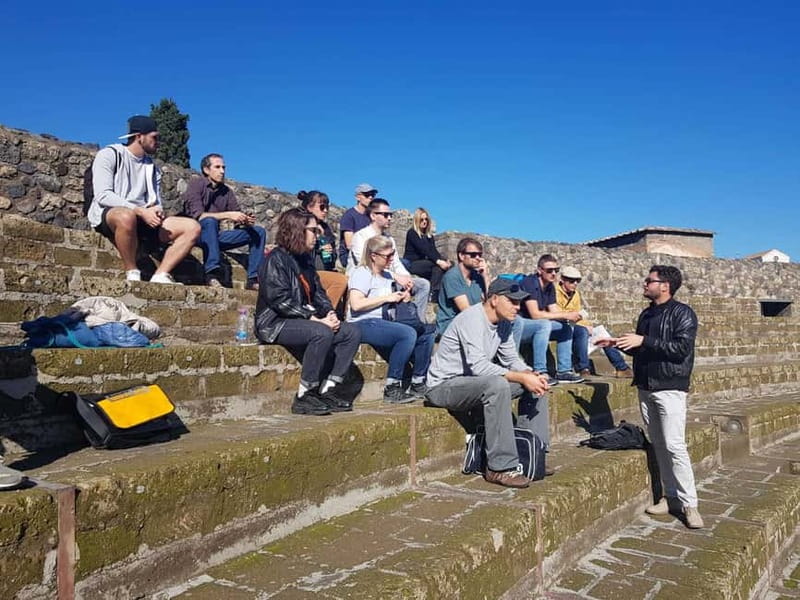
Pompeii wasn’t only streets and markets. It had a religious map, and you’ll see key temples dedicated to Jupiter, Venus, and Apollo. The tour includes Temple of Jupiter and Temple of Apollo, and the guide connects them to the broader feel of worship in Roman daily life.
This is one of those areas where a self-guided walk often turns into confusion—lots of stone columns and not enough explanation. With a guide, you’re more likely to notice how these spaces relate to the city’s public character.
Even if you’re not a classics person, the “why” gets clearer when someone ties it to what ordinary people would have seen and done.
Baths and market life: Forum Baths and the Macellum
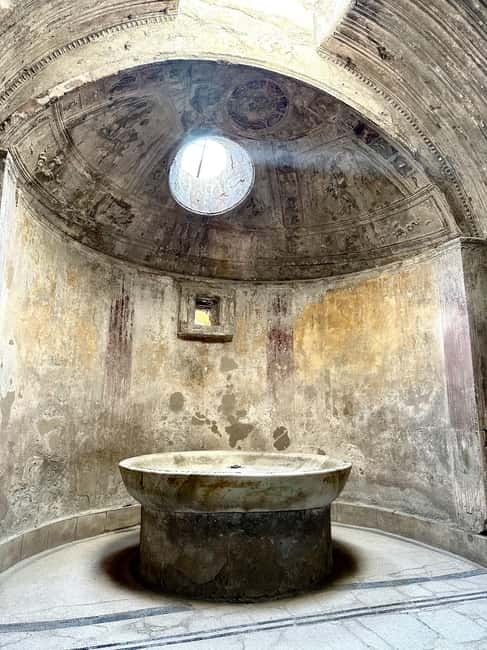
Then the tour swings into “how people lived” territory. You’ll visit the Forum Baths, which are a major clue to the social side of Pompeii—bathing wasn’t only hygiene, it was community life.
After that comes the Macellum, the market zone where food and daily trade would have flowed. This stop is paired with one of the most powerful elements of Pompeii: the plaster casts linked to the eruption victims.
Here’s what makes the guided timing important. The Macellum is visually dense, and it’s easy to miss how the market layout functioned. A guide can help you look in the right directions before you hit the plaster casts, so the emotional impact lands with meaning—not just shock.
Houses you can actually read: House of the Tragic Poet, Vettii, and House of the Faun

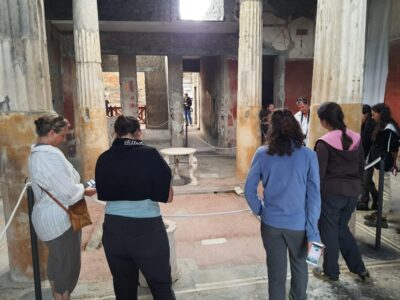
If you want Pompeii to feel real, you have to see homes. This tour includes the House of the Tragic Poet, the House of the Vettii, and the House of the Faun.
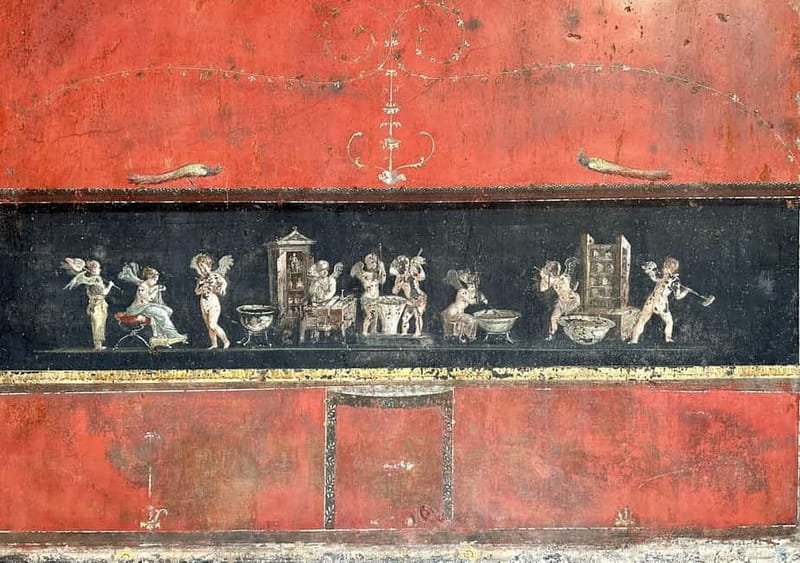
These are standout stops because they show how Pompeians used art and design as a daily experience. Expect explanations of frescoes and mosaics—how color and pattern shaped rooms and how visitors would have moved through domestic space.
The House of the Vettii and House of the Faun are especially memorable for art lovers. Even in a short visit, you can learn what to focus on. You’ll likely come away with a short list of specific details that you’ll be able to spot instantly if you return later.
Lupanare and Theatre District: the street-level contrast
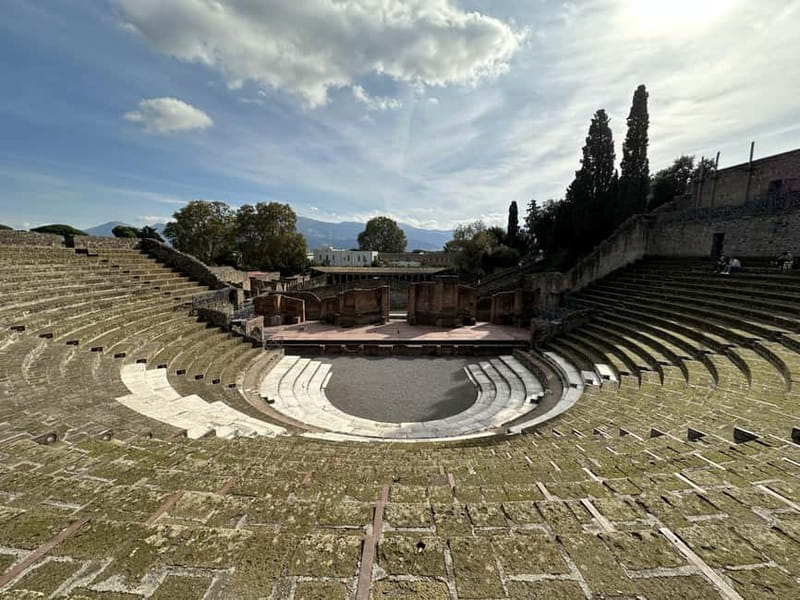
Pompeii doesn’t keep a single mood. The tour includes the Lupanare, the brothel, plus the Theatre District approach leading to the Large Theatre.
This is where the guide’s pacing matters. The Lupanare is a blunt window into daily life—advertising imagery, the commercial side of the city, and the way the Roman world mixed public and private behavior. Then you shift to the theatre spaces, where entertainment reflects a different kind of civic energy.
One review noted an especially enjoyable format: the guide made room for photo stops and stayed at a steady pace so the stops didn’t feel rushed. That matters here, because these areas can blend together if you’re just walking and not connecting the dots.
What to look for: frescoes, mosaics, and the small visual clues
Even with a guided tour, your eyes still do the heavy lifting. The best part is that the guide points you toward what’s worth slowing down for, not just what’s famous.
In houses, focus on:
- Fresco placement: what’s painted where, and why that corner feels like a focal point.
- Mosaic floors: how they guide movement through a room or entry.
- Material clues: boundaries between public-facing spaces and more private areas.
In markets and civic zones:
- Look for how foot traffic would have shaped movement.
- Notice the relationship between public space and nearby commercial activity.
This is where the headset setup pays off. When you can hear clearly, you’re more likely to catch the guide’s exact cue—what detail matters today because excavators found it, restored it, or interpreted it.
Guide quality and group pacing: why it matters at Pompeii
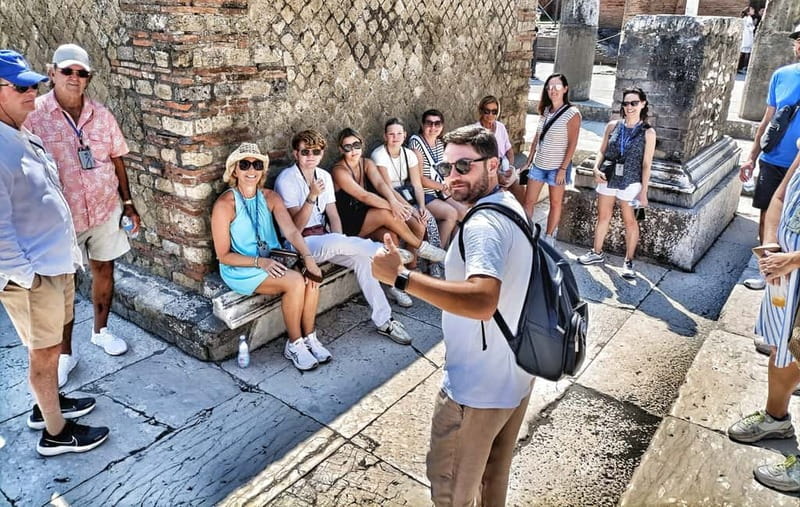
This tour is built around small groups, with a private slot available if you want a more tailored experience. That setup is more than a comfort feature—it’s how you avoid being one of a hundred people staring at the same wall without anyone explaining the context.
In the reviews, guides like Livio, Antonio, Ricardo, Ivan, and Loredana show up with a consistent pattern: professional delivery, clear explanations, humor that keeps the tone human, and real patience with questions. One guide helped a participant avoid a slip leaving the site, which tells you something about how alert and engaged they tend to be in real time.
For families, it also helps that the tour length is manageable and the guide can calibrate the pace. A 2-hour schedule forces clarity: you don’t get lost in detail for so long that you stop paying attention.
Price and value: is $50 per person a good deal?
At $50 per person for a 2-hour visit with skip-the-line entry and an archaeologist/licensed guide, the value is mainly about time and interpretation.
If you go independently, you pay for entry tickets anyway, and you also spend time figuring things out on your own—especially at peak hours. Here, you’re paying to avoid that friction and to get a structured walk through the most meaningful sites.
It’s also worth thinking about what you want from Pompeii:
- If you want a guided, high-impact introduction that sets you up to explore further, this price is easy to justify.
- If you’re the type who likes to read quietly at every stone and take a full day, you might find the route a bit tight and want to add self-guided time afterward.
Practical tips: what to bring and the ID name rule
Bring comfortable shoes and water. You’ll be on your feet for the whole route.
You also need your passport or ID card, and kids need ID too. The tour also follows a ticketing rule that requires you to provide full name and surname for all participants, including ages, using the messaging system after you book. The key point: do it promptly after booking so your ticket matches the allowed format.
A few other practical points from the tour rules:
- Not allowed: pets, alcohol and drugs, swimwear, and electric wheelchairs.
- Not suitable for wheelchair users and people with mobility impairments.
- Languages offered include English, Italian, French, and Spanish.
Also, check your start time. Some guides run later options where conditions can feel better in the heat, and you might encounter fewer people depending on the day and hour.
Should you book the Pompeii VIP archaeologist tour?
Book it if you want:
- Skip-the-line entry so you actually use your time on site
- A structured route through Forum, temples, baths, markets, key houses, and the Theatre District
- A guide who can answer questions and point out what matters visually
- A short, high-value intro that makes it easier to explore on your own afterward
Skip it (or plan a different approach) if:
- You want a full-day Pompeii experience and you’re comfortable organizing it yourself
- Your pace requires frequent long stops or you rely on wheelchair access (this tour isn’t listed as suitable)
If Pompeii is your one big stop in Campania and you want it to land with meaning—not just photos—this is a smart way to do it. You’ll leave with a clearer map of the city, a better sense of daily life, and a stronger grasp of how the eruption turned routine into history.
FAQ
How long is the Pompeii archaeologist tour?
The duration is 2 hours.
Where do I meet my guide?
Meet outside Porta Marina entrance, in front of the Pompei Scavi – Villa dei Misteri train station (Circumvesuviana). Your guide will hold a sign that says Pompei VIP.
Are entry tickets included, and do I skip the ticket line?
Yes. Skip-the-line entry tickets and Pompeii’s admission Express ticket are included.
Is this tour private or small group?
It’s a small group experience, and you can also choose a private slot.
What languages are available for the live guide?
The tour is available in English, Italian, French, and Spanish.
What should I bring to Pompeii?
Bring a passport or ID card (photo is fine), comfortable shoes, and water.
Is the tour suitable for wheelchair users or mobility impairments?
The tour is not suitable for wheelchair users or people with mobility impairments.
More Tours in Pompeii Archaeological Site


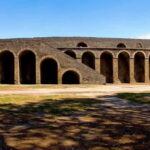
More Tour Reviews in Pompeii Archaeological Site
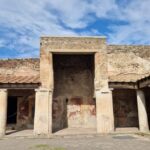
More Pompeii Tours to Compare
More Pompeii Archaeological Site tours, freshly reviewed

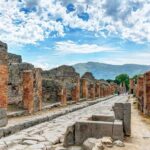

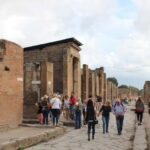
Pompeii Tours, compared.
 ★ 4.8Pompeii: Entry Ticket and Guided Tour with an ArchaeologistFrom $3519,459 reviews
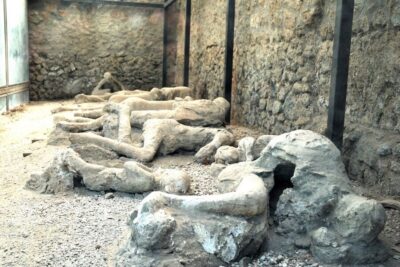 ★ 4.1Pompeii: Entry Ticket with Audio GuideFrom $4013,491 reviews
 ★ 4.8Pompeii: Small Group Tour with an ArchaeologistFrom $4012,264 reviews
 ★ 4.3Pompeii Ruins & Mount Vesuvius Day TourFrom $12011,459 reviews
★ 5.0Pompeii Small Group Tour with an ArchaeologistFrom $356,593 reviews
★ 4.3Pompeii Ruins & Mount Vesuvius Day TourFrom $12011,459 reviews
★ 5.0Pompeii Small Group Tour with an ArchaeologistFrom $356,593 reviews
 ★ 4.5Skip-the-line Pompeii – Small Group TourFrom $544,401 reviews
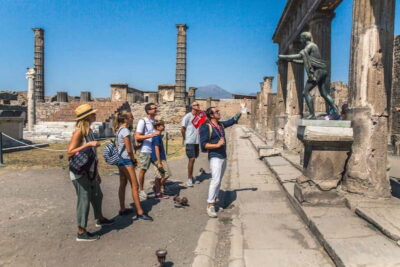 ★ 4.6Naples or Sorrento: Full-Day Pompeii and Mount Vesuvius TourFrom $1044,235 reviews
 ★ 3.9Pompeii: Skip-the-line Entry Ticket with Audio Guide & MapFrom $433,153 reviews