

Review · POMPEII TOURS
Pompeii: Skip-the-Line Guided Tour with Expert Archaeologist
Pompeii makes more sense with a real archaeologist. This skip-the-line tour gets you inside the Pompeii Archaeological Park fast, and the use of headsets means you can actually hear your guide without crowding.
I especially like how the route balances big, iconic stops with smaller, human-scale places: shops, baths, villas, and even a Roman bakery where food is still remarkably intact. I also like that you go beyond the postcard highlights, learning how Pompeii is still being uncovered today, and why preservation work matters—whether you’re at the Temple of Apollo or looking closely at plaster casts from 79 AD. One drawback: it’s still a lot of walking in real heat and sun, so you need sturdy shoes and a pace that matches the group.
In This Review
- Key takeaways before you go
- Skip-the-line entry and headsets: start strong inside Pompeii
- Where to meet at Via Villa dei Misteri (and not waste your first hour)
- How an archaeologist changes what you see on Roman streets
- The stops that tend to land hardest: Forum, Temple of Apollo, and everyday food
- Roman Forum and civic core
- Temple of Apollo
- Roman bakery and other food-related remnants
- Plaster casts and the meaning of the eruption of 79 AD
- Ongoing excavations: why this tour feels more current than a basic walk
- Roman baths, villas, shops, plus a brothel and city-wall views
- Pompeii Express vs the full route: pick based on your energy, not your ego
- Price and value: what $70 buys you at Pompeii
- Walking reality check: heat, shoes, and how to prepare like a local
- Who this Pompeii archaeologist tour suits best
- Should you book this skip-the-line Pompeii archaeologist tour?
- FAQ
- How long is the Pompeii skip-the-line guided tour?
- What’s included in the tour price?
- Where exactly do we meet for the tour?
- What should I bring to Pompeii?
- Is this tour suitable for wheelchair users or mobility impairments?
- Is the tour offered in English?
Key takeaways before you go
- Archaeologist-led explanations that focus on what you can see, not just dates
- Skip-the-line entry plus headsets when needed so you keep moving and keep hearing
- More of Pompeii than most tours, especially with the Complete Pompeii option
- Plaster casts and ongoing excavations that connect the tragedy to modern archaeology
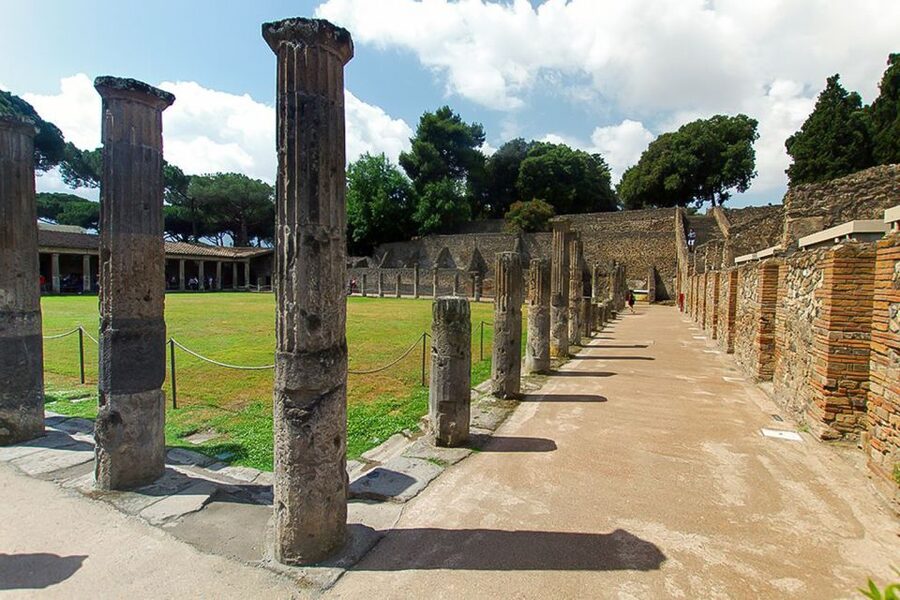
- A tight, walkable route that hits the Roman Forum, Temple of Apollo, and everyday life
Which Pompeii ticket and guide? Compare a few more.
- Pompeii: Entry Ticket with Audio Guide★ 4.1 · 13,491 reviews
- Pompeii: Group Tour with an Archeologist Guide★ 4.4 · 2,361 reviews
- Pompeii Ruins Private Tour with Optional Skip-the-Line Entry★ 4.9 · 732 reviews
- Pompeii: Exclusive Tour with Archaeologist and Entry Tickets★ 4.9 · 634 reviews
Skip-the-line entry and headsets: start strong inside Pompeii

Pompeii is huge, and the park can feel like a maze when you’re doing it alone. The best value of this tour is that it removes one of the biggest frustrations: getting your group past the entry bottleneck with pre-reserved skip-the-line tickets. Once you’re inside, you can spend your energy on the ruins instead of queuing.
You’ll also get headsets when needed, which sounds small until you’re standing among other groups and trying to make out a voice over foot traffic. This matters because Pompeii is full of tight corners, and you don’t want your “where are we going next” moment to turn into “what did the guide just say.”
The walk itself is paced to fit a 2–3 hour experience (with a curated route if you choose the Pompeii Express option). That’s important because Pompeii punishes slow sightseeing: not enough time means you miss the meaning, but too much wandering without context turns the site into background scenery.
Where to meet at Via Villa dei Misteri (and not waste your first hour)
Meeting points can make or break your day at Pompeii, and this one is straightforward, as long as you show up early. Plan to arrive 15 minutes before the start time.
Your group meets at Via Villa dei Misteri, 1, near the Entrance Gate of the Pompeii Archaeological Park—across from Hortus Pompei. The guide will be holding a green walks sign. If you’ve ever arrived at the wrong entrance and watched the rest of the group disappear into history, you already know why this detail matters.
From there, the tour starts moving quickly toward the areas that make Pompeii click: the streets, the public spaces, and the “ordinary life” locations that are so easy to miss on your own.
How an archaeologist changes what you see on Roman streets
What makes Pompeii special is also what makes it hard. A wall is a wall until someone tells you why it was built where it was, how people moved past it, and what it replaced after earthquakes or building changes over time.
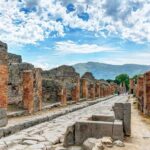
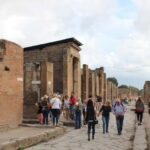
This tour is led by an official Pompeii guide and includes a trained archaeologist. In practical terms, that means you’re not just hearing stories—you’re getting explanations tied to material remains. You’ll walk through fully preserved streets of the Roman world and hear how the city worked as a system: where daily errands happened, where people bathed, where meals were made and sold, and where civic life played out.
This is the kind of guiding that helps you notice things like:
- how a public building’s placement affects foot traffic
- why certain storefront layouts feel familiar
- how “small” rooms reflect the social habits of the time
Also, the route is described as adaptable, since a third of Pompeii remains uncovered and excavations and preservation are ongoing. That matters because the park isn’t a static museum. Even in a short visit, you get a sense of how new discoveries can shift what researchers understand.
The stops that tend to land hardest: Forum, Temple of Apollo, and everyday food
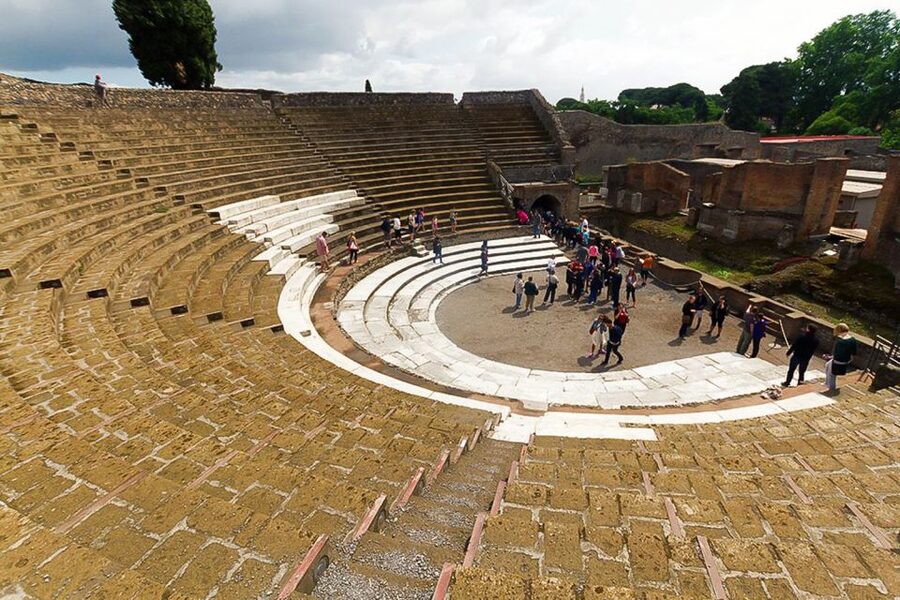
If you’re only visiting once, you want the tour to do more than hit the famous map pins. This one does that by pairing major landmarks with places that show what life actually meant on a busy street.
More guided runs around Pompeii Archaeological Site

Roman Forum and civic core
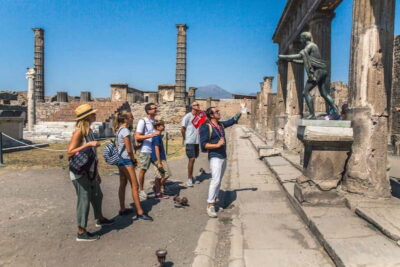
You’ll see parts of the Roman Forum, a space that’s easy to admire from the outside. The guide’s job is to make it feel lived-in: who used it, why it mattered, and what it says about public power during the Roman Republic era. On your own, it’s very possible to stand there, take photos, and walk away without feeling the day-to-day rhythm. With a guide, you learn what to look for while you’re still there.
Temple of Apollo
The Temple of Apollo shows up more often in Pompeii itineraries because it’s visually memorable—but here you’ll get context that helps it connect to the city’s social and religious life. That’s the difference between viewing a ruin and understanding it as part of a neighborhood.
Roman bakery and other food-related remnants
One of the standout elements is the stop at a Roman bakery where food is still almost intact. That kind of detail hits you differently than wall fragments. You’re not just seeing architecture; you’re seeing the remains of what people ate and how bread and meals were connected to the street economy.
The tour also references seeing an ancient supermarket feel and other everyday commercial remains like shops, plus villas and public baths. The overall effect is that Pompeii stops being a tragedy headline and becomes a real city with routine.
Plaster casts and the meaning of the eruption of 79 AD
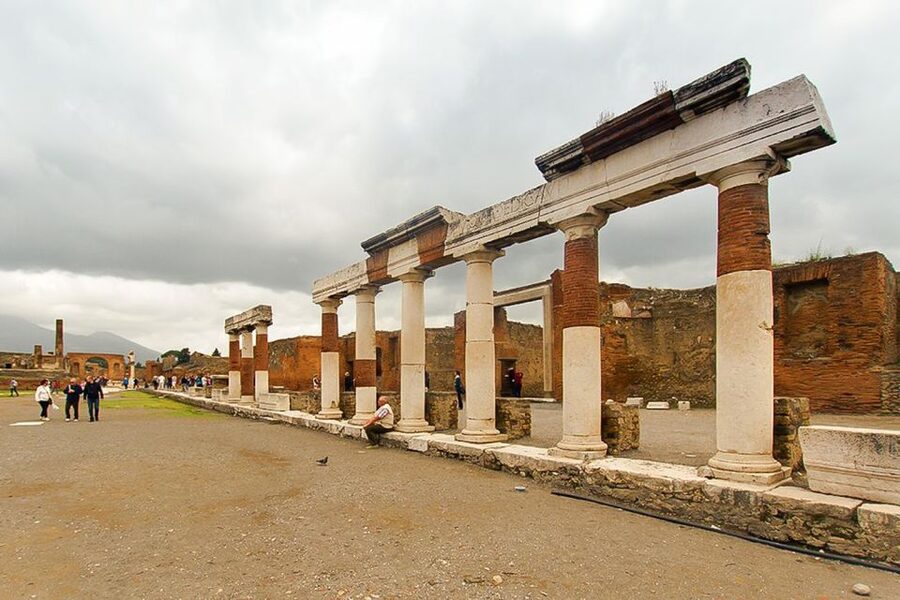
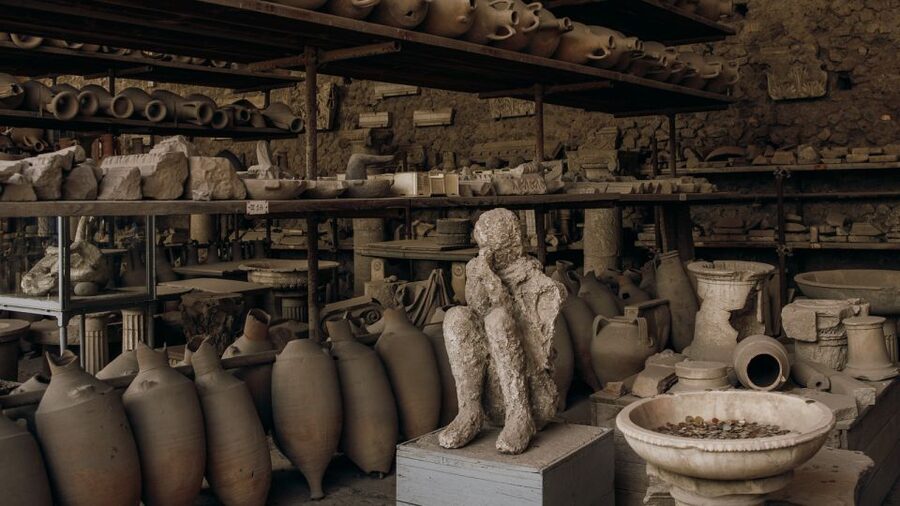
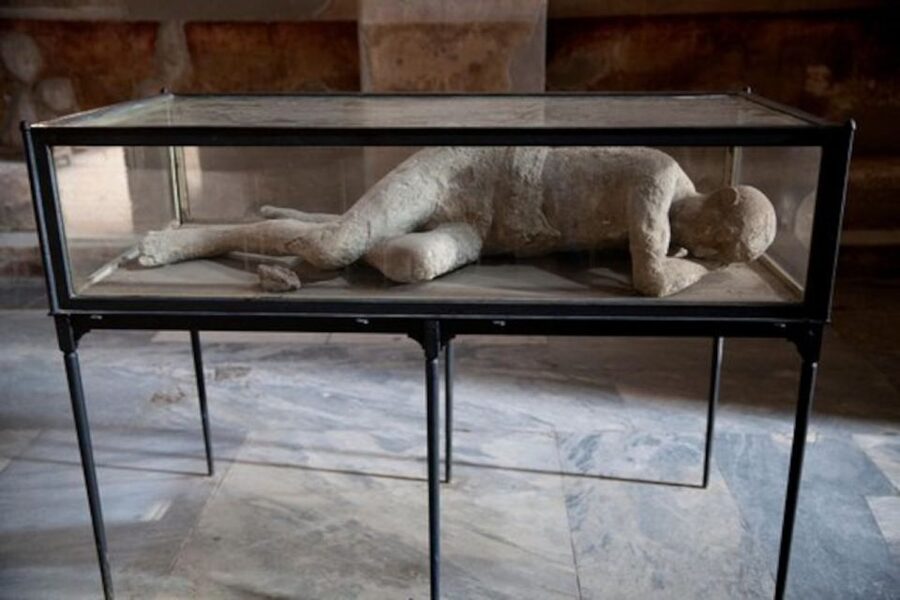
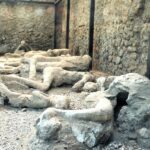
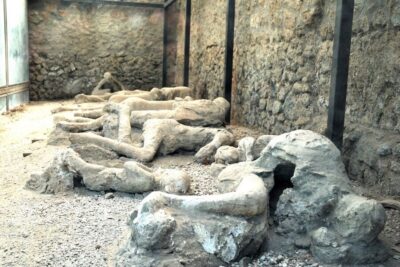
Pompeii’s emotional weight comes fast, but you need context to process it. This tour includes the famous plaster casts of people caught in the eruption at the moment of death. These stops aren’t just for visuals; they help you understand what preservation turned into over time—and why archaeologists treat the site with such care.
On a practical level, plaster casts can feel like a museum exhibit. On this tour, they’re positioned inside the logic of the city: where panic, movement, and escape attempts might have played out relative to the buildings and streets you’re walking through.
You’ll also learn about how preservation works today, because the story isn’t frozen at 79 AD. The tour highlights that excavations and preservation efforts are still uncovering new evidence. That’s a key value-add: you get a sense of current archaeology, not just ancient tragedy.
Ongoing excavations: why this tour feels more current than a basic walk
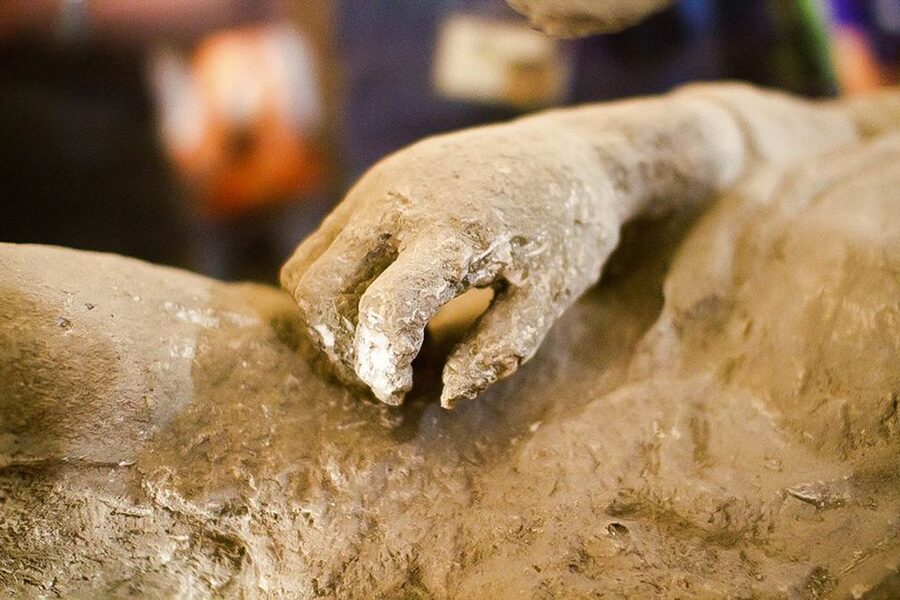
Pompeii is famous, but it still changes. The most exciting aspect here is that you’re guided through how archaeology actually works in an active site, including recent discoveries and ongoing excavations.
You might hear references to newly opened dig areas as part of the experience. Even when you don’t see earth-moving action, you still get the sense that the ground is part of the argument. A wall standing today isn’t just a backdrop—it’s a result of careful unearthing, stabilization, and long-term conservation.
This is the “why hire an archaeologist” moment. A regular guide can tell you what happened. An archaeologist helps you understand why what you’re seeing matters scientifically—and how it reshapes questions about Pompeii’s daily life.
Roman baths, villas, shops, plus a brothel and city-wall views
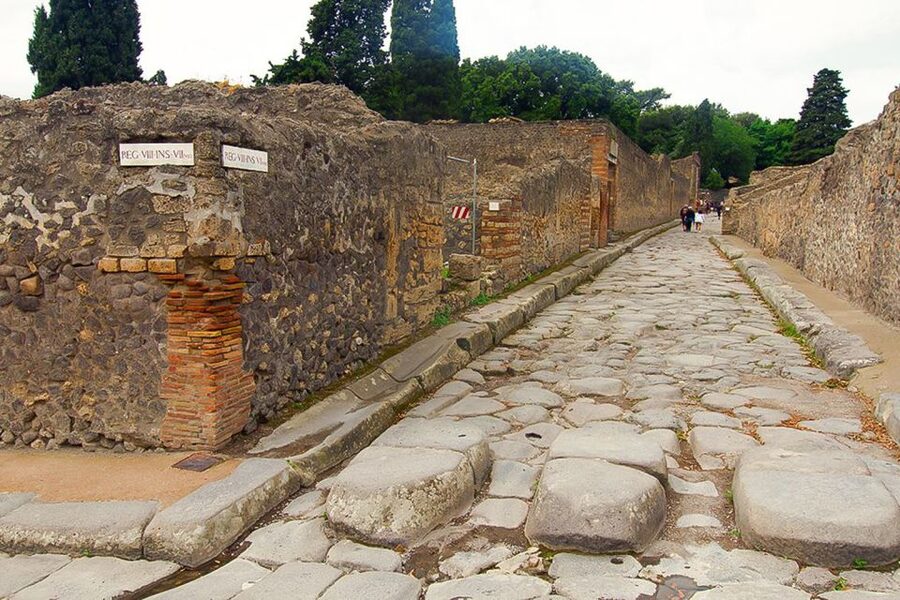
The tour’s strength is balance. You get the big civic and religious spaces, but you also spend time with the residential and commercial pieces that make Pompeii feel like a lived city.
Expect to see remains tied to:
- Public baths (how hygiene and leisure shaped routine)
- Villas (signals of wealth, comfort, and spatial planning)
- Shops (the street-level economy you can almost imagine in motion)
There’s also a mention of an old cemetery, which is a reminder that Pompeii’s story includes more than daily commerce and public life. Death, burial, and ritual are part of any city, and the site reflects that.
Two extra elements may be included depending on your group:
- A visit to one of the old brothels if appropriate for your group
- A stroll along the old city walls for panoramic views of Naples
The Naples views are a nice reset. Pompeii can feel enclosed, and stepping up to a viewpoint gives you perspective on the region without losing the thread of what you just saw.
Pompeii Express vs the full route: pick based on your energy, not your ego
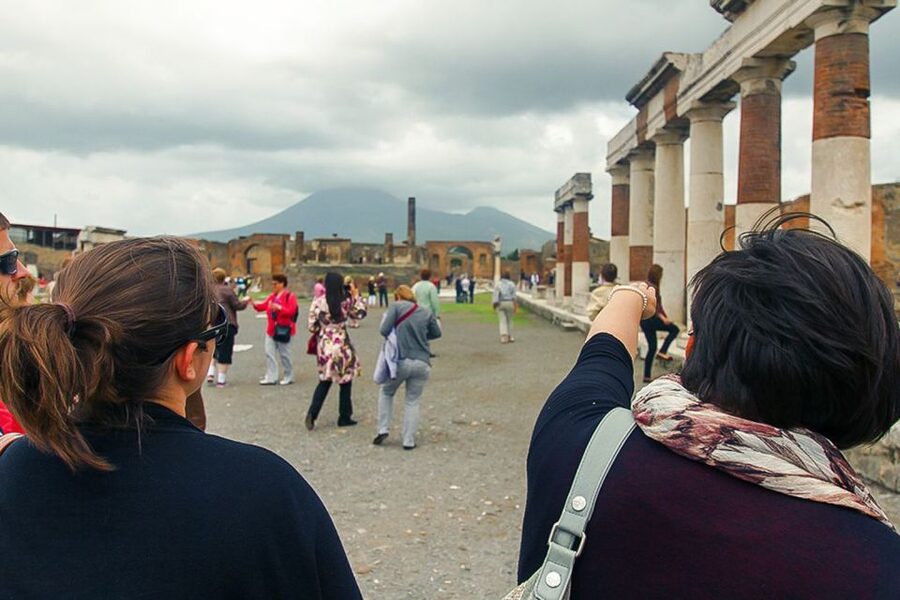
Not everyone wants the full 3-hour walking circuit. The Pompeii Express option is a shorter 2-hour experience and is led by an expert archaeologist. It focuses on a curated set of highlights, including the Forum, temples, and shops.
Here’s how I’d choose:
- If it’s your first time and you want the most “meaning per minute,” the Express route can work.
- If you want to feel like you saw Pompeii in a way that connects streets to stories, the full tour is worth the extra time.
Also, some versions of the tour mention you can see more of Pompeii than typical options if the Complete Pompeii route is selected. If that matters to you, look for the option that explicitly promises a fuller footprint.
Price and value: what $70 buys you at Pompeii
At about $70 per person for a 2–3 hour guided experience, this isn’t the cheapest way into Pompeii. But it is priced like a “spend your time well” tour.
Here’s the value logic:
- Skip-the-line tickets reduce wasted time right away.
- An official guide plus an archaeologist changes how quickly information clicks.
- Headsets make the experience less frustrating in a crowded park.
- The tour includes multiple categories of sites—civic, religious, domestic, commercial, and archaeological “how we know” stops—so you’re not paying for only the obvious sights.
If you’re the kind of traveler who gets more satisfaction from understanding what you’re looking at (instead of just collecting landmark photos), this price tends to feel fair.
Walking reality check: heat, shoes, and how to prepare like a local
Pompeii is famous, but it’s also a sun-and-stone experience. Many guide comments in the group feedback point to how hot it can get, with limited shade. If you show up under-prepared, the tour becomes a battle.
Do this instead:
- Wear comfortable, closed-toe shoes.
- Bring water and plan on using what you carry.
- Consider sun protection like a hat or even a UV umbrella (a great practical tip when the route has long stretches with little cover).
The tour rules also call out no high-heeled shoes, and it’s a walking tour with a moderate pace. It is not suitable for guests with mobility impairments, wheelchairs, or strollers. If that describes your group, it’s better to look for a different style of Pompeii visit.
If you want the best outcome, match your expectations to the format: you’re here to walk, listen, ask questions, and then use the leftover time to explore on your own while you understand what you’re seeing.
Who this Pompeii archaeologist tour suits best
This is a strong fit if you:
- want a structured path through a massive site
- like explanations tied to real artifacts and building layouts
- care about how archaeology is ongoing, not just what happened long ago
- want help noticing Pompeii’s lesser-seen pieces like bakeries, cemeteries, and smaller neighborhood spaces
It’s also a good option for mixed groups, since small-group guiding and headsets help everyone keep up. Families often benefit too, especially when the guide takes questions in a way that keeps kids engaged.
If you prefer total freedom with no schedule pressure, you may find a guided route too structured. But most first-time visitors seem to find that the guidance makes self-exploring afterward much more satisfying.
Should you book this skip-the-line Pompeii archaeologist tour?
If you’re weighing a basic walk-through against paying for expert guidance, I’d lean toward booking this one.
Choose it if you want:
- skip-the-line entry so you start efficiently
- an archaeologist-led approach that turns ruins into usable understanding
- emotional stops like plaster casts, plus modern context from ongoing excavations
- a route that covers civic landmarks and everyday spaces, not just the biggest names
Skip it only if your group struggles with long walks in heat, or if you want a fully self-paced day with no set route. Otherwise, this is the kind of Pompeii visit that helps you leave with more than photos—you’ll remember the city’s logic, street by street.
FAQ
How long is the Pompeii skip-the-line guided tour?
The experience runs about 2–3 hours. If you book the Pompeii Express option, it’s a shorter 2-hour route.
What’s included in the tour price?
You get Pompeii pre-reserved skip-the-line tickets, an official Pompeii tour guide (with a trained archaeologist), and headsets when needed.
Where exactly do we meet for the tour?
Meet at the Entrance Gate for the Pompeii Archaeological Park, across from Hortus Pompei, at Via Villa dei Misteri, 1. Arrive 15 minutes early, and look for your guide holding a green walks sign.
What should I bring to Pompeii?
Bring passport or ID, plus comfortable shoes. For children, you’ll also need a passport or ID card.
Is this tour suitable for wheelchair users or mobility impairments?
No. The tour is not suitable for guests with mobility impairments, wheelchair users, or strollers.
Is the tour offered in English?
Yes. The live tour guide provides the tour in English.
More Tours in Pompeii Archaeological Site

More Tour Reviews in Pompeii Archaeological Site
More Pompeii Tours to Compare
More Pompeii Archaeological Site tours, freshly reviewed


Pompeii Tours, compared.
 ★ 4.8Pompeii: Entry Ticket and Guided Tour with an ArchaeologistFrom $3519,459 reviews
 ★ 4.1Pompeii: Entry Ticket with Audio GuideFrom $4013,491 reviews
 ★ 4.8Pompeii: Small Group Tour with an ArchaeologistFrom $4012,264 reviews
 ★ 4.3Pompeii Ruins & Mount Vesuvius Day TourFrom $12011,459 reviews
★ 5.0Pompeii Small Group Tour with an ArchaeologistFrom $356,593 reviews
★ 4.3Pompeii Ruins & Mount Vesuvius Day TourFrom $12011,459 reviews
★ 5.0Pompeii Small Group Tour with an ArchaeologistFrom $356,593 reviews
 ★ 4.5Skip-the-line Pompeii – Small Group TourFrom $544,401 reviews
 ★ 4.6Naples or Sorrento: Full-Day Pompeii and Mount Vesuvius TourFrom $1044,235 reviews
 ★ 3.9Pompeii: Skip-the-line Entry Ticket with Audio Guide & MapFrom $433,153 reviews