

Review · POMPEII TOURS
Pompeii: Entry Ticket with Audio Guide
A volcanic city in plain sight. That’s what hits you first at Pompeii—streets, shops, and homes frozen under ash, now revealed to walk through. I love the self-guided format (you don’t have to match a group pace), and I love that the included audio guidance helps you read what you’re seeing. One thing to plan for: Pompeii is huge, so a single day can feel rushed unless you choose a smart route and start early.
The ticket setup is also refreshingly modern: you show your voucher on your phone, grab your entry ticket, and then use the audio guide either as a physical device or via the digital app. I like the free luggage storage too, because you can travel lighter and keep moving. The only real drawback is logistics—audio guides need to be picked up and returned at the official desk inside the site, with an ID deposit, and Bluetooth headphones won’t work with the audio unit.
In This Review
- Key Points You’ll Feel Immediately
- Pompeii by Audio: Why This Ticket Works So Well
- Pompeii Express vs Pompeii+: What You Gain (and What You Miss)
- Pompeii Express (Ancient city only)
- Pompeii+ (Ancient city plus suburban villas)
- Entering Through Porta Marina Superiore: Where to Go First
- The Audio Guide: App vs Device, and the Headphone Reality
- Using the app
- Using the physical device
- The “audio doesn’t match what I’m looking at” issue
- Your Self-Guided Route: The Main Sights Worth Prioritizing
- Streets, neighborhoods, and the everyday city feel
- The marketplace lunch moment
- Public baths and mosaic floors
- House of the Faun (Hellenistic-style highlight)
- Amphitheater: imagine the audience
- Temples: Venus, Apollo, Jupiter
- Villa Mysteries and the suburban layer (Pompeii+)
- Villa of Diomedes and Villa Regina + Antiquarium (Pompeii+)
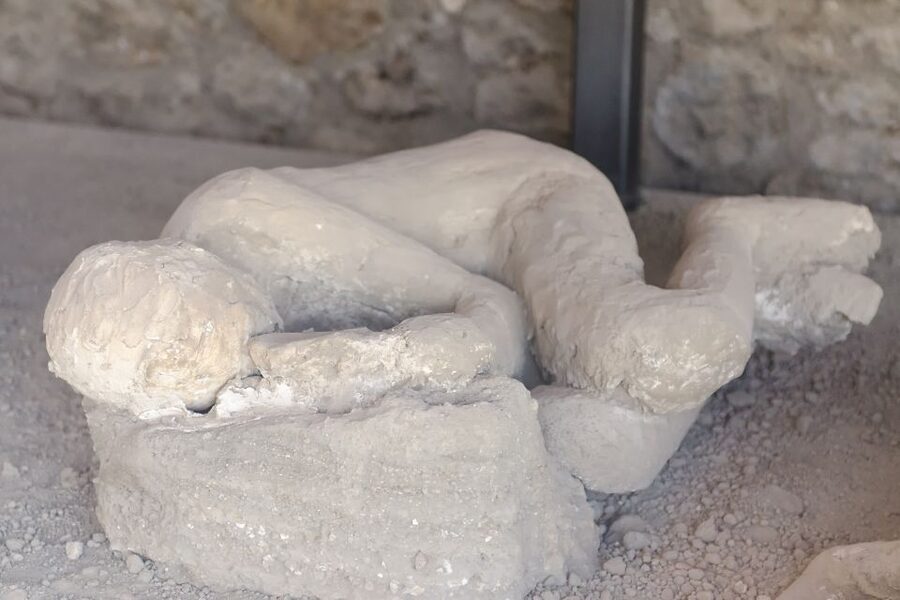
- Petrified bodies / casts zone (plan for the far end)
- How Long Should You Spend? One Day Means Picking Your Battles
- Practical Tips That Make Pompeii Easier (and More Comfortable)
- Price and Value: Is This $40 Ticket a Smart Deal?
- Should You Book This Pompeii Entry Ticket With Audio?
- FAQ
- What’s the difference between Pompeii Express and Pompeii+?
- Is an audio guide included?
- Where do I pick up the ticket and audio guide?
- Do I need ID to rent the audio guide?
- Can I use Bluetooth headphones with the audio guide?
- Are headphones included?
- What are the last entry times for Pompeii+?
- Do EU citizens under 18 get free admission?
- How much time should I plan for a one-day visit?
Key Points You’ll Feel Immediately
- Real self-guided wandering: walk when you want, pause when you want, and don’t wait for a group.
- Choose your scope: Pompeii Express covers the main ancient city; Pompeii+ adds suburban villas like the Villa of the Mysteries.
- Audio guide pick-up is the key step: collect at the official audio desk near Porta Marina Superiore.
- Plan for walking distance: this is not a quick stop; it’s a full outing on stone streets.
- Heads-up on headphones: bring something that works, because Bluetooth won’t pair with the device.
- One-day timing matters: if you choose Pompeii+, there are seasonal last-entry cutoffs.
Which Pompeii ticket and guide? Compare a few more.
- Pompeii: Entry Ticket with Audio Guide★ 4.1 · 13,491 reviews
- Pompeii: Group Tour with an Archeologist Guide★ 4.4 · 2,361 reviews
- Pompeii Ruins Private Tour with Optional Skip-the-Line Entry★ 4.9 · 732 reviews
- Pompeii: Exclusive Tour with Archaeologist and Entry Tickets★ 4.9 · 634 reviews
Pompeii by Audio: Why This Ticket Works So Well
Pompeii’s power is simple: it’s a whole city, not a single monument. You can stand where Romans ate lunch in the marketplace, look at mosaic floors in public baths, and then turn a corner into temples and theaters. The best part of this entry setup is that it lets you slow down without feeling stuck—no forced tour route.
For me, the biggest win is the pairing of reserved entry with audio guidance. You’re not stuck guessing what you’re looking at. Instead, you get context for the everyday things that make Pompeii feel human: street life, public buildings, and the way neighborhoods were laid out. The audio guide doesn’t just point at landmarks. It gives you the story that makes those landmarks make sense.
The other practical win is that you’re not locked into one timed segment of the site. Because this is a one-day ticket, you can shape your day: a focused run through the highlights, or a slower circuit that leaves time for the villas (if you booked Pompeii+), plus breaks for water and shade.
Pompeii Express vs Pompeii+: What You Gain (and What You Miss)
This is where you should be decisive before you arrive.
Pompeii Express (Ancient city only)
Pompei Express includes the ancient city of Pompeii, but it does not include the suburban villas. If your priority is the dense, walkable core—streets, baths, theaters, temples, and the big signature sights inside Pompeii—you’ll likely be happiest with Express.
A smart way to think about it: Express is for people who want to see Pompeii as a city and accept that you won’t add the “outside the walls” layer.
Pompeii+ (Ancient city plus suburban villas)
Pompei+ includes the ancient city and three suburban locations:
- Villa of the Mysteries
- Villa of Diomedes
- Villa Regina in Boscoreale, with the Antiquarium
You’re paying extra for space and time. Those villas take effort to reach and require extra walking, so Pompeii+ is best if you’re willing to plan your day like an endurance loop, not a casual stroll.
One important timing note: Pompeii+ has a last entry time that changes by season. In winter, last entry is 3:30 p.m. (Nov 1–Mar 31). In summer, last entry is 5:30 p.m. (Apr 1–Oct 31). If you show up late in the day, you can lose part of what you paid for.
Other tickets and entries for Pompeii Archaeological Site


Entering Through Porta Marina Superiore: Where to Go First

Here’s the move that prevents most frustration: don’t aimlessly chase signs.
To collect your reserved entry ticket, you show your voucher at either:
- Porta Marina Superiore, or
- Piazza Esedra ticket office
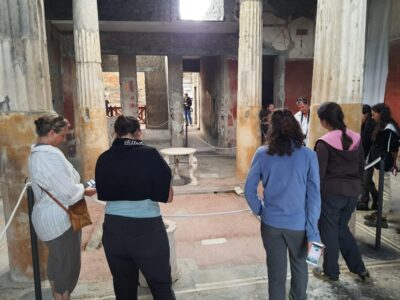
For the audio guide, you must go one step further. The physical audio guides are collected and returned at the official desk inside the Pompeii Archaeological Site, next to the ticket office at Porta Marina Superiore. The address given for that desk is Via Villa dei Misteri n.2 (Porta Marina Superiore).
And yes, they’ll ask for ID as a deposit to rent the audio guide device. Bring your passport or ID card.
Practical tip: several people found the arrows and meeting-point directions confusing. If you’re unsure, follow the guidance to the audio desk near Porta Marina Superiore rather than trying to guess which queue gets you the right thing.
The Audio Guide: App vs Device, and the Headphone Reality

You get two ways to listen:
- a digital audio guide app (instructions come with your booking confirmation), and
- a physical audio guide device if you selected that option.
Languages listed for the audio offer include: English, Italian, Chinese, Japanese, Portuguese, Russian, German, French.
Using the app
The app is convenient, especially if you like seeing text or want a backup when you don’t want to manage an extra device. One practical downside is phone battery life—if you’re listening for hours, your phone can drain faster than you expect.
Using the physical device
The physical unit gives you a stable experience without relying fully on your phone. But remember: headphones are not included, and Bluetooth headphones don’t work with the audio guide device. Plan for that before you arrive.
The “audio doesn’t match what I’m looking at” issue
A couple of people mentioned that the audio snippets can feel confusing at first, especially when you’re walking between sites. My advice is to treat the audio as a guide to help you orient, not as an exact pinpoint GPS. When you arrive at a major cluster (like a forum area, baths, theater zone, or a specific villa), then commit to listening to that segment before moving on.
Your Self-Guided Route: The Main Sights Worth Prioritizing

Pompeii doesn’t work as a single straight line. You’ll enjoy it more if you build a rough loop and let the audio guide support your route.
Here are the high-value stops to aim for, and why they matter.
Streets, neighborhoods, and the everyday city feel
Pompeii’s streets are preserved under volcanic ash, which is the big emotional hook of the place. The experience becomes easier to understand when you walk like a resident would—moving from commercial zones to public buildings, then into civic and religious spaces.
This is where the audio adds value most. It turns stone layout into real-life routine: where people gathered, what public areas looked like, and how daily life functioned.
The marketplace lunch moment
You can stand in the marketplace area and imagine Romans grabbing lunch there. This is one of those details that makes Pompeii feel less like a museum and more like a living city that stopped mid-day.
Public baths and mosaic floors
The baths are a strong choice because you can actually see what people used daily. Look for the mosaics and the layout that suggests how spaces flowed—again, audio helps connect the dots so you’re not just admiring floor art without context.
House of the Faun (Hellenistic-style highlight)
If you want a feel for wealth and design, prioritize the House of the Faun. It’s mentioned as a Hellenistic place in the guidance, and that label matters: it reminds you Pompeii wasn’t stuck in one cultural box. You’re looking at Roman life shaped by earlier Mediterranean influence.
Amphitheater: imagine the audience
The amphitheater is built for spectacle. Even if you’re not focused on architecture, it’s one of those places where you instantly get the scale—and the audio helps you imagine the crowd energy rather than just staring at seating tiers.
Temples: Venus, Apollo, Jupiter
The temples are perfect for a self-guided visit because you can bounce between them and build a mental map of where worship fit into city life. Look for Venus, Apollo, and Jupiter and let the audio connect the religious purpose to the urban layout.
Villa Mysteries and the suburban layer (Pompeii+)
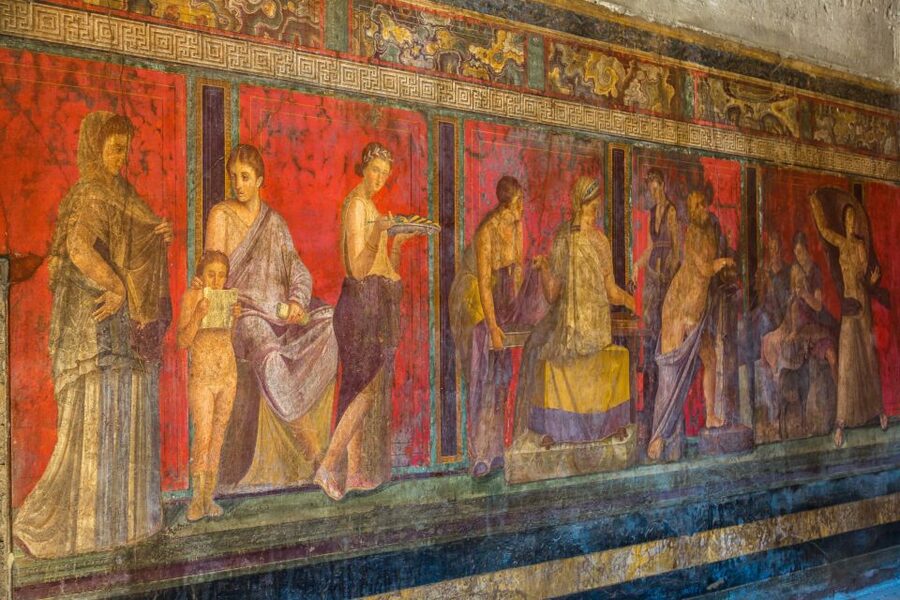
If you booked Pompeii+, the Villa of the Mysteries deserves attention. It’s known for its frescoes, and this is one of the reasons Pompeii+ exists: you’re stepping beyond the main streets into a more private world.
Villa of Diomedes and Villa Regina + Antiquarium (Pompeii+)
These suburban additions expand the story from public city life to lifestyle on the outskirts. The Villa Regina visit includes the Antiquarium, which is there to help you make sense of what you’re seeing rather than leaving you to guess.
Petrified bodies / casts zone (plan for the far end)
There’s a practical pacing issue here: the petrified bodies area is described as being at the furthest part of the site. Don’t treat it like a quick stop. If you want it, plan your day so you don’t run out of daylight or energy before you reach it.
How Long Should You Spend? One Day Means Picking Your Battles

The site is massive. Even without trying to see everything, it’s easy to lose hours.
Based on timing experiences shared, a useful planning guideline is:
- At least 3 hours if you want to see about half the site.
- Around 6 hours if you want a more complete loop with breaks.
If you arrive late or underestimate walking time, you can end up seeing only a fraction. This is why the ticket being self-guided is both a blessing and a trap: you’re in control, but control works best when you set realistic expectations.
If you chose Pompeii Express, you can still get a lot done. Just be honest: you won’t “tour the whole place” unless you’re comfortable with a marathon pace.
If you chose Pompeii+, you need a slightly more strategic mindset. The villas add distance, and you can lose part of them if you’re still moving through the main city when the last-entry time approaches.
Practical Tips That Make Pompeii Easier (and More Comfortable)

Pompeii is outdoors, and you’ll walk on uneven stone. Small choices matter.
Bring:
- Passport or ID card for the audio deposit
- Comfortable sports shoes (paths can be uneven)
- A hat and plan for shade breaks
- Water and snacks (there are places to eat, but you’ll still benefit from carrying essentials)
Heat shows up fast, especially in summer. One review tip was to bring a small umbrella or sunhat for shade. That’s not fancy advice—it’s just smart.
Also, use the site services:
- Free luggage storage is included, which helps if you don’t want to carry bags all day.
- Toilets are available in the park, but it helps to use a map and don’t assume you’ll spot one exactly when you need it.
If you’re relying on the audio guide app, treat your phone battery like it’s part of your itinerary. You might use both the app and the device as a backup plan if your phone dies.
Price and Value: Is This $40 Ticket a Smart Deal?

For $40 per person, the value mostly comes from two things:
1) Reserved entry means you’re not stuck scrambling on the day.
2) The audio guidance makes the self-guided experience feel organized, so you’re not just walking through ruins with no context.
That said, the price only really pays off if you use it. If you show up tired and late, you’ll pay for time you don’t get. If you’re choosing between Express and Plus, the value depends on what you actually want to see. Pompeii+ is the better match if villas like the Villa of the Mysteries are on your must-see list. Express is better if you’re focused on the main urban core and you prefer not to stretch your day.
Should You Book This Pompeii Entry Ticket With Audio?

Book it if you want freedom. You’ll like this format if you prefer to wander, stop for photos, and spend time thinking about what you’re seeing rather than racing between stops with a group.
Skip it or rethink your choice if you know you struggle with long walking days or you’re likely to arrive too late to reach the far zones. Pompeii rewards planning. If you want the villas and you booked Pompeii+, also respect the seasonal last-entry times, because time lost is time you can’t buy back.
If you’re aiming for a memorable Pompeii day that feels readable and not random, this ticket is a solid choice.
FAQ
What’s the difference between Pompeii Express and Pompeii+?
Pompei Express includes only the ancient city of Pompeii. Pompeii+ includes the ancient city plus suburban villas, specifically the Villa of the Mysteries, Villa of Diomedes, and Villa Regina in Boscoreale with the Antiquarium.
Is an audio guide included?
Yes. The experience includes a digital audio guide app. If you select the option with a physical audio guide, you’ll also get a physical audio device.
Where do I pick up the ticket and audio guide?
You collect your entry ticket by showing your voucher at the Porta Marina Superiore or Piazza Esedra ticket office. You pick up your audio guides at the official audio guide desk situated next to the ticket office at Pompeii Archaeological Site, Via Villa dei Misteri n.2 (Porta Marina Superiore).
Do I need ID to rent the audio guide?
Yes. A valid ID is required as a deposit to rent the audio guide device, and ID is asked for when picking it up.
Can I use Bluetooth headphones with the audio guide?
No. Bluetooth headphones don’t work with the audio guide device.
Are headphones included?
No. Headphones are not included.
What are the last entry times for Pompeii+?
Last entry for Pompeii+ is 3:30 p.m. in winter (Nov 1 to Mar 31) and 5:30 p.m. in summer (Apr 1 to Oct 31).
Do EU citizens under 18 get free admission?
Yes. Entrance fees are free for Pompeii for EU citizens under 18 years old, as well as for disabled citizens and their relatives.
How much time should I plan for a one-day visit?
Pompeii is large. A useful planning guide is to set aside at least 3 hours if you want to see about half, and closer to 6 hours if you want a more complete visit with time for breaks.
More Tickets and Entries in Pompeii Archaeological Site



More Tour Reviews in Pompeii Archaeological Site




More Pompeii Tours to Compare
More Pompeii Archaeological Site tours, freshly reviewed





Pompeii Tours, compared.
 ★ 4.8Pompeii: Entry Ticket and Guided Tour with an ArchaeologistFrom $3519,459 reviews
 ★ 4.8Pompeii: Small Group Tour with an ArchaeologistFrom $4012,264 reviews
 ★ 4.3Pompeii Ruins & Mount Vesuvius Day TourFrom $12011,459 reviews
★ 5.0Pompeii Small Group Tour with an ArchaeologistFrom $356,593 reviews
★ 4.3Pompeii Ruins & Mount Vesuvius Day TourFrom $12011,459 reviews
★ 5.0Pompeii Small Group Tour with an ArchaeologistFrom $356,593 reviews
 ★ 4.5Skip-the-line Pompeii – Small Group TourFrom $544,401 reviews
 ★ 4.6Naples or Sorrento: Full-Day Pompeii and Mount Vesuvius TourFrom $1044,235 reviews
 ★ 3.9Pompeii: Skip-the-line Entry Ticket with Audio Guide & MapFrom $433,153 reviews
 ★ 4.0Pompeii & Mt.Vesuvius Day Tour from Naples with Pizza LunchFrom $1492,901 reviews
Browse the lists this tour appears in