
Review · POMPEII TOURS
Pompeii: All-Inclusive Group Tour with an Archeologist Guide
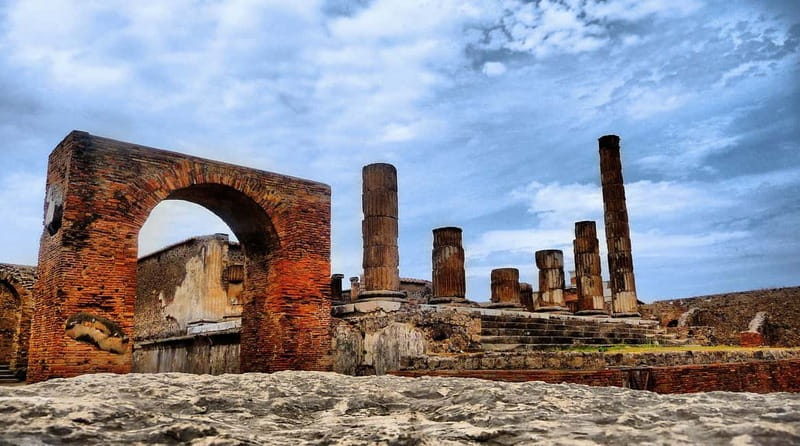
Pompeii is one of those places where you either wander blind or learn fast. This 2-hour guided route is built for the second option, using an expert guide to turn streets, homes, frescoes, and everyday objects into a clear story of what life looked like before the eruption in 79 AD. It’s also a practical way to see Pompeii’s biggest highlights without getting stuck for hours in the biggest crowds.
I especially liked the express ticketing approach paired with a tight itinerary. The tour hits the core areas people actually want to see, and the headset setup (reported as clear and easy to use) makes it easier to keep up even when groups are moving. I also appreciate the pacing: 2 hours gives you a strong foundation, then you can keep going on your own with better instincts for what to look for next.
One consideration: Pompeii can still be busy, and your group size can feel larger than expected on some departures. Also, on the first Sunday of each month entry is free, but tickets can’t be reserved ahead of time, so entry isn’t guaranteed.
In This Review
- Key highlights at a glance
- Why Pompeii works best with a guide and a tight time window
- Getting there: meeting points near Pompeii’s main entry areas
- Skip-the-line tickets: what you should realistically expect
- The 2-hour Pompeii route: Porta Marina to the Large Theatre
- Porta Marina: starting with a major gate view
- Foro Civile di Pompei: the civic heart for quick context
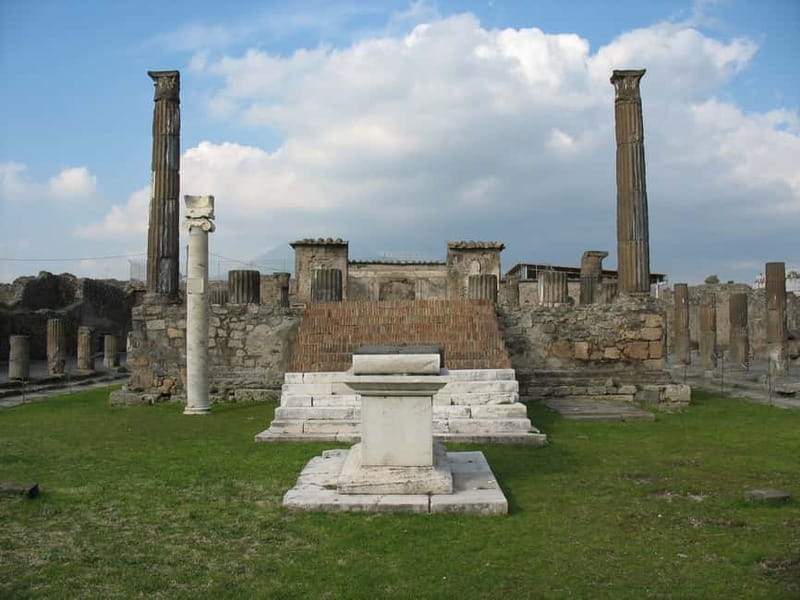
- Temple of Apollo and the Basilica: religion and administration vibes
- Macellum and Forum Baths: markets and everyday routines
- Houses with preserved walls: House of the Vettii and House of the Faun
- Vetutius Placidus House and Thermopolium, plus the Lupanare stop
- Large Theatre: finishing with a public performance space
- Frescoes, plaster casts, and why the eruption story hits differently
- Group size, headsets, and heat: how the experience feels in real life
- Value for $37: what you gain, and what you don’t
- Combo options: Pompeii + Vesuvius hike or Pompeii + Herculaneum day
- Pompeii + Vesuvius: transport, entrances, and a crater hike
- Pompeii + Herculaneum: two UNESCO towns in one day
- Who this tour fits best (and who might want something else)
- Should you book this Pompeii archaeologist group tour?
- FAQ
- How long is the Pompeii guided tour?
- Where do I meet the guide?
- Does the tour include entry tickets to Pompeii?
- Is the Herculaneum entrance ticket included?
- Is the Vesuvius entrance ticket and transfer included?
- What languages is the live guide available in?
- What should I bring?
- Are luggage or large bags allowed?
- Is this tour suitable for people with mobility impairments?
- Is Pompeii free on the first Sunday of the month?
Key highlights at a glance
- Express tickets designed to help you get inside with less waiting
- Certified archaeologist-style guiding in English or Italian
- A 2-hour “high-impact” loop through Pompeii’s most memorable stops
- Frescoes, houses, and plaster casts that make the eruption story hit harder
- Headset delivery that helps you hear clearly as you walk
- Optional combos that extend your day with Vesuvius crater hiking or Herculaneum
Which Pompeii ticket and guide? Compare a few more.
- Pompeii: Entry Ticket with Audio Guide★ 4.1 · 13,491 reviews
- Pompeii: Group Tour with an Archeologist Guide★ 4.4 · 2,361 reviews
- Pompeii Ruins Private Tour with Optional Skip-the-Line Entry★ 4.9 · 732 reviews
- Pompeii: Exclusive Tour with Archaeologist and Entry Tickets★ 4.9 · 634 reviews
Why Pompeii works best with a guide and a tight time window
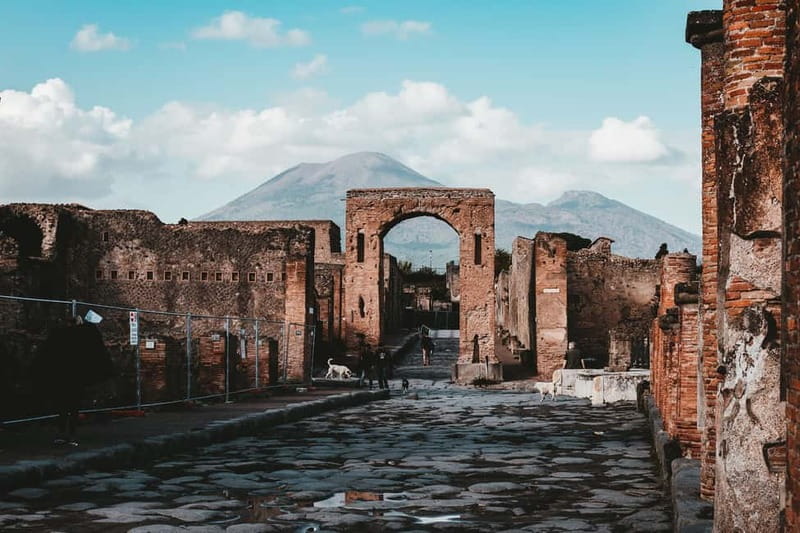
Pompeii is huge, and the ruins are easy to misread if you don’t know what you’re looking at. With this tour, you’re not just ticking off buildings. You’re learning how to connect the dots: the spaces people lived in, the decorative details preserved on walls, and the everyday rhythms that suddenly stopped.
What makes this format work is the time pressure done right. Two hours is long enough to understand the big picture, but short enough that you’re not fighting fatigue, heat, and attention drift. Guides also help you avoid the most confusing dead-ends so you spend your time where the evidence is strongest.
The big win for me is that the guide’s job is storytelling with structure. Instead of random facts, you get a route with a reason, so you leave with mental landmarks.
Getting there: meeting points near Pompeii’s main entry areas
Your meeting point can vary depending on which option you book, which is important to check ahead of time. You may meet at one of the following Pompeii-area locations: Biglietteria Ercolano, Tempio Travel (walking tour option), or a Pompeii pickup point such as Porta Marina or Foro Civile di Pompei.
Here’s the practical tip that can save time: if your meeting location is Tempio Travel, look for the agency building with a red logo and plan to take the stairs to reach the right floor. Getting this part wrong can easily cost 20 to 30 minutes, and Pompeii doesn’t “pause” for anyone.
Also note the walk from the meeting point is brief in the Pompeii option, so you’ll want to arrive a few minutes early. It’s not about being overly punctual; it’s about being ready when your guide is.
Skip-the-line tickets: what you should realistically expect
This tour includes express tickets to Pompeii, which is the right move for a site this in-demand. In best-case timing, you roll through faster and get started with the guide while other people are still stuck at entry.
That said, don’t treat express entry as magic. On very busy days, you might still encounter waits, including situations where group logistics slow things down. The good news is that the tour is designed around a clear, guided flow once you’re inside, so delays (if they happen) don’t usually destroy the whole experience.
One more heads-up: on the first Sunday of each month, entry is free, but tickets can’t be reserved ahead of time. Translation: entry is not guaranteed. If you’re traveling then and Pompeii is your must-see, you’ll want a plan B.
The 2-hour Pompeii route: Porta Marina to the Large Theatre
This is a guided loop with set stops, and each one is chosen because it helps you build a mental map fast.
More guided runs around Pompeii Archaeological Site
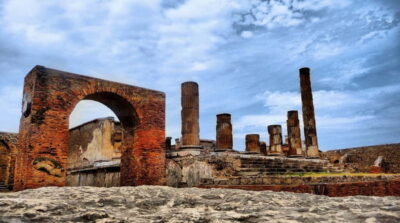

Porta Marina: starting with a major gate view
You begin near Porta Marina, the entry point that helps you orient immediately. Even before you reach the quieter interior spaces, the guide’s early framing matters because it gives you a sense of how the town connected to routes outside the city.
If you’re the type who gets lost in open ruins, this first stop is a lifesaver. It anchors the rest of the walk.
Foro Civile di Pompei: the civic heart for quick context
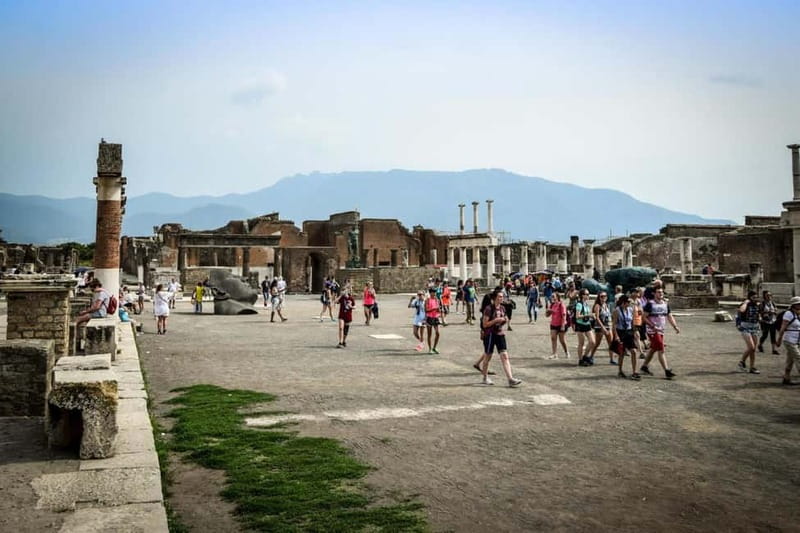
Next comes Foro Civile di Pompei, a natural spot to understand the city’s public side. This is where you start seeing Pompeii not as isolated buildings, but as a functioning urban layout.
You’ll get a focused explanation for why this kind of central space mattered to daily life, and it sets up the later “home and leisure” stops.
Temple of Apollo and the Basilica: religion and administration vibes
Then you move to the Temple of Apollo area and later the Basilica. These stops are short, but they’re useful because they show the mix of ceremonial and official spaces in the city’s core.
Think of these as “context builders.” Even if you don’t go deep into Roman theology or law, you’ll understand that Pompeii wasn’t just a place to live—it was also a place where public identity and governance played out.
Macellum and Forum Baths: markets and everyday routines
The tour continues through Macellum of Pompeii and the Forum Baths. This is where everyday life starts to feel tangible. A market-style stop helps you picture how people acquired food and supplies, while the baths-focused stop helps you understand the social rhythms tied to routine.
If you’ve ever visited ruins and wondered where people actually spent time, these two stops are the answer.
Houses with preserved walls: House of the Vettii and House of the Faun
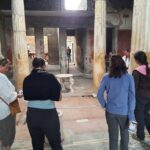
Two of the most memorable shifts on this tour come when you step into House of the Vettii and House of the Faun. These are prime for seeing how decoration and domestic space worked together—especially when you’re viewing frescoes and the kind of wall surfaces that survived.
These house stops are also where the guide’s storytelling makes a big difference. Without a guide, you can look at a house and still not understand what it meant in lived reality. With the guide, you’ll be able to “read” the space faster.
Vetutius Placidus House and Thermopolium, plus the Lupanare stop
After the bigger house interiors, you visit Vetutius Placidus House and Thermopolium and then the Lupanare stop. This part of the route is especially good for people who want Pompeii to feel human rather than museum-like.
The time spent here stays focused: enough to register what you’re seeing, and enough for the guide to connect it back to the everyday mix of routines, services, and social behavior.
Large Theatre: finishing with a public performance space
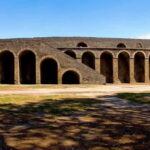
You end at the Large Theatre. It’s a strong way to close because you finish with something visibly built for gathering. The guide’s wrap-up here helps you understand Pompeii as a place where entertainment and community mattered, not just daily work.
When the tour ends, you’ll likely realize you’ve only skimmed the surface. That’s actually a good thing. Pompeii is one of those sites that rewards return visits or slow follow-ups once you know where to look.
Frescoes, plaster casts, and why the eruption story hits differently
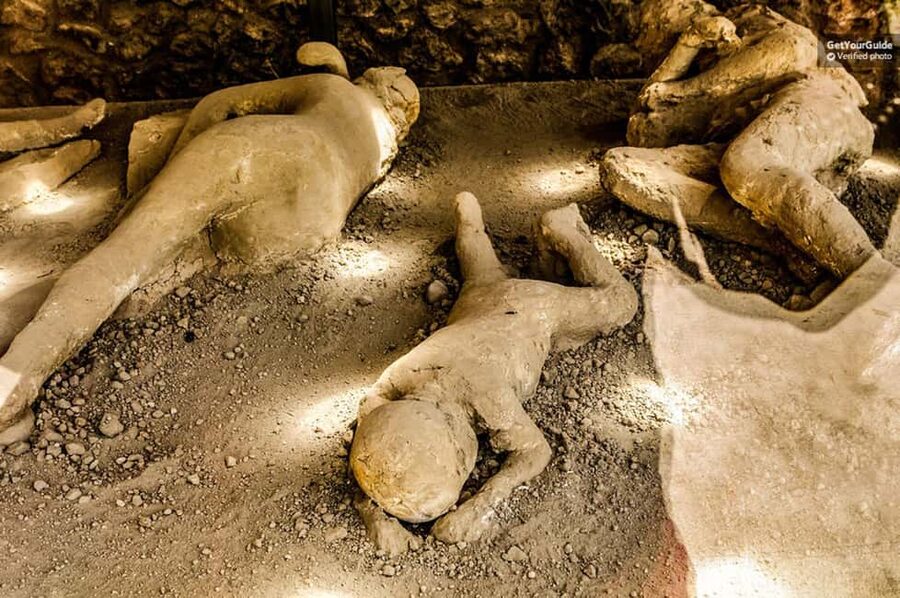
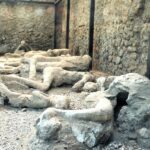
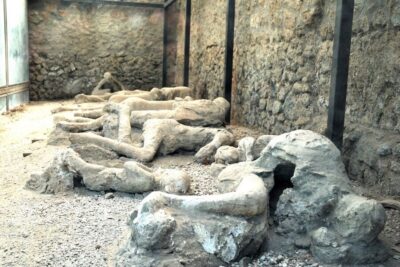
The highlights aren’t just architectural. You’re also set up to see the human side of what happened—particularly through the plaster casts that freeze the tragedy in a physical way. It’s the kind of moment that shifts Pompeii from “cool ruins” to something emotionally real.
You’ll also spend time around frescoes and well-preserved surfaces in homes and public-adjacent spaces. That matters because it shows Pompeii wasn’t stripped down to stone. Color and interior detail survived in fragments, and seeing those pieces in context helps you understand what people valued.
The guide’s role here is crucial. With the right explanations, plaster casts and painted walls stop being random “photo stops.” They become evidence that supports a clearer picture of the city’s final day and its abrupt end.
Group size, headsets, and heat: how the experience feels in real life
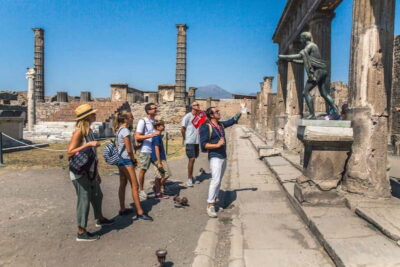
One of the most praised parts of this tour is the delivery: people often mention the guide using a microphone and headsets, with audio that’s clear enough to follow along while you’re walking. That’s a real quality-of-life factor at Pompeii, where people talk over each other when they don’t have sound support.
Guides with names like Igor, Ernaldo, Lena, Laura, Giuseppe, Maria, Alfonso, Antonio, and Gaye show up in the documented bookings for this experience. Meeting a guide like that can be a game-changer because they tend to keep the story structured while still staying friendly and human.
A practical note on group size: this is described as a small-group tour, but some departures are clearly larger than what you’d expect from the word small. If you’re sensitive to crowds, you might prefer quieter times of day.
And yes, the heat can be serious. One booking mentioned temperatures around +34 C in the shade, and the best advice is to treat Pompeii like an outdoor endurance event. Wear comfortable shoes, plan for sun coverage, and consider buying a simple sun shield outside the entrance area if you forgot one.
Value for $37: what you gain, and what you don’t

At around $37 per person, the value is mostly about conversion: you pay to turn confusing ruins into a clear route with expert interpretation. If you’re going to Pompeii for a half-day and you want to get the most out of it, paying for a guided structure is often worth it.
The trade-off is that a two-hour tour can only cover highlights. Even with a strong itinerary, you won’t cover everything, and you’ll still need time after the tour if you want to linger over individual houses, wall paintings, and side areas.
If you’re the kind of visitor who likes to wander, you’ll probably love the format because the tour gives you direction for your self-guided follow-up. If you’re the type who wants every detail and every corner, you might feel it’s too brief—especially on days when the start is delayed or the group size makes sightlines tough.
Combo options: Pompeii + Vesuvius hike or Pompeii + Herculaneum day
If you have more time, the tour offers two popular expansions.
Pompeii + Vesuvius: transport, entrances, and a crater hike
The Pompeii + Vesuvius option adds transportation and entrance tickets, plus guided access tied to Vesuvius. The big draw is the crater hike and the views over the Bay of Naples and surrounding scenery.
This is a great choice if you want the story from the ground up: you see the city first, then you climb toward the volcanic source behind it.
Pompeii + Herculaneum: two UNESCO towns in one day
The Herculaneum + Pompeii option combines two UNESCO sites in one packed day, including entrance tickets and a 2-hour guided visit of Herculaneum. This gives you a second lens on Roman life, and the tour description emphasizes beautifully preserved houses, frescoes, and mosaics.
If Pompeii is already on your list but you worry it might feel overwhelming, doing both sites can actually create balance. Two different towns, two different “feel,” and you’ll start seeing patterns in daily life across the region.
Who this tour fits best (and who might want something else)

This experience fits best if you:
- Have only a short time in Naples/Campania and want a high-impact route
- Want a guide to explain what you’re seeing without turning it into an academic lecture
- Like the idea of learning quickly, then exploring on your own afterward
- Travel with teens or kids who do better when someone keeps the story moving
You might want a different plan if you:
- Need accessibility accommodations, since this tour isn’t suitable for people with mobility impairments
- Want a full-day slow crawl through every corner of Pompeii
- Are uncomfortable with groups, especially on very busy departures
Should you book this Pompeii archaeologist group tour?
I’d book this if you want to leave Pompeii feeling oriented and emotionally connected, not just tired and photo-heavy. The combination of express entry, a professional guide, and a carefully chosen 2-hour highlight route makes it one of the most practical ways to see Pompeii with real meaning.
If you have the time and energy, I’d strongly consider upgrading to Pompeii + Vesuvius for the eruption-to-crater storyline, or Pompeii + Herculaneum if you want a second UNESCO site with preserved daily life.
Just go in with the right expectations: this is designed to be a best-of tour, not a complete Pompeii encyclopedia. For first-timers, that’s exactly the point.
FAQ
How long is the Pompeii guided tour?
The Pompeii tour is listed as a 2-hour guided experience. Depending on the option you choose, the total duration can extend up to 6 hours.
Where do I meet the guide?
The meeting point varies by option. The listed starting locations include Biglietteria Ercolano, Tempio Travel (walking tour option), Porta Marina, and Foro Civile di Pompei.
Does the tour include entry tickets to Pompeii?
Yes. You get express tickets to Pompeii included.
Is the Herculaneum entrance ticket included?
It is included only if you select the Pompeii + Herculaneum option. That option also includes a 2-hour guided tour in Herculaneum.
Is the Vesuvius entrance ticket and transfer included?
It is included only if you select the Pompeii + Vesuvius option. That option includes round-trip transfer from Pompeii to Vesuvius and an entrance ticket.
What languages is the live guide available in?
The live tour guide is available in Italian and English.
What should I bring?
Bring a passport or ID card and wear comfortable shoes.
Are luggage or large bags allowed?
No. Luggage or large bags are not allowed.
Is this tour suitable for people with mobility impairments?
No. It is not suitable for people with mobility impairments.
Is Pompeii free on the first Sunday of the month?
Yes, entrance is free on the first Sunday of each month, but tickets can’t be reserved ahead of time, so entry is not guaranteed.
More Tours in Pompeii Archaeological Site


More Tour Reviews in Pompeii Archaeological Site
More Pompeii Tours to Compare
More Pompeii Archaeological Site tours, freshly reviewed

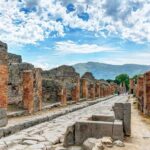

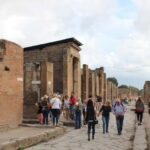
Pompeii Tours, compared.
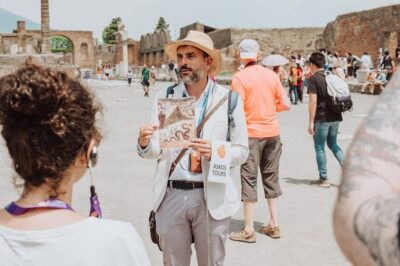 ★ 4.8Pompeii: Entry Ticket and Guided Tour with an ArchaeologistFrom $3519,459 reviews
 ★ 4.1Pompeii: Entry Ticket with Audio GuideFrom $4013,491 reviews
 ★ 4.8Pompeii: Small Group Tour with an ArchaeologistFrom $4012,264 reviews
 ★ 4.3Pompeii Ruins & Mount Vesuvius Day TourFrom $12011,459 reviews
★ 5.0Pompeii Small Group Tour with an ArchaeologistFrom $356,593 reviews
★ 4.3Pompeii Ruins & Mount Vesuvius Day TourFrom $12011,459 reviews
★ 5.0Pompeii Small Group Tour with an ArchaeologistFrom $356,593 reviews
 ★ 4.5Skip-the-line Pompeii – Small Group TourFrom $544,401 reviews
 ★ 4.6Naples or Sorrento: Full-Day Pompeii and Mount Vesuvius TourFrom $1044,235 reviews
 ★ 3.9Pompeii: Skip-the-line Entry Ticket with Audio Guide & MapFrom $433,153 reviews