

Review · POMPEII TOURS
Pompeii: Group Tour with an Archeologist Guide
Pompeii hits hardest with a real guide. This 2-hour skip-the-line group walk with a certified archaeologist turns the ruins into real scenes from Roman daily life.
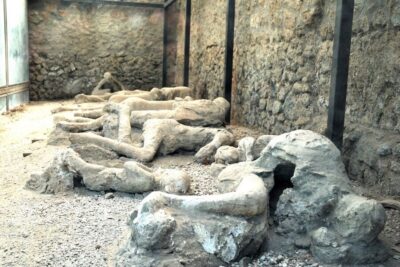
I especially like how the route prioritizes the places that explain how people lived: streets, public buildings, and standout homes. You also get time to appreciate the famous plaster casts and preserved details without getting lost. One heads-up: this tour covers only part of Pompeii, so you’ll want extra time later if you want more wandering on your own.
Tour highlights that matter
- Skip-the-line entry helps you start seeing things faster instead of queuing.
- Headsets for larger groups (when the group is over 14 people) make the narration workable.
- A tight 2-hour route hits Pompeii’s major public spots and a handful of top homes.
- Frescoes, everyday objects, and plaster casts help you picture the tragedy and the routine.
- Combo options let you extend the day to Vesuvius crater hiking or Herculaneum too.
- You get a finish-and-explore window after the guided portion for photos and slower wandering.
In This Review
- Why Pompeii Feels Different with an Archaeologist Guide
- Getting Oriented Fast: Meeting Points and Starting the Walk
- Your 2-Hour Pompeii Route: What Each Stop Teaches You
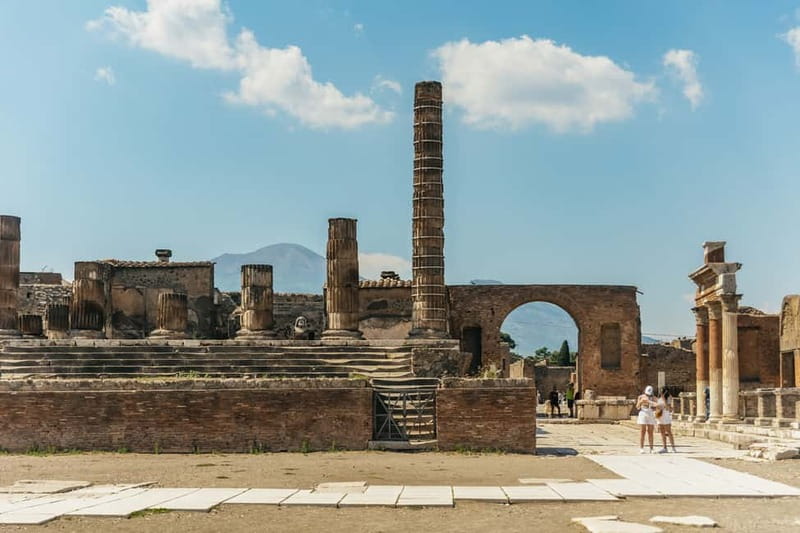
- Foro Civile di Pompei (30 minutes)
- Temple of Apollo (10 minutes) and the Basilica (10 minutes)
- Macellum (10 minutes) and Forum Baths (15 minutes)
- Houses That Make the Roman World Feel Real
- Frescoes, Casts, and Everyday Details: Why These Moments Stick
- Headsets, Group Size, and the Real-Life Pace
- Combo Options: Pompeii Plus Vesuvius or Herculaneum
- Pompeii + Vesuvius
- Pompeii + Herculaneum
- Pricing and Value: What $40 Really Buys
- Tips That Make This Tour Easier (and Better)
- What You Can Do After the Guided Portion
- Should You Book This Pompeii Archaeologist Tour?
- FAQ
- How long is the tour?
- Where do we meet for the Pompeii tour?
- Is skipping the ticket line included?
- Are entrance tickets included?
- Does the tour include a headset?
- What languages are the guides?
- Do I need to bring ID?
- Is entrance free on the first Sunday of each month?
- Is food included?
Why Pompeii Feels Different with an Archaeologist Guide
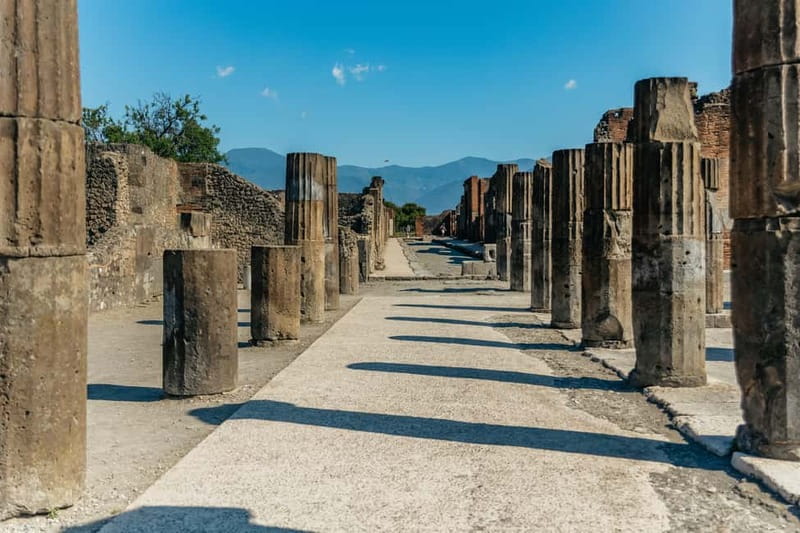
Pompeii is huge, and it’s also easy to end up staring at stones instead of understanding what you’re looking at. A guide’s job is to connect the layout, the objects, and the buildings into a story that makes sense in real time. That’s the payoff of this format: you walk a focused route with someone trained to explain what mattered and why.
In particular, I like the way the narration tends to be practical. You’re not only learning names of sites. You’re learning what these spaces were used for—public life, worship, shopping, dining, and private routines inside homes.
Which Pompeii ticket and guide? Compare a few more.
- Pompeii: Entry Ticket with Audio Guide★ 4.1 · 13,491 reviews
- Pompeii: Group Tour with an Archeologist Guide★ 4.4 · 2,361 reviews
- Pompeii Ruins Private Tour with Optional Skip-the-Line Entry★ 4.9 · 732 reviews
- Pompeii: Exclusive Tour with Archaeologist and Entry Tickets★ 4.9 · 634 reviews
Getting Oriented Fast: Meeting Points and Starting the Walk
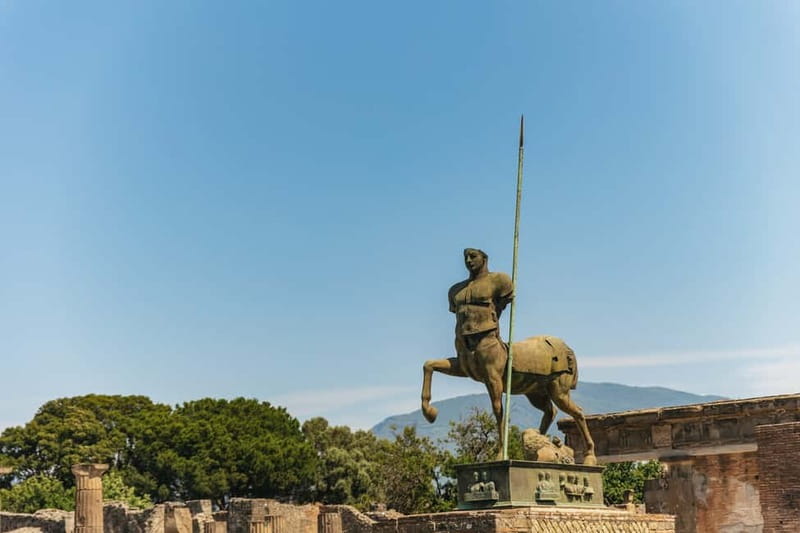
You’ll meet at one of two starting points depending on your booking: Biglietteria Ercolano (Tempio Travel) or Porta Marina in Pompeii. From Porta Marina, you’re only looking at a short walk to start the guided portion.
This matters more than it sounds. Pompeii is not one compact building you can circle in a few minutes. Getting situated early helps you settle into the pace and not lose time figuring out where your group is supposed to be.
Your 2-Hour Pompeii Route: What Each Stop Teaches You
This tour focuses on a classic set of Pompeii highlights, paced to fit into a 2-hour walk. It’s not trying to cover everything. It’s trying to cover the right things in the time you have.
Foro Civile di Pompei (30 minutes)
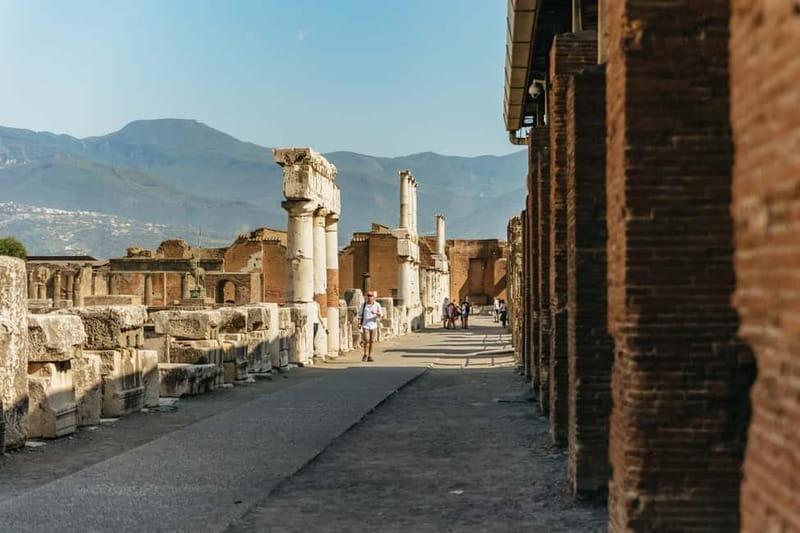
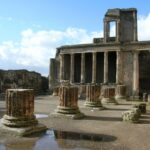
The Foro Civile is where you start to understand Pompeii as a city, not just an attraction. You get context for the civic and public side of life—where people gathered, discussed, and handled public business.
The time here is long enough to grasp the big picture without feeling rushed. If your goal is to leave Pompeii with a mental map, this first chunk helps.
Temple of Apollo (10 minutes) and the Basilica (10 minutes)
After the forum, you shift toward major civic and religious spaces. The Temple of Apollo gives you a sense of how worship blended into everyday city rhythms. The Basilica is a key stop for understanding how authority and legal/public functions worked.
These short segments are useful because they show patterns. Public architecture in Pompeii wasn’t random decoration; it shaped how people moved, met, and behaved.
More guided runs around Pompeii Archaeological Site

Macellum (10 minutes) and Forum Baths (15 minutes)
From civic spaces you move into daily needs: food and social life. The Macellum (a market area) helps you see Pompeii as a place where meals and commerce were built into the schedule. Then the Forum Baths connect daily routines to a social setting.
This is where the tour’s approach feels smart. You start to see how the city functioned beyond the disaster story. It’s about routine, gatherings, and repeated movements through shared spaces.
Houses That Make the Roman World Feel Real
The rest of the route leans into private life. Pompeii’s homes are often what people remember most, because you can connect architecture to human choices: decoration, space use, and how different rooms worked.
House of the Vettii (10 minutes)
This stop is about how wealth and taste showed up at home. In a guided setting, it’s easier to understand what you’re looking at and why certain rooms mattered more than others.
You’ll also get better at noticing details instead of just collecting photos.
House of the Faun (10 minutes)
This is another of Pompeii’s standout homes. The guide’s job here is to help you read the layout like a story: how you’d move through the space, what rooms were meant for display, and what parts were more practical.
If you’ve ever felt like ruins are too open-ended to interpret, this section usually changes that feeling.
Vetutius Placidus House and Thermopolium (5 minutes)
This one is a quick but important switch from “fancy home” to everyday food culture. A thermopolium points you toward places where meals and drinks were served to people on the move.
A short stop can still be valuable if you understand the role of the building. In this tour, the thermopolium helps balance the house heavy moments.
Lupanare (15 minutes)
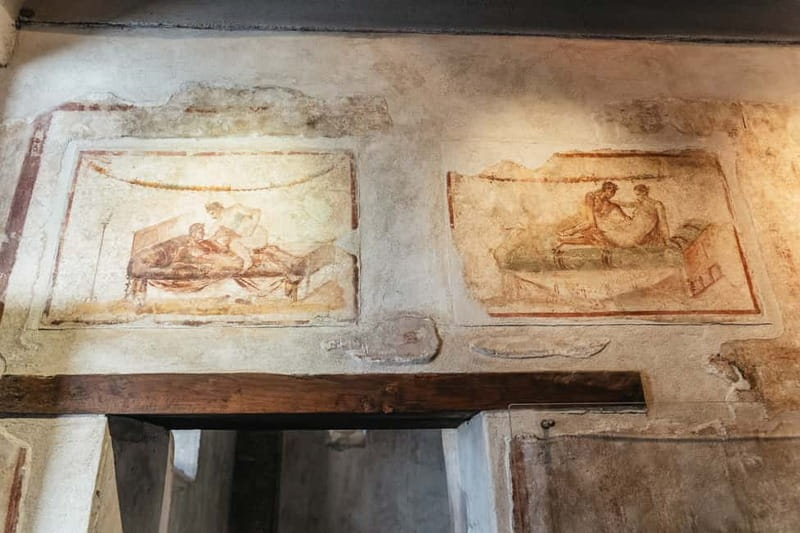
The Lupanare stop is often the most talked-about because of what it reveals about city life. With a guide, it’s less about shock and more about understanding how the business of sex worked in Pompeii, how rooms were set up, and how the space communicated with customers.
It’s also a reminder that Pompeii wasn’t just “pretty ruins.” It contained the same complicated realities every ancient city had.
Teatro Piccolo (15 minutes)
The Teatro Piccolo brings you back to public entertainment. It helps you see how leisure fit into city routines. And because it’s a clearly defined structure, it’s a good end-of-route anchor: you finish with a sense of how people spent time, not only how they lived day to day.
Frescoes, Casts, and Everyday Details: Why These Moments Stick
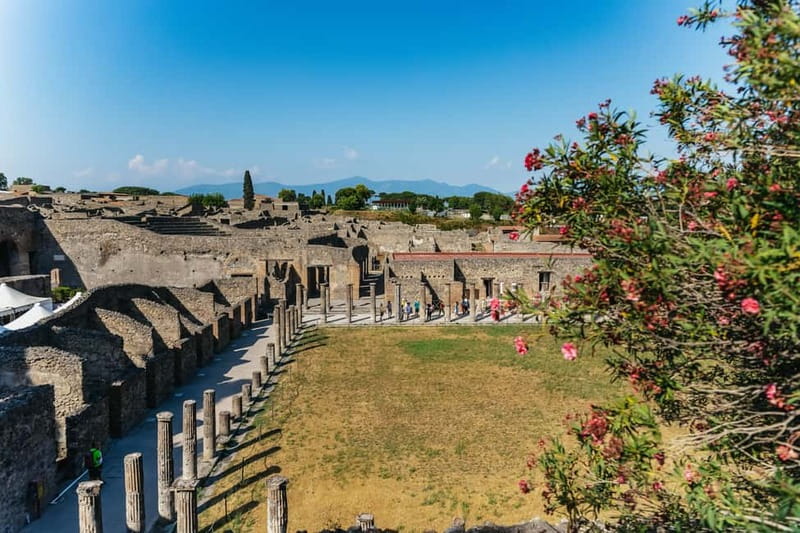
Pompeii’s power comes from preserved surfaces: frescoes, plaster casts, and details that make people feel close to their old routines. What I like about this tour’s pacing is that it gives you time to look and time to understand what you’re seeing.
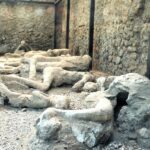
The plaster casts in particular help you grasp the scale of the tragedy without turning the site into only a horror story. Instead, you’re also seeing what people were doing in the city at the moment the eruption changed everything.
That combination is why many guides include stories with everyday elements—how water worked, why certain spaces were shaped a certain way, and what daily objects can suggest about routine.
Headsets, Group Size, and the Real-Life Pace
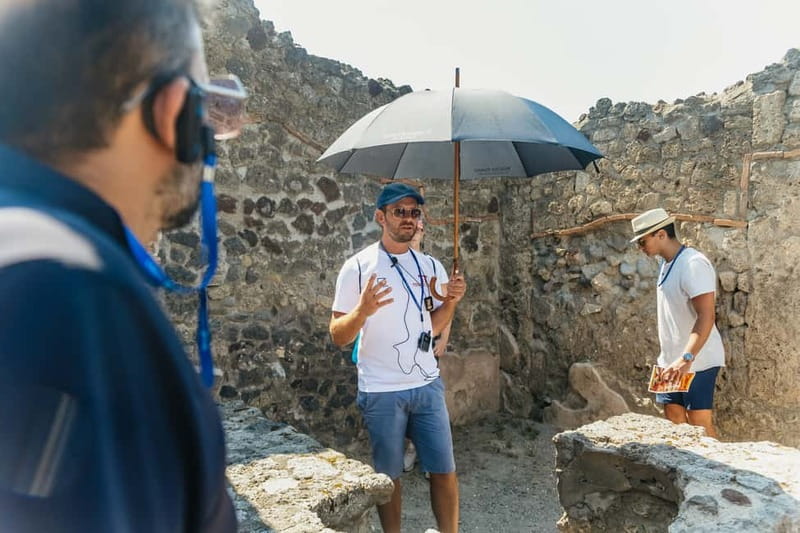
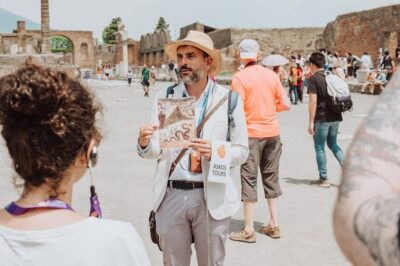
The tour uses whisper headsets when groups are larger than 14 people. This is one of those practical touches you’ll feel immediately: you don’t have to crane your neck toward the guide, and you’re less likely to miss key explanations.
One detail I’d plan around: the start can feel a little chaotic depending on where groups are gathering. It’s worth arriving a few minutes early and confirming the meeting point clearly for your option. At least one guide experience stood out for how organized the process felt once the tour actually began, and that’s what you should aim for.
In warm weather, the guide pacing also matters. More than one guide was praised for keeping the group moving while steering people toward shaded areas when possible.
Combo Options: Pompeii Plus Vesuvius or Herculaneum
If Pompeii is your centerpiece, the combo choices can turn it into a full, emotionally bigger day.
Pompeii + Vesuvius
This option adds transportation from Pompeii, plus entrance tickets for Vesuvius. You hike to the crater and get views over the Bay of Naples and the surrounding region.
This is the best fit if you want the “why” behind the ruins. Seeing the crater area in the same day helps the eruption story feel less abstract.
Pompeii + Herculaneum
This option pairs Pompeii with Herculaneum using a small-group guided visit and an entrance ticket for Herculaneum. You focus on well-preserved houses, frescoes, and mosaics—another Roman window into daily life before the eruption.
This is the best fit if you want contrast. Pompeii is famous, but Herculaneum can feel more intimate and well-preserved in certain ways, and the combo gives you more variety in what you walk through.
Pricing and Value: What $40 Really Buys

The price is listed at about $40 per person for the Pompeii guided portion, lasting 2 hours. For many people, that’s worth it because Pompeii is so big and so easy to misread without context.
Here’s the key value point: the money is buying expertise and structure, not just movement across the park. In a 2-hour slot, a guide can point out what to pay attention to, explain how spaces worked, and help you avoid spending your limited time on random browsing.
One important check: Pompeii entrance tickets are not simply bundled into the base tour price. You’re expected to select and add the entrance tickets to the Park once you check out after purchasing the tour. There’s also mention of an express entry ticket available as an add-on. So budget slightly beyond the $40 if you don’t already have tickets.
Tips That Make This Tour Easier (and Better)
If you do just a few things right, the experience improves a lot.
- Bring a passport or ID card. It’s specifically listed as what you need to have with you.
- Plan your photos. Pompeii is busy and sunny, so it helps to know the stops you’ll hit before you start wandering on your own afterward.
- Use the official entry process. One guide experience included a warning about ticketing confusion near an office that charged extra compared with normal tickets, so it’s smart to stick with the official park ticket lines.
- If you’re meeting up and you’re driving or arriving by rail, give yourself extra time. There was a practical mention of luggage storage near the station for a small fee, which can help if you don’t want to drag bags into the park.
- Pack for heat. Even with a short 2-hour walk, summer can be intense.
What You Can Do After the Guided Portion
A good guide doesn’t just lead you through the route. They also set you up to explore afterward with better direction. The tour is short enough that you typically finish while you’re still able to keep walking, grabbing lunch, and checking out additional streets and buildings on your own.
If you’re choosing between the 2-hour slot and a longer day, decide based on your walking tolerance. Pompeii is enormous. A 2-hour tour gives you the highlights and the meaning behind them. It doesn’t replace a longer independent stroll if you want to see more neighborhoods, more homes, or more of the side streets.
Should You Book This Pompeii Archaeologist Tour?
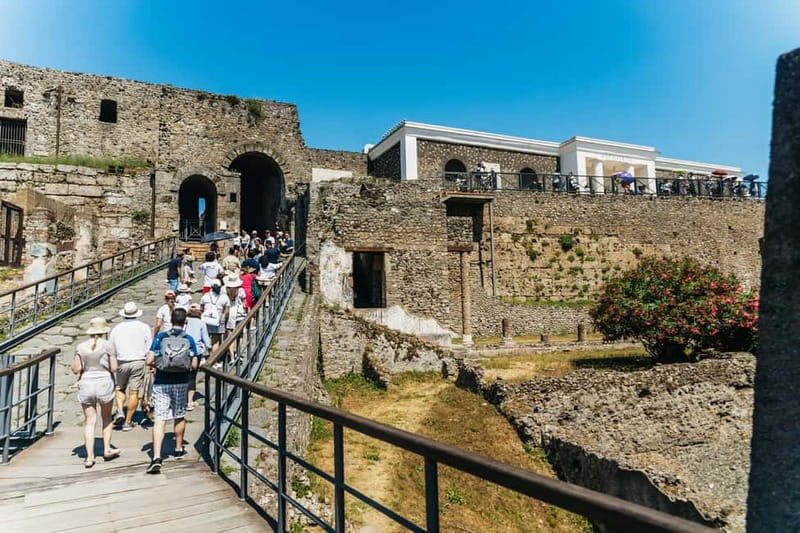
Book it if:
- You want a focused 2-hour route through Pompeii’s most instructive areas.
- You’re the type who learns best with storytelling and context, especially for houses, public spaces, and preserved details.
- You want skip-the-line entry so you can spend your time inside, not waiting.
Consider skipping or choosing a different format if:
- You have lots of time and prefer fully independent exploration with no structured route.
- You’re expecting the tour to cover the entire archaeological park. It won’t. This is a curated slice, designed to make Pompeii make sense quickly.
If you can, pair your guided walk with time afterward. That way you get both: clear explanations during the tour, and your own pace once you’ve built the mental map.
FAQ
How long is the tour?
The Pompeii guided tour is 2 hours. The total duration can be 2 to 6 hours depending on which option you select.
Where do we meet for the Pompeii tour?
Meeting points may vary by option. Two starting options listed are Biglietteria Ercolano (Tempio Travel) and Porta Marina in Pompeii.
Is skipping the ticket line included?
Yes, the tour includes skip the ticket line.
Are entrance tickets included?
The Pompeii express entry ticket is not included as an add-on. You’re also prompted to add entrance tickets to the Park after checkout. For combo options, entrance tickets are included for Herculaneum (Pompeii + Herculaneum) and entrance tickets for Vesuvius (Pompeii + Vesuvius), along with round-trip transfer for the Vesuvius option.
Does the tour include a headset?
Yes. Whisper headsets are included for groups bigger than 14 pax.
What languages are the guides?
The live tour guide is available in English and Italian.
Do I need to bring ID?
Yes. Bring a passport or ID card.
Is entrance free on the first Sunday of each month?
Yes, entrance is free on the first Sunday of each month, but tickets can’t be reserved ahead of time, so entry isn’t guaranteed.
Is food included?
No. Food is not included.
More Tours in Pompeii Archaeological Site

More Tour Reviews in Pompeii Archaeological Site
More Pompeii Tours to Compare
More Pompeii Archaeological Site tours, freshly reviewed

Pompeii Tours, compared.
 ★ 4.8Pompeii: Entry Ticket and Guided Tour with an ArchaeologistFrom $3519,459 reviews
 ★ 4.1Pompeii: Entry Ticket with Audio GuideFrom $4013,491 reviews
 ★ 4.8Pompeii: Small Group Tour with an ArchaeologistFrom $4012,264 reviews
 ★ 4.3Pompeii Ruins & Mount Vesuvius Day TourFrom $12011,459 reviews
★ 5.0Pompeii Small Group Tour with an ArchaeologistFrom $356,593 reviews
★ 4.3Pompeii Ruins & Mount Vesuvius Day TourFrom $12011,459 reviews
★ 5.0Pompeii Small Group Tour with an ArchaeologistFrom $356,593 reviews
 ★ 4.5Skip-the-line Pompeii – Small Group TourFrom $544,401 reviews
 ★ 4.6Naples or Sorrento: Full-Day Pompeii and Mount Vesuvius TourFrom $1044,235 reviews
 ★ 3.9Pompeii: Skip-the-line Entry Ticket with Audio Guide & MapFrom $433,153 reviews