
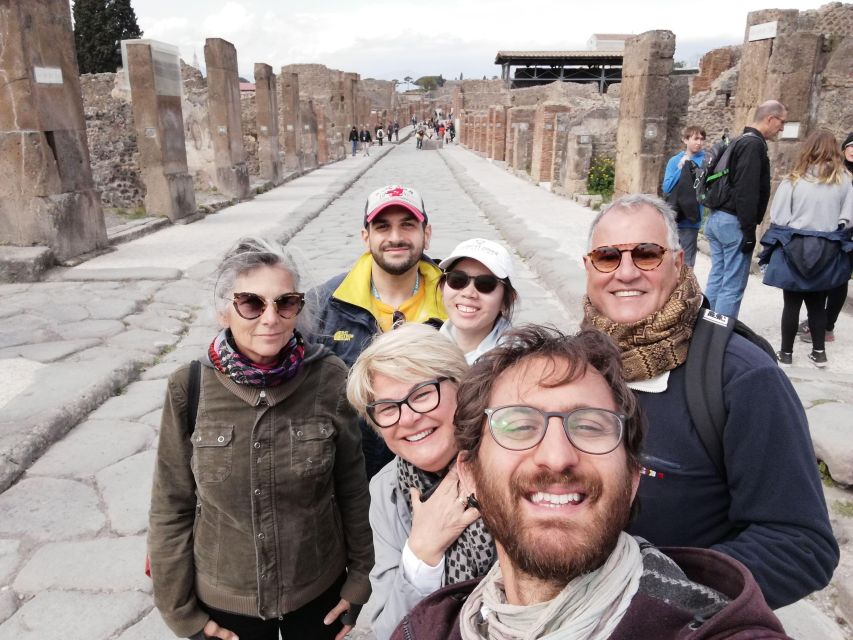
Review · POMPEII TOURS
Pompeii 2-Hour Private Tour
Pompeii gets real fast. This private 2-hour walk turns a huge archaeological site into a clear, story-led route through Roman daily life. I especially like how the tour focuses on the people behind the stones, not just famous monuments, and it’s run like a proper guided visit from the moment you meet your guide at Via Villa dei Misteri.
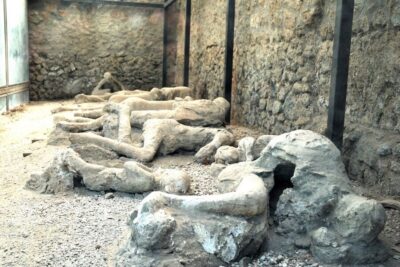
My two favorite parts are the Forum-and-Temple-of-Jupiter focus (you get the why behind the politics, religion, and crowds) and the plaster casts that make the 79 AD disaster hit on a human level without turning it into spectacle. It’s the kind of orientation that helps you understand what you’re seeing as you keep walking on your own after.
One drawback to consider: it’s only 2 hours, and you’ll be walking through uneven ruins, so if you want a slower, deeper museum-style visit, you may feel a bit rushed.
In This Review
- Key things to know before you go
- Meeting at Villa dei Misteri: the easiest way to start Pompeii
- Two hours in Pompeii: a smart pace for first-timers
- The Forum and Temple of Jupiter: the city’s power center, explained
- Street life meets social class in Pompeii’s homes and ruins
- The plaster casts: what 79 AD really looks like
- How guides like Stefano and Antonietta change the whole visit
- What to bring and what to leave behind
- Price and value: what $181.26 per person buys you
- Who should book this Pompeii private tour
- Should you book the Pompeii 2-Hour Private Tour?
- FAQ
- Where do I meet my guide for this Pompeii private tour?
- What time should I arrive at the meeting point?
- How long is the tour?
- Does the tour include entrance tickets?
- Is there a skip-the-line option?
- What languages are the guides available in?
- What should I bring to Pompeii?
- Are there restrictions on bags or luggage?
- Is this tour wheelchair accessible?
Key things to know before you go
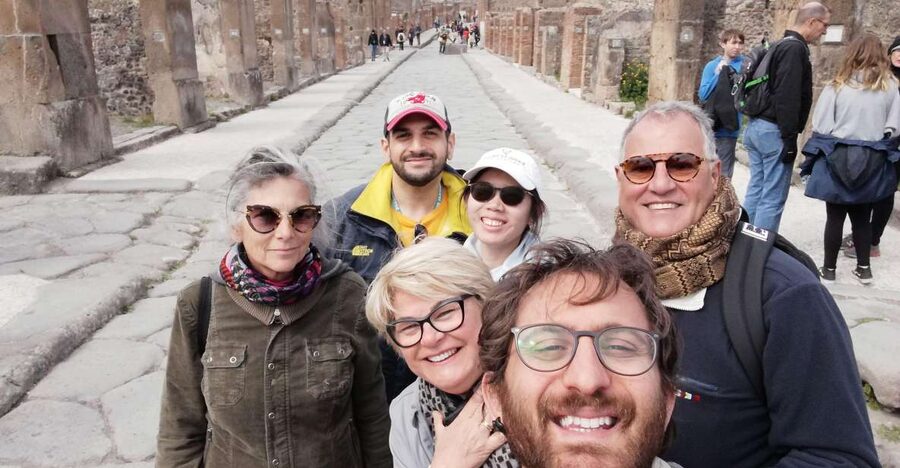
- Meet at the Villa dei Misteri train station with a name sign, so you can get inside quickly
- Forum + Temple of Jupiter are front and center, not buried in the later parts of the site
- Everyday Roman life gets explained clearly, from slaves and ordinary people to very wealthy families living close by
- Rich houses and street-level ruins help you connect social class to the physical city layout
- Plaster casts of victims give you a powerful, grounded way to understand what happened in 79 AD
- Small private groups (often around 8–10) make questions easy and pacing smoother
Which Pompeii ticket and guide? Compare a few more.
- Pompeii: Entry Ticket with Audio Guide★ 4.1 · 13,491 reviews
- Pompeii: Group Tour with an Archeologist Guide★ 4.4 · 2,361 reviews
- Pompeii Ruins Private Tour with Optional Skip-the-Line Entry★ 4.9 · 732 reviews
- Pompeii: Exclusive Tour with Archaeologist and Entry Tickets★ 4.9 · 634 reviews
Meeting at Villa dei Misteri: the easiest way to start Pompeii
The tour starts in front of the Pompei Villa dei Misteri train station on Via Villa dei Misteri, 2. Your guide will be holding a sign with your name on it, which sounds simple, but it matters in Pompeii. Meeting confusion can eat up your energy fast, especially in peak season.
Plan to arrive 10 minutes early. That buffer gives you time to orient yourself, use the restroom if you need it, and settle into the right meeting spot before the group moves. This is also where the guide’s communication style shows—some guides coordinate closely by message ahead of time, then meet you right at the station as promised.
The route begins immediately from this entry area, which is smart. Pompeii is big. Starting at the right point with a guided plan helps you feel like you’re seeing Pompeii as a living town, not just crossing coordinates on a map.
One more practical note: keep bags minimal. The tour involves real walking, and Pompeii restricts large luggage in the archaeological areas. If you travel light, you’ll feel less hassled from minute one.
Two hours in Pompeii: a smart pace for first-timers
A 2-hour private tour is not trying to cover Pompeii. It’s trying to give you a working framework. That’s the key difference between a rushed highlights scramble and a guide-led orientation.
Because it’s private (with a small group feel), you don’t have to fight your way through the main bottlenecks just to hear basic context. The tour also includes skip-the-ticket-line entry, so you can spend more time looking and asking instead of waiting.
This pace works best if you’re doing Pompeii during a day trip from Naples or Sorrento, or if you only have a short window on your itinerary. You’ll see the big anchors (Forum and major temple areas), and you’ll also get “how it worked” explanations that make the remaining ruins easier to interpret on your own.
If you have kids, this length tends to fit well too. Several guides mention tailoring the tone and detail level, which is helpful when the site covers things like the old red-light district. You don’t need to be an ancient history expert to enjoy it—you just need someone to translate the layout into everyday life.
The Forum and Temple of Jupiter: the city’s power center, explained

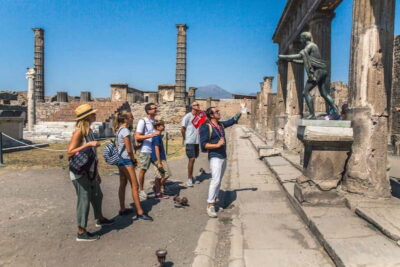
The heart of the guided experience is the Forum, where Pompeii’s religious, cultural, and political life played out in public. This is where a site like Pompeii stops being “cool ruins” and becomes a real picture of civic routine.
A good guide will walk you through what the Forum meant: who gathered there, what people did there, and how decisions and ceremonies shaped daily life. Instead of listing facts, the tour connects the architecture to behavior—where you’d likely see people discuss issues, how formal and everyday spaces overlap, and why this area sat at the center of the town’s identity.
From there, the route also includes iconic religious framing such as the Temple of Jupiter. Even if you’re not a theology person, the explanation helps you see why a temple wasn’t only about worship—it was also a landmark for status, order, and community power.
If you’re visiting for the first time, this is the ideal strategy. You’ll come away understanding Pompeii’s “center of gravity,” which makes everything you see later feel less random.
Street life meets social class in Pompeii’s homes and ruins
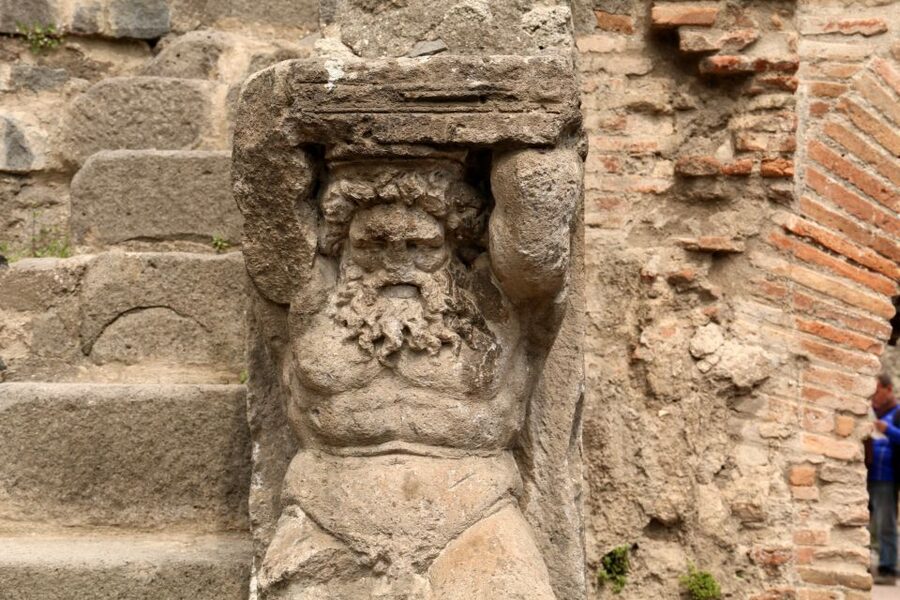
Pompeii is famous for its preservation, but what makes it unforgettable is the mix of ordinary people and very rich families living close enough to hear each other’s world. A strong guide brings that contrast into focus.
You’ll spend time in areas tied to daily rhythms: shops and street life at ground level, plus access to some of the city’s richer houses. These homes aren’t just decorative. The tour explanations help you connect layout to lifestyle—where residents would spend time, how wealth shaped space, and how the city’s social structure showed up in architecture.
One of the most useful parts for me is how the guide frames the social spectrum you’d see in daily Pompeii: slaves, ordinary citizens, and the wealthier classes. The idea is not to shock you with inequality, but to show how close it all was. Pompeii makes the social ladder visible right in front of you.
In some cases, the tour also includes areas tied to Roman leisure and bodily life, like Terme Stabiane and the Lupanar area. If your guide includes those stops, it helps you see Pompeii as a whole town, not just a religious and political backdrop.
Rather go private? More options in Pompeii Archaeological Site
The plaster casts: what 79 AD really looks like
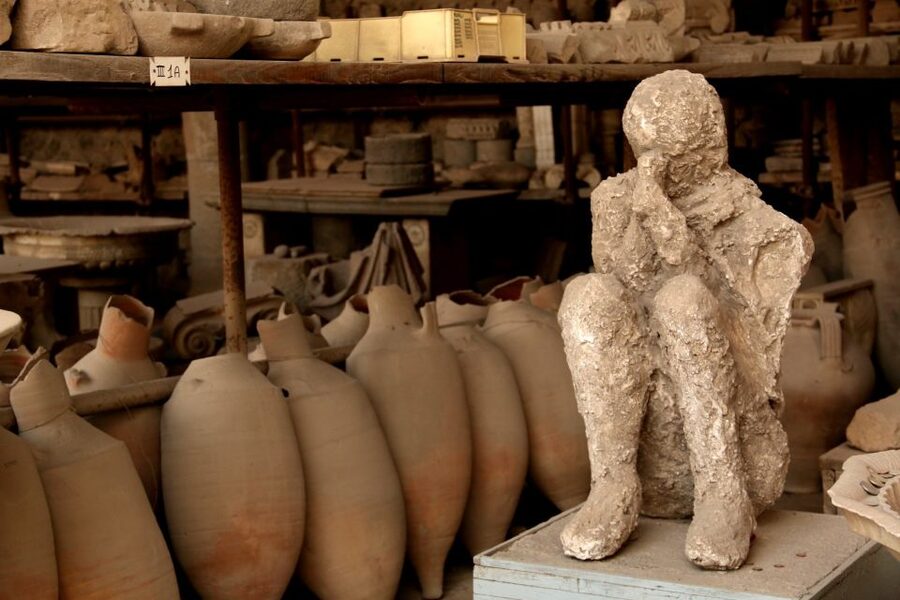
The most emotionally heavy stop is also one of the most important: seeing the plaster casts of people buried under volcanic ash. It’s not just an artifact. It’s a moment of stillness that makes the scale of the disaster feel immediate.
A good guide helps you navigate this carefully. You’ll learn what the casts represent and how the eruption transformed the city. The goal is understanding, not sensationalism. That difference is huge at Pompeii, because the site invites strong reactions.
What I like about this part of the tour is the way it turns preservation into meaning. When you see the casts alongside the ruins of houses and streets, you start to sense how suddenly life changed—how a town’s everyday structure became a record of one moment in time.
If you’re sensitive to heavy scenes, plan to take your time here. Don’t rush photos. Let the explanation settle, then continue at your own pace after the tour ends.
How guides like Stefano and Antonietta change the whole visit
A private Pompeii tour rises or falls on the guide. This one is built around a licensed, English-speaking guide (with guides also able to speak Italian and Spanish), which matters when you want accurate context.
The repeated theme in strong experiences is pacing and responsiveness. Guides like Stefano are praised for being able to answer questions without dumping information. People also note that he navigates to stay ahead of crowds, which keeps the tour comfortable and keeps you from losing time.
Then there’s Antonietta (often called Anto), described as high-energy and supportive, especially when visitors have trouble finding the meeting spot. That’s a real-world skill. Pompeii can be confusing, and a guide who helps you arrive smoothly prevents stress from turning the whole day sour.
Another practical win: guides can be flexible. If you care more about certain themes—like family life, Roman engineering, or aspects of Pompeii that tourists sometimes skip—your guide can adjust within the time window. You may also see questions handled in a thoughtful way for families, including asking children or parents how much detail they want.
If you want Pompeii to feel like a story you can follow, this is the type of guide interaction that makes it work.
What to bring and what to leave behind
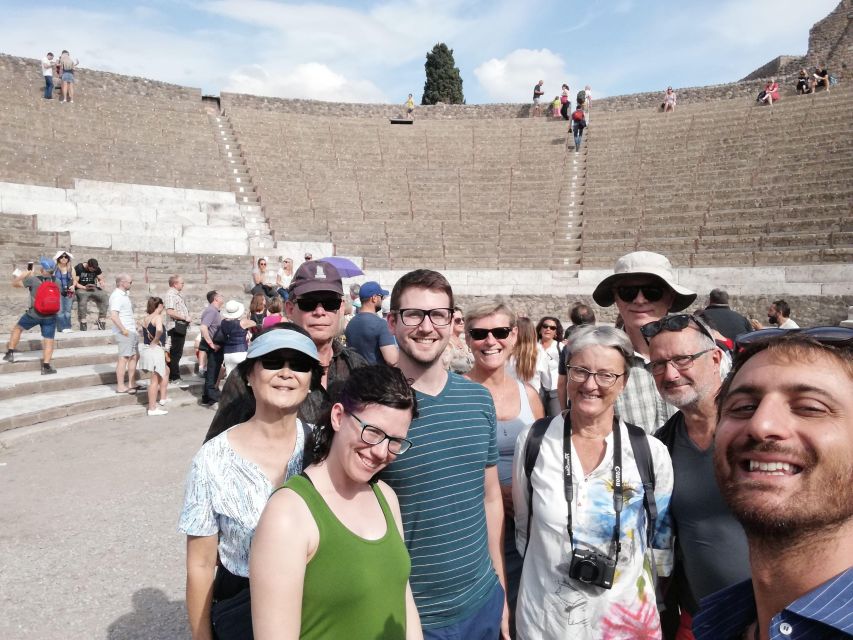
Pompeii is outdoors, mostly walking over uneven surfaces, and the sun can be intense. For this tour, bring:
- Comfortable shoes with good grip
- Hat and sunscreen
- Water (a bottle for each person)
- Passport or ID card (important for visitors under 18 to access free admission for excavation areas)
There’s also a bag rule you should treat seriously. Large items are not permitted in the archaeological areas—specifically, bags/backpacks/luggage exceeding 30x30x15 cm are not allowed inside Pompeii sites. The good news is that there are free cloakrooms at access points where you can leave personal belongings.
One more tip: travel light. Even when the restrictions don’t stop you, carrying bulky bags can slow you down and make you feel rushed.
About accessibility, the info you’ll see includes wheelchair accessibility, but it also says it isn’t suitable for wheelchair users or people with mobility impairments. If that affects you, it’s worth checking directly with the provider before booking so you don’t get surprised by real-world walking conditions.
Price and value: what $181.26 per person buys you
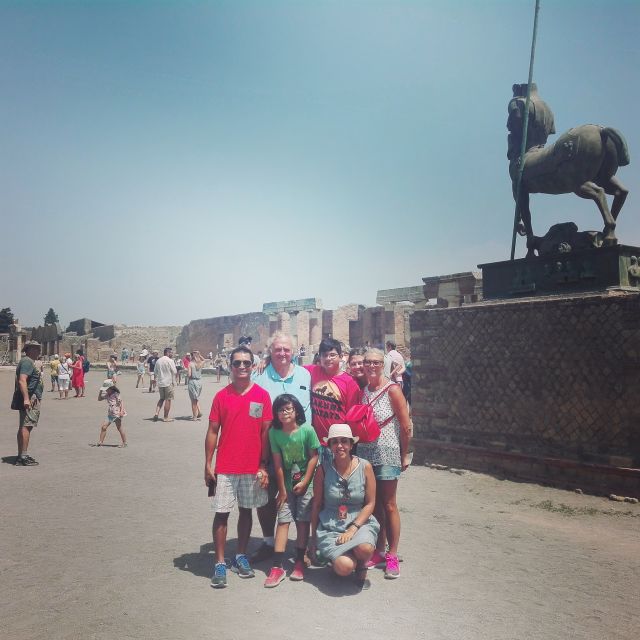
At $181.26 per person for a 2-hour private tour, you’re paying for three big things: a licensed guide, entry tickets, and time saved.
First, the guide. Pompeii isn’t hard to visit. Pompeii is hard to understand without context. A good guide turns random ruins into a connected mental map, especially at the Forum and major temple areas.
Second, the skip-the-ticket-line benefit. Waiting in queues during a short visit can cut your time fast. By reducing that downtime, the tour protects your limited hours.
Third, it’s private. In Pompeii, that’s often what you really want—being able to ask questions, hear the guide without strain, and keep a pace that works for your group. Reviews highlight this small-group feel and the ability to ask questions easily.
If you love history and you want a firm foundation for self-exploring afterward, this price can feel reasonable. If you’re visiting slowly and you don’t mind figuring things out on your own, you might spend less. But you’ll likely trade away the context that makes Pompeii click.
Who should book this Pompeii private tour
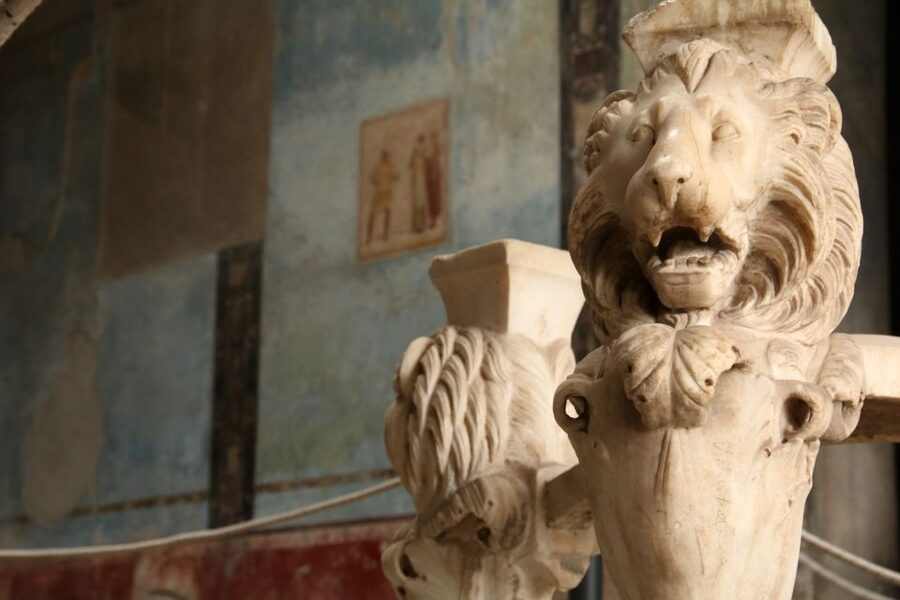
I’d book this if you:
- have limited time and want the key anchors of Pompeii in a focused route
- prefer a guided orientation rather than wandering with a map
- want to understand daily life themes like social class, public civic space, and how people used buildings
- are visiting with family and want explanations paced for different ages
You might skip or rethink it if you:
- need a very slow, low-walking experience
- want to spend a lot longer in one neighborhood or house complex
- expect a full “every corner” Pompeii experience (2 hours is not that)
Should you book the Pompeii 2-Hour Private Tour?
Yes, if your goal is to leave Pompeii with a clearer understanding of what you’re seeing. This tour does a rare thing: it prioritizes the structures and stories that help you keep making sense of the site after the guide steps away.
Book it if you value a confident route, skip-the-line entry, and a guide who can answer questions. If mobility is an issue, check details about real walking conditions before committing. For most first-timers, especially those on a tight schedule, this is a solid way to get more meaning out of your time at Pompeii.
FAQ
Where do I meet my guide for this Pompeii private tour?
You meet in front of the Pompei Villa dei Misteri train station, on Via Villa dei Misteri (address: Via Villa dei Misteri, 1), and the guide holds a sign with your name.
What time should I arrive at the meeting point?
You should arrive about 10 minutes before the start time and look for the guide holding a sign with your name.
How long is the tour?
The tour lasts 2 hours (starting times vary, so check availability).
Does the tour include entrance tickets?
Yes. The price includes entry tickets along with the licensed guide.
Is there a skip-the-line option?
Yes. The tour is described as skip the ticket line.
What languages are the guides available in?
The live tour guide is available in English (and also Italian and Spanish).
What should I bring to Pompeii?
Bring a passport or ID card (especially if anyone under 18 needs free admission), comfortable shoes, a hat, sunscreen, and water (a bottle for each person).
Are there restrictions on bags or luggage?
Yes. Luggage or large bags are not permitted in the archaeological areas. Bags larger than 30x30x15 cm are not allowed, and free cloakrooms are available at access points.
Is this tour wheelchair accessible?
The information includes both wheelchair accessibility and a note that it is not suitable for wheelchair users or people with mobility impairments. You’ll want to confirm suitability with the provider based on your needs.
More Tours in Pompeii Archaeological Site


More Tour Reviews in Pompeii Archaeological Site
More Pompeii Tours to Compare
More Pompeii Archaeological Site tours, freshly reviewed


Pompeii Tours, compared.
 ★ 4.8Pompeii: Entry Ticket and Guided Tour with an ArchaeologistFrom $3519,459 reviews
 ★ 4.1Pompeii: Entry Ticket with Audio GuideFrom $4013,491 reviews
 ★ 4.8Pompeii: Small Group Tour with an ArchaeologistFrom $4012,264 reviews
 ★ 4.3Pompeii Ruins & Mount Vesuvius Day TourFrom $12011,459 reviews
★ 5.0Pompeii Small Group Tour with an ArchaeologistFrom $356,593 reviews
★ 4.3Pompeii Ruins & Mount Vesuvius Day TourFrom $12011,459 reviews
★ 5.0Pompeii Small Group Tour with an ArchaeologistFrom $356,593 reviews
 ★ 4.5Skip-the-line Pompeii – Small Group TourFrom $544,401 reviews
 ★ 4.6Naples or Sorrento: Full-Day Pompeii and Mount Vesuvius TourFrom $1044,235 reviews
 ★ 3.9Pompeii: Skip-the-line Entry Ticket with Audio Guide & MapFrom $433,153 reviews
Browse the lists this tour appears in