
Review · POMPEII TOURS
Pompeii Skip-the-Line Tour with Expert Archeological Guide
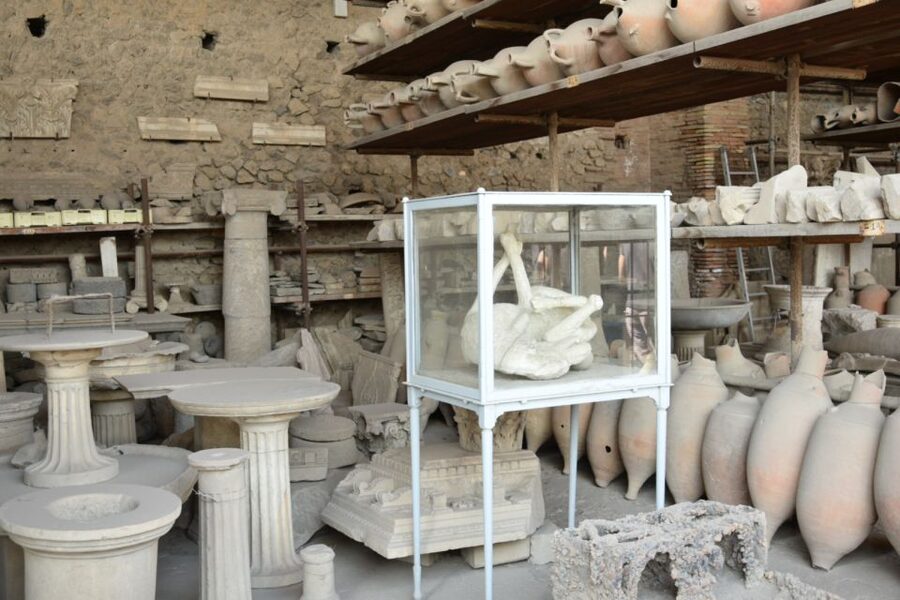
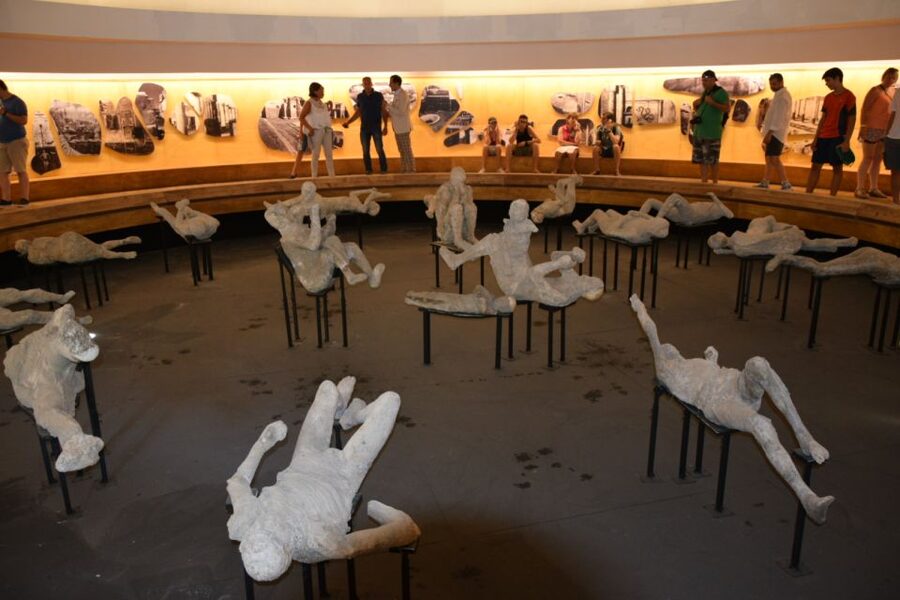
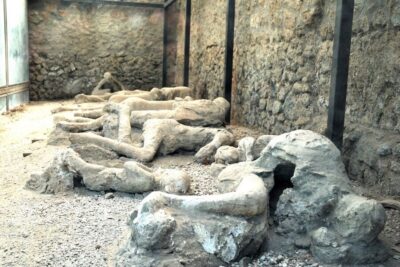
Pompeii is history you can walk through. This skip-the-line Pompeii tour pairs a licensed archaeologist with a smart route through the city’s temples, villas, baths, and markets, so you don’t just see stones—you learn how people ate, worked, bathed, and worshiped. I also like the poignant inclusion of the plaster casts of Vesuvius victims, which turns the ruin into a human story instead of a postcard. One thing to watch: the small ear pieces (used to hear the guide) can be uncomfortable or unreliable, so bring patience and be ready to lean in.
You’ll spend about two hours in the ruins, with photo stops and longer looks in the big “wow” areas like the House of the Vettii and the House of Menander. Before you enter Pompeii, there’s a quick cameo workshop visit where you can see artisans carve shell by hand, plus a restroom break. It’s a practical setup for a first Pompeii visit—though the route focuses on core highlights rather than every single major site.
In This Review
- Key things you’ll remember
- Where You Meet and How You Get Into Pompeii Faster
- The Cameo Workshop Stop: A Calm Start Before the Ruins
- First Views: Theatres, Street Food Stops, and Quick Photo Moments
- The Forum Area: Civic Life, Markets, and the City’s Busy Core
- The House of the Vettii: Where Private Luxury Shows Its Teeth
- The House of Menander: Daily Reality Behind the Decorative Walls
- Baths and Roman Hygiene: Forum Baths in Detail
- Temples of Jupiter and Apollo: Short Stops, High Meaning
- How Much of Pompeii You’ll Actually See (and What’s Not Included)
- Price and Value: Is $31 a Fair Deal for Pompeii?
- Guide Quality and Group Size: What You Can Hope For
- Practical Tips to Make Your Day Smoother
- Should You Book This Pompeii Skip-the-Line Tour?
Key things you’ll remember
- Skip-the-line entry plus a real expert on site so you waste less time and get more meaning per minute
- Plaster casts tied to the 79 AD eruption for an emotional, not just educational, experience
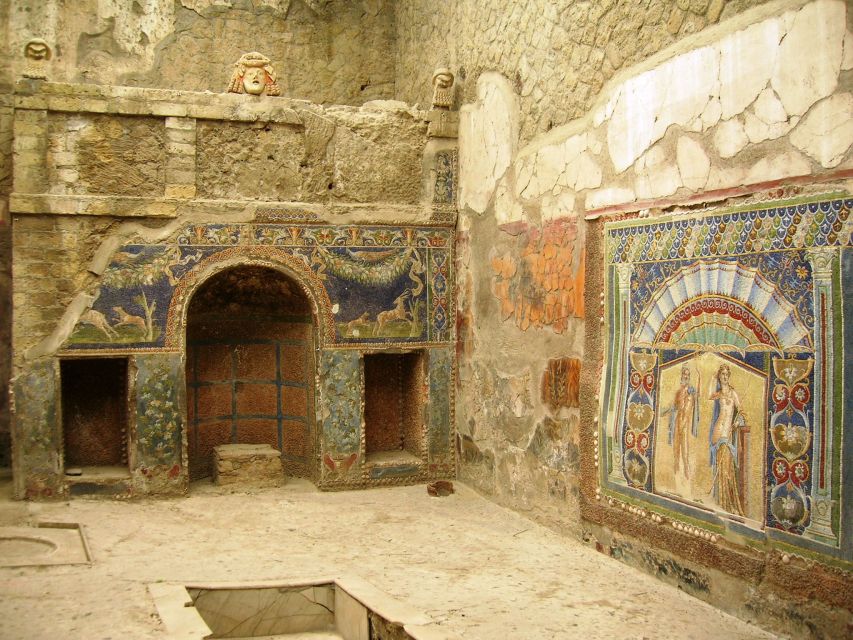
- House tours with real house details including daily life in two of Pompeii’s most famous residences
- Baths and markets that explain routine not just monuments
- A cameo workshop stop that gives you a light cultural break before the heavy stuff
Which Pompeii ticket and guide? Compare a few more.
- Pompeii: Entry Ticket and Guided Tour with an Archaeologist★ 4.8 · 19,459 reviews
- Pompeii: Small Group Tour with an Archaeologist★ 4.8 · 12,264 reviews
- Pompeii: Skip-the-line Entry Ticket with Audio Guide & Map★ 3.9 · 3,153 reviews
- Naples: Pompeii and Mt. Vesuvius with Lunch and Wine Tasting★ 4.5 · 2,454 reviews
Where You Meet and How You Get Into Pompeii Faster
You meet your guide outside the entrance of Fortuna Village Pompei, with the guide holding a sign for the company name. It’s a very Pompeii-style setup: you’re at the edge of the action, then it’s all movement and logistics. Since timing matters, arrive a few minutes early and be ready to spot the sign quickly.
The biggest payoff is the skip-the-line entrance. Pompeii can have serious waiting, and that time doesn’t help you much once you’re inside. With this tour, you trade potential dead time outside for guided time inside the ruins. It also matters because you’ll only have about two hours of guided walking—so getting in smoothly protects your schedule.
One practical note: you don’t get pickup or drop-off. That’s typical for Pompeii day trips, but it does mean you’re responsible for getting yourself to the meeting spot on time.
The Cameo Workshop Stop: A Calm Start Before the Ruins
Right before the main event, you stop at a traditional cameo workshop. The workshop is short, but it’s a nice change of pace: you can watch artisans carving delicate shells by hand. It gives your brain a break from ancient stone and makes the day feel less like a nonstop sprint.
You’ll also have a restroom break here, which is genuinely useful. Once you’re walking through Pompeii’s streets and courtyards, bathroom access isn’t something you should gamble on.
If you’re traveling with kids or you’re prone to getting snack-stressed during tours, this stop is a small win. It keeps the day human. You’re not just marching from one ruin to another—you’re resetting.
First Views: Theatres, Street Food Stops, and Quick Photo Moments
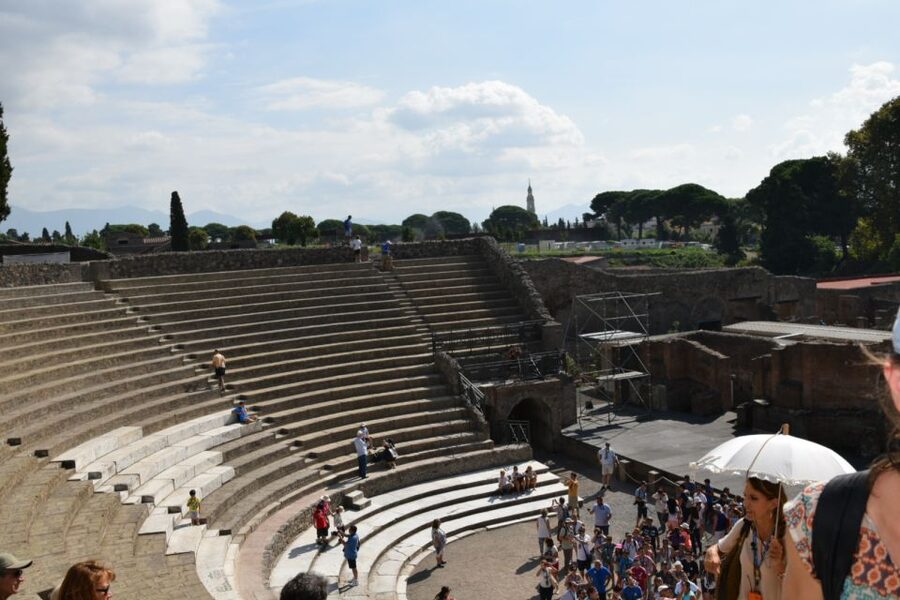
Once you’re inside, the early pace is designed to help you orient fast. You’ll start with the Large Theatre for about five minutes. Even if you don’t linger, it’s a helpful anchor point because it shows that Pompeii wasn’t only temples and villas. It also had public entertainment, crowds, and public life.
Next comes a quick visit to the Teatro Piccolo, mostly a photo stop. Then you’ll spot a thermopolium (Roman fast-food style). The time at these stops is brief, but the point isn’t to memorize every wall—it’s to help you start seeing Pompeii as a lived-in city with variety.
This is where a guide really earns their fee. A thermopolium can look like a wall and counters until someone points out what it meant for quick meals and daily routines. When the guide is clear and audible, these short stops become mental labels you’ll use later.
The Forum Area: Civic Life, Markets, and the City’s Busy Core
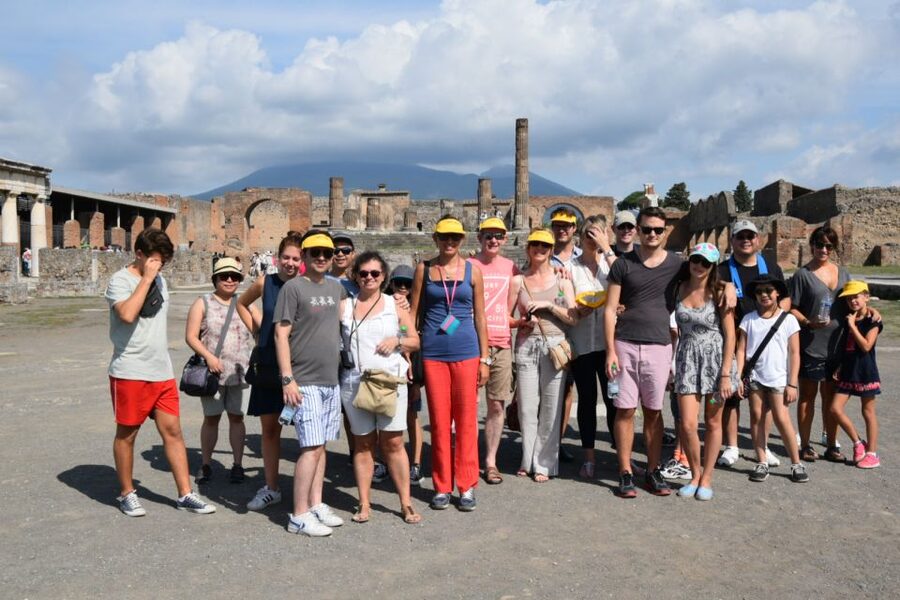
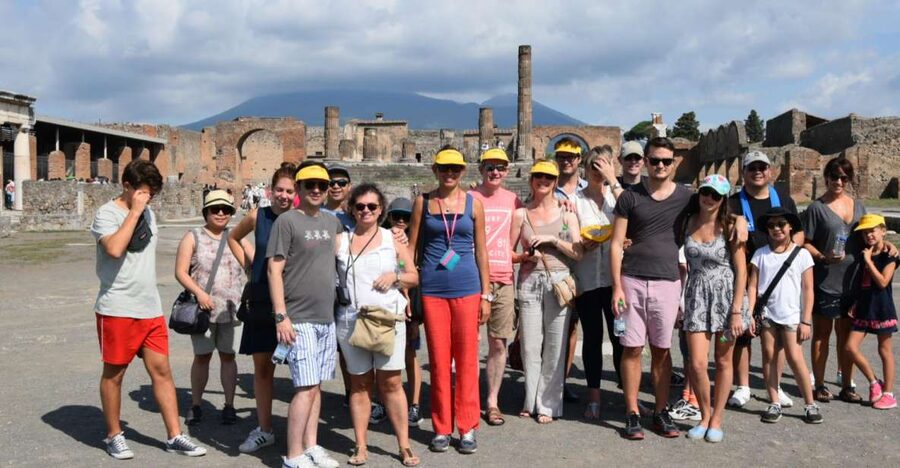
After the quick orientation stops, you’ll move into the Foro Civile di Pompei for around ten minutes. This is Pompeii’s civic heart, so it’s where you’ll start understanding how the city organized power, public space, and community identity.
From there, the tour leans into the “how people lived” side of Pompeii, with stops that connect daily needs: public spaces, food supply, and the kind of urban bustle you can still read from stone layout. You’ll also see the Macellum of Pompeii for about ten minutes, which is the market area. This is the kind of place where your guide can turn “it’s a market” into a picture of buying, selling, and social routine.
One honest consideration: because Pompeii is so big, this tour gives you a focused slice, not everything. If you want the amphitheatre area, or if there’s a specific neighborhood you’re obsessed with, you’ll likely need extra time after the guided portion. The guided plan is tuned for the big recognizables and the most interpretable sections.
More guided runs around Pompei Campania


The House of the Vettii: Where Private Luxury Shows Its Teeth
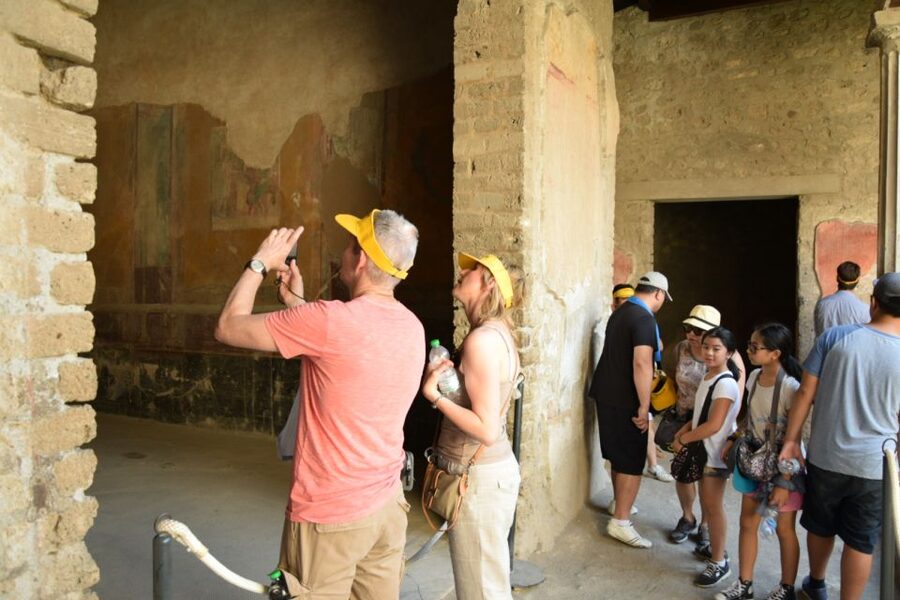
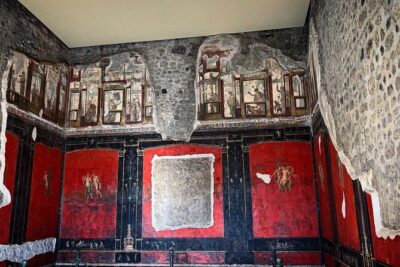
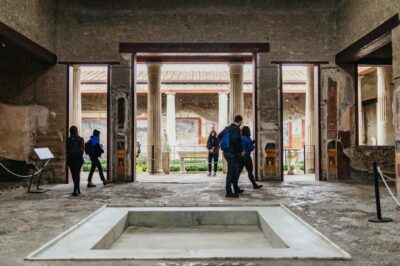
Then you hit the first major “you came for this” moment: the House of the Vettii for about twenty minutes. This house helps you understand how wealth displayed itself in Pompeii. The beauty isn’t just aesthetic. It’s functional storytelling—how a home branded itself, how it welcomed visitors, and how it reflected status.
Two things make this stop especially valuable:
- You get time to look rather than just pose and move on.
- You’re not studying a museum display. You’re reading rooms, courtyards, and architectural choices that were part of daily life.
If you love archaeology because you want context—not just facts—this is the kind of place that rewards your attention. It’s also one of those stops where the guide’s narration quality matters. When you can hear well, the home turns from pretty to meaningful.
The House of Menander: Daily Reality Behind the Decorative Walls
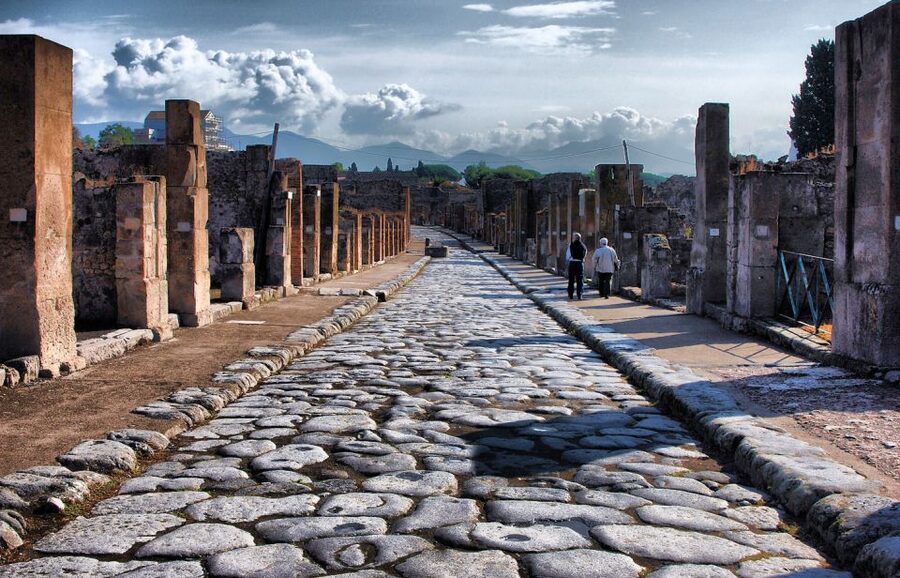
Next is the House of Menander, also about twenty minutes. It’s another top-tier residence, and it complements the Vettii house by showing a different slice of domestic life and decoration.
The value here is comparison. You begin noticing how different houses managed space and how residents used rooms. That’s the moment Pompeii stops being a single “site” and starts being a collection of real social worlds.
Again, sound matters. Some people report ear pieces that fit poorly or don’t help much. If you find you can’t hear, lean toward the guide when you’re walking and don’t be afraid to ask a question when the guide pauses. That’s when the tour feels less like a lecture and more like a conversation.
Baths and Roman Hygiene: Forum Baths in Detail
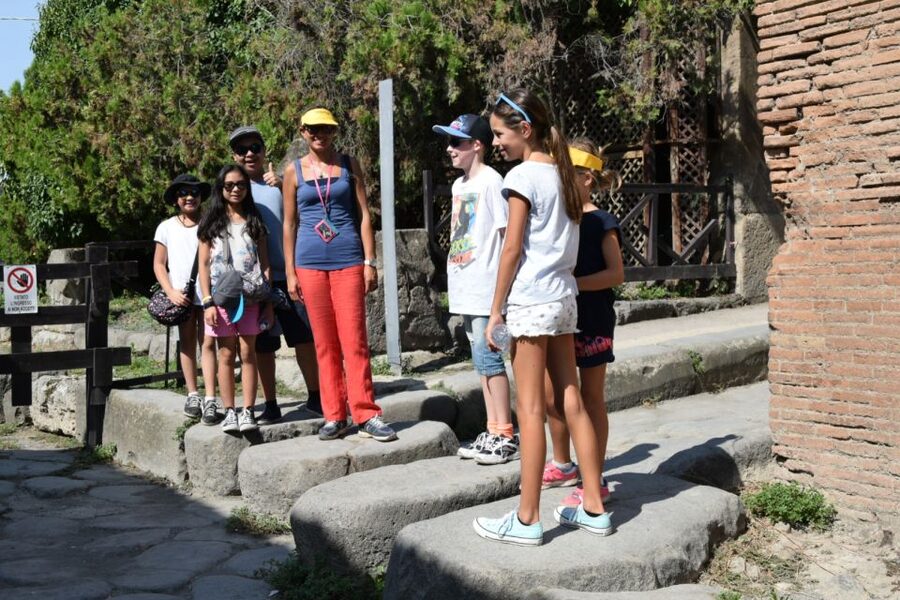
The Forum Baths stop runs about twenty minutes. This section is great for understanding Roman routine because baths weren’t only about cleanliness. They were about time, social behavior, and culture.
If you’ve ever wondered what the Romans did with a chunk of their day besides work and sleep, baths are one of the answers hiding in plain sight. A good guide will connect the architecture to real habits: how people moved through bathing spaces and how public life intertwined with personal care.
This is also a strong stop for photos, but it’s worth remembering you’ll get better results with fewer posed shots and more looking. Pompeii rewards slow scanning—notice where openings lead, how rooms relate, and what the design suggests about flow.
Temples of Jupiter and Apollo: Short Stops, High Meaning
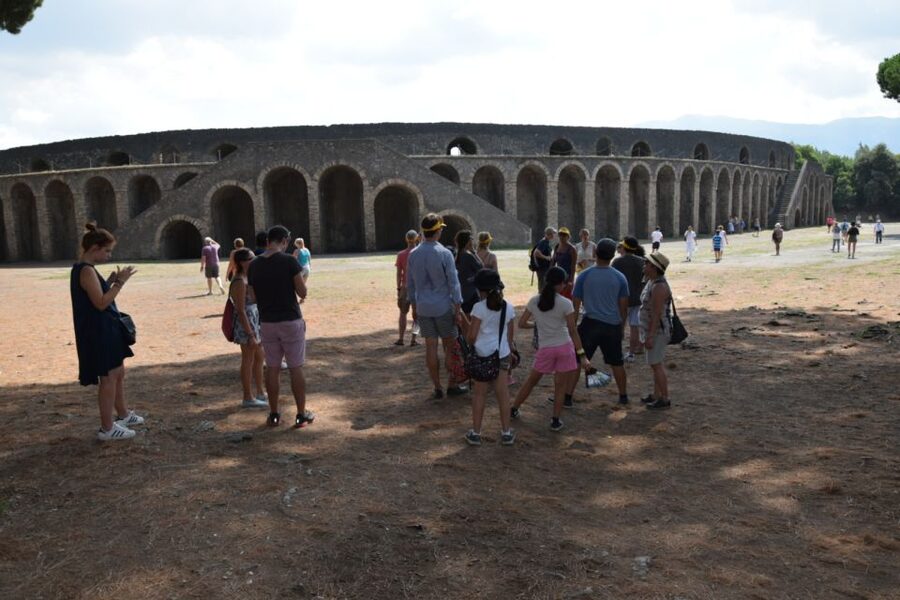
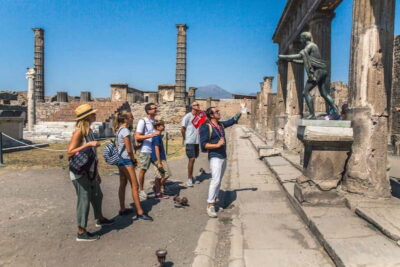
Later, you’ll reach the Temple of Jupiter as a photo stop (around five minutes), then the Temple of Apollo for about ten minutes.
These are quick, but don’t treat them as filler. Temples anchor why Pompeii had rituals, community gathering, and public identity. Even in short time, a guide can help you understand what people were doing there and why the location mattered.
If you’re into religion as social structure, these moments can stick with you. If you’re more into architecture, you’ll appreciate how layout expresses function. Either way, these stops are a reminder that Pompeii wasn’t frozen with only homes and streets—it paused a whole belief system.
How Much of Pompeii You’ll Actually See (and What’s Not Included)
This tour gives you a solid cross-section—big public spaces, market life, two famous houses, baths, and key temples—wrapped into a focused route. It also includes a cameo workshop stop before the ruins, which can be a bonus on a long day.
But here’s the trade-off: it’s not designed to cover the entire city. One review noted that it doesn’t cover some famous outlying areas like the amphitheatre. So if the amphitheatre is on your personal top-five list, plan to add time on your own after the two-hour guided window.
The good news is this style works well for most first-time visitors. You’ll get enough structure to make self-guided walking afterward feel easier, not lost.
Price and Value: Is $31 a Fair Deal for Pompeii?
At $31 per person for about two hours inside Pompeii, this can be strong value if two things line up:
1) you care about having an archaeologist guide explain what you’re seeing, not just pointing at it, and
2) you want to reduce waiting time by using the skip-the-line entrance.
You’re also getting more than a pure ruins walkthrough. The tour includes the cameo workshop and shop plus a restroom break, which helps the day feel organized.
The value drops a bit if you’re the type who reads site signs well on your own and don’t need narration. The guided stops are time-limited, so if you prefer long wandering, you may feel slightly rushed. Some people reported finishing sooner than expected or the guide moving quickly once they’d covered a point.
Also keep the “first Sunday” rule in mind. Site admission can be free on the first Sunday of each month, but tickets can’t be reserved ahead of time, so entry isn’t guaranteed. On those days, you might pay less by timing your visit strategically, but you’re trading control for risk.
Guide Quality and Group Size: What You Can Hope For
You’ll be touring with a licensed archaeologist guide, with tour narration available in English, Italian, Spanish, and French. The tour can be bilingual, depending on what’s scheduled.
In reviews, the most praised aspect is the guide’s energy and passion, plus the ability to answer questions in a way that makes the site click. You’ll feel the difference when someone can explain why a feature exists, not just what it is.
Group size is “small group available,” but reality can vary. One review described a group of 20 and said it was bigger than expected. If you strongly prefer whisper-level intimacy, you might want to check the group size when you book.
Sound is the other wild card. Some reports praise the narration and clarity. Others mention ear pieces that fit poorly, fall off, or make it harder to follow the guide. If you’re sensitive to audio gear, it helps to bring your own earbuds as a backup, even though the tour’s system may be different.
Practical Tips to Make Your Day Smoother
Pompeii is a stone city, so you’ll want to prepare like you’re walking in a hot, uneven place.
Bring:
- Comfortable shoes
- Water
- A camera
- Passport or ID card (always required for identity-based rules)
Plan on:
- No luggage or large bags, and no drones
- No pets
- No walking sticks (so choose low-friction footwear)
- Not suited for wheelchair users or people with mobility impairments
One more small tip: dress for sun and be ready for short stair-and-stone moments. Even when a stop is only five minutes, Pompeii can still feel like a workout.
Should You Book This Pompeii Skip-the-Line Tour?
I’d book this tour if you want a guided “best hits” route with an archaeologist and you value skip-the-line entry. It’s a strong choice for first-timers who want Pompeii to make sense fast, especially because it connects major sights like houses and baths to daily Roman life.
I’d think twice if:
- you hate relying on ear pieces and you’re worried you’ll struggle to hear,
- you need maximum coverage of the entire site (because it’s focused, not city-wide),
- or you’re visiting with mobility needs that don’t match the tour’s walking style.
If you want Pompeii to feel personal, not just ancient, this is one of the more practical ways to do it. You’ll leave with stories in your head, not just photos on your phone.
More Tours in Pompei Campania




More Tour Reviews in Pompei Campania



More Pompeii Tours to Compare
More Pompei Campania tours, freshly reviewed



Pompeii Tours, compared.
 ★ 4.8Pompeii: Entry Ticket and Guided Tour with an ArchaeologistFrom $3519,459 reviews
 ★ 4.1Pompeii: Entry Ticket with Audio GuideFrom $4013,491 reviews
 ★ 4.8Pompeii: Small Group Tour with an ArchaeologistFrom $4012,264 reviews
 ★ 4.3Pompeii Ruins & Mount Vesuvius Day TourFrom $12011,459 reviews
★ 5.0Pompeii Small Group Tour with an ArchaeologistFrom $356,593 reviews
★ 4.3Pompeii Ruins & Mount Vesuvius Day TourFrom $12011,459 reviews
★ 5.0Pompeii Small Group Tour with an ArchaeologistFrom $356,593 reviews
 ★ 4.5Skip-the-line Pompeii – Small Group TourFrom $544,401 reviews
 ★ 4.6Naples or Sorrento: Full-Day Pompeii and Mount Vesuvius TourFrom $1044,235 reviews
 ★ 3.9Pompeii: Skip-the-line Entry Ticket with Audio Guide & MapFrom $433,153 reviews