
Pompeii can feel like one big outdoor museum. This tour adds a focused lens on Roman daily life and ends with a tasting inside the site that regular visits usually miss. I like that you get guided context at key stops, not just background noise, and I also like the way the food and wine tie into the flavors people would’ve known locally. The main thing to weigh is that it is still a walking tour on uneven ground, and the tasting includes alcohol.
If you’ve seen Pompeii before, you’ll still probably enjoy the structure here. The itinerary tracks the city’s routines and neighborhoods, from public spaces like the Forum to private, eerie corners like the Lupanare, then lands in a garden tied to the eruption’s human story. One drawback: the tour isn’t designed for mobility needs, so if you use a wheelchair or need accessible routes, this won’t work well for you.
Key things I’d zero in on
- Archaeologist-led guidance with headsets so you don’t miss explanations
- Skip-the-line Express entry to start faster at Porta Marina Superiore
- Daily-life stops like the Forum, Via dell’Abbondanza, and the Thermopolium of Vetutius Placidus
- Human-scale moments at the House of Menander, Casa della Nave Europa, and the Garden of the Fugitives
- Three-wine tasting right inside the archaeological site paired with local bites
In This Review
- Meeting at Porta Marina Superiore and Getting Your Bearings Fast
- Why the Tour Focuses on Daily Life (Not Just Stone-Spotting)
- The Main Stops: Forum, Via dell’Abbondanza, and the Thermopolium of Vetutius Placidus
- Neighborhood and Social Reality: Macellum, Lupanare, and Houses
- Chaste Lovers and the Moment Frozen in Time
- The Panoramic Terrace Inside the Site: Wine and Local Bites
- Price and Value: What You’re Really Paying For
- What to Bring and How to Plan Your Day
- Who This Tour Fits Best
- Should You Book? My Practical Take
- FAQ
- How long is the Pompeii Guided Tour and Tasting Experience?
- Where do we meet for the tour?
- Is the tour offered in English?
- What is included in the tasting?
- Do I need ID to join the tour?
- Is this tour suitable for wheelchair users or limited mobility?
Meeting at Porta Marina Superiore and Getting Your Bearings Fast
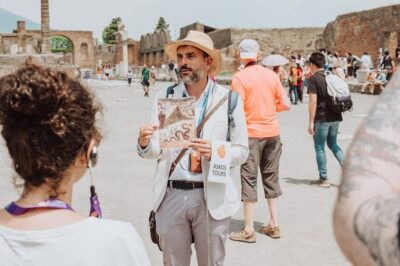
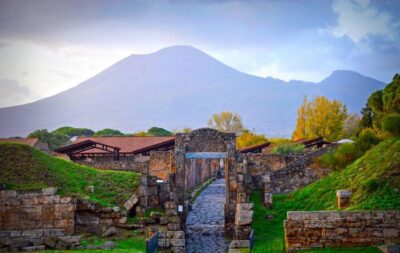
You start outside the Pompeii ruins main gate called Porta Marina Superiore. The meeting is simple: look for a staff member holding a sign with ASKOS TOURS. It’s a small but helpful detail because Pompeii entrances can get confusing fast, especially when multiple groups arrive at once.
From there, the tour is built around momentum. You’re not left wandering while everyone catches up. You get into the site, and the guide starts connecting what you’re seeing to how Pompeii worked day to day. That matters because Pompeii is vast, and without a plan it’s easy to end up with a bunch of cool photos and not much understanding.
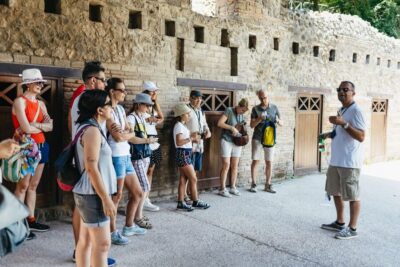
The group size stays small, and you’ll use headsets. That combination is a quality-of-life upgrade. It means you can keep your pace with the walk and still hear the explanations, even when you’re standing close to walls, entrances, or ticket crowds.
Which Pompeii ticket and guide? Compare a few more.
- Pompeii: Entry Ticket and Guided Tour with an Archaeologist★ 4.8 · 19,459 reviews
- Pompeii: Small Group Tour with an Archaeologist★ 4.8 · 12,264 reviews
- Pompeii: Skip-the-line Entry Ticket with Audio Guide & Map★ 3.9 · 3,153 reviews
- Naples: Pompeii and Mt. Vesuvius with Lunch and Wine Tasting★ 4.5 · 2,454 reviews
Why the Tour Focuses on Daily Life (Not Just Stone-Spotting)
This is the part I think most people will feel right away. Pompeii is famous, sure, but what makes it memorable here is the emphasis on how people lived.
Instead of treating the ruins as a checklist, the stops are chosen to show different layers of society and routine: public affairs, commerce, eating and drinking, and private homes. You’ll move through spaces that were designed for movement and interaction, not silence. That’s what turns the site from a hard-to-grasp tragedy into a real city with rhythms.
Even the more dramatic sights aren’t handled as shock value. The guide uses them to explain meaning—how something functioned, who might’ve used it, and why it’s set up the way it is.
You should go into this expecting a guided walk. It’s not a sit-down lecture. It’s a steady path through major areas, with time spent in the right spots for you to actually look.
The Main Stops: Forum, Via dell’Abbondanza, and the Thermopolium of Vetutius Placidus
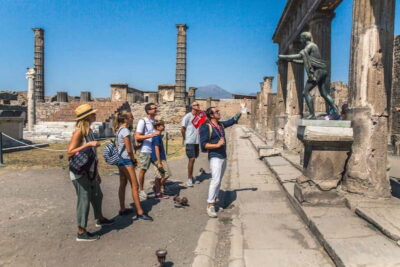
The walk begins with the big public core. The itinerary includes the Foro Civile di Pompei (the civic Forum area) early on. This is where you get the political and social framework. Even if you know Roman history in broad strokes, this is where the ruins make sense as a system—places were built for decisions, gatherings, and visibility.
Next comes Via dell’Abbondanza, one of Pompeii’s signature streets. This is where you start spotting how daily life played out along a route people would’ve walked constantly. It’s also a good moment to notice the kind of infrastructure Romans used to keep business moving: the layout encourages both foot traffic and commercial frontage.
Then you reach the Thermopolium of Vetutius Placidus area, which is tied to the theme of food and everyday consumption. In practical terms, a thermopolium was like a fast, local stop for prepared items and drinks. You’re seeing the built environment behind what people grabbed when they were busy—an angle that feels more human than looking at ruins purely as architecture.
One tip: on these street and public-space segments, keep your eyes up and ahead. It’s tempting to stare at one wall section, but the street layout is part of the story.
Neighborhood and Social Reality: Macellum, Lupanare, and Houses
You’ll also visit the Macellum of Pompeii, the market area. This is valuable because markets tell you what a city wanted and what people relied on. You’ll get a sense of commerce and regular exchange, and it helps you connect the public spaces to everyday needs.
Another stop included is the Lupanare. It’s not a comfortable topic, but it’s part of the reality of Pompeii as it existed. The guide’s job here is to keep it anchored in explanation rather than sensationalism, helping you understand the site’s function and how it fit into the urban setting.
Then the tour shifts into homes, and that’s when Pompeii stops feeling like a stage set. You’ll see the House of Menander, the Garden of the Fugitives, and Casa della Nave Europa. Each of these has a different mood.
- House of Menander: elegant, refined, and useful for thinking about how wealth and taste shaped domestic space.
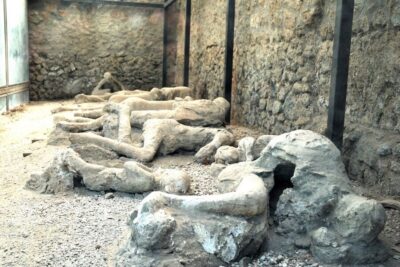
- Garden of the Fugitives: a moving space tied to the eruption aftermath, including vineyards and plaster casts of eruption victims. It’s the emotional center of the tour for many people because it connects art and landscape features to real lives interrupted.
- Casa della Nave Europa: a memorable house stop that’s visually striking, with themes that help you picture what residents cared about and how they decorated.
As you move through these places, you’ll get a better feel for Pompeii’s “social map.” Public areas aren’t separate from private life—they feed into it. That’s why houses matter on a daily-life tour.
Chaste Lovers and the Moment Frozen in Time
A unique excavation stop on this walk is the Insula dei Casti Amanti (House and insula of the chaste lovers). This is described as revealing everyday life frozen at the moment of the eruption.
That phrase is important. Pompeii is already famous for “how much survived,” but what makes this particular area especially useful is that it’s about ordinary life—how rooms were used, how people expressed themselves, and what the layout says about routines. You’re not just looking at a tragedy; you’re seeing domestic details.
You also pass by the Casina dell’Aquila. It’s one more clue in the city’s urban texture: Pompeii wasn’t only about the big, famous monuments. Smaller structures and variations in property design helped create a full neighborhood fabric.
Other Pompei Campania outings worth a look before you book

The Panoramic Terrace Inside the Site: Wine and Local Bites
After the walking portion, you head to a panoramic terrace inside the archaeological site for the tasting experience. This is one of the strongest reasons to pick this tour over a standard guided visit.
Many Pompeii tastings happen outside the ruins, which means you lose the emotional and visual context. Here, you’re still surrounded by the setting while tasting three locally produced wines: a white, a red, and a sparkling. It’s paired with local favorites, including cured meats, cheeses, fruit jam, mozzarella, traditional Neapolitan taralli, and water.
This isn’t just food as an afterthought. It’s a theme wrap-up. You’ve spent the earlier hours learning about daily life—markets, streets, food stops, houses. Then you shift into what those routines might have tasted like, using familiar regional ingredients.
Practical note: this tasting includes alcohol, so you need to be of legal drinking age. If you have allergies or intolerances, let the operator know right away so they can guide you on what’s safe.
And yes, the terrace matters. The views inside the site are part of why the ending feels special. You’re not rushing back through crowds. You’re slowing down long enough to process what you just walked past.
Price and Value: What You’re Really Paying For
At $100 per person for a 3-hour experience, you’re paying for three things that many separate purchases don’t bundle as well:
- Professional archaeologist guide (not just a casual guide) plus headsets for clarity.
- Express entrance tickets that help you start without spending the early part of your day stuck at entry lines.
- A tasting experience that’s not a generic snack stop—three wines plus a set of local food pairings served inside the archaeological site.
If you were to do Pompeii on your own and then add a tasting separately, you’d likely spend extra time coordinating. Time is the hidden cost in Pompeii. This tour gives you a planned flow, which can make the whole visit feel more satisfying, especially if it’s your first time or you want a different angle than a photo-driven loop.
Small-group touring also tends to make explanations more specific. That’s a real value item when the site is huge and attention spans are tested.
What to Bring and How to Plan Your Day
This is a walking-heavy activity on uneven surfaces, and it’s not designed for anyone who can’t handle steps and irregular ground. Wear comfortable shoes that don’t mind rough stone and changes in grade.
Bring:
- Passport or ID card
- Hat and sunscreen for sun protection
Don’t bring:
- Weapons or sharp objects
- Baby strollers
- Mobility scooters or anything non-folding where access could be a problem
- Non-folding wheelchairs and non-folding strollers
- Unaccompanied minors
- Electric wheelchairs
- Explosive substances
If you’re a planner type: schedule the rest of your day with some flexibility. You’ll cover a meaningful stretch of Pompeii, and the tasting is a relaxed pacing moment afterward—but it’s still a real tour day.
Who This Tour Fits Best
This is a strong match if you want Pompeii to feel like a city, not just ruins.
You’ll probably love it if:
- You enjoy guided context and want someone to connect stops to daily life.
- You like a thematic approach: public spaces, food routines, and domestic details.
- You want the tasting experience to feel integrated with the site, not tacked on at a distance.
You might want to skip it if:
- You need mobility accommodations. This is not suitable for people with mobility impairments or wheelchair users, and it’s also listed as not suitable for visually impaired people.
- You don’t want alcohol involved (the tasting includes alcohol).
Should You Book? My Practical Take
If you’re deciding between a plain guided Pompeii walk and something more thoughtful, I’d lean toward this one. The combination of a small-group archaeological tour, a guide who explains how things worked, and the rare chance to do a wine-and-food tasting inside the archaeological site makes it feel like a complete experience.
The only serious caution is physical access and the walking portion. If you can handle uneven ground and want structure, this is a smart way to see Pompeii with less guessing and more meaning.
FAQ
How long is the Pompeii Guided Tour and Tasting Experience?
The total duration is 3 hours.
Where do we meet for the tour?
Meet outside the Pompeii ruins main entrance gate called Porta Marina Superiore. Staff will hold a sign that says ASKOS TOURS.
Is the tour offered in English?
Yes, the live tour guide operates in English.
What is included in the tasting?
The tasting includes three local wines (white, red, and sparkling), plus local cured meats and cheeses, fruit jam, mozzarella, traditional Neapolitan taralli, and water.
Do I need ID to join the tour?
Yes. Bring your passport or ID card.
Is this tour suitable for wheelchair users or limited mobility?
No. It’s not suitable for people with mobility impairments or wheelchair users.
More Tours in Pompei Campania




More Tour Reviews in Pompei Campania



More Pompeii Tours to Compare
More Pompei Campania tours, freshly reviewed



Pompeii Tours, compared.
 ★ 4.8Pompeii: Entry Ticket and Guided Tour with an ArchaeologistFrom $3519,459 reviews
 ★ 4.1Pompeii: Entry Ticket with Audio GuideFrom $4013,491 reviews
 ★ 4.8Pompeii: Small Group Tour with an ArchaeologistFrom $4012,264 reviews
 ★ 4.3Pompeii Ruins & Mount Vesuvius Day TourFrom $12011,459 reviews
★ 5.0Pompeii Small Group Tour with an ArchaeologistFrom $356,593 reviews
★ 4.3Pompeii Ruins & Mount Vesuvius Day TourFrom $12011,459 reviews
★ 5.0Pompeii Small Group Tour with an ArchaeologistFrom $356,593 reviews
 ★ 4.5Skip-the-line Pompeii – Small Group TourFrom $544,401 reviews
 ★ 4.6Naples or Sorrento: Full-Day Pompeii and Mount Vesuvius TourFrom $1044,235 reviews
 ★ 3.9Pompeii: Skip-the-line Entry Ticket with Audio Guide & MapFrom $433,153 reviews
Browse the lists this tour appears in