
Review · POMPEII TOURS
Pompeii and Herculaneum: Guided Tour with an Archaeologist
Two Roman cities, one ash-stamped story. This Pompeii and Herculaneum guided walking tour pairs a professional archaeologist with a tight-group pace, so you get context for the AD 79 eruption as you move site to site. You’ll also hit the most striking stops, from Pompeii’s Lupanare and Forum casts to Herculaneum’s better-preserved interiors.
I like the small group size (up to 10) because it keeps the walk from feeling rushed, and you can actually ask questions. I also like the guide, Benedetto Tourist Guide, who’s described as funny and as an archaeologist with deep hands-on experience at these places.
One drawback to plan around: this is not for people with mobility impairments, and the day involves a lot of walking on uneven ground. Also, Pompeii’s ticket is named, so you’ll need to provide first and last names after booking and bring your original passport or ID.
In This Review
- Key things that make this tour work
- Pompeii and Herculaneum in one day: the value of the pairing
- Meeting at Suisse Restaurant and how the day starts
- Pompeii with an archaeologist: Porta Marina to the Forum
- The lunch break at Pompeii: timing that keeps momentum
- The 30-minute train hop to Herculaneum
- Herculaneum’s conservation advantage: why it feels different
- Headsets, pacing, and why “small” is more than a number
- Price and what you’re really paying for
- What to bring: a short list that makes the day easier
- Who this tour fits best (and who should reconsider)
- FAQ
- FAQ
- How long is the Pompeii and Herculaneum guided tour?
- What’s the meeting point for the tour?
- Is this a small-group or private experience?
- Does the tour include entry tickets and a guide?
- Do I need to arrange transportation and buy my own food?
- Is Pompeii entry ticket information required in advance?
- What identification should I bring?
- What should I bring for the day?
- Should you book this Pompeii and Herculaneum tour?
Key things that make this tour work
- Small group up to 10 keeps you moving at a human pace and helps you avoid big crowd bottlenecks
- Archaeologist-led explanations connect the buildings to real Roman daily life, not just dates
- Pompeii highlights include houses with frescoes and mosaics, plus the Forum and plaster casts of victims
- Herculaneum contrasts Pompeii with exceptional preservation, including well-kept wood and household details
- Headsets for groups larger than 8 make it easier to hear the guide on busy stretches
- Same-day logistics: Pompeii first, lunch break, then a short train ride to Herculaneum
Which Pompeii ticket and guide? Compare a few more.
- Pompeii: Entry Ticket and Guided Tour with an Archaeologist★ 4.8 · 19,459 reviews
- Pompeii: Small Group Tour with an Archaeologist★ 4.8 · 12,264 reviews
- Pompeii: Skip-the-line Entry Ticket with Audio Guide & Map★ 3.9 · 3,153 reviews
- Naples: Pompeii and Mt. Vesuvius with Lunch and Wine Tasting★ 4.5 · 2,454 reviews
Pompeii and Herculaneum in one day: the value of the pairing
Pompeii and Herculaneum are often compared, and for good reason. Same volcanic disaster, AD 79, but very different outcomes for what survived and how clearly you can read daily life in the Roman world.
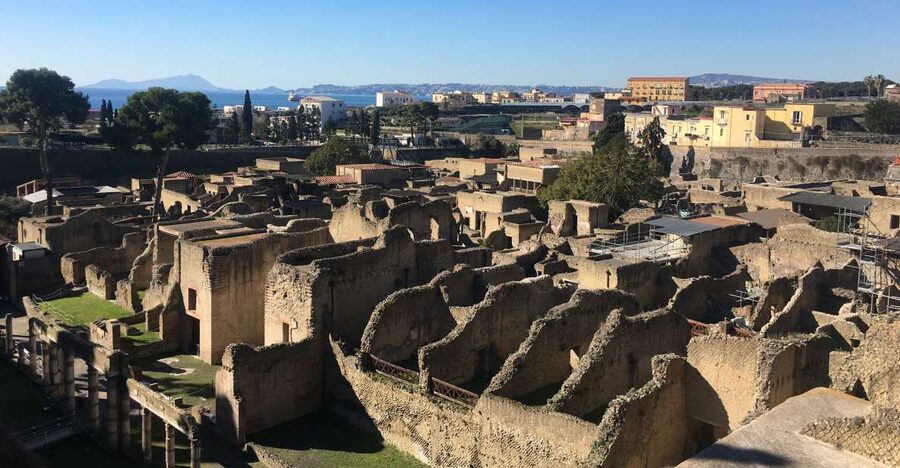
What you get here is the best kind of contrast: Pompeii shows you a huge, dramatic city buried by eruption, with major public spaces and street-level shop life. Herculaneum feels smaller and more intimate, where the preservation makes homes and everyday objects feel close enough to almost touch.
Meeting at Suisse Restaurant and how the day starts
Your guide meets you at Suisse Restaurant with a sign that includes your name. You’ll then head into Pompeii’s archaeological area for a 2-hour guided visit.
This matters because the first minutes set the tone. When the group is small, and the meeting point is clear, you spend less time hunting, more time walking and listening. It also helps you get oriented fast inside a site that can feel endless without a plan.
Pompeii with an archaeologist: Porta Marina to the Forum
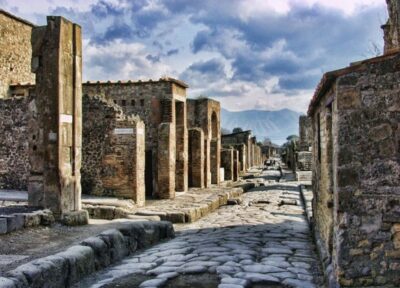
Pompeii is built for walking, but it’s also easy to lose the thread. The tour’s route is designed to give you a story as you go, not just a checklist.
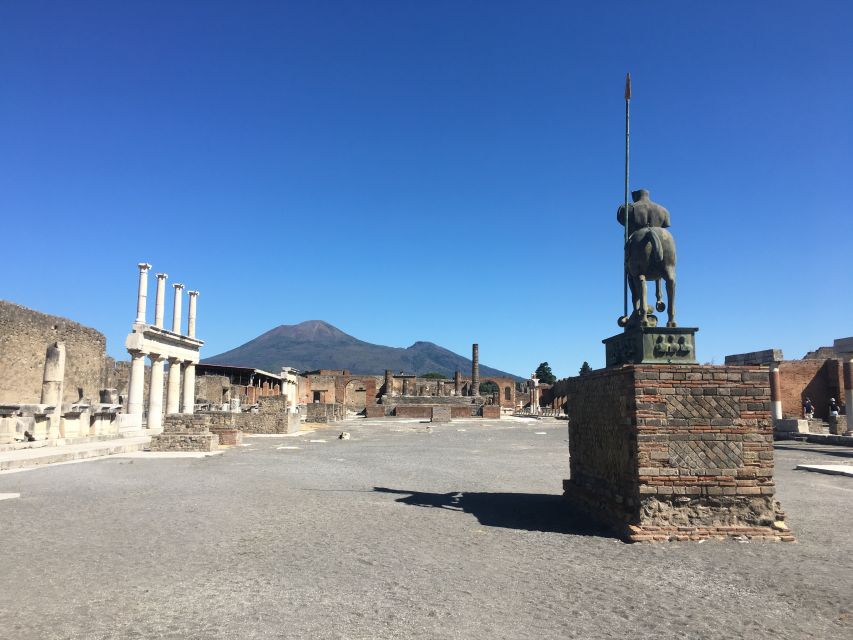
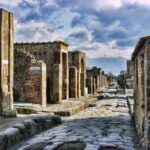
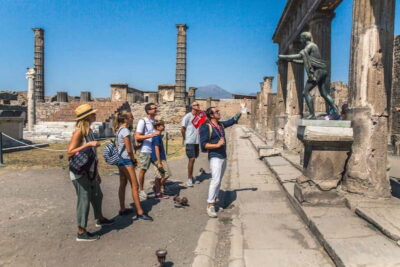
You start around Porta Marina Inferiore, then move through the area of the theatres. From there, you’ll see ancient houses with decorations—especially mosaics and frescoes—and you’ll also pass signs of daily commerce like shops, old Roman bakeries, and small snack-style spots.
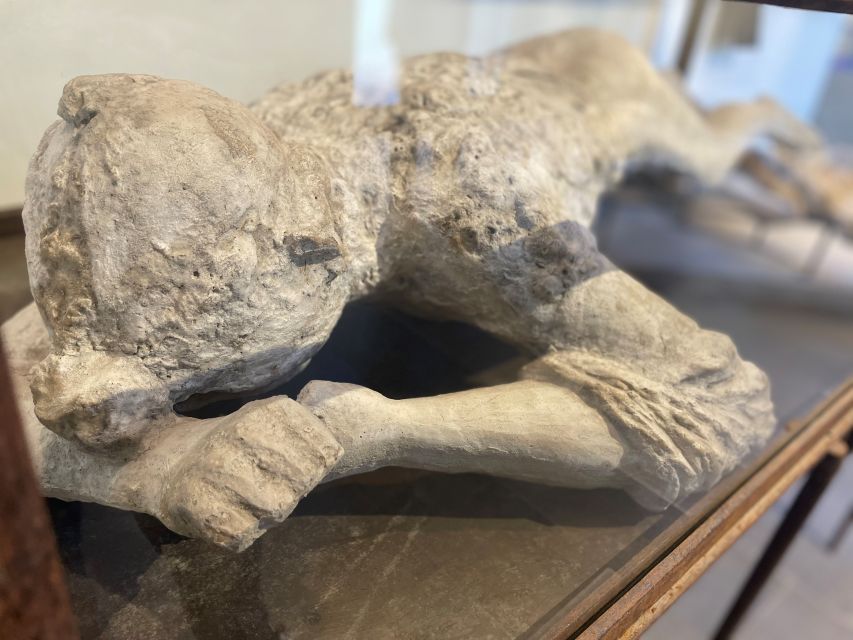
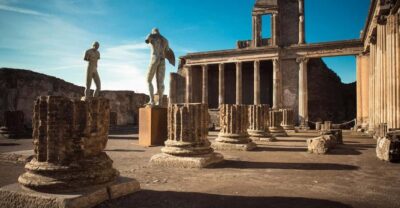
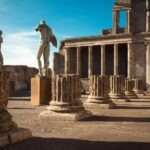
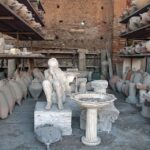
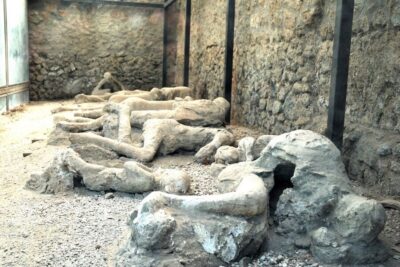
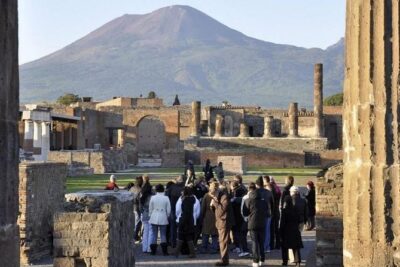
One of the most memorable segments is the stop for the public baths and the famous Lupanare, which helps explain the city’s social life, not just its monuments. Then you reach the Forum, including plaster casts of the victims. The casts are heavy, but they’re also one of the most direct ways to understand what the eruption meant for real people, not just for history books.
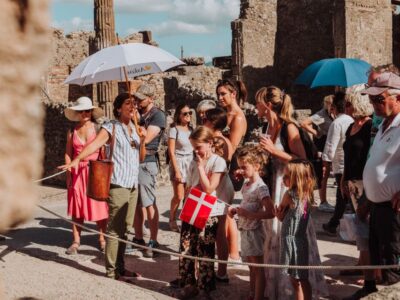
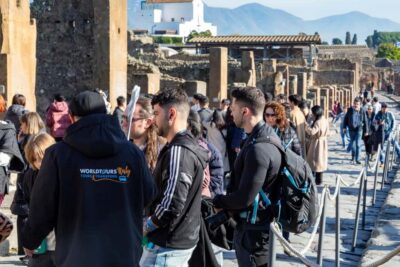
A practical note: Pompeii can be crowded. A recurring theme in the best parts of this tour is that the guide handles the flow well—staying with a small group and steering you away from the messier congestion you’d otherwise hit in larger tours. That keeps the walk more relaxed even when the site is busy.
The lunch break at Pompeii: timing that keeps momentum
After about two hours in Pompeii, you get a 1-hour lunch break with free time. This is built in at the restaurant that starts the day, which is convenient because you aren’t trying to figure out a new meeting point in the middle of your route.
Is it included food? No. Food and drink aren’t included in the price. But the free time is a big deal: you can refuel, use a restroom, and take a breather before the train ride to Herculaneum.
If it’s hot, use the break smartly. Bring water and take shade when you can. One of the practical wins here is that your guide tends to manage the day to keep it enjoyable, even in warm weather.
Herculaneum keeps a few more tours worth your time
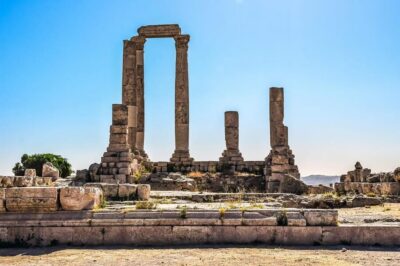
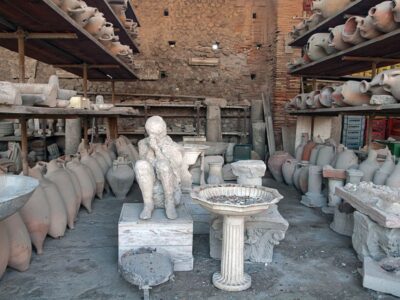
The 30-minute train hop to Herculaneum
Between the two sites, you’ll travel by train for about 20 minutes (the day’s schedule also references about 30 minutes for the train segment). Either way, the shift is fast enough that you still feel like it’s one continuous day.
Why this matters: it prevents the classic mistake of trying to force both sites without a clear plan. The day has a rhythm—Pompeii first while your brain is still soaking up Roman city life, then Herculaneum right after, when you can compare preservation, layout, and household details with fresh attention.
Herculaneum’s conservation advantage: why it feels different
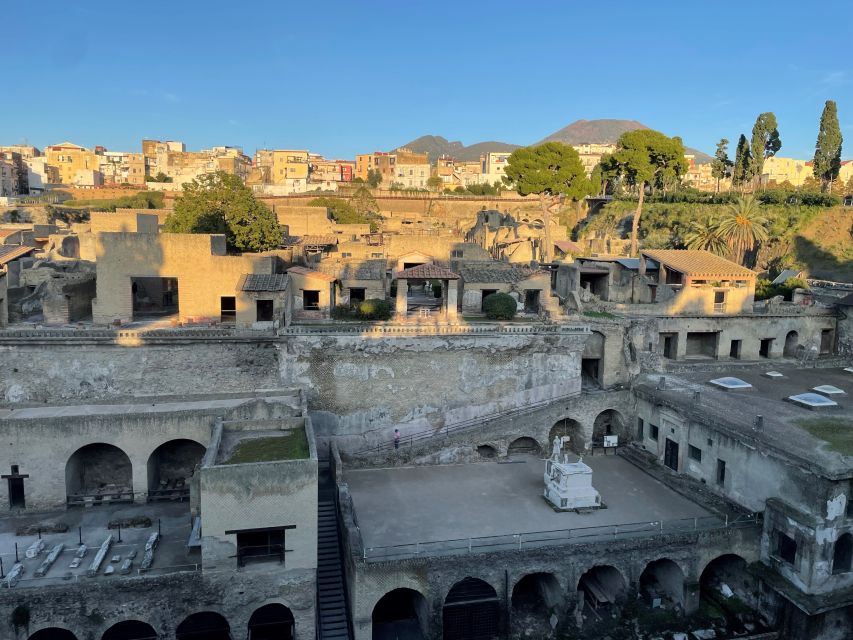
Herculaneum is often described as the quieter, more delicate counterpart to Pompeii, and this tour leans into that. You’ll have 1.5 hours of guided time in the Archaeological Site of Herculaneum, finishing at the Archaeological Park of Herculaneum.
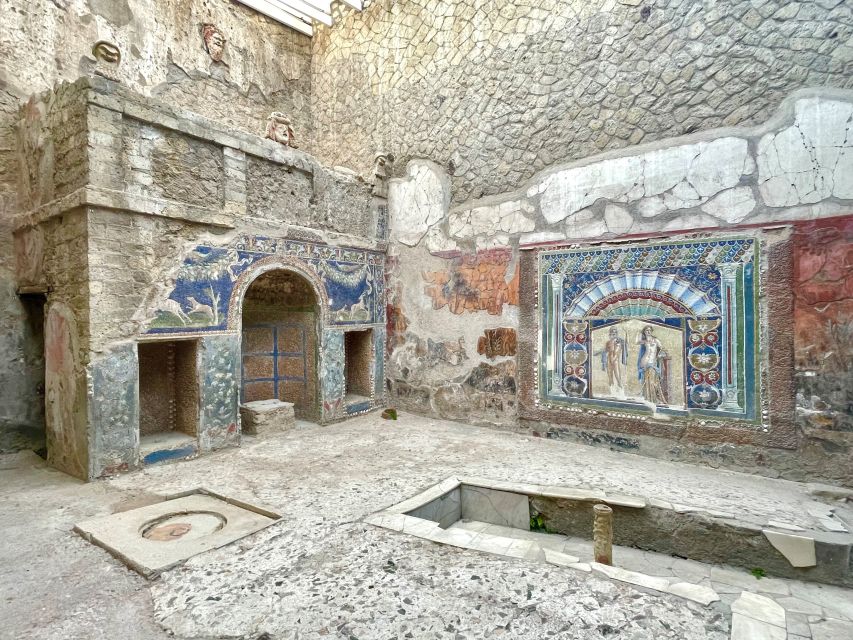
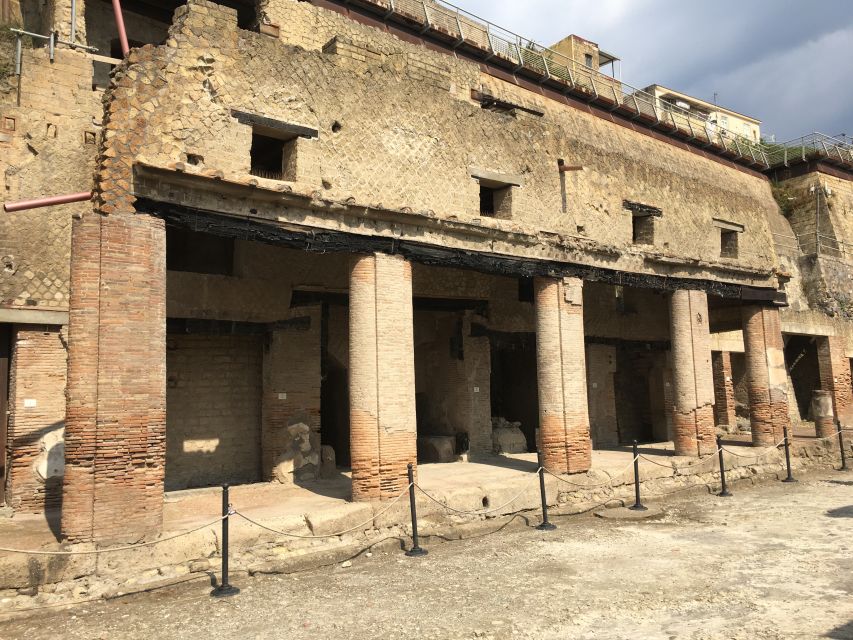
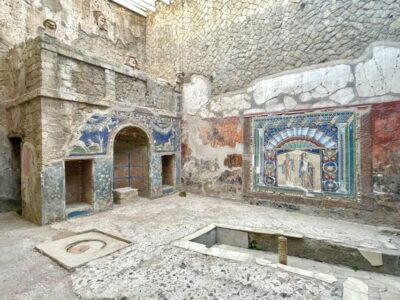
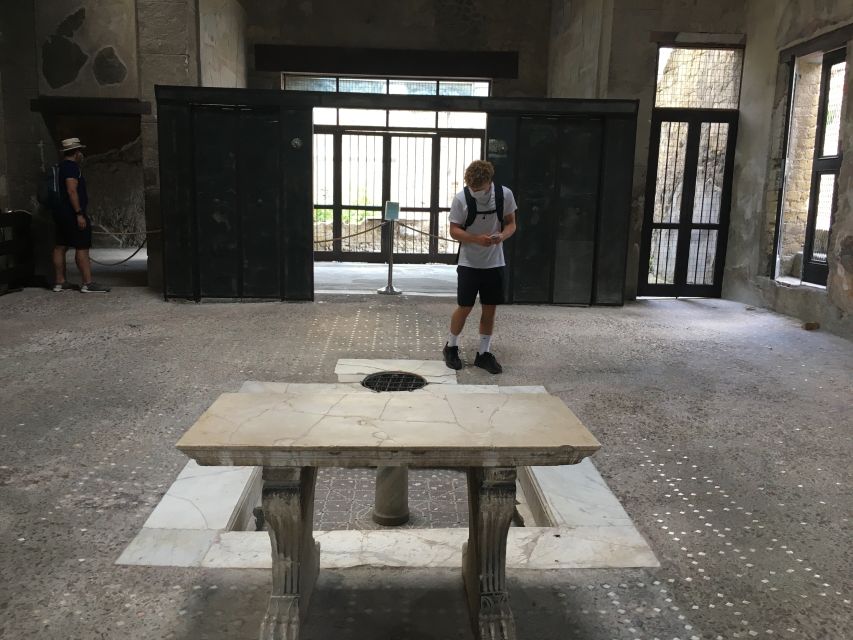
The big difference is the condition of what you’ll see. The eruption affected both places, but Herculaneum preserved more—including interiors and organic materials that Pompeii doesn’t show as clearly. You’ll admire splendid residences and unique decorations, with frescoes, marbles, mosaics, jewelry, and skeletons, plus exceptionally well-preserved wood.
That wood detail is the kind of thing that makes the site feel less like ruins-as-a-museum-piece and more like rooms with belongings—broken by disaster, but still legible. When you walk through a preserved home and see how far the details survived, it changes how you picture Roman daily life.
Also, fewer crowds helps. Even if the site is not empty, Herculaneum generally feels more manageable than Pompeii, which makes the guide’s pacing feel more relaxed and the conversation easier to follow.
Headsets, pacing, and why “small” is more than a number
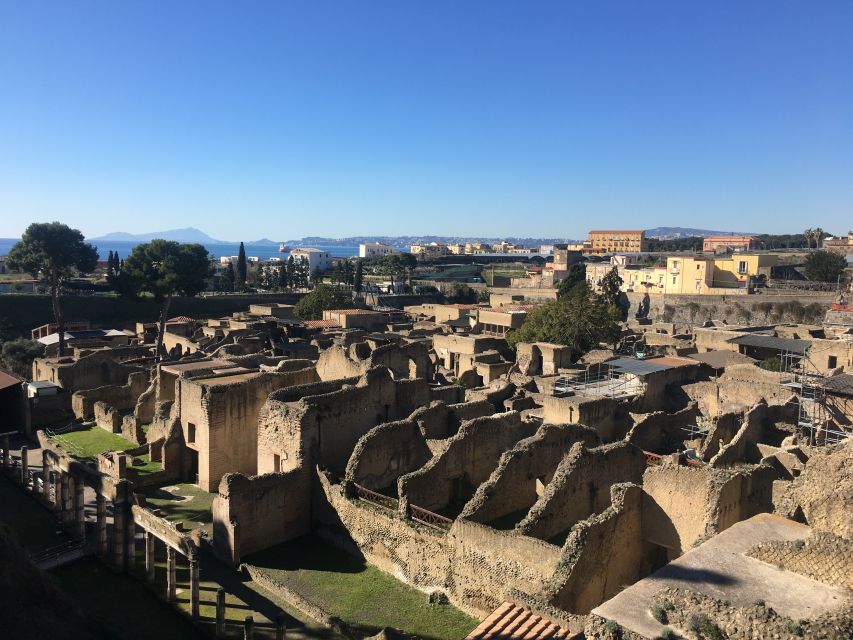
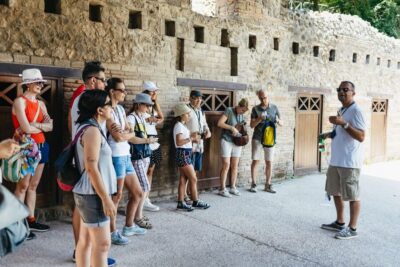
This tour runs as a small group up to 10 people (private or small groups available). For groups larger than 8, you’ll get headsets, which is a simple comfort upgrade when you’re in open areas with lots of noise.
Small-group format does three practical things for you:
- It makes it easier to hear the guide’s explanations without craning.
- It reduces time spent waiting, which matters when walking between major highlights.
- It helps you move with purpose instead of bouncing randomly from one wall to the next.
Based on the experience described, Benedetto Tourist Guide also uses that small-group setup to keep the day flexible—spotting what your group reacts to and guiding you toward the best stops without turning the visit into a scripted lecture.
Price and what you’re really paying for
At $141.61 per person for about 5 hours, this isn’t the cheapest way to see Pompeii and Herculaneum. But it’s also not paying for just entry tickets and a generic walk.
Here’s what your money covers:
- An archaeologist guide
- Entry tickets
- Headsets when needed (groups larger than 8)
- Free time for lunch (time included, not the meal)
What you do still need to budget:
- Transportation (the tour doesn’t include transport, though the day includes a train hop between sites)
- Food and drink
So the real value is the interpretation. Pompeii and Herculaneum reward attention. With an archaeologist, you don’t just see rooms and streets—you get the why behind the design, the function of buildings, and the story of the eruption’s impact across the two cities. For many people, that’s the difference between checking off ruins and actually understanding them.
What to bring: a short list that makes the day easier
You’ll be walking a lot, often over uneven ground, so pack for comfort and heat.
Bring:
- Passport or ID card (original, not a copy)
- Comfortable shoes
- Hat
- Water
The ID part is not just paperwork. Pompeii’s ticket is named, and you must provide the first and last names of all participants after booking. If you forget your original passport or ID, that can create problems you don’t want mid-day.
Who this tour fits best (and who should reconsider)
This tour is designed and recommended for families, and it also makes sense for photography and archaeology fans. A guided route helps kids understand what they’re seeing, and a small group helps keep the pace manageable.
It’s also a smart choice if you want both sites in one day without the stress of planning trains, timing, and routes on your own. The day is built around a clear sequence: Pompeii, lunch break, then Herculaneum.
But reconsider if you have mobility limits. The tour is not suitable for people with mobility impairments and is not for wheelchair users. Uneven terrain and a lot of walking make that an honest limitation.
FAQ
FAQ
How long is the Pompeii and Herculaneum guided tour?
The total duration is about 5 hours, including the Pompeii visit, lunch break, train time, and the guided visit at Herculaneum.
What’s the meeting point for the tour?
The guide meets you at Suisse Restaurant. You’ll see a sign with your name.
Is this a small-group or private experience?
It’s offered as a private or small-group walking tour, with a maximum group size of up to 10 people.
Does the tour include entry tickets and a guide?
Yes. The experience includes an archaeologist guide and entry tickets. Headsets are included for groups larger than 8.
Do I need to arrange transportation and buy my own food?
Transportation and food and drink are not included. The schedule includes free time for lunch, but you’ll be responsible for what you eat and drink.
Is Pompeii entry ticket information required in advance?
Yes. The Pompeii ticket is named, so you’ll need to provide the list with first and last name of all participants after booking.
What identification should I bring?
Bring your passport or ID card in original form.
What should I bring for the day?
Wear comfortable shoes and bring a hat and water. You should also bring your passport or ID card.
Should you book this Pompeii and Herculaneum tour?
If you want an organized way to see both Pompeii and Herculaneum—without wasting hours figuring things out—this one is a strong pick. The main reason is the mix of small-group pace plus an archaeologist-led route that helps you connect frescoes, public spaces, homes, and the AD 79 story into one coherent day.
Book it if you like guided interpretation and want the contrast: Pompeii’s larger public city energy (including the Forum and casts) followed by Herculaneum’s household-level preservation, where details like well-preserved wood make the tragedy feel immediate.
Pass or look for another option if walking is a challenge for you, because this tour is not suitable for wheelchair users or people with mobility impairments.
More Tour Reviews in Pompei Campania




Herculaneum, a Few More Tours


More Pompeii Tours to Compare
More Pompei Campania tours, freshly reviewed

Pompeii Tours, compared.
 ★ 4.8Pompeii: Entry Ticket and Guided Tour with an ArchaeologistFrom $3519,459 reviews
 ★ 4.1Pompeii: Entry Ticket with Audio GuideFrom $4013,491 reviews
 ★ 4.8Pompeii: Small Group Tour with an ArchaeologistFrom $4012,264 reviews
 ★ 4.3Pompeii Ruins & Mount Vesuvius Day TourFrom $12011,459 reviews
★ 5.0Pompeii Small Group Tour with an ArchaeologistFrom $356,593 reviews
★ 4.3Pompeii Ruins & Mount Vesuvius Day TourFrom $12011,459 reviews
★ 5.0Pompeii Small Group Tour with an ArchaeologistFrom $356,593 reviews
 ★ 4.5Skip-the-line Pompeii – Small Group TourFrom $544,401 reviews
 ★ 4.6Naples or Sorrento: Full-Day Pompeii and Mount Vesuvius TourFrom $1044,235 reviews
 ★ 3.9Pompeii: Skip-the-line Entry Ticket with Audio Guide & MapFrom $433,153 reviews
Browse the lists this tour appears in