
Review · POMPEII TOURS
Pompeii: Guided Tour with Archaeologist with max. 12 People
Pompeii can feel unreal—until you walk it. This 2-hour, small-group Pompeii tour focuses on how AD 79 life worked, not just what survived the eruption. With archaeologist Benedetto leading, you get a story-driven route through streets, shops, homes, and major public spaces—plus the moment the catastrophe hits.
My two favorite parts are the archaeologist-led explanations (it turns ruins into real people and daily habits) and the small group size (it stays human-scale, with time to ask questions and move efficiently). The only real drawback to plan for is time: 2 hours is short, and Pompeii rewards anyone who wants to linger.
In This Review
- Key reasons this tour is worth your time
- Meeting at Suisse Restaurant and Getting Into Pompeii Smoothly
- The 2-Hour Format: What You Gain (and What You Won’t)
- From Porta Marina Inferiore to the Theaters: Reading the City’s Layout
- Houses, Frescoes, Mosaics, and Marbles: Why the Decoration Matters
- Roman Bakeries, Snack Bars, and Street Life You Can Actually Picture
- Terme Stabiane: Public Baths as a Social Hub
- The Lupanare: What This Brothel Stop Really Tells You
- The Forum Zone, Temple of Jupiter, Basilica, and the Plaster Casts
- What Makes This Tour Feel Different: Benedetto’s Style and Pace
- Small Group Logistics That Actually Matter on Site
- Price and Value: Is $65 a Good Deal?
- Who Should Book This Pompeii Tour (and Who Might Not)
- Should You Book Pompeii With an Archaeologist Guide?
- FAQ
- How long is the Pompeii guided tour?
- What is the maximum group size?
- Where do we meet the guide?
- What’s included in the price?
- Do I need to provide participant names before the tour?
- What should I bring with me?
- What languages are available for the live guide?
- Is this tour suitable for wheelchair users or people with mobility impairments?
Key reasons this tour is worth your time
- Archaeologist as your guide: You’re not just hearing facts; you’re getting context that connects buildings to Roman routines.
- Small group (max 12): Easier pacing, fewer “where do we go now?” moments, more chances to ask questions.
- Crowd-smart route: You’ll be guided toward the most important sights without wasting time in long waits.
- Big Pompeii moments in one loop: Houses with frescoes, thermal baths, the lupanare, the Forum area, and the plaster casts.
- Comfort and clarity support: Headsets for groups larger than 8, plus free time after the tour to explore on your own.
Which Pompeii ticket and guide? Compare a few more.
- Pompeii: Entry Ticket and Guided Tour with an Archaeologist★ 4.8 · 19,459 reviews
- Pompeii: Small Group Tour with an Archaeologist★ 4.8 · 12,264 reviews
- Pompeii: Skip-the-line Entry Ticket with Audio Guide & Map★ 3.9 · 3,153 reviews
- Naples: Pompeii and Mt. Vesuvius with Lunch and Wine Tasting★ 4.5 · 2,454 reviews
Meeting at Suisse Restaurant and Getting Into Pompeii Smoothly
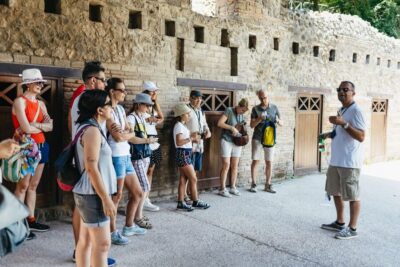
You meet at the Suisse Restaurant area, where the guide waits for you with a sign that shows your name. That sounds simple, but it matters in Pompeii because you’re navigating a big site with crowds, signage chaos, and uneven walking.
Entry is handled with an express ticket, which helps you start seeing things faster. You also get built-in context before you even reach the busiest sections, because the tour is designed as a guided walk with an archaeologist, not a grab-what-you-can situation.
One more practical point: your ticket is named. After booking, you’ll need to provide the first and last names for everyone in your group, and you must bring your passport or ID in original form. If you travel with just a phone photo, plan to fix that before you leave your lodging.
The 2-Hour Format: What You Gain (and What You Won’t)
This tour is set for 2 hours, which is perfect if Pompeii is your one big “must-do” and you don’t want your whole day eaten by a site that’s physically huge. You’ll hit a strong slice of what makes Pompeii famous: streets and shopfront life, decorated homes, public baths, the lupanare, and the Forum zone with the plaster casts.
What I like about the timing is that it’s long enough to make connections between places. You can go from the practical rhythms of Roman daily life (food, shopping, social spaces) to the emotional wallop of the victims’ casts without feeling like you’re rushing through a checklist.
The tradeoff is that you won’t see every corner. Pompeii is broad, and even a well-run tour only covers part of it. If you’re the type who wants to read every wall, take lots of close-up photos, and soak in details for 10 minutes at a stop, plan extra time afterward to roam.
From Porta Marina Inferiore to the Theaters: Reading the City’s Layout
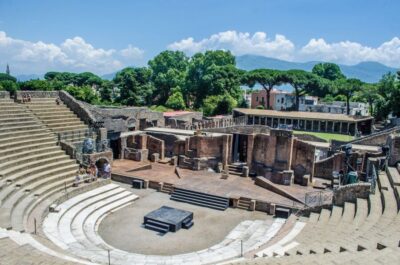
The tour route starts from Porta Marina Inferiore, then moves through the area of the theaters. This is a smart starting point because theaters weren’t just entertainment—they were part of the city’s social structure. Even if you don’t know Roman architecture, your archaeologist guide frames what you’re looking at so the streets feel like a lived-in place.
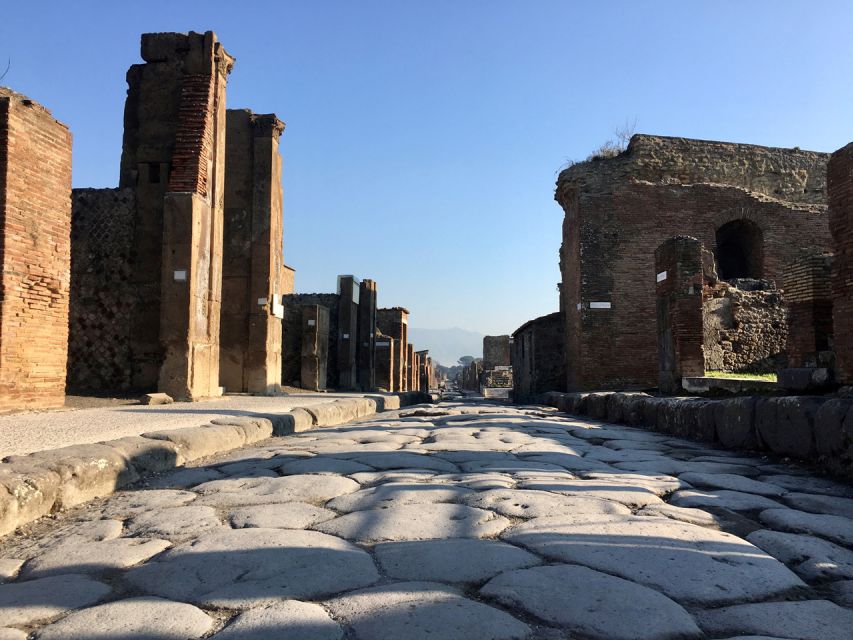
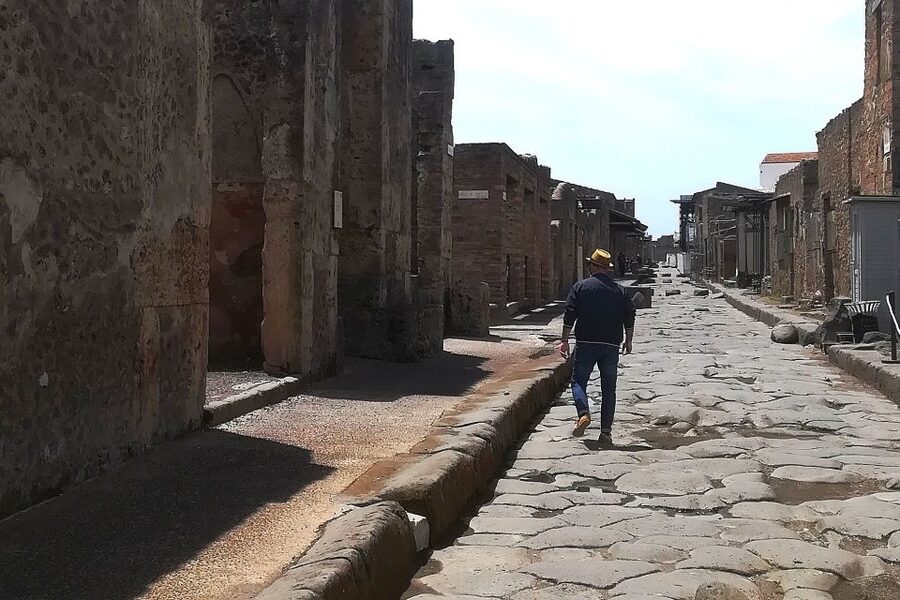
From there, you’re walking with purpose. You’ll move through areas where shops and everyday services would have lined the street, and you’ll get a sense of how people moved between public spaces and home zones.
One underrated value here: Pompeii can feel “bare” at a glance, since many walls are gone and you’re left with outlines and fragments. With the right guide, you’ll start to mentally rebuild what’s missing—how a street would have looked when it was full, and how a neighborhood would have functioned.
Houses, Frescoes, Mosaics, and Marbles: Why the Decoration Matters
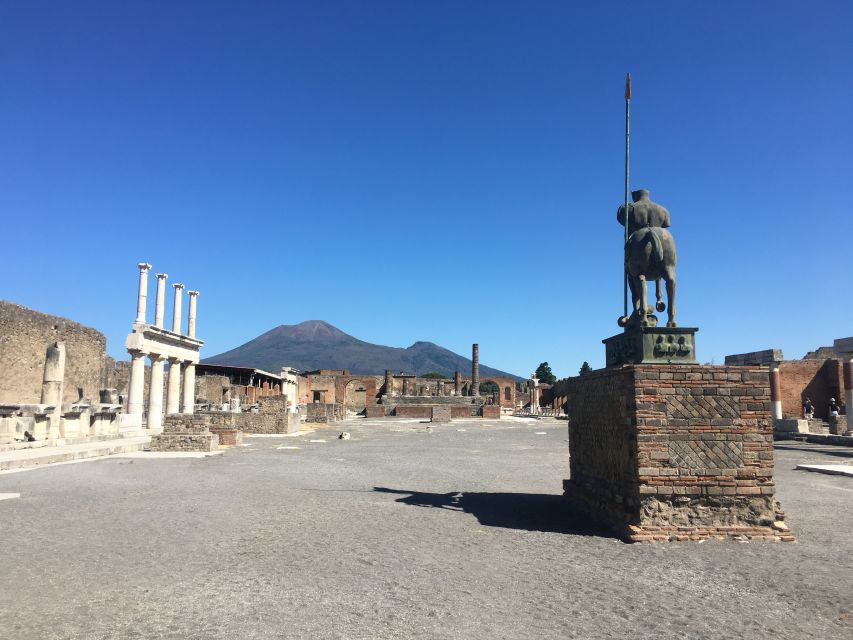
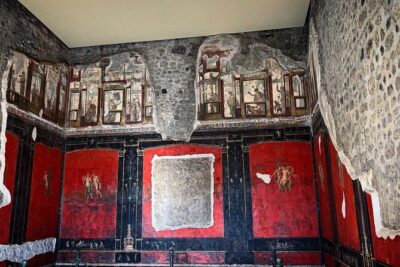
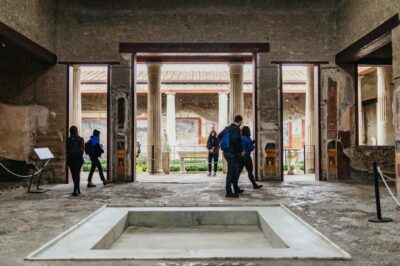
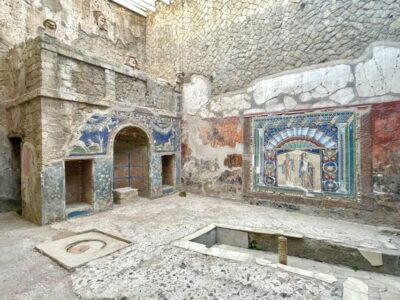
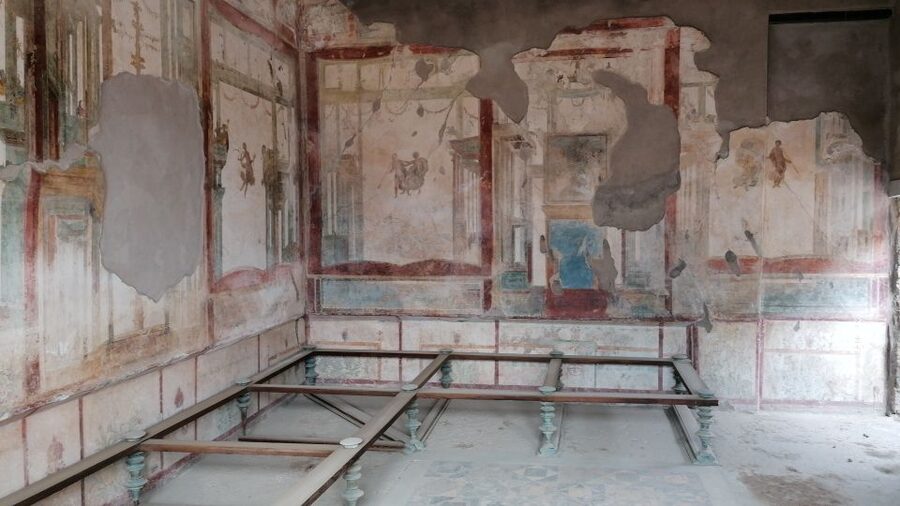
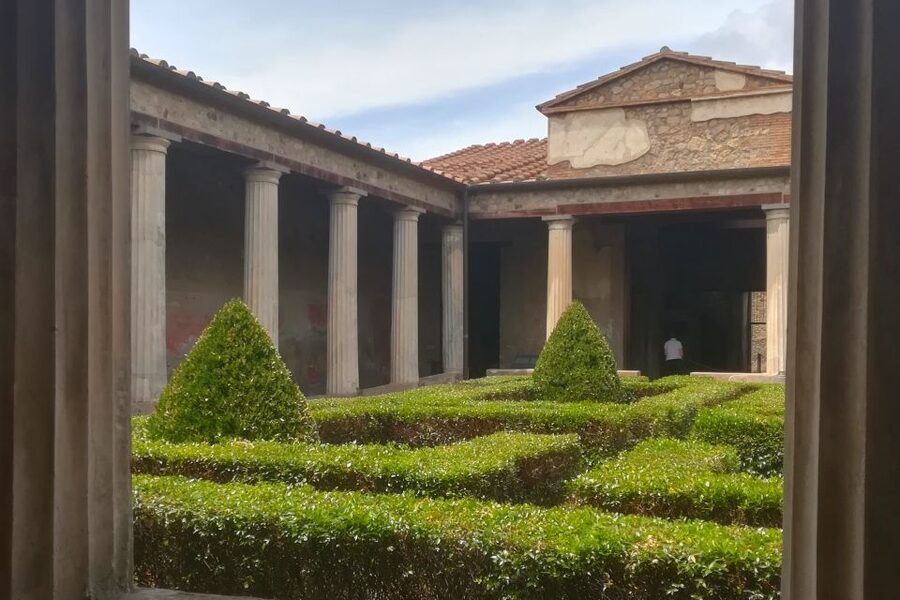
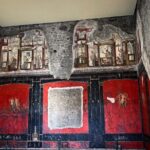
A major portion of your time goes through ancient houses with beautiful decoration—mosaics, frescoes, and marble elements. This is where Pompeii turns from archaeology into human storytelling. Your guide helps you understand that art wasn’t just for beauty; it was tied to status, identity, and how people wanted to be seen.
The House route is especially useful if you’re curious how ordinary Roman life worked. You don’t just look at a shell—you get explanations that make those rooms feel connected to routine: where daily activities might have happened, how spaces related to one another, and why certain decorative styles would have mattered.
This is also where small-group benefits really show. You can stay together through tighter passages and actually ask questions without being left behind. If you’re traveling with kids, this section tends to be more engaging because frescoes and mosaics are visual and easy to talk about.
More guided runs around Pompei Campania
Roman Bakeries, Snack Bars, and Street Life You Can Actually Picture
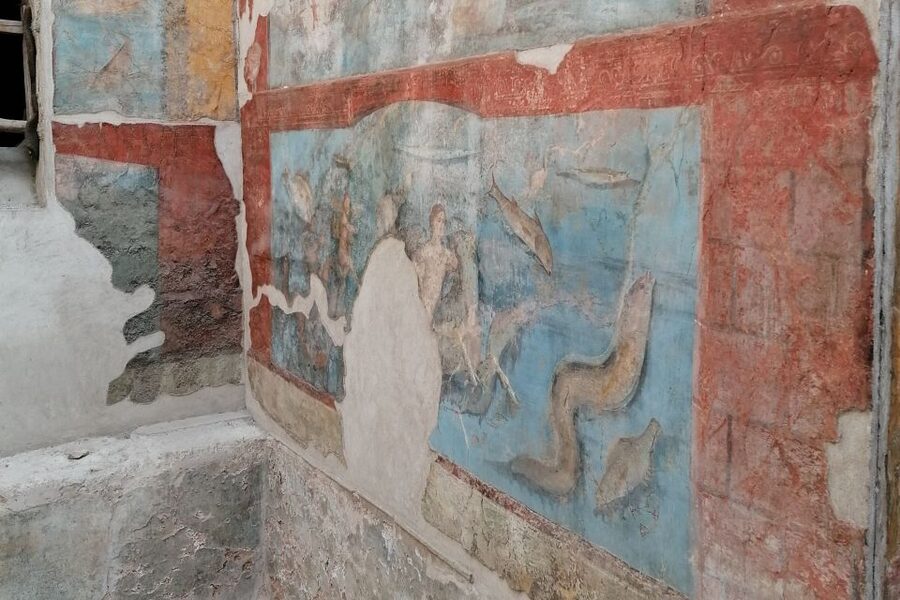
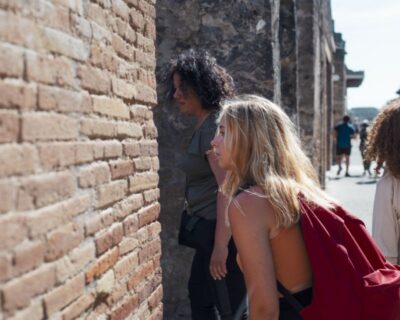
As you walk, you’re led past shops and Roman bakeries, plus old snack bars. That street-level detail is what makes the tour feel grounded. Pompeii isn’t only temples and grand buildings; it’s also where people bought food, grabbed quick bites, and did daily errands.
I like this part because it connects the site to habits that are familiar. When you see shopfronts and food-related spots with a guide explaining how they likely worked, you stop treating Pompeii like a museum and start treating it like a city.
You’ll also get “how to look” coaching. The ruins can be confusing if you don’t know what you’re looking at. Your guide helps you orient—where a room likely opened, how a street edge likely functioned, and why certain features would have mattered to residents.
Terme Stabiane: Public Baths as a Social Hub
Next up are the public thermal baths at Terme Stabiane. Baths in Roman culture were far more than hygiene. They were a key place for socializing, passing time, and being seen, and your archaeologist explains what that meant in daily life.
This stop is valuable because it shows the public version of Roman living. In homes, you learn about private spaces and decoration. In the baths, you learn how the city pulled people together around common routines.
Practical note: Pompeii can be hot and exposed. Your guide is used to managing a group through sun and stone, and in real experiences they’ll look for practical breaks when conditions get intense. Bring water and a hat because this is mostly walking and outdoor viewing.
The Lupanare: What This Brothel Stop Really Tells You
You’ll visit the famous lupanare, the brothel area. Even though the name alone makes it stand out, it’s not presented as cheap shock value. The point is to show how Pompeii handled sex work and how public spaces shaped social behavior.
If you’re sensitive to this topic, plan for it. It’s part of the core Pompeii story and is named on the tour, so it isn’t a surprise stop. But with context from an archaeologist, it becomes an example of how Romans organized and regulated certain aspects of city life.
This stop also reinforces why a guide matters. Pompeii includes spaces that are hard to interpret if you only see fragments. A good archaeologist helps you understand what you’re seeing and what it suggests about how life worked before the eruption.
The Forum Zone, Temple of Jupiter, Basilica, and the Plaster Casts
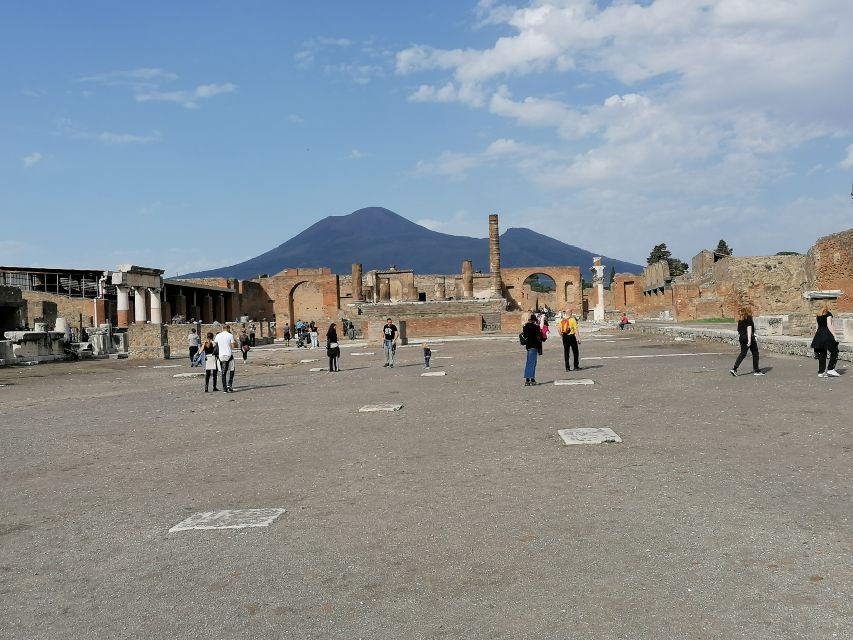
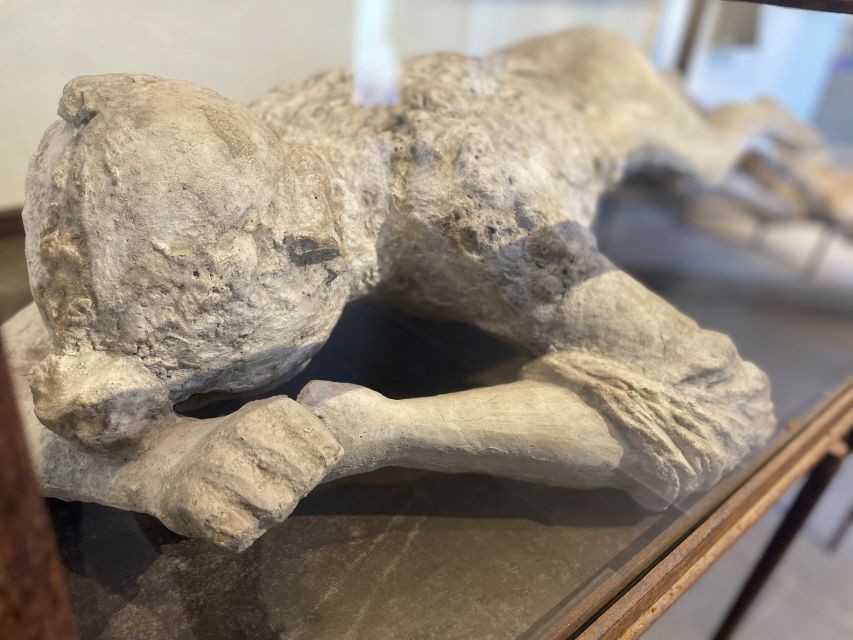
The tour culminates in the most emotionally powerful part: the Forum area with public buildings, including the plaster casts of victims. This is where Pompeii becomes more than history. AD 79 is no longer a date on a page—it becomes something you can stand beside and feel.
Along the way you’ll also visit major landmarks in this public zone, including the Temple of Jupiter and the basilica. The value here is that you get the city’s “why it mattered” layout: the places that centered religion, governance, and civic life.
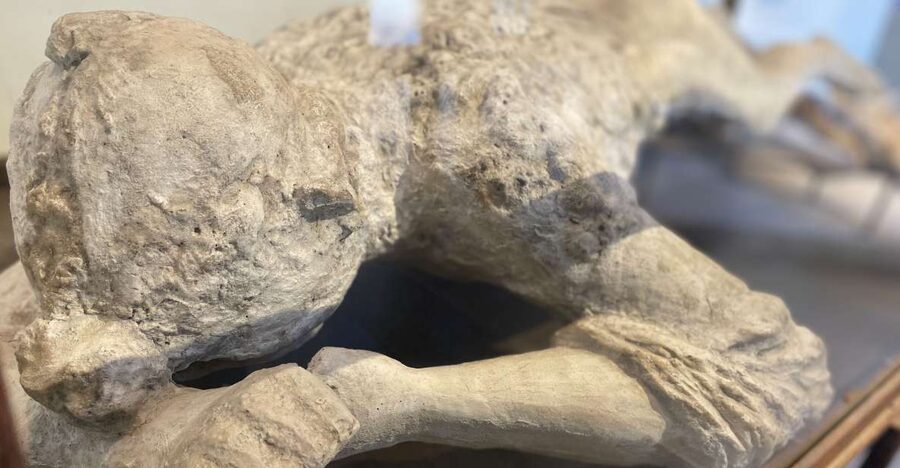
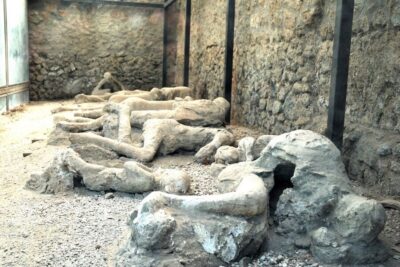
Then come the casts. They’re famous because they help you visualize what happened at the moment of impact. With a guide explaining the eruption’s role in what you see (and what you don’t), the casts land with real weight, without turning the experience into pure tragedy for tragedy’s sake.
If you want a Pompeii visit that feels coherent, this is the section that ties it together. You’ve seen homes and streets; now you see the machinery of public life—and then the final stillness.
What Makes This Tour Feel Different: Benedetto’s Style and Pace
This experience stands or falls on the guide, and the center of it is Benedetto. In real use, he’s described as archaeologist-level and professionally practiced in explaining what you’re seeing in a way that stays engaging.
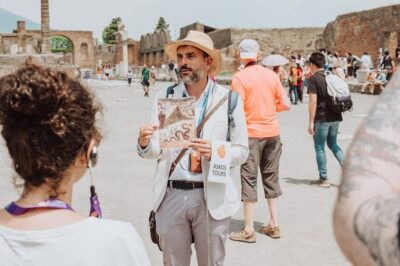
The best part of his style isn’t just facts. It’s pacing. The tour is designed to help you avoid unnecessary crowd bottlenecks, so you spend more time looking and asking questions and less time shuffling. People also highlight how he keeps the group together, which is huge on a site where people can drift quickly.
You’ll also appreciate the interactive tone. If you’re curious, you can ask questions and get answers tied to what you’re looking at. If you’re traveling with mixed experience levels, a strong guide should be able to adjust without making the tour feel watered down.
Small Group Logistics That Actually Matter on Site
Your group is limited to 12 people max, which is the sweet spot for a site like Pompeii. The group size reduces confusion, and it keeps you from getting lost in a sea of strangers. If your group is larger than 8, you’ll receive headsets, which helps you hear the guide clearly while you stand in open-air spaces.
You also get time on your own at the end. That’s important because your priorities will shift once you see a few key stops. Some people want photos; some want a slower re-walk of the decorated house areas; some want to follow their favorite building deeper. This tour doesn’t trap you in “march mode” the whole time.
If you’re traveling without a guide for the rest of the day, this added free time is one of the smartest inclusions, because it turns your guided learning into personal exploration.
Price and Value: Is $65 a Good Deal?
At $65 per person for 2 hours, this isn’t a budget throwaway. But it’s also not priced like a luxury private driver-and-guide setup. The value comes from a few practical pieces that add up fast:
First, you get an archaeologist guide, which changes the quality of interpretation. Second, express entry helps you waste less time at the ticket point. Third, the small group keeps the experience personal enough that questions and clarifications actually happen.
Also, you’re getting a structured route through several “anchor” areas: decorated homes, thermal baths, the lupanare, the Forum zone, and the plaster casts. If you try to self-guide that with no local expertise, you’ll likely spend extra energy just figuring out what’s significant.
So yes, it’s a fair price if Pompeii is a highlight stop for you. If you already know Pompeii well and only want a slow photo walk, you might not need a guide. For most people, though, a strong archaeologist-led route makes the ticket feel worth it quickly.
Who Should Book This Pompeii Tour (and Who Might Not)
This tour is a great fit if you want Roman daily life explained in a way that stays human-scale. It also works well for first-time Pompeii visitors because it gives you orientation fast and then fills in meaning as you go.
It’s also a smart choice if you hate long lines and want to keep your time efficient. The small group and crowd-smart pacing are built for people who want to see more without suffering.
The main group to avoid it is anyone with mobility impairments or anyone using a wheelchair. The tour is not listed as suitable for wheelchair users, and Pompeii is a walking-heavy site with uneven surfaces and stairs.
If you’re traveling as a family, this format tends to keep kids engaged through visuals and stories, as long as everyone is prepared for time outdoors.
Should You Book Pompeii With an Archaeologist Guide?
Book it if you want Pompeii to make sense. The guided route through streets, homes, baths, the lupanare, and the Forum zone—and especially the plaster casts—becomes much more than ruins when an archaeologist explains what you’re looking at. The small group size also makes it easier to ask questions and stay together without feeling rushed every second.
Skip it if you know you want a very slow, very detailed read-all-the-placards style visit. With only 2 hours, you’ll still have more to see, and you may feel pulled forward even with a good guide.
If Pompeii is your one big stop and you want value for money, this tour is a solid pick. It helps you see the city the way Pompeii deserved: as lived-in Roman life, not just scattered stone.
FAQ
How long is the Pompeii guided tour?
The tour lasts 2 hours.
What is the maximum group size?
The group is limited to a maximum of 12 people.
Where do we meet the guide?
The meeting point is Suisse Restaurant. The guide waits there holding a sign with your name.
What’s included in the price?
Included are the archaeologist guide, an express entry ticket to Pompeii, headsets for groups larger than 8, and free time to explore the archaeological site after the tour.
Do I need to provide participant names before the tour?
Yes. In Pompeii, the ticket is named. After booking, you must provide the list of all participants’ first and last names.
What should I bring with me?
Bring your passport or ID card in original form, comfortable shoes, a hat, and water.
What languages are available for the live guide?
The tour is offered in Italian, English, and French.
Is this tour suitable for wheelchair users or people with mobility impairments?
No. It is listed as not suitable for mobility impairments and wheelchair users.
If you tell me your travel month and whether you’re more into architecture, art, or the AD 79 story, I can help you decide if the 2-hour format matches your pace.
More Tours in Pompei Campania




More Tour Reviews in Pompei Campania



More Pompeii Tours to Compare
More Pompei Campania tours, freshly reviewed



Pompeii Tours, compared.
 ★ 4.8Pompeii: Entry Ticket and Guided Tour with an ArchaeologistFrom $3519,459 reviews
 ★ 4.1Pompeii: Entry Ticket with Audio GuideFrom $4013,491 reviews
 ★ 4.8Pompeii: Small Group Tour with an ArchaeologistFrom $4012,264 reviews
 ★ 4.3Pompeii Ruins & Mount Vesuvius Day TourFrom $12011,459 reviews
★ 5.0Pompeii Small Group Tour with an ArchaeologistFrom $356,593 reviews
★ 4.3Pompeii Ruins & Mount Vesuvius Day TourFrom $12011,459 reviews
★ 5.0Pompeii Small Group Tour with an ArchaeologistFrom $356,593 reviews
 ★ 4.5Skip-the-line Pompeii – Small Group TourFrom $544,401 reviews
 ★ 4.6Naples or Sorrento: Full-Day Pompeii and Mount Vesuvius TourFrom $1044,235 reviews
 ★ 3.9Pompeii: Skip-the-line Entry Ticket with Audio Guide & MapFrom $433,153 reviews