
Review · POMPEII TOURS
Pompeii: Afternoon to Sunset Guided Tour with Ticket
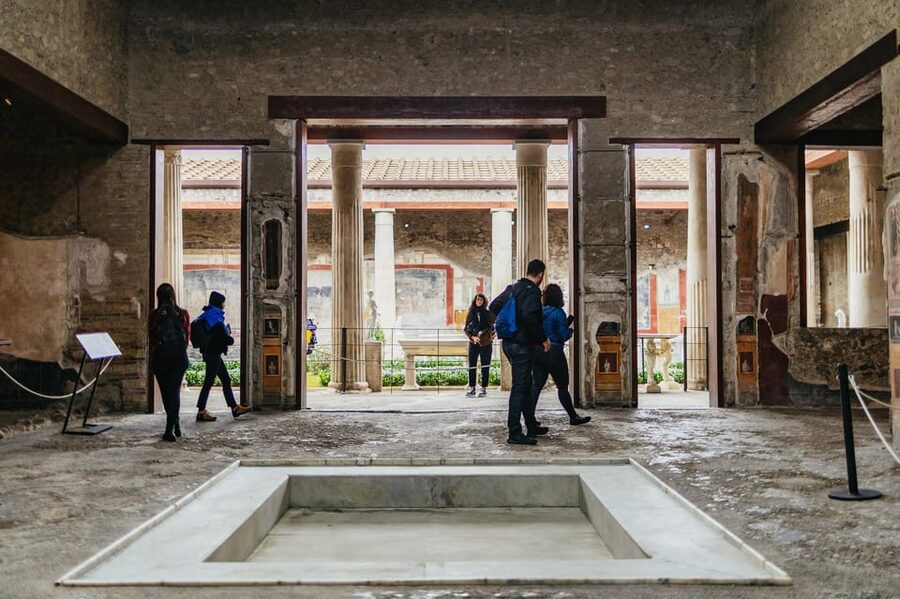
Pompeii lands differently when the sun drops. This 2.5-hour walk with an archaeologist guide helps you see Pompeii as a lived-in city—Forum, Basilica, baths, theater, and neighborhood streets—then you finish as the light softens. I love that you get a real guide (not a headset tour) and that the ticket includes skip-the-line entry so you spend your time on ruins instead of waiting.
My favorite part is how the best guides connect big monuments to daily routines, from civic life to the rhythms of ordinary blocks and bakeries. One consideration: you’re walking for the full 2.5 hours over ancient, uneven ground, so plan on sturdy shoes and a steady pace.
In This Review
- Key reasons this Pompeii sunset tour works
- Meeting at Ristorante Bar Sgambati: your first easy win
- Skip-the-line entry: why it’s worth paying for
- Getting oriented fast in Pompeii’s ancient streets
- Forum and Basilica: Rome’s civic engine in stone
- Thermal Baths and public buildings: not just sightseeing, but routine
- Theater time: culture, crowds, and how people gathered
- Neighborhood streets, housing blocks, and the bakery detail
- The Vesuvius eruption story: impact on the city and beyond
- Sunset timing: calmer light, easier stamina, better photos
- Value check: is $58 a fair price for 2.5 hours?
- Real-guide style: the names that keep showing up
- What to bring, and how to avoid the usual Pompeii regrets
- Who should book this Pompeii afternoon sunset tour
- Should you book this tour?
- FAQ
- What’s included in the Pompeii afternoon to sunset guided tour?
- How long is the tour?
- Where do I meet the guide?
- Does the tour include skip-the-line entry?
- What languages are the live guides available in?
- Is transportation included?
- What should I bring?
- Who is this tour not suitable for?
- What’s the cancellation window?
Key reasons this Pompeii sunset tour works
- Skip-the-line Pompeii entry via a separate entrance means more ruin time
- An archaeologist guide turns stone walls into day-to-day Roman life
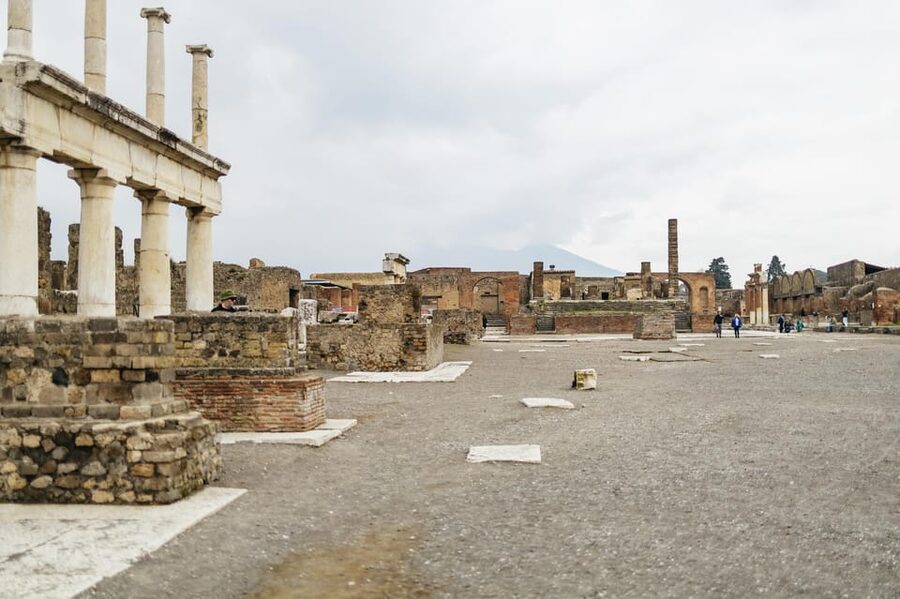
- Stops that matter: Forum, Basilica, Thermal Baths, Theater
- You’ll see neighborhood remnants, including a bakery and typical housing blocks
- Late-day timing helps you enjoy Pompeii when crowds and heat feel calmer
- Many guides finish with a chance to keep wandering on your own if you want
Which Pompeii ticket and guide? Compare a few more.
- Pompeii: Entry Ticket and Guided Tour with an Archaeologist★ 4.8 · 19,459 reviews
- Pompeii: Small Group Tour with an Archaeologist★ 4.8 · 12,264 reviews
- Pompeii: Skip-the-line Entry Ticket with Audio Guide & Map★ 3.9 · 3,153 reviews
- Naples: Pompeii and Mt. Vesuvius with Lunch and Wine Tasting★ 4.5 · 2,454 reviews
Meeting at Ristorante Bar Sgambati: your first easy win
You start at Ristorante Bar Sgambati, with a red Enjoy Pompeii sign to look for. That detail matters more than it sounds, because Pompeii can be a confusing place to “hunt” for meeting points—especially if you’re arriving by your own transport and you’re a few minutes late.
This tour is designed as a tight afternoon window. So the best move is simple: show up a few minutes early, find the sign, and settle your daypack needs right away (water, hat, and your ID). If you want the ruins experience to feel smooth rather than rushed, your start time accuracy sets you up.
Also note the language setup. The guide lineup can include Italian, English, and French, which is handy if you’re not traveling with a translator or if your group includes mixed language comfort levels.
Skip-the-line entry: why it’s worth paying for
The ticket is included, and the big advantage is skip-the-line through a separate entrance. Pompeii isn’t small, and it can be time-hungry. When you’re only in the site for a couple of hours, saving even 20–30 minutes from queue time can be the difference between seeing highlights comfortably versus doing a frantic hit-and-run.
For $58 per person, you’re paying for two things at once:
- entry you don’t have to “earn” with a long wait
- a live archaeologist guide to point out what you’d otherwise miss
If you’ve ever walked through ruins with just a map, you already know the problem: your eyes see walls, but your brain doesn’t know what it’s looking at. A guide gives you the meaning behind the buildings—civic life, engineering, and what people actually did there.
Getting oriented fast in Pompeii’s ancient streets
Once you’re inside, the tour is a walking format designed to help you get your bearings quickly. Pompeii can feel like a maze: streets intersect, buildings sit in odd angles, and signs and explanations on-site vary in helpfulness. The guide’s job is to connect the dots so you don’t waste your limited time guessing what’s important.
Your walk focuses on key civic and public areas plus smaller, street-level remnants that show how everyday life worked. That balance is smart. You get the big names—Forum-area power and public buildings—but you also get street-corner realism like a bakery and typical housing blocks.
A practical tip from how the best guides run this kind of tour: if your group pace is mixed, ask questions early. Guides tend to know the best moments to stop and explain, and you’ll feel less rushed when you’re not saving questions for the very end.
Forum and Basilica: Rome’s civic engine in stone
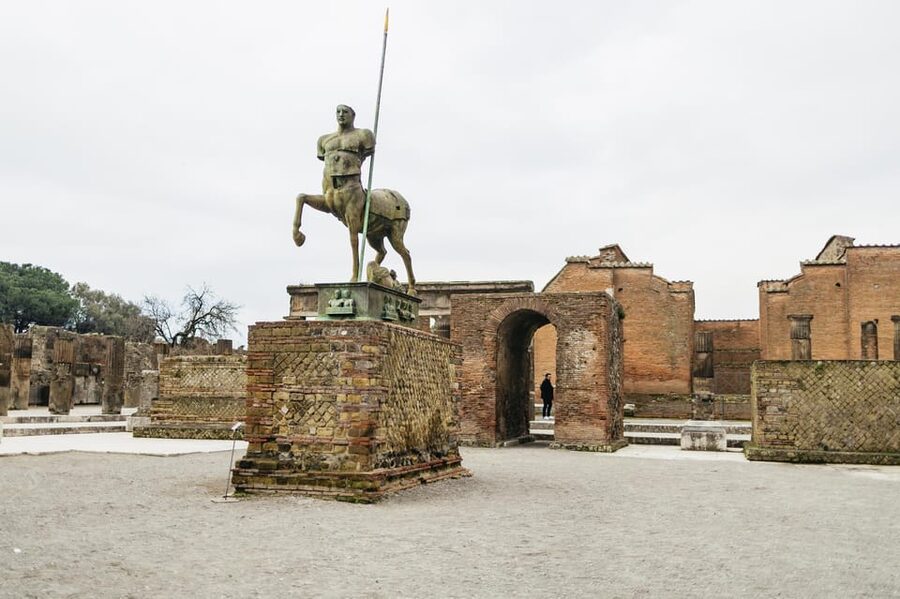
The tour includes Pompeii’s Forum area and major civic structures, including the Basilica. This is where Roman city life becomes easier to understand because it’s about crowds, decisions, commerce, and public presence.
What makes this stop feel different on a guided walk is context. The guide doesn’t just point to columns and arches; they explain how the space worked in daily terms. Think of it as the social and administrative hub—people gathered, business moved, and civic identity was on display.
Why this matters for your visit: if you only see random buildings, Pompeii can feel like a list. The Forum/Basilica focus gives your brain a storyline. You’ll start noticing how Pompeii’s layout reinforces movement, gathering, and public life.
One small drawback: the Forum zone can be busy even later in the day. The upside is that a knowledgeable guide can route you so you’re not stuck waiting in the densest spots.
Other tickets and entries for Pompei Campania

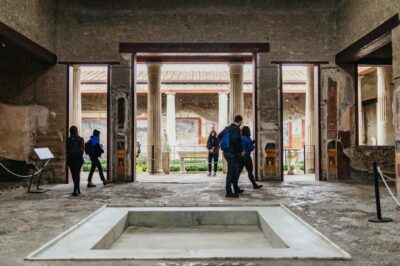
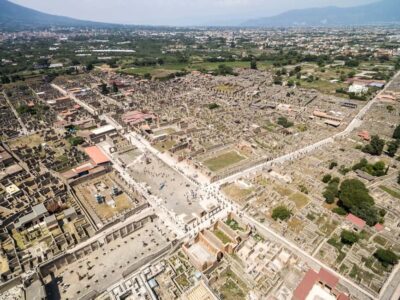
Thermal Baths and public buildings: not just sightseeing, but routine
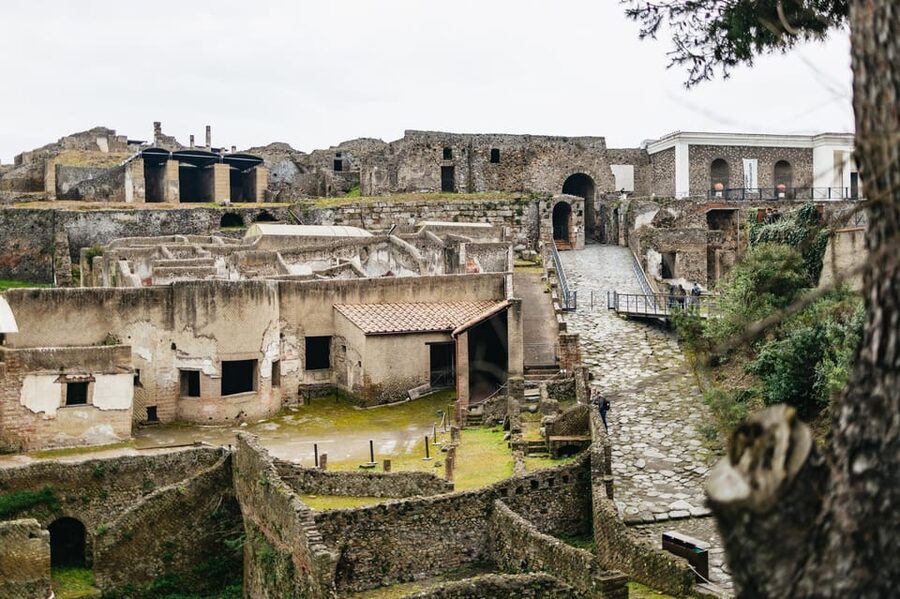
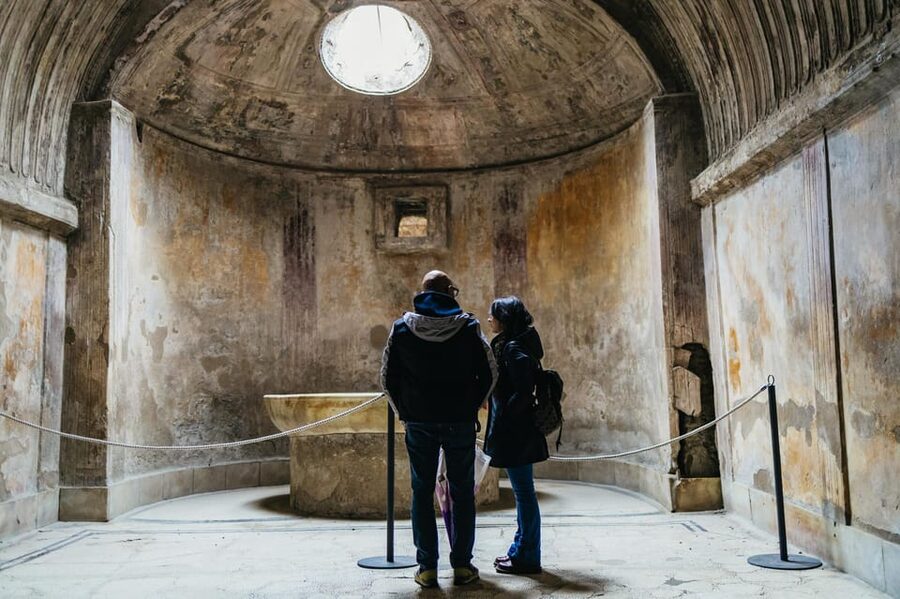
Next up is the Thermal Baths—one of the most important glimpses of how Romans spent time. These weren’t only for washing. Baths were social spaces, part of the city’s leisure rhythm, and a window into technology and civic investment.
On a guided tour, the baths stop becomes more than a photo location. You’ll hear how spaces connected—how circulation and room layout supported the day’s routine—and how public architecture served ordinary people, not just officials.
The Thermal Baths stop is also a reminder of why Pompeii is overwhelming in the best way. You stand in rooms that once held heat, steam, conversation, and movement. With a guide, you learn to read that feeling instead of just watching it happen in your imagination.
Theater time: culture, crowds, and how people gathered
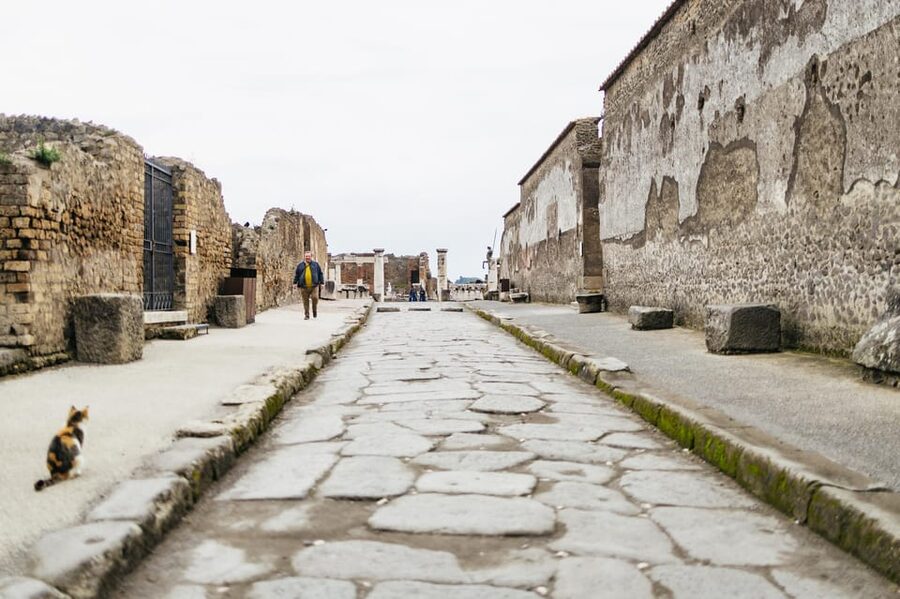
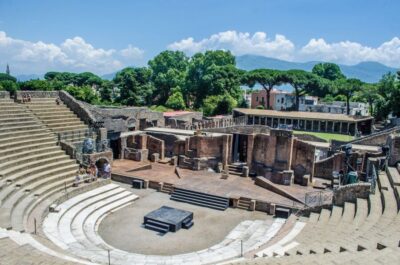
The tour includes the Theater, another must-see highlight that helps you understand Pompeii as a city where entertainment mattered. Roman theaters weren’t simply about performances. They were about gathering, status, and community.
When a guide explains the theater in place—how it fits into the town, how people likely moved through it, what the space was for—you come away with a clearer picture of how leisure worked. Without that context, theaters can feel like pretty stones. With it, they become social infrastructure.
If you’re visiting with teens or a group that wants something a bit more energetic than “lecture ruins,” this is usually the kind of stop that keeps attention. Theater scenes are easier to picture, and the stories you hear tend to land faster.
Neighborhood streets, housing blocks, and the bakery detail
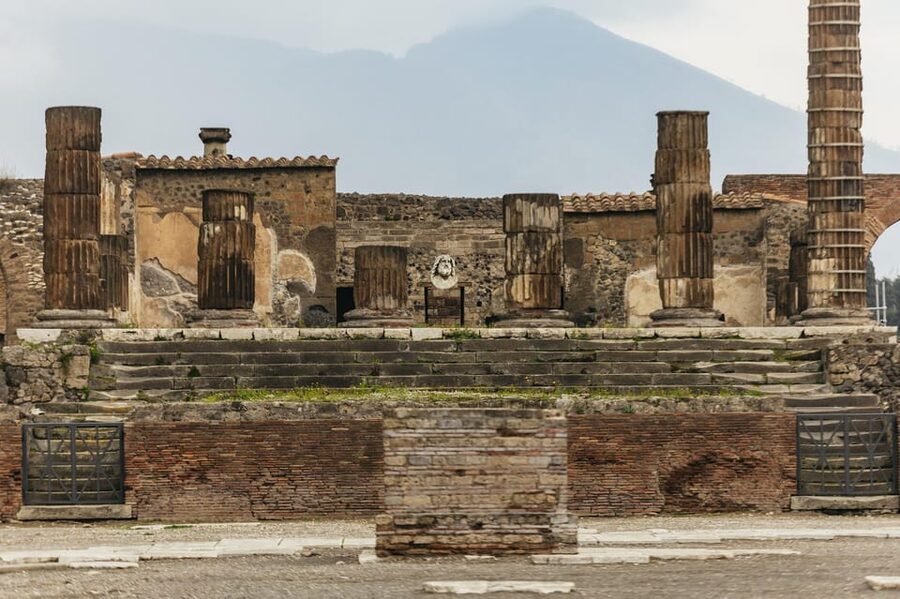
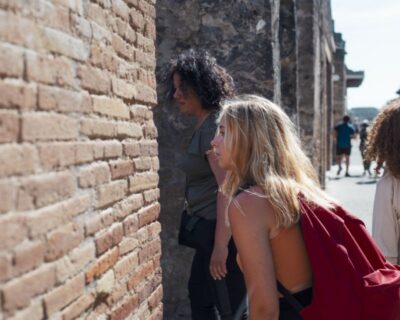
One of the most praised parts of this tour style is that it goes beyond the showpieces and into the neighborhoods. You’ll explore remnants of commercial and residential areas, including a bakery and typical housing blocks.
This is where Pompeii stops feeling like history homework. You start noticing everyday patterns: places where goods were made or sold, and the scale of living spaces. It’s not perfect—ruins are fragmented—but the guide helps you interpret what’s left.
The bakery detail is especially valuable because it anchors the story in something concrete. You can talk about civic life all day, but a bakery tells you how food, labor, and local routines connected to the street.
In short: these neighborhood stops are how you learn to see Pompeii as a city of rooms and errands, not just monuments.
The Vesuvius eruption story: impact on the city and beyond
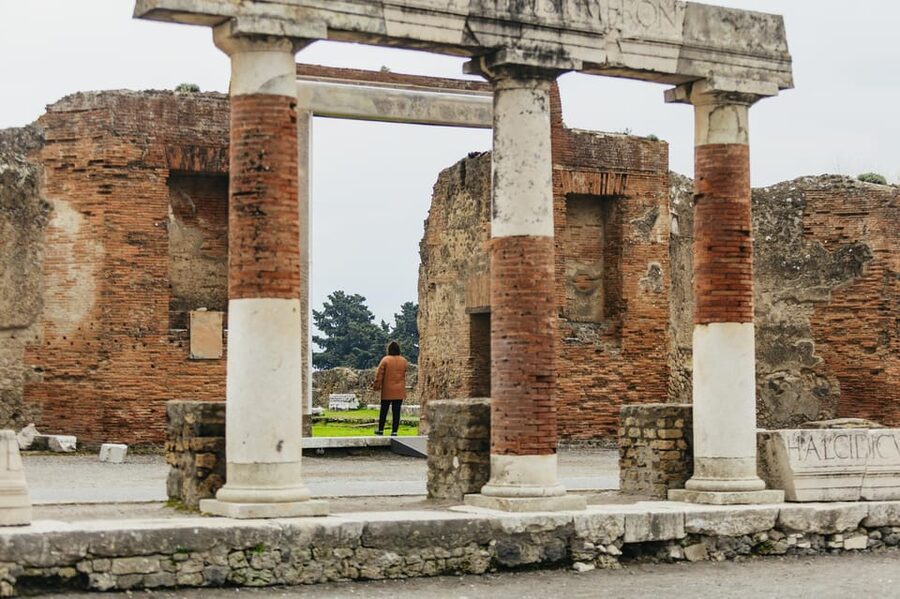
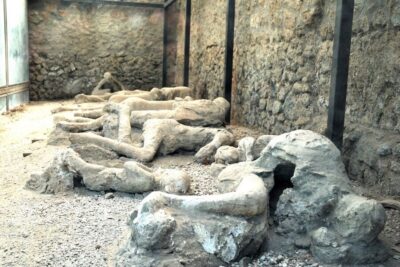
The tour covers the eruption and its impact on Pompeii and broader society. That topic deserves care, because it’s easy to turn tragedy into a dramatic recap. A good guide keeps it human and structural—how the event froze a city in time, what that means for the archaeology, and why Pompeii became such a lasting reference point for understanding the ancient world.
You’ll likely hear the eruption explained alongside what you’re standing in. That approach is powerful: it makes the catastrophe feel tied to the places you just toured.
Why this works for most visitors: Pompeii can be emotionally heavy, and a guided frame helps you process it without getting lost in one-off facts.
Sunset timing: calmer light, easier stamina, better photos
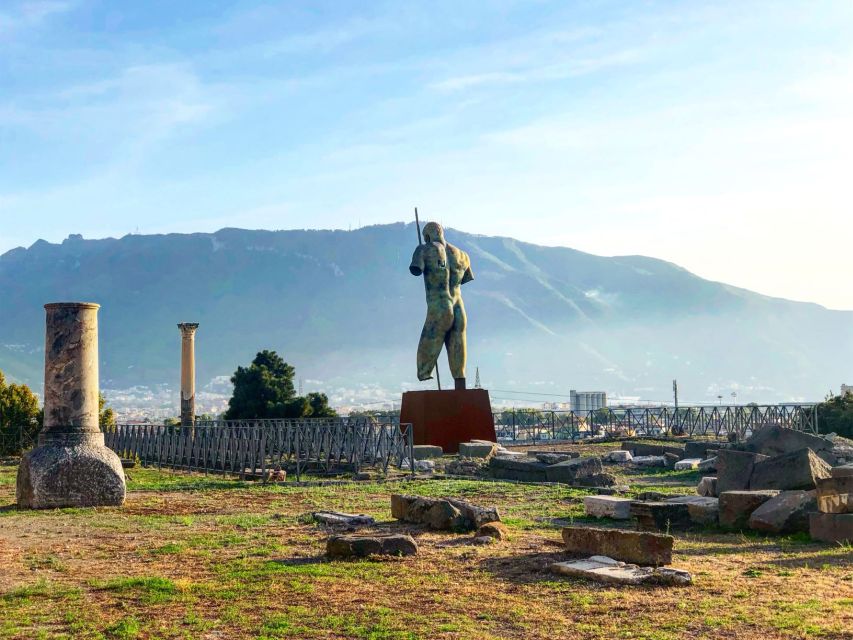
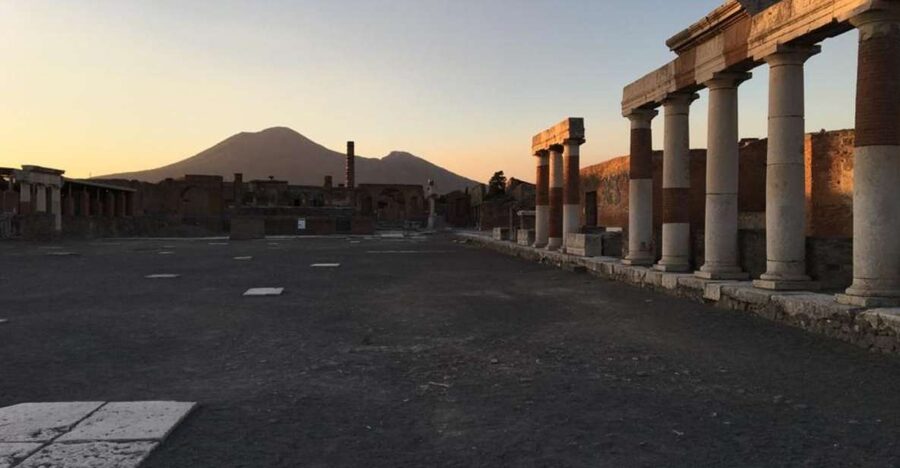
This is an afternoon to sunset format. Timing is not a small detail at Pompeii. Late-day light can make the ruins easier to read, shadows can reveal shapes in walls, and the overall pace can feel less stressful.
You’ll hear this reflected in guide praise: people specifically call out how evening touring helped with heat and crowds. One commonly noted start time in feedback is around 3:30pm, which makes sense for that shift into cooler conditions.
Even with better timing, you still need to treat this as a walking tour on uneven ground. The sun setting angle helps, but it doesn’t remove the reality of long stone paths.
Value check: is $58 a fair price for 2.5 hours?
For $58 per person, you get:
- a skip-the-line ticket to Pompeii
- a live archaeologist guide
- a curated route through major sites like the Forum, Basilica, Thermal Baths, and Theater
That bundle is the key to the value. If you price it out separately in your head, the ticket becomes just a starting point. What you’re really paying for is interpretation—having someone explain what you’re seeing, help you prioritize, and keep you moving through the site without wasting your time.
Also, the guide-driven experience matters because Pompeii is huge. A 2.5-hour window can’t cover everything. This tour earns its price by focusing on what gives you a coherent Pompeii story in a short time.
If you want the most value, come in with modest expectations: this is not an all-day Pompeii marathon. It’s a high-impact highlights route with real explanation.
Real-guide style: the names that keep showing up
Guide quality is one of the strongest signals in the feedback. Several guides receive repeated praise, including Angelo, Anna, Sasa, and Francesco, often nicknamed Frankie. You’ll also see Luigi mentioned.
Common threads in those positive notes:
- guides that answer lots of questions
- guides that keep the group engaged with story and pacing
- small-group dynamics where it feels more like a conversation than a lecture
- attention to comfort, like finding shade when stopping for explanations
Some groups are described as small (for example, around five people in one English-language tour). That’s not guaranteed, but it’s consistent with the idea that you can get a more personal experience rather than being one face in a crowd.
If you care about pacing—especially with kids, multi-generation groups, or mixed stamina—this kind of guide-led format tends to work well.
What to bring, and how to avoid the usual Pompeii regrets
You’ll want a simple kit:
- a sun hat
- your ID card (a copy is accepted)
And then the real-world extras:
- sturdy walking shoes for uneven surfaces
- water, since this is a walking tour and your time inside is fixed at about 2.5 hours
- a light layer if you run cool later in the evening
Also, plan your energy. This tour is short, but it still covers meaningful ground. If you try to sprint ahead in search of perfect photos, you’ll lose the flow of the explanation. Let the guide’s stops do the work; your job is to follow the route and ask questions when you’re curious.
Who should book this Pompeii afternoon sunset tour
This tour is a good fit if you:
- want a high-priority highlights visit in a short time
- prefer a live archaeologist guide over self-guided wandering
- enjoy context—how buildings connect to daily life
- like the idea of late-day touring when conditions are calmer
It’s less suitable if you:
- have mobility impairments
- have heart problems
- have respiratory issues
- are over 95 years old
If you’re visiting Pompeii as part of a bigger trip, this tour is especially useful. It gives you a strong foundation so you can enjoy any extra self-exploration afterward with better understanding.
Should you book this tour?
Book it if you want Pompeii to feel like a city you can understand, not just ruins you can see. The combination of skip-the-line entry, a focused route, and archaeologist guidance is a solid value for a 2.5-hour window.
Skip it if you need fully accessible terrain or if you’re looking for an unstructured, all-day tour at your own pace. In that case, you may be better off planning a longer visit and moving at your preferred rhythm.
If your goal is simple: maximize meaning, see the key buildings, and enjoy Pompeii in softer light—this afternoon-to-sunset guided tour is one of the most practical ways to do it.
FAQ
What’s included in the Pompeii afternoon to sunset guided tour?
It includes a skip-the-line entry ticket to Pompeii and an archaeologist guide.
How long is the tour?
The duration is 2.5 hours.
Where do I meet the guide?
Meet at Ristorante Bar Sgambati and look for a red Enjoy Pompeii sign.
Does the tour include skip-the-line entry?
Yes. You get skip-the-line entry through a separate entrance.
What languages are the live guides available in?
The live guide is available in Italian, English, and French.
Is transportation included?
No. Transportation is not included.
What should I bring?
Bring a sun hat and your ID card (a copy is accepted).
Who is this tour not suitable for?
It’s not suitable for people with mobility impairments, heart problems, respiratory issues, or people over 95 years.
What’s the cancellation window?
You can cancel up to 24 hours in advance for a full refund.
More Tours in Pompei Campania




More Tour Reviews in Pompei Campania


More Pompeii Tours to Compare
More Pompei Campania tours, freshly reviewed



Pompeii Tours, compared.
 ★ 4.8Pompeii: Entry Ticket and Guided Tour with an ArchaeologistFrom $3519,459 reviews
 ★ 4.1Pompeii: Entry Ticket with Audio GuideFrom $4013,491 reviews
 ★ 4.8Pompeii: Small Group Tour with an ArchaeologistFrom $4012,264 reviews
 ★ 4.3Pompeii Ruins & Mount Vesuvius Day TourFrom $12011,459 reviews
★ 5.0Pompeii Small Group Tour with an ArchaeologistFrom $356,593 reviews
★ 4.3Pompeii Ruins & Mount Vesuvius Day TourFrom $12011,459 reviews
★ 5.0Pompeii Small Group Tour with an ArchaeologistFrom $356,593 reviews
 ★ 4.5Skip-the-line Pompeii – Small Group TourFrom $544,401 reviews
 ★ 4.6Naples or Sorrento: Full-Day Pompeii and Mount Vesuvius TourFrom $1044,235 reviews
 ★ 3.9Pompeii: Skip-the-line Entry Ticket with Audio Guide & MapFrom $433,153 reviews
Browse the lists this tour appears in