
Review · POMPEII TOURS
Pompeii: Small-Group Tour of Pompeii and Herculaneum
Pompeii and Herculaneum feel like time travel. You get a small-group walk (up to 20 people) led by an archaeologist, plus the bigger win: you’re not stuck decoding ruins with zero context. What I like most is the way the guide turns scattered stones into street life, and how the two sites actually balance each other—Pompeii’s scale and heartbreak, then Herculaneum’s sharper preservation.
The only real drawback to plan for is that this is a long, packed day. Pompeii gets about 2 hours, then a break that can be short for a proper lunch sit-down, and you end the day in Ercolano, not back in Pompeii.
If you want a guided route that keeps you oriented and helps you understand what you’re seeing, this tour hits the sweet spot.
In This Review
- Key Points to Know Before You Go
- Finding the Tour Start at Porta Marina Inferiore
- Pompeii in Two Hours: How the Guide Keeps You Oriented
- A 30-Minute Break After Pompeii: Lunch Reality Check
- Getting to Ercolano by Circumvesuviana: The Simple Connection
- Herculaneum’s Two-Hour Walk: Why This One Feels More Intact
- What the Small-Group Format Changes (In a Good Way)
- Heat, Rain, and the Stuff You’ll Actually Use
- Value for Money: What You’re Paying For (Beyond Entry)
- Should You Book This Pompeii and Herculaneum Tour?
- FAQ
- Where is the meeting point?
- How long is the tour?
- What’s the group size?
- How do you get from Pompeii to Herculaneum?
- What languages is the tour offered in?
- What should I bring and what’s the ticket situation?
Key Points to Know Before You Go
- Small-group size (max 20): easier pacing, fewer bottlenecks, and your guide can steer you through the most meaningful spots
- Archaeologist-led explanations: not just dates, but how buildings, daily routines, and the eruption tie together
- Pompeii’s “wow and ache” contrast: you see a massive city shaped by 79 A.D. ash and pumice
- Herculaneum’s better preservation: the site’s layout and surviving materials make daily life feel close
- Circumvesuviana train hop: a simple, about-20-minute connection to Ercolano between ruins
- Skip-the-ticket-line setup: helps you spend more of your time walking and listening
Which Pompeii ticket and guide? Compare a few more.
- Pompeii: Entry Ticket and Guided Tour with an Archaeologist★ 4.8 · 19,459 reviews
- Pompeii: Small Group Tour with an Archaeologist★ 4.8 · 12,264 reviews
- Pompeii: Skip-the-line Entry Ticket with Audio Guide & Map★ 3.9 · 3,153 reviews
- Naples: Pompeii and Mt. Vesuvius with Lunch and Wine Tasting★ 4.5 · 2,454 reviews
Finding the Tour Start at Porta Marina Inferiore
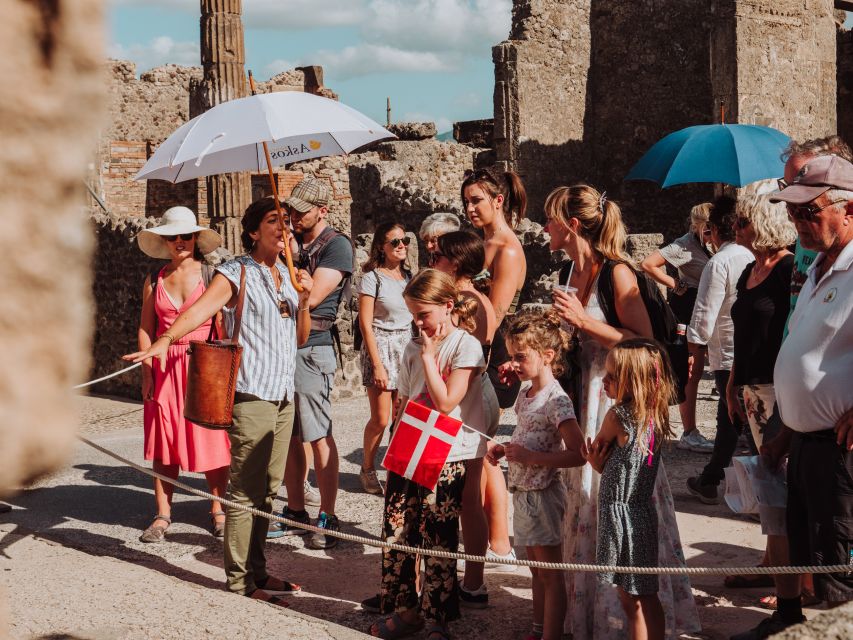
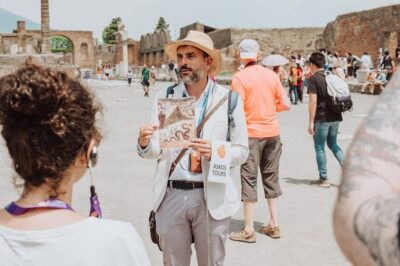
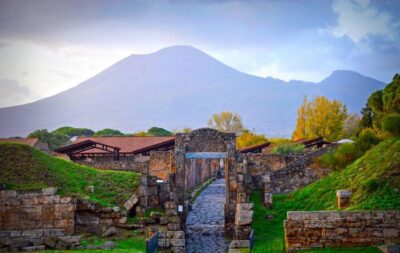
The day begins at Piazza Porta Marina Inferiore, 1, on the left side of the Pompeii entrance called Porta Marina Inferiore. This is near the Arte bus stop, and you’ll look for a sign with Askos Tours on it. It’s also a few minutes’ walk from the Circumvesuviana station (Pompei-Villa dei Misteri), so it’s not a mystery-to-reach meeting point.
Why this matters: Pompeii is chaotic on arrival. If you show up early, you’ll waste less time figuring out where your group gathers, and you’ll start the real experience (walking with a guide) with less stress.
Tip: bring your ID/passport with you. The tour info is explicit about it.
Pompeii in Two Hours: How the Guide Keeps You Oriented
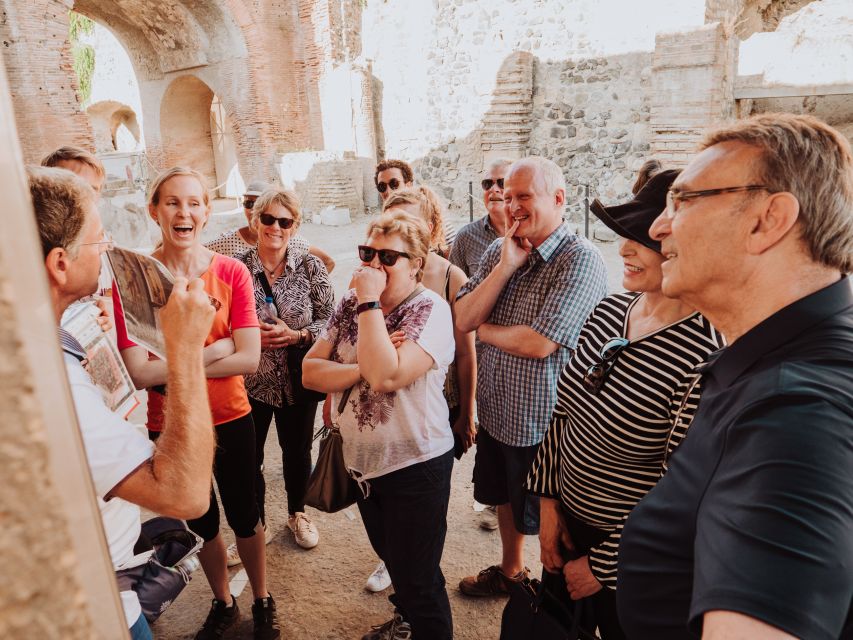
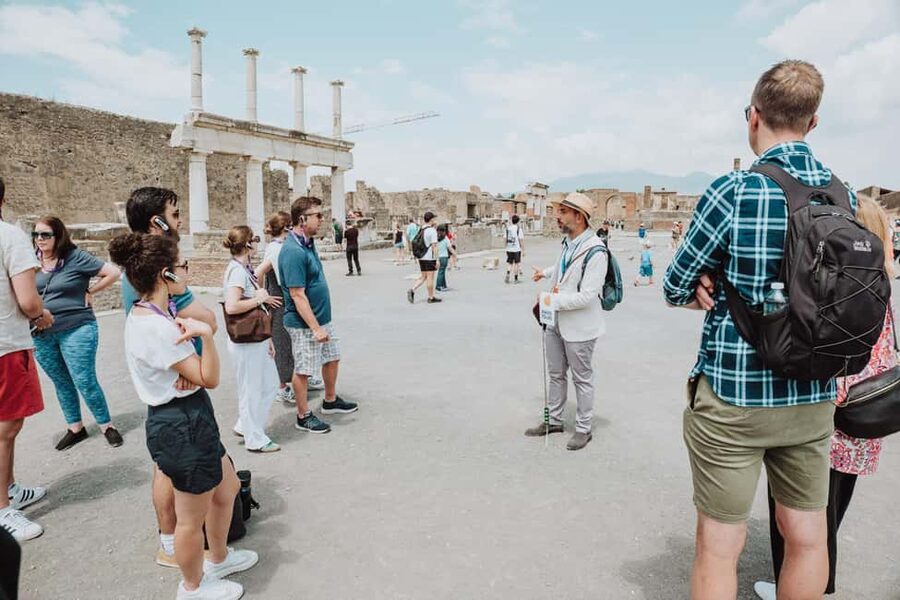
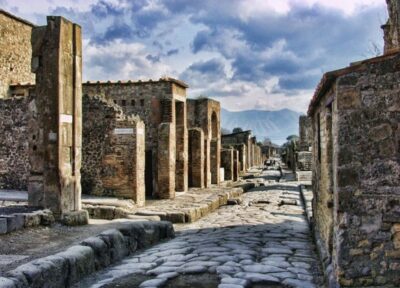
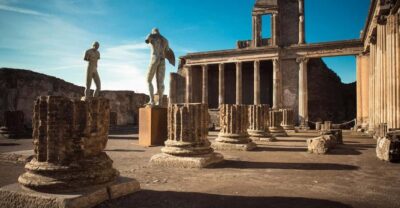
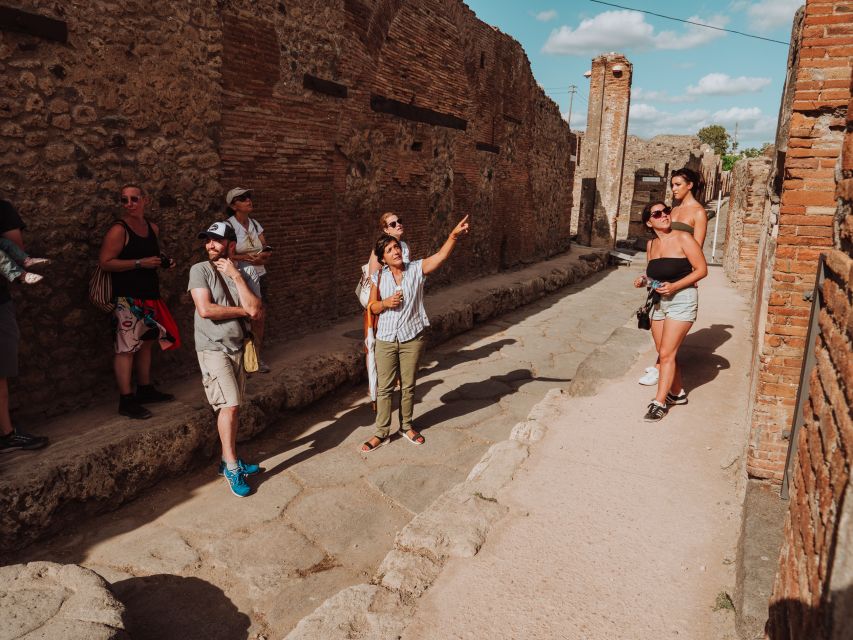
Pompeii takes about 2 hours of guided walking. That time limit forces focus, which is good. Pompeii is huge, and without structure you can end up staring at fragments and losing the bigger story.
With an archaeologist guide, you’re guided through the key themes that make Pompeii make sense:
- How the eruption trapped everyday stuff: tons of pumice and volcanic ash buried the city in 79 A.D.
- Why certain details survived: the burial conditions preserved objects and surfaces in striking condition
- What you’re seeing in human terms: not just architecture, but the routines of homes, public spaces, and neighborhoods
Pompeii can be emotionally heavy. In some stops, the guide helps you connect the site to the people who lived there—something you miss if you only read signs. Several guides highlighted in the experience descriptions (people like Diego, Alfonso, and Paolo, among others) are praised for making complicated archaeology feel clear and story-driven, not lecture-like.
Also, you’re in English (with the group tour). If you’ve ever wished the ruins came with a translator who also knows what to point at, this is the setup.
One practical note: Pompeii is crowded and sun-baked, so you’ll want comfortable shoes and a hat if you’re going in warmer months.
A 30-Minute Break After Pompeii: Lunch Reality Check
After Pompeii, you get about 30 minutes for a break. This usually means either a quick bite at a nearby place or grabbing something and keeping moving.
Here’s the trade-off: Pompeii’s ruins are physically demanding, and the time window can be tight if you want a sit-down lunch away from heat and crowds. Some people would prefer more time for a longer meal and a real rest.
So plan like this:
- If you’re the type who needs a proper lunch break, have a lighter mindset for this portion.
- If you’re okay with a sandwich and getting back to the walking, this break works fine.
If you go in summer, keep water close. The ruins don’t care about your schedule, and your energy will run out before your interest does.
Getting to Ercolano by Circumvesuviana: The Simple Connection
Then you head to the Circumvesuviana train, a short transfer of about 20 minutes to Ercolano (also called Herculaneum/Ercolano depending on spelling you see). The schedule sets aside about 30 minutes for the train portion, which gives you a bit of buffer to get on, off, and regroup.
Why the train matters for value: it’s an efficient way to cover both sites in one day without complicated touring logistics. And since the tour ends in Ercolano, you’re not doing redundant backtracking.
One thing to know: the tour concludes at Parco Archeologico di Ercolano, so you’ll still need a plan for how you return to your hotel after the tour ends. The experience info doesn’t promise a return ride to Pompeii.
Herculaneum keeps a few more tours worth your time

Herculaneum’s Two-Hour Walk: Why This One Feels More Intact
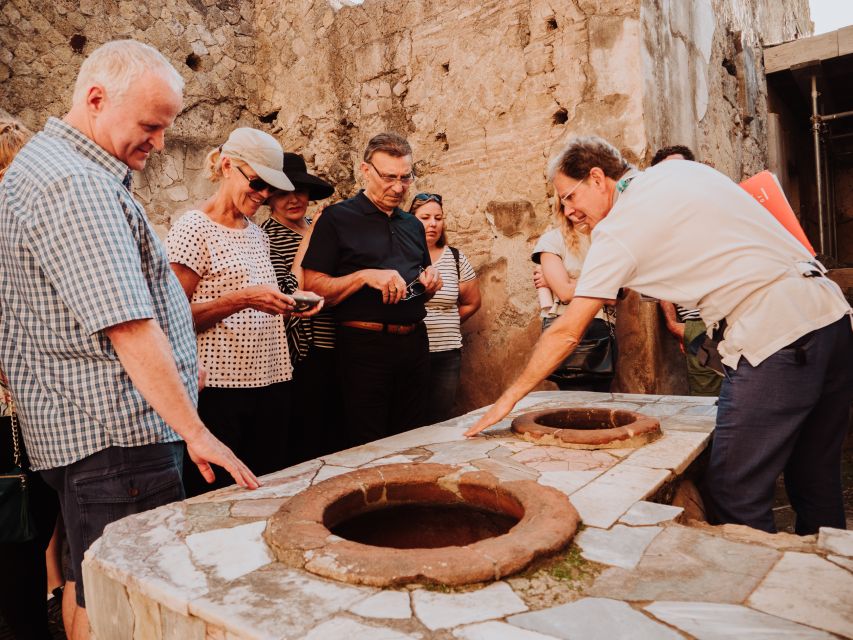
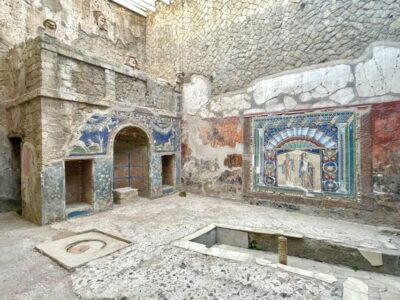
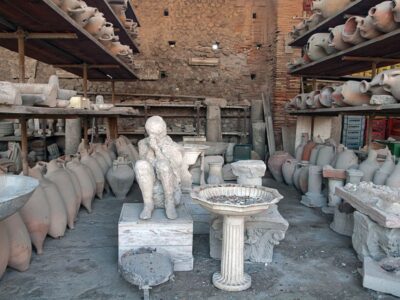
Herculaneum gets about 2 hours of guided walking, and this is where the tour often wins people over. The site is smaller than Pompeii, but it’s better preserved, and that difference changes how you experience it.
The big reason is the type of burial:
- Pompeii was covered in roughly four meters of ash
- Herculaneum was hit by a mud avalanche about 20 meters thick
That mud sealed structures differently, and it’s the main reason you can still appreciate details such as:
- second floors of buildings
- carbonized wooden objects
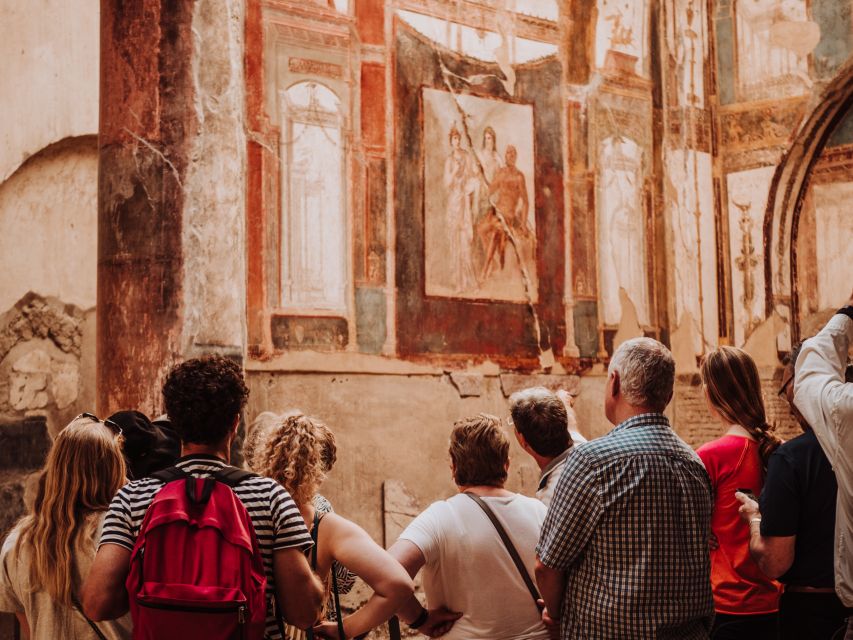
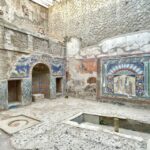
- intact paintings, mosaics, and visible interior decoration
In plain terms: Herculaneum can feel more like you’re stepping into the building rather than touring the aftermath. People described this as getting a clearer glimpse of what wealthier Roman life looked like—tiling, decor, and the kind of materials that say money and taste.
The guide’s job here is to connect what you see to how the city worked: rooms, layout, daily movement, and how the preservation helps archaeologists reconstruct the past. Many guides in the experience descriptions—such as Sergio, Alfredo, Julia, and Vincenzo—are specifically praised for making the walk feel understandable instead of overwhelming.
What the Small-Group Format Changes (In a Good Way)
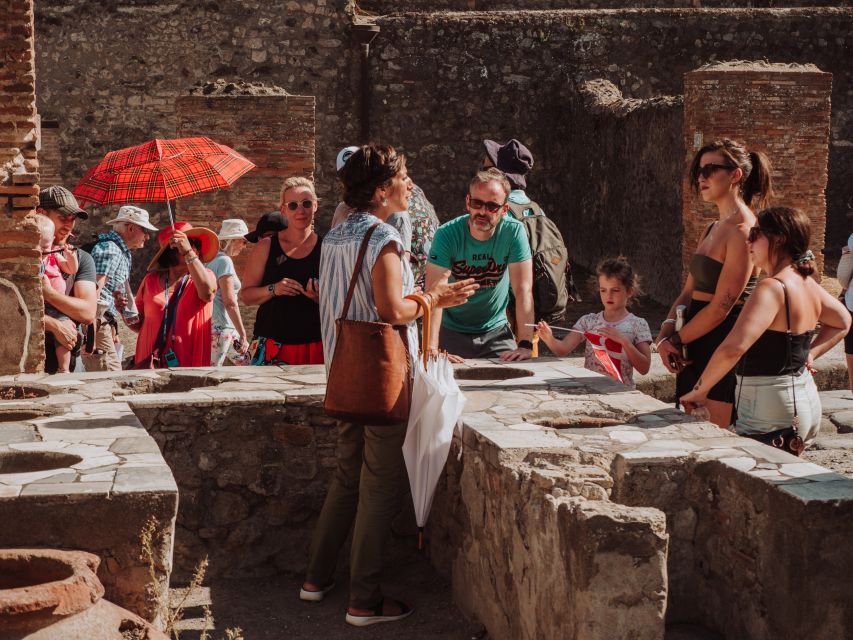
With a group capped at 20, you get a calmer pace inside sites that are anything but calm. This affects the experience in a few practical ways:
- You’re less likely to get separated
- Your guide can choose routes that avoid the worst crush at that moment
- Hearing the guide stays easier during longer stretches
For groups of more than 10, the tour provides headsets. That’s a big deal in Pompeii and Herculaneum. Ruins are not built for modern conversations, and headsets prevent the classic problem of guessing what you missed.
If you hate feeling rushed, or you want to ask questions without being shut down by crowd timing, this small-group approach is a major selling point.
Heat, Rain, and the Stuff You’ll Actually Use
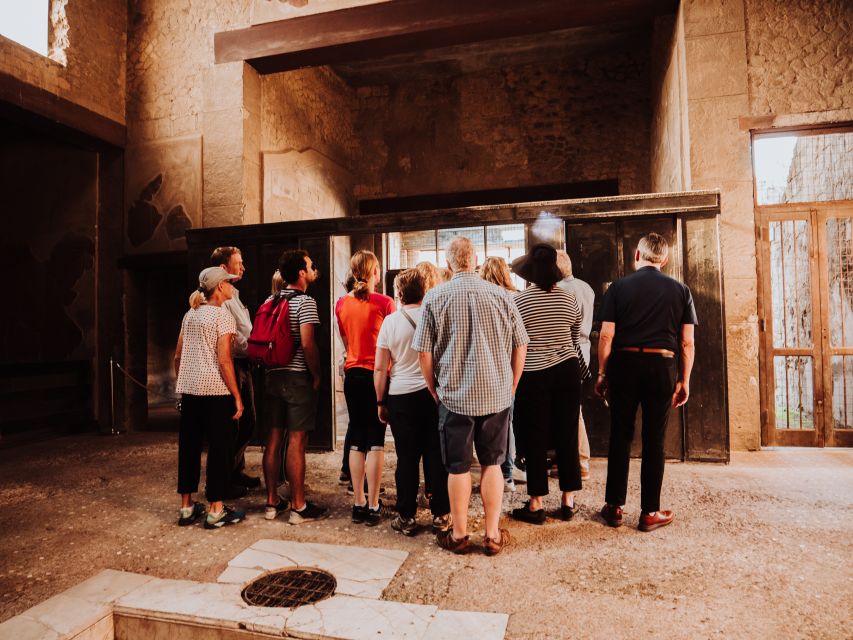
This is outdoor walking, with uneven ground and long distances between meaningful spots. The tour’s guidance is practical:
- Wear comfortable clothes
- Bring sunglasses, a hat, and water in the summer
- Bring a raincoat or poncho if sudden showers hit
From the experience descriptions, guides (including people like Antonio and Amadeus/Amedeo) are often praised for keeping the group moving smartly in hot weather—staying aware of shade and pacing.
Still, don’t rely on shade alone. Treat this as a day where you manage your body as much as your schedule.
Also: the tour isn’t suitable for people with mobility impairments or wheelchair users. The sites are not set up like a smooth walking path.
Value for Money: What You’re Paying For (Beyond Entry)
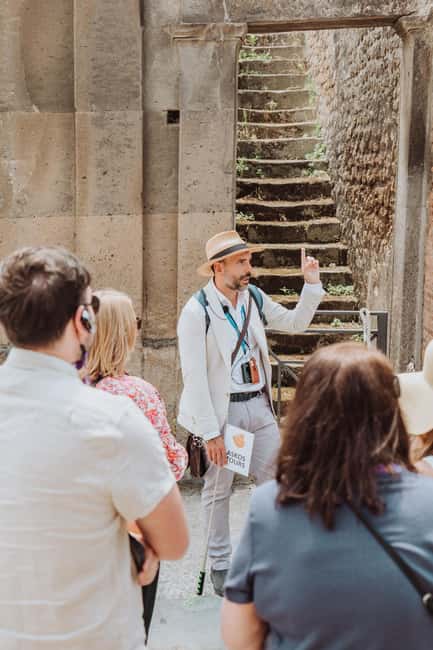
Touring Pompeii and Herculaneum is expensive in time and attention. You can do it on your own, but you’ll miss a lot of what makes these sites click.
Here’s what you’re buying with this format:
- An archaeologist guide who can explain what you’re seeing, why it matters, and how the eruption shaped preservation
- Two sites in one day without you having to plan the full route
- Skip-the-ticket-line setup for the sites
- Headsets for larger groups, so the guide stays audible and the experience stays coherent
One ticket detail you might care about: the info provided lists Herculaneum entry prices as 16.00 euros for adults and 2.00 euros for EU citizens aged 18–25. If your booking includes admission handling, you’ll appreciate the skip-the-line style. If not, at least you know what you’re potentially paying for the second site.
Either way, the main value is the reduction of frustration. Pompeii alone can be confusing. Herculaneum alone can feel quiet and hard to interpret without context. Together, with a trained guide, they tell a fuller story.
Should You Book This Pompeii and Herculaneum Tour?
Book it if you want:
- A guide-led experience that helps you understand ruins instead of just seeing them
- Both cities in one day, with a simple train connection between Pompeii and Ercolano
- A small-group pace and headsets (if your group size triggers it)
Skip it or look for an alternative if:
- You want a long, sit-down lunch and plenty of free time to wander
- You need an accessibility-friendly route (this one isn’t suitable for wheelchair users or mobility impairments)
- You’re expecting a relaxed, slow sightseeing day with lots of downtime
If you’re torn, here’s the easiest decision rule: if you’d feel lost without a person explaining what every building and mosaic is telling you, this tour is the right kind of structure.
FAQ
Where is the meeting point?
You meet at Piazza Porta Marina Inferiore, 1, at the left side of the Pompeii entrance named Porta Marina Inferiore, near the Arte bus stop. The guide holds an Askos Tours sign.
How long is the tour?
The tour duration is 5.5 hours.
What’s the group size?
It’s a small group with a maximum of 20 people.
How do you get from Pompeii to Herculaneum?
You take the Circumvesuviana train from Pompeii to Ercolano, and it’s about a 20-minute trip.
What languages is the tour offered in?
The tour is conducted in English (and Italian as well).
What should I bring and what’s the ticket situation?
Bring a passport or ID card. Wear comfortable clothes and bring water, plus sunglasses and a hat in summer, and a raincoat/poncho for sudden rain. The provided info lists Herculaneum entry as 16.00 euros for adults and 2.00 euros for EU citizens 18–25.
More Tour Reviews in Pompei Campania




Herculaneum, a Few More Tours

More Pompeii Tours to Compare
More Pompei Campania tours, freshly reviewed


Pompeii Tours, compared.
 ★ 4.8Pompeii: Entry Ticket and Guided Tour with an ArchaeologistFrom $3519,459 reviews
 ★ 4.1Pompeii: Entry Ticket with Audio GuideFrom $4013,491 reviews
 ★ 4.8Pompeii: Small Group Tour with an ArchaeologistFrom $4012,264 reviews
 ★ 4.3Pompeii Ruins & Mount Vesuvius Day TourFrom $12011,459 reviews
★ 5.0Pompeii Small Group Tour with an ArchaeologistFrom $356,593 reviews
★ 4.3Pompeii Ruins & Mount Vesuvius Day TourFrom $12011,459 reviews
★ 5.0Pompeii Small Group Tour with an ArchaeologistFrom $356,593 reviews
 ★ 4.5Skip-the-line Pompeii – Small Group TourFrom $544,401 reviews
 ★ 4.6Naples or Sorrento: Full-Day Pompeii and Mount Vesuvius TourFrom $1044,235 reviews
 ★ 3.9Pompeii: Skip-the-line Entry Ticket with Audio Guide & MapFrom $433,153 reviews
Browse the lists this tour appears in