
Review · POMPEII TOURS
Pompeii: Skip-the-Line Private Tour with Archaeologist Guide
Pompeii feels personal when you go in with an archaeologist. This private skip-the-line Pompeii tour is built for smart pacing and clearer context as you move through the public buildings, homes, and Roman streets. I especially like how the guide connects paintings, mosaics, and daily life into one story you can actually follow, not a blur of ruins.
The main drawback to plan for: entrance tickets are not included, so you still need to buy them (and the first Sunday rule can make timing tricky).
In This Review
- Key reasons this Pompeii tour works
- Skip the ticket rush at Pompeii’s entrance
- What you’ll learn from an archaeologist guide (and why it changes everything)
- Public Pompeii: forum, gymnasium, baths, and amphitheater
- Forum: the civic center in stone form
- Gymnasium: training, status, and routine
- Baths: comfort culture (with rules)
- Amphitheater: spectacle with an audience in mind
- Homes and art: domus mosaics and frescoes you can actually appreciate
- Pompeii street life: shops, laundries, bakery-style eats, and the ancient brothel
- Ancient shops that feel modern
- The ancient brothel: uncomfortable, but important
- How the pacing works in 2.5 hours (and what you should do afterward)
- Price and value for a private group up to 20 people
- Who this tour suits best
- What to bring so you don’t lose the day
- Should you book this Pompeii skip-the-line private tour?
- FAQ
- How long is the Pompeii skip-the-line private tour?
- Are Pompeii entrance tickets included?
- Where do we meet the guide?
- What languages is the live guide available in?
- Is the tour private?
- What should I bring for the visit?
- Is there free entry on the first Sunday of the month?
Key reasons this Pompeii tour works
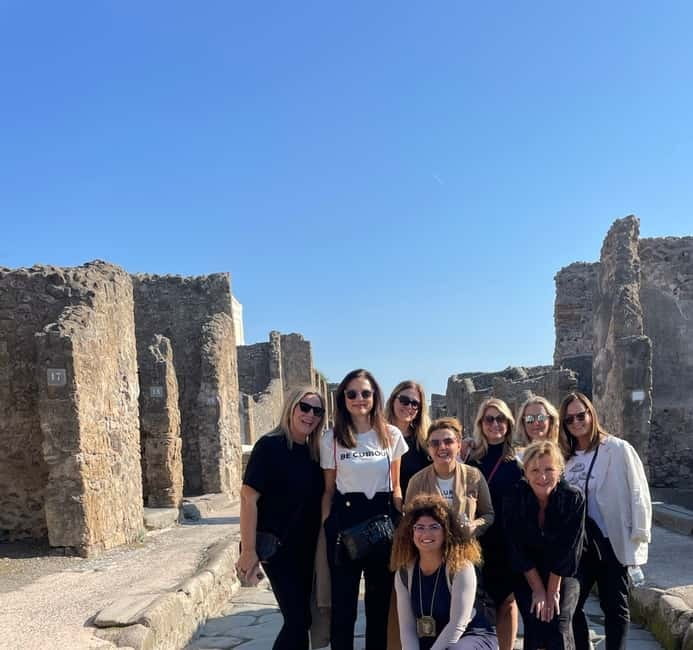
- Skip-the-line ticket office access so you lose less time standing around.
- Archaeologist-led storytelling tied to major Pompeii public sites.
- Mosaics and frescoes in the domus—art you can read like a scene.
- Roman daily-life stops like gymnasium, baths, forum, amphitheater, and more.
- Independent time after the guided portion to wander where you want.
Which Pompeii ticket and guide? Compare a few more.
- Pompeii: Entry Ticket and Guided Tour with an Archaeologist★ 4.8 · 19,459 reviews
- Pompeii: Small Group Tour with an Archaeologist★ 4.8 · 12,264 reviews
- Pompeii: Skip-the-line Entry Ticket with Audio Guide & Map★ 3.9 · 3,153 reviews
- Naples: Pompeii and Mt. Vesuvius with Lunch and Wine Tasting★ 4.5 · 2,454 reviews
Skip the ticket rush at Pompeii’s entrance
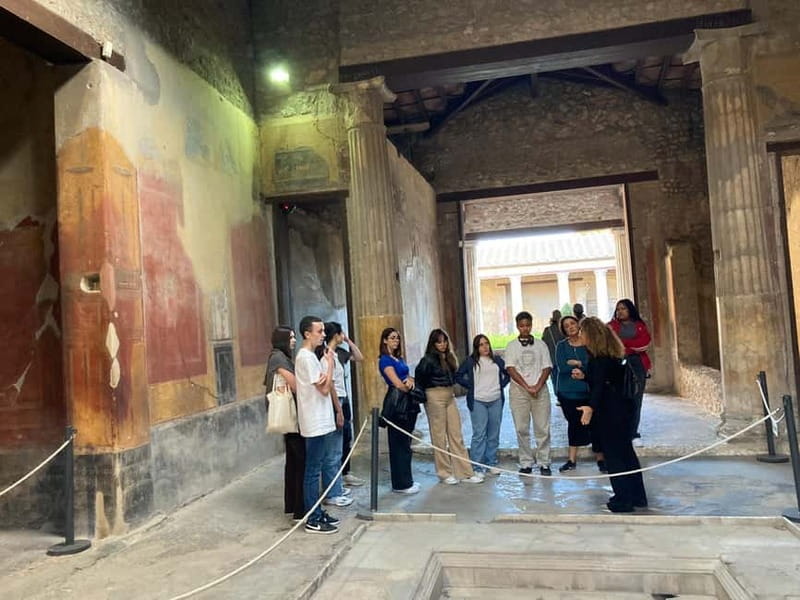
Pompeii is popular, which means lines can turn your visit into a waiting game. This tour solves that with priority entrance to the ticket office, plus a skip-the-line style experience so you start seeing things faster. That matters because Pompeii isn’t small. If you spend your first hour queued up, the rest of the ruins feel rushed.
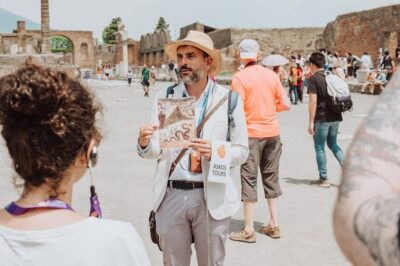
You’ll meet your guide at the entrance to the excavations, and they’ll be holding a sign with your names. After the 2.5-hour tour, you head back to that same meeting point. The structure is simple, and it helps you keep momentum without constantly re-checking where everyone is headed next.
What you’ll learn from an archaeologist guide (and why it changes everything)
A regular walk through Pompeii is impressive, but an archaeologist changes the experience. The guide isn’t just pointing out what’s there. They explain how the buildings worked, what people likely did inside, and what the surviving art and spaces can tell us.
I like that this tour is designed around the way Pompeii functioned hour by hour—especially the contrast between public spaces and private life. You’ll see how Romans moved through the city: where they gathered, exercised, bathed, judged, watched events, shopped, and socialized. The aim is to help you retrace the last hours of the city through the buildings that still make that pattern visible.
You’ll also get context for the “wow” moments. The frescoes and mosaics don’t just look pretty. They’re clues about status, taste, and daily routines. When you understand that, even a small painted wall section feels like it has a job.
Public Pompeii: forum, gymnasium, baths, and amphitheater
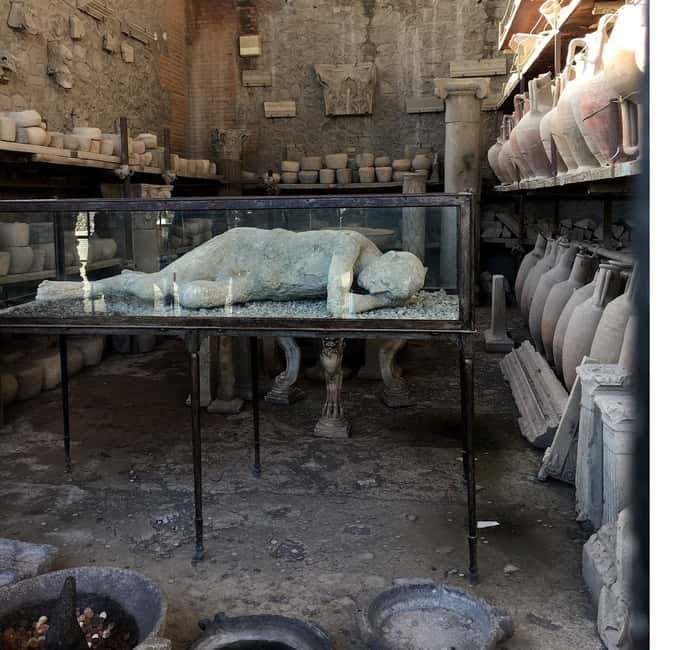
This tour focuses on Pompeii’s public-facing buildings, the places where city life happened. Even if you don’t call yourself an “ancient history person,” these stops are practical. They show you how a Roman city ran day to day.
Forum: the civic center in stone form
The forum is the obvious headline, but it’s still worth your time because it’s where public decisions and social interaction overlapped. When a guide frames the forum as more than a big open space—think announcements, meetings, movement—you start noticing how the layout shapes people’s behavior. You stop seeing it as ruins and start seeing it as traffic.
More guided runs around Pompei Campania

Gymnasium: training, status, and routine
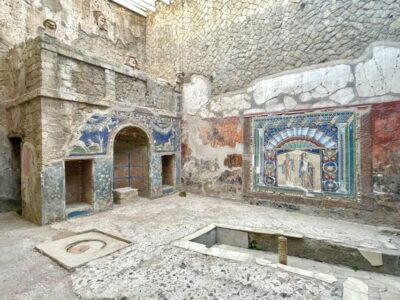
In the gymnasium, you get a sense of Roman priorities. This is where exercise, discipline, and public identity intersected. A good archaeologist guide will connect what you see to how routines played out in real life—so the space stops being “a building with columns” and becomes a daily schedule you can imagine.
Baths: comfort culture (with rules)
The tour includes the baths, which were a major part of Roman routine. What I like here is that baths were both practical and social—people cleaned up, relaxed, and spent time together. The guide’s archaeologist lens helps you understand the purpose of different areas, rather than treating the bath complex like one giant mystery room.
Amphitheater: spectacle with an audience in mind
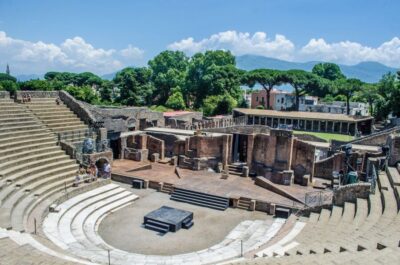
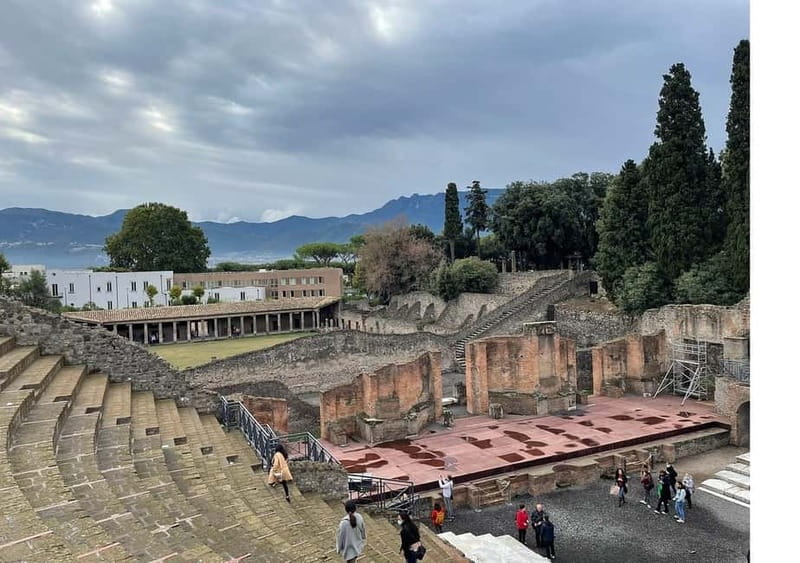
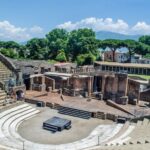
The amphitheater is where Pompeii turns dramatic. You’ll be able to connect the space with the idea of crowds, noise, and spectacle. The guide’s commentary helps you imagine what the experience would have felt like to sit there and watch events unfold. It’s a stop where visuals are great, but interpretation is what makes it unforgettable.
Homes and art: domus mosaics and frescoes you can actually appreciate
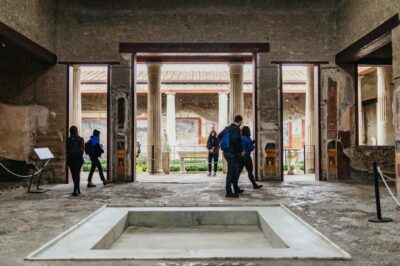
If you only see Pompeii’s streets and big public spaces, you miss the emotional side of the place. This tour brings you into the ancient domus (private houses), where the art and decoration do real work.
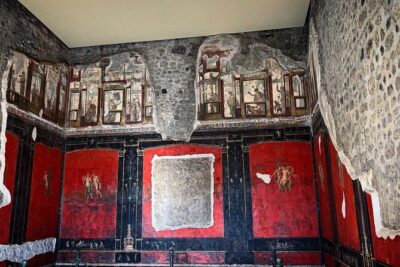
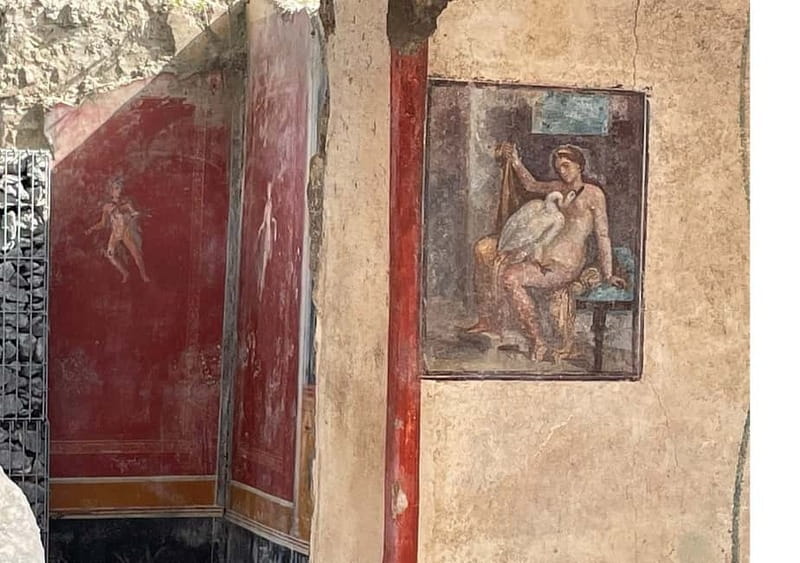
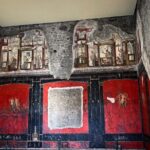
Here’s the key value: the guide leads you to mosaics and frescoes and helps you see why they mattered. You’ll admire the original mosaics and frescoes, not as museum pieces, but as part of how people lived—where guests were received, where families spent time, and where status showed itself.
Even from what survives, Pompeii’s homes can feel personal. You’re standing in spaces that once held routines: looking at patterns, scenes, and decoration that would have been everyday life. An archaeologist guide helps you read those details instead of just admiring them.
One small caution: mosaics and frescoes can pull you into a slow, photo-heavy pace. That’s great—just wear comfortable shoes and plan to step often. Pompeii rewards looking closely, but it also punishes slow walking with hot, uneven ground.
Pompeii street life: shops, laundries, bakery-style eats, and the ancient brothel
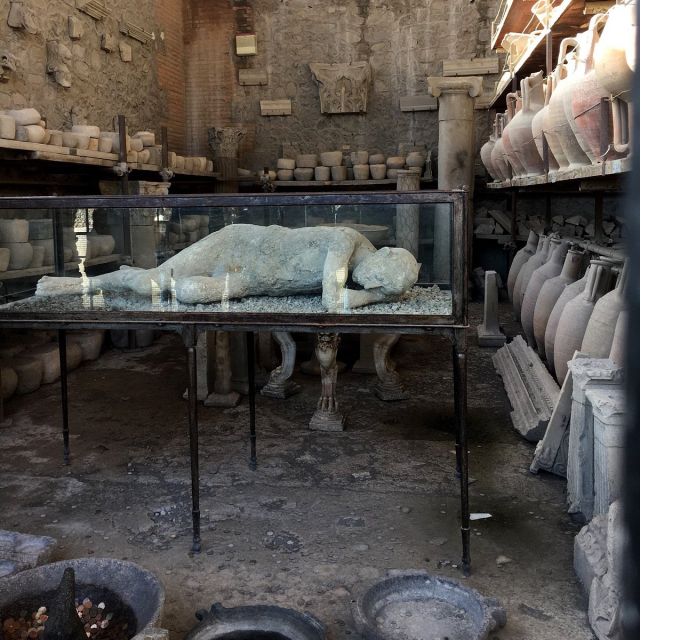
Pompeii is famous for big buildings, but it’s also famous for how ordinary daily life left evidence. This tour highlights those “wait, people were doing that here?” moments.
Ancient shops that feel modern
On the way, you may pass through or be shown ancient shops that mirror things you still recognize: a laundry, something close to fast food, and a bakery. The surprising part isn’t the word “shop.” It’s how instantly familiar the functions feel when you put them into a Roman context.
This is one of the reasons I recommend a guided stop here. Without explanation, you might miss how these spaces fit into the city’s rhythm. With a guide, you start to connect commerce, neighborhoods, and movement through the streets.
The ancient brothel: uncomfortable, but important
Yes, the tour includes the ancient brothel. You should approach it with the right expectations. It’s not for shock value. It’s part of how the city operated and how social life functioned, including who served whom and how commerce worked in intimate spaces.
A good guide’s job is to make the visit respectful and meaningful. You’ll learn in a way that’s less gossip and more interpretation—what the building represents and what you can infer from the layout and decoration.
How the pacing works in 2.5 hours (and what you should do afterward)
A 2.5-hour tour is long enough to matter and short enough to keep energy. The style here is to cover major public and private highlights so you don’t end up sprinting randomly between two points and missing the “why.”
You’ll have time after the guided portion to explore independently. That’s an underrated feature. Pompeii doesn’t reward rigid schedules forever. Once you understand the big idea—public life vs private life, and how art and daily routines fit—you can wander with better instincts.
When you strike out on your own after the tour, focus on what grabbed you most:
- If you loved mosaics and frescoes, spend extra time in domus areas your guide highlighted.
- If you were drawn to civic buildings, return for another look at the forum and how movement across spaces would have worked.
Price and value for a private group up to 20 people
The price is listed at $192.58 per group up to 20 for a 2.5-hour private tour. That pricing can be a good deal if your group is actually large, because private archaeology guide time can get expensive fast. But it can also be reasonable for smaller parties if you care about skipping lines and getting interpretation rather than a simple walk.
Think of what you’re paying for:
- A real archaeologist guide who explains buildings and context.
- Priority entrance to the ticket office, which saves time and frustration.
- A structure that hits the major Pompeii themes instead of letting you get lost in the biggest sights.
The one “watch out” is that entrance tickets aren’t included, so your real total depends on ticket costs. Still, a skip-the-line private guide can make sense when you want high value per minute.
Who this tour suits best
This experience is a strong match if you want:
- a clear, story-based visit instead of wandering,
- major Pompeii buildings with context,
- art-focused time in mosaics and frescoes,
- and a guide who can adapt pacing to the group.
It’s also a great fit for people who like practical learning. The tour is described as an archaeologist showing how Romans lived, not just reciting names and dates. One of the standout points is that the guide can adjust to your group and help you avoid crowds when possible. That makes a noticeable difference in comfort and attention.
What to bring so you don’t lose the day
This is Pompeii. You’ll thank yourself for basic prep.
Bring:
- Comfortable shoes (you’ll be walking on uneven ground)
- Sun hat
- Water
If you’re the type who likes photos, add one more item mentally: time. When you see a mosaic or fresco and the guide explains what you’re looking at, you’ll probably want a few minutes just to stare. That’s normal here.
Also note the first Sunday rule: on the first Sunday of each month, entry is free of charge, but tickets can’t be reserved ahead, so entry isn’t guaranteed. If you’re planning around that date, build in flexibility.
Should you book this Pompeii skip-the-line private tour?
I’d book it if you want Pompeii to feel like a living place instead of a pile of stones. The biggest reason is the mix: skip-the-line priority access plus an archaeologist guide who connects public buildings, private homes, and everyday life like shops and street functions. You’ll also like the independence after the tour, which lets you follow your own curiosity once the big story is clear.
Don’t book it if you’re allergic to walking or if you’re very mobility-limited. Even though the tour is listed as wheelchair accessible, it’s also flagged as not suitable for people with mobility impairments. In your shoes—literally—this is the kind of situation where you should double-check fit before committing.
If your goal is a smart, meaningful Pompeii visit that uses time efficiently, this private format is a solid choice.
FAQ
How long is the Pompeii skip-the-line private tour?
It lasts about 2.5 hours.
Are Pompeii entrance tickets included?
No. Entrance tickets are not included.
Where do we meet the guide?
The guide waits at the entrance to the excavations with a sign showing the clients’ names.
What languages is the live guide available in?
The tour guide is available in English, French, and Italian.
Is the tour private?
Yes. It’s a private group experience.
What should I bring for the visit?
Bring comfortable shoes, a sun hat, and water.
Is there free entry on the first Sunday of the month?
Yes, entry is free of charge on the first Sunday of each month, but tickets can’t be reserved ahead, so entry isn’t guaranteed.
More Tours in Pompei Campania




More Tour Reviews in Pompei Campania



More Pompeii Tours to Compare
More Pompei Campania tours, freshly reviewed



Pompeii Tours, compared.
 ★ 4.8Pompeii: Entry Ticket and Guided Tour with an ArchaeologistFrom $3519,459 reviews
 ★ 4.1Pompeii: Entry Ticket with Audio GuideFrom $4013,491 reviews
 ★ 4.8Pompeii: Small Group Tour with an ArchaeologistFrom $4012,264 reviews
 ★ 4.3Pompeii Ruins & Mount Vesuvius Day TourFrom $12011,459 reviews
★ 5.0Pompeii Small Group Tour with an ArchaeologistFrom $356,593 reviews
★ 4.3Pompeii Ruins & Mount Vesuvius Day TourFrom $12011,459 reviews
★ 5.0Pompeii Small Group Tour with an ArchaeologistFrom $356,593 reviews
 ★ 4.5Skip-the-line Pompeii – Small Group TourFrom $544,401 reviews
 ★ 4.6Naples or Sorrento: Full-Day Pompeii and Mount Vesuvius TourFrom $1044,235 reviews
 ★ 3.9Pompeii: Skip-the-line Entry Ticket with Audio Guide & MapFrom $433,153 reviews