
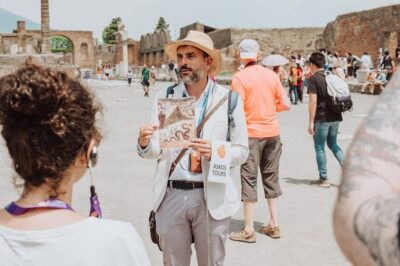
Pompeii clicks into place with a great guide. This 2.5-hour walk is built around the sites that explain how Pompeii worked day to day, from Porta Marina straight through the Forum, temples, baths, domus, and theaters. I especially like the way Mauro Ferrara frames each stop, so you’re not just looking at ruins—you’re understanding choices, routines, and status in Roman-era life.
Two things I really like: the careful storytelling around the Calchi (the plaster casts) and the “wow” factor of houses like the Casa del Fauno. One thing to keep in mind: Pompeii is uneven and stair-heavy, so this tour isn’t a good fit if you use a wheelchair or have limited mobility.
In This Review
- Key things to know before you go
- Getting oriented at Porta Marina: Pompeii without the guesswork
- The Foro, Apollo Temple, and Basilica: public life in walking order
- Terme and daily routines: why the baths mattered
- Calchi and theaters: the human story behind the ruins
- Casa del Fauno and Casa dei Vettii: what wealthy homes actually reveal
- Via dell’Abbondanza, il Pistrinum, and Lupanare: street life beyond the big sights
- How the guide connects everything: daily life, myths, and Roman layers
- Price, tickets, timing, and the walk you’ll actually do
- Who this Pompeii guided tour is best for
- Should you book this Pompeii tour with Mauro Ferrara?
- FAQ
- What does the Pompeii guided tour include?
- Do entrance tickets cost extra?
- How long is the tour?
- Where is the meeting point?
- What languages are available?
- Is the tour suitable for wheelchair users or limited mobility?
Key things to know before you go
- Porta Marina first: you start at a main entrance and follow a logical path through Pompeii’s core.
- Forum + Basilica + Apollo Temple: public life, religion, and business come together in one sweep.
- Terme stops you can feel: you’ll connect architecture to social habits, not just dates.
- Calchi with sensitivity: the eruption story is handled thoughtfully, with real human context.
- Big-house highlights: Casa del Fauno and Casa dei Vettii show how wealth displayed itself.
- Street level detail: Via dell’Abbondanza and the Lupanare round out the everyday—including adult life and commerce.
Which Pompeii ticket and guide? Compare a few more.
- Pompeii: Entry Ticket and Guided Tour with an Archaeologist★ 4.8 · 19,459 reviews
- Pompeii: Small Group Tour with an Archaeologist★ 4.8 · 12,264 reviews
- Pompeii: Skip-the-line Entry Ticket with Audio Guide & Map★ 3.9 · 3,153 reviews
- Naples: Pompeii and Mt. Vesuvius with Lunch and Wine Tasting★ 4.5 · 2,454 reviews
Getting oriented at Porta Marina: Pompeii without the guesswork
Pompeii is famous, but it can still feel confusing fast. The streets twist, landmarks repeat, and you can lose time just trying to figure out what you’re looking at. That’s why I like starting at Porta Marina, one of Pompeii’s main entrances.
From the moment you step in, you’re not wandering randomly. The route is designed to build a mental map: where the city’s flow likely moved, which areas were public-facing, and which spaces belonged to daily routines. The focus stays on how people moved through the city and what each area was for.
You’ll also want to plan your comfort for uneven ground. Pompeii has steps, ramps, and steep inclines, and this tour is not recommended for mobility issues. If you’re able-bodied, you’ll likely find it manageable as a walking experience—just don’t expect flat, easy strolling.
One practical bonus: there’s a free cloakroom service near Porta Marina Superiore (subject to availability). If you’re carrying a light jacket, small backpack, or day bag, it can keep your hands free for photos.
The Foro, Apollo Temple, and Basilica: public life in walking order
The Foro is the heart of Pompeii’s public world, so it’s a smart place to learn the city’s rhythm. Here, you’re looking at more than stone columns. You’re seeing where people would gather, talk, conduct business, and show civic identity.
Next comes the Tempio di Apollo, one of the oldest temples in the city. This stop helps you connect religion to everyday place-making. In other words: this wasn’t worship tucked away “somewhere else.” It was anchored in the center of community life.
Then you move to the Basilica, an important center of economic activity. The word sounds like a building type lesson, but the effect is practical: the guide helps you interpret what economic life looked like in physical terms—where decisions got made, where people went to work through the city’s systems, and how power showed up in architecture.
If you’re the kind of person who likes understanding why a site looks the way it does, this sequence works. You start with civic space, add religious meaning, then land on commercial function—so your eyes learn what to look for.
Terme and daily routines: why the baths mattered
Pompeii wasn’t just monuments. It was people, schedules, and social habits. That’s where the Terme stop becomes one of the most useful parts of the tour.
Public baths weren’t only about cleanliness. They were a social hub—places to talk, unwind, and run into neighbors. When the guide explains these spaces, you start noticing details that turn “a big room” into something recognizable: how the layout supports movement, how the design supports comfort, and why the Romans were serious about efficiency in everyday life.
One highlight here is the way the guide can connect the baths to larger ideas about Roman culture and the pursuit of a good routine. If you’ve ever wondered how daily life could be so structured without feeling sterile, this is the point in Pompeii where that question gets answered.
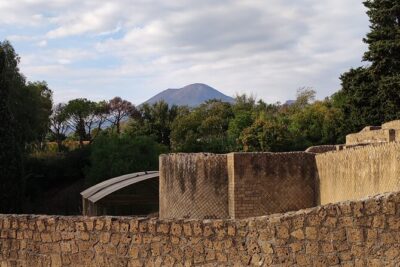
You’ll also cover the eruption context as part of the broader city story—so Pompeii doesn’t become a museum of shock. Instead, it stays focused on the lived reality that came right before the disaster.
Calchi and theaters: the human story behind the ruins
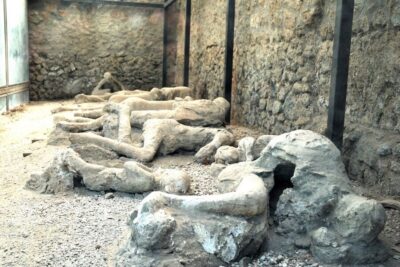
The Calchi are the moment Pompeii stops being abstract. These plaster casts preserve outlines of victims of the eruption, and the tour handles the topic with care. The guide’s approach matters here. You don’t get a sensational script. You get context and explanations that keep the focus on humanity.
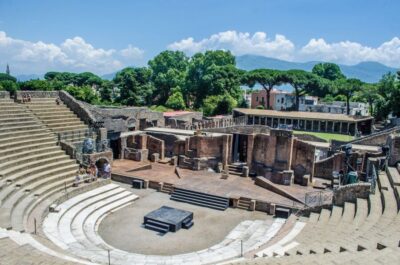
From there, you’ll continue to the theaters, where people of Pompeii went for performances—plays and other entertainment. This part is important because it adds emotional variety. The city isn’t only fear and tragedy. It’s also routine, culture, and leisure.
In a lot of guided tours, the tragedy comes and goes and the day ends. Here, the theaters help restore balance. You see how entertainment fit into civic life, and you understand that a city’s identity includes how it spends free time.
More guided runs around Pompei Campania
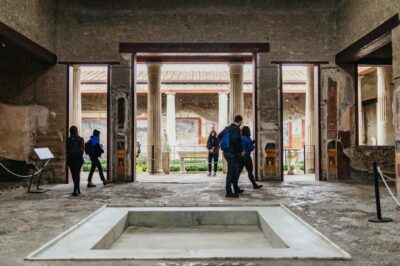
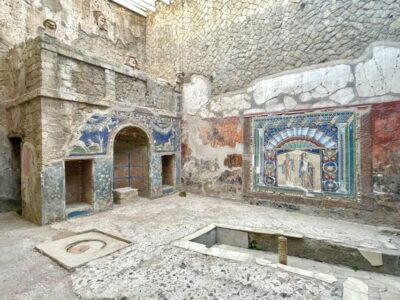
Casa del Fauno and Casa dei Vettii: what wealthy homes actually reveal
Pompeii’s big houses are where the site can feel unfair—because they’re impressive even from a distance. But the best part of visiting the Casa del Fauno and Casa dei Vettii with a guide is that you’re not just chasing mosaics for the next photo spot.
The Casa del Fauno is one of the largest and most striking residences. Its standout feature is the quality of its decoration, including impressive mosaics. When the guide points things out, you start understanding what “status” meant in a home: wealth didn’t sit quietly. It displayed itself.
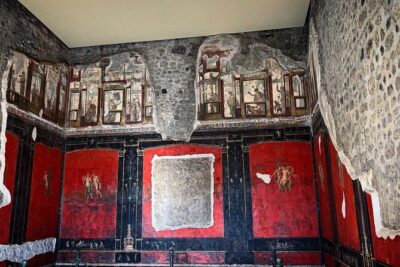
Then you’ll visit the Casa dei Vettii, another remarkable residence. This helps complete the picture of domestic life across different levels of wealth. Again, the value isn’t only architecture—it’s what the architecture tells you about privacy, power, and self-presentation.
One extra detail you might notice through the explanations: the guide often connects mythological figures and symbols to the way Romans thought and displayed ideas. That turns artworks into clues, not just decoration.
Via dell’Abbondanza, il Pistrinum, and Lupanare: street life beyond the big sights
After the big houses, the tour shifts down to street scale. Via dell’Abbondanza is one of Pompeii’s main streets, and it’s the perfect place to understand how the city handled movement and commerce.
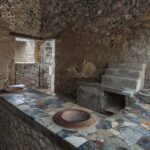
You’ll also see il Pistrinum, a site connected to bread-making. Even if you’re not a food history person, this stop is useful. It grounds Pompeii in basics: production, supply, and how a city feeds itself.
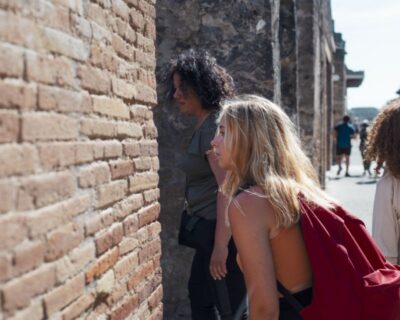
Then comes Lupanare, an ancient brothel. It’s not a comfortable topic, but it’s part of the city’s real world. If you’re trying to understand daily life in Pompeii honestly, you can’t skip the areas that show adult commerce and the practical side of urban life.
The value here is that the tour makes space for the full range of what the city contained—public institutions, elite homes, and everyday street reality. And if you’re the type who enjoys small clues—delivery patterns, building purpose, or what a street might have sounded like—you’ll likely find the street-level explanations especially satisfying.
How the guide connects everything: daily life, myths, and Roman layers
This tour isn’t only a list of monuments. The guide’s job is to connect them into a single story about daily life. That means you’ll hear about how Pompeii worked before and during Roman influence, including traces of populations that preceded the Romans.
You’ll also get mythological context tied to symbols you encounter. That matters because in Pompeii, images aren’t random. They reflect beliefs, identity, and social signaling. When the guide explains these connections, your visit feels less like staring at details and more like reading a visual language.
A standout for many people is the way the guide can weave in a named eyewitness account—Pliny the Younger, describing events from across the Bay of Naples. Even if you know the headline of the eruption, hearing how it’s framed through an observer’s perspective adds weight.
Also, the pace works for questions. The guide is set up to answer what you ask, from big-picture history questions to smaller “what am I looking at” moments.
Price, tickets, timing, and the walk you’ll actually do
The tour is $28 per person and lasts about 2.5 hours (you should expect 2–3 hours in real terms). That time window is tight enough to feel focused, but long enough to cover a meaningful section of Pompeii without turning it into a sprint.
Important cost detail: the $28 does not include entrance tickets. Pompeii tickets are about €20 per person, and free under 18. You can often buy online through Ticketone.it (until 1st March) or vivaticket.it (from 2nd March), or purchase at the ticket office in Pompeii.
Value-wise, I think this is where a guided format really matters. Pompeii’s ruins are widespread. A local expert helps you avoid wasting time on guesswork, and you’ll spend your limited hours learning what each stop meant. If you already love self-guided archaeology, you can do it solo. But if you want the “why” behind what you’re seeing—this is one of the easier ways to get it without studying beforehand.
Meeting point is clearly specified: to the right of the Vesuviana exit Pompei Scavi – Villa dei Misteri.
What to bring: passport or ID card, and a charged smartphone. If you’re bringing a bag, take advantage of the nearby cloakroom service at Porta Marina Superiore if it’s available.
Finally, a realism check: Pompeii involves steps, ramps, and steep inclines. If you’re planning around mobility needs, choose carefully.
Who this Pompeii guided tour is best for
This is a strong fit if you:
- Want a guided, interpretive walk across major areas (not just a highlights photo loop).
- Like stories that explain how people lived—public spaces, daily routines, and domestic life.
- Prefer a local expert who can answer questions and connect symbols and meaning to what you see.
- Are visiting in cooler months; Pompeii can be easier to move through at certain times of year, and the tour keeps your attention on key stops.
If you’re traveling with older kids or a mixed group, it can work well too because the pacing and explanations are built to keep the city understandable.
Should you book this Pompeii tour with Mauro Ferrara?
If you want Pompeii to make sense quickly, I’d book it. The tour covers the big civic core, meaningful cultural sites, and the domestic and street-level corners that round out daily life—without turning it into an all-day endurance test.
Do it if you value interpretation and want a guide who can connect the eruption story, Roman routines, and the symbolism you’ll see around you. Skip it if you need wheelchair access or if steep, stepped terrain won’t work for your group. Otherwise, this is a very practical way to see Pompeii with context while staying within a manageable 2.5-hour window.
FAQ
What does the Pompeii guided tour include?
The tour includes a guided visit to Porta Marina, Foro, Tempio di Apollo, Basilica, Terme, Calchi, Casa del Fauno, Casa dei Vettii, il Pistrinum, Via dell’Abbondanza, Lupanare, and the theaters.
Do entrance tickets cost extra?
Yes. The price does not include Pompeii entry tickets. Tickets are listed as €20 per person (and free under 18). You can buy online or at the Pompeii ticket office.
How long is the tour?
The duration is listed as 2.5 hours, and it’s noted that tours are typically 2–3 hours.
Where is the meeting point?
Meet at to the right of the Vesuviana exit Pompei Scavi – Villa dei Misteri.
What languages are available?
The live tour guide is offered in English, Italian, and Japanese.
Is the tour suitable for wheelchair users or limited mobility?
No. The tour is not recommended for travelers with mobility issues or disabilities because of steps, ramps, and steep inclines, and it is not suitable for wheelchair users.
More Tours in Pompei Campania



More Tour Reviews in Pompei Campania


More Pompeii Tours to Compare
More Pompei Campania tours, freshly reviewed

Pompeii Tours, compared.
 ★ 4.8Pompeii: Entry Ticket and Guided Tour with an ArchaeologistFrom $3519,459 reviews
 ★ 4.1Pompeii: Entry Ticket with Audio GuideFrom $4013,491 reviews
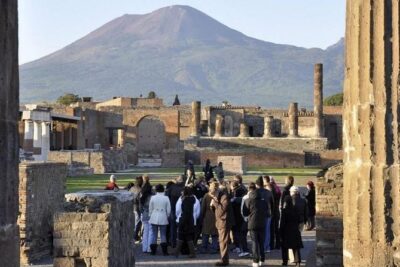 ★ 4.8Pompeii: Small Group Tour with an ArchaeologistFrom $4012,264 reviews
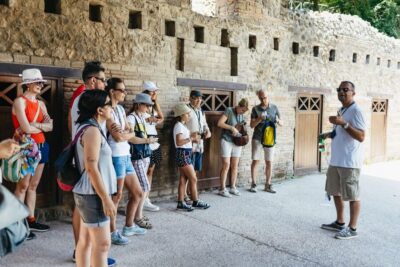 ★ 4.3Pompeii Ruins & Mount Vesuvius Day TourFrom $12011,459 reviews
★ 5.0Pompeii Small Group Tour with an ArchaeologistFrom $356,593 reviews
★ 4.3Pompeii Ruins & Mount Vesuvius Day TourFrom $12011,459 reviews
★ 5.0Pompeii Small Group Tour with an ArchaeologistFrom $356,593 reviews
 ★ 4.5Skip-the-line Pompeii – Small Group TourFrom $544,401 reviews
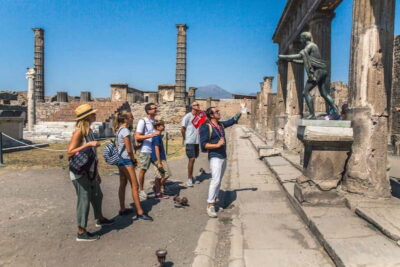 ★ 4.6Naples or Sorrento: Full-Day Pompeii and Mount Vesuvius TourFrom $1044,235 reviews
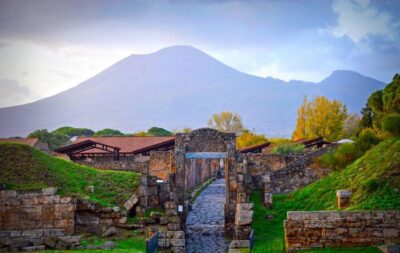 ★ 3.9Pompeii: Skip-the-line Entry Ticket with Audio Guide & MapFrom $433,153 reviews