
Review · POMPEII TOURS
Pompeii: 2-Hour Guided Tour with an Archaeologist
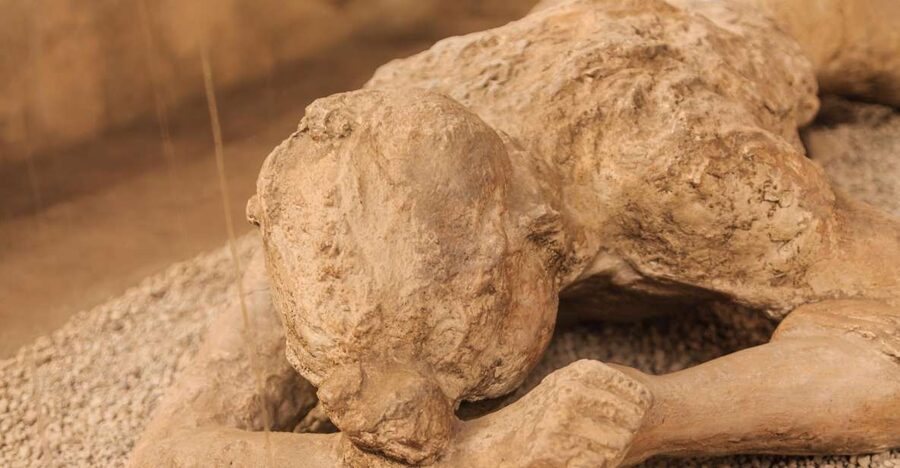
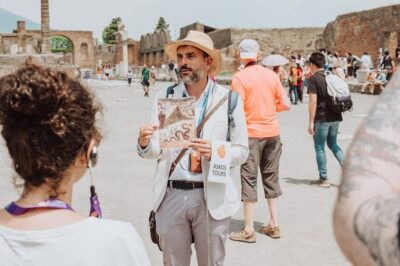
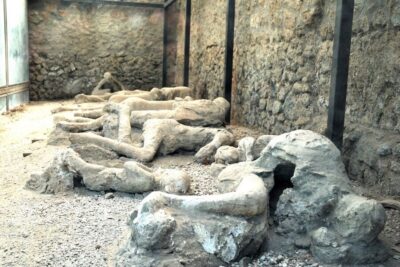
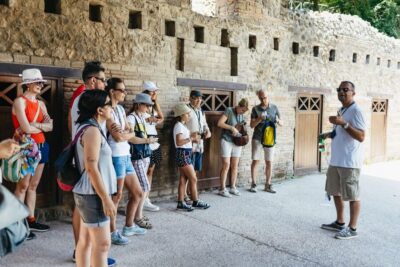
Pompeii gets real fast when someone explains it right. I love the archaeologist-style guidance, with guides such as Rosalina, Enzo, and Paola who turn the ruins into everyday Roman life, not just stone facts. I also love the moment you see the plaster casts—humans and animals frozen in time by the 79 AD eruption.
There’s one practical catch to plan for: the meeting spot near Porta Marina Superiore isn’t always easy to find if you rely on GPS. With that said, once you’re together, the route stays focused on the most important public buildings, homes, and shops in the western part of Pompeii.
This is built as a tight 2-hour walk, so you’ll see a lot without feeling lost. You’ll cover the Forum and Basilica, then continue through stops like the House of Menander, Forum Baths, the Lupanar (brothel), and on to the theatres and amphitheater.
In This Review
- Key things to know before you go
- Why this Pompeii tour is built for real understanding
- The Porta Marina meeting point: where timing and calm matter
- The big story UNESCO hinted at: one city, one moment
- Temple of Apollo and the first civic landmarks
- Forum and Basilica: seeing power, not just architecture
- House of Menander and the transition to everyday living
- Forum Baths and a look at daily routine spaces
- The Lupanar: a blunt look at sexuality and society
- Termopolium Capuano and the food street connection
- Houses along the route: House of the Faun and the House of the Vettii
- Plaster casts: when archaeology stops being abstract
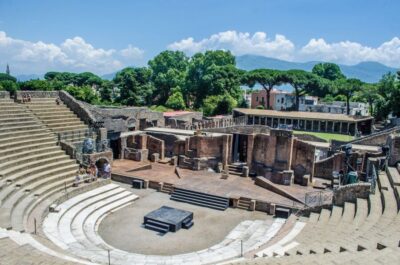
- Large Theatre and Amphitheater: entertainment and community
- Price and value: is $175.74 per person worth it?
- What to bring, and the small practical stuff that saves your day
- Should you book this Pompeii archaeologist tour?
- FAQ
- How long is the Pompeii guided tour with an archaeologist?
- Where do I meet the guide?
- Is Pompeii entry included?
- What sights are covered on the tour?
- What should I bring to Pompeii?
- Are there any special days when entry can be free?
Key things to know before you go
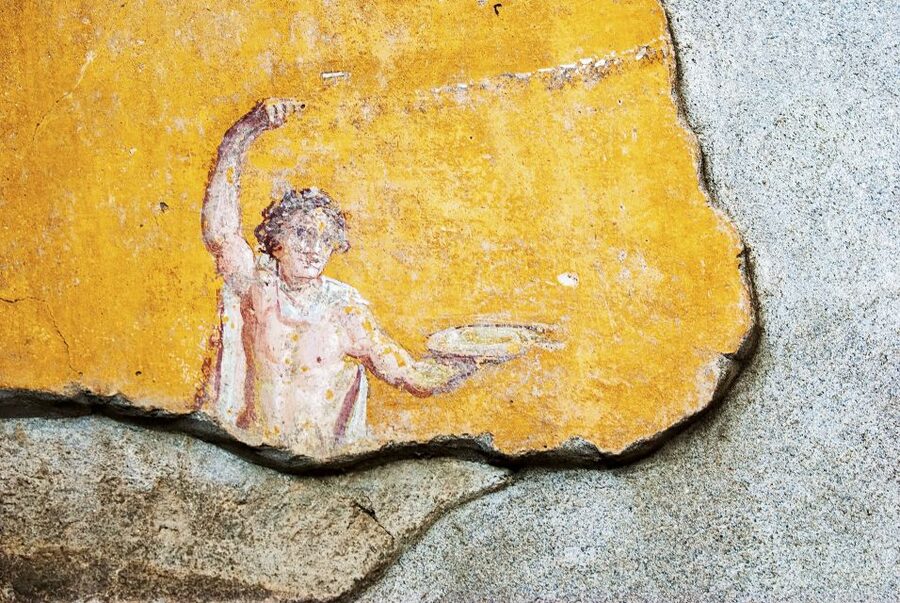
- Archaeologist-led storytelling: You’re guided through the city’s layout and what each site meant to daily life.
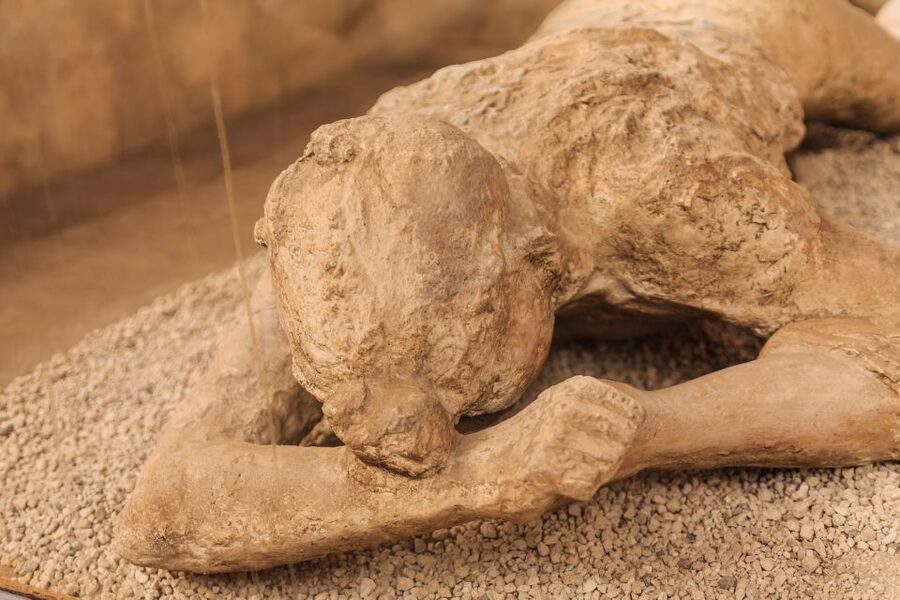
- Plaster casts stop you in your tracks: Humans and animals show what happened at the moment of death.
- You get the big public core: Forum and Basilica are the political and social heart points.
- Private homes and street life, not only monuments: House of Menander, House of the Faun, and House of the Vettii keep it human-sized.
- Includes earphones for larger groups: Disposable earphones help if you’re in a bigger crowd.
- A one-direction route that ends near Villa Dei Misteri: The finish at Pompei Scavi is convenient for continuing your day.
Which Pompeii ticket and guide? Compare a few more.
- Pompeii: Entry Ticket and Guided Tour with an Archaeologist★ 4.8 · 19,459 reviews
- Pompeii: Small Group Tour with an Archaeologist★ 4.8 · 12,264 reviews
- Pompeii: Skip-the-line Entry Ticket with Audio Guide & Map★ 3.9 · 3,153 reviews
- Naples: Pompeii and Mt. Vesuvius with Lunch and Wine Tasting★ 4.5 · 2,454 reviews
Why this Pompeii tour is built for real understanding
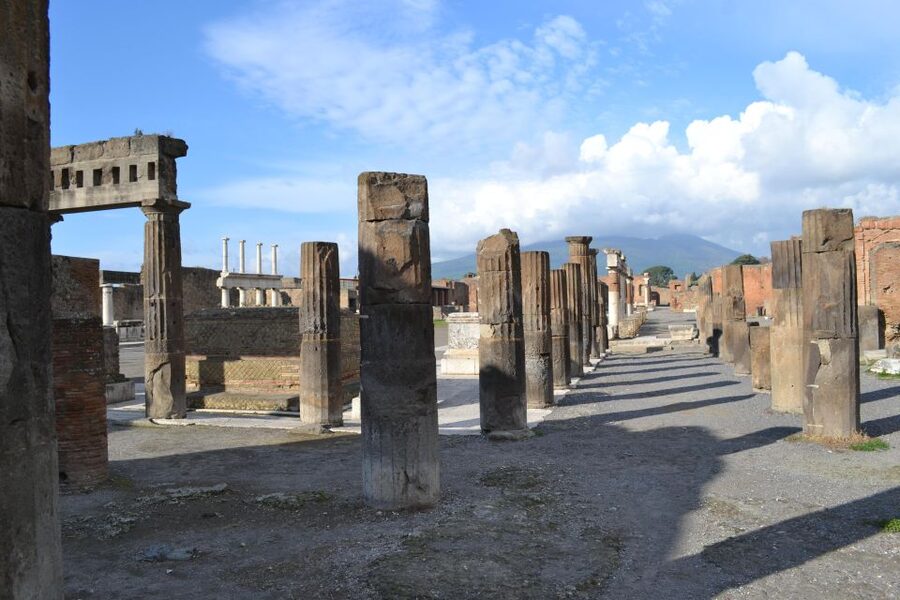
Pompeii is huge. The challenge is not seeing ruins—it’s making sense of them. This tour stays manageable because it’s intentionally focused on the western part of Pompeii and the highlights that explain how the city worked: public power, commercial streets, homes, and entertainment.
What I like about the structure is that it doesn’t treat Pompeii like a checklist. Instead, you move through the Forum area and related civic buildings, then shift to baths and everyday spaces, and finally wrap into theatre and amphitheater life. That flow helps you connect the dots between what you’re looking at and how Romans actually spent their days.
There’s also a human layer that the best Pompeii tours provide. Here, the guide brings in the story of how the town was buried under molten ash and lava in 79 AD, then rediscovered in the 18th century. Even in a short window, you’ll feel the tragedy and the archaeological care behind what survives.
The Porta Marina meeting point: where timing and calm matter
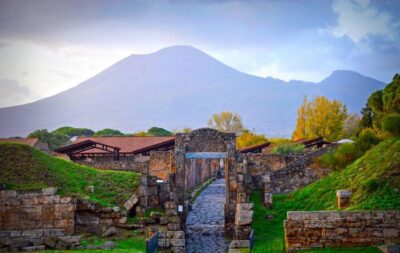
Your tour starts at the old Porta Marina Superiore, with two possible start options depending on what you booked: Porta Marina (Via Villa dei Misteri, 2) or another location listed around Porta Marina. If you’ve ever shown up to an Italian archaeological site and felt like the GPS is working against you, you’ll appreciate arriving early.
Plan to show up with time to spare. One issue that can throw off your first minutes is simply finding the exact meeting point—especially because the area can be confusing if you’re following a map app. Once you locate your group, the tour rhythm becomes straightforward.
You’re also starting at a gate area that fits the theme of the day. Porta Marina isn’t just a convenient address; it’s part of Pompeii’s story of movement in and out of the city. Starting here helps the guide set up the route so you don’t feel like you’re wandering.
The big story UNESCO hinted at: one city, one moment
Pompeii is part of the UNESCO World Heritage designation for a reason that matters on-site: the ruins offer a complete and vivid picture of society and daily life at a specific moment in the past.
In this tour, that idea becomes practical. Your archaeologist guide doesn’t just point out stones—they connect sites to daily routines. You’ll hear how Romans lived in public spaces (politics, gatherings, civic buildings) and in private spaces (homes and household areas), and how the eruption changed everything.
What makes this valuable is the contrast. Even when you’re looking at something small—like a street-level commercial space—you can understand why it existed. The guide’s job is to help you “read” the city, not just watch it.
Temple of Apollo and the first civic landmarks
The route begins to build meaning quickly. One of the early stops is the Temple of Apollo, which helps set the tone that Pompeii wasn’t only residential—it was a city with shared religious and civic identity.
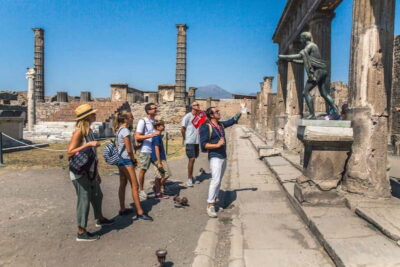
Then you move into the civic center area: the Foro Civile di Pompei (Forum) and the Basilica. These are the “where decisions happen” stops. In a Roman city, the Forum is political and social life in stone, and the Basilica is central to legal and civic activity.
A key benefit of having a guide here is pacing. In Pompeii, it’s easy to look around and feel you’re seeing everything at once. By focusing on the Forum and Basilica, you get a clear mental map. After that, even the residential stops feel more connected to the civic world you just learned.
More guided runs around Pompei Campania
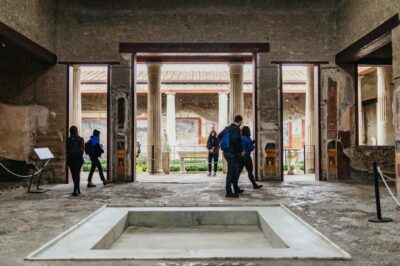
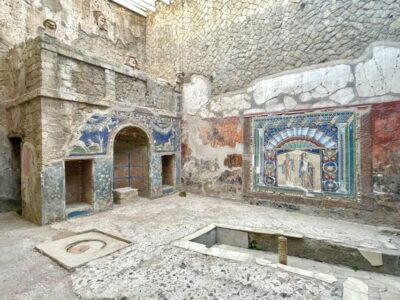
Forum and Basilica: seeing power, not just architecture
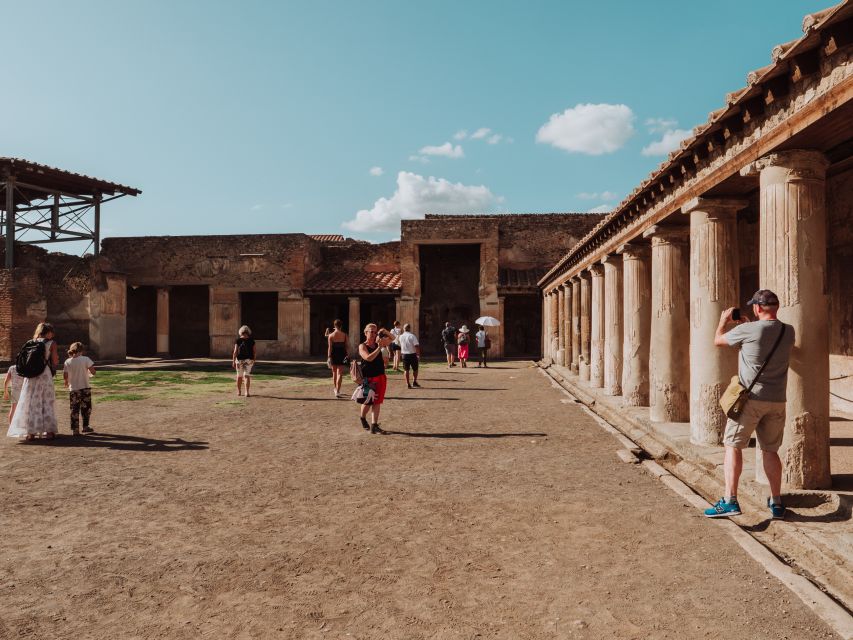
At the Forum and Basilica, the tour does something smart: it shows you the relationship between public spaces and the people using them.
This is where you learn why certain areas mattered daily—who gathered, how civic life played out, and how the city functioned as a system. The Basilica stop also helps you understand the scale and layout of civic buildings so the rest of the route makes sense.
One practical drawback to keep in mind: Pompeii is sun-heavy. Civic areas can get exposed quickly. Bring a hat and water and plan for short pauses. The guide can’t change the weather, but they can help you spend your energy well.
House of Menander and the transition to everyday living
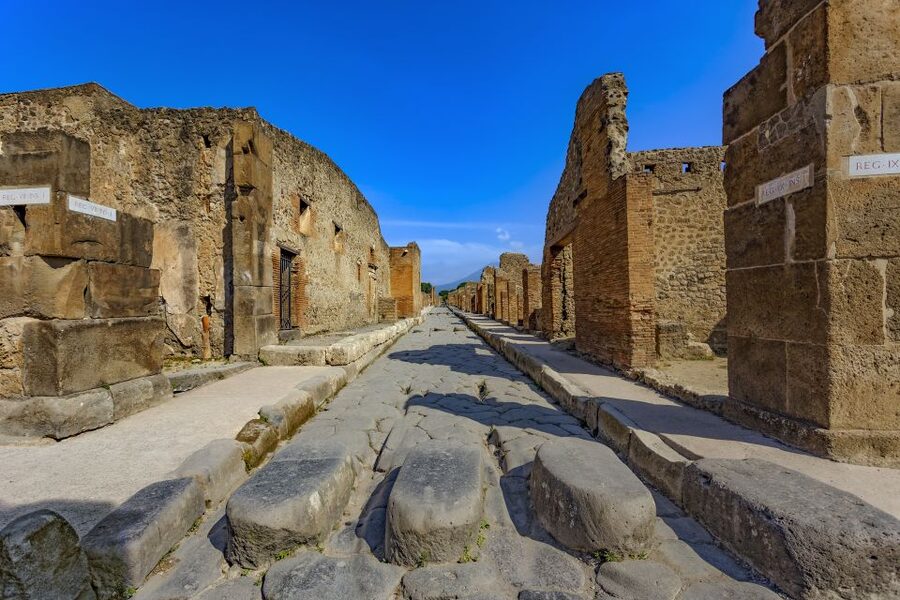
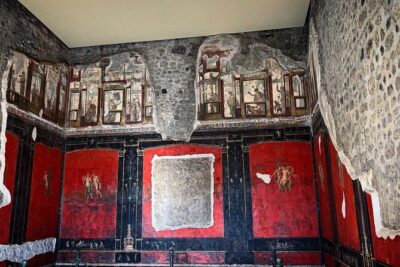
After civic landmarks, the tour shifts gears to private life with the House of Menander. This kind of stop is where Pompeii stops being abstract. You begin to see the city as lived-in space: household routines, social status, and the way rooms shaped daily life.
This is also where a 2-hour format works in your favor. You get a quick, guided “sample” of domestic space rather than trying to interpret everything on your own. If you go self-guided, you can miss the significance of what you’re seeing. With a guide, the stops feel less random.
If you’re traveling with family or friends who don’t always love history, this shift is often the best part. Homes help people picture real habits: where someone might eat, gather, or work—especially when the guide connects it back to Roman culture.
Forum Baths and a look at daily routine spaces
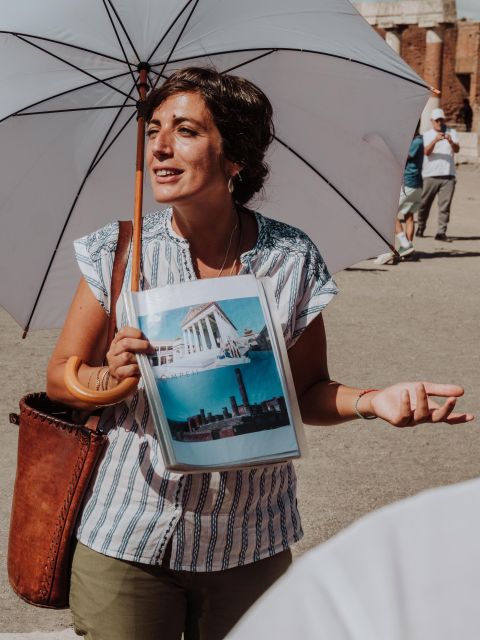
Next comes the Forum Baths. Baths were social places as much as they were functional spaces. On this tour, they’re not treated like random ruins. Instead, your guide uses them to explain how people moved through the day and used shared facilities.
Just as important, this is where you’ll hear about what still “reads” like everyday life. The tour includes a stop at a bakery where you can see the remains of utensils and even traces of food. It’s one of those Pompeii moments that makes history feel close—not because it’s cheerful, but because it’s detailed.
If you’re thinking about photography, focus on small details here rather than wide angles. The human scale is the point.
The Lupanar: a blunt look at sexuality and society
One of the more talked-about stops on this route is the Lupanar, Pompeii’s old brothel. This is not a theme you can skip if you want a full picture of life at the time. It’s also not sugarcoated.
What I think makes this stop worthwhile is balance. A good guide doesn’t treat it like shock value. They place it in context—how commerce, neighborhoods, and social rules interacted in Roman life. With the archaeologist approach, you get more meaning than just a label.
If you’re sensitive to adult topics, go in with the expectation that Pompeii is real life frozen in time. You don’t need to dwell on it, but you should know it’s part of the “complete and vivid picture” idea.
Termopolium Capuano and the food street connection
The tour highlights include Termopolium Capuano, a place connected to ready-to-eat food culture in Roman towns. Along with the bakery stop, it helps you understand that Pompeii wasn’t only marble and religion—it had street-level commerce built around daily meals.
Again, a guide helps here because you’re not just looking at a counter or a room. You’re learning how these spaces worked socially, how people used them, and why they mattered.
This is where you’ll start to feel the city’s rhythm. Civic life gave structure; commercial spaces gave convenience; homes gave privacy. Pompeii’s layout becomes a story you can follow.
Houses along the route: House of the Faun and the House of the Vettii
The tour then moves through more domestic landmarks, including the House of the Faun and the House of the Vettii. These aren’t just “bigger houses” for sightseeing bragging rights. They’re part of the guide’s explanation of how wealth, household organization, and identity played out inside Pompeii.
You’ll also pass or visit other home-related highlights such as the House of the Tragic Poet and the House of Menander (already mentioned earlier). Taken together, these stops give you a sense of variety—how Pompeians lived differently depending on status and needs.
The value of multiple home stops in a short tour is clarity. One house can feel like a puzzle piece. Several houses let you compare patterns. That makes what you see feel less random and more like a city with neighborhoods and hierarchies.
Plaster casts: when archaeology stops being abstract
One of the tour’s strongest highlights is time devoted to the plaster casts of humans and animals—the ones formed to show the position of people and animals at the moment of death.
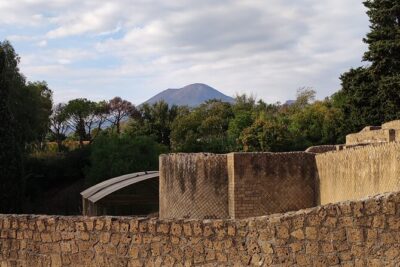
This is emotionally heavy, but it’s also intellectually powerful. It turns the Vesuvius story from “a volcano happened” into “people and animals were caught in a specific instant.” That’s the point of why Pompeii and Herculaneum matter so much archaeologically: the level of preserved detail is rare.
If you’re unsure how you’ll feel, plan to pause. Don’t rush through. Let the guide talk, then take a breath and look again. This stop can become the anchor for everything else you see today.
Large Theatre and Amphitheater: entertainment and community
Pompeii also had major public entertainment. This tour includes the Large Theatre and the Amphitheater—two very different spaces for performance and spectacle.
The Large Theatre helps you understand community gatherings around shows. The Amphitheater adds another layer: a different kind of event and a different kind of crowd energy. Even without getting lost in architectural jargon, the guide can explain how these spaces functioned socially.
This part of the route is often where people feel the most “wow” because the scale makes the city feel alive. Just remember it’s still Pompeii’s outdoor sun country. Bring water and take short shade breaks if you need them.
Price and value: is $175.74 per person worth it?
At $175.74 per person for a 2-hour guided tour, it’s not a budget add-on. The value comes from three things that matter in Pompeii:
First, you’re buying a trained guide who can interpret what you’re seeing. Pompeii is confusing at first glance. With a guide, you get the big connections: public vs private life, civic purpose, and what Vesuvius changed.
Second, the tour includes your Pompeii entry tickets. That helps you avoid the separate ticket step and makes the tour feel more like a packaged experience.
Third, the group setup includes disposable earphones for bigger groups. Even if it’s a private tour, this shows the operator plans for sound and communication, which becomes important when you’re moving and trying to hear explanations clearly.
Is it “worth it” for everyone? If you want a fast walk and you don’t care about interpretation, you could self-guide. But if you want Pompeii to make sense—and you want to spend your limited time seeing the most meaningful pieces—this is a strong value.
What to bring, and the small practical stuff that saves your day
Come prepared. Pompeii is walk-heavy and exposed. I’d treat it like a warm-weather hike with ruins.
Bring:
- Comfortable shoes (the ground can be uneven)
- Sunglasses and a sun hat
- Water
If it’s your first Sunday of the month, there’s a bonus and a risk. Entrance is free, but tickets can’t be reserved ahead of time, so entry isn’t guaranteed. If you care about certainty, choose a non–first Sunday.
Accessibility note: the activity info lists wheelchair accessible, but it also flags not suitable for wheelchair users. If mobility is part of your decision, confirm directly with the provider before booking so you don’t get surprised on arrival.
Also, plan your meeting timing. The tour starts at Porta Marina Superiore, and finding the exact spot can be tricky if you rely on GPS alone. Give yourself buffer time.
Should you book this Pompeii archaeologist tour?
Book it if you want Pompeii to feel like a real city, not a scatter of monuments. This tour is especially good for:
- First-time Pompeii visitors who want focus in a short time
- Anyone who likes context—how public spaces, homes, baths, and entertainment fit together
- People who want a guided explanation of the 79 AD burial and rediscovery story
- Small groups who prefer moving at a guided pace instead of playing archaeologist solo
Skip it (or consider a longer tour) if you know you’ll want hours of free wandering after seeing the big highlights. Two hours is enough for the main sights, but you might leave wishing you had more time for lingering.
If you can handle outdoor walking and you’re ready for both the awe and the hard moments, I think this is one of the better ways to experience Pompeii without turning it into a self-guided puzzle.
FAQ
How long is the Pompeii guided tour with an archaeologist?
The tour is 2 hours.
Where do I meet the guide?
You meet near Porta Marina Superiore. There are two starting options listed for Pompeii: Porta Marina (Via Villa dei Misteri, 2) and the other option that depends on what you booked.
Is Pompeii entry included?
Yes. Pompeii entry tickets are included.
What sights are covered on the tour?
The tour highlights include the Forum, Basilica, Temple of Apollo, Thermal/Baths areas, Lupanar (brothel), House of the Faun, House of the Vettii, plus entertainment stops like the Large Theatre and Amphitheater, along with other home/commercial highlights mentioned in the tour description.
What should I bring to Pompeii?
Wear comfortable shoes and bring water, plus sun protection like sunglasses and a sun hat.
Are there any special days when entry can be free?
Yes. On the first Sunday of each month, entrance is free, but tickets can’t be reserved ahead of time, so entry isn’t guaranteed.
More Tours in Pompei Campania




More Tour Reviews in Pompei Campania



More Pompeii Tours to Compare
More Pompei Campania tours, freshly reviewed



Pompeii Tours, compared.
 ★ 4.8Pompeii: Entry Ticket and Guided Tour with an ArchaeologistFrom $3519,459 reviews
 ★ 4.1Pompeii: Entry Ticket with Audio GuideFrom $4013,491 reviews
 ★ 4.8Pompeii: Small Group Tour with an ArchaeologistFrom $4012,264 reviews
 ★ 4.3Pompeii Ruins & Mount Vesuvius Day TourFrom $12011,459 reviews
★ 5.0Pompeii Small Group Tour with an ArchaeologistFrom $356,593 reviews
★ 4.3Pompeii Ruins & Mount Vesuvius Day TourFrom $12011,459 reviews
★ 5.0Pompeii Small Group Tour with an ArchaeologistFrom $356,593 reviews
 ★ 4.5Skip-the-line Pompeii – Small Group TourFrom $544,401 reviews
 ★ 4.6Naples or Sorrento: Full-Day Pompeii and Mount Vesuvius TourFrom $1044,235 reviews
 ★ 3.9Pompeii: Skip-the-line Entry Ticket with Audio Guide & MapFrom $433,153 reviews
Browse the lists this tour appears in