

Review · HERCULANEUM TOURS
Herculaneum: Skip The Line Entrance ticket + Audioguide
Roman streets, still eerily intact. Herculaneum is one of those rare sites where the past feels close, and this skip-the-line ticket paired with an audio guide lets you explore on your own schedule.
I especially like two things about this setup: the visit is self-guided, so you can slow down for the rooms and details that grab you, and the audio guide comes with a map and audio prompts that help you follow what you’re looking at as you walk.
One drawback to keep in mind: the listing says hearphones are not included, so plan to bring your own earphones and expect a bit of trial-and-error with the audio device when you first start.
In This Review
- Key things to know before you go
- Herculaneum’s punch: why this Roman ruin still feels real
- Skip-the-line entrance + audioguide: what the 3 hours really means
- The pick-up moment: finding the Audioguide Desk at the entrance
- Self-guided walking: how to use the map and audio without getting lost
- What you’ll actually see: houses, villas, mosaics, and the street layout
- Time and comfort tips: shoes, the uphill/downhill walk, and bringing lunch
- Cost and value: is the $35 combo worth paying for?
- Audio guide reality check: devices, returns, and common frustrations
- Who should book this self-guided Herculaneum entry?
- Should you book this Herculaneum skip-the-line audio guide?
- FAQ
- How long is the Herculaneum visit with this ticket?
- What’s included in the ticket price?
- Is this a guided tour or self-guided?
- Where do I pick up the audioguide?
- Which languages are available for the audio guide?
- Do I need to bring headphones or earphones?
- What ID do I need for the audioguide?
- Does the visit run in bad weather?
- Is there free cancellation?
Key things to know before you go
- Skip-the-line entry saves time at the entrance, even if lines are light
- Self-guided pace works well when you only have a limited window
- Audioguide + map helps you navigate streets, alleys, and key areas at your own speed
- No headphones included means you’ll want to bring your own earphones
- ID required for the audioguide (passport/ID/driving licence) so pack it ahead of time
- Expect a compact-but-heavy site: great walking, but wear comfortable shoes
Herculaneum keeps a few more tours worth your time
- Herculaneum: Skip The Line Entrance ticket + Audioguide★ 4.3 · 266 reviews
- Naples: Pompeii and Herculaneum Tour with Tickets and Lunch★ 4.4 · 136 reviews
- Herculaneum Archaeological Park smart Audio Tour★ 3.8 · 70 reviews
- Herculaneum: Private Walking Tour with Archeologist Guide★ 5.0 · 59 reviews
Herculaneum’s punch: why this Roman ruin still feels real
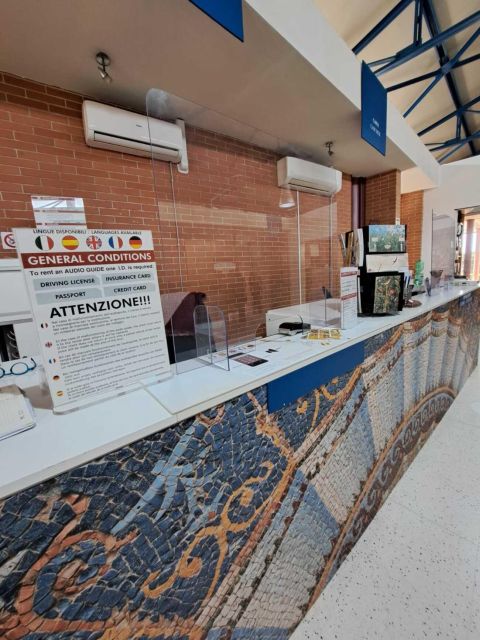
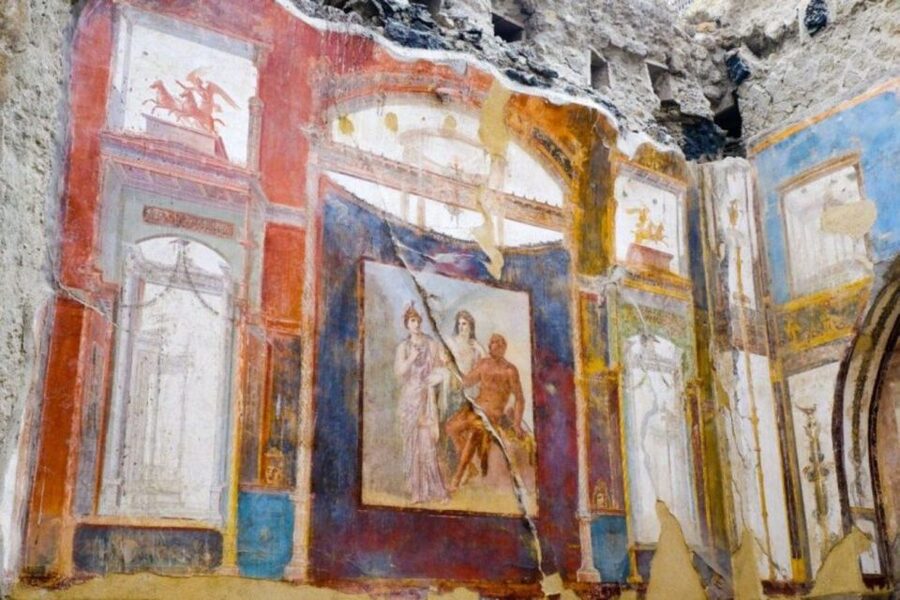
Herculaneum is famous for a very specific kind of preservation. When Mount Vesuvius erupted in 79 AD, it buried this town. The result is that what you see today is not just rubble. It’s streets, houses, villas, and mosaics that still communicate how ordinary people lived.
That is why I like this kind of entry ticket with an audio guide. With a guided tour, you often move at someone else’s tempo. With this plan, you can set your own rhythm. Want to linger on a set of well-preserved rooms? You can. Want to move quickly through an area that doesn’t interest you much? You can also do that.
And yes, it’s emotional. Seeing the layers of loss of life made real through the remains can hit hard, in a quiet, sobering way. This is not a theme park stop. It’s history you can walk through.
Skip-the-line entrance + audioguide: what the 3 hours really means
The ticket is built around a simple goal: get you inside and give you enough structured help to explore without rushing. The published duration is 3 hours, and in practice you’ll usually land somewhere around that range depending on your pace and how many stops you take your time with.
Here’s why that matters: Herculaneum is smaller than Pompeii, but it still takes real time to see thoughtfully. If you try to sprint, you’ll miss what makes it special. If you take your time, the audio guide helps you keep moving with confidence instead of wandering in the dark like a confused tourist.
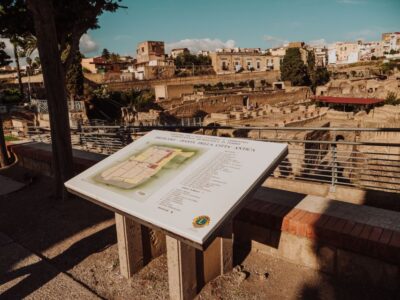
Also, the attraction is set up for self-navigation. Your audioguide is meant to pair with the site map and the numbered points in the archaeological areas. That’s the difference between just walking and actually understanding what you’re looking at as you go.
The pick-up moment: finding the Audioguide Desk at the entrance
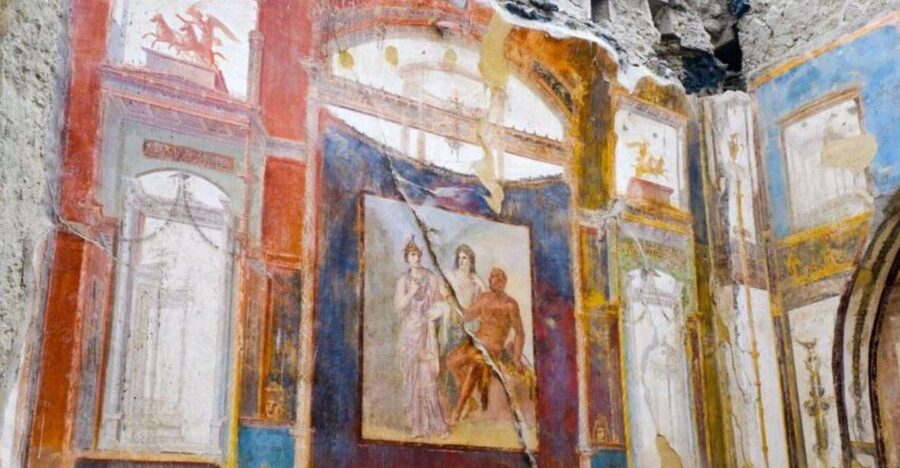
You pick up the audioguide at the entrance and you’re told to look for the Audioguide Desk. That sounds straightforward, but on arrival I’d give yourself an extra few minutes. Several visitors note that the desk signage can be unclear, and it’s easy to walk past the right entrance if you’re following the wrong direction markers.
Practical tip: once you’re at the entrance area, take a moment to orient yourself before you commit to a route. When your goal is to start listening quickly, those first minutes matter.
Also, don’t forget the paperwork requirement. A valid passport, ID card, or driving licence is required for audioguide hire. If you leave it behind, you can’t just “wing it.”
Self-guided walking: how to use the map and audio without getting lost
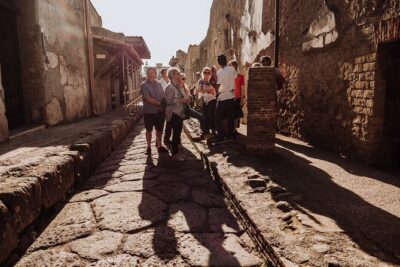
This package is designed for a self-guided visit. You’ll have an entrance ticket, an audioguide, and a map. The audio guide includes explanations that help you understand the streets and alleys of the ancient town, so you’re not just looking at walls and hoping it makes sense.
A key detail: the audio guide is not random background sound. It’s linked to the site through guidance like numbered points on buildings and specific areas. That structure helps in two ways:
- You know what to look for next. Instead of stopping every few minutes to figure out what’s relevant, you can follow the numbered flow.
- You can choose your focus. If mosaics pull you in more than houses, you can spend more time at the points that match your interests.
As you move through the archaeological park, keep your pace steady rather than trying to cover everything. Herculaneum’s preservation can be startling at close range, and it’s worth giving your brain a little time to absorb the scale of daily life that’s preserved here.
And since the experience is rain or shine, be ready for slick surfaces. If it’s wet, slow down slightly and treat the ground like it’s more fragile than it looks.
Other tickets and entries for Ercolano





What you’ll actually see: houses, villas, mosaics, and the street layout
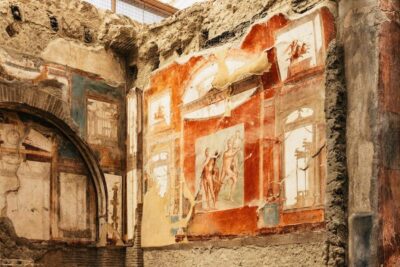
The ruins at Herculaneum are special because of how much is still readable. You’ll see preserved structures from an ancient Roman town buried in 79 AD, with houses, villas, and mosaics forming the core of what people come to experience.
What’s useful about a self-guided format is how it lets you match the site to your curiosity. If you care about everyday domestic life, spend time on the residential spaces. If you’re drawn to art and decoration, track the audio points tied to the mosaic areas. If you’re more interested in the broader layout, follow the street and alley guidance so you can understand how the town flowed.
One good strategy is to avoid treating the visit like a checklist. Instead, use the audioguide as a set of “this is what you’re looking at” explanations. That turns the walk into something closer to a guided lesson, without the pressure of keeping up with a group.
Time and comfort tips: shoes, the uphill/downhill walk, and bringing lunch
Comfort matters at Herculaneum. The ground is not just flat sightseeing. You should wear comfortable shoes, because you’ll be walking around an archaeological area.
Also, plan for the approach. One of the most helpful practical notes from real visits: you’ll often face a walk downhill from the station to the site, with roughly a half-mile mentioned as a reality for many arrivals. That means shoes with good grip and socks you don’t mind getting a bit warm can make the difference between a pleasant visit and a sore one.
Then there’s food. This site is not set up like a day-trip festival with cafés every few corners. You might find vending machines, but there’s no full café or restaurant offering. So I recommend bringing your own lunch or at least snacks and water. If you end up hungry, it can cut your time short, and with a self-guided visit that’s the opposite of what you want.
If you’re pairing Herculaneum with another big stop nearby, the compact nature of the site can help. People often combine it with a Vesuvius plan on the same day, and the pacing here supports that kind of schedule.
Cost and value: is the $35 combo worth paying for?

The price is listed as $35 per person, and it includes an entrance ticket + audioguide + map. That’s the key value angle. You’re not just paying for entry. You’re paying for interpretation tools that help you enjoy the site instead of just passing through it.
The value gets even clearer if you compare it to the frustration of wandering a site with limited information. The audio guide is described as invaluable, especially because on-site information may feel limited without it. If you’ve ever been to an archaeological site where the signs are sparse, you know what I mean: you’re left looking for meaning. Here, the audioguide is meant to provide that bridge.
One thing to think about: there’s a noticeable recurring complaint around audio setup. You can’t assume it will pair with Bluetooth headphones, and the listing says hearphones are not included. So if you show up with no earphones, the “value” drops fast because your listening experience suffers. Bring your own earphones.
Also, there’s a potential pricing twist worth knowing. One visitor pointed out that the site is free on Sundays, and that third-party booking can complicate refunds or voucher handling. I’d treat this as a “check before you pay” warning: if you’re going on a Sunday, do the quick research first so you’re not paying full price when you don’t need to.
Audio guide reality check: devices, returns, and common frustrations
This is where you should be ready mentally. The audioguide is a rented device, not an app on your phone. The rules are pretty clear: devices must be returned before office closing time. And if something goes wrong—damage, loss, or theft—you’re responsible for repair or replacement costs.
That means the visit needs a little “treat it carefully” mindset. Don’t toss it in your bag like it’s disposable. When you’re finished, return it on time so you don’t end up dealing with stress at the end of an already memorable day.
If the audio doesn’t start right away, don’t panic. One visitor described confusion around where the audioguide stand was, and another noted it took some time to get the hang of how to use the device properly. In other words: plan for a short learning curve at the start, then you’ll have a smoother visit.
Who should book this self-guided Herculaneum entry?
This combo makes the most sense for you if:
- You like exploring at your own pace and don’t want to be rushed.
- You’re traveling with limited time and need flexibility once you’re on site.
- You want context for what you’re seeing, but you don’t want a live group tour style.
- You want enough structure from the map and audio to feel confident while you walk.
It can also work well after Pompeii, especially because Herculaneum’s preservation is so different. People often find they were surprised by how much they enjoyed it, even if they expected to feel “Pompeii again.” The compact size helps you keep your focus.
If you strongly prefer a fully guided explanation from a human guide, this ticket is still useful, but you might want a different format where you get live storytelling. Here, you’re in charge, with audio support doing the heavy lifting.
Should you book this Herculaneum skip-the-line audio guide?
I’d book it if you want a smooth entry plus a guided-on-the-go experience that fits your pace. The $35 price is most fair when you treat the audioguide as part of the value, not an optional extra.
Before you decide, check two things: bring your own earphones, and come prepared with the ID required for audioguide hire. If you do that, you’ll likely have exactly the kind of visit this ticket is built for: time with Herculaneum without the pressure of group timing.
If you’re going on a Sunday, do a quick check on whether the site is free so you don’t pay full price unnecessarily through a third party. For most days, though, this is a practical, high-value way to make sense of one of Campania’s most hauntingly well-preserved Roman towns.
FAQ
How long is the Herculaneum visit with this ticket?
The duration listed is 3 hours, so you can plan a focused half-day visit.
What’s included in the ticket price?
You get an entry ticket for Herculaneum, an audio guide, and a map.
Is this a guided tour or self-guided?
This is self-guided. You explore on your own using the audio guide and map.
Where do I pick up the audioguide?
Go to the entrance and look for the Audioguide Desk.
Which languages are available for the audio guide?
The audio guide is available in Italian, German, English, French, and Spanish.
Do I need to bring headphones or earphones?
Hearphones are not included. You’ll want to bring your own earphones if you plan to listen privately.
What ID do I need for the audioguide?
A valid passport, identity card, or driving licence is required for audioguide hire.
Does the visit run in bad weather?
Yes, the activity takes place rain or shine.
Is there free cancellation?
Yes. You can cancel up to 24 hours in advance for a full refund.
More Tickets and Entries in Ercolano





More Tour Reviews in Ercolano


Herculaneum, a Few More Tours

More Ercolano tours, freshly reviewed



Herculaneum Tours, compared.
 ★ 4.8Herculaneum: Skip-the-Line Guided Tour with ArchaeologistFrom $533,439 reviews
 ★ 5.0Pompeii and Herculaneum Small Group Tour with an ArchaeologistFrom $771,350 reviews
 ★ 5.0Herculaneum Small Group Tour and Ticket With an ArchaeologistFrom $53994 reviews
 ★ 4.3Herculaneum: Skip-the-Line Entry Ticket with Audio GuideFrom $15870 reviews
 ★ 4.8Pompeii: Small-Group Tour of Pompeii and Herculaneum867 reviews
 ★ 4.8Pompeii & Herculaneum with Archaeologist GuideFrom $168665 reviews
 ★ 3.9Pompeii, Herculaneum, & Vesuvius Full-Day TourFrom $152602 reviews
 ★ 4.1Ercolano: Herculaneum Entry Ticket with Optional Audio GuideFrom $21581 reviews
Browse the lists this tour appears in