
Review · HERCULANEUM TOURS
Herculaneum: Private Walking Tour with Archeologist Guide
Mud can tell a better story. This private Herculaneum tour uses an archaeologist guide to explain how Vesuvius buried the town and why so much survived. I like that you don’t just look at ruins; you get the why behind the walls, including the role of volcanic ash and mud.
Second, I love the human scale of a private group. In the real world, that means your guide can match the pace and keep questions coming, like Antonio and Luciano did for families, or Paola who worked to keep people in the shade while pointing out the highlights.
One consideration: it’s a true walking tour. Comfortable shoes are a must, and you’ll be moving through an outdoor archaeological site for the full 2 hours (so plan your energy accordingly).
In This Review
- Key things to know before you go
- Why Herculaneum feels different from Pompeii
- The 2-hour private walking plan that keeps you from getting lost
- Start at Parco Archeologico di Ercolano: where your guide sets the scene
- The main archaeological stop: Forum, houses, and the town’s daily rhythm
- Casa del Salone Nero: Roman rooms that make you slow down
- The Herculaneum Thermopolium: a Roman snack bar, minus the hype
- Casa dell’Albergo and the other homes: preservation as a time machine
- House of Skeletons: when the story turns from buildings to people
- Sacellum of the Augustales: small religious space, big cultural context
- Guide quality is the real value on this tour
- Price and value: what you’re really paying for
- Practical tips for a smooth Herculaneum visit
- Should you book this private Herculaneum walking tour?
- FAQ
- How long is the Herculaneum private walking tour?
- What does the tour include?
- Is transportation included?
- Where does the tour start?
- Where does the tour end?
- Is this tour private?
- What languages are available for the guide?
- What should I bring?
- Is oversize luggage allowed?
- Is there free entry on the first Sunday of the month?
- Is it wheelchair accessible?
Key things to know before you go
- You’re watching a disaster unfold, not just touring ruins: the Vesuvius eruption story is built into the route.
- Herculaneum’s preservation is the main event: mud burial created an unusually well-preserved site compared with Pompeii’s ash.
- You’ll see multiple “everyday life” stops like houses, a thermopolium (Roman snack bar), and the beach area where victims were found.
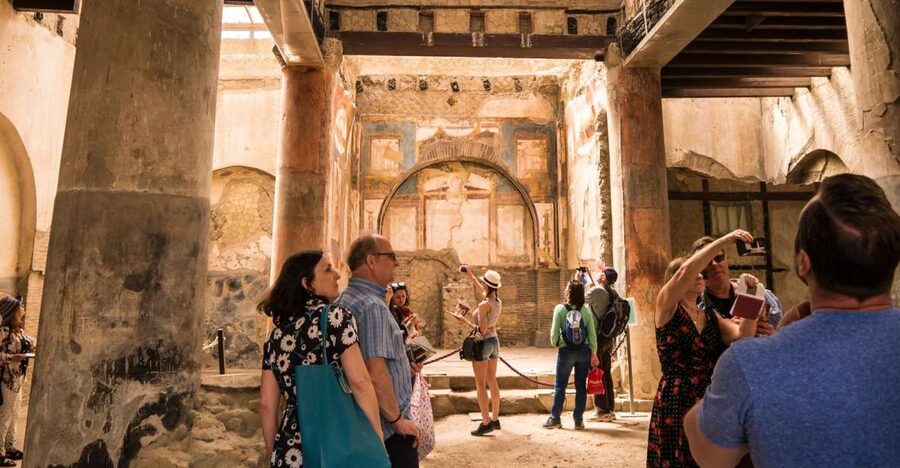
- Roman interiors are the payoff: your guide connects what you see to how people actually lived, including wood, paintings, and mosaics.
- The guide matters a lot on this tour: reviews highlight engaging archaeologist storytelling from guides like Antonio, Luciano, and Paola.
- Admission is handled for you: licensed archaeologist guide plus Herculaneum entry fees are included, and you skip the ticket line.
Herculaneum keeps a few more tours worth your time
- Ercolano: Herculaneum Entry Ticket with Optional Audio Guide★ 4.1 · 581 reviews
- Herculaneum: Skip The Line Entrance ticket + Audioguide★ 4.3 · 266 reviews
- Naples: Pompeii and Herculaneum Tour with Tickets and Lunch★ 4.4 · 136 reviews
- Herculaneum Archaeological Park smart Audio Tour★ 3.8 · 70 reviews
Why Herculaneum feels different from Pompeii
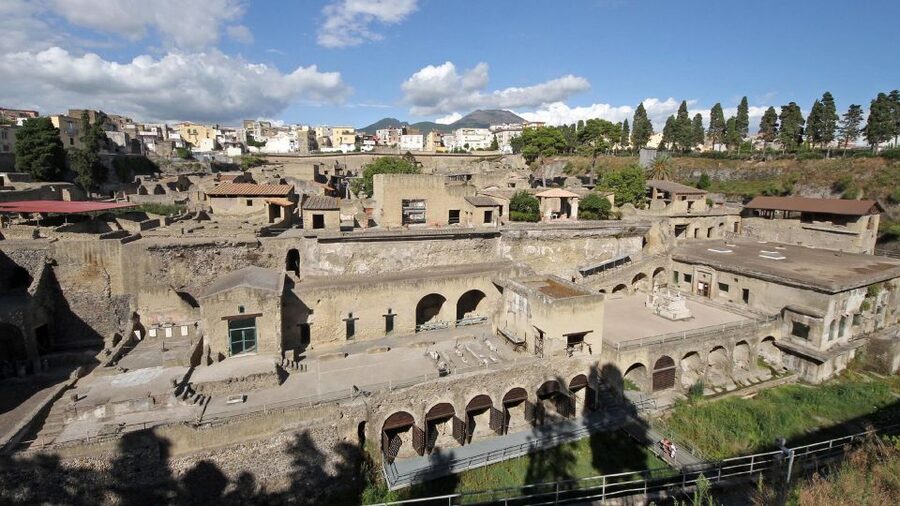
Herculaneum is often described as Pompeii’s sister town, but it doesn’t feel like a twin. The difference comes from how the disaster sealed the place. Pompeii was covered by several meters of ash. Herculaneum, though, was hit by an avalanche of mud—reported as about 20 meters deep—which created conditions that helped preserve more than you’d expect for an outdoor site.
That’s what you’ll feel on the ground. Instead of only imagining Roman life from broken stone, you’re nudged toward a more specific mental picture: doorways, rooms, and everyday spaces that help you grasp private routines and public interactions. The tour’s big promise is exactly this—seeing what happened in 79 A.D. and learning how the burial preserved things like wooden objects, paintings, and mosaics.
And because the guide is an archaeologist, you get context that makes the ruins click. It’s the sort of explanation that helps you stop staring at random walls and start spotting patterns—where people ate, worked, prayed, and lived.
The 2-hour private walking plan that keeps you from getting lost
A 2-hour tour is short enough to be doable, long enough to feel like you accomplished something real. You’re not spending the day wandering. You’re following a guided circuit that hits major highlights, then lets you make sense of them in order.
This is also a private group tour, so the pace can be more humane than a big group bus-to-bus plan. If you’re traveling with kids, you’ll appreciate the ability to keep things relatable; reviews specifically call out how guides made the site engaging even for teenagers.
On the practical side, you should come ready for steady walking and uneven outdoor surfaces. This isn’t a quick museum stop with seats every ten minutes. Bring comfortable shoes and treat it like a light workout that happens to include ancient Roman tragedy.
Start at Parco Archeologico di Ercolano: where your guide sets the scene
The tour begins at the Parco Archeologico di Ercolano area (with meeting point details varying by the option booked). From there, you’ll move into the archaeological zone with a guide who can frame what you’re about to see.
This first stretch matters more than it sounds. Herculaneum can feel confusing if you haven’t been oriented—streets and room layouts can blend together. A good guide helps you get your bearings fast, so the next stops don’t feel like random labels on a map.
Since the tour includes admission fees and offers skip-the-ticket-line entry, you’ll likely lose less time to paperwork at the entrance and spend more time on the parts you came for.
The main archaeological stop: Forum, houses, and the town’s daily rhythm
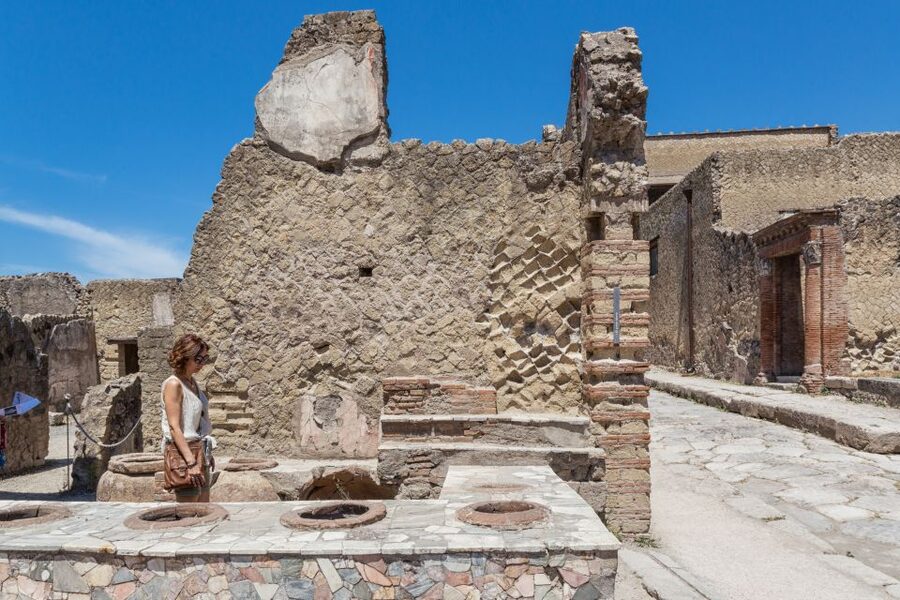
The heart of the tour is the main archaeological site portion, where you’ll cover big highlights and connect the dots between them. This is where you should expect the most “I get it now” moments.
You’ll see headline spaces such as the Forum, plus an assortment of homes and practical buildings. The tour also includes attention to sites tied to daily life, like:
- House highlights such as the House of the Black Saloon
- House of the Wooden Partition
- A Bakery area
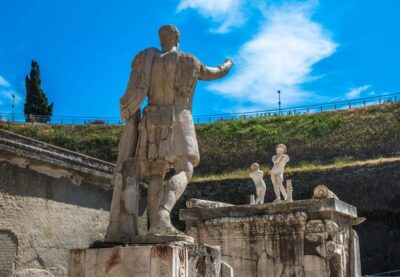
- The Terrace of Marcus Nonius Balbus
- And, later, the beach area linked to victims
What I like about this kind of main-stop structure is that it lets you understand the town as a system, not just a list of pretty artifacts. The Forum helps you picture public space. The houses and bakery help you picture private life and local work.
In Herculaneum, that matters because the preservation is part of the story. The ash-and-mud burial didn’t only protect objects—it also protected enough room layout and material evidence to help you imagine behavior, not just style.
More of Ercolano at street pace
Casa del Salone Nero: Roman rooms that make you slow down
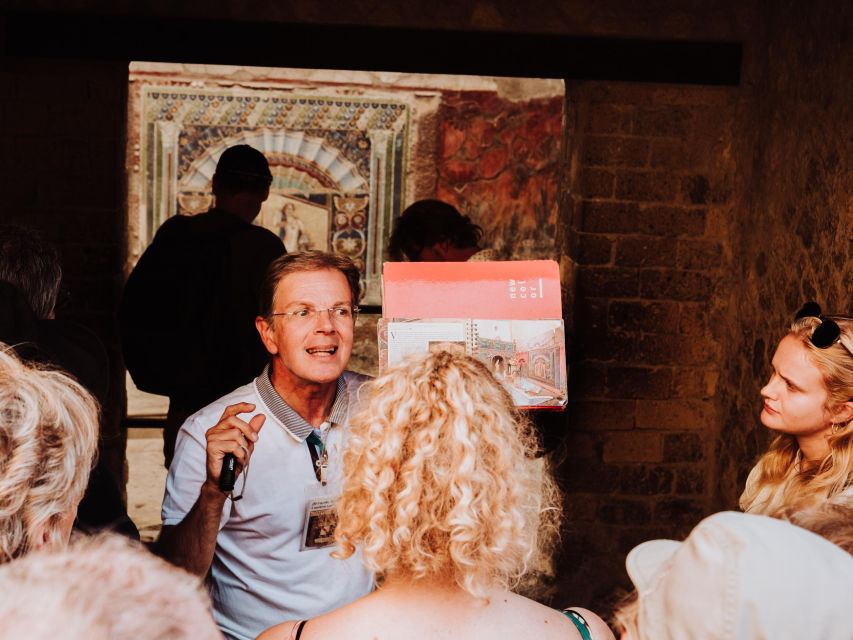
One of the named stops is Casa del Salone Nero (the House of the Black Saloon). This is the kind of place where the guide’s interpretation really helps. A room isn’t automatically interesting because it has walls—what makes it meaningful is what it says about daily routine and taste.
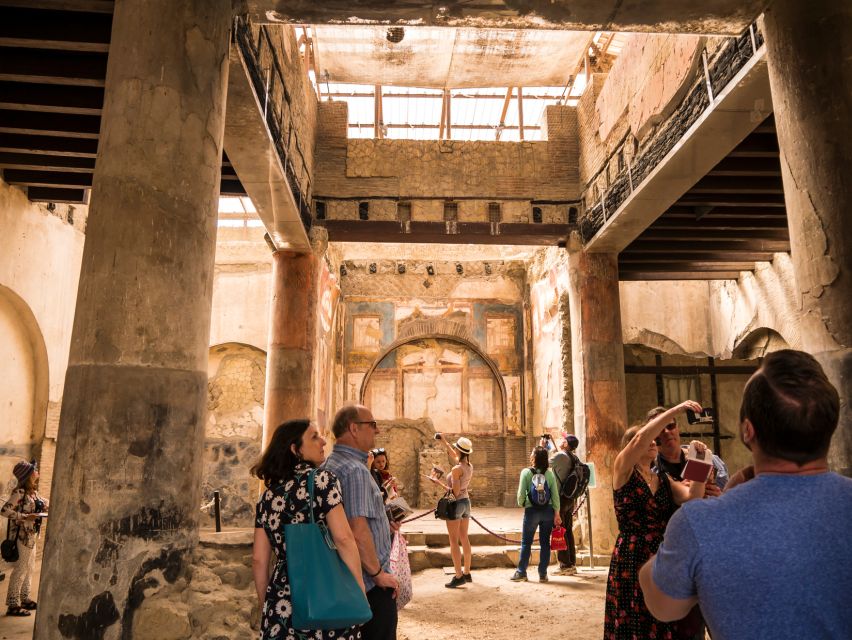
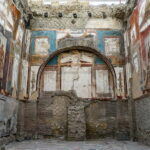
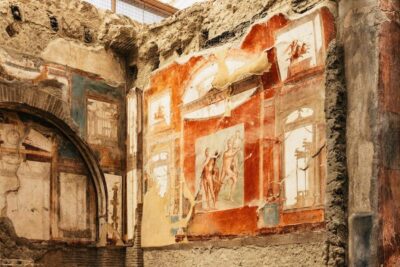
This is where you’re likely to start noticing how well the site was preserved. The tour focuses on items that survived through volcanic sealing, including well-preserved wood, paintings, and mosaics. Even if you’re not the type to geek out on art details, the guide can point out how these elements fit into how Romans lived indoors.
The drawback here is simple: houses encourage lingering. In a 2-hour tour, you won’t be able to stare at everything. If you’re someone who usually likes to read every sign and sketch every layout, you may wish you had a longer standalone visit. Still, with a private guide, you’ll have a better chance of asking the right questions and getting the key points without feeling rushed.
The Herculaneum Thermopolium: a Roman snack bar, minus the hype
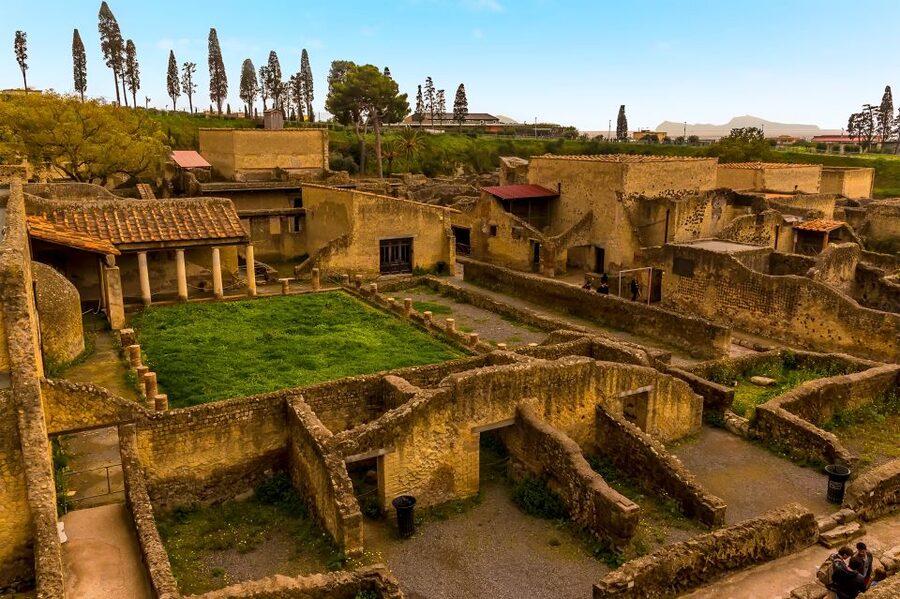
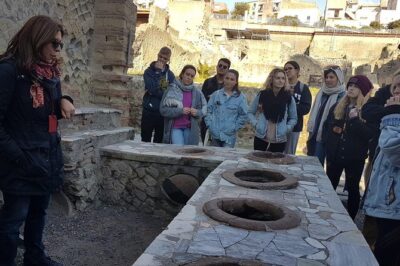
Another named stop is the Herculaneum Thermopolium. The word might be unfamiliar, but the idea is straightforward: this is a place tied to quick food and daily stop-in eating—less formal than a full meal in a private home.
What makes a thermopolium interesting in a site like Herculaneum is how it shifts the tragedy story into something more human. You’re not only walking through “important” buildings. You’re walking through the spaces where ordinary people might have grabbed food, talked, and moved on with their day.
This stop also helps you appreciate the town as lived-in, not staged. You get the sense of a neighborhood that had routine, noise, and habits—until the eruption changed everything.
Casa dell’Albergo and the other homes: preservation as a time machine
The itinerary also includes several residential stops: Casa dell’Albergo, Casa di Nettuno ed Anfitrite, and Casa dei Cervi. These aren’t just “nice rooms.” They’re entry points into how Romans used private space, how different households expressed identity, and how everyday life looked inside a city.
With the guide’s archaeologist lens, you’ll be encouraged to look at details beyond walls—especially the kinds of materials and decoration that survived. Since the tour highlights well-preserved wooden objects, paintings, and mosaics, these homes become where those statements come alive.
A helpful way to think about these stops: you’re comparing impressions. Each home can help you understand that Roman life wasn’t one uniform experience. You’ll likely leave with a more grounded sense of social variety—people living in different settings, using rooms differently, and building homes that reflected their status and taste.
If you’re traveling with mixed ages, these home stops often work well because they balance story with visuals. Kids may focus on what looks intact or unusual. Adults tend to latch onto the symbolism and practical use of rooms. The guide has room to steer the explanation to your group’s interests.
House of Skeletons: when the story turns from buildings to people
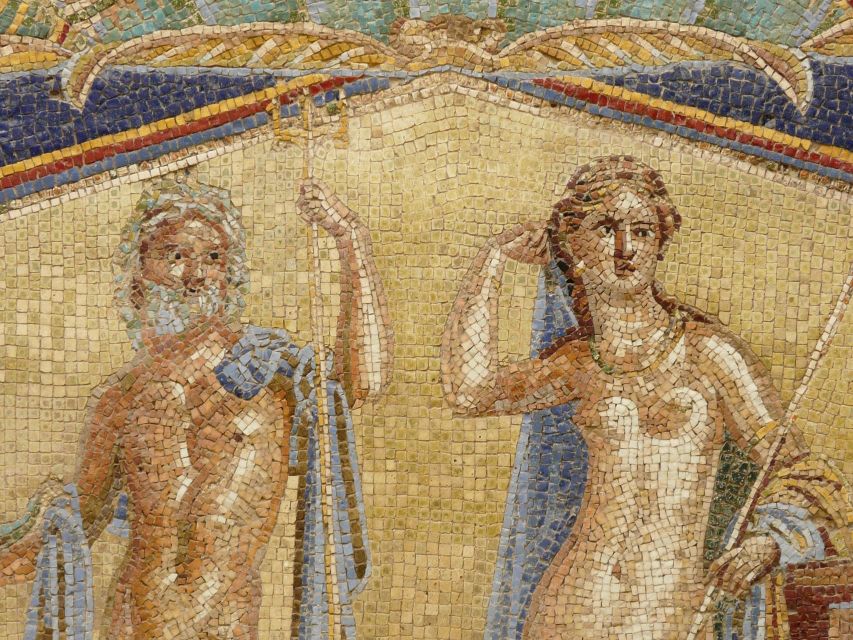
The House of Skeletons is one of the most emotionally intense parts of the experience. The tour specifically includes the beach where hundreds of victims were discovered. This is the stop where you’re no longer only learning about Roman architecture and material survival.
Instead, you get the human scale of 79 A.D.—what it meant to be caught in the eruption. A good guide keeps this respectful and grounded in the evidence you’re seeing, not sensational.
My advice: give yourself a moment here. Don’t treat it like a checklist stop. Even if you’re not a history buff, this is where the tour’s central theme becomes real. You can understand the mud burial and the preservation story, and then you can also feel the cost.
Sacellum of the Augustales: small religious space, big cultural context
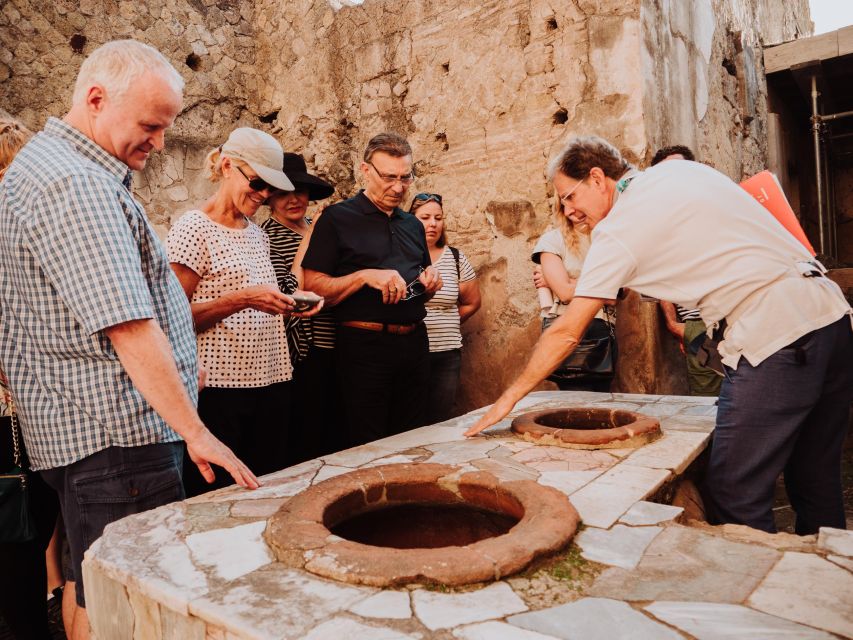
The last named stop is the Sacellum of the Augustales. A sacellum is essentially a small religious space, and that matters because it rounds out what you’ve been seeing.
So far, you’ve likely experienced Herculaneum through public life (Forum), private life (houses), and everyday commerce/food (thermopolium and bakery highlights). A religious stop adds the fourth piece: how people marked belief, community, and civic identity.
If you enjoy being able to explain a place after the fact, this is a key ending. It helps you answer questions like: What did people do together? What spaces held meaning beyond work and home?
And it gives the “town” story more balance. The tragedy is the climax, but religion and community are part of what made the town a town.
Guide quality is the real value on this tour
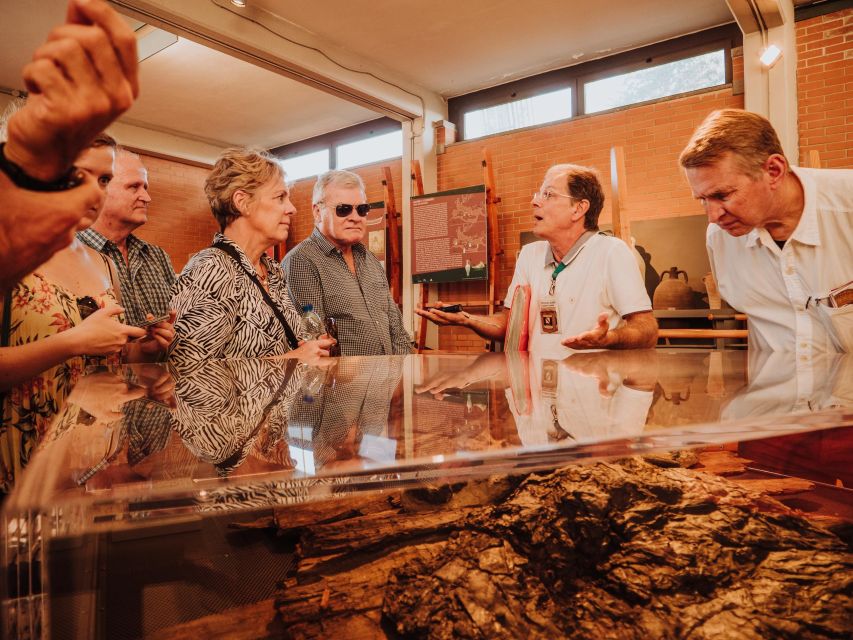
The tour promises an archaeologist guide, and the reviews back up that the people deliver. Names that stand out include Antonio, Luciano, and Paola. The consistent thread is engagement—guides who explain clearly without turning the site into a lecture.
Luciano gets special mention for bringing Herculaneum to life and making the tour feel like a small group experience. Antonio is praised for being both informed and fun, even with kids around. Paola is noted for highlighting the site’s key moments and also managing the comfort factor by trying to keep people in the shade.
That matters because Herculaneum is outdoors. Lighting changes, heat and sun can be real, and walking paths can be tiring. A guide who understands pacing and how to keep the story flowing helps you enjoy the site instead of just enduring it.
Price and value: what you’re really paying for
The price is listed as $317.76 per group up to 1 for a 2-hour private tour, with admission fees to Herculaneum included at 16.00 euros each. That combination is where the value sits.
If you’re the kind of traveler who wants to maximize time, a private archaeologist guide can be a smart move. You’re paying for:
- A guided route through key highlights
- Specialized interpretation from an archaeologist
- Time saved by skip-the-ticket-line access
- Included admission fees
Is it “cheap”? No. But value in a place like Herculaneum is about understanding what you’re seeing. If you’re going to be in Campania for limited days, or you’d rather pay extra to get clarity than spend hours trying to decode signs on your own, this format can pay off quickly.
Also, language options are broad (Italian, Spanish, English, Japanese, Russian, French, Portuguese, Chinese, German). If you want the story told in a language you fully understand, that’s not a minor benefit.
Practical tips for a smooth Herculaneum visit
Here’s what will help you have a better time.
- Wear comfortable shoes. Expect a walking circuit through an archaeological site.
- Skip the oversize luggage. Oversize luggage isn’t allowed.
- Plan for the heat. One guide comment specifically mentions trying to keep people in shade, which hints that sun management matters.
- Pick the language that matches your comfort level. The guide can work in multiple languages, which makes a big difference in how well you’ll absorb details.
- Check the wheelchair situation directly. The activity information is contradictory: one part says wheelchair accessible, while another note says it isn’t suitable for wheelchair users. If mobility is a concern, confirm with the provider before booking.
One more timing note: on the first Sunday of each month, entrance is free. Tickets can’t be reserved ahead of time, so entry isn’t guaranteed. If you’re planning around that, don’t make the day-of entry your only plan.
Should you book this private Herculaneum walking tour?
Book it if you want a guided, high-focus way to understand Herculaneum in two hours, especially if you care about why the site is so well preserved and what daily Roman life looked like. The archaeologist guide element, paired with the included admission fees and skip-the-line entry, makes it a practical choice rather than a pure splurge.
Don’t book it if you want a slow, self-guided museum-style visit where you can spend a long time reading every panel and taking your own route. This tour is structured, and that’s the point—but it can feel tight if you’re a “linger for an hour at one room” type.
If you’re visiting from elsewhere in Campania or you’re squeezing ruins into a busy itinerary, this private format is a smart way to leave with real understanding, not just photos.
FAQ
How long is the Herculaneum private walking tour?
The tour lasts 2 hours.
What does the tour include?
It includes a licensed archaeologist guide and admission fees to Herculaneum (16.00 euros each), plus skip-the-ticket-line entry.
Is transportation included?
No. Transportation is not included.
Where does the tour start?
The start meeting point may vary depending on the option booked. One listed start option is Parco Archeologico di Ercolano, Via dei Papiri Ercolanesi, 21.
Where does the tour end?
The tour ends back at the meeting point.
Is this tour private?
Yes. It’s a private group experience.
What languages are available for the guide?
The guide can be in Italian, Spanish, English, Japanese, Russian, French, Portuguese, Chinese, German.
What should I bring?
Bring comfortable shoes.
Is oversize luggage allowed?
No. Oversize luggage is not allowed.
Is there free entry on the first Sunday of the month?
Yes. On the first Sunday of each month, entrance is free, but tickets cannot be reserved ahead of time, so entry isn’t guaranteed.
Is it wheelchair accessible?
One part of the information says wheelchair accessible, but another note says it isn’t suitable for wheelchair users. You should confirm details with the provider before booking.
More Tours in Ercolano


More Tour Reviews in Ercolano



Herculaneum, a Few More Tours
More Ercolano tours, freshly reviewed


Herculaneum Tours, compared.
 ★ 4.8Herculaneum: Skip-the-Line Guided Tour with ArchaeologistFrom $533,439 reviews
 ★ 5.0Pompeii and Herculaneum Small Group Tour with an ArchaeologistFrom $771,350 reviews
 ★ 5.0Herculaneum Small Group Tour and Ticket With an ArchaeologistFrom $53994 reviews
 ★ 4.3Herculaneum: Skip-the-Line Entry Ticket with Audio GuideFrom $15870 reviews
 ★ 4.8Pompeii: Small-Group Tour of Pompeii and Herculaneum867 reviews
 ★ 4.8Pompeii & Herculaneum with Archaeologist GuideFrom $168665 reviews
 ★ 3.9Pompeii, Herculaneum, & Vesuvius Full-Day TourFrom $152602 reviews
 ★ 4.1Ercolano: Herculaneum Entry Ticket with Optional Audio GuideFrom $21581 reviews
Browse the lists this tour appears in