
Review · HERCULANEUM TOURS
Herculaneum: Skip-the-Line Guided Tour with Archaeologist
Herculaneum feels like a frozen breath. This skip-the-line guided tour gets you into one of Italy’s best-preserved Roman towns fast, and it’s led by an archaeologist who can explain what you’re standing in. I love two things most: the convenience of bypassing the entrance line and the way guides like Luciano Leone and Yolanta can turn stone, paint, and mosaics into real human stories. The main drawback is that the site is exposed and the tour moves at a steady pace, so you’ll want good shoes and sun protection.
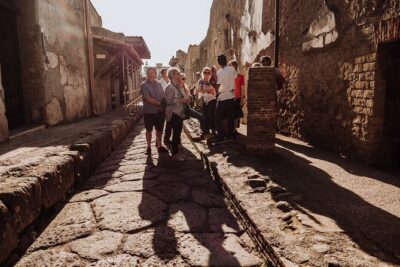
What makes Herculaneum special is how close it keeps you to daily life. You walk through compact streets and public buildings, then your guide ties it to the sudden destruction caused by Mount Vesuvius nearly 2,000 years ago. Expect plenty of stops, lots of visuals (often with extra photo material), and a clear “before and after” story told in plain language.
In This Review
- Key highlights to watch for
- Herculaneum’s compact ruins hit differently than Pompeii
- Skip-the-line entry and the rhythm of a 2-hour visit
- Casa dei Cervi and the quiet drama of Roman houses
- House of Neptune and Amphitrite: mosaics you can almost feel
- The waterfront tragedy: House of Skeletons and the human cost
- Thermal baths, forum zones, and public life you can actually picture
- Gymnasium moments: what survives and what can guide your imagination
- Artifacts and “time capsules”: ceramics, paint, and mosaics
- Price and value: $53 for a guide, admission, and headsets
- Practical tips before you go: shoes, sun, rain, and no big bags
- Should you book this skip-the-line archaeologist tour?
- FAQ
- How long is the Herculaneum skip-the-line guided tour?
- What’s included in the $53 per person price?
- Where do I meet my guide?
- What languages are available for the live tour?
- What should I bring and wear?
- Is the tour suitable for wheelchair users or mobility impairments?
Key highlights to watch for
- Skip-the-line entry means you spend more time inside and less time waiting outside.
- Archaeologist-led commentary turns ruins into everyday scenes, not just dates and labels.
- Well-preserved interiors you can actually picture, including mosaics, paintings, and ceramics.
- Villas and public life in a walkable circuit, from the thermal baths to the forum areas.
- A strong Vesuvius story: how lives ended quickly, including the waterfront tragedy tied to more than 300 people.
Herculaneum keeps a few more tours worth your time
- Herculaneum: Skip-the-Line Guided Tour with Archaeologist★ 4.8 · 3,439 reviews
- Herculaneum Small Group Tour and Ticket With an Archaeologist★ 5.0 · 994 reviews
- Herculaneum: Skip-the-Line Entry Ticket with Audio Guide★ 4.3 · 870 reviews
- From Naples: Pompeii & Herculaneum with Archaeologist Guide★ 4.8 · 665 reviews
Herculaneum’s compact ruins hit differently than Pompeii
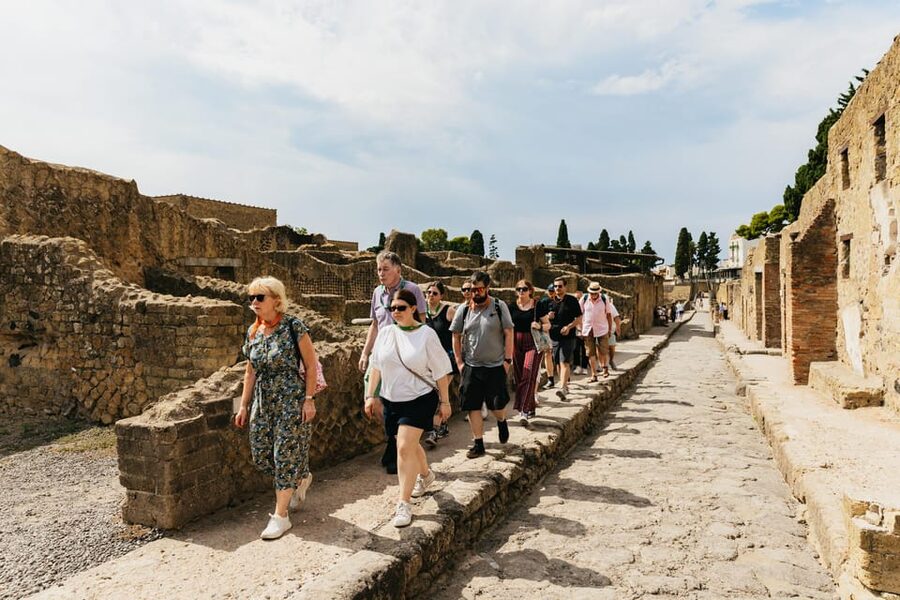
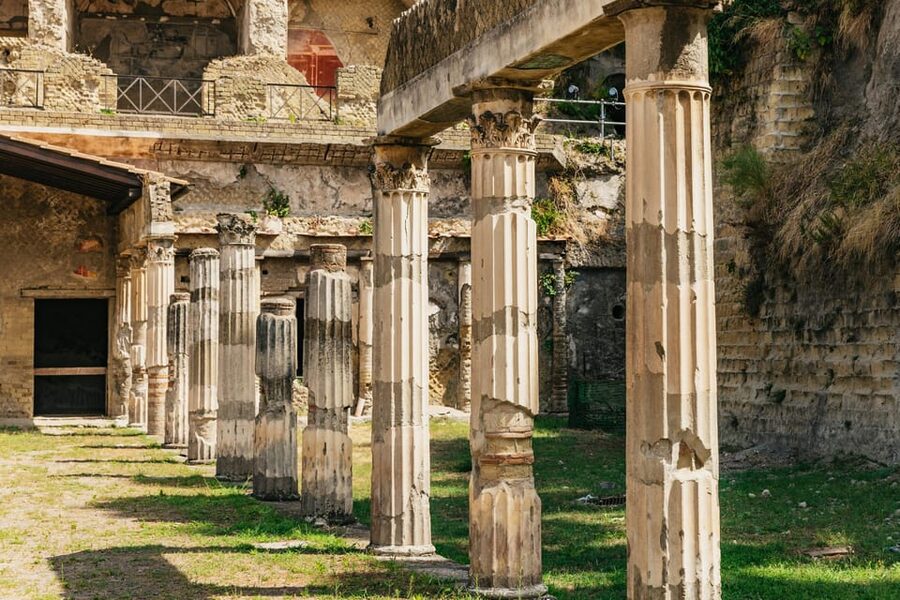
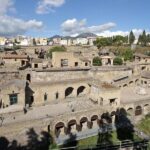
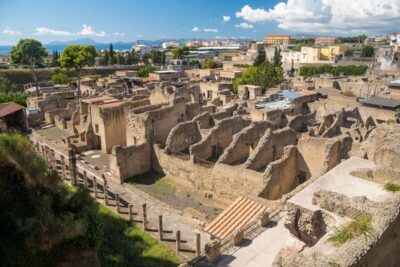
If you’ve seen Pompeii, you might expect the same vibe: bigger crowds, more chaos, and more “what am I looking at” moments. Herculaneum is often the opposite experience. The site is smaller and easier to manage, so you can actually focus. You also get an unusually clear snapshot of Roman life because many structures and objects survived in remarkable condition.
A big part of the appeal here is preservation. You’re not just looking at walls. You’re walking past remnants that include stone and marble, plus ceramics and decorative elements. The guides also explain how the eruption affected things differently than in Pompeii, so the comparison makes your visit feel smarter, not repetitive.
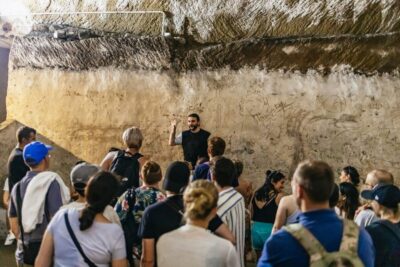
You’ll likely notice the atmosphere, too. Several guides on these tours are archaeologists and are comfortable speaking for two hours without turning into a lecturer. Names that come up repeatedly in the tour’s guide rotation include Luciano, Diego, Yolanta, and Gerardo, and the common thread is a talk style that keeps people moving and paying attention.
Skip-the-line entry and the rhythm of a 2-hour visit
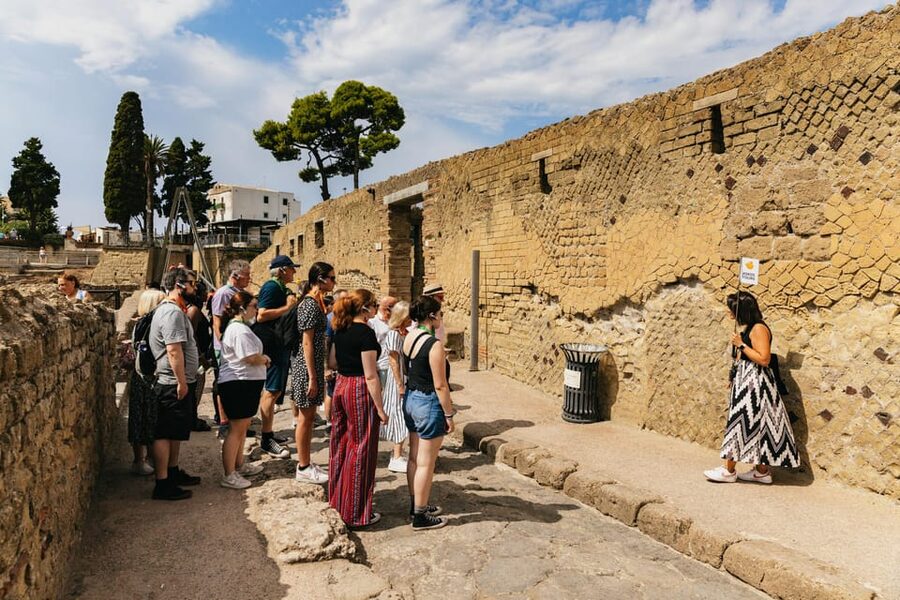
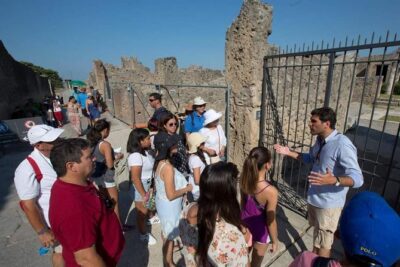
The whole tour is designed around a 2-hour loop. That’s short enough to feel energetic, long enough for your guide to build context. You’ll start at the ticket office area at the Herculaneum ruins (Askos Tours holds an Askos Tours sign), and you’ll head into the archaeological site with admission and headsets included.
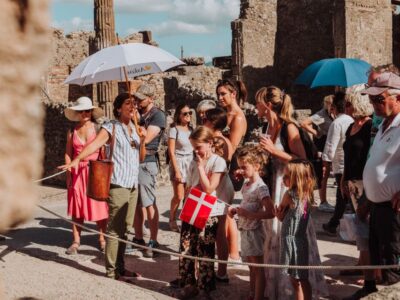
Headsets matter more than you’d think. The group is usually kept small-to-medium, and if you end up at the far edge, audio can be less consistent. So aim for the front half of your group if you want the clearest sound for the key explanations.
Here’s the practical takeaway: this is not a “wander and wonder” visit. It’s a guided route where your guide points out what you’d probably miss alone. You’ll still have time after the tour to look around more slowly because full admission is included, but the guided segment itself is purposeful and brisk.
Casa dei Cervi and the quiet drama of Roman houses

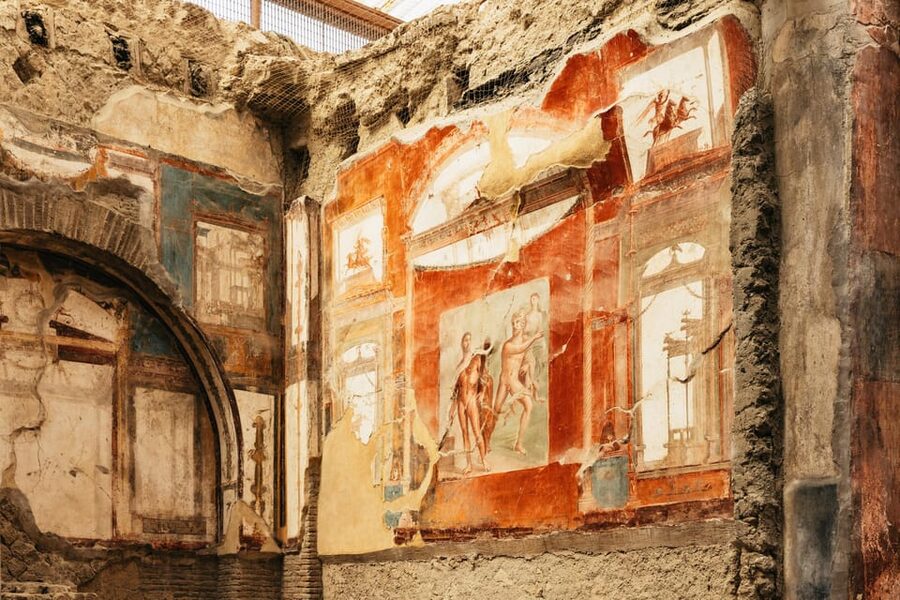
One of the first places you’ll visit is Casa dei Cervi. It’s the kind of stop that can feel ordinary at a distance. Up close, it becomes easier to read: you see how space worked in daily life, how people moved through rooms, and how domestic decoration tied into status and comfort.
This is where an archaeologist guide earns their paycheck. Instead of just naming rooms, the guide helps you connect the layout to how the city functioned. For example, the way a house organizes common and private space gives you insight into who lived there and how they used the home.
The lesson I like most from domestic stops like Casa dei Cervi is this: you start seeing Herculaneum as a living neighborhood, not a museum floor plan. Even in two hours, you build a mental map.
House of Neptune and Amphitrite: mosaics you can almost feel
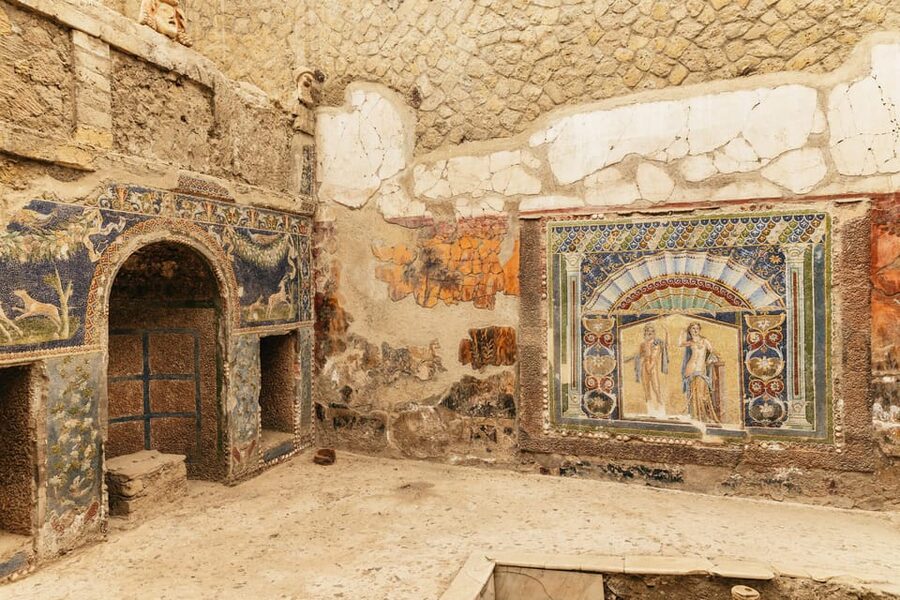
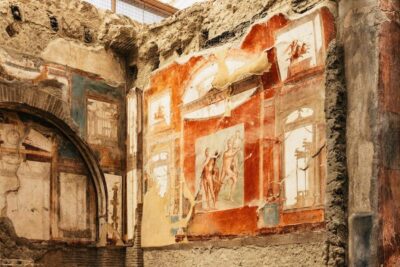
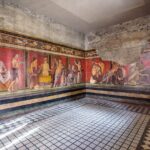
The star stop for many people is Casa di Nettuno ed Anfitrite (also described as the House of Neptune and Amphitrite). This is where decoration tells a story. Decorative themes like Neptune and Amphitrite aren’t random; they connect to ideas about sea power, trade, and the household’s identity.
And because Herculaneum preserved more than just “pretty bits,” you get a stronger sense of what the art used to do. Your guide points out surviving detail in mosaics and other decorative materials, and ties it back to the city as a wealthy port town.
If you like art history but find it too academic, this is a good balance. The guide’s explanations connect myth and motif to real people who likely walked these spaces in ordinary daily routines.
More guided runs around Naples


The waterfront tragedy: House of Skeletons and the human cost
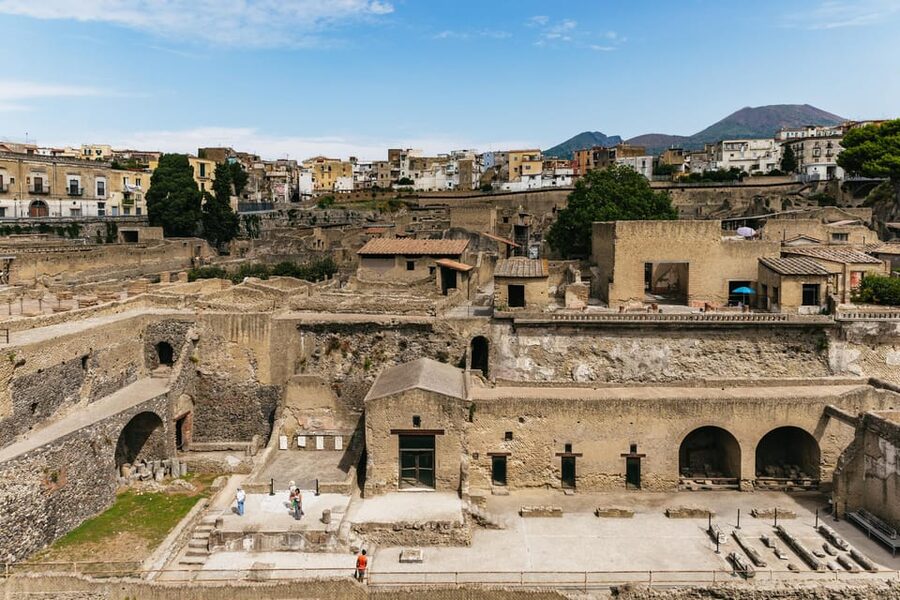
You’ll also visit the House of Skeletons. It’s a heavy stop, but it matters because it grounds the story in real consequence. Herculaneum wasn’t destroyed as a slow mystery. Lives ended abruptly with Mount Vesuvius, and your guide explains the overall event’s speed and impact.
One of the most haunting details shared during this tour is the waterfront story: the remains of more than 300 people are linked to those who tried to escape by going to the ocean. Your guide uses that as a bridge to explain why the port mattered so much to the city’s everyday life.
This is also where I recommend mentally switching modes. For the earlier house stops, you’re looking for household signals: wealth, routine, taste. At the waterfront-related moments, you’re looking for the human shock. A good guide helps you hold both truths at once: beauty and sudden loss.
Thermal baths, forum zones, and public life you can actually picture
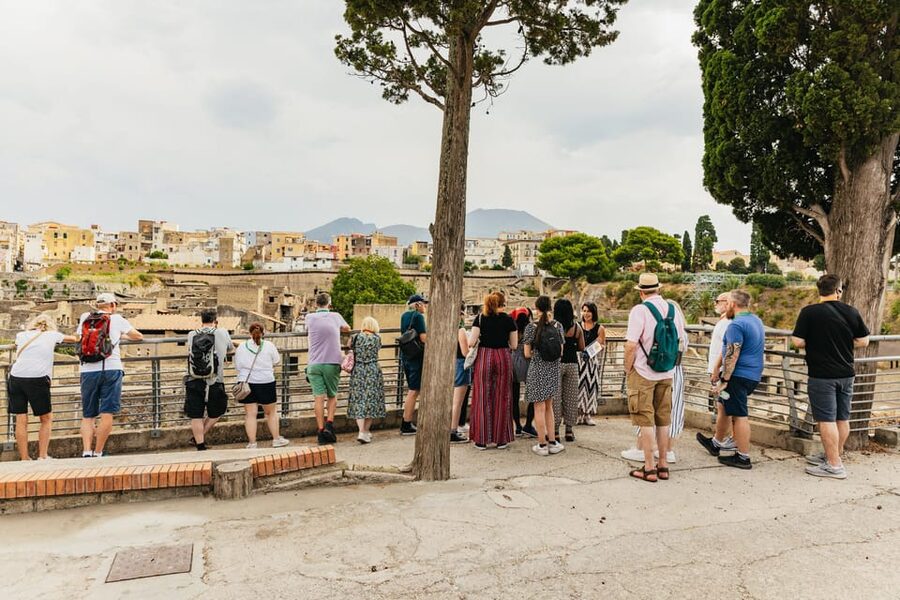
Herculaneum’s public spaces help you understand the city beyond private homes. You’ll see thermal baths and the tour also touches the forum area—places where you can sense routine, conversation, and status.
When I walk through ruins like these, I try to ask myself one question: what would a person do here on a normal day? That’s exactly the kind of question archaeologist guides answer. You learn what these spaces likely meant socially, not just architecturally.
The tour also includes the Sacellum of the Augustales (also referred to as the Temple of the Augustales). This is a strong stop if you want the political-religious layer of Roman life. It’s not only about pretty stone; it’s about civic roles and community structures.
Gymnasium moments: what survives and what can guide your imagination
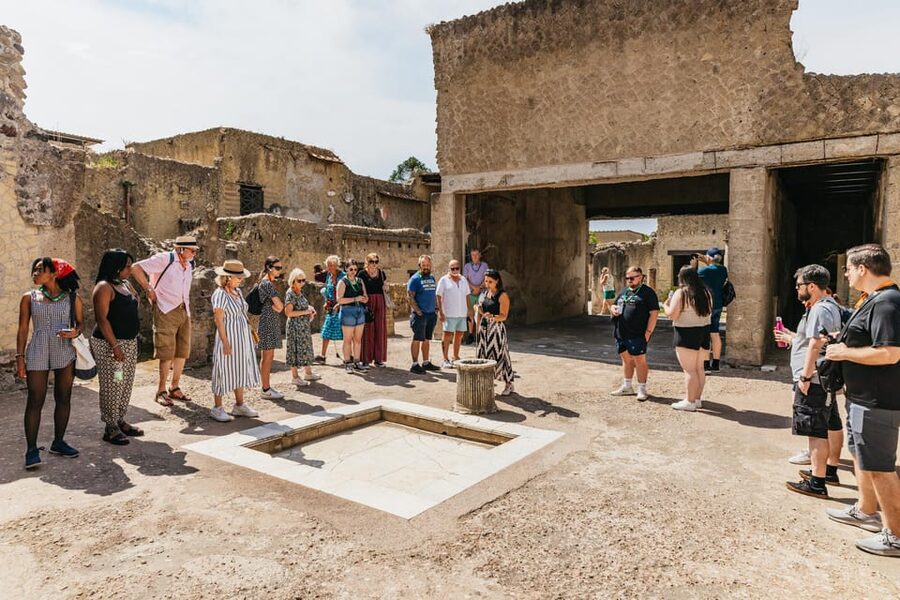
Another highlight is the gymnasium, where you’ll hear how leisure and training fit into Roman society. In at least some departures, your guide may take you into a tunnel area connected with the gymnasium complex, giving an added sense of scale and function.
This is where Herculaneum’s preservation helps your imagination. Some materials survived in ways you don’t get at every site: decorative surfaces, plus objects that tell you about daily routines. Even when something looks damaged, the guide points out what remains and what that suggests.
It’s also where carbonization matters. The tour explains how some items survived the event while others were transformed, including carbonized wood, plus surviving paintings and mosaics. That mix can feel surprising, and a good guide makes the difference legible.
Artifacts and “time capsules”: ceramics, paint, and mosaics
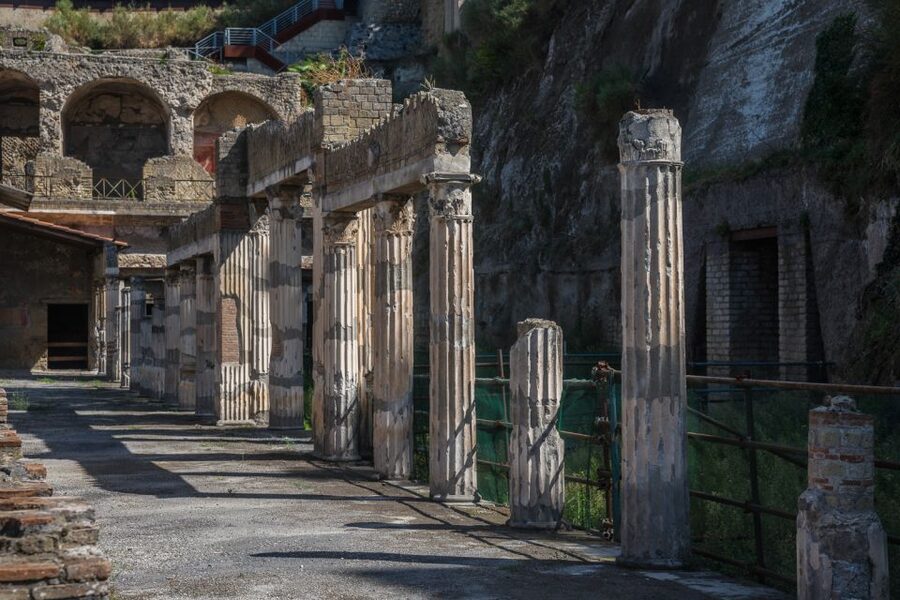
Even if you’ve seen Roman mosaics before, Herculaneum’s surviving examples feel closer because of the way the city was preserved. You see decorated details that would normally be long gone.
The tour highlights a range of materials, including ceramics and decorative pieces in multiple forms. You’ll also learn how the eruption impacted what you’re seeing today: some surfaces and objects survived, while others were damaged or altered.
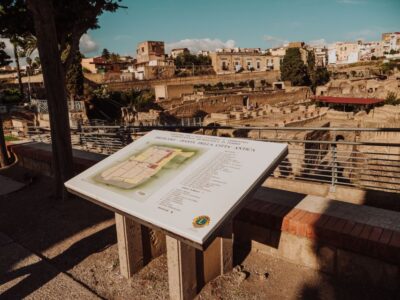
This is also where the archaeologist’s method helps. Many guides use extra materials—photo overlays, picture binders, and comparisons—to explain what the site looked like before it was covered. That approach helps you avoid a frustrating feeling of only seeing fragments without a bigger picture.
Price and value: $53 for a guide, admission, and headsets
At $53 per person for a 2-hour archaeologist-guided visit, this is often good value because it bundles the expensive part: time with a real expert plus entry into the site.
Admission at Herculaneum is listed separately in the general guidance: 16.00 euros for adults and 2.00 euros for EU citizens aged 18–25. This tour’s price is positioned to include admission fees, plus the archaeologist guide and headsets, so you’re not paying extra just to hear what you came for.
Is it worth it if you love ruins but don’t care about context? You might still enjoy it, because Herculaneum is visually striking and compact. But if you want the story behind what you see—port life, nobility and merchants, what changed after Vesuvius—this is where the money goes.
Practical tips before you go: shoes, sun, rain, and no big bags
Herculaneum is vast and very exposed, even though it’s compact enough for a guided loop. Plan for sun and heat: bring sunscreen and consider a hat. Wear closed-toe shoes. The ground can be uneven, and walking on open sandals is a bad trade when you’re in and out of covered and open areas.
Rain is part of the plan. The tour runs rain or shine, so pack a raincoat if you’re visiting when weather can shift.
A few “don’t get stuck at the entrance” rules matter:
- You’ll need a valid passport or ID.
- Luggage or large bags are not allowed.
- Unaccompanied minors aren’t allowed.
- It’s not suitable for mobility impairments or wheelchair users.
Also, if you’re traveling from Naples, note that transportation isn’t included. You’ll need to handle getting there on your own.
Should you book this skip-the-line archaeologist tour?
Book it if you want the best mix of speed, context, and preservation. This is the kind of tour that helps you see Herculaneum the right way: houses with meaning, public buildings you can interpret, and the Vesuvius story told clearly.
Skip it (or go self-guided) if you prefer long, slow wandering with minimal structure, and you’re okay reading on your own without an archaeologist to connect the dots. The guided route is very efficient, and the exposed setting means you may not want to rush too much if you’re sensitive to heat or rain.
My best advice: if you’re even halfway curious about how Roman daily life looked in a wealthy port city—and how quickly it ended—this is a strong match. The tour’s skip-the-line entry, included headsets, and archaeologist-led stops like Casa dei Cervi and the House of Neptune and Amphitrite make it a smart use of limited vacation time.
FAQ
How long is the Herculaneum skip-the-line guided tour?
The tour lasts 2 hours.
What’s included in the $53 per person price?
It includes the guided tour of Herculaneum, admission fees, an archaeologist guide, and headsets.
Where do I meet my guide?
Meet at the ticket office of the Herculaneum Ruins. The guide holds an Askos Tours sign.
What languages are available for the live tour?
The tour is offered in English, Italian, German, Spanish, and French.
What should I bring and wear?
Bring a passport or ID card, wear comfortable closed-toe shoes, and bring sunscreen (and a hat is recommended). A raincoat is recommended because the tour runs rain or shine.
Is the tour suitable for wheelchair users or mobility impairments?
No. It is not suitable for people with mobility impairments or for wheelchair users.
More Tours in Naples




More Tour Reviews in Naples

Herculaneum, a Few More Tours



More Naples tours, freshly reviewed




Herculaneum Tours, compared.
 ★ 5.0Pompeii and Herculaneum Small Group Tour with an ArchaeologistFrom $771,350 reviews
 ★ 5.0Herculaneum Small Group Tour and Ticket With an ArchaeologistFrom $53994 reviews
 ★ 4.3Herculaneum: Skip-the-Line Entry Ticket with Audio GuideFrom $15870 reviews
 ★ 4.8Pompeii: Small-Group Tour of Pompeii and Herculaneum867 reviews
 ★ 4.8Pompeii & Herculaneum with Archaeologist GuideFrom $168665 reviews
 ★ 3.9Pompeii, Herculaneum, & Vesuvius Full-Day TourFrom $152602 reviews
 ★ 4.1Ercolano: Herculaneum Entry Ticket with Optional Audio GuideFrom $21581 reviews
 ★ 4.5Day Trip of Pompeii, Herculaneum and Vesuvius from NaplesFrom $145547 reviews
Browse the lists this tour appears in