
Review · HERCULANEUM TOURS
Herculaneum Guided Walking Tour – Priority Access
Vesuvius left Herculaneum frozen in time, and this priority access tour lets you see it with a licensed guide in about two hours. I especially like the structure: you’re not just looking at ruins, you’re learning what you’re seeing as you walk.
My second big favorite is the preservation. Herculaneum still shows original frescoes, intricate mosaics, wooden elements, and Roman architecture that survived almost intact, so the place feels personal, not museum-distant.
One possible consideration: you have to be at the exact ticket office meeting point, since the guide is there and you’re expected to start right on time.
In This Review
- Key highlights worth your attention
- Herculaneum in Two Hours: Why This Site Hits Hard
- Priority Entrance at the Herculaneum Ticket Office: Less Waiting, More Seeing
- Licensed Guide, Italian or English: How the Tour Stays Understandable
- The 2-Hour Walk: The Stops That Tell the Whole Story
- House of the Mosaic Atrium: Art and status in one space
- House of the Deer: A residential look at everyday refinement
- Forum Baths: Public routine, not just private luxury
- House of Neptune and Amphitrite: Myth, decoration, and attention to detail
- How Herculaneum Shows Roman Daily Life (Beyond the Big Names)
- What the Vesuvius Story Adds (And Why It’s Worth Hearing)
- Price and Value: Is $47 Worth It?
- Who This Tour Fits Best (and Who Might Want a Different Style)
- Should You Book This Priority Access Herculaneum Walk?
- FAQ
- How long is the Herculaneum guided walking tour with priority access?
- What does the tour cost?
- Where do we meet the guide?
- Is priority entrance included?
- Who provides the tour?
- What languages are offered?
- Is Whispers headset rental included?
- Is there free cancellation?
Key highlights worth your attention
- Priority skip-the-line entrance so you spend your time inside the ruins, not stuck in queues.
- A 2-hour guided route focused on major stops like the House of the Mosaic Atrium and the Forum Baths.
- Preserved details you can actually recognize including frescoes, mosaics, and even wooden elements.
- A clear story of 79 AD and rediscovery—from Vesuvius to the site’s 18th-century uncovering.
- Whispers headset rental (for groups of 10+) that helps you hear your guide as you move.
- Roman daily life, not just big ruins—houses, courtyards, bath spaces, and public areas tied to everyday routines.
Herculaneum keeps a few more tours worth your time
- Herculaneum: Skip The Line Entrance ticket + Audioguide★ 4.3 · 266 reviews
- Naples: Pompeii and Herculaneum Tour with Tickets and Lunch★ 4.4 · 136 reviews
- Herculaneum Archaeological Park smart Audio Tour★ 3.8 · 70 reviews
- Herculaneum: Private Walking Tour with Archeologist Guide★ 5.0 · 59 reviews
Herculaneum in Two Hours: Why This Site Hits Hard
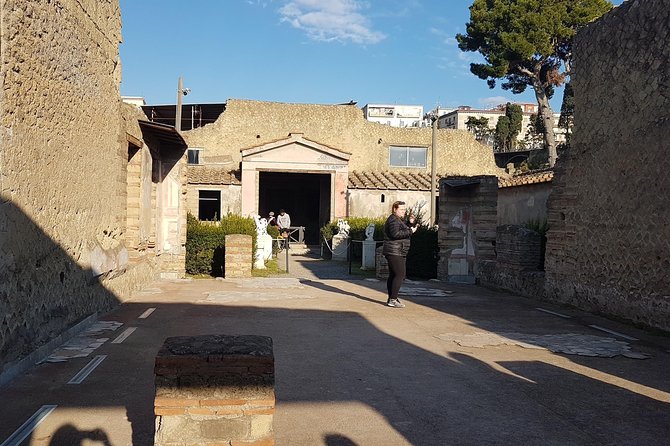
Herculaneum is one of those places where the scale is obvious the second you arrive—then the details grab you. This tour is timed for first-timers, so you get a strong overview without turning the visit into a full-day slog.
You’ll learn how Herculaneum was destroyed by the eruption of Mount Vesuvius in 79 AD. Even better, the tour frames the later rediscovery in the 18th century, when people realized what had been preserved beneath the volcanic material—and why it became so important for archaeology worldwide.
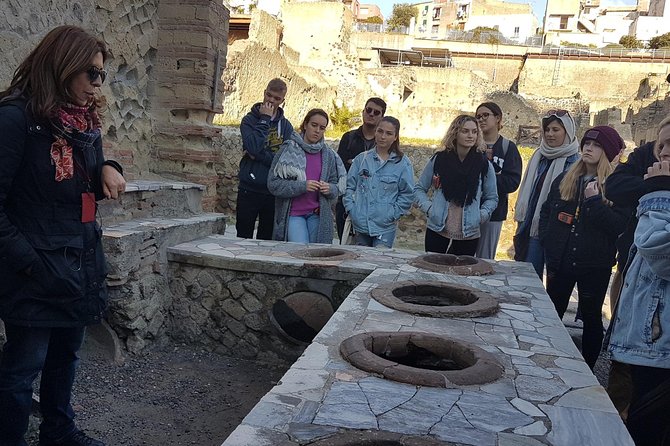
If you like cities that feel lived-in, this is the right one. You’re not staring at “ruins” in the abstract; you’re walking through homes and public buildings built for real routines—visiting bath spaces, moving between courtyards, and living among artworks that still look startlingly intact.
Priority Entrance at the Herculaneum Ticket Office: Less Waiting, More Seeing
This experience includes a priority entrance ticket, plus you skip the ticket line. That matters because Herculaneum is a popular stop, and a shorter guided visit means every minute inside counts.
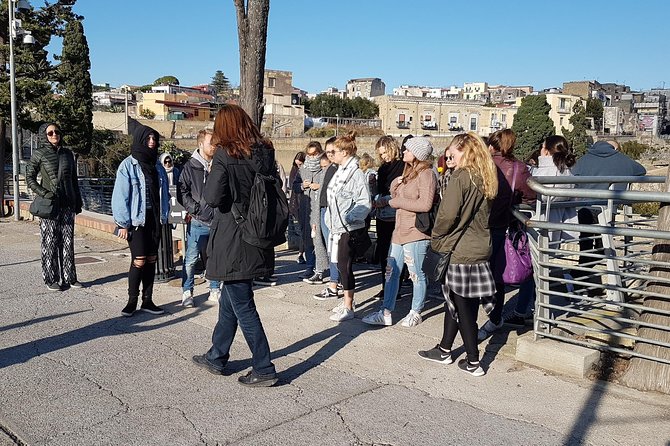
Your meeting point is clear and practical: meet your guide next to the ticket office of the Herculaneum Ruins. The guide will hold a flag with the local tour operator logo, which makes it easier to find each other quickly.
Here’s my advice for making priority access work for you: arrive early enough to settle, confirm you’re in the right group, and start the walk feeling calm. It’s not the kind of site where a delayed start magically fixes itself—once the tour begins, the group moves.
Licensed Guide, Italian or English: How the Tour Stays Understandable
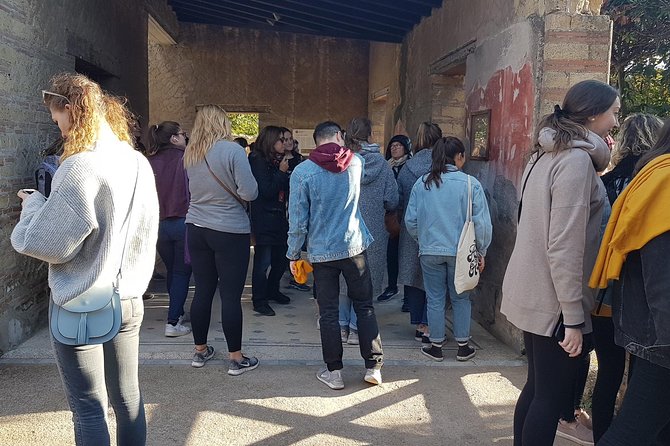
You’re getting a professional, licensed guide for the 2-hour walk. That’s the difference between wandering and learning—because the guide points out what to look for and connects the buildings to what life would’ve been like.
Language options are Italian and English. If you’re more comfortable in English, you’ll still benefit from the guide’s pacing and explanations, especially when they connect different areas of town to everyday Roman habits.
One neat practical perk is the Whispers rental for groups of 10 persons and more. Even if you don’t think you’ll need it, headsets can make a big difference in outdoor sites where sound carries unpredictably. With a moving group, it helps you keep up without constantly turning your head.
Also, there’s a strong signal that the tour pace is meant to be comfortable—steady, not rushed—so you can actually enjoy the spaces instead of rushing through them for photos.
The 2-Hour Walk: The Stops That Tell the Whole Story
This tour is built around a focused set of highlights. In two hours, you won’t see every single room in Herculaneum, but you will hit the most teachable parts—the ones that show how wealth, public life, and daily routine mixed together.
More of Ercolano at street pace
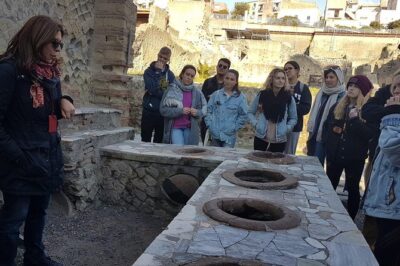

House of the Mosaic Atrium: Art and status in one space
You’ll visit the House of the Mosaic Atrium, a key stop because it shows how Roman homes could broadcast taste and social standing. You’ll get to see intricate mosaics and architectural design that helps you understand how these spaces were organized for movement, privacy, and display.
What I like here is the “readability.” The atrium style and decoration aren’t random. As your guide explains, you start seeing how people would experience the home—where they’d gather, what they’d notice first, and how artwork shaped the mood.
House of the Deer: A residential look at everyday refinement
Next comes the House of the Deer, which helps you compare what you saw in the mosaic-focused atrium space to another elite residence. The point isn’t just the name on a label—it’s how different parts of the home reflect different priorities, from decoration to layout.
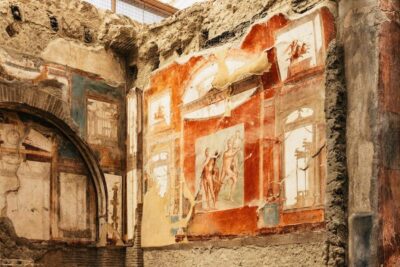
This is also where you’ll likely notice how well-preserved elements contribute to the illusion of being inside. Frescoes and fine details help you understand that the buildings weren’t “decorated later”—they were meant to be lived with.
Forum Baths: Public routine, not just private luxury
Then you shift from homes to public life with the Forum Baths. Bath spaces were social hubs. They mattered for health, conversation, and daily rhythm—so this stop adds context that pure residential visits can miss.
If you’ve ever wondered why so much Roman life centered on public spaces, this is where it clicks. You can connect the physical design of bath areas with how people would’ve used them through the day.
House of Neptune and Amphitrite: Myth, decoration, and attention to detail
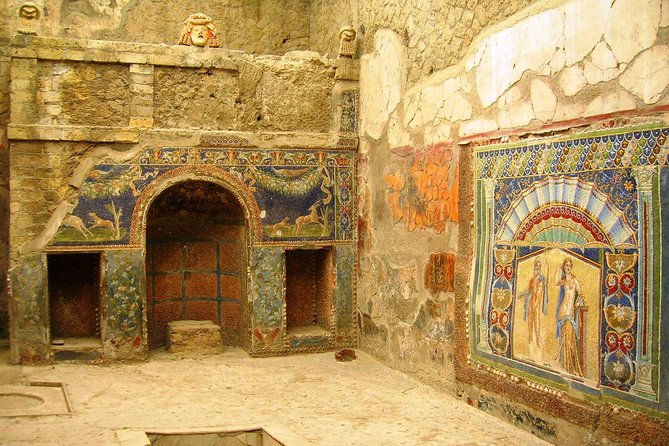
Finally, you’ll visit the House of Neptune and Amphitrite. This stop is especially useful if you want to see how Roman culture expressed itself through art and theme.
My tip: at this point, pay attention to how the guide links artwork and architecture. When you understand why myth-themed decoration appeared in certain spaces, it stops being just pretty decoration and starts being a window into belief, taste, and identity.
How Herculaneum Shows Roman Daily Life (Beyond the Big Names)
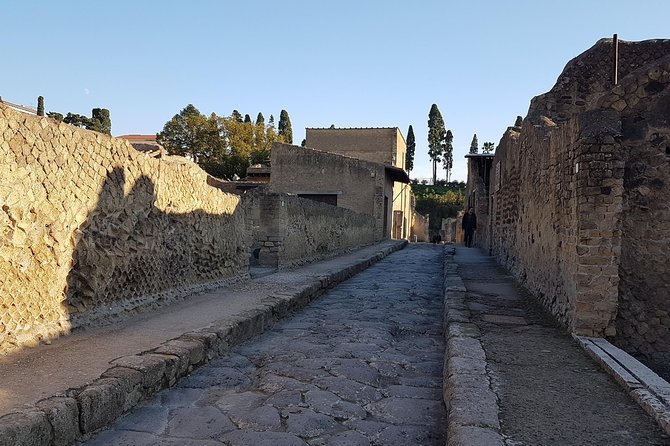
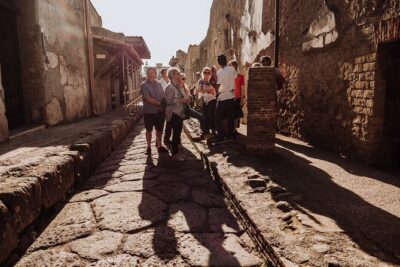
The core value of this guided walk is that it connects buildings to routines. You’ll walk along ancient streets and move through areas that reveal how Romans lived, worked, and spent time—through noble residences and public buildings, with shops, bathhouses, and courtyards included in the story.
Because Herculaneum is so well preserved, the ruins aren’t just shapes. You’ll be able to notice original frescoes and mosaics, and the tour also references surviving wooden elements and Roman architecture that remained almost intact. That combination makes the site feel more human-scale than many archaeological places.
A quick way to get more out of the tour: keep asking yourself what you’d do in each space. If you’re looking at a home, think about where someone would enter, pause, and meet visitors. If you’re looking at bath areas, think about how schedules and social life would flow.
Your guide is there to make those connections fast, so you leave with a mental map of the city and what life looked like inside it.
What the Vesuvius Story Adds (And Why It’s Worth Hearing)
A lot of people know the headline: 79 AD, Vesuvius, and tragedy. This tour goes further by explaining how the eruption buried Herculaneum and why that burial helped preserve so much of what you see today.
Then it brings in the rediscovery in the 18th century, when excavations began revealing the scale and detail of the preserved city. That back-and-forth—disaster to rediscovery—isn’t just background. It helps you understand why certain rooms look the way they do and why Herculaneum became such an important archaeological site.
When a guide tells this story clearly, it changes the way you look at walls and floors. Instead of seeing them as ruins, you start seeing them as a snapshot of a city stopped mid-routine.
Price and Value: Is $47 Worth It?
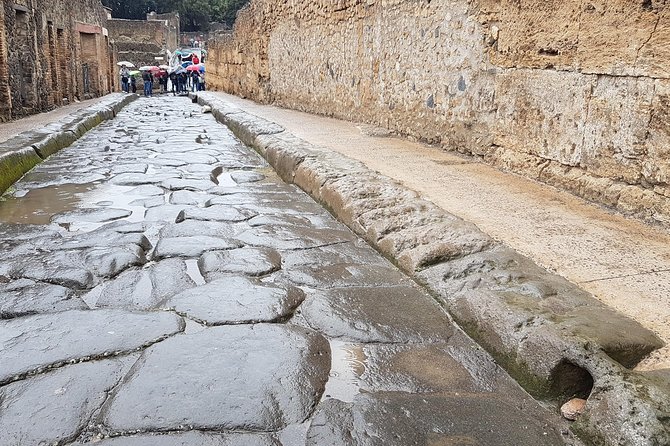
At $47 per person for a 2-hour guided walking tour, you’re paying for three things that are hard to replicate on your own: interpretation, time efficiency, and priority entry.
You’re not just getting a ticket. You’re getting a professional, licensed guide who helps you recognize what’s important and explains how the city worked—homes, public spaces, and the story of destruction and rediscovery. For many people, that’s the biggest “value driver” because it turns the visit into something you can actually remember.
Priority entrance and skip-the-line access are also part of the equation. If you only have a limited window in the area, shaving off waiting time inside a popular site can be the difference between enjoying a full tour versus feeling rushed.
And if you’re traveling with a group of 10 or more, the included Whispers headset rental is another small upgrade that can make the experience smoother.
Who This Tour Fits Best (and Who Might Want a Different Style)
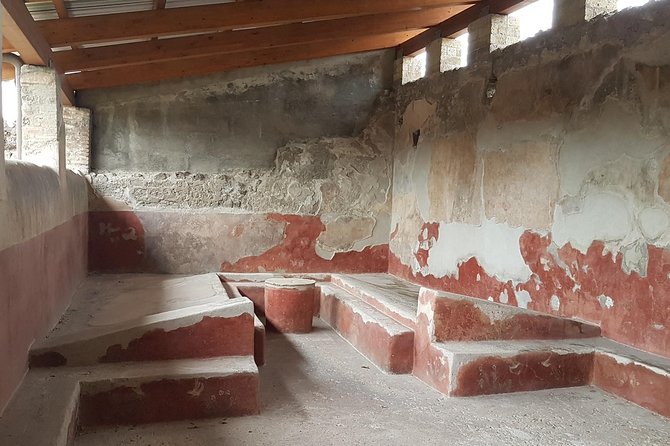
This works best if you want an organized visit. If you like getting your bearings fast—then walking at a comfortable pace while someone explains what you’re seeing—this tour is a strong fit.
It’s also a great choice if you care about daily life. The stops connect residential homes and public spaces so you don’t only get wealth and beauty; you get routine, social life, and how the city functioned.
On the other hand, if you prefer wandering without structure and want to spend extra time in fewer rooms, you might feel the tour is a bit “focused.” The upside is clarity. The downside is you can’t turn it into a slow, solo exploration unless you add time on your own before or after.
Should You Book This Priority Access Herculaneum Walk?
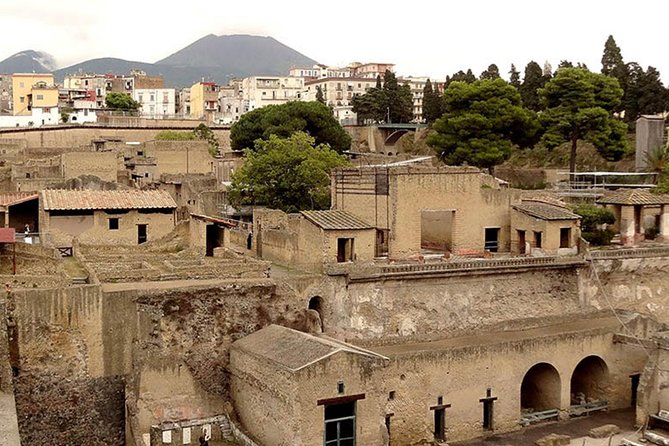
I’d book it if you want the most efficient way to understand what you’re seeing at Herculaneum. The combination of licensed guidance, priority skip-the-line entry, and a route through major sites like the Mosaic Atrium, the Deer House, the Forum Baths, and the Neptune and Amphitrite residence makes it a smart use of a 2-hour window.
One caution to take seriously: be on time and be at the right spot by the ticket office. The meeting is specific—your guide holds a flag near the ticket office—and if you miss that handoff, you can end up waiting.
If you’re ready to trade a little flexibility for a lot of clarity, this is a solid, value-minded way to experience one of Italy’s most strikingly preserved Roman cities.
FAQ
How long is the Herculaneum guided walking tour with priority access?
The tour lasts 2 hours.
What does the tour cost?
The price is $47 per person.
Where do we meet the guide?
Meet the guide next to the ticket office of the Herculaneum Ruins. The guide holds a flag with the local tour operator logo.
Is priority entrance included?
Yes. The tour includes priority entrance and skip-the-line ticket access.
Who provides the tour?
A professional, licensed tour guide provides the guided visit for 2 hours.
What languages are offered?
The live tour guide is available in Italian and English.
Is Whispers headset rental included?
Whispers rental is included for groups of 10 persons and more.
Is there free cancellation?
Yes. Free cancellation is available up to 24 hours in advance for a full refund.
More Tours in Ercolano






More Tour Reviews in Ercolano



Herculaneum, a Few More Tours
More Ercolano tours, freshly reviewed


Herculaneum Tours, compared.
 ★ 4.8Herculaneum: Skip-the-Line Guided Tour with ArchaeologistFrom $533,439 reviews
 ★ 5.0Pompeii and Herculaneum Small Group Tour with an ArchaeologistFrom $771,350 reviews
 ★ 5.0Herculaneum Small Group Tour and Ticket With an ArchaeologistFrom $53994 reviews
 ★ 4.3Herculaneum: Skip-the-Line Entry Ticket with Audio GuideFrom $15870 reviews
 ★ 4.8Pompeii: Small-Group Tour of Pompeii and Herculaneum867 reviews
 ★ 4.8Pompeii & Herculaneum with Archaeologist GuideFrom $168665 reviews
 ★ 3.9Pompeii, Herculaneum, & Vesuvius Full-Day TourFrom $152602 reviews
 ★ 4.1Ercolano: Herculaneum Entry Ticket with Optional Audio GuideFrom $21581 reviews
Browse the lists this tour appears in