
Review · POMPEII TOURS
Pompeii and Herculaneum Small Group Tour with an Archaeologist
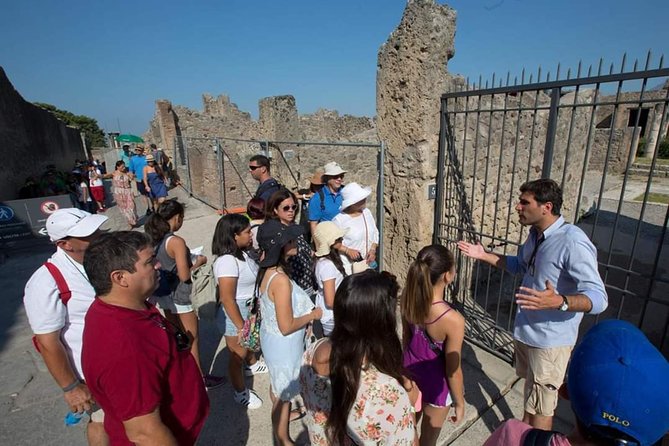
Pompeii and Herculaneum feel like they’re still breathing. This small-group tour is a practical way to see the big moments fast, with an archaeologist guiding you through Pompeii highlights and the far-better-preserved streets of Herculaneum. I like that you skip the map-and-missed-signs feeling and instead follow a clear route, with headsets so you can hear every explanation.
Two things I really value here: admission to both sites is included, so you’re not juggling ticket logistics, and the guide helps you connect the dots between villas, baths, and public buildings instead of just spotting ruins. The one drawback to plan for is tempo: Pompeii is huge, and the day is structured to hit major sights in a limited time, so it can feel a bit rushed if you want to linger.
In This Review
- Key things to know before you go
- Price and value: what $77 buys you
- Meeting points: where to find the group
- How the day flows: Pompeii first, then Herculaneum
- Pompeii with an archaeologist: seeing the city, not just the stones
- Basilica and the Foro: the city’s public heartbeat
- House of Menander: luxury with decoration details
- Granaries of the Forum: everyday storage with chilling casts
- Stabian Baths and the Lupanar: public routine and public appetite
- House of the Faun and Pompeii’s theaters
- Lunch between sites: plan for your own food
- The transfer to Herculaneum: minibus or train, depending on where you start
- Herculaneum with an archaeologist: more preserved, more intimate
- House of the Deer and the role of art
- M. Nonius Balbus terrace and civic patronage
- College of the Augustales: cult, community, and power
- Casa del Rilievo di Telefo and private access to baths
- Wooden partitions and the House of the Skeleton
- Baths with separate entrances: Central Thermae
- House of the Black Salon and carbonised door details
- Casa Sannitica, Casa del Bel Cortile, and the Grand Portal
- The real win: what your archaeologist guide changes
- When this tour might not fit you
- Should you book it? My take
- FAQ
- FAQ
- Where do I meet the archaeologist guide?
- Are admission tickets to Pompeii and Herculaneum included?
- How do I get from Pompeii to Herculaneum?
- How long is the guided time at each site?
- Are headsets provided?
- How many people are in the group?
- Is lunch included?
- What is the cancellation policy?
Key things to know before you go
- Skip-the-line entry at both Pompeii and Herculaneum so your day starts with ruins, not paperwork.
- Headsets for the whole group help you hear the archaeologist even when you’re walking.
- Small group size (max 20) keeps the experience from turning into a stampede.
- Two focused site blocks: about two hours in Pompeii, about two hours in Herculaneum with guided stops.
- Included train transfer (Pompeii start) uses Circumvesuviana for the Pompeii → Herculaneum connection.
- Lunch is on your own, and there’s usually a set break between sites, so plan ahead for food preferences.
Which Pompeii ticket and guide? Compare a few more.
- Pompeii Small Group Tour with an Archaeologist★ 5.0 · 6,593 reviews
- Discover the Ancient Ruins of Pompeii: Day Trip from Rome★ 3.5 · 2,247 reviews
- Pompeii and Herculaneum Small Group Tour with an Archaeologist★ 5.0 · 1,350 reviews
- Skip the Line Guided Tour of Pompeii led by an Archaeologist★ 5.0 · 703 reviews
Price and value: what $77 buys you
At about $77 per person, this tour is priced like a guided day out, but it also includes costs that often add up on your own: entry tickets for both Pompeii and Herculaneum, plus the transportation plan that depends on where you start. On top of that, you get headsets and a guided route designed to cover the most important areas without wandering for hours.
If you’re doing this as a DIY day, you’d still pay for tickets (the listed adult prices are 16 euros for Herculaneum and 20 euros for Pompeii) and you’d still need to solve the “how do I move between sites” problem. Here, that part is handled, especially if you start in Naples, Rome, or Sorrento where you travel by modern minibus with the guide.
Meeting points: where to find the group
You meet your archaeologist guide at the meeting point tied to your chosen start option:
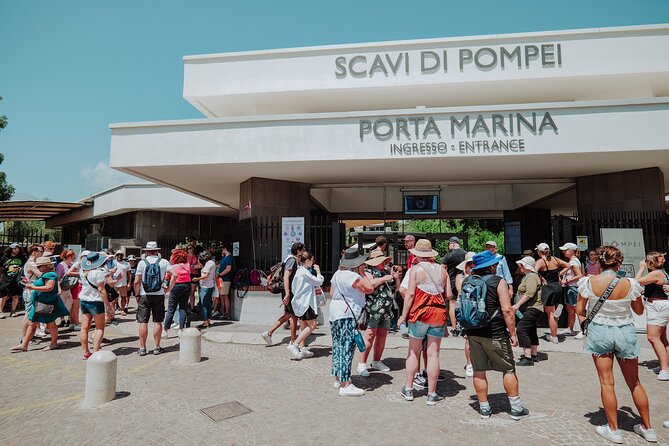
- Pompeii option: Porta Marina Superiore
- Naples and Rome options: Starhotels Terminus
- Sorrento option: Piazza Angelina Lauro
This matters because the day runs on a schedule. If you’re arriving in Naples, double-check that you’re positioned near the correct hotel-area pickup point. The tour is also described as being near public transportation, which is handy if you’re not using a taxi.
How the day flows: Pompeii first, then Herculaneum
The tour is structured like this: you begin with a guided visit in Pompeii for about two hours, including the major “must-see” zones. After a short lunch break (paid by you), you move to Herculaneum and get another about two hours there, again with guided stops and included entry.
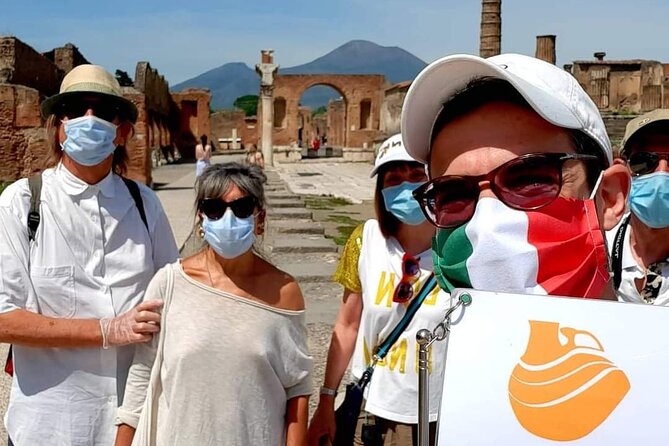
The best part of this pacing is that it gives you the contrast you came for. Pompeii shows you the city layout and famous sites—forums, theaters, baths—while Herculaneum feels more intimate because many buildings were preserved so well.
Pompeii with an archaeologist: seeing the city, not just the stones
Pompeii can be overwhelming. This is where a guide earns their fee fast. Instead of walking until you find the “big thing,” you move through a route that highlights different types of life: commerce, civic space, luxury homes, and even places people went for leisure (and sometimes for less-than-family-friendly entertainment).
Herculaneum keeps a few more tours worth your time

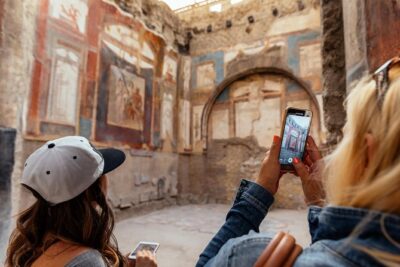
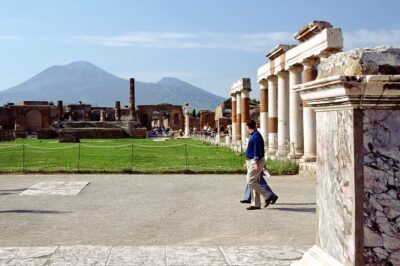
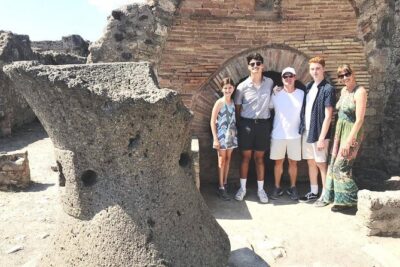
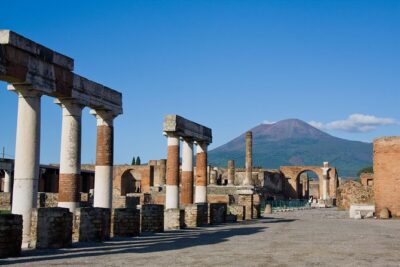
Basilica and the Foro: the city’s public heartbeat
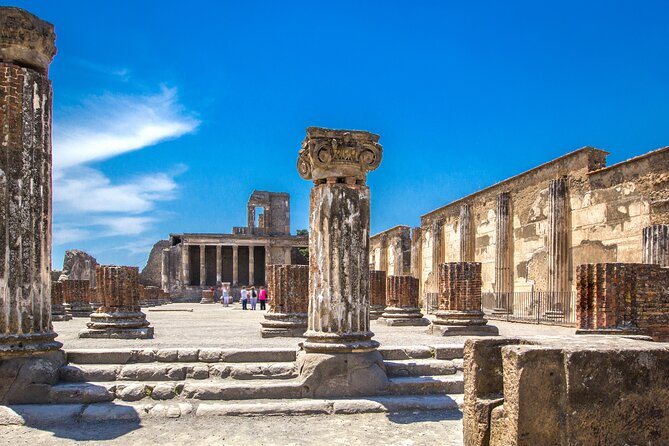
You start with the Basilica, described as an open portico area where merchants and activities happened. Then you head to the Foro de Pompeya, the main square. These stops are short, but that’s the point—you’re getting the context for how Pompeii worked day to day.
If you’ve ever felt like ruins are just pretty architecture, this kind of civic-start helps you read the city like a system: where people gathered, where business happened, and what “public” meant.
House of Menander: luxury with decoration details
Next up is the House of Menander, one of the richest homes in Pompeii in terms of architecture, decoration, and contents. Even with limited time, a guide can point out the cues that make Pompeii’s domestic spaces feel lived-in: how rooms relate, how decoration signals status, and how layout shapes movement.
Granaries of the Forum: everyday storage with chilling casts
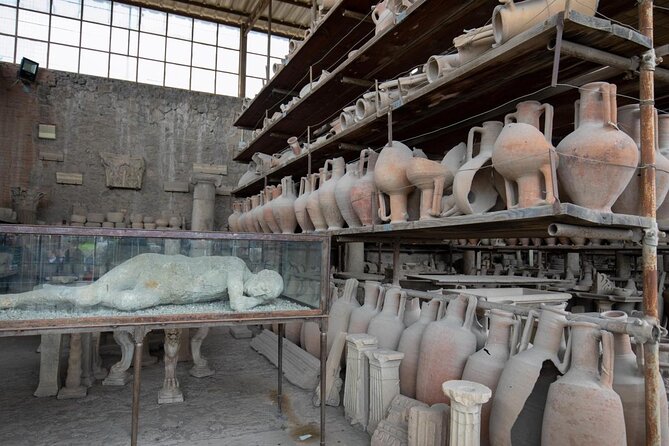
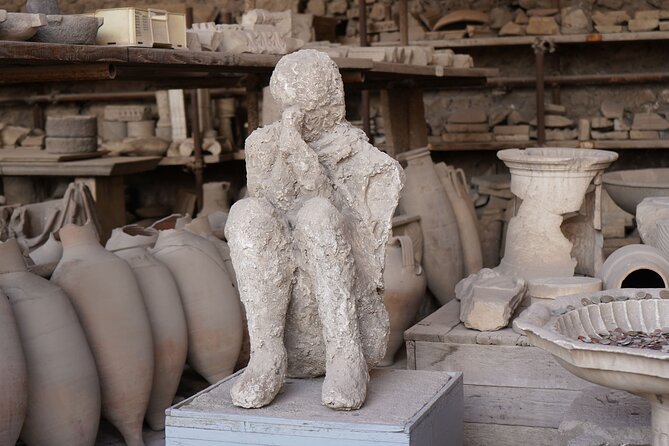
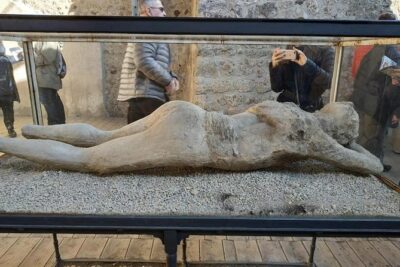
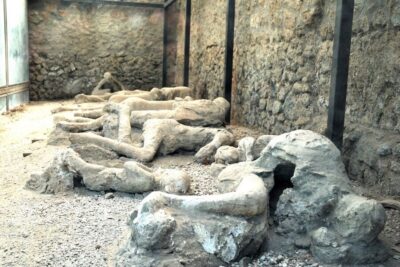
The Granaries of the Forum are an interesting mix of function and aftermath. You’ll see marble tables and details tied to fountains, and you’ll also encounter casts related to the eruption victims—including a dog and a tree. This is one of those places where the ruins stop being “ancient” and start feeling painfully human.
Stabian Baths and the Lupanar: public routine and public appetite
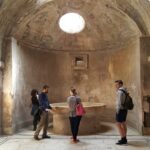
Then you hit the Stabian Baths (Terme Stabiane), noted as the oldest thermal complex in the city. Baths in Roman life weren’t just about hygiene; they were social hubs. Seeing the layout with a guide helps you understand why people built so much space around bathing.
After that comes the Lupanar, the famous brothel. It’s an uncomfortable stop for many people, but it’s also important. A guide can explain how the site fits into the street life and how to interpret what you’re seeing without turning it into shock tourism.
House of the Faun and Pompeii’s theaters
You’ll also visit the House of the Faun, one of the largest and most impressive private residences. For many visitors, this is where Pompeii’s “power of images” clicks—because you’re seeing art and design inside a home, not just temples from the outside.
Finally, you wrap with performance spaces: the Odeon (Teatro Piccolo) and the Teatro Grande, the city’s most important theater. These stops are quick, but they matter. A guide’s explanation turns them into community engines, not just big rooms.
Lunch between sites: plan for your own food
Lunch is available as a break, but meals and drinks aren’t included. One practical consideration: Pompeii is a long day, and if you don’t like rushed or “grab-and-go” meals, bring snacks or plan your lunch break carefully.
There’s also mention in tour feedback that lunch time can feel like it takes place near a mall-style area. I don’t think it’s the most romantic part of the day—but it can be convenient if you’re hungry and need reliable options quickly.
The transfer to Herculaneum: minibus or train, depending on where you start
How you get to Herculaneum depends on your starting point:
- If you start in Naples, Sorrento, or Rome: you travel by modern minibus directly with the guide.
- If you start in Pompeii: you use the Circumvesuviana train (about 30 minutes) plus a short 10-minute walk to the ruins.
A small tip: if your stomach is picky about timing, grab a snack before the train. The transfer is efficient, but it’s still a real gap in the day, and it’s better to handle hunger before it becomes a distraction.
Herculaneum with an archaeologist: more preserved, more intimate
Herculaneum feels different from Pompeii. It’s smaller, but the sense of “how people actually lived” lands harder because so many details survive. You’ll go straight to the Ticket Office after arrival, then your guide leads you through a sequence of homes, baths, and public buildings.
You also get Herculaneum entry tickets included, and the visit lasts about one hour according to the scheduled time block for the park, with guided stops inside that window.
House of the Deer and the role of art
Early in the Herculaneum segment is the House of the Deer, named for marble statues of stags/deer found in the peristyle. This is a good example of why a guided route helps: it’s easy to miss the reasoning behind why a house gets a name.
M. Nonius Balbus terrace and civic patronage
Next is the La Terrazza di M. Nonio Balbo, tied to the city’s major benefactor. You’ll hear how restorations and public building projects connect to status—then you’ll see that story spelled out in inscriptions.
College of the Augustales: cult, community, and power
The College of the Augustales is tied to the cult of Emperor Augustus and the Collegium Augustalium. This stop helps you understand how religion and civic structure overlapped. It’s one of those “public institutions” moments that makes Herculaneum feel like a functioning town rather than a preserved stage set.
Casa del Rilievo di Telefo and private access to baths
The Casa del Rilievo di Telefo is unusual because it has private access to the adjoining Suburban Thermae to the south. That kind of connection—home to bath complex—explains Roman priorities in a very physical way.
Wooden partitions and the House of the Skeleton
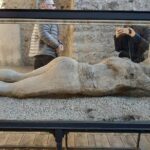
Then you’ll see the Partem Domus lignea (Casa del Tramezzo di Legno), highlighted for an elegant wooden partition that remained. Nearby, the House of the Skeleton gets its name from human remains discovered in 1831. Between the two, you get a powerful mix: domestic design details on one hand, and the harsh reality of eruption aftermath on the other.
Baths with separate entrances: Central Thermae
The Central Thermae are built around the beginning of the 1st century AD and divided into men’s and women’s baths with separate entrances. This is practical insight. You’re not only seeing ruins; you’re learning how routine was organized.
House of the Black Salon and carbonised door details
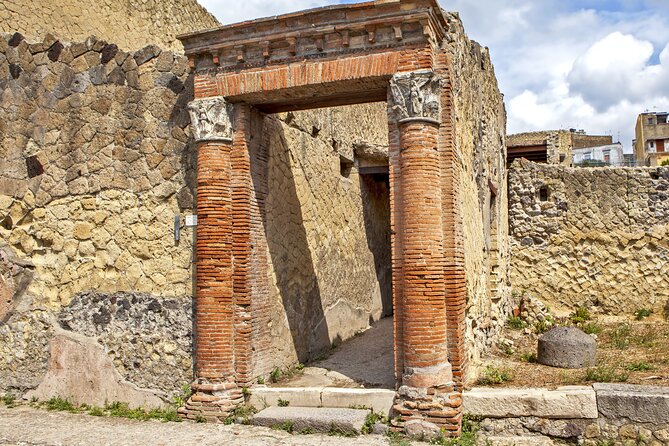
In the House of the Black Salon, you’ll see a monumental entrance where carbonised remains of doorposts and lintel survive. It’s a small architectural detail, but it’s exactly the sort of evidence that makes Herculaneum feel so immediate.
Casa Sannitica, Casa del Bel Cortile, and the Grand Portal
You’ll also cover:
- Casa Sannitica, with an atrium and gallery with Ionic columns, tied to typical Samnite arrangement.
- Casa del Bel Cortile, with a courtyard, stairway, and stone balcony instead of a traditional atrium layout.
- House of the Grand Portal, a central domus with charred remains of wooden parts and decorated environments.
These are quick stops, but they keep showing you variety—different layouts, different social signals, different ways to organize space.
The real win: what your archaeologist guide changes
The tour’s biggest advantage isn’t just the sites—it’s the way the guide helps you interpret them. In feedback tied to this route, guides like Michele, Diego, Tomas, Antonio, Alfredo, Paolo/Paolo, and Michael get praised for making daily life feel real, answering questions in plain language, and pointing out details people would otherwise miss.
That translates to you walking away with a clearer sense of:
- what parts of the city were built for work and commerce
- how public spaces shaped routine
- how elite homes communicated status through art and layout
- how baths connected bodies and community
- how sites preserve both beauty and the aftermath
Plus, the headsets are a big deal. Pompeii and Herculaneum are noisy with foot traffic and crowds, and being able to hear clearly makes a difference.
When this tour might not fit you
This isn’t for you if you want a slow, deep museum-style visit where you can sit with one room for half an hour. Pompeii’s scale means time is limited, and at least one set of feedback flagged that Pompeii can feel short for such a huge site.
Also, if your ideal day is built around long, flexible meals, treat lunch as a planning item. It’s your expense, and the break is scheduled to keep the rest of the route on track.
Finally, if you have accessibility needs beyond the basics: the tour is described as not recommended for visually impaired guests unless accompanied by a dedicated personal assistant.
Should you book it? My take
Book this tour if you want:
- two big ruins days in one without having to plan transportation between them
- a structured route that hits Pompeii’s key areas and then shifts to Herculaneum’s preserved detail
- skip-the-line entry plus headsets for a smoother experience
- a small group cap that keeps things from becoming chaotic
Don’t book it if you’re the type who needs more time in Pompeii to wander and re-wander at your own pace. In that case, you might still love the sites, but you may wish you’d allowed a second trip for Pompeii alone.
FAQ
FAQ
Where do I meet the archaeologist guide?
You meet at different places depending on your start option: Porta Marina Superiore for Pompeii, Starhotels Terminus for Naples and Rome, and Piazza Angelina Lauro for Sorrento.
Are admission tickets to Pompeii and Herculaneum included?
Yes. Entrance fees for Herculaneum and Pompeii are included in the tour price.
How do I get from Pompeii to Herculaneum?
If your tour starts in Pompeii, you’ll use an included Circumvesuviana train ticket to go to Herculaneum, plus a short 10-minute walk. If you start in Naples, Sorrento, or Rome, you travel by modern minibus with the guide directly to Herculaneum.
How long is the guided time at each site?
You spend about two hours exploring Pompeii with the archaeologist guide and about two hours exploring Herculaneum with the archaeologist guide.
Are headsets provided?
Yes. Headsets are provided for all participants.
How many people are in the group?
This tour has a maximum group size of 20 travelers.
Is lunch included?
No. Meals and drinks are not included. There is a lunch break available, but it’s at your own expense.
What is the cancellation policy?
You can cancel for a full refund up to 24 hours in advance of the experience start time.
More Tour Reviews in Pompeii



Herculaneum, a Few More Tours

More Pompeii Tours to Compare
More Pompeii tours, freshly reviewed



Pompeii Tours, compared.
 ★ 4.8Pompeii: Entry Ticket and Guided Tour with an ArchaeologistFrom $3519,459 reviews
 ★ 4.1Pompeii: Entry Ticket with Audio GuideFrom $4013,491 reviews
 ★ 4.8Pompeii: Small Group Tour with an ArchaeologistFrom $4012,264 reviews
 ★ 4.3Pompeii Ruins & Mount Vesuvius Day TourFrom $12011,459 reviews
★ 5.0Pompeii Small Group Tour with an ArchaeologistFrom $356,593 reviews
★ 4.3Pompeii Ruins & Mount Vesuvius Day TourFrom $12011,459 reviews
★ 5.0Pompeii Small Group Tour with an ArchaeologistFrom $356,593 reviews
 ★ 4.5Skip-the-line Pompeii – Small Group TourFrom $544,401 reviews
 ★ 4.6Naples or Sorrento: Full-Day Pompeii and Mount Vesuvius TourFrom $1044,235 reviews
 ★ 3.9Pompeii: Skip-the-line Entry Ticket with Audio Guide & MapFrom $433,153 reviews
Browse the lists this tour appears in