
Review · HERCULANEUM TOURS
Herculaneum Small Group Tour and Ticket With an Archaeologist
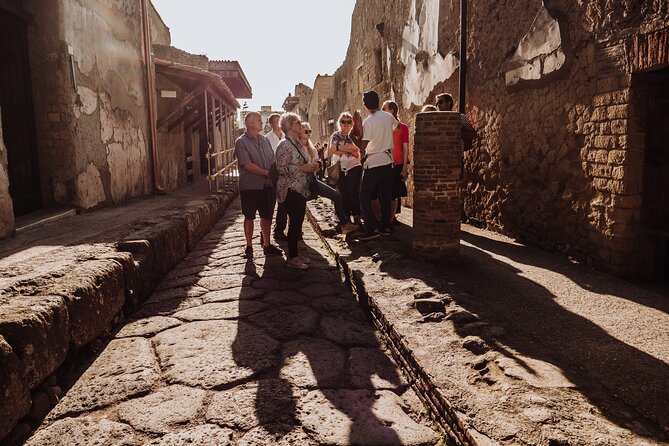
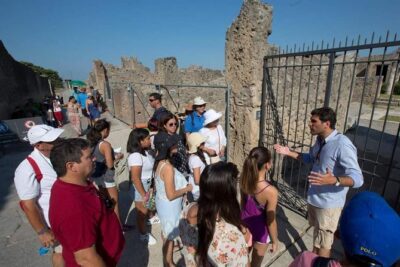
Herculaneum feels close, not crowded. This small-group tour walks you through the most important houses and baths, guided by an archaeologist with a knack for explaining how daily life worked. I especially like the headsets (so you hear clearly even while walking) and the fact that your ticket skips the long queues. The main drawback is simple: it’s mostly standing and moving at a brisk pace for about two hours, so plan accordingly if you need more breaks.
At around $53.81 per person, it’s not a cheap “wander around alone” option. But because the entry ticket is included, you’re paying mainly for expert guidance and a tight route that hits the site’s best-preserved highlights without wasting time. If you’re sensitive to pace or timing, you’ll want to go in knowing the schedule is packed.
In This Review
- Key Highlights You Should Know
- Why Herculaneum Feels Different (And Why a Guide Helps)
- Meeting at the Ticket Office: Getting There Without Stress
- Skip-the-Line Tickets and Headsets: Small Details, Big Payoff
- The 2-Hour Walk Through Herculaneum: Stop by Stop
- The Archaeologist Factor: What You Gain Beyond Photos
- Timing, Weather, and How to Plan Your Body
- Price and Value: Is $53.81 Worth It?
- Who Should Book This Tour
- Should You Book the Herculaneum Archaeologist Small Group Tour?
- FAQ
- How long is the Herculaneum small group tour with an archaeologist?
- What language is the tour offered in?
- How large is the group?
- Is the entrance ticket included?
- Does the tour include skip-the-line entry?
- Where does the tour start, and where does it end?
- Is there headsets or audio support?
- Can I cancel for a full refund?
- Should I book this tour? (Quick answer)
Key Highlights You Should Know
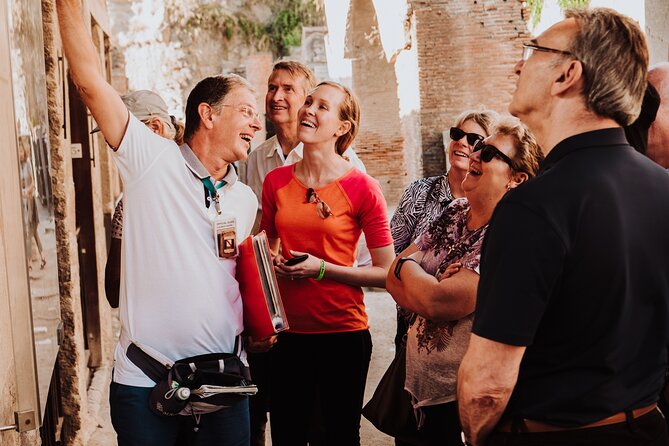
- Archaeologist-led explanations that connect rooms, everyday objects, and the city’s layout
- Skip-the-line entry so you spend more time inside the ruins
- Headsets for clear audio on uneven terrain and in noisy areas
- Maximum 20 people per guide, which keeps the group from turning into a stampede
- A focused 2-hour route through standout houses, baths, and monuments
Herculaneum keeps a few more tours worth your time
- Herculaneum: Skip-the-Line Guided Tour with Archaeologist★ 4.8 · 3,439 reviews
- Herculaneum Small Group Tour and Ticket With an Archaeologist★ 5.0 · 994 reviews
- Herculaneum: Skip-the-Line Entry Ticket with Audio Guide★ 4.3 · 870 reviews
- From Naples: Pompeii & Herculaneum with Archaeologist Guide★ 4.8 · 665 reviews
Why Herculaneum Feels Different (And Why a Guide Helps)
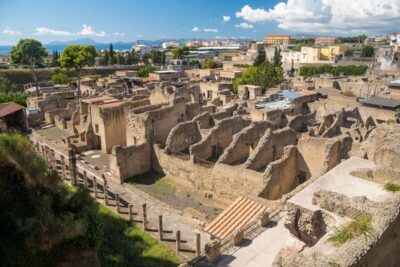
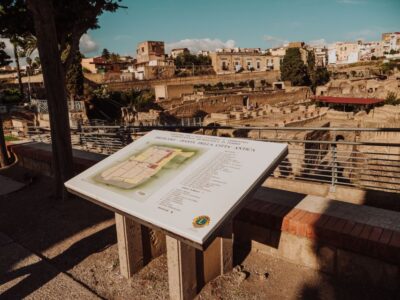
Herculaneum is the underdog site compared to Pompeii, and that’s good news for your trip. The ruins here tend to feel more “lived in” because you’re moving through intact-looking structures, not just stone outlines. With a guide who thinks like an archaeologist, you stop seeing random rooms and start recognizing patterns: entrances, social status, household layout, and how people used space day to day.
This is exactly the kind of place where a walking tour earns its cost. Left alone, you can enjoy it, but you’ll miss the why behind what you’re looking at. The archaeologist guide helps you connect each stop to larger stories: patronage, worship, bathing routines, and even what excavation discoveries reveal.
Meeting at the Ticket Office: Getting There Without Stress
The tour meets at the Ticket Office of the Herculaneum ruins, and it ends inside the site. That matters because it keeps you from doing the awkward “where do we start” shuffle.
For getting there:
- By car: park nearby in via Pignalver (parking is not guarded, but it’s close to the meeting area).
- By train: take the Circumvesuviana and walk about 10 minutes from the Corso Resina 1 area.
One practical tip: show up a bit early so you can get your bearings at the ticket office and settle in before the group starts walking.
Skip-the-Line Tickets and Headsets: Small Details, Big Payoff
You get skip-the-line tickets, which sounds boring until you’re standing in a queue with your schedule shrinking. Here, the payoff is time: you can start seeing buildings sooner, and the guide’s 2-hour plan stays realistic.
You also get headsets. This is one of those “why doesn’t everyone do this” upgrades. Headsets help you hear explanations clearly while you’re walking between rooms and across open areas. If you have hearing needs, headsets can be especially helpful.
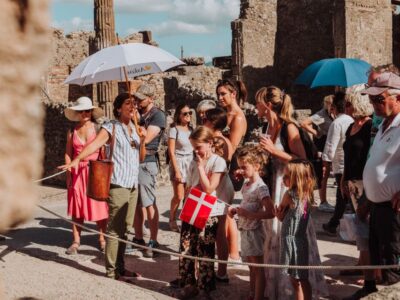
Finally, since the group cap is 20 people, the guide can actually manage questions and keep everyone together without shouting.
The 2-Hour Walk Through Herculaneum: Stop by Stop
The route is structured around a series of short stops (about 10 minutes each on average), so you’ll move quickly but not randomly. Here’s what you’ll see and what makes each part worth your time.
House of the Deer (Casa del Cervo)
This house gets its name from marble stags or deer found in the peristyle area. It’s a great first stop because it signals the theme of the whole visit: how wealth shows up in decoration, layout, and imported materials.
La Terrazza di M. Nonio Balbo
This stop ties an individual benefactor to the city’s public works and honors. The long inscription linked to M. Nonius Balbus is the kind of detail you’d completely miss without guidance, but it gives the ruins an actual human story: who paid, who built, and how power moved through the city.
College of the Augustales
You’ll see a building connected to the cult tied to Augustus, and possibly the headquarters of local civic-religious structures. It’s a reminder that Herculaneum wasn’t only homes and shops. There were organized places where ideology and social status intersected.
Casa del Rilievo di Telefo
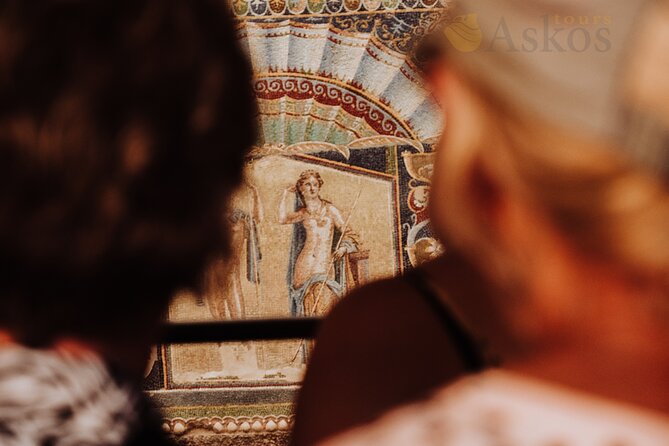
This house is known for a sculptural relief (and the guide will point out what makes it unusual). One of the most interesting elements here is the private connection to the nearby Suburban Thermae to the south. Even if you don’t care about technicalities, that connection shows how elite households treated bathing as part of their lifestyle.
Partem Domus lignea – Casa del Tramezzo di Legno
This is a key “wow” stop because of the surviving wooden partition, an unusual survival. It’s one of those moments where you realize excavation isn’t just uncovering stone walls. It’s sometimes recovering evidence of woodwork and internal function, which changes how you imagine daily movement in the home.
House of the Skeleton
The name comes from human remains discovered in 1831 in a second-floor room. It’s heavy content, handled best with a guide’s context. The value here is understanding how the disaster affected real people and how archaeology turns that discovery into meaning—without turning it into spectacle.
Central Thermae
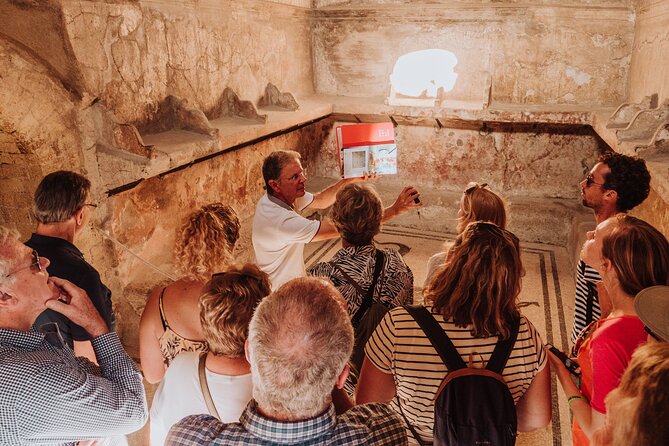
These baths date to the start of the 1st century AD. You’ll learn how the baths were organized with separate entrances for men and women, reflecting how social rules shaped everyday routines. Bathhouses can feel like “just rooms” if you’re not told the logic; with an archaeologist, you start noticing the flow and function.
House of the Black Salon (Casa del Salone Nero)
This is one of the site’s luxury homes. Look for the monumental entrance and the carbonised remains on doorposts and lintel. That charred evidence is one of the stark ways Herculaneum preserves a moment frozen in time.
Casa Sannitica
This house shows a layout typical of the Samnites. You’ll see the splendid atrium with a gallery supported by Ionic columns, plus fresco decoration in rooms. It’s a useful stop for understanding cultural mixing: the city’s identity wasn’t one single uniform style.
Casa del Bel Cortile
This is a standout because it isn’t built around the more common atrium model. Instead, you’ll see a courtyard with a stairway and a stone balcony. It’s a good moment to slow down (mentally) and notice how people used different open spaces for light, gathering, and movement.
House of the Grand Portal
The final stretch focuses on a beautiful domus in the center of the archaeological area, with collonnati and frescos. You’ll also see evidence of charred wooden elements. This stop helps you wrap up the overall theme: Herculaneum’s destruction preserved details that normally vanish.
After the last stop, you’re left in the ruins area with time to keep looking on your own if your schedule allows.
Other tickets and entries for Naples


The Archaeologist Factor: What You Gain Beyond Photos
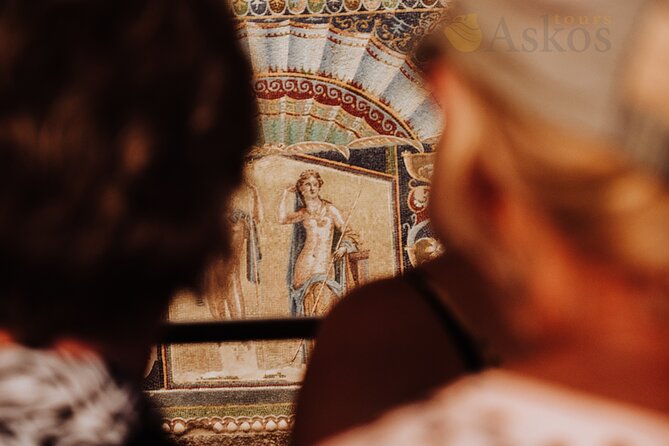
A good guide doesn’t just point at walls. An archaeologist guide helps you read the site like evidence.
Some guides (for example, Luciano Leone is described as a working archaeologist) bring reconstructions and visual references to show what buildings likely looked like when the city was active. That kind of tool matters because it stops you from only seeing the “after” version. Instead, you start imagining materials, colors, and how space functioned.
You’ll also tend to get explanations that combine engineering, daily habits, and cultural context. One reason people rate this experience so highly is that the guide’s storytelling stays grounded in what the structures can actually prove.
Timing, Weather, and How to Plan Your Body
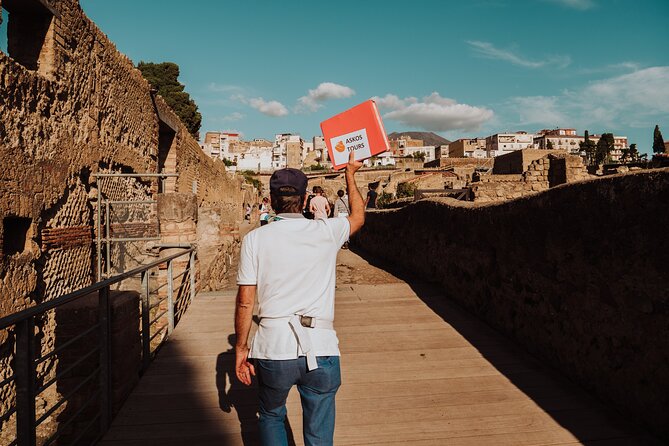
This tour runs about two hours in all weather, so dress for rain or sun. Shoes matter too: the ruins involve standing, walking between houses, and moving through uneven terrain.
A realistic consideration: because the route is tight and the stops are short, there’s limited time to sit down and linger. If you’re traveling with someone who needs frequent breaks, decide ahead of time whether the pace will work for your group.
Also, while most tours run smoothly, it’s possible for timing to vary. If you’re trying to squeeze other plans right after, give yourself a buffer.
Price and Value: Is $53.81 Worth It?
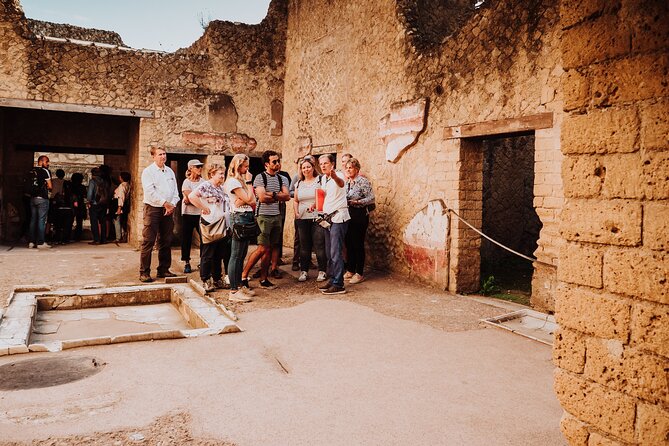
At $53.81 per person, you’re paying for three big things:
- the archaeologist-led guided route,
- the skip-the-line ticket experience,
- and entry tickets that are otherwise 16 euros for adults (and 2 euros for EU citizens aged 18–25).
When the ticket cost is included, the economics shift from “am I paying extra?” to “am I paying for expertise and time efficiency?” For Herculaneum, that’s usually the right trade. A well-run guided walk helps you avoid wandering without direction, and it gives you context that makes the site much more rewarding.
Who Should Book This Tour
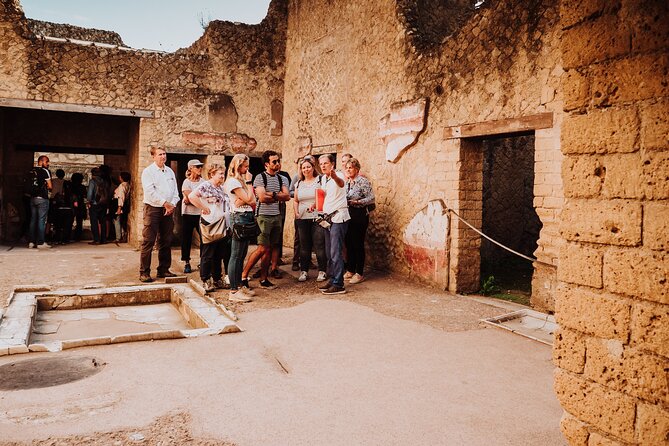
I’d book this if you:
- want a focused, high-impact experience in about two hours,
- like learning how people lived, not just seeing ruins,
- appreciate small groups with clear audio (headsets),
- plan to skip Pompeii or want an alternative that still feels major.
It’s also a solid choice if you’re the type who enjoys details: household layout, inscriptions, how baths worked, and how excavation findings became names and stories (like the House of the Deer and the House of the Skeleton).
If you’re mainly looking for a slow, sit-down museum vibe, you may prefer a more relaxed option. This one is built for walking and listening.
Should You Book the Herculaneum Archaeologist Small Group Tour?
If your goal is to understand what you’re seeing, this tour is a strong yes. The combination of archaeologist guidance, skip-the-line entry, headsets, and a capped 20-person group makes it easy to feel like you’re getting value instead of paying for access you could do alone.
My only “pause” is the pace. It’s short and active, with limited sitting time, so plan for movement. If you’re okay with that, you’ll come away with a clear picture of how Herculaneum worked—homes, baths, social rank, and the cultural signals hidden in everyday spaces.
FAQ
How long is the Herculaneum small group tour with an archaeologist?
It runs for about 2 hours (approximately).
What language is the tour offered in?
The tour is offered in English.
How large is the group?
The group is limited to a maximum of 20 people per guide.
Is the entrance ticket included?
Yes. The entrance fee for Herculaneum is included in the tour package.
Does the tour include skip-the-line entry?
Yes. Skip-the-line tickets are part of the experience.
Where does the tour start, and where does it end?
It starts at the Ticket Office of the Herculaneum ruins and ends inside the Herculaneum ruins area.
Is there headsets or audio support?
Yes. Headsets are included.
Can I cancel for a full refund?
Yes, free cancellation is available up to 24 hours in advance for a full refund.
Should I book this tour? (Quick answer)
Yes, if you want an archaeologist-led walk that makes Herculaneum understandable fast—and you’re comfortable with a brisk, standing-heavy pace. If you need lots of rest time, think twice.
More Tours in Naples




More Tour Reviews in Naples

Herculaneum, a Few More Tours


More Naples tours, freshly reviewed




Herculaneum Tours, compared.
 ★ 4.8Herculaneum: Skip-the-Line Guided Tour with ArchaeologistFrom $533,439 reviews
 ★ 5.0Pompeii and Herculaneum Small Group Tour with an ArchaeologistFrom $771,350 reviews
 ★ 4.3Herculaneum: Skip-the-Line Entry Ticket with Audio GuideFrom $15870 reviews
 ★ 4.8Pompeii: Small-Group Tour of Pompeii and Herculaneum867 reviews
 ★ 4.8Pompeii & Herculaneum with Archaeologist GuideFrom $168665 reviews
 ★ 3.9Pompeii, Herculaneum, & Vesuvius Full-Day TourFrom $152602 reviews
 ★ 4.1Ercolano: Herculaneum Entry Ticket with Optional Audio GuideFrom $21581 reviews
 ★ 4.5Day Trip of Pompeii, Herculaneum and Vesuvius from NaplesFrom $145547 reviews
Browse the lists this tour appears in