
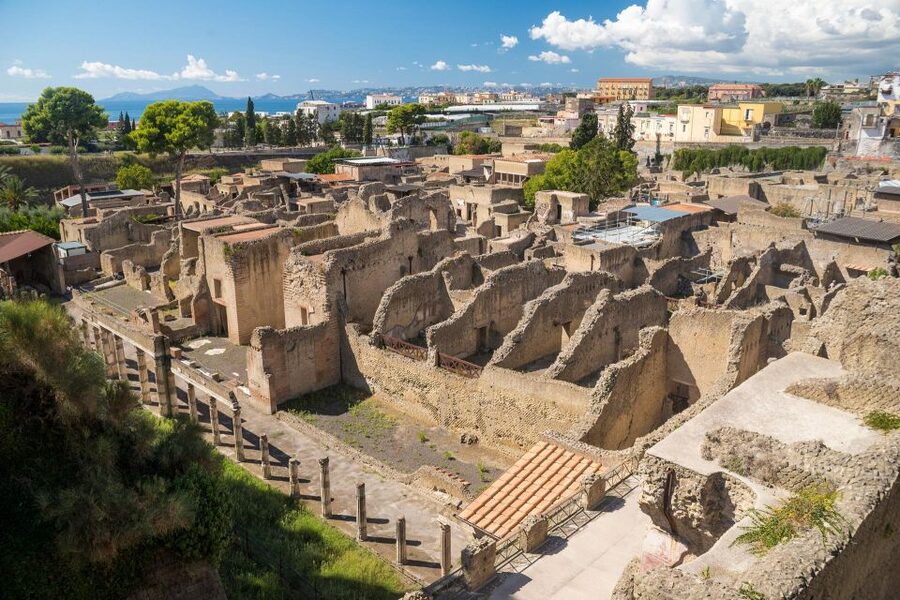
Review · HERCULANEUM TOURS
Herculaneum: Skip-the-Line Entry Ticket with Audio Guide
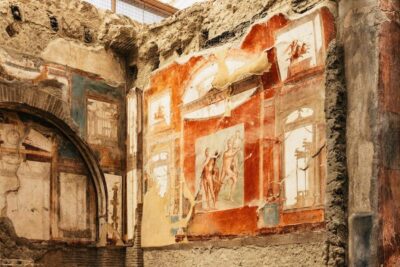
Roman ruins that feel uncomfortably close. Herculaneum is smaller than Pompeii, but the preservation hits hard—frescoes, wooden elements, and entire rooms preserved under volcanic ash. With the audio guide and map, you can walk at your own pace and still catch the key stories.
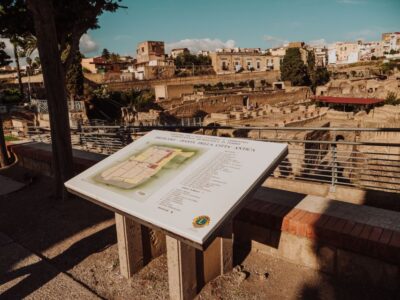
I especially like how the site layout makes self-guided exploration feel doable. You’ll move through the ancient market area, the public fountains, and toward the theatre without needing a live lecturer. The other big win for me is the way the audio tour supports the standout visuals—paintings, doors, and sculpture—so you’re not just staring at walls.
One consideration: the audio cues and physical numbering don’t always line up perfectly, so you may need to slow down, use the map, and get your bearings early. Also, expect cobblestones and some steep steps, so comfortable shoes matter more than usual.
In This Review
- Key takeaways before you go
- Herculaneum vs. Pompeii: what makes it worth a dedicated ticket
- Ticket office to audio guide: the smooth entry game plan
- Walking the ancient town: market, fountains, and the theatre
- Villas buried in ash: frescoes, doors, and the preserved interiors
- The human impact: the sea-rescue story and the poignant end
- Temples, gods, and social structure: slaves vs. wealthy Romans
- What about the audio guide experience itself?
- Time, crowds, and the practical reality of cobblestones
- Optional upgrades: when a live guide is worth the extra
- Food stops and nearby breaks
- Who should book this and who should skip it
- Should you book this Herculaneum skip-the-line audio ticket?
- FAQ
- Do I need a live guide with the ticket?
- What languages is the audio guide available in?
- Where do I start at the site?
- How long should I plan for the visit?
- What should I bring?
- Is skip-the-line entry guaranteed to avoid all waiting?
- Can I cancel or change my plans?
Key takeaways before you go
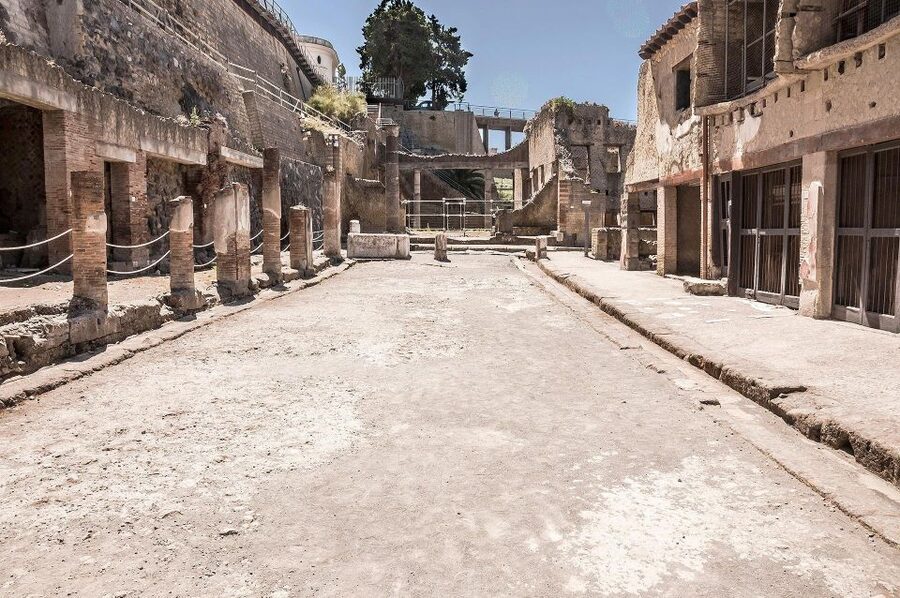
- Skip-the-line entry helps, but you still need to collect your audio guide on-site first.
- Audio guide in 5 languages (English, French, German, Italian, Spanish) makes this easy for mixed groups.
- More compact than Pompeii means you can enjoy a full visit without feeling swallowed by crowds.
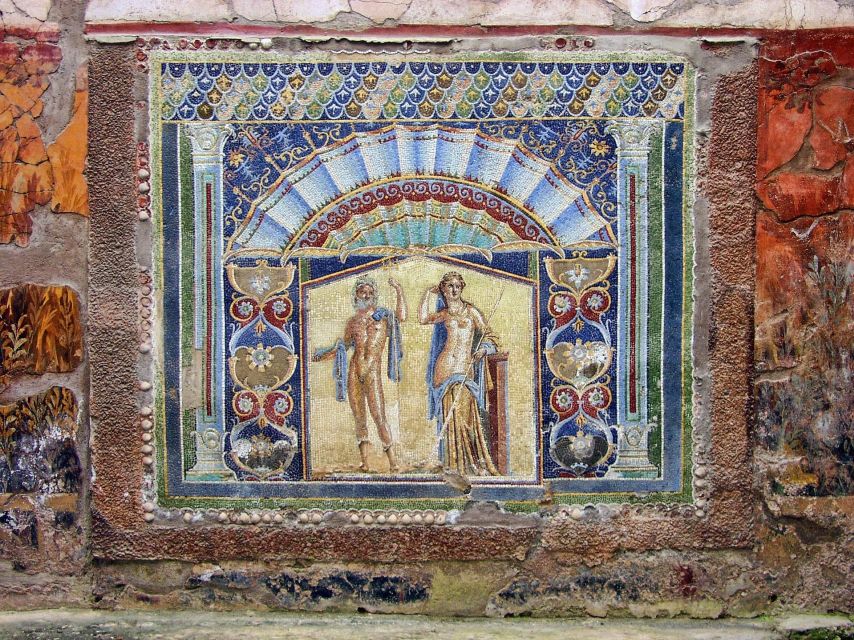
- Well-preserved rooms and artwork are the star: paintings, intact doors, and statues you can actually see.
- Use the map early—some points can be confusing if you chase cue numbers blindly.
- Plan for walking on cobblestones with some steps, plus a few spots that are easier to linger in than others.
Herculaneum keeps a few more tours worth your time
- Herculaneum: Skip-the-Line Guided Tour with Archaeologist★ 4.8 · 3,439 reviews
- Herculaneum Small Group Tour and Ticket With an Archaeologist★ 5.0 · 994 reviews
- Herculaneum: Skip-the-Line Entry Ticket with Audio Guide★ 4.3 · 870 reviews
- From Naples: Pompeii & Herculaneum with Archaeologist Guide★ 4.8 · 665 reviews
Herculaneum vs. Pompeii: what makes it worth a dedicated ticket
If you’ve already been to Pompeii, Herculaneum can feel like the calmer sibling—less spread out and often quieter. That quiet matters. It makes it easier to connect the place to daily life: shops, living spaces, and public corners that don’t look like a museum set.
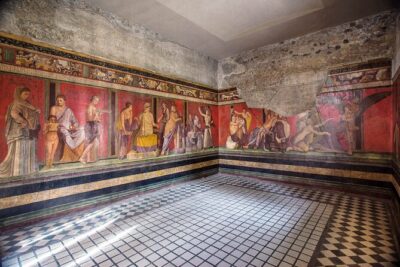
What you’re really buying here is time with the site’s preservation. In particular, Herculaneum’s villas and rooms can look startlingly intact. The volcanic ash of 79 AD didn’t just destroy things—it trapped them, which is why you can still spot details like wall paintings and even wooden elements in some areas.
Ticket office to audio guide: the smooth entry game plan
This is a self-guided experience, and it starts with straightforward logistics. Show your ticket at the Herculaneum ticket office, then focus on getting your audio guide in hand before you move too far.
A practical tip: the on-site flow can involve separate desks (for audio and entry), so don’t treat it like one single line-and-done moment. Build in a few extra minutes when you arrive, especially if it’s peak season.
Also plan to bring your passport or ID card. One common pattern is that you may need to show identification to collect the audio device or materials. Once you’ve got the audio setup, you’ll want to take 2 minutes to study the map so the rest of your walk feels logical.
Walking the ancient town: market, fountains, and the theatre
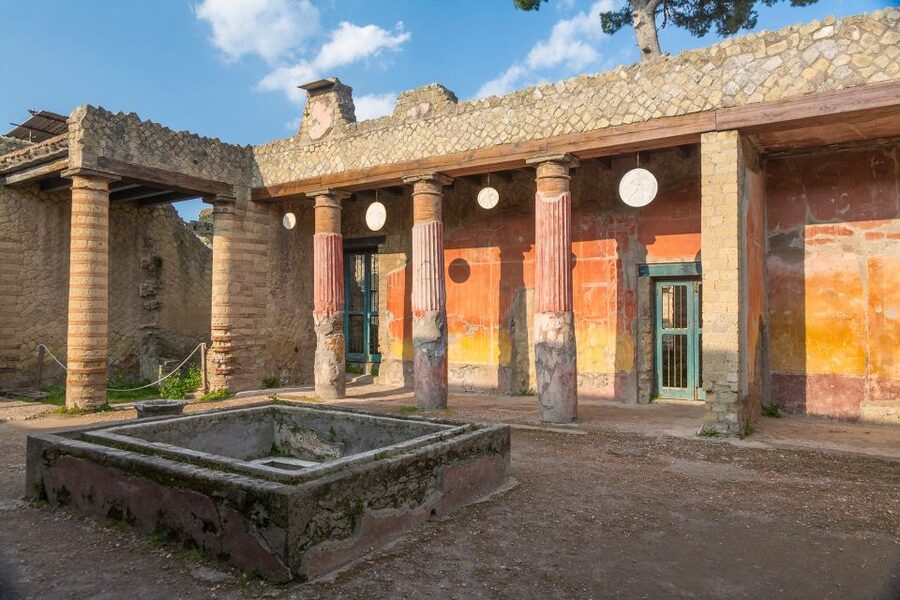
Once you’re oriented, the best part is the sense of moving through a real Roman neighborhood. The experience is designed around key stops you can reach on foot, including an ancient market area and public fountains. Even without a guide, the audio tour helps explain what you’re seeing and why it mattered.
The market zone is especially good for getting your head around everyday Rome. You can imagine foot traffic, casual commerce, and the rhythm of people moving between errands. If you like “how did they live?” details, these are the spots where the audio really earns its keep.
Then there’s the theatre area. Compared with some of the larger, more overwhelming sites, the theatre stop feels like a natural waypoint: you’re transitioning from everyday spaces into public life. Take a breath here. The stonework and scale help you understand how the town moved between work, leisure, and community events.
Villas buried in ash: frescoes, doors, and the preserved interiors
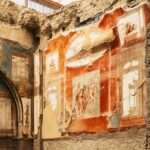
Herculaneum’s big selling point isn’t just that it’s Roman—it’s how much of it survives. The audio tour points you toward villas buried under volcanic ash from the 79 AD eruption. And because the preservation is so strong, you can often spend real time on the fine stuff, like well-preserved paintings and architectural details.
You’ll also come across areas where wooden components are still visible in some form. That detail can be almost eerie, because it reminds you that this wasn’t stone ruins only—it was real buildings with real materials.
Here’s how to make the interiors work for you: don’t sprint between rooms. Pause at the visual highlights first, then let the audio explain context afterward. That order helps you connect the artwork and layout to the people who used them.
Other tickets and entries for Naples


The human impact: the sea-rescue story and the poignant end
One of the hardest moments in the whole experience comes from the area connected to people who perished near the sea while hoping for rescue. The site makes this tragic story unavoidable, and the audio descriptions add shape to what you’re seeing.
If you’re sensitive to memorial-type exhibits, plan your timing. Going earlier often helps because you’re more likely to have space to process without shoulder-to-shoulder pressure. Still, even with a quieter visit, this part of Herculaneum hits emotionally.
When you reach these sections, let yourself slow down. It’s not the kind of stop where you need to “tick it off.” It’s the part where the site stops feeling like a history lesson and starts feeling like a record of human lives.
Temples, gods, and social structure: slaves vs. wealthy Romans
Herculaneum doesn’t just show wealth—it shows how structured Roman life could be. The audio guide takes you through areas tied to temples and depictions of ancient gods, which helps explain religion as a daily anchor, not just a story from a textbook.
Just as important is the contrast in living spaces. You’ll be led to compare how slaves were housed versus the more lavish rooms for rich Romans. That contrast makes the site feel clearer and more honest: you see hierarchy built into architecture.
If you want to “read” the town visually, use this strategy:
- Look for room size and layout first.
- Then listen for the audio explanation of who used the space.
That simple two-step turns the experience from pretty ruins into a believable social map.
What about the audio guide experience itself?
Overall, the audio guide is a major reason this ticket feels like good value. It’s offered in English, French, German, Italian, and Spanish, and many people find the device easy to use once they get oriented.
That said, there are a couple friction points you should expect. Some audio prompts may not match the site’s physical numbering, and a few listeners found the directional cues confusing until they learned the system. If you’re someone who likes strict order, this can annoy you.
My advice: treat it as a flexible route. Use the map to confirm you’re at the right general area, then let the audio prompt guide your attention rather than forcing you to follow one rigid sequence.
Also, if you plan to use your own earbuds, you might find the audio device works best with a headset or earbuds. (One review notes it’s used with earbuds/headsets via the smartphone-style device.)
Time, crowds, and the practical reality of cobblestones
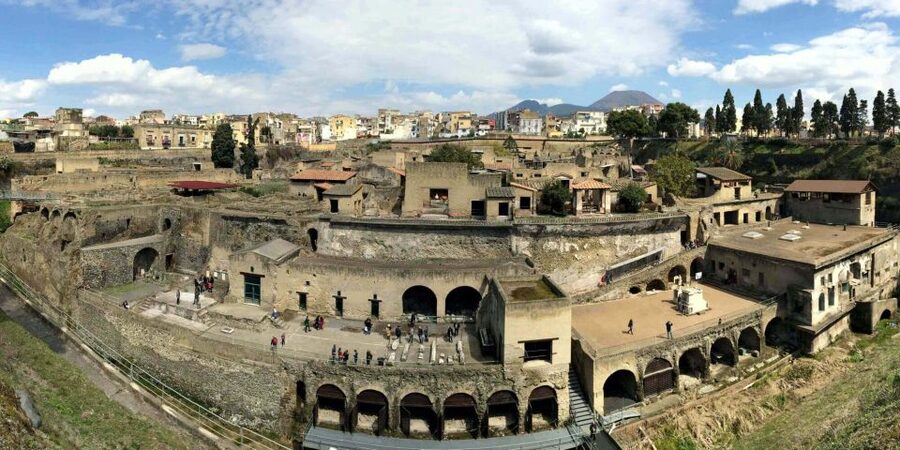
This is a “linger” site. In real-life terms, many visitors end up spending around 3 to 4 hours on the grounds when they take it slow. If you only have a tight schedule, you can do less, but Herculaneum tends to reward slower walking.
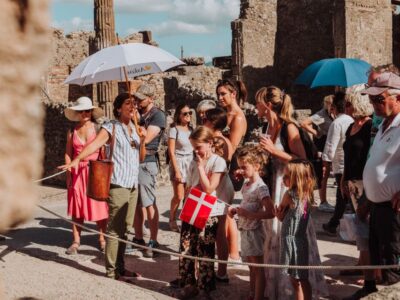
Crowds matter. People often enjoy going earlier because lines and congestion ease up, and you get better moments for photos and quiet attention. That especially helps during emotionally heavy sections.
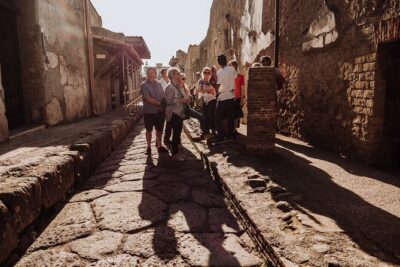
And don’t underestimate the ground conditions: expect cobblestones plus some steep steps. You don’t need hiking gear, but you do need shoes you trust.
Optional upgrades: when a live guide is worth the extra
This ticket is self-guided, and no live guide is included. Still, there have been reports of an on-site upgrade option to add a guided tour.
If you’re choosing between audio-only and a guided tour, here’s my rule of thumb: pick audio-only if you want freedom and you don’t mind occasionally adjusting when cues don’t line up. Choose a live guide if you want someone to tie together the buildings, art, and daily-life details without you doing extra work.
Names that showed up with upgrade experiences include Tony and Fabio, and another guide name you may hear is Amara. If staff offers an upgrade, it can be a smart way to get more from the preserved interiors—especially on a hot day, since some guides pace differently and pause in shade.
Food stops and nearby breaks
You’ll likely need a break. One practical plus is that there are places to sit down and take in views, plus the possibility of grabbing a packed lunch nearby. If you’re visiting as a day trip from Naples, it also helps to build your schedule so you’re not rushing back too soon.
To keep your energy steady, plan for water and small snacks. This is a walking-and-standing site.
Who should book this and who should skip it
Book it if you want a quieter Roman ruin experience with strong preservation and enough structure to make self-guided walking satisfying. This fits best for couples, solo explorers, and families who like to read and listen while they walk.
Skip it if you get annoyed when audio doesn’t match exact spot numbering, or if you require a perfectly guided, step-by-step experience with no ambiguity. You can still make it work—you’ll just spend more time using the map and orienting yourself.
Also, if you’re comparing it to Pompeii, this ticket works well as a “second dose” of Roman life. Pompeii can feel like the big hit; Herculaneum can feel like the deeper conversation.
Should you book this Herculaneum skip-the-line audio ticket?
Yes—if you want value and you like exploring at your pace. For the price, you get the entry ticket plus an audio guide and map, and the site’s preservation makes that audio investment feel meaningful. The ability to spend time in the villas, market spaces, and poignant 79 AD areas without a live guide can be exactly what makes Herculaneum memorable.
I’d book this particular setup if you’re comfortable doing light problem-solving with the map (especially since some cue numbering doesn’t always match the site layout). And if you’re traveling on the first Sunday of the month, it’s worth checking whether entry is free before you pay—some people note that possibility.
FAQ
Do I need a live guide with the ticket?
No. A guide is not included. You’ll use the audio guide to explore at your own pace.
What languages is the audio guide available in?
The audio guide is available in English, French, German, Italian, and Spanish.
Where do I start at the site?
Show your ticket at the Herculaneum ticket office, and that’s where you’ll begin.
How long should I plan for the visit?
The experience is listed as a 1-day activity. Many visitors take a few hours to walk through at a relaxed pace, especially if you stop for the preserved interiors.
What should I bring?
Bring a passport or ID card and wear comfortable shoes.
Is skip-the-line entry guaranteed to avoid all waiting?
The ticket is described as skip-the-line entry, but you may still need to collect or set up the audio guide on-site before you start walking.
Can I cancel or change my plans?
You can cancel up to 24 hours in advance for a full refund, and there’s also a reserve now & pay later option.
More Tickets and Entries in Naples




More Tour Reviews in Naples



Herculaneum, a Few More Tours


More Naples tours, freshly reviewed





Herculaneum Tours, compared.
 ★ 4.8Herculaneum: Skip-the-Line Guided Tour with ArchaeologistFrom $533,439 reviews
 ★ 5.0Pompeii and Herculaneum Small Group Tour with an ArchaeologistFrom $771,350 reviews
 ★ 5.0Herculaneum Small Group Tour and Ticket With an ArchaeologistFrom $53994 reviews
 ★ 4.8Pompeii: Small-Group Tour of Pompeii and Herculaneum867 reviews
 ★ 4.8Pompeii & Herculaneum with Archaeologist GuideFrom $168665 reviews
 ★ 3.9Pompeii, Herculaneum, & Vesuvius Full-Day TourFrom $152602 reviews
 ★ 4.1Ercolano: Herculaneum Entry Ticket with Optional Audio GuideFrom $21581 reviews
 ★ 4.5Day Trip of Pompeii, Herculaneum and Vesuvius from NaplesFrom $145547 reviews
Browse the lists this tour appears in