

Review · POMPEII TOURS
Sharing Tour of Pompeii
Pompeii is intense fast. This shared tour helps you make sense of three major stops in about 2.5 hours, with a guide doing the heavy lifting as you walk the ruins. I especially like the small group size (up to 8), because it keeps the pace friendly and the explanations from getting lost.
The second thing I like is the practical, on-the-ground approach: you get a mobile ticket, English guide help, and a clear meeting setup at Villa dei Misteri. One thing to keep in mind is cost: the Pompeii entrance ticket is not included in the tour price, so you’ll need to budget the additional fee per person.
In This Review
- Key things I’d prioritize on this tour
- 2.5 Hours in Pompeii: what this shared format really gives you
- Meeting at Villa dei Misteri: your fastest route into the day
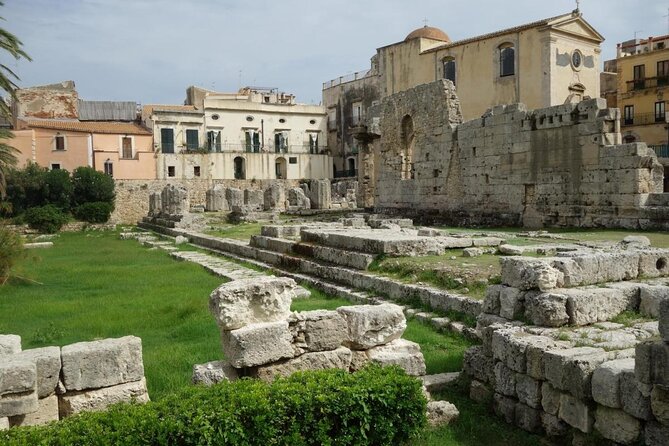
- Stop One: a Roman temple pulled back from the ash
- Casa dei Vettii: where Roman art hits hardest
- The Lupanari: a blunt look at adult commerce in Pompeii
- Price and the Pompeii ticket you must plan for
- How to plan your day around this route (without overthinking it)
- Who this Pompeii tour suits best
- Should you book the Sharing Tour of Pompeii?
- FAQ
- How long is the Sharing Tour of Pompeii?
- What is the meeting point for the tour?
- Does the tour include pickup?
- Is the Pompeii entrance ticket included in the price?
- What language is the tour offered in?
- How many people are in a group?
- Is this tour private?
- Can I use a mobile ticket?
- Is free cancellation available?
Key things I’d prioritize on this tour
- Up to 8 people means you get more personal attention than you would on a big group schedule
- Roman temple + Casa dei Vettii + Lupanari covers a great mix of public, elite, and everyday life in Pompeii
- English guide keeps the details readable and the walking more purposeful
- Pickup offered can save you time if you’re staying nearby
- Start and end at the same meeting point makes your day feel simpler
Which Pompeii ticket and guide? Compare a few more.
- Pompeii Small Group Tour with an Archaeologist★ 5.0 · 6,593 reviews
- Discover the Ancient Ruins of Pompeii: Day Trip from Rome★ 3.5 · 2,247 reviews
- Pompeii and Herculaneum Small Group Tour with an Archaeologist★ 5.0 · 1,350 reviews
- Skip the Line Guided Tour of Pompeii led by an Archaeologist★ 5.0 · 703 reviews
2.5 Hours in Pompeii: what this shared format really gives you
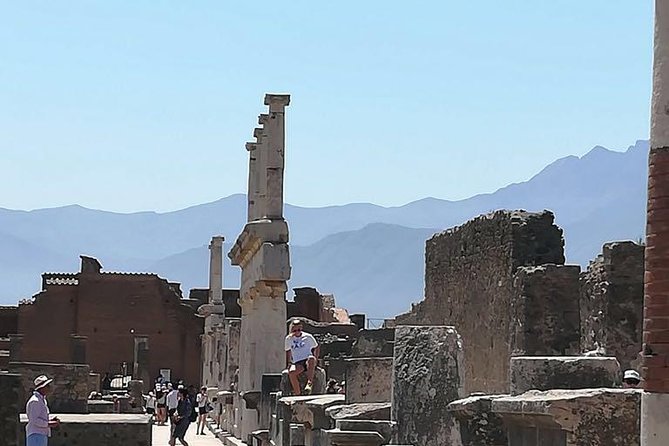
Pompeii can feel overwhelming. Streets, houses, and monuments stack up faster than your brain can label them, especially if you’re walking without a plan. This tour is built for that first-day problem. In about 2 hours 30 minutes, you cover three standout areas that together give you a clearer picture of how the city worked before Vesuvius buried it.
The “sharing” part matters less for the sightseeing and more for the vibe. With a group capped at 8, you usually get a guide’s full attention at key moments. You’re not lost in a crowd, and you’re not stuck waiting for everyone to catch up. It also helps you ask quick questions without turning the day into a slow-motion Q&A session.
The pacing is another benefit. Pompeii is big, and it’s easy to spend your time in one site and then feel rushed everywhere else. Here, the route is designed to move you through major highlights without pretending you’ll see everything. You’ll leave with a strong “foundation set” of what you just saw and how it connects.
Meeting at Villa dei Misteri: your fastest route into the day
Your start point is Pompei Scavi Villa Dei Misteri (the meeting is at the address listed for the Pompeii Scavi area near Villa dei Misteri). You’ll find the guide holding a sign for the Sharing Tour of Pompei. The tour also ends back at that same meeting spot, which is genuinely helpful on a busy day—no last-minute transit planning.
Pickup is offered, which can make this much easier if you don’t want to navigate on foot right away. If you’re not using pickup, you’ll still want to arrive with enough time to find your guide and get your bearings before entering the ruins.
Two practical notes I’d keep in mind:
- Bring your mobile ticket and any required ID/confirmation details so you can move through the process smoothly.
- Wear shoes you trust. Pompeii is uneven and sometimes slippery. The guided walking helps, but it won’t change the ground.
Stop One: a Roman temple pulled back from the ash
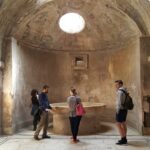
The first stop is a Roman temple that was buried during the eruption of Vesuvius in 79 and recovered through later archaeological excavations. Even if you’ve seen other ruins in Italy, this kind of site helps you understand Pompeii as a living city, not just a museum of tragedy.
What I like about starting with a temple is that it gives you a framework. Temples weren’t random decorations. They were part of public life—religion, civic identity, and community rituals all tied together in one place. When you’re standing in the open space around a recovered temple, you can better imagine how people moved through the city and gathered for events.
This stop also sets the tone for the rest of the tour. Pompeii’s ruins don’t feel like isolated buildings. They feel like layers of a whole society. Seeing the “public face” early makes the later stops—an elite home and a commercial-adjacent building—land better.
Potential drawback: this is a tour format, so the temple stop is best as context rather than a full, hour-long deep dive. If you love stopping to take long notes or want every architectural measurement, you might feel slightly time-pressured. The tradeoff is that you’ll get to see more ground.
Casa dei Vettii: where Roman art hits hardest
Next comes the Casa dei Vettii, a Roman domus (a private house) buried by the eruption and found after excavations. This house is named after its owners—so you’re not just looking at “some fancy villa,” you’re stepping into a specific household. The tour highlights that it represents one of the greatest examples of Roman art from the first century, and you’ll feel why quickly once you’re inside the preserved areas.
Here’s what makes this stop so valuable for most people: it’s the moment Pompeii stops being abstract. You can see how art, status, and daily life intersected under the same roof. Roman elite homes used decoration like messaging. It wasn’t just beautiful surfaces; it communicated wealth, taste, and identity.
Even if your background is light, you can still read the experience. The guide’s job here is to connect what you’re seeing to how Romans used space—where people likely gathered, what the visuals may have signaled, and how the house’s design fit the culture of the time.
Also, this is one of the best stops for photos, because you get a sense of scale and layout, not just close-up ruins. Just remember: Pompeii rewards steady looking. If you rush through, you miss the details that make Casa dei Vettii memorable.
A small consideration: the house areas can feel busy and visually dense. If you’re the type who gets overwhelmed in museums, go slow for the first 10 minutes. Let the guide point out what to focus on, then you’ll enjoy the rest more.




The Lupanari: a blunt look at adult commerce in Pompeii
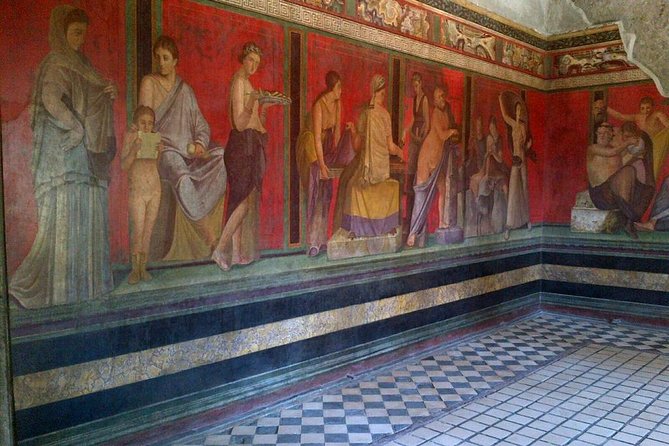
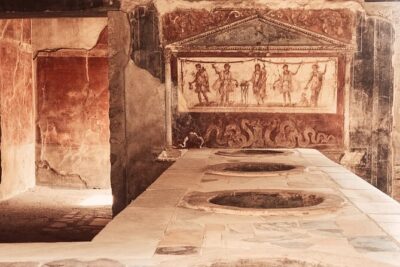
Your final major stop is the lupanari (from the Latin lupa, linked here to the concept of a she-wolf, i.e., the business label). During the Roman period, these were places dedicated to mercenary sexual pleasure—essentially appointment-houses, the kind of brothels where money was part of the arrangement.
This is a heavy stop, but it’s also part of why Pompeii feels real. Ancient cities weren’t only temples and fancy houses. They had commerce, services, and everyday transactions—some of them uncomfortable for modern visitors. The lupanari offers a window into how the city functioned socially, not just architecturally.
The tour also notes that some of these spaces are still visible in Pompeii. That matters because it turns a topic many people only hear about in vague terms into something you can actually see in context. The guide’s explanations help you avoid turning it into shock tourism. Instead, it becomes a practical lesson in how signage, layout, and business life were woven into the city.
If there’s a drawback, it’s simply the subject matter. If you’d rather avoid adult-themed sites, this stop might feel like too much. But for many people, it’s also the most memorable “Pompeii is complete” moment of the day, because it fills in the blanks that postcards never show.
Price and the Pompeii ticket you must plan for
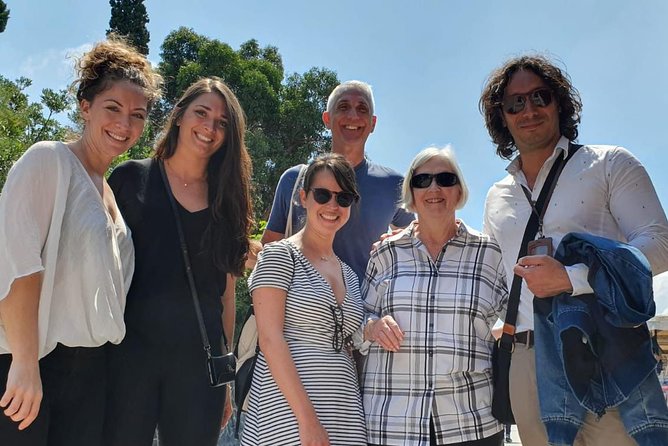
The tour price is listed as $193.49 per group (up to 8 people) for about 2 hours 30 minutes. You also get a private guide included. English is available, and pickup is offered.
Now the important part: the Pompeii entrance ticket is not included. The additional cost is €20.00 per person for the entrance ticket, and it’s purchased daily for customers. That means your real total depends on how many people you split the group cost with.
Here’s a helpful way to estimate value:
- If you’re traveling with a full group of 8, the tour cost per person works out to roughly $24 (before the €20 ticket).
- If you’re just two people, you’ll pay more per person for the guide-and-tour portion, and the entrance fee becomes a smaller part of your overall cost—but still required.
So when is this a good value?
- It’s usually best when you can split the group price with friends or family.
- It’s also good if you want a guided plan and don’t want to spend time figuring out what to prioritize inside Pompeii.
- If you’re the lone-wander type and don’t need a guide’s structure, you might feel the premium more.
The big upside is that, with the guide included, you’re paying for direction and interpretation—especially at Casa dei Vettii, where knowing what you’re looking at turns ruins into a story.
How to plan your day around this route (without overthinking it)
This tour is set up to keep your schedule tidy: you start at Villa dei Misteri, you see three major sites, and you return to the same meeting point at the end. That simplicity is worth something. It reduces stress, and it helps you move on to lunch or more exploring without guessing how to get back.
Because the tour is in English, you don’t have to rely on guesswork for the explanations at each stop. And the mobile ticket format is practical, especially on a trip where you might already be juggling reservations.
One more realistic planning tip: consider your comfort level with walking and changing environments. Pompeii ruins are not smooth floors, and the light can be bright. Even with a guide, you’re still doing an outdoor walking tour in archaeological terrain.
If your goal is to get the key sights with context on a first visit, this route does the job. If your goal is to go slow, linger, and photograph endlessly, you may want to pair this with additional time later rather than trying to force all your interests into these 2.5 hours.
Who this Pompeii tour suits best
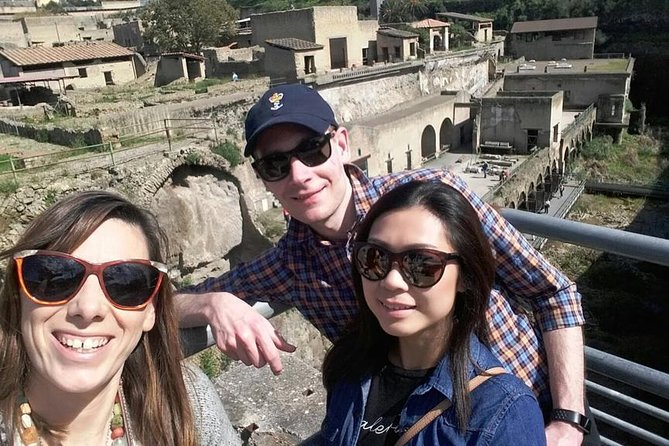
This experience is a great match if you:
- Want a focused highlights route rather than trying to conquer Pompeii alone
- Prefer a small group feel
- Appreciate interpretation—especially for art and how homes functioned
- Are okay with an adult-themed stop that’s explained as part of the city’s everyday reality
It also fits well for many ages and walking levels, since the tour says most travelers can participate. Service animals are allowed, and it’s near public transportation, which helps if you’re not driving.
If you’re traveling with a mixed group and not everyone wants a long, museum-style day, the structure can be a peacekeeper. Everyone gets the big anchors: temple, domus, and a working-city site.
Should you book the Sharing Tour of Pompeii?
If you want Pompeii that makes sense quickly, I’d lean toward booking. This tour gives you a guided path through three powerful stops and a clear start/end plan. The highlight advantage is Casa dei Vettii—Roman art in a preserved house setting—plus the way the temple and lupanari round out the picture of public life and everyday commerce.
Just go in with one expectation set: you still have to pay the €20 entrance ticket per person, so don’t treat the tour price as your full Pompeii cost. Also, the adult-topic site may not be for everyone, so consider whether that part fits your comfort level.
Overall, the combination of a private guide, a group cap of up to 8, and a tight 2.5-hour route is a strong value if you share costs and want a guided first visit.
FAQ
How long is the Sharing Tour of Pompeii?
It runs about 2 hours 30 minutes.
What is the meeting point for the tour?
It starts at Pompei Scavi Villa Dei Misteri, 80045 Pompei, Metropolitan City of Naples, Italy.
Does the tour include pickup?
Pickup is offered.
Is the Pompeii entrance ticket included in the price?
No. The tour price does not include the entrance ticket. The entrance ticket is €20.00 per person.
What language is the tour offered in?
The tour is offered in English.
How many people are in a group?
The price is per group up to 8 people.
Is this tour private?
It’s described as a private tour/activity, with only your group participating.
Can I use a mobile ticket?
Yes, a mobile ticket is offered.
Is free cancellation available?
Yes, you can cancel for a full refund up to 24 hours in advance of the experience start time.
More Tours in Pompeii





More Tour Reviews in Pompeii

More Pompeii Tours to Compare
More Pompeii tours, freshly reviewed




Pompeii Tours, compared.
 ★ 4.8Pompeii: Entry Ticket and Guided Tour with an ArchaeologistFrom $3519,459 reviews
 ★ 4.1Pompeii: Entry Ticket with Audio GuideFrom $4013,491 reviews
 ★ 4.8Pompeii: Small Group Tour with an ArchaeologistFrom $4012,264 reviews
 ★ 4.3Pompeii Ruins & Mount Vesuvius Day TourFrom $12011,459 reviews
★ 5.0Pompeii Small Group Tour with an ArchaeologistFrom $356,593 reviews
★ 4.3Pompeii Ruins & Mount Vesuvius Day TourFrom $12011,459 reviews
★ 5.0Pompeii Small Group Tour with an ArchaeologistFrom $356,593 reviews
 ★ 4.5Skip-the-line Pompeii – Small Group TourFrom $544,401 reviews
 ★ 4.6Naples or Sorrento: Full-Day Pompeii and Mount Vesuvius TourFrom $1044,235 reviews
 ★ 3.9Pompeii: Skip-the-line Entry Ticket with Audio Guide & MapFrom $433,153 reviews