
Review · POMPEII TOURS
Pompeii Private Tour with an Archaeologist and Skip The Line – 3 hours
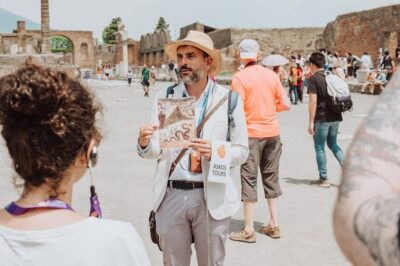
Pompeii hits different with an expert beside you. I like the archaeologist-style storytelling that makes everyday life in 79 AD click, and I like the skip-the-line setup that helps you get moving faster. The main drawback: you still pay the site entry fee, and it’s a lot of walking on uneven ground with steps.
This is a true private 3-hour walk through major Pompeii highlights, starting at Porta Marina Superiore and finishing back at the meeting area. If you want structure instead of aimless wandering, this format is a solid use of your time.
In This Review
- Key moments worth knowing
- Why this 3-hour Pompeii plan actually feels right
- Meeting at Porta Marina: your route starts with orientation
- Theaters first: seeing why Romans went out in the open
- Main Street to the Forum: politics, courts, and civic power
- Stabian Baths: when public life gets very human
- Temples and the Quadriporticus: religion and military-adjacent energy
- Lupanar and the Cave Canem mosaic: the city’s harder edges
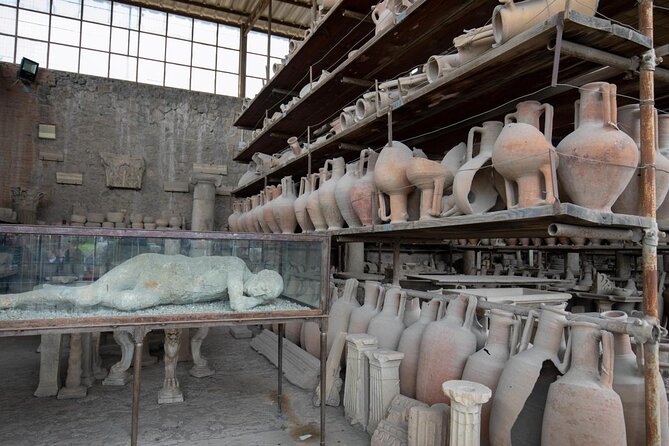
- Markets, deposits, and the wool-and-laundry reality check
- Casa del Menandro: the mosaic-and-fresco moment you’ll remember
- Price and tickets: the part to confirm before you go
- What to wear and how to handle Pompeii’s ground
- Who this tour suits best (and who should consider another option)
- Should you book Pompeii Private Tour with an Archaeologist?
- FAQ
- How long is the Pompeii private tour?
- Is this tour private?
- What language is the tour offered in?
- Is skip the line included?
- Are the Pompeii admission tickets included in the price?
- Where does the tour start and end?
- Is transportation or meals included?
- Does the tour run in any weather?
Key moments worth knowing
- Skip-the-line help when requested: you need to ask in advance for the ticket-office line to be bypassed.
- A tight 3-hour route: short stops at the big names, plus longer time for the Forum-adjacent areas and major houses.
- Public life to private life: theaters, baths, markets, then homes with mosaics like the Cave Canem.
- Roman economy stops: wool, laundry, and food culture show up instead of only temples and tombs.
- Guides matter here: many bookings highlight guides like Luisa, Eliana, Maria, Roberto, and Mariagrazia for keeping the pace and answering questions.
- Bring grippy shoes: expect steps and slippery surfaces, so your footwear is part of the plan.
Which Pompeii ticket and guide? Compare a few more.
- Pompeii Small Group Tour with an Archaeologist★ 5.0 · 6,593 reviews
- Discover the Ancient Ruins of Pompeii: Day Trip from Rome★ 3.5 · 2,247 reviews
- Pompeii and Herculaneum Small Group Tour with an Archaeologist★ 5.0 · 1,350 reviews
- Skip the Line Guided Tour of Pompeii led by an Archaeologist★ 5.0 · 703 reviews
Why this 3-hour Pompeii plan actually feels right
Pompeii is enormous. Even if you have one whole day, you’ll still miss things. This tour keeps you in the sweet spot: enough key locations to understand the city, without turning your afternoon into a marathon.
What I like is how the stops build on each other. You start with public and civic space, then move into everyday life—baths, markets, and the working fabric of the city—before landing in household art and mosaics. By the time you reach the famous houses, you’re not just looking at ruins. You’re recognizing what you’re seeing.
The pacing is also realistic. Most sites are only a quick moment here, with longer time reserved for the bigger anchors like the large theater, the Forum area, and select homes. That helps you keep momentum in a place where “just one more stop” can turn into “we ran out of time.”
Meeting at Porta Marina: your route starts with orientation
The tour starts at Hortus Pompei, Restaurant & Garden Bar, near Piazza Porta Marina Superiore (Via Villa dei Misteri / Piazza Esedra area), and it ends back at the meeting point. You’re also guided through the park starting at Porta Marina Superiore and moving down toward Porta Marina Inferiore as part of the walk.
In practical terms, this matters because Pompeii can feel like a maze unless you have a plan. Starting at a defined entry point and moving through a logical corridor helps you get your bearings fast. You’re not fighting for orientation with crowds around every corner.
Also note the weather requirement. The experience requires good weather. Pompeii ground conditions can turn slick quickly, and the itinerary is walking-heavy—so showing up with shoes that can handle dust, stone, and uneven steps is not optional.
Theaters first: seeing why Romans went out in the open
One of the tour’s smart choices is starting with performance spaces. You get a quick introduction at the Odeon / Teatro Piccolo, then a longer look at Teatro Grande.
Even a short stop pays off because it changes how you interpret the city. Pompeii isn’t just a museum of stones. It’s a place built for gatherings: cheering, announcements, court-adjacent drama, and community events. A theater stop helps you understand that the city’s layout wasn’t accidental. Public entertainment sat in the middle of civic life.
Drawback to consider: if your main goal is “see as many ruins as possible,” theater time can feel like it’s not enough. But for first-timers, it’s a high-value start. It gives you a framework for what comes next.
Main Street to the Forum: politics, courts, and civic power
From there, the route transitions into Pompeii’s core public spaces. You’ll walk past the main street of Pompeii and then enter the civic hub with stops tied to the Forum and the Court of the Justice (Basilica / judicial court area).
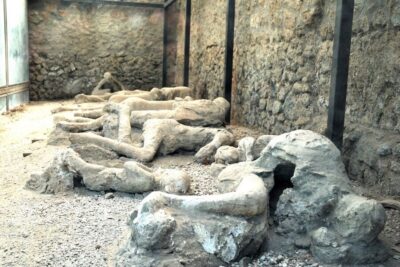
This is where the city stops feeling like scenes from a postcard and starts feeling like a functioning place. You see spaces designed for crowds, speeches, business, and legal life. Pompeii’s famous eruption freezes everything in place, but these areas show you the engine that kept daily routines running.
One practical benefit: these are some of the areas where “being in the right spot” matters for views. With an experienced guide, you spend less time hunting for the best angles and more time understanding the layout and purpose.
Rather go private? More options in Pompeii



Stabian Baths: when public life gets very human
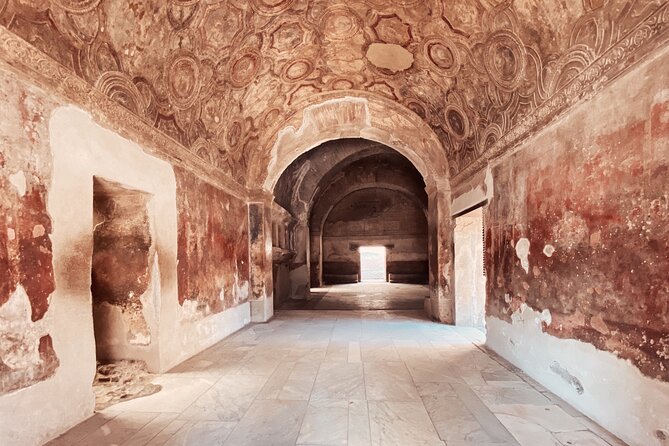
Then comes the Stabian Baths (Terme Stabiane), treated as one of the key everyday-life moments. A bath complex tells you a lot about Roman society fast—how people relaxed, washed, socialized, and moved through a public space.
This stop also helps break up the more purely ceremonial feel of temples and civic monuments. It’s still Pompeii’s public world, but it’s intimate in a different way. You’re picturing routine: going somewhere for cleanliness, conversation, and downtime.
Expect this stop to be time-limited. That’s not a problem if you’re there to learn what each structure means. If your goal is deep time in one single complex, you might want a longer tour later. For three hours, this strikes a balance.
Temples and the Quadriporticus: religion and military-adjacent energy
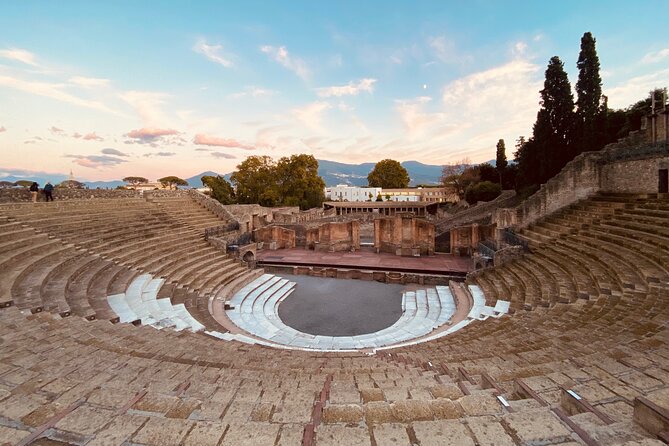
Pompeii’s religious anchors appear at a few points, including the Temple of Jupiter and later the Temple of Venus. Sandwiched between or alongside those are civic-to-semi-civic spaces such as the Quadriporticus of the theatres, described as a kind of gladiators’ barracks area.
This matters because it connects three themes:
- public performance and spectacle,
- organized power structures (including violence as entertainment),
- and religious framing around civic identity.
When you see those pieces in sequence, Pompeii reads like a city with systems. Not random buildings.
Lupanar and the Cave Canem mosaic: the city’s harder edges
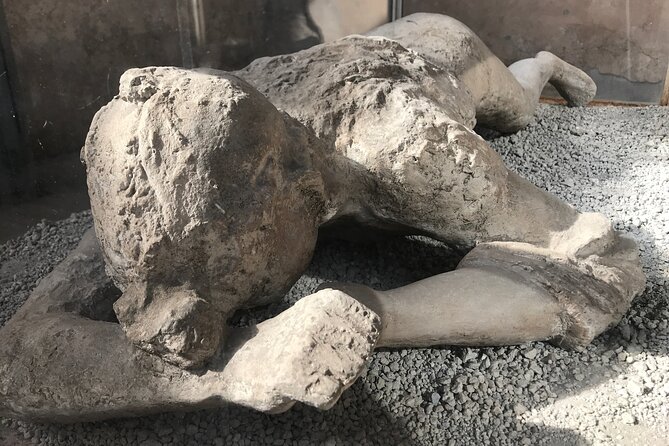
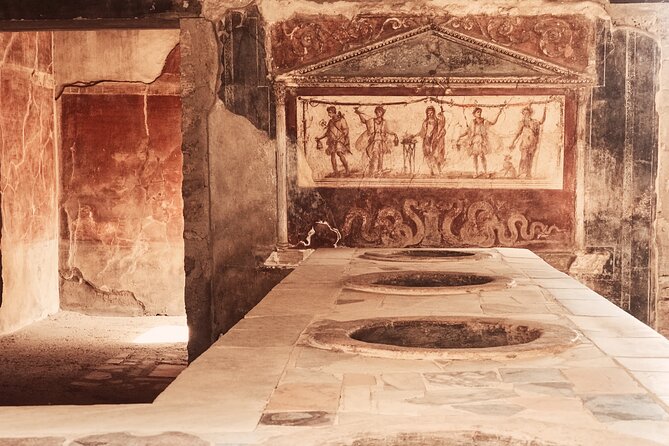
Two stops pull no punches: the Lupanar (brothel/prostitution area) and the Casa del Poeta Tragico featuring the Cave Canem mosaic.
These are the moments that turn Pompeii from history class into real human context. The Lupanar stop helps you grasp that ancient cities included the same kinds of under-the-table realities you’d expect in any large community—just with different rules and different language.
Then Cave Canem (Beware of the dog) becomes a perfect contrast. It’s playful, household-level messaging that makes the home feel lived-in rather than frozen. Seeing it with guidance turns it from a famous image into a clue about daily experience and humor.
Time-wise, both are relatively short. If you want to linger in just one of these places, you’ll want a longer second pass. But for a first visit, they’re essential.
Markets, deposits, and the wool-and-laundry reality check
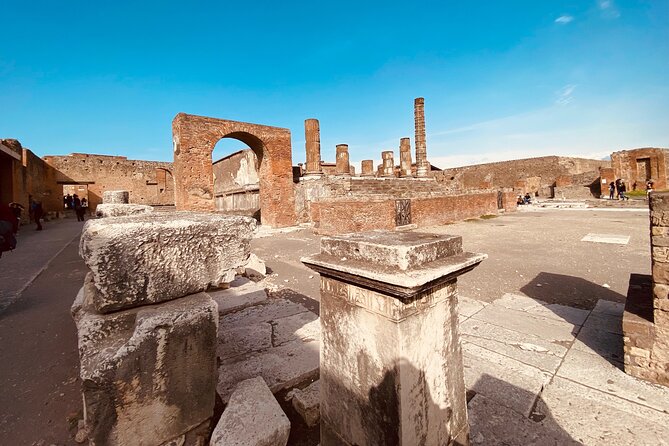
Pompeii wasn’t only temples and theaters. It had shopping lines, food supply, textile work, and maintenance. This tour covers several “how the city ran” stops, including:
- Granai del Foro (archaeological deposit / storage context),
- Macellum (meat and fish market),
- Edificio di Eumachia (wool market),
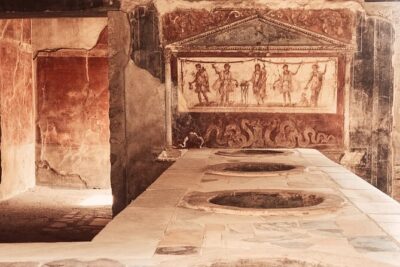
- Termopolio di Vetuzio Placido (take-away food spot),
- Fullonica di Stephanus (laundry).
These stops are among the best value for money because they’re the most “you are there” parts of Pompeii. A big house is impressive, sure. But a market is how thousands of people fed themselves and worked. A laundry space tells you about labor, hygiene, and business.
One note: this is still walking. These are often shorter stops, so you’ll get the concept, not an extended museum lecture. If you love practical history—who did what, where they bought food, how jobs worked—this section is the payoff.
Casa del Menandro: the mosaic-and-fresco moment you’ll remember
The tour’s longer home stop is Casa del Menandro, described for its frescoes and mosaics. This is where you slow down enough to appreciate the interior art and the idea of domestic life.
Casa del Menandro is also a good “capstone” for the whole route. By the time you’re here, you’ve already seen public life (theaters, bath complex, forum) and the city’s economy (markets, food, textiles). That makes the home stop feel less like a random detour and more like the last piece of the puzzle.
The tour gives you time here (about 20 minutes). That’s usually enough to notice major design features, absorb what the space was for, and take photos without feeling like you’re chasing a clock the whole time.
Price and tickets: the part to confirm before you go
The price is listed at $302.32 per group for a private tour lasting about 3 hours. Your size of group matters for value. In Pompeii, a private guide is expensive compared with a group tour, so you want your guide to do real work for you—not just “point and walk.”
Here’s the key logistics point: the tour does not include the Pompeii entry fee for adults. Adults are 19 euros per person, and under 18 is free. Your tour includes skip-the-line help at the ticket office on request in advance, plus a link to buy tickets entrance in advance.
So I’d plan this way:
- Budget the tour cost plus the 19 euros adult entry fee.
- If skip-the-line is a priority, request it ahead of time so you’re not scrambling at the gate.
- Arrive with your ticket-ready on your phone since you’ll have a mobile ticket involved.
If you’re trying to keep costs tight, this might not be the best pick. If you’re trying to get the most meaning out of a limited visit, it’s closer to “buying time and clarity” than buying tickets.
What to wear and how to handle Pompeii’s ground
Pompeii is outdoors, and the surface can be rough. This matters for enjoyment more than people expect. Plan for:
- lots of walking,
- steps, and
- slippery surfaces.
I’d wear shoes with grippy soles and broken-in comfort. Skip anything stiff or slick. Also consider sun protection—Pompeii has open areas, and shade comes and goes depending on the section you’re in.
A small but useful detail: some guides can help you time the walk with water stops. One guide is specifically described as steering the group to spots to refill water. That’s worth doing. You’ll enjoy the visit more if you’re not halfway dehydrated and rushing to catch up.
Who this tour suits best (and who should consider another option)
This tour is a great fit if:
- you want a structured 3-hour route,
- you care about understanding how people lived (not just seeing monuments),
- you appreciate art and details like mosaics and frescoes,
- and you want a guide who can answer questions without herding you.
It’s also a smart pick for couples, friends, or small families who don’t want to get trapped behind bigger group schedules.
Consider a different approach if:
- you want to spend lots of time inside one single house or complex,
- you dislike crowds but also dislike frequent moving (because the stops are frequent, even if each is short),
- you need a very accessible route with minimal steps. The tour is marked as “most travelers can participate,” but Pompeii itself is still steps and uneven stone.
Should you book Pompeii Private Tour with an Archaeologist?
If you’re coming to Pompeii for the first time and you have about half a day, I’d book this. You get the big anchors—the theaters, the Forum, baths, markets, and major houses—plus the “how people lived” layer that ruins often can’t explain on their own.
Before you pay, do two quick checks:
- Confirm the 19 euros adult entry fee is separate and budget for it.
- Make sure you’ve requested skip-the-line help in advance if that’s important to you.
If those boxes are checked, you’ll likely feel like you used your time well, instead of just walking around hoping the pieces line up.
FAQ
How long is the Pompeii private tour?
It’s about 3 hours.
Is this tour private?
Yes, it’s a private tour, so only your group participates.
What language is the tour offered in?
The tour is offered in English.
Is skip the line included?
Skip the line at the ticket office is included, but it’s only available on request in advance.
Are the Pompeii admission tickets included in the price?
No. Entrance tickets are not included. Adults pay 19 euros per person, and admission is free for under 18.
Where does the tour start and end?
It starts at Hortus Pompei, Restaurant & Garden Bar near Porta Marina Superiore, and it ends back at the meeting point.
Is transportation or meals included?
No. Meals and food are not included, and private transportation is not included.
Does the tour run in any weather?
The experience requires good weather. If it’s canceled due to poor weather, you’ll be offered a different date or a full refund.
More Tours in Pompeii



More Tour Reviews in Pompeii

More Pompeii Tours to Compare
More Pompeii tours, freshly reviewed



Pompeii Tours, compared.
 ★ 4.8Pompeii: Entry Ticket and Guided Tour with an ArchaeologistFrom $3519,459 reviews
 ★ 4.1Pompeii: Entry Ticket with Audio GuideFrom $4013,491 reviews
 ★ 4.8Pompeii: Small Group Tour with an ArchaeologistFrom $4012,264 reviews
 ★ 4.3Pompeii Ruins & Mount Vesuvius Day TourFrom $12011,459 reviews
★ 5.0Pompeii Small Group Tour with an ArchaeologistFrom $356,593 reviews
★ 4.3Pompeii Ruins & Mount Vesuvius Day TourFrom $12011,459 reviews
★ 5.0Pompeii Small Group Tour with an ArchaeologistFrom $356,593 reviews
 ★ 4.5Skip-the-line Pompeii – Small Group TourFrom $544,401 reviews
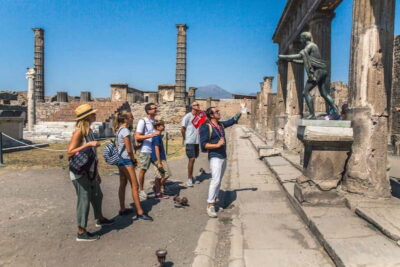 ★ 4.6Naples or Sorrento: Full-Day Pompeii and Mount Vesuvius TourFrom $1044,235 reviews
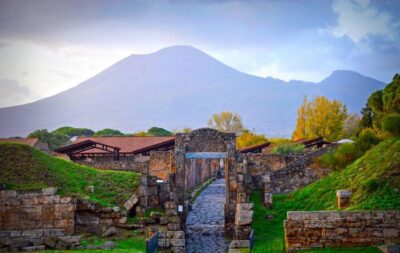 ★ 3.9Pompeii: Skip-the-line Entry Ticket with Audio Guide & MapFrom $433,153 reviews
Browse the lists this tour appears in