
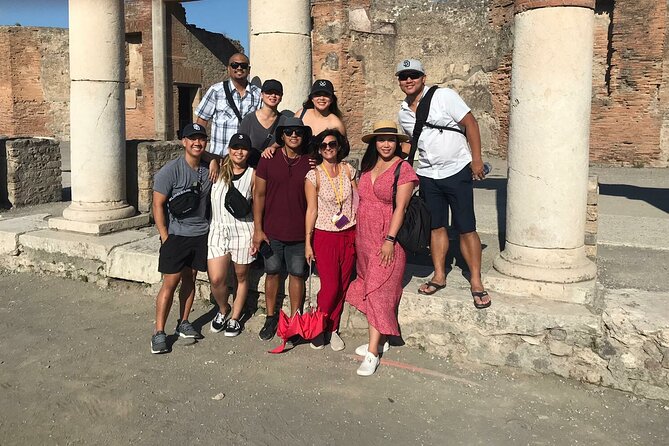
Review · POMPEII TOURS
Pompeii Skip-the-line Tour with Archaeologist Guide
Pompeii clicks fast when a pro points things out. You get a skip-the-line-style guided entry and a tight walk through the city’s biggest scenes with an archaeologist guide, plus clear explanations of the AD 79 eruption that froze daily life in time. One small catch: since the tour is about 2 hours, you’ll see the highlights rather than do slow, solo wandering across the entire site.
This is built for practical sightseeing. I like the small-group feel (up to 16) and the fact that you walk on original Roman streets. You’ll go in the heat of the day with lava rock underfoot, so comfortable shoes and a hat aren’t optional.
In This Review
- Key reasons this Pompeii tour earns top marks
- Why Pompeii feels different with a guide in your ear
- Getting to Pompeii: train to Pompei Scavi, then meet at Hotel Vittoria
- Skip-the-line means guided entry, not a solo ticket
- Your 2-hour walk: what you’ll see from the gate into Roman daily life
- The forum and civic heart: temples, politics, and gladiator-adjacent power
- Theater and thermal baths: where Romans relaxed, watched, and gossiped
- Shops, streets, wagon-wheel ruts, and the House of Menander vibe
- The Lupanare brothel: a famous stop explained, not just displayed
- Comfort and timing: wear shoes for lava rock and plan for summer sun
- Price and value: does $71.35 buy you enough?
- Who should book this Pompeii archaeologist tour?
- Should you book this Pompeii archaeologist tour?
- FAQ
- Where is the meeting point for the Pompeii skip-the-line tour?
- How long is the tour?
- Are admission tickets included?
- Do I need a hotel pickup or private transport?
- How do I get to Pompeii from Naples or Sorrento?
- Can I cancel and get a full refund?
Key reasons this Pompeii tour earns top marks
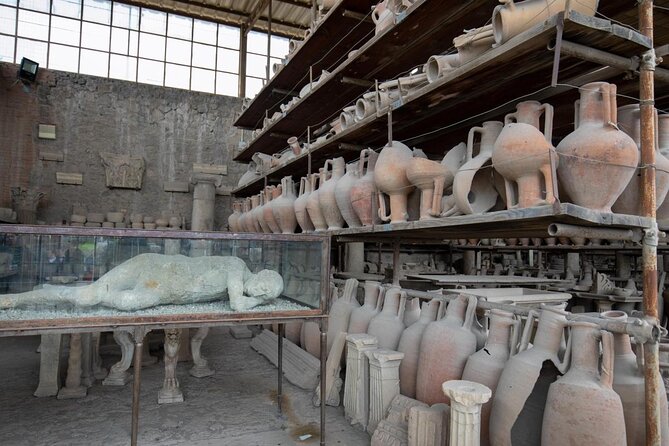
- Small group size (max 16) keeps the pace human and questions easy.
- Admission tickets included mean you don’t have to juggle separate paperwork.
- Archaeologist-led storytelling turns ruins into daily-life scenes (baths, shops, politics).
- Main Pompeii icons in 2 hours: forum, theater, thermal baths, gladiator area, Lupanare.
- Hands-on details you’ll notice like wagon-wheel ruts and cobblestone textures.
- Rebuilt Lupanare (brothel) is a standout stop that’s explained, not just photographed.
Which Pompeii ticket and guide? Compare a few more.
- Pompeii Small Group Tour with an Archaeologist★ 5.0 · 6,593 reviews
- Discover the Ancient Ruins of Pompeii: Day Trip from Rome★ 3.5 · 2,247 reviews
- Pompeii and Herculaneum Small Group Tour with an Archaeologist★ 5.0 · 1,350 reviews
- Skip the Line Guided Tour of Pompeii led by an Archaeologist★ 5.0 · 703 reviews
Why Pompeii feels different with a guide in your ear
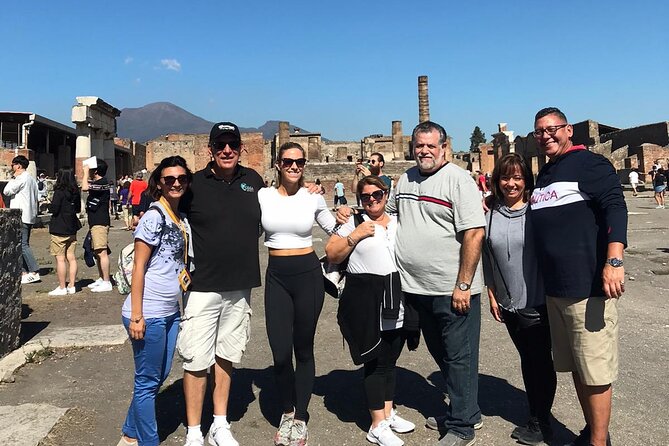
Pompeii can be visually impressive and still feel confusing. Rows of walls and street grids can blur together when you don’t know what you’re looking at. This kind of guided walk helps you map what’s where, and it also gives you a reason to care.
You start moving through the ancient city and the guide connects the dots: how Romans used public space, why certain buildings matter, and what the eruption changed. The AD 79 Vesuvius story isn’t treated like trivia. It’s used to explain why so much is preserved, and why specific rooms and streets look the way they do.
Another big win is how you’re encouraged to notice details. You walk on ancient cobblestones, and the guide points out ruts from wagon wheels. That small observation makes the city feel lived-in, not museum-like.
You’ll also get context for the stops that most people only skim. The theater, thermal bathhouse, forum, and the rebuilt brothel all have explanations that make them easier to place in everyday Roman life.
Getting to Pompeii: train to Pompei Scavi, then meet at Hotel Vittoria
Plan to reach Pompeii on your own. From Naples or Sorrento, take the Circumvesuviana train and get off at Pompei Scavi station. From there, the meeting point is near the entrance area, so you’re not trekking across the countryside with your bags and your patience.
The meeting location is: Hotel Vittoria, Piazza Esedra, 80045 Pompei (NA), Italy. Your tour ends back at the meeting point, so you don’t have to worry about a complicated drop-off plan.
This matters because it keeps your day flexible. You can come from Naples, Sorrento, or wherever your itinerary has you that morning or afternoon. You just need to show up on time, because if you’re late or miss the tour, there’s no refund.
If you’re staying in the area, you can use public transport and walk the final steps. The tour is listed as near public transportation, so you’re not stuck waiting for a private transfer.
Skip-the-line means guided entry, not a solo ticket
This is sold as a skip-the-line style experience, but it’s not the same as handing yourself an admission ticket and wandering in whenever you feel like it. Your confirmation is for the guided tour, and you use it with the guide to enter.
Admission tickets are included, so you’re not paying extra at the gate. Still, the process is designed around your guide’s timing and group flow. That’s the value: you spend your energy looking at Pompeii, not scanning crowds and guessing the best path.
One practical point: the tour description says you’re not just getting a ticket to the ruins. The confirmation is effectively your “your group starts here” document. If you expect to bypass everything on your own, you’ll get frustrated. Go with the guided flow and it works.
Also note the group size is capped at 16 travelers. That size is usually right for keeping movement smooth without turning into a rush.
Your 2-hour walk: what you’ll see from the gate into Roman daily life
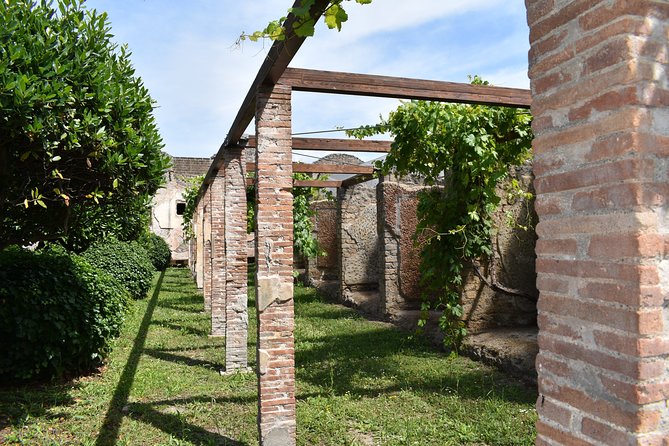
The tour focuses on major highlights of Pompeii, paced for a first-time visit. You’re not aimless. You’re led through a sequence that helps you understand how a Roman city functioned.
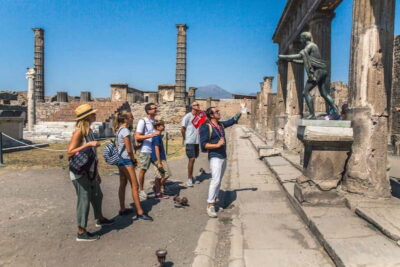
You begin at the archaeological park entrance area and head into the ruins. From there, you move through the city’s central and high-interest zones, with time to stop and look closely. The walk includes iconic spaces such as the forum, the theater, and the thermal bathhouse, plus other memorable stops connected to everyday life and culture.
Here’s what makes the route smart for limited time:
- You hit the forum, which acts like the city’s brain and meeting place.
- You move to leisure and community life, like the theater and bathhouse.
- You end up in places that show the darker side and more personal sides of city life, including the rebuilt brothel.
At each stop, the guide ties what you see to how Romans lived—politics, religion, entertainment, and social routines. That’s what turns a “pile of ruins” into a coherent city.
And yes, there’s walking on original streets and lava rock, so you’ll feel like you’re moving through the city itself, not just viewing it from a distance.
More guided runs around Pompeii



The forum and civic heart: temples, politics, and gladiator-adjacent power
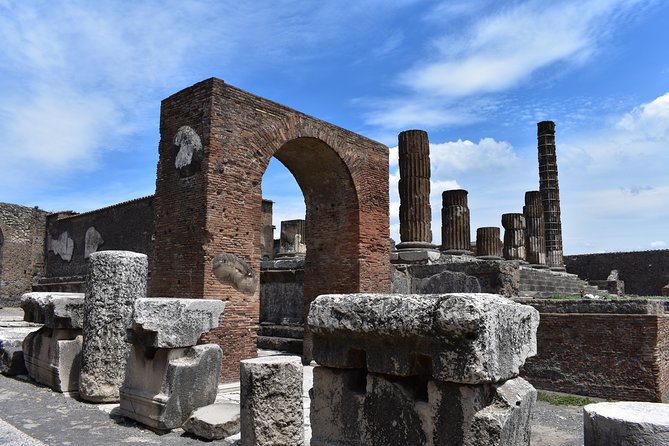
The forum is the anchor of any Roman city, and it’s one of Pompeii’s most important zones on the tour. This is where priests and politicians would spend time, and where government and religion overlapped in public.
Your guide helps you read the space. Instead of just pointing at structures, they explain what the area meant and how different civic buildings fit together. That changes the whole experience. You stop seeing the forum as scenery and start seeing it as the stage for decisions and public life.
You’ll also see ruins connected to entertainment and training, including barracks where gladiators once trained and lived. Even if you’re not a Roman-history person, gladiators give you a human hook. It’s a tangible way to picture the kinds of people who lived near this power center.
A fun practical note: the guide’s job here is to show you why the details matter. Pompeii is big. Without someone steering you, it’s easy to miss the significance of what’s left behind.
Theater and thermal baths: where Romans relaxed, watched, and gossiped
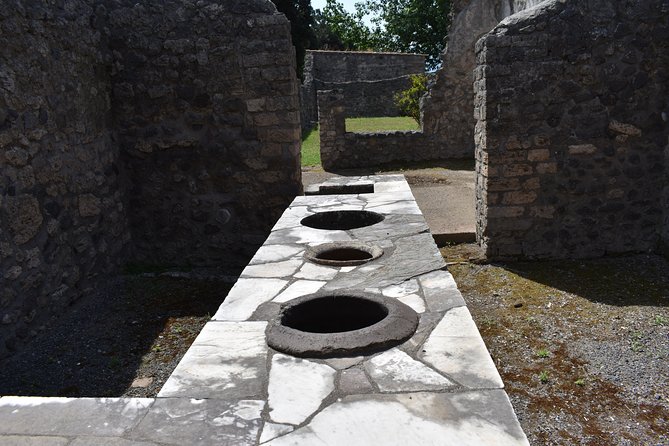
Next up is a classic pairing: the theater and the thermal bathhouse. Together, they show two big parts of Roman daily culture—public entertainment and social routines.
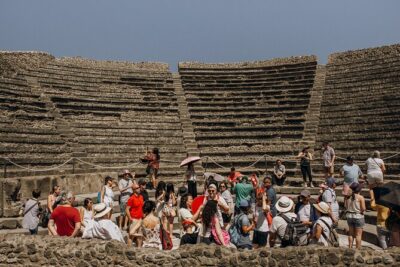
In the theater, you learn about performances of tragedy and comedy. The structure is still physical, but the guide gives it context: what audiences came to see and why venues like this mattered in a city like Pompeii.
Then you shift to the thermal bathhouse, where residents regularly went to bathe, exercise, and gossip. This is one of the stops that makes Pompeii feel oddly familiar. People still meet at places with routines. The bathhouse just makes the social layer visible in the architecture.
The guide also helps you interpret the remains of different areas tied to these activities. If you’ve ever looked at ruins and thought, I can’t tell what happened here, this is the part where the fog lifts.
Time-wise, you won’t leave with every detail of the bath complex memorized, but you will leave with the big idea: this wasn’t only hygiene. It was a weekly social hub.
Shops, streets, wagon-wheel ruts, and the House of Menander vibe
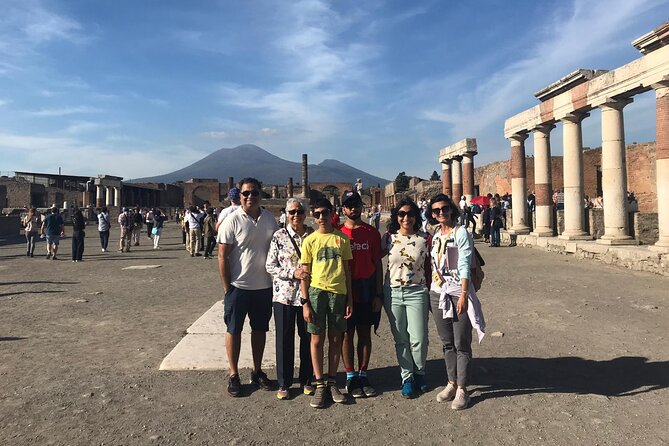
Pompeii is famous for being preserved down to daily life clues. Part of the value of a guided tour is that someone points out what you might otherwise ignore.
You’ll walk along ancient cobblestones and notice wagon-wheel ruts—physical marks that help you imagine traffic patterns and movement through the city. It’s not dramatic in the way a big collapse scene is. It’s better. It feels real.
You’ll also peek into the remains of local businesses such as restaurants, bars, and shops selling food and clothing. Even without seeing everything intact, you can grasp the city’s economic rhythms.
The tour description also includes stops like the House of Menander and other key locations within the park. Those are the kinds of places that reward attention to arrangement, scale, and how spaces relate to streets.
If you like “micro history,” this is where it lands. You come away with a better sense of what the city looked like in motion.
The Lupanare brothel: a famous stop explained, not just displayed
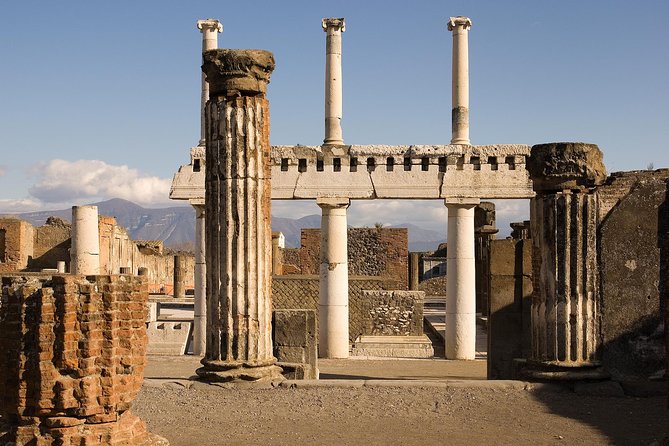
Don’t skip the Lupanare. It’s one of Pompeii’s most popular attractions, and in this tour it’s treated as part of the city, not a sideshow.
You’ll see the rebuilt brothel area on the walk. The guide’s role matters here because the Lupanare can feel like a photo-op if you don’t know what you’re looking at. With context, you understand how entertainment, commerce, and privacy shaped aspects of Roman life.
This is also a moment where the guide can help you keep the experience respectful. You’re seeing reconstructions and remains, and you want to pay attention to the integrity of the site instead of turning it into a random stop.
If you’re traveling with teens or adults who like frank history, this stop often becomes a highlight. If you’re more reserved, the guide’s explanation can keep it grounded and informative.
Comfort and timing: wear shoes for lava rock and plan for summer sun
Pompeii ruins demand basic preparedness. You’ll be walking on original ancient streets and lava rock, so comfy shoes matter more than fashion.
Bring a hat for summer sun. The tour also suggests wearing comfortable clothing for heat. The site can be exposed, and you don’t want to spend your short 2 hours adjusting laces or fighting blisters.
Because this is a 2-hour experience, don’t plan it as your only Pompeii time if you want deeper exploration. Even with a guide, you’ll only cover the highlights. If you want more time, plan to stay longer after the tour and wander on your own.
One timing detail: it’s noted that the 5 pm tour lasts 2 hours. So even if the afternoon heat is a concern, you’ll still be walking and stopping.
Price and value: does $71.35 buy you enough?
At $71.35 per person, the price is not low, but it’s also not random. The big value drivers are:
- Admission tickets included (so you’re paying for guided entry plus site access).
- A local guide focused on what matters most in a short visit.
- A group size capped at 16, which usually keeps your route efficient and your questions from getting lost.
If you’re the type who hates standing in crowds and trying to figure things out from scratch, a guided format often saves time and improves your day. Pompeii is too large and too detailed to “figure out later” during a brief visit.
Also, this tour has a strong track record with a 4.9 rating from 559 reviews and 99% recommendation noted. That doesn’t replace your judgment, but it tells you the experience is consistently landing for first-timers.
Where the cost can feel less worth it is if you already plan to spend a full day and want to roam freely. For deep, slow exploration, you may prefer a longer private guide or a self-paced plan. For a fast, focused first look, this one is built for that.
Who should book this Pompeii archaeologist tour?
I think this tour fits best if you:
- Have only a half day (or less) in Pompeii.
- Want the main sights connected by a clear story, not a random list.
- Like being shown what to look for, like wagon-wheel ruts and how public spaces worked.
- Prefer a small-group format over the big-bus experience.
It’s also a good choice for families and mixed ages since it’s structured and paced. The guide style seems to work well for groups that want both facts and humor.
You might choose something else if you:
- Want to linger long in one neighborhood for hours.
- Are committed to a self-guided approach with no guided explanation at all.
- Hate any walking on uneven stones (this tour does involve walking on original streets and lava rock).
Should you book this Pompeii archaeologist tour?
If you’re visiting Pompeii for the first time and you want the most impact for your time, I’d book it. The combination of included admission, small group size, and guide-led explanations of places like the forum, theater, thermal baths, and the Lupanare makes the experience feel coherent fast.
If you have more time later, you can absolutely extend your day and wander after your 2-hour guided walk. That’s a smart way to get both: guided direction first, then your own slow curiosity.
My only “hold on” is the duration. Pompeii is huge, so treat this as a strong introduction to the site, not the full experience.
FAQ
Where is the meeting point for the Pompeii skip-the-line tour?
The tour meets at Hotel Vittoria, Piazza Esedra, 80045 Pompei (NA), Italy, and ends back at the same meeting point.
How long is the tour?
The tour runs about 2 hours.
Are admission tickets included?
Yes. Admission tickets are included with the tour.
Do I need a hotel pickup or private transport?
No. Hotel/port pickup and drop-off are not included, and you’ll make your way to Pompeii on your own.
How do I get to Pompeii from Naples or Sorrento?
Take the Circumvesuviana train to Pompei Scavi station, then meet your guide near the Pompeii archaeological site entrance area.
Can I cancel and get a full refund?
Free cancellation is available up to 24 hours before the experience start time for a full refund, and good-weather requirements apply (a poor-weather cancellation may offer a different date or a full refund).
More Tours in Pompeii



More Tour Reviews in Pompeii

More Pompeii Tours to Compare
More Pompeii tours, freshly reviewed




Pompeii Tours, compared.
 ★ 4.8Pompeii: Entry Ticket and Guided Tour with an ArchaeologistFrom $3519,459 reviews
 ★ 4.1Pompeii: Entry Ticket with Audio GuideFrom $4013,491 reviews
 ★ 4.8Pompeii: Small Group Tour with an ArchaeologistFrom $4012,264 reviews
 ★ 4.3Pompeii Ruins & Mount Vesuvius Day TourFrom $12011,459 reviews
★ 5.0Pompeii Small Group Tour with an ArchaeologistFrom $356,593 reviews
★ 4.3Pompeii Ruins & Mount Vesuvius Day TourFrom $12011,459 reviews
★ 5.0Pompeii Small Group Tour with an ArchaeologistFrom $356,593 reviews
 ★ 4.5Skip-the-line Pompeii – Small Group TourFrom $544,401 reviews
 ★ 4.6Naples or Sorrento: Full-Day Pompeii and Mount Vesuvius TourFrom $1044,235 reviews
 ★ 3.9Pompeii: Skip-the-line Entry Ticket with Audio Guide & MapFrom $433,153 reviews