
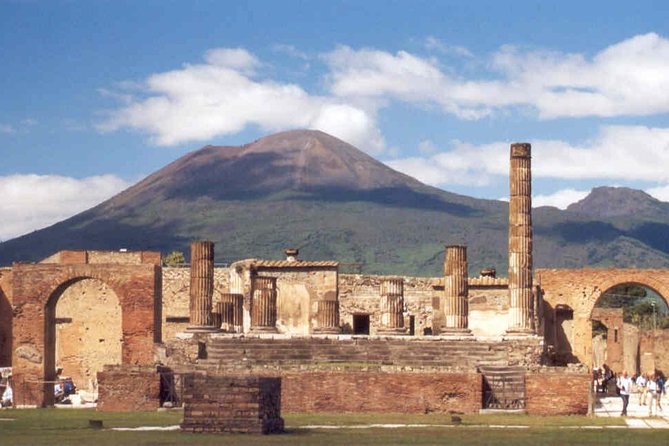
Review · POMPEII TOURS
Pompeii Visit at its Most Peaceful Moment
Sunset turns Pompeii into a quiet classroom. This closing-time guided visit is built for the moments after most people leave—cooler air, fewer bodies, and time to actually look at the details in the UNESCO ruins.
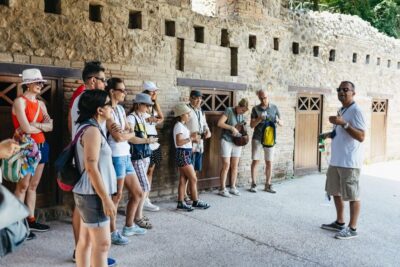
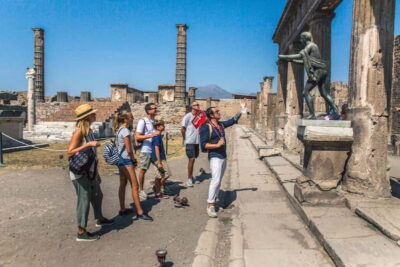
I especially like the small group size (up to 15) and the Blue Badge guide caliber, with guides such as Giovanni and Paulo setting a lively pace and explaining what you’re seeing. The difference shows when you’re not stuck in a slow-moving crowd.
One possible drawback: because the tour runs around sunset, the light can fade fast in shoulder seasons, so you might finish a little earlier than you’d like.
In This Review
- Quick Hits Before You Go
- Why a Closing-Time Pompeii Tour Feels More Like Real Travel
- Meeting at Hotel Vittoria and What “Small Group” Really Means
- Pompeii Archaeological Park at Sunset: The Route You’ll Remember
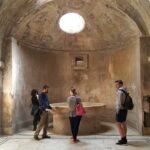
- The Thermal Baths: When Daily Life Becomes Visual
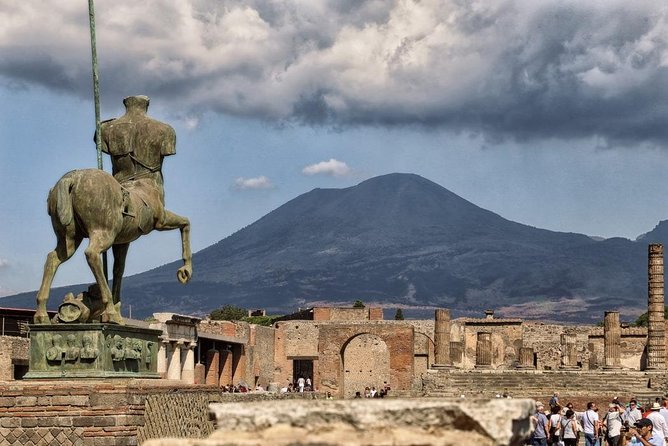
- The Forum: Politics, Commerce, and Where People Gathered
- The Theater: Public Entertainment, Right in the Center of Town
- And Then the “More”: Houses and Details Beyond the Main Walkways
- Guide Power: How Giovanni and Paulo Make Stones Talk
- The Trade-off: Sunset Timing Means You Might Lose Some Light
- Price and Value: What $142.42 Buys You in the Real World
- Logistics That Matter: Shoes, Fitness, and Staying Comfortable
- Who Should Book This After-Hours Pompeii Tour
- Should You Book It?
- FAQ
- How long is the Pompeii tour?
- Where does the tour start and end?
- What’s included in the tour price?
- Are entrance fees included?
- What’s the maximum group size?
- Is there a minimum fitness level required?
- Do I get a mobile ticket?
- Can I cancel for free?
Quick Hits Before You Go
- After-hours timing: Start when the biggest rush has passed, with cooler temperatures and calmer streets.
- 2-hour guided focus: A structured walk that still feels unhurried.
- Blue Badge guide + skip-the-line: You spend time inside Pompeii, not waiting outside.
- Baths, forum, theater, and more: Key parts of the site are built into the route.
- Max 15 people: Small enough to ask questions without yelling.
Which Pompeii ticket and guide? Compare a few more.
- Pompeii Small Group Tour with an Archaeologist★ 5.0 · 6,593 reviews
- Discover the Ancient Ruins of Pompeii: Day Trip from Rome★ 3.5 · 2,247 reviews
- Pompeii and Herculaneum Small Group Tour with an Archaeologist★ 5.0 · 1,350 reviews
- Skip the Line Guided Tour of Pompeii led by an Archaeologist★ 5.0 · 703 reviews
Why a Closing-Time Pompeii Tour Feels More Like Real Travel
Pompeii is famous for being massive. The downside is that it also attracts massive numbers. This kind of late-day tour flips the usual problem: you’re not trying to squeeze your day around peak congestion.
I like the trade. You get to walk the main areas—forum, theater, and the thermal bath zone—with more room to breathe. When the sun drops, the stones look different too. Shadows sharpen edges, and you can spot layout clues you’ll miss when everything is washed out by midday glare.
If you’re visiting from Naples or staying nearby, this is also a practical move. You avoid burning your best daylight and save your energy for the rest of your trip.
Meeting at Hotel Vittoria and What “Small Group” Really Means
The tour meets at Hotel Vittoria, Piazza Esedra, 80045 Pompei NA, Italy, and ends back at the same spot. That matters more than it sounds. You don’t end up searching for a separate pickup point or trying to navigate Pompeii logistics while you’re already tired.
The group limit—15 travelers maximum—is one of the biggest value drivers. In a crowd, you’re mostly looking at backs and hearing bits of commentary. In a smaller group, you can actually hear the guide and keep up without constantly stopping and starting.
You’ll also have a mobile ticket, so you’re not hunting for paper vouchers. And since the tour starts near public transportation, you can line it up with your broader day plan more easily.
Pompeii Archaeological Park at Sunset: The Route You’ll Remember
Your two-hour walk is timed after most visitors have gone, so you can enjoy Pompeii at a pace that feels human. The guide leads you through the main highlights, including areas tied to daily life and public events—not just the “postcard” viewpoints.
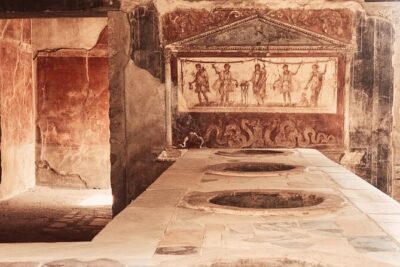
The Thermal Baths: When Daily Life Becomes Visual
One of the best reasons to book a guided visit here is the way a guide points out function. The thermal bath area is more than an old set of rooms. It’s a snapshot of routine: movement between spaces, how people used the facility, and what the layout implies.
At a calmer hour, you’re more likely to notice things like how doors, corridors, and space flow connect. Without a crowd pressing you along, you can pause and compare what you’re seeing to your own instincts about how a building would work.

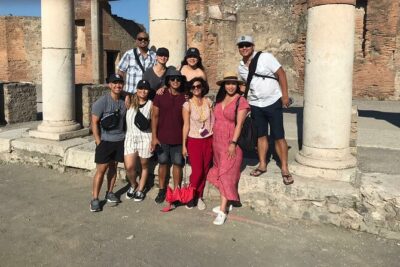
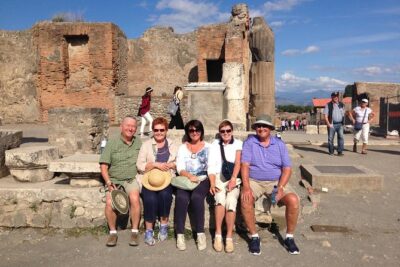
The Forum: Politics, Commerce, and Where People Gathered
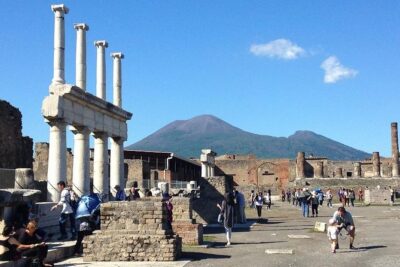
The forum is the center of gravity in Pompeii. It’s where you expect to feel “this is the big stuff,” and it is. The payoff of going later is that you’re not rushing through it while dozens of groups funnel into the same viewpoints.
A good guide helps you read the forum like a map: where people would have moved, what would have mattered for gatherings, and why certain areas likely felt more important than others.
The Theater: Public Entertainment, Right in the Center of Town
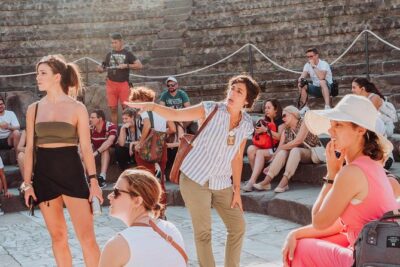
The theater brings Pompeii’s social side into focus. Even if you’ve never studied ancient Rome, you can usually sense the purpose immediately: people arrived, sat together, and watched performances.
This tour style is good for understanding the setting. One of the guide strengths you’ll see with tours like this is turning the ruins into context—how public spaces shaped daily life, not just how they looked.
And Then the “More”: Houses and Details Beyond the Main Walkways
Pompeii isn’t only streets and public buildings. The experience gets better when you catch glimpses of private spaces too.
In fact, one of the repeated strengths of this tour format is that it can include time that goes beyond the most obvious routes, including access to houses on the property. That shift helps you see Pompeii as a city with different layers, not a single open-air museum display.
Guide Power: How Giovanni and Paulo Make Stones Talk
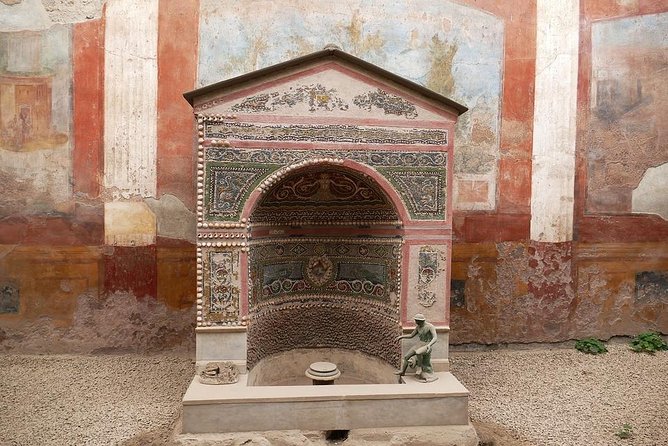
The guides are a real selling point here. You can tell quickly whether a guide is reciting facts or actually guiding your eyes.
With guides like Giovanni and Paulo, the tone tends to be energetic and human. They explain what matters and why it matters—so you’re not just absorbing dates, you’re learning how the place worked.
One especially memorable advantage is the way a guide can connect sites to stories of use. For example, commentary about events that took place in the stadium areas (including references to concerts) adds a bridge between modern expectations and ancient settings. It’s not about pretending it’s the same today—it’s about helping you picture the spaces in action.
If you’re traveling with kids, this kind of storytelling matters even more. Several guides are known for keeping the group engaged instead of lecturing through the fun parts.
The Trade-off: Sunset Timing Means You Might Lose Some Light
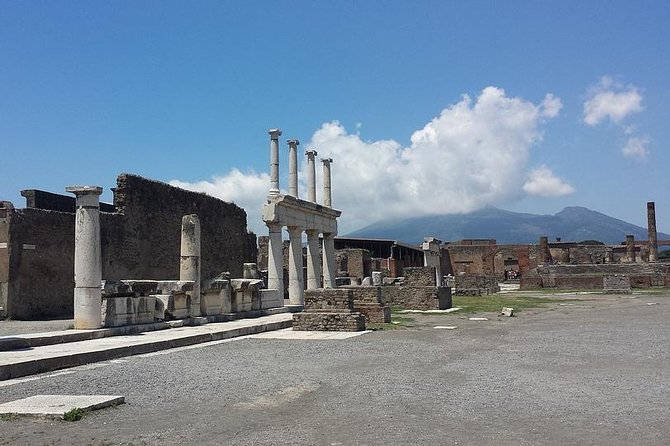
Here’s the reality check. This tour is designed around closing time, and the biggest variable is seasonal daylight. In early fall, sunsets happen earlier than you might expect, and that can affect how long you have in each area.
That’s not a “bad tour” problem—it’s just the physics of the calendar. If you’re visiting when the days are shorter, go in knowing you’ll be balancing cooler, calmer ruins with fading light.
My practical advice: plan your expectations like you would for a great evening stroll. You’ll enjoy it more if you’re not treating the tour as a clock-strict checklist where every minute has to be perfect.
Price and Value: What $142.42 Buys You in the Real World
At $142.42 per person for about 2 hours, the pricing only feels “high” if you compare it to self-guided entry. But you’re not paying for a ticket—you’re paying for time, pacing, and interpretation.
You get:
- a Blue Badge guide
- skip-the-line access
- a route designed for the post-crowd hours
- a small-group experience that keeps your questions possible
That last point is the quiet value. When groups are smaller and the guide can pause with you, you end up seeing more useful things, not just more things.
One important note for budgeting: while the experience is described as having entrance included in the guided visit, the provided details also state entrance fees are not included and the admission ticket is listed as not included. So treat this as: you’ll likely need to pay the official site admission on top of the tour price. I’d build that into your mental math so there are no surprises at the gates.
Logistics That Matter: Shoes, Fitness, and Staying Comfortable
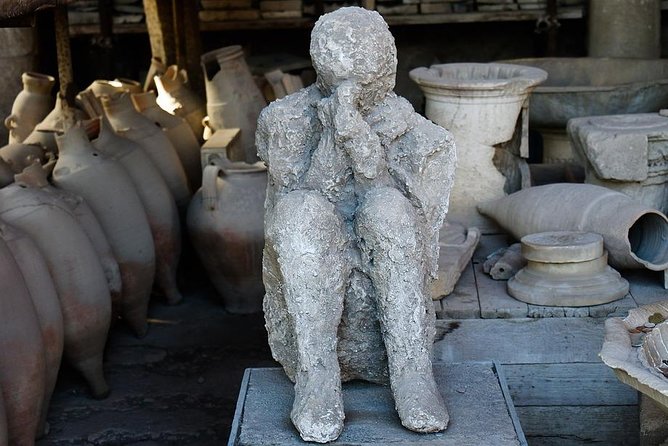
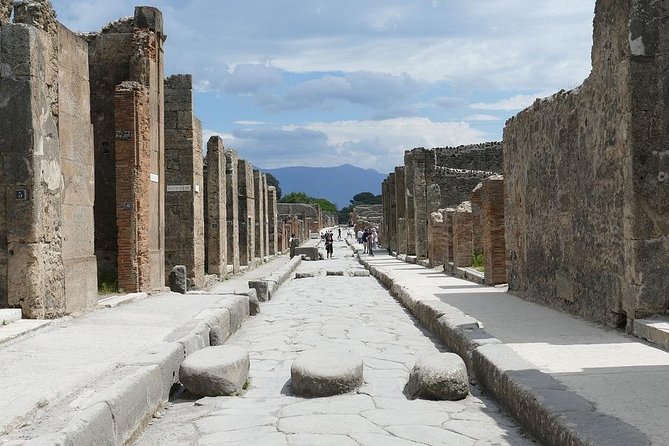
Pompeii involves walking on uneven ancient surfaces, and the tour requests a moderate physical fitness level. This isn’t for serious mountain treks, but it’s not a stroll on flat pavement either.
Bring comfortable shoes with grip. Even in cooler late-day weather, you’ll appreciate footwear that keeps you steady and lets you move without constantly thinking about your ankles.
Also, the tour allows service animals. If you’re traveling with mobility needs, focus on whether your party can handle walking through archaeological terrain and mild uneven ground.
Who Should Book This After-Hours Pompeii Tour
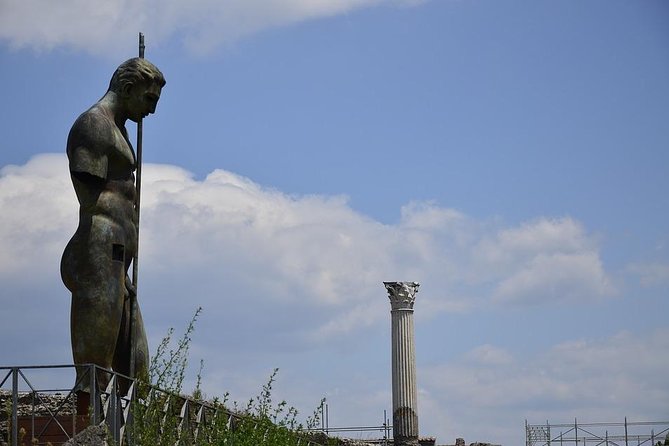
This is a strong fit if you:
- hate fighting crowds and want a calmer Pompeii
- want a guided explanation instead of wandering with a map
- value small-group interaction
- enjoy evening sights and cooler conditions
- want a solid “first Pompeii” visit without burning an entire day
It may not be ideal if you require maximum time inside the site. Because it’s timed around sunset, your exact pacing depends on the season’s light.
Families can also do well here when the guide keeps everyone engaged and the pace stays manageable.
Should You Book It?
If your goal is Pompeii with breathing room, I think this tour is an easy yes. The late-day timing plus Blue Badge guidance plus skip-the-line is a strong combination for squeezing more meaning out of less time.
Just go in prepared for two things: plan on paying the official entrance fees (based on the provided details), and accept that sunset limits daylight. If that works for you, you’re likely to leave feeling like you saw Pompeii—not just passed through it.
FAQ
How long is the Pompeii tour?
It’s listed as about 2 hours.
Where does the tour start and end?
The tour starts at Hotel Vittoria, Piazza Esedra, 80045 Pompei NA, Italy, and ends back at the same meeting point.
What’s included in the tour price?
The tour includes a Blue Badge guide and skip-the-line access.
Are entrance fees included?
Entrance fees are listed as not included, so you should plan to pay the official Pompeii admission separately.
What’s the maximum group size?
The tour has a maximum of 15 travelers.
Is there a minimum fitness level required?
Yes. The tour notes a moderate physical fitness level.
Do I get a mobile ticket?
Yes. The experience includes a mobile ticket.
Can I cancel for free?
Yes. You can cancel up to 24 hours in advance for a full refund.
More Tour Reviews in Pompeii




More Pompeii Tours to Compare
More Pompeii tours, freshly reviewed


Pompeii Tours, compared.
 ★ 4.8Pompeii: Entry Ticket and Guided Tour with an ArchaeologistFrom $3519,459 reviews
 ★ 4.1Pompeii: Entry Ticket with Audio GuideFrom $4013,491 reviews
 ★ 4.8Pompeii: Small Group Tour with an ArchaeologistFrom $4012,264 reviews
 ★ 4.3Pompeii Ruins & Mount Vesuvius Day TourFrom $12011,459 reviews
★ 5.0Pompeii Small Group Tour with an ArchaeologistFrom $356,593 reviews
 ★ 4.5Skip-the-line Pompeii – Small Group TourFrom $544,401 reviews
 ★ 4.6Naples or Sorrento: Full-Day Pompeii and Mount Vesuvius TourFrom $1044,235 reviews
 ★ 3.9Pompeii: Skip-the-line Entry Ticket with Audio Guide & MapFrom $433,153 reviews