
Review · POMPEII TOURS
Pompeii & Villa of Mysteries Small Group Tour with Archaeologist
Pompeii can feel chaotic fast. This small-group tour with an archaeologist gives you a clear route and the context to make the ruins click. I especially like the Villa of the Mysteries access (often harder to get on your own) and the way the guide points out details you’d miss wandering aimlessly. The trade-off: it’s still a lot of walking on uneven ground, so the pace may feel brisk.
In about 3 hours, you cover the park’s big “I get it now” moments: the Basilica, the Forum, the Macellum market area, and a major house selected for your group. You also get inside stops like the Great Theatre, with the day ending at the Villa so you can keep exploring afterward if you want.
In This Review
- Key things that make this tour worth your time
- Getting oriented at Porta Marina Superiore (and why that matters)
- Basilica and Forum: the city’s busy “systems” made understandable
- Macellum market life and the quiet punch of human details
- The house visit (Menander, Ceii, or the Ephebe): how Pompeii homes reveal status
- Great Theatre interiors and the Lupanar stop: culture and controversy
- Via Stabiana and the Stabian Baths: where daily routine turns technical
- Villa of the Mysteries: the restricted finale and what to watch for
- Pace, surfaces, and what to bring so you don’t hate your shoes
- Price and value: what $60.34 buys you in the real world
- Who should book this Pompeii archaeologist tour
- Should you book it?
- FAQ
- How long is the Pompeii & Villa of Mysteries small group tour?
- Is the Villa of the Mysteries included?
- What’s included with the Pompei Plus ticket?
- Where do I meet the guide?
- Where does the tour finish?
- Does this tour include an archaeologist guide?
- Is transportation or hotel pickup included?
- What’s the group size?
- Is the tour suitable for mobility issues or visual impairments?
Key things that make this tour worth your time
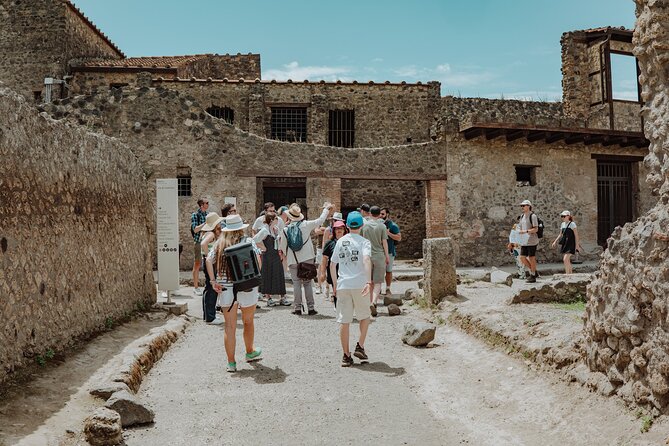
- Archaeologist-led routes so the ruins stop being random walls and start being real daily life
- Restricted Villa of the Mysteries access via the Pompei Plus ticket, not just the usual entry
- Small group size (max 20) that helps you actually hear the explanations and see what you came for
- Big highlights in a short window without you playing map detective in a huge archaeological park
- A house visit chosen by logistics (Menander, Ceii, or the Ephebe), so you’ll still get domestic-life frescoes and mosaics
- A practical mix of inside and outdoor stops (Theatre and Baths add variety beyond street-level ruins)
Which Pompeii ticket and guide? Compare a few more.
- Pompeii Small Group Tour with an Archaeologist★ 5.0 · 6,593 reviews
- Discover the Ancient Ruins of Pompeii: Day Trip from Rome★ 3.5 · 2,247 reviews
- Pompeii and Herculaneum Small Group Tour with an Archaeologist★ 5.0 · 1,350 reviews
- Skip the Line Guided Tour of Pompeii led by an Archaeologist★ 5.0 · 703 reviews
Getting oriented at Porta Marina Superiore (and why that matters)
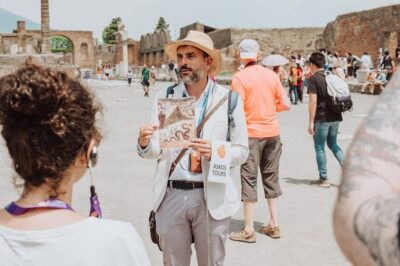
You’ll meet the guide outside the ruins’ main entrance at Porta Marina Superiore, holding an Askos Tours sign. That small detail helps: arriving on your own at Pompeii can mean staring at a map while other groups stream past you. Here, you step into a plan right away.
This tour is in English, and it’s set up for first-time visitors who want momentum. Pompeii’s Archaeological Park is enormous, and seeing it in just a few hours means you need smart guidance on what to prioritize. The meeting point and early start also help you avoid getting trapped behind slower-moving crowds right when you enter.
Basilica and Forum: the city’s busy “systems” made understandable
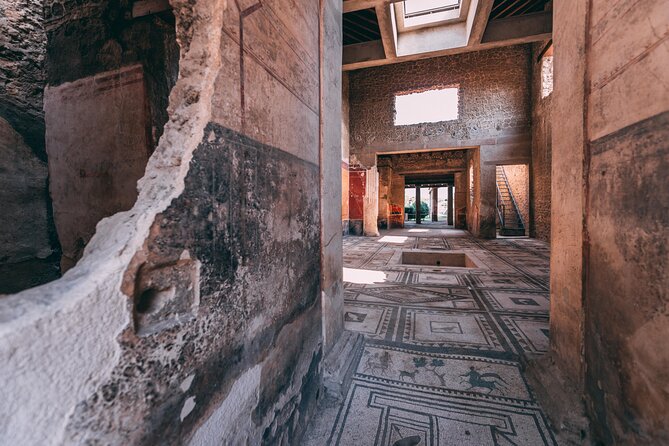
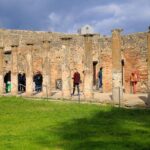
The first big “anchor” stop is the Basilica, described as an open portico used by merchants and other activities. In plain terms, it was a civic-business hub—one of those places where people came to transact, gather, and deal with everyday life. When you’re standing there in person, it’s easy to think: great, columns and stone. The archaeologist turns it into a routine you can picture.
Next comes the Forum, Pompeii’s nerve center: political, commercial, and religious life all in one area. This is where Pompeii stops being a single tragic story and starts reading like a functioning city. You’ll walk through the core and hear how the spaces connect—where authority showed up, where trade happened, and where public ritual fit into the day-to-day schedule.
A downside of any highlights tour: the Forum’s popularity means you’re sharing space with other visitors. The upside is that you’ll get the “map in your head” version of Pompeii, so later, when you wander freely on your own, you’ll know what you’re looking at.
Macellum market life and the quiet punch of human details
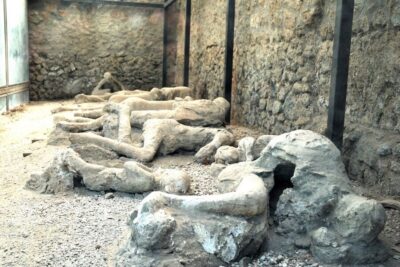
The Macellum stop focuses on the city’s main market. Markets are where history gets real fast: this is where food, supplies, and gossip met. You’ll also get a special layer of meaning here. The Macellum area is where you’ll encounter the famous plaster casts of ancient residents—human forms that make the disaster feel close, not abstract.
That emotional hit is part of why Pompeii works so well when you have a guide. Without context, the casts can be treated like just another photo stop. With an archaeologist explaining what you’re looking at, you tend to slow down and actually see them as people with ordinary lives.
Time at this stop is short (about 15 minutes), so I suggest keeping your phone for reference and taking a moment to look without the camera first. It’s worth it.
The house visit (Menander, Ceii, or the Ephebe): how Pompeii homes reveal status
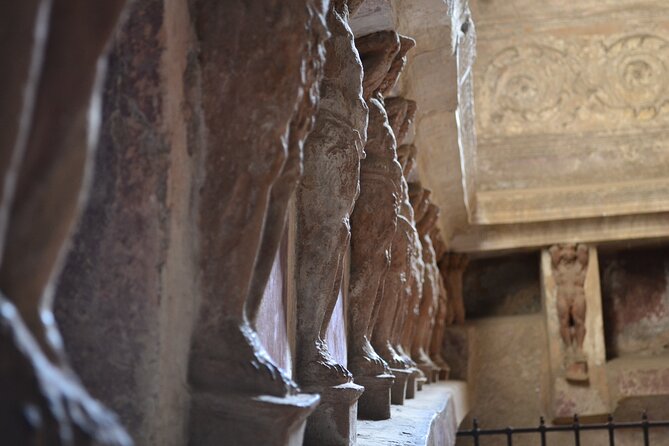
One of my favorite parts of Pompeii with a guide is the jump from public life into private life. This tour includes a visit to one of several notable domus, such as the House of Menander, House of Ceii, or the House of the Ephebe. Which one you’ll see depends on logistics and time.
That selection method is smart for a small-group schedule. It also means you’re still guaranteed domestic-life frescoes and mosaics, plus a look at how wealth and status expressed itself inside a home. Even in ruins, you can read social signals: the quality of surfaces, the themes in wall paintings, and how rooms connect.
Drawback to know: because the house is chosen based on conditions, you can’t treat it like a fixed promise that you’ll see a specific house every time. If you have a must-see (like one exact home), you’d want to verify options directly when booking.
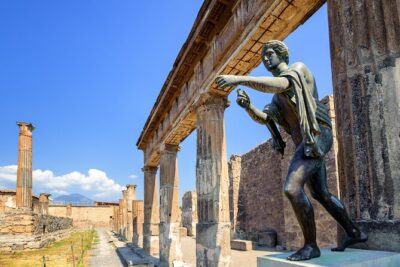

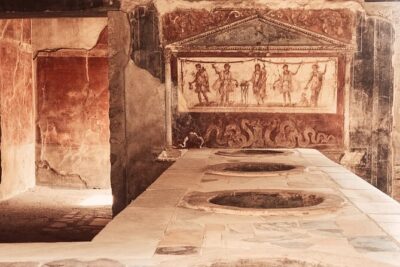
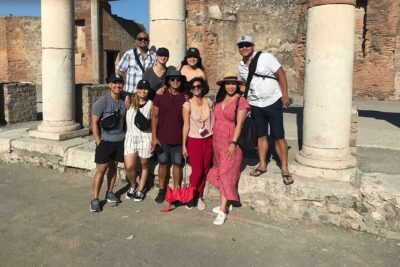
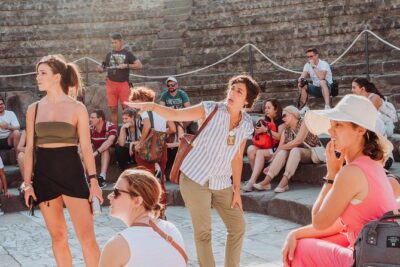

Great Theatre interiors and the Lupanar stop: culture and controversy
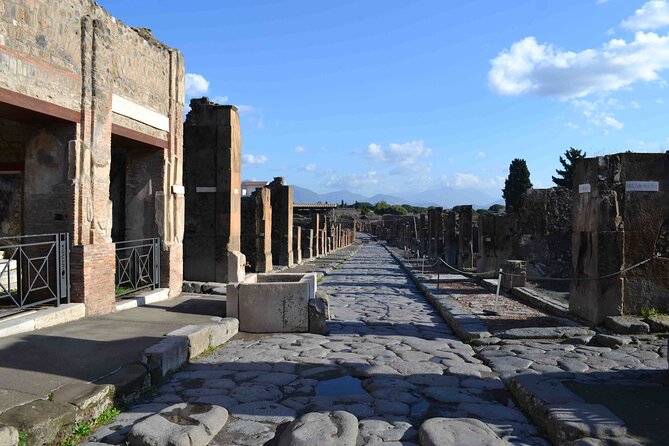
Next you head into the Teatro Grande. You’re not just looking at the outside shape; you visit the interior. The guide explains the theatre’s cultural and social role and the architecture that made it work for a large crowd. In a few minutes, you start understanding how entertainment, politics, and community all braided together.
After that comes the Lupanar, Pompeii’s most famous brothel, known for its erotic frescoes. Important practical note: the visit here is subject to the site’s affluence to keep the tour on schedule. So if it’s crowded, you might spend a little less time than the ideal pace.
I’ll be honest: this stop isn’t for everyone’s comfort level, but it is part of the full snapshot of Roman life. If you come expecting only temples and tragedy, Pompeii will correct that quickly. With an expert guide, it’s easier to frame these scenes as evidence of daily realities, not shock-value tourism.
Via Stabiana and the Stabian Baths: where daily routine turns technical
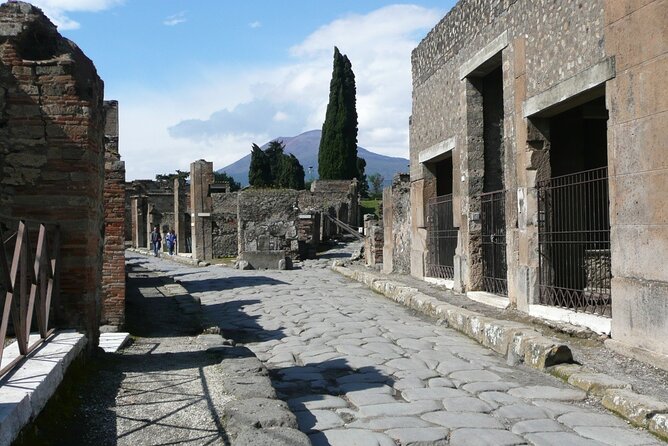
You’ll walk along Via Stabiana, the street leading toward baths and many homes. It’s one of those sections that helps you feel the city’s movement. You’re not just “in rooms.” You’re walking through an urban artery.
Then comes the Stabian Baths (Terme Stabiane). Baths were a major social institution in the Roman world, and this stop focuses on their function and the technology behind public bathing. When you stand near the structural remains, you get a better sense of how the heating worked and why baths weren’t just for hygiene—they were for meeting, relaxing, and passing time.
One more reason I like this part of the itinerary: it gives your brain a break from murals and politics. You shift into engineering and routine.
Villa of the Mysteries: the restricted finale and what to watch for
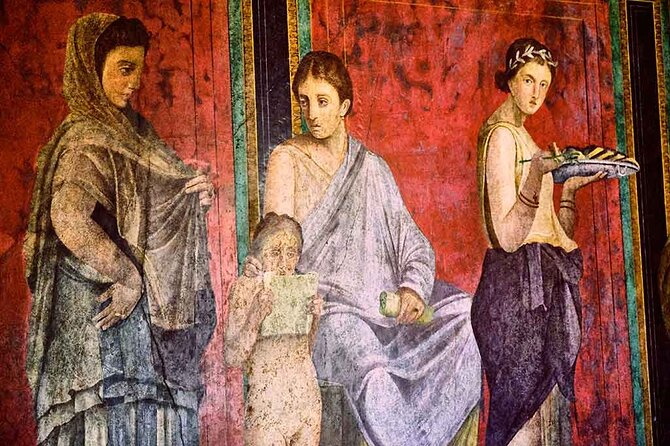
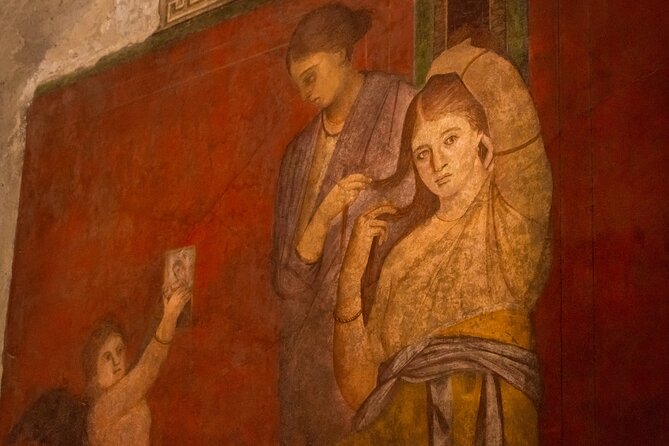
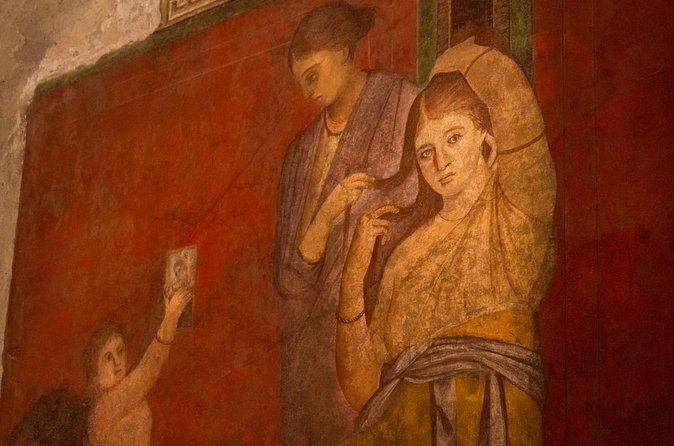
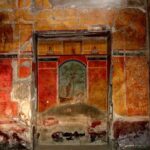
The tour ends at the Villa of the Mysteries, famous for frescoes that depict Dionysiac rites. This stop is a big part of why this ticket is more valuable than standard entry. The highlights promise that the Villa access is typically restricted compared with regular tickets, and the Pompei Plus entrance is built to include it.
Why the Villa matters: it’s not just decoration. Those painted scenes are tied to religious belief and ritual. With a guide, you’re more likely to notice patterns—figures, gestures, and the story-like way scenes are arranged—rather than treating it like another “wall of art.”
The tour concludes inside the ruins. That’s useful because you can keep exploring if you still have energy. One of the best times to go back for a second look is right after a guided explanation, when your brain starts recognizing details you glossed over the first time.
Pace, surfaces, and what to bring so you don’t hate your shoes
This is a 3-hour tour, and you will walk. Expect uneven paths and bumpy stones. That’s part of Pompeii’s charm and also the reason the tour isn’t recommended for mobility issues.
If you’re deciding what to wear, follow the simplest advice from people who’ve done it: comfortable shoes, layers (especially in cooler months), and something for sun. One review tip that matches reality: you’ll want water. There’s also a tap to refill a bottle once inside, and some people recommend grabbing water at a nearby shop before entering.
Also plan for a little flexibility if you’re slower. The tour is structured, but guides do tend to wait and regroup when someone needs extra time. Still, you should expect the group to keep moving in real time.
Price and value: what $60.34 buys you in the real world
At $60.34 per person, the price only feels fair if you’re getting something more than a casual walk-through. Here you are.
What you’re paying for:
- A 3-hour guided tour by an archaeologist guide
- A Pompei Plus entrance ticket that includes the Archaeological Park + Villa of the Mysteries
- A small group capped at 20
The Pompei Plus part matters. If you were cobbling together separate tickets and trying to get restricted access alone, you’d spend time fighting lines and figuring out what’s available. This tour’s structure is designed to reduce that friction.
There’s also a demand signal: on average, this tour gets booked about 56 days in advance, so if your dates are fixed, book sooner rather than later.
Who should book this Pompeii archaeologist tour
This tour is a great fit if:
- You want a high-quality Pompeii orientation in a short amount of time
- You like your Roman sites explained in context—public life, home life, markets, entertainment
- You prefer a small group over large crowds drifting in every direction
- You specifically want the Villa of the Mysteries experience with guide support
It may be less ideal if:
- You need step-free or very smooth walking routes (the terrain is irregular)
- You’re not comfortable with uneven ruins paths
- Visual accessibility needs are a priority (the tour isn’t suitable for visually impaireds based on the provided info)
If you’re flexible and curious, this kind of tour is exactly how Pompeii becomes understandable fast.
Should you book it?
If you want Pompeii to feel like a real city—public spaces, homes, markets, baths, theatre—you should book this. The combination of an archaeologist guide, small-group pacing, and Pompei Plus access to the Villa of the Mysteries makes the ticket feel like more than sightseeing math.
Skip it only if your mobility needs are incompatible with uneven ground or if you’d rather do Pompeii entirely on your own at a slow stroll pace. Otherwise, this is one of the smartest ways to get the highlights without getting lost in the scale.
FAQ
How long is the Pompeii & Villa of Mysteries small group tour?
The tour is about 3 hours.
Is the Villa of the Mysteries included?
Yes. The tour ends at the Villa of the Mysteries, and admission is included.
What’s included with the Pompei Plus ticket?
Pompei Plus includes entry to the Archaeological Park of Pompeii plus the Villa of the Mysteries.
Where do I meet the guide?
You meet at Via Villa dei Misteri, 2, 80045 Pompei NA, Italy. The guide meets you outside the ruins area at the main entrance of the park.
Where does the tour finish?
The tour ends inside the Archaeological Park of Pompeii.
Does this tour include an archaeologist guide?
Yes. It’s a 3-hour guided tour with an archaeologist guide.
Is transportation or hotel pickup included?
No. Transportation is not included.
What’s the group size?
The group is capped at a maximum of 20 travelers.
Is the tour suitable for mobility issues or visual impairments?
It is not recommended for people with mobility issues due to irregular and uneven paths. It is also not suitable for visually impaireds.
More Tours in Pompeii



More Tour Reviews in Pompeii

More Pompeii Tours to Compare
More Pompeii tours, freshly reviewed


Pompeii Tours, compared.
 ★ 4.8Pompeii: Entry Ticket and Guided Tour with an ArchaeologistFrom $3519,459 reviews
 ★ 4.1Pompeii: Entry Ticket with Audio GuideFrom $4013,491 reviews
 ★ 4.8Pompeii: Small Group Tour with an ArchaeologistFrom $4012,264 reviews
 ★ 4.3Pompeii Ruins & Mount Vesuvius Day TourFrom $12011,459 reviews
★ 5.0Pompeii Small Group Tour with an ArchaeologistFrom $356,593 reviews
★ 4.3Pompeii Ruins & Mount Vesuvius Day TourFrom $12011,459 reviews
★ 5.0Pompeii Small Group Tour with an ArchaeologistFrom $356,593 reviews
 ★ 4.5Skip-the-line Pompeii – Small Group TourFrom $544,401 reviews
 ★ 4.6Naples or Sorrento: Full-Day Pompeii and Mount Vesuvius TourFrom $1044,235 reviews
 ★ 3.9Pompeii: Skip-the-line Entry Ticket with Audio Guide & MapFrom $433,153 reviews