
Review · POMPEII TOURS
Pompeii tour with archaeologist
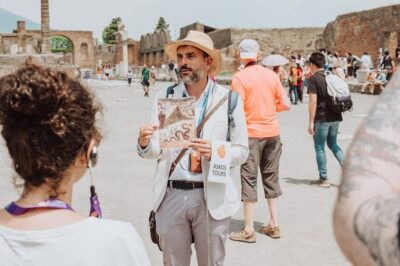
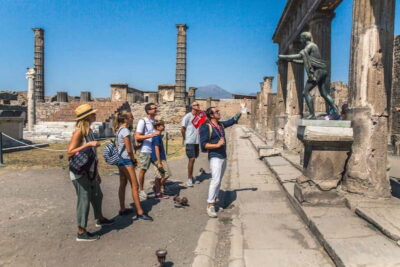
Pompeii gets clearer with the right guide. This 2.5-hour Pompeii tour uses an archaeologist-led route in English to connect the city’s layout, rituals, and everyday meals to the reality of the eruption in 79 AD.
I especially like two things: the way the tour turns the Forum into a true timeline, and the close-up attention to standout artifacts like the Cave Canem mosaic and the bronze dancing Faun.
One consideration: you’ll cover a lot of ground in uneven excavation paths, and while the tour is only about 2.5 hours, you still need good shoes. Also, the site entrance fee isn’t included in the $42.01 price.
In This Review
- Key highlights to look for
- Pompeii with an archaeologist: why it feels different
- Starting point at Villa dei Misteri and ending at the Forum
- Foro di Pompei: the city’s storyline in 15 minutes
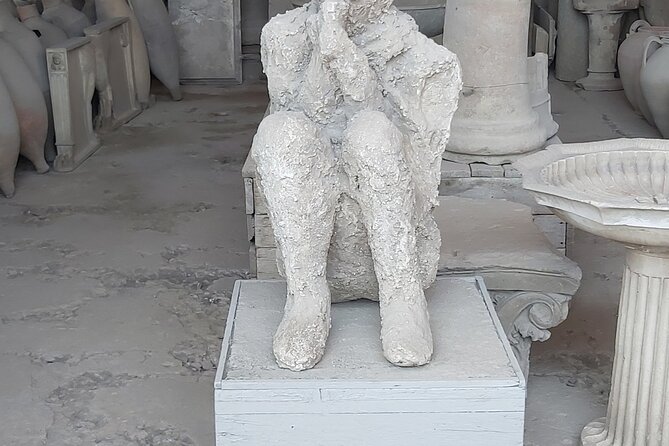
- Granaries of the Forum and the casts of victims
- Basilica and Temple of Apollo: how religion and authority worked
- Hotel Vittoria gateway: how the city boundary shaped movement
- Cave Canem and the House of the Tragic Poet
- Casa del Fauno: bronzes, mosaics, and elite daily life
- Thermopolium Regio VI: ancient fast-food and real social life
- Temple of Vespasian and the imperial cult in plain sight
- Via dell’Abbondanza: the street plan that makes the city legible
- Teatro Grande and the theater district: entertainment that shaped public life
- Doric Temple and Stabian Baths: older roots and daily routines
- Lupanar: the brothel, the art, and the context
- Price and value: what $42.01 buys you
- Pacing, comfort, and practical tips that make a difference
- Should you book this Pompeii archaeologist tour?
- FAQ
- How long is the Pompeii tour?
- Where does the tour start and where does it end?
- Is the tour offered in English?
- What is included in the price?
- Is there a limit on group size?
- Do I need good weather for the tour?
Key highlights to look for
- Archaeologist-led storytelling in English: you’re not just looking at ruins; you’re getting explanations tied to what’s still in place.
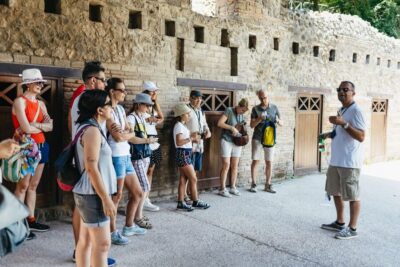
- Small-group feel (max 15): it’s easier to ask questions and get direction instead of getting swept along.
- From politics to everyday food: you’ll move from temples and public buildings to a preserved thermopolium (ancient fast-food).
- Big-art and big-house moments: the route highlights the House of the Faun and the famous Battle of Alexander mosaic.
- A complete “life in Pompeii” snapshot: theaters, baths, and even the Lupanar brothel are included, with context.
Which Pompeii ticket and guide? Compare a few more.
- Pompeii Small Group Tour with an Archaeologist★ 5.0 · 6,593 reviews
- Discover the Ancient Ruins of Pompeii: Day Trip from Rome★ 3.5 · 2,247 reviews
- Pompeii and Herculaneum Small Group Tour with an Archaeologist★ 5.0 · 1,350 reviews
- Skip the Line Guided Tour of Pompeii led by an Archaeologist★ 5.0 · 703 reviews
Pompeii with an archaeologist: why it feels different
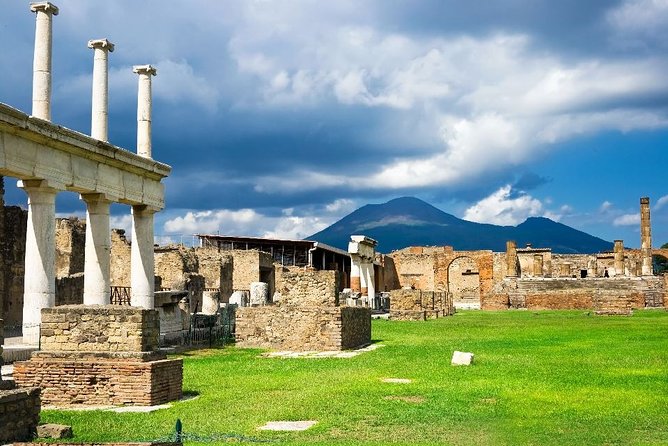
If Pompeii is your main reason for visiting the Naples area, this kind of tour can be the difference between seeing stone and understanding a city. The big win here is the guide’s approach: each stop explains what the building did, who used it, and how it fits into the wider city plan. That matters because Pompeii can feel like a maze if you only follow signs and plaques.
I also like that the tour doesn’t skip the everyday side of the city. Yes, you get the major religious and civic structures. But you also get the food counter, the entertainment district, and the baths. That blend helps you build a mental picture of daily life, not just a list of monuments.
Finally, I think the ending matters. The tour finishes at the Forum, where you can decide on the spot whether you want to keep exploring on your own for another hour or two.
Starting point at Villa dei Misteri and ending at the Forum
You meet at Pompei Scavi Villa Dei Misteri. From there, you walk toward the center of the excavations, gradually shifting from major public spaces to elite houses and back to community life.
The tour ends at the Forum, specifically at Foro di Pompei. That’s a smart design: the Forum is one of the best places to keep going without feeling like you’re retracing your steps. Just don’t plan on a quick exit right after the tour if you want to linger.
Timing-wise, plan on about 2 hours 30 minutes on the ground. In practical terms, you’ll want to keep water on your personal checklist and expect that the walk itself is part of the experience.
Foro di Pompei: the city’s storyline in 15 minutes
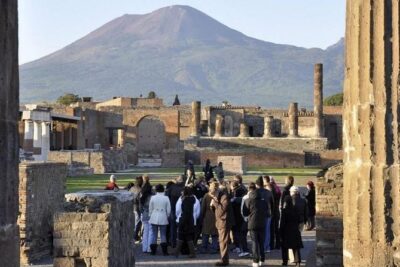
The first major stop is the Foro di Pompei, and it sets the tone. The guide explains the Forum’s role and Pompeii’s bigger story, from its early days to the eruption of 79 AD.
Why this matters: the Forum is where power, law, ceremony, and public life overlap. If you start here with context, then later stops like temples, theaters, and imperial-cult sites click into place. You’re not just seeing structures. You’re seeing a system.
Drawback? The Forum is a big area, so if you’re trying to take photos while also listening, you may need to balance your attention. I’d focus on the guide’s points first, then do your photo sweep afterward.
Granaries of the Forum and the casts of victims
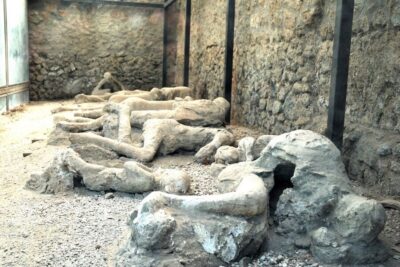
Next comes the Granai del Foro—the Forum granaries—and the finds tied to this space. The guide also points out the plaster casts of victims connected with the eruption.
This stop is emotionally heavier than the civic buildings around it, and the value is in the framing. The guide helps you understand what you’re looking at and why it’s important to the story of the disaster—not just as a spectacle, but as evidence of what people faced.
Practical tip: give yourself a moment here before you rush to the next stop. If you’re sensitive to tragedy, you’ll probably appreciate the slower pace more than the photos.

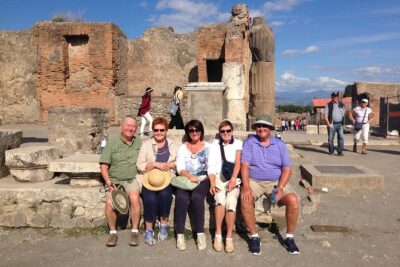
Basilica and Temple of Apollo: how religion and authority worked
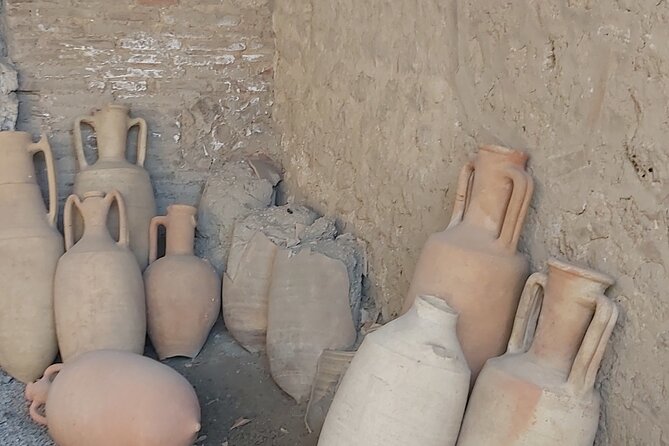
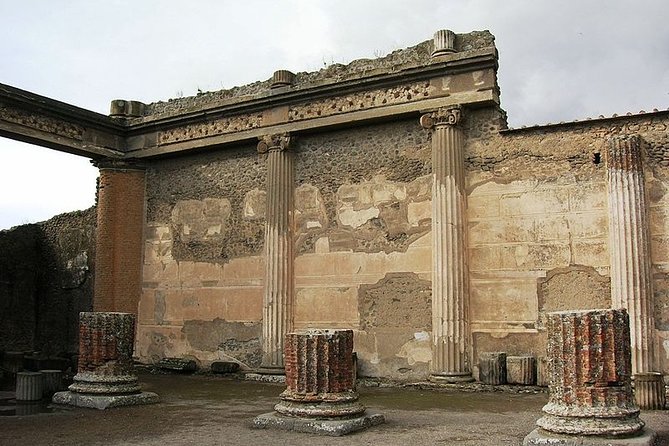
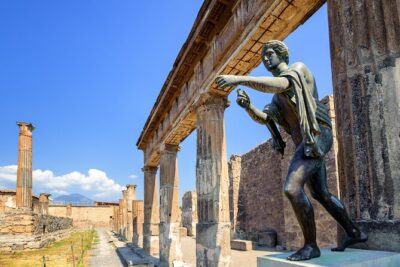
The Basilica is a highlight because it wasn’t just decorative. The guide explains its functions, and once you grasp that, the scale makes sense. Pompeii’s most impressive buildings often served everyday roles that felt official—commercial activity, legal life, and public business held under monumental stone.
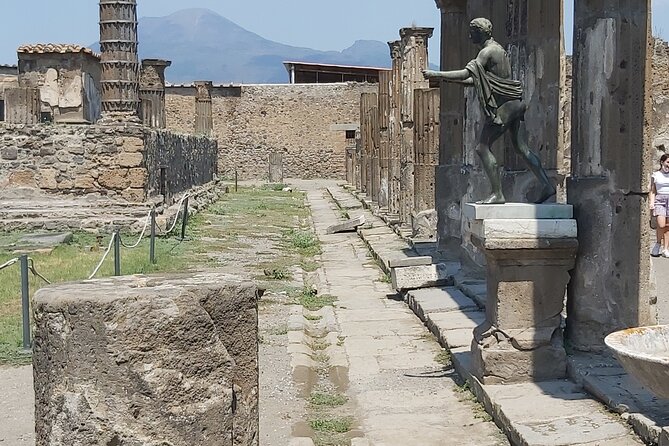
Then you move to the Temple of Apollo, which the tour treats as an advanced lesson in ancient religious architecture. You’ll hear about the original finds associated with the temple, including sculptures, altar elements, a fountain, inscriptions, columns, and even a Roman sundial.
If you like details, this stop rewards you. If you don’t, it still works because the guide links the physical elements to how worship happened in real space.
Hotel Vittoria gateway: how the city boundary shaped movement
A shorter stop is the Hotel Vittoria, but it’s not just a roadside pause. The guide explains it as an ancient gateway to the city and the surrounding area.
Think of this as your “how people moved” moment. Pompeii wasn’t a random jumble of streets; it had an organized approach to entry, flow, and access. Once you understand the gateway concept, the later street and urban-plan talk feels less abstract.
Cave Canem and the House of the Tragic Poet
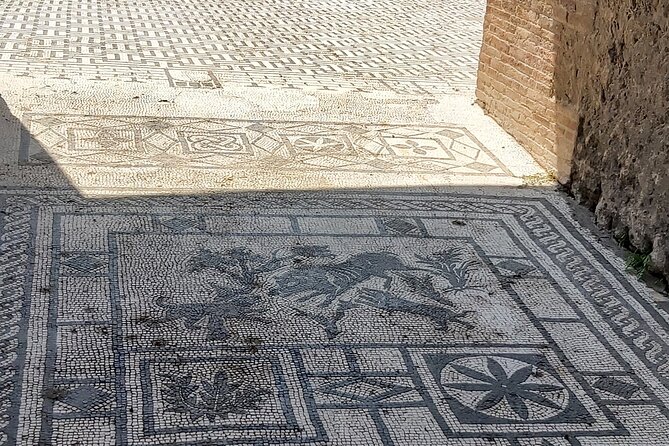
Then comes a moment most first-timers miss because they’re busy looking for the biggest buildings. You get the Pompei La Basilica side? No—this tour specifically points you to the mosaic of Cave Canem, placed at the entrance connected with the House of the Tragic Poet.
The phrase matters, but the placement matters even more. A warning mosaic at an entrance turns a private home into a statement: this is an address, a boundary, and a message to anyone who approaches.
If you enjoy these small “aha” details, this is one of the stops that makes the tour feel like more than a walking circuit.
Casa del Fauno: bronzes, mosaics, and elite daily life
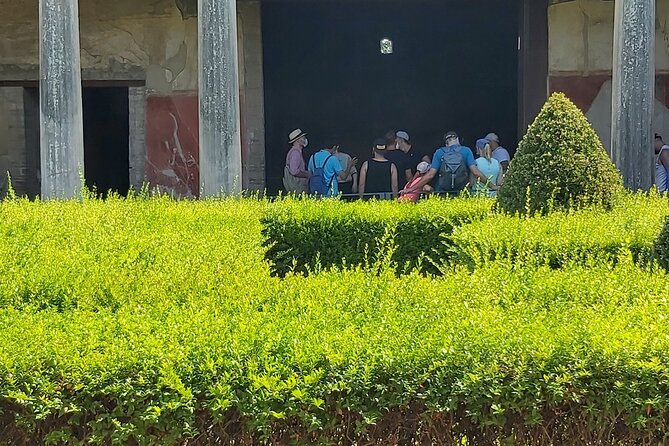
The tour’s next big draw is Casa del Fauno, described as the largest house in Pompeii. The guide explains its history and what made it special as a household.
Two standout objects get real attention:
- the bronze sculpture of the dancing Faun
- the massive Mosaic of the Battle of Alexander, made of more than a million tiny colored tiles
This stop is where Pompeii can feel like art meets power. The mosaic isn’t only impressive because of size. It shows taste, wealth, and how elite homes used art to signal identity and connections to the wider Mediterranean world.
A gentle caution: the House of the Faun can be busy in peak hours. If the group gets tight, listen for what the guide points out—then you can look for those same features once you’re ready to linger.
Thermopolium Regio VI: ancient fast-food and real social life
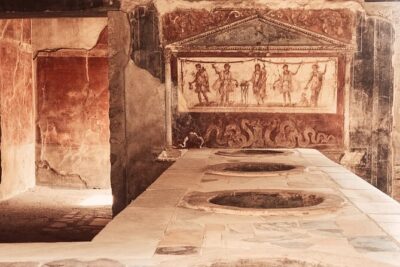
After the elite-house spectacle, the tour shifts to something practical: a thermopolium, one of the best-preserved examples of fast-food from antiquity. The guide talks through its layout and then connects it to social life and nutrition.
This is one of the most useful parts of Pompeii for modern brains. It’s easy to understand the idea of grabbing food on the go. The tour helps you see how people in Pompeii built meals and conversations into the same everyday rhythm—standing, serving, buying, and moving.
If you want Pompeii to feel like a lived-in place instead of a museum, this is where that happens.
Temple of Vespasian and the imperial cult in plain sight
Next is the Temple of Vespasian, also known as the temple of Genius Augusti. The guide focuses on why the imperial cult mattered—how Roman authority was communicated through worship and public ceremony.
This stop is valuable because it connects architecture to politics. When you understand that, you stop viewing temples as only religious structures. They become part of the public messaging system of the empire.
Via dell’Abbondanza: the street plan that makes the city legible
The tour then walks through Via dell’Abbondanza, and the guide explains the road network and the urban plan.
Why this matters: Pompeii is huge, and without a sense of how streets align and how neighborhoods fit together, you’ll keep losing your “where am I?” feeling. The street plan talk acts like a mental map. Later, when you notice where you are relative to key buildings, the city stops feeling random.
Short stop, big payoff.
Teatro Grande and the theater district: entertainment that shaped public life
The Teatro Grande and the broader theater district come next, including the Teatro Piccolo and the Quadriportico dei Teatri.
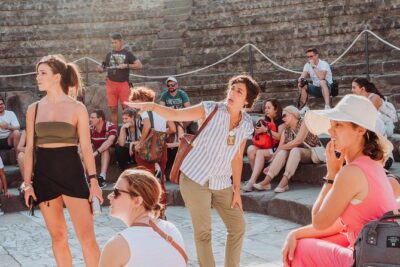
This is a great segment if you want to understand that public life in Pompeii wasn’t only religious or commercial. Entertainment was a civic event. The guide helps you see why these areas weren’t just leisure spots; they were meeting places where people shared culture and time.
Practical note: theaters are also perfect for photos, because you can see multiple levels at once. Still, listen first—then use your camera for the details the guide highlighted.
Doric Temple and Stabian Baths: older roots and daily routines
A smaller stop covers the Doric Temple, described as the oldest temple in Pompeii, plus the Triangular Forum. The guide uses it to connect earlier religious life to what later grew around it.
Then you shift into a completely different daily world: the Stabian Baths (Terme Stabiane). The guide treats the baths as an extraordinary example of ancient thermal architecture.
This is another “Pompeii lived here” stop. Even if you don’t care about bathing systems, the baths show how many parts of daily routine were shared community experiences: washing, relaxing, and socializing.
Lupanar: the brothel, the art, and the context
The tour ends with the Lupanar, Pompeii’s famous brothel, known for the exceptional state of conservation of bedrooms and erotic frescoes depicting different amorous positions.
This stop can be uncomfortable for some people. The value of a guide here is context. You’re not only looking at shocking imagery. You’re learning how the space worked, what it tells you about commerce and gender dynamics, and how normalized behavior can still be deeply revealing.
If you’d rather keep things lighter emotionally, it’s still worth visiting because it completes the city portrait. Just know it’s part of Pompeii’s truth, not a sideshow.
Price and value: what $42.01 buys you
At $42.01 per person, this tour isn’t just cheap enough to be worth it on impulse. It’s priced like a serious guided experience—especially because the tour includes a guide/archaeologist in English (or other listed languages) for about 2.5 hours.
What you get for the money:
- A structured walk through major Pompeii zones, not a random shuffle
- Explanation of what buildings did and why the artifacts matter
- A small group size (max 15), which makes Q&A and pacing more realistic
What’s not included:
- Food and drink
- Tips
- Entrance fee
I treat that entrance fee detail as the only real “gotcha.” If you’re budgeting, you’ll want to plan for it so the price feels like what it is: a guided ticketed experience, not a full package with meals.
Pacing, comfort, and practical tips that make a difference
This tour moves through Pompeii with stops every 5 to 15 minutes, and that’s ideal for most people. The trade-off is that you can’t do everything slowly. Your job is to choose what you’ll linger on.
Here’s what I’d do to make it smoother:
- Bring comfortable shoes with grip. Excavation surfaces can be uneven.
- Keep water handy. Pompeii heat can turn a great explanation into a rushed listen.
- If you care about certain artifacts, listen for the guide’s specific pointers. Then you’ll know exactly what to hunt for after they move on.
One more thing: the tour format tends to work well when you’re curious. The group size supports questions, and that can transform your understanding quickly, especially at places like the Forum granaries and the temple sites where meaning isn’t obvious at first glance.
Should you book this Pompeii archaeologist tour?
I’d book this if you want Pompeii to feel like a city with logic and human routines, not just a scattering of impressive ruins. It’s also a strong choice if you only have a short time and want the must-see elements without losing your sense of place.
You might skip it if you’re an independent “museum-only” visitor who prefers silence, or if you’re going to spend your day hopping between stops on your own anyway. But even then, a guide helps you see what you’d likely miss: the connections between civic power, religion, daily eating, and public entertainment.
If you do book, do it with one mindset: arrive ready to walk and listen. Pompeii rewards that.
FAQ
How long is the Pompeii tour?
It’s approximately 2 hours 30 minutes.
Where does the tour start and where does it end?
It starts at Pompei Scavi Villa Dei Misteri (80045 Pompei) and ends at the Foro di Pompei (Via Villa dei Misteri 2, 80045 Pompei NA). The tour finishes at the Forum so you can stay inside the excavations on your own if you want.
Is the tour offered in English?
Yes. The tour is offered in Italian, English, or German, and it’s available in English.
What is included in the price?
The price includes a guided tour with an archaeologist/guide in the selected language. It does not include food, drink, tips, or the entrance fee.
Is there a limit on group size?
Yes. The tour has a maximum of 15 travelers.
Do I need good weather for the tour?
Yes. The experience requires good weather. If it’s canceled due to poor weather, you’ll be offered a different date or a full refund.
More Tours in Pompeii


More Tour Reviews in Pompeii

More Pompeii Tours to Compare
More Pompeii tours, freshly reviewed




Pompeii Tours, compared.
 ★ 4.8Pompeii: Entry Ticket and Guided Tour with an ArchaeologistFrom $3519,459 reviews
 ★ 4.1Pompeii: Entry Ticket with Audio GuideFrom $4013,491 reviews
 ★ 4.8Pompeii: Small Group Tour with an ArchaeologistFrom $4012,264 reviews
 ★ 4.3Pompeii Ruins & Mount Vesuvius Day TourFrom $12011,459 reviews
★ 5.0Pompeii Small Group Tour with an ArchaeologistFrom $356,593 reviews
★ 4.3Pompeii Ruins & Mount Vesuvius Day TourFrom $12011,459 reviews
★ 5.0Pompeii Small Group Tour with an ArchaeologistFrom $356,593 reviews
 ★ 4.5Skip-the-line Pompeii – Small Group TourFrom $544,401 reviews
 ★ 4.6Naples or Sorrento: Full-Day Pompeii and Mount Vesuvius TourFrom $1044,235 reviews
 ★ 3.9Pompeii: Skip-the-line Entry Ticket with Audio Guide & MapFrom $433,153 reviews