
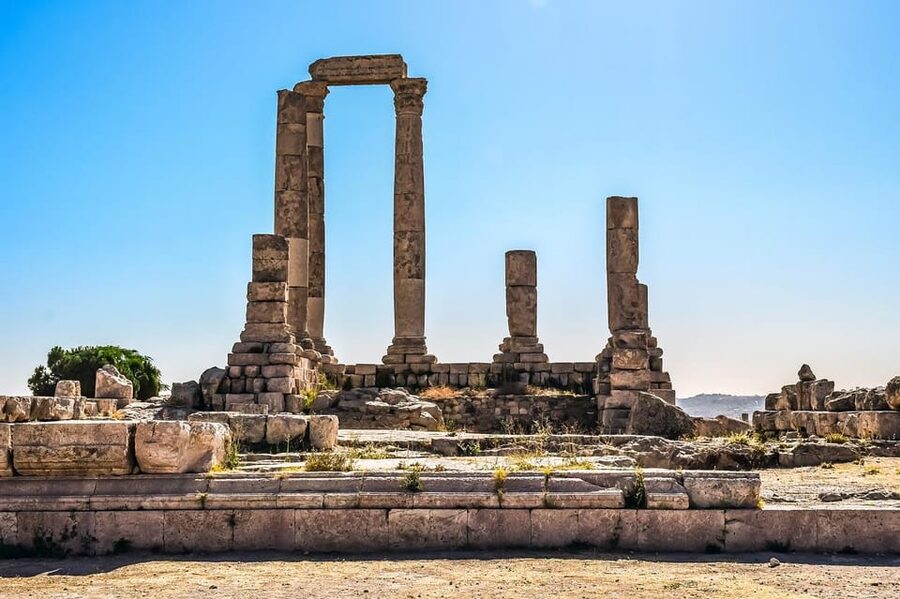
Review · POMPEII TOURS
Herculaneum and Pompeii in one day: Audioguides + Tkts (art)
Some ruins feel like a movie. These feel like a snapshot—frozen.
This one-day setup lets you visit Pompeii and Herculaneum on your own schedule, using authorized audioguide devices plus skip-the-line entry for both archaeological parks. What makes it interesting is the contrast: Pompeii’s streets and villas read like a whole city mid-life, while Herculaneum’s houses and mosaics are preserved under volcanic material in a way you just don’t get anywhere else.
I like the freedom this gives you: you can start at Pompeii or Herculaneum first, then take the rest of your day in your own rhythm. I also like that the audioguide devices are official for the parks, using the numbered audio points so you’re not guessing where you are. The main drawback to watch for is that issues with audioguides or exchanging tickets can cost time if you arrive late or don’t know exactly where each device pickup is.
In This Review
- Key points before you go
- Two UNESCO Sites in One Day: the “Choose Your Order” Advantage
- Getting Your Audioguides Without Losing Time
- Pompeii at Your Speed: dedicated Porta Marina Inferiore entry
- Seasonal hours check
- Herculaneum: the preserved rooms that make the audio feel personal
- Switching cities: how the Circumvesuviana train keeps it realistic
- Price and value: is $88 a fair deal for two sites?
- When audioguides or exchanges get messy (and how to protect your day)
- What you’ll actually do during the day (a practical flow)
- Who this one-day combo is best for
- Should you book this Pompeii + Herculaneum one-day audioguide ticket?
- FAQ
- What’s the duration of this one-day Pompeii and Herculaneum experience?
- Can I choose whether to start with Pompeii or Herculaneum?
- Where do I pick up the audioguide for Pompeii?
- Where do I pick up the audioguide for Herculaneum?
- Is the entry truly skip-the-line?
- Do I need to bring headphones?
- Is transportation between Pompeii and Herculaneum included?
- Which languages are available on the audioguide?
- What do I need to bring or have with me?
- Is it suitable for wheelchair users?
Key points before you go
- Official audioguides for Pompeii and Herculaneum with numbered explanations tied to the sites
- Dedicated entry in Pompeii via Porta Marina Inferiore (separate line, less hassle)
- Choose your order: hit Pompeii first or start in Herculaneum
- Train between sites is straightforward using Circumvesuviana (tickets not included)
- Timing matters because the experience is set for about 6 hours and both parks have last-entry cutoffs
Which Pompeii ticket and guide? Compare a few more.
- Pompeii: Entry Ticket and Guided Tour with an Archaeologist★ 4.8 · 19,459 reviews
- Pompeii: Small Group Tour with an Archaeologist★ 4.8 · 12,264 reviews
- Pompeii: Skip-the-line Entry Ticket with Audio Guide & Map★ 3.9 · 3,153 reviews
- Naples: Pompeii and Mt. Vesuvius with Lunch and Wine Tasting★ 4.5 · 2,454 reviews
Two UNESCO Sites in One Day: the “Choose Your Order” Advantage
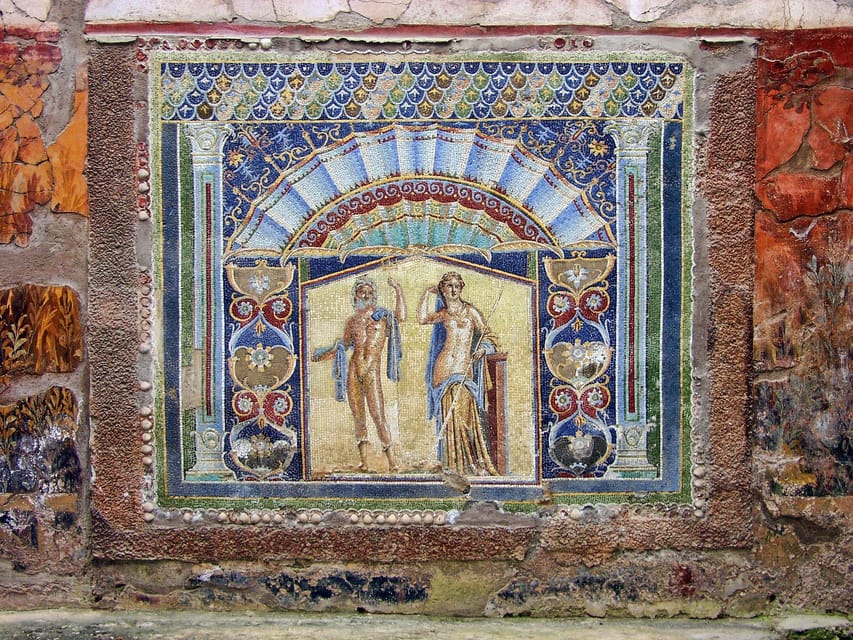
If you want one day that feels like two different worlds, this combo works. Pompeii and Herculaneum are both UNESCO sites, but they don’t tell the same story in the same way. Pompeii gives you the big-city layout: forums, streets, storefronts, villas—places where you can read how people moved and lived. Herculaneum is smaller, and the preservation is so striking that you walk through rooms and details that feel almost close enough to touch.
The biggest value here is control. You’re not stuck in a group pace. You decide whether you want to start with Pompeii’s scale or Herculaneum’s preserved interiors, then continue while your energy is still good. You’ll also see a lot more because the audioguide format is designed for self-guided wandering rather than rushed stops.
The catch is simple: you’re still visiting two major archaeological sites in one day. If you take long breaks, stop often for photos, or get delayed between parks, 6 hours can feel tight. I’d treat it as a “full but doable day,” not a leisurely stroll.
Getting Your Audioguides Without Losing Time
This experience runs on two key moments: picking up your Pompeii audioguide device and picking up your Herculaneum device.
Pompeii device pickup
You exchange your voucher at the local partner’s office at the Circumvesuviana train station area: Tempio Travel, Villa dei Misteri 1, first floor. After that, you enter the archaeological park at the dedicated line at Porta Marina Inferiore, in Piazza Esedra, just hundreds of meters away.
Herculaneum device pickup
You go directly to the entrance of the Archaeological Park of Herculaneum and look for the Audioguide Desk, where staff have your reservation.
Two practical things matter here:
- You need an ID deposit for the audioguide devices, returned when you give the devices back.
- The devices use numbers to match explanations to the site, which is exactly what you want when conservation work changes visual landmarks.
A heads-up from real-world friction points: some people have found the location of the second device pickup unclear, especially because Pompeii’s process involves an office exchange first. If you’re starting in Herculaneum, double-check in advance where your Pompeii exchange office is, so you’re not hunting once your day is already moving.
Pompeii at Your Speed: dedicated Porta Marina Inferiore entry
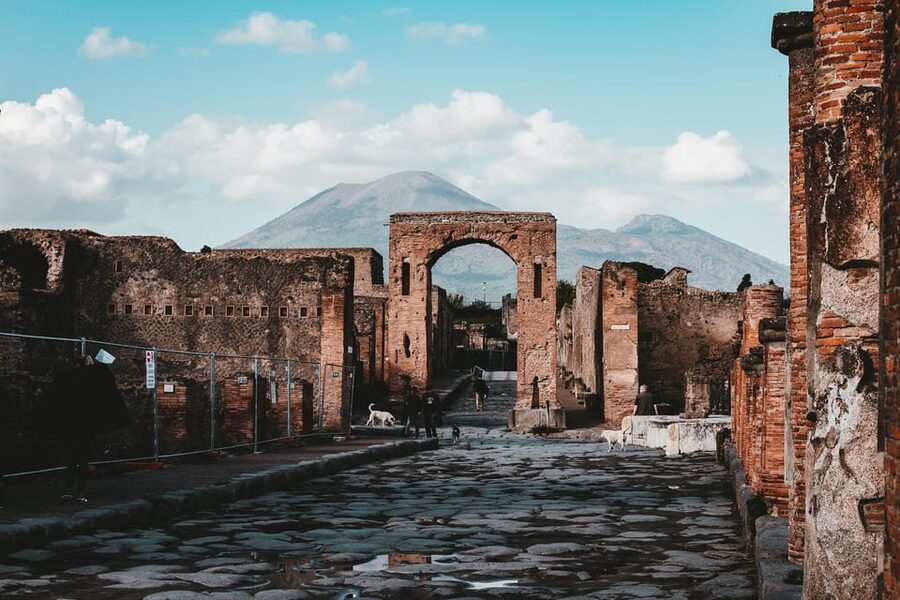
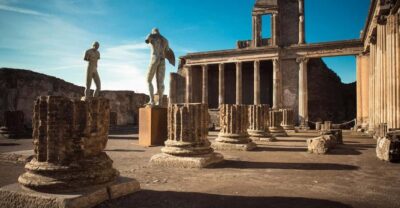
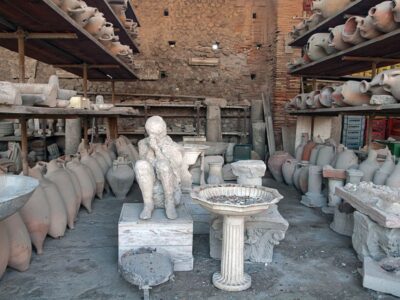
Pompeii is the one that usually pulls people in first. Even if you’ve read about it, the physical layout hits you fast. You’re walking through streets and structures that show everyday life: where people worked, socialized, shopped, and relaxed.
With this setup, you’ll enter using skip-the-line access via a dedicated entrance at Porta Marina Inferiore. That matters because Pompeii’s main entrances can be crowded, and every minute spent standing is a minute you’re not reading the city.
Once inside, the audioguide does the heavy lifting. Explanations are available in multiple languages—English, Italian, French, Spanish, and German—and the numbered system helps you follow along without needing to “meet the guide” at a specific spot.
Two things I think you should plan for:
- Headphones aren’t included. The devices can work hands-free or with standard jack headphones (so bring your own if you prefer privacy).
- You still need to move smart. Pompeii is huge. For a one-day visit, pick a couple areas to really “read,” then let the rest be your supporting cast.
Seasonal hours check
Pompeii opening hours run:
- Oct 15–Mar 15: 09:00–17:00 (last entry 15:30)
- Mar 16–Oct 15: 09:00–19:00 (last entry 17:30)
If your timing is even slightly off, it’s better to spend more time in the sections you chose than to sprint toward the exits.
Herculaneum keeps a few more tours worth your time



Herculaneum: the preserved rooms that make the audio feel personal
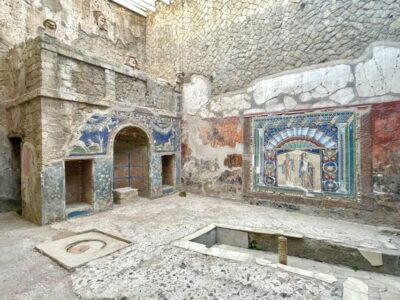
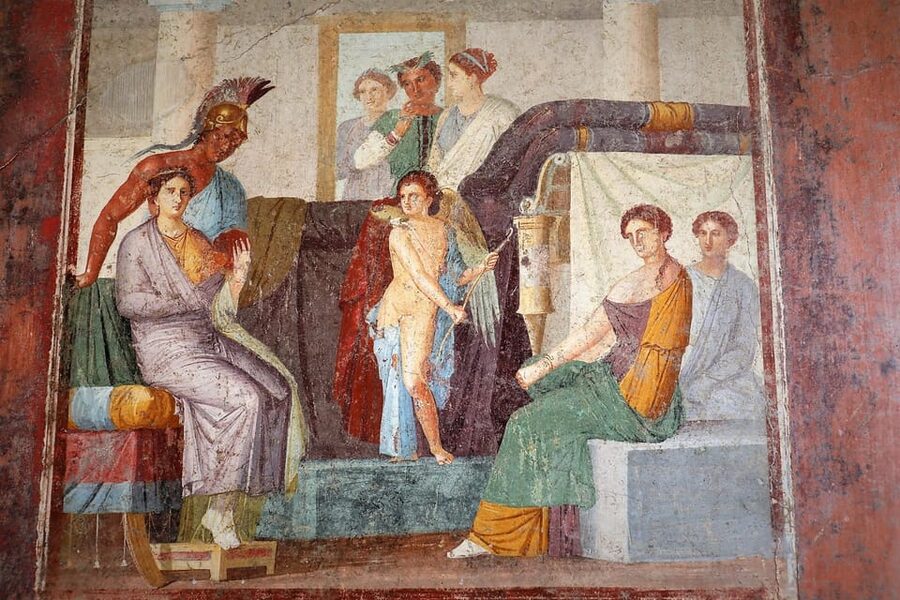
Herculaneum is the “wait, how is this still here?” stop. The volcanic material that covered the town preserved details that are harder to picture from Pompeii alone. Think mosaics, frescoes, and even wooden structures—the kind of specifics that help you understand daily life beyond ruins-as-skeletons.
Because this is self-guided with an authorized audioguide, Herculaneum tends to feel more intimate. The audio points help you connect what you’re seeing to how people used the space: rooms, entrances, and design choices that reflect everyday routines.
I also like that your pace here can be slower. Herculaneum rewards attention: surfaces, decorative patterns, and the way spaces connect. If you’re the type who enjoys pausing for 10 minutes to let the place sink in, this is where it pays off.
Herculaneum opening hours:
- Oct 15–Mar 15: 09:00–17:00 (last entry 15:30)
- Mar 16–Oct 14: 09:00–19:00 (last entry 17:30)
If you start here, you’ll probably want enough time later in the day to still enjoy Pompeii without feeling rushed.
Switching cities: how the Circumvesuviana train keeps it realistic
The transportation piece is what makes or breaks a one-day combo. The good news: the local Circumvesuviana train links the right areas.
You’ll connect Pompei Scavi – Villa dei Misteri and Ercolano Scavi (Herculaneum’s station). Usually there’s a simple change at Torre Annunziata. Tickets aren’t included, so budget that extra cost.
Why this matters: you’re not dealing with complex transfers or timed reservations in the middle of your day. You can usually build a sensible flow:
- morning at one park
- train ride
- afternoon at the other park
For planning, give yourself a little buffer. Trains can change in frequency depending on the day and season, and walking from station to entrance still takes time.
Price and value: is $88 a fair deal for two sites?
At $88 per person for a 6-hour experience, you’re basically paying for three things at once:
1) Skip-the-line entry tickets for both Pompeii and Herculaneum
2) Authorized audioguide devices (not generic phone audio)
3) An organized plan for where to pick up devices and how to enter Pompeii
That’s where the value comes in. If you were to buy two separate park tickets and then figure out audio guides separately, you’d likely spend more time and money piecing it together.
Still, watch for the add-ons you must handle yourself:
- Headphones are not included
- Transportation between sites isn’t included
- Pompeii Entrance Ticket Plus is not included
- Parking is only a possible bonus: if open and available from 01/04, there may be free non-gated parking at Osteria Nonna Cherubina (Via Andolfi 46)
If you’re the kind of traveler who normally spends time hunting for the right entrance and audio info, this package can be worth it just for saving mental work. If you already know the sites well and prefer to do everything ad hoc, you might not “need” the structure. But most people visiting both parks benefit from the organized audioguide access.
When audioguides or exchanges get messy (and how to protect your day)
Two of the clearest complaints center on time loss:
- audioguides not working
- skip-the-line tickets still requiring a queue to exchange
There are also issues around confusion over where to pick up the second audioguide device, especially because Pompeii involves a station office exchange before you enter.
Here’s how you protect yourself:
- Arrive earlier than you think you need. Late arrivals magnify every small process step.
- Plan a quick “device check” before you start walking deep into either park. Make sure your language works and the device audio is operating.
- Know the exact second pickup location. Don’t rely on memory once you’re already in motion.
- Keep your ID accessible so the deposit process is smooth.
This is still a good-value self-guided experience when it runs as intended. But you should treat audioguide pickup as part of the itinerary, not an afterthought.
What you’ll actually do during the day (a practical flow)
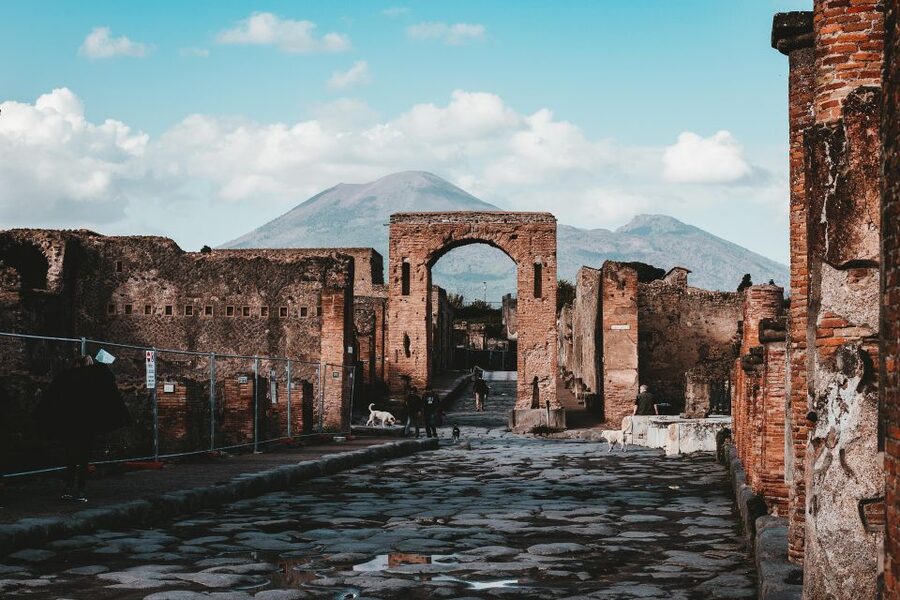
Even though the plan is self-guided, you can think of your day like this:
1) Start at your chosen park
- Pompeii: exchange at Tempio Travel office, then enter Porta Marina Inferiore via the dedicated line
- Herculaneum: go straight to the Audioguide Desk at the park entrance
2) Use the numbered audioguide points as your walking rhythm
You’re not following a script. You’re using the audio to “hold your place” and connect scenes to meaning.
3) Take the Circumvesuviana train between Pompei Scavi – Villa dei Misteri and Ercolano Scavi
4) Spend your second block of time finishing the story
Pompeii gives you scale and city life. Herculaneum gives you preservation and intimate detail.
That structure is what makes the day work. If you try to do both parks with no plan at all, you’ll spend too long wandering without a thread.
Who this one-day combo is best for
This experience fits best if:
- you like to travel independently but still want official audioguides
- you want both Pompeii and Herculaneum without hiring separate guided tours
- you enjoy using audio to connect architecture and daily life, not just reading plaques
It may not fit well if:
- you’re relying on a fully working audio device and don’t want any risk of downtime
- you need specific help for hearing accessibility (the activity description lists it as not suitable for hearing-impaired people)
- you want a slow, uncrowded day with plenty of downtime—two parks in one day is still a time squeeze
One more note: the data you’ll see includes both wheelchair accessibility and also states it’s not suitable for wheelchair users. If mobility is part of your planning, you’ll want to confirm directly with the provider before booking.
Should you book this Pompeii + Herculaneum one-day audioguide ticket?
If your goal is to hit both UNESCO sites in one day while keeping freedom, this is a solid option—especially because you’re getting skip-the-line entry plus authorized audioguides in multiple languages. I’d book it if you’re comfortable handling a bit of logistics yourself and you prefer self-paced sightseeing over a group tour.
I’d hesitate if you strongly dislike any chance of audio-guide problems or if you know you’ll arrive late and be stressed by pickup lines. In that case, you may want to consider a more guided setup where device issues are handled for you.
FAQ
What’s the duration of this one-day Pompeii and Herculaneum experience?
The duration is listed as 6 hours. Exact time on-site depends on your pace and timing between parks.
Can I choose whether to start with Pompeii or Herculaneum?
Yes. You can start at the site of your choice, and your visit is flexible.
Where do I pick up the audioguide for Pompeii?
You exchange your voucher at Tempio Travel, located on the first floor of the Circumvesuviana station area at Villa dei Misteri 1. Then you enter the park via the dedicated entrance at Porta Marina Inferiore.
Where do I pick up the audioguide for Herculaneum?
You go to the entrance of the Archaeological Park of Herculaneum and look for the Audioguide Desk, where staff will have your reservation.
Is the entry truly skip-the-line?
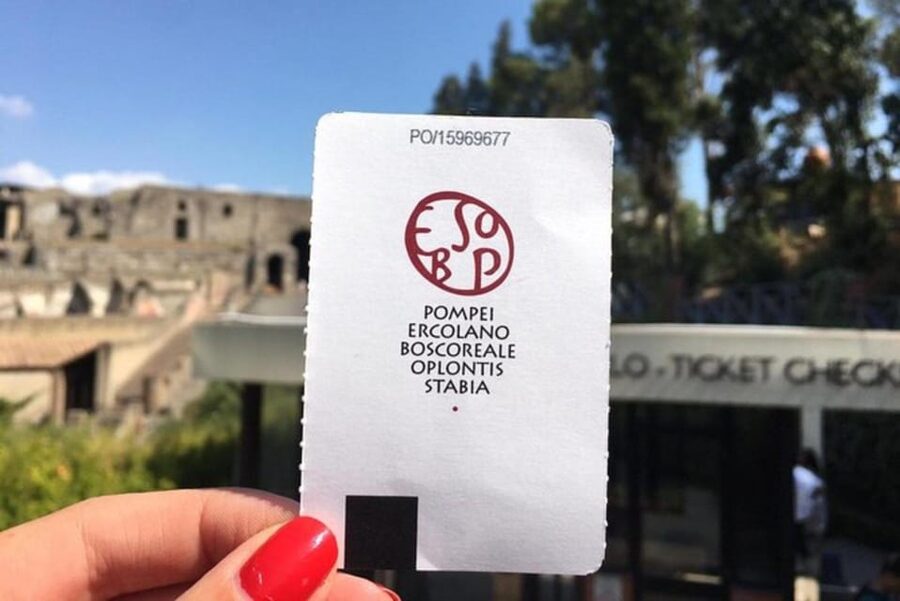
The package includes skip-the-line entry tickets (artecards) and dedicated access at Porta Marina Inferiore in Pompeii.
Do I need to bring headphones?
Personal headphones are not included. The audioguide devices can be used hands-free or with standard jack headphones.
Is transportation between Pompeii and Herculaneum included?
No. You need to travel between sites on your own (Circumvesuviana is recommended).
Which languages are available on the audioguide?
Audioguides are available in English, Italian, French, Spanish, and German.
What do I need to bring or have with me?
You should bring a passport or ID card and comfortable shoes/clothes. A valid ID is required as a deposit for the audioguide devices.
Is it suitable for wheelchair users?
The information provided includes both that it is wheelchair accessible and that it is not suitable for wheelchair users. If that affects you, confirm with the provider before booking.
More Tour Reviews in Pompei Campania





Herculaneum, a Few More Tours


More Pompeii Tours to Compare
More Pompei Campania tours, freshly reviewed




Pompeii Tours, compared.
 ★ 4.8Pompeii: Entry Ticket and Guided Tour with an ArchaeologistFrom $3519,459 reviews
 ★ 4.1Pompeii: Entry Ticket with Audio GuideFrom $4013,491 reviews
 ★ 4.8Pompeii: Small Group Tour with an ArchaeologistFrom $4012,264 reviews
 ★ 4.3Pompeii Ruins & Mount Vesuvius Day TourFrom $12011,459 reviews
★ 5.0Pompeii Small Group Tour with an ArchaeologistFrom $356,593 reviews
★ 4.3Pompeii Ruins & Mount Vesuvius Day TourFrom $12011,459 reviews
★ 5.0Pompeii Small Group Tour with an ArchaeologistFrom $356,593 reviews
 ★ 4.5Skip-the-line Pompeii – Small Group TourFrom $544,401 reviews
 ★ 4.6Naples or Sorrento: Full-Day Pompeii and Mount Vesuvius TourFrom $1044,235 reviews
 ★ 3.9Pompeii: Skip-the-line Entry Ticket with Audio Guide & MapFrom $433,153 reviews
Browse the lists this tour appears in