

Review · POMPEII TOURS
Pompeii & Herculaneum: Skip-the-line & Digital Guide App
Pompeii and Herculaneum feel like time travel, with fewer hassles. This experience is built around skip-the-line tickets and a smart digital guide app, so you can spend your energy walking the ruins instead of waiting around. I especially like that it covers both sites in one day, giving you a full Roman contrast: Pompeii’s street-level city life and Herculaneum’s unusually preserved everyday details.
The biggest thing to note is timing. You get a full day, but Pompeii can take almost the whole day if you want to see more than the highlights, and Herculaneum is where you may need to decide how deep you want to go.
In This Review
- Key points before you go
- Getting your tickets and getting your phone ready
- What skip-the-line really means here
- Pompeii first: using the app to walk like a local
- Pompeii in real time: how to pace yourself
- Pompeii highlights worth planning around
- Herculaneum second: why the tone feels different
- The practical Herculaneum concern: logistics if you’re driving
- How to make one day actually work
- Value check: does $72 make sense?
- Comfort items you can’t skip
- Who this self-guided Pompeii and Herculaneum day suits best
- Should you book this one?
- FAQ
- Where do I get my tickets?
- Do I need to download the app?
- Are tickets included for both Pompeii and Herculaneum?
- Is lunch included?
- Are headphones included?
- Do I need a charged smartphone?
- Is the tour in multiple languages?
- How long is the experience?
- Is it wheelchair accessible?
- Is there a refund if plans change?
- Are free or reduced tickets for minors and EU 18–24 handled by the provider?
Key points before you go
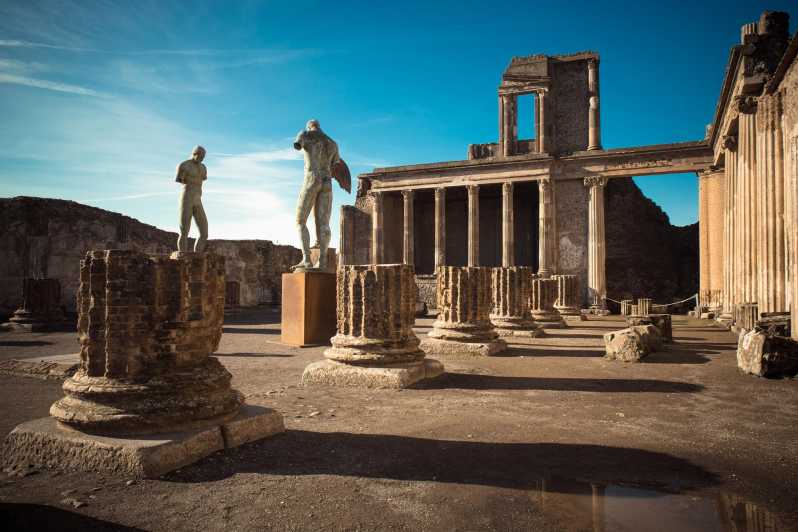
- Skip-the-line access at both sites helps you start walking faster.
- Digital guide app on your phone lets you set your own pace instead of staying stuck on a group schedule.
- Tickets collected from the FS station office in Pompeii keeps the process structured.
- Two distinct archaeological moods: Pompeii’s wider sweep versus Herculaneum’s preservation of daily objects.
- Bring headphones and a charged phone so the audio guide actually works when you need it most.
Which Pompeii ticket and guide? Compare a few more.
- Pompeii: Entry Ticket and Guided Tour with an Archaeologist★ 4.8 · 19,459 reviews
- Pompeii: Small Group Tour with an Archaeologist★ 4.8 · 12,264 reviews
- Pompeii: Skip-the-line Entry Ticket with Audio Guide & Map★ 3.9 · 3,153 reviews
- Naples: Pompeii and Mt. Vesuvius with Lunch and Wine Tasting★ 4.5 · 2,454 reviews
Getting your tickets and getting your phone ready

This is a self-guided setup, not a “walk beside me” tour. You won’t meet anyone personally for the tour itself, and you’ll receive tickets via WhatsApp. Still, you should plan on stopping at the FS train station office in Pompei to collect your tickets, as the operator asks you to do that before you head into the ruins.
When you collect your tickets, you’ll also get help downloading the digital guide app onto your smartphone. That matters more than it sounds. The whole experience depends on you having the app working in the field, and you want that figured out before you reach the gates.
Two practical points you should treat like basics:
- Bring headphones. They are explicitly not included. If you show up without them, your audio guide experience may be less useful.
- Have a charged smartphone. You’ll use your phone during the visit, and Roman ruins are not the place to hunt for a power outlet.
One extra note: the activity is non-refundable, so only book if your dates are firm.
What skip-the-line really means here
“Skip-the-line” sounds simple, but it changes your day. Pompeii and Herculaneum can both attract crowds, and entry delays eat up your walking time fast. With this ticket package, you’re skipping the queue for entry so you can start exploring on your terms.
Also, you’re not getting only one site. You’re paying for two skip-the-line entries, and that’s part of the value story. If you were trying to buy separately on the spot, you’d likely spend more time coordinating and waiting. Here, you’re reducing friction right up front.
One caution: this skip-the-line service is for the standard offering. The operator notes that free tickets for minors and reduced tickets for EU citizens aged 18–24 are available at the entrance, but the provider does not offer that type of skip-the-line option for those categories. If that applies to you, plan on buying the relevant services at full price for this format, unless you decide to handle entry separately.
Pompeii first: using the app to walk like a local

You’ll head to Pompeii after collecting your tickets. The walk from the collection point to the ruins is described as just under ten minutes on foot, so you’re not spending your first hour commuting.
Pompeii works best when you don’t rush. The digital guide is designed to route you through ancient streets, temples, and houses, which is exactly how you want to experience the place: not just seeing one big monument, but understanding what daily city life looked like.
Here’s what you should expect your phone guide to do for you:
- Give context as you move from area to area, so you’re not guessing what you’re looking at.
- Encourage you to stop at the right spots for street-level details, not only the most famous postcard images.
- Keep the experience self-paced, so you can pause for photos or slow down when something catches your eye.
I like this format because Pompeii has enough “stuff” to overload you. Without structure, it’s easy to see a lot and remember almost nothing. A guided app helps you connect the dots—like why a street layout feels the way it does, or what a space suggests about how people lived.
One insight from the reviews is that the explanations include more anecdotes than you might expect from a plain audio track. That’s a good sign for people who want color and human detail, not just dates and labels.
Pompeii in real time: how to pace yourself

Pompeii can take almost the whole day if you want to see enough to feel satisfied. That’s not a flaw of the tour; it’s the nature of the site. Pompeii is big, and it’s easy to underestimate how long you’ll want to linger over houses, mosaics, and street corners.
So I’d suggest this decision rule:
- If you’re the type who likes to read and look closely, plan to spend longer in Pompeii than you think.
- If you prefer broad strokes and don’t mind picking fewer stops in each area, you can balance Pompeii and Herculaneum more evenly.
Because your visit is self-guided, the “group pace” problem is mostly gone. You control how fast you move. The trade-off is that you control your stamina. Wear shoes you’re comfortable with for uneven ground and a lot of walking.
Herculaneum keeps a few more tours worth your time






Pompeii highlights worth planning around

The tour description doesn’t list individual monuments by name, but it does point to the categories you’ll follow. As you walk, you’ll be looking at:
- Streets that show how the city moved, with spaces that feel designed for daily routines.
- Temples and religious spaces that help you understand Roman public life.
- Houses that reveal how wealth and occupation shaped home layouts.
- Areas focused on “daily life,” so you’re not only chasing big set pieces.
If you want to get the most from the app, don’t treat it like background noise. When it signals you to pay attention, stop. This is where Pompeii rewards you: in small observations. A doorway, a courtyard, a worn step—these are the moments that make the city feel lived-in.
And if your phone battery starts dipping, prioritize the spots where you’ll benefit most from explanations rather than letting the app run constantly while you walk.
Herculaneum second: why the tone feels different

After Pompeii, you continue on to Herculaneum. This is where the experience can surprise you, because Herculaneum often feels smaller at first glance, but it can hit harder if you care about preservation.
The tour description emphasizes that Herculaneum is about remarkably preserved houses, mosaics, and the “extraordinary conservation” of everyday objects. That means the app can help you see more than architectural ruins. You’re looking at an environment where daily life details survive in ways that feel more tangible.
That said, not everyone will love Herculaneum the same way. One review noted that they’d revisit Pompeii again but found Herculaneum less interesting for their tastes. That makes sense: if you want maximum variety in a single big site, Pompeii tends to feel like the stronger bet.
If you’re torn, use your energy level as the guide:
- If Pompeii left you wanting more context and object-level detail, Herculaneum is a great continuation.
- If you’re already saturated from walking and reading, you may want to choose fewer stops in Herculaneum and still hit the most meaningful ones the app recommends.
The practical Herculaneum concern: logistics if you’re driving
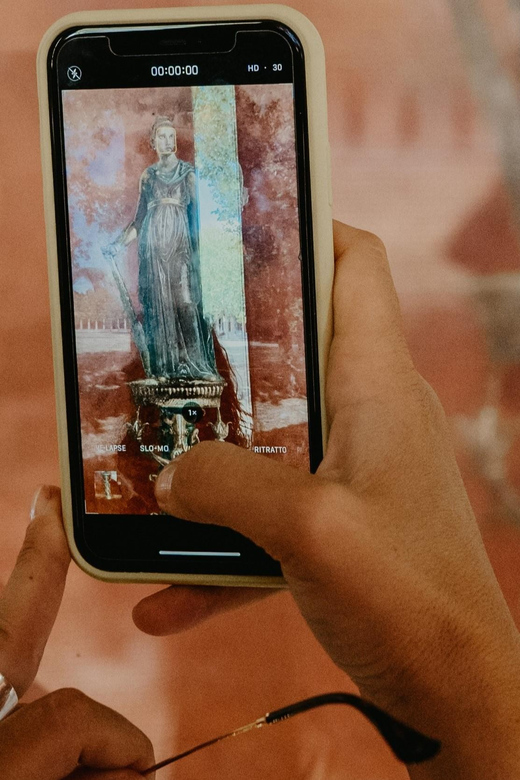
This self-guided format doesn’t add transportation, and the “not included” list specifically mentions train. Still, in real life, some people arrive by car or deal with car-related planning.
One review highlights that it can be difficult to park in Herculaneum. Even if you’re not driving, that’s a useful heads-up: make sure your plan for reaching and leaving the area is realistic, and don’t assume you’ll find easy parking right away if you’re using a vehicle.
For most people, the key takeaway is simple: build in buffer time around the Herculaneum leg, just like you would for any popular site with tight surroundings.
How to make one day actually work
This tour is one day total, and you’re splitting it between two sites. That’s the whole deal—and it can be either a dream or a squeeze depending on your pace.
Here’s a balanced approach that fits the structure described:
- Start with Pompeii and treat it as the main event.
- Use the digital guide to keep your stops efficient, not random.
- When you reach Herculaneum, switch from “see everything” to “see what matches your interests.”
Also, remember that you’re doing this as self-guided exploration. That means your satisfaction depends on how you use the app and how comfortable you are walking.
If you’re traveling with people who want different speeds (one person wants to read every sign, another wants fast photos), this format can still work because you can move independently to a degree. But since the ruins are all still within the same day window, you’ll want a meetup plan for breaks rather than assuming you’ll naturally stay together.
Value check: does $72 make sense?
At $72 per person, you’re paying for three concrete things included in the experience:
- A digital guide app for your smartphone
- Skip-the-line entry ticket for Pompeii
- Skip-the-line entry ticket for Herculaneum
For one day, that’s the real value equation. If skip-the-line entry and a phone-based guide are exactly what you want, the price feels straightforward: you’re not paying for staff time inside the ruins, you’re paying for the access and the guidance layer.
Where the value can tilt:
- If you’re happy exploring independently and you’ll actually use the audio guide with headphones, this is a strong fit.
- If you prefer a live guide or want a structured group itinerary with names and set talking points, you might feel you’re doing more work yourself than you expected.
Given the emphasis on independence in the description, I’d say this price is fair for people who like flexibility and can self-manage their time.
Comfort items you can’t skip
You already know basics like good shoes, but for this specific experience, the “small gear” matters:
- Headphones: not included, but required for audio guide use.
- Charged smartphone: the app is central to how you interpret the site.
- Download time: give yourself a little patience for setup when you collect your tickets and get app access.
If you tend to use your phone constantly, consider lowering screen brightness and using power-saving mode. Pompeii and Herculaneum reward attention, but they don’t provide charging convenience.
Who this self-guided Pompeii and Herculaneum day suits best
This format fits best if you:
- Want two archaeological sites in one day
- Like the idea of walking at your own pace rather than following a group
- Will use a digital guide app while you explore streets, temples, and houses
- Prefer skipping entry queues to protect your day
It may be less ideal if you:
- Want heavy narration from a live guide every step of the way
- Need a highly structured itinerary with named stops and fixed timing
- Don’t like relying on phone audio for context
On accessibility, the tour is listed as wheelchair accessible, which is a helpful baseline to check when planning your route and timing.
Should you book this one?
I’d book it if you want the simplest path to two major sites with fewer delays. The combination of skip-the-line entry for both Pompeii and Herculaneum plus an app that guides you through streets, temples, and houses is the kind of setup that keeps a day from turning into a waiting-and-guessing session.
I’d pause and rethink if you’re likely to rush Pompeii. Reviews and site size realities point to Pompeii needing a lot of time to feel satisfying. If you know you’ll want to move fast and just skim, you might not get enough payoff from the Herculaneum half either.
If you like independent exploring with audio support, you’re in the right place.
FAQ
Where do I get my tickets?
You will not meet anyone in person during the tour. Your tickets are sent via WhatsApp, and you are also instructed to collect them from the FS train station office in Pompeii.
Do I need to download the app?
Yes. At the office in Pompeii, you get assistance downloading the smart digital guide onto your smartphone.
Are tickets included for both Pompeii and Herculaneum?
Yes. The experience includes skip-the-line entry tickets for both Pompeii and Herculaneum.
Is lunch included?
No. Lunch is not included.
Are headphones included?
No. Headphones are not included, so you should bring them.
Do I need a charged smartphone?
Yes. A charged smartphone is listed as something to bring because the digital guide is on your phone.
Is the tour in multiple languages?
Yes. The languages offered are English, French, Italian, German, and Spanish.
How long is the experience?
It’s valid for one day. Starting times depend on availability.
Is it wheelchair accessible?
The experience is listed as wheelchair accessible.
Is there a refund if plans change?
No. The activity is non-refundable.
Are free or reduced tickets for minors and EU 18–24 handled by the provider?
Free tickets for minors and reduced tickets for EU citizens aged 18 to 24 are available at the entrance, but the provider does not offer this category with skip-the-line options.
More Tour Reviews in Pompei Campania






Herculaneum, a Few More Tours






More Pompeii Tours to Compare
More Pompei Campania tours, freshly reviewed




Pompeii Tours, compared.
 ★ 4.8Pompeii: Entry Ticket and Guided Tour with an ArchaeologistFrom $3519,459 reviews
 ★ 4.1Pompeii: Entry Ticket with Audio GuideFrom $4013,491 reviews
 ★ 4.8Pompeii: Small Group Tour with an ArchaeologistFrom $4012,264 reviews
 ★ 4.3Pompeii Ruins & Mount Vesuvius Day TourFrom $12011,459 reviews
★ 5.0Pompeii Small Group Tour with an ArchaeologistFrom $356,593 reviews
★ 4.3Pompeii Ruins & Mount Vesuvius Day TourFrom $12011,459 reviews
★ 5.0Pompeii Small Group Tour with an ArchaeologistFrom $356,593 reviews
 ★ 4.5Skip-the-line Pompeii – Small Group TourFrom $544,401 reviews
 ★ 4.6Naples or Sorrento: Full-Day Pompeii and Mount Vesuvius TourFrom $1044,235 reviews
 ★ 3.9Pompeii: Skip-the-line Entry Ticket with Audio Guide & MapFrom $433,153 reviews
Browse the lists this tour appears in