
Review · POMPEII TOURS
Pompeii: Guided Tour & Skip the Line Ticket
Pompeii feels like a door left open. This tour pairs skip-the-line entry with a live guide who explains how Romans actually lived, not just what you’re looking at. In a compact 2-hour window, you’ll walk through major areas like the Forum and famous houses tied to the city’s daily life.
One thing to keep in mind: Pompeii is big, and the fixed 2-hour tour format means you might not have time to linger where you’d like. It’s best for people who want a clear path, strong context, and then time (if you’re up for it) to explore on your own afterward.
In This Review
- Key highlights at a glance
- Meeting point and first minutes at Pompeii
- Skip-the-line tickets: what you actually gain
- The “frozen in time” feeling—and how the guide makes it click
- Walking Pompeii’s ancient streets: the foundation stop
- The Forum: Pompeii’s public gathering place
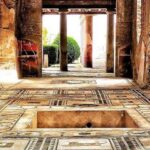
- House of the Tragic Poet: learning from domestic life
- House of the Golden Cupids: art and meaning in everyday rooms
- Stabian Bath: what the Romans did between everything else
- How Vesuvius fits into the story, not just the headline
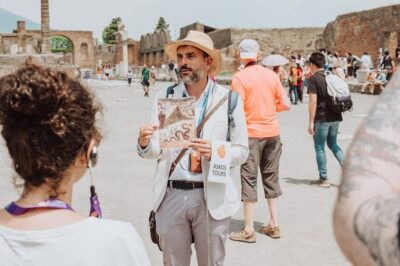
- Group size, guide style, and why it feels personal
- Where the tour shines for different types of visitors
- Price and value: is $60 a fair deal?
- Practical tips to get the best 2 hours
- Should you book this Pompeii guided tour with skip-the-line tickets?
- FAQ
- How long is the guided tour?
- What is included with the ticket?
- Where does the tour start?
- What languages are the guides?
- Do I need to bring anything besides myself?
- Is the tour suitable for wheelchair users?
Key highlights at a glance
- Skip-the-line access through a separate entrance so you lose less time waiting
- Live English/Italian guide who ties stories to real spaces you can see
- Vesuvius eruption context—how the 79 AD catastrophe preserved Pompeii
- Top Pompeii stops including the Forum, House of the Tragic Poet, House of the Golden Cupids, and the Stabian Bath
- Small group feel, with guides ready to help if you’re delayed
- A guide who may also point you toward photo-friendly spots during the walk
Which Pompeii ticket and guide? Compare a few more.
- Pompeii: Entry Ticket and Guided Tour with an Archaeologist★ 4.8 · 19,459 reviews
- Pompeii: Small Group Tour with an Archaeologist★ 4.8 · 12,264 reviews
- Pompeii: Skip-the-line Entry Ticket with Audio Guide & Map★ 3.9 · 3,153 reviews
- Naples: Pompeii and Mt. Vesuvius with Lunch and Wine Tasting★ 4.5 · 2,454 reviews
Meeting point and first minutes at Pompeii
This tour starts at Ristorante Bar Sgambati, where you’ll gather before heading to the Pompeii Archaeological Site. That early setup matters more than you might think. Pompeii draws a lot of day-trippers, and arriving with a plan helps you get into the site while your energy is still fresh.
Once you’re at the entrance, the biggest practical win is the skip-the-line ticket. You enter through a separate route, which usually means you’re spending time walking Pompeii instead of standing in a slow-moving queue. For a place like this, where the site itself is the attraction, saving even 20–30 minutes can feel like getting an extra chunk of sightseeing.
Skip-the-line tickets: what you actually gain
Skip-the-line isn’t just a convenience. It changes your whole experience. With standard ticket lines, you often lose the best part of a short visit: the first moments when your brain is most open to wonder and learning.
On this tour, the skip-the-line entry ticket is included, and the guide keeps your group moving as you enter. That’s why the tour can realistically cover multiple highlights in about 2 hours—you’re not constantly pausing for bottlenecks.
If you’re visiting during peak hours, this becomes even more valuable. Pompeii’s crowds can turn a quick visit into a slow one. With this approach, you get into the site and start connecting the map in your head to real stones under your feet.
The “frozen in time” feeling—and how the guide makes it click
Pompeii works on two levels. Visually, it’s startling: streets, building remains, and everyday spaces preserved in a way that feels almost unreal. But the second level is understanding what you’re seeing—how people used the Forum, what happened in homes, and how public life differed from private life.
That’s where the guide earns their place in the experience. The goal isn’t just to list sights. The tour is designed to explain how Pompeii was shaped by Roman culture and then preserved after the eruption of Mount Vesuvius in 79 AD.
You’ll get the day-to-day contrast as the story moves from disaster to city life. In practical terms, it means you can look at a doorway or a public square and understand why it mattered. Without that context, Pompeii can turn into a set of impressive ruins. With it, you start seeing routines.
Walking Pompeii’s ancient streets: the foundation stop
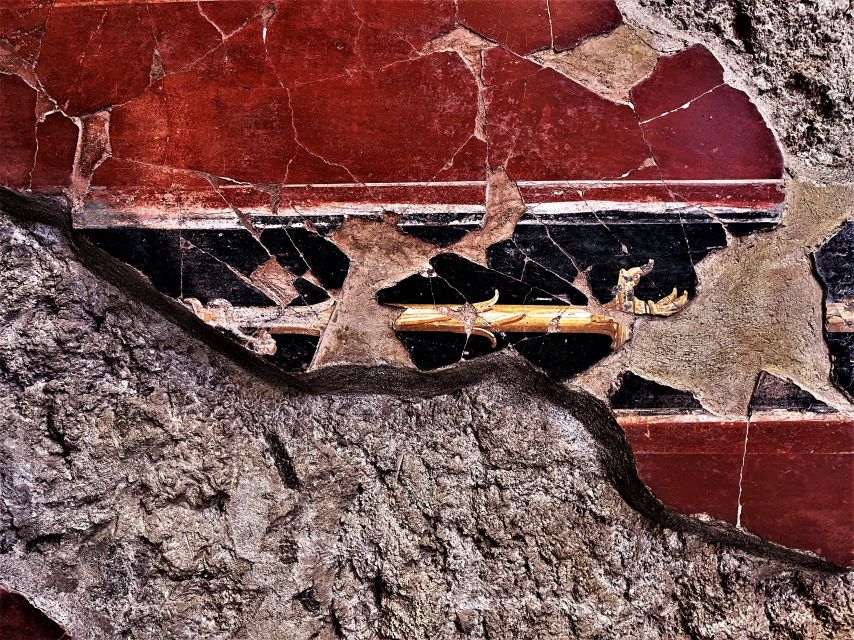
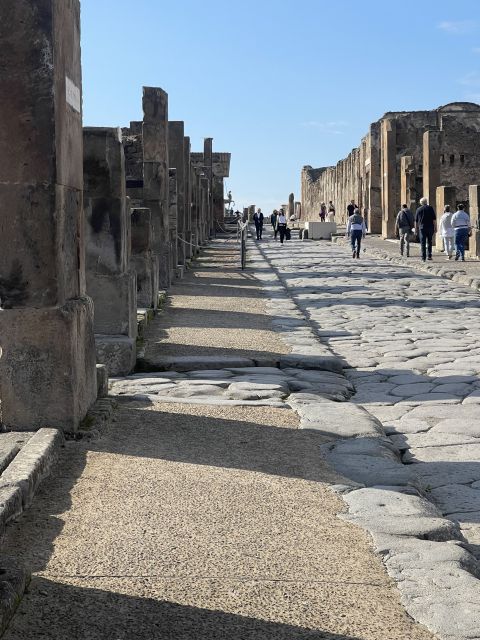
Right after entry, you’ll start in the core walking areas—the kind of routes that help you get oriented fast. This portion is less about one single “photo spot” and more about building your bearings: where you are in the city, how the street layout ties into public buildings, and how the architecture supports daily movement.
The tour route includes time on ancient streets where Roman residents once walked. Even in two hours, that walk helps your brain stop seeing Pompeii as “a site” and start seeing it as “a place.”
One note for your planning: the tour is not built for people who want wheel access, and it also isn’t suitable for people with motion sickness or certain medical conditions. That’s your clue that the experience involves sustained walking and lots of time outdoors.
Other tickets and entries for Pompei Campania




The Forum: Pompeii’s public gathering place
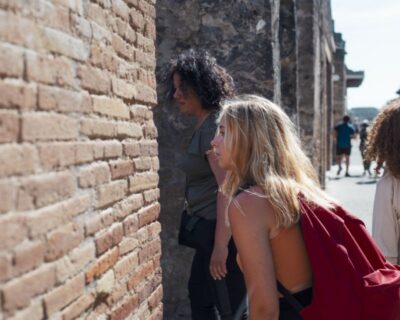
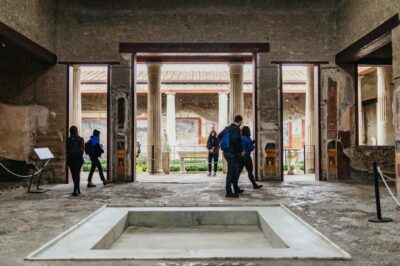
If there’s one stop that changes your perspective, it’s the Forum. This is Pompeii’s civic center—the place where public life happened. Even if you’ve heard the word before, standing in a Roman Forum space gives you a more grounded understanding: the Forum wasn’t decoration. It was where people met, discussed, and carried out community business.
On a guided tour, the Forum is where the guide’s storytelling pays off. Instead of treating ruins as disconnected walls, you’ll learn what the city used the space for and how the Roman way of life showed up in public layout. You also start picking up patterns—what’s open, what’s ceremonial, what feels like the “main stage” of daily interaction.
The drawback? If you love reading every inscription and standing silently for a long time, you might feel the time pressure. A guided highlight tour keeps a pace so everyone can fit the main sites in the allotted duration. Think of the Forum as a high-impact stop, not a full-day deep archive.
House of the Tragic Poet: learning from domestic life
Next, you shift from civic space to private space. The tour includes the House of the Tragic Poet, which is a strong example of how Pompeii lets you see domestic life rather than only public monuments.
This is where the tour does something especially useful for first-timers: it teaches you to look at homes as social and cultural statements. A house tells you about status, daily routines, and what residents valued. You’ll also hear how mythology and beliefs can show up in the art and iconography connected to these spaces.
Why I like this kind of stop: it prevents Pompeii from becoming only about the eruption. Yes, Vesuvius preserved the city, but Pompeii still matters because it was full of people—people with homes, tastes, and habits.
House of the Golden Cupids: art and meaning in everyday rooms
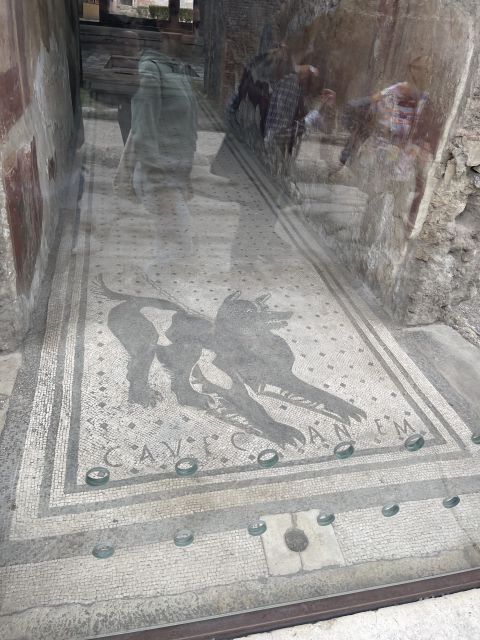
The tour also takes you to the House of the Golden Cupids. This is the kind of stop that can feel visually memorable, but the guide’s job is to make it meaningful beyond what catches your eye.
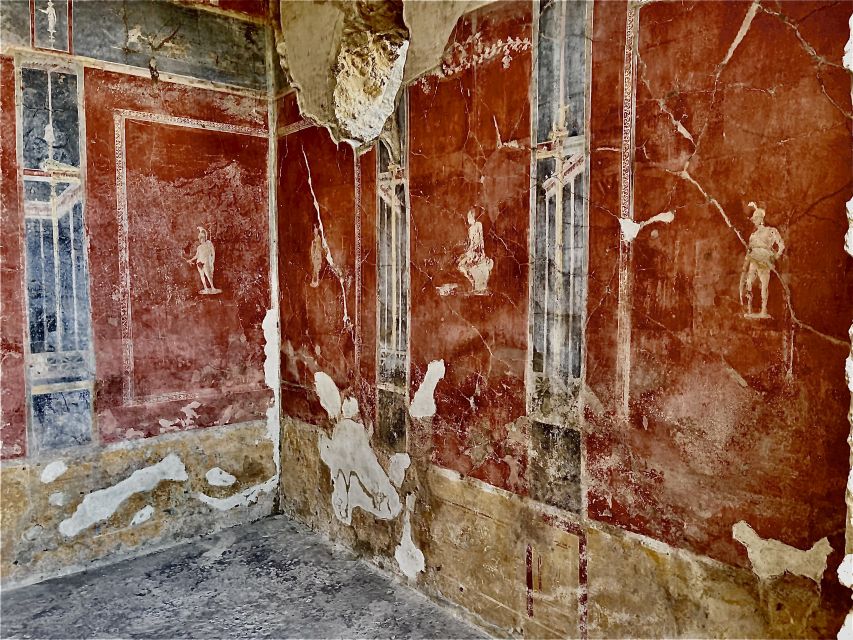
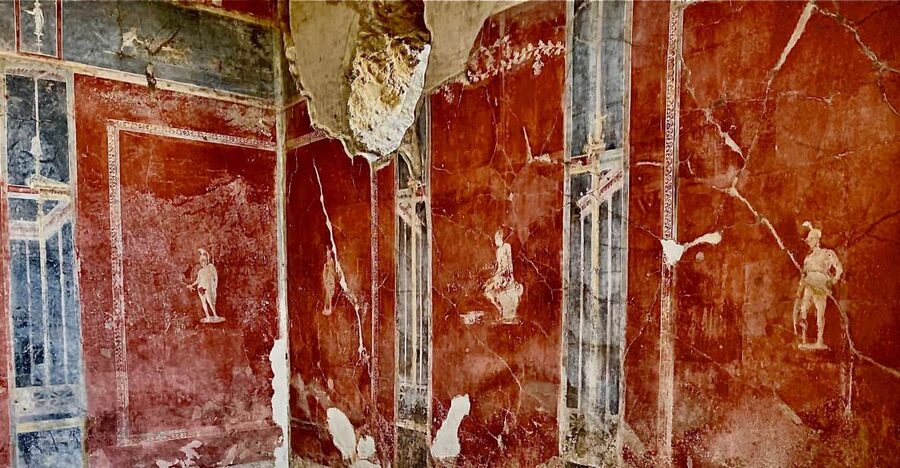
You’ll get an explanation of how Roman domestic spaces used imagery and symbolism. That matters because Pompeii’s power comes from contrast: you’re looking at art and architecture from nearly 2,000 years ago, yet it was meant to be part of normal life. The tour helps you see that it wasn’t just a museum piece—it was a house used by real people.
Also, if you’re into taking photos, this is often the moment where you can capture both architecture and atmosphere. One of the perks mentioned in guide feedback is that some guides will point out Instagrammable/TikTok-friendly spots and even help with a photo while you’re there.
Stabian Bath: what the Romans did between everything else
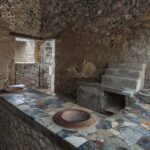
Public life and private life are only half the story. Pompeii also tells you a lot about leisure and routine through the Stabian Bath.
Baths in Roman culture weren’t just about hygiene. They were social hubs and part of everyday scheduling. Seeing a bath area with a guide’s explanation can help you understand why people organized their days around these spaces. It’s one of those “this is why it mattered” stops.
This is also a good place for a mental reset. Up to this point, you’ve been learning about street life and homes. Baths bring you back into the rhythm of daily Pompeii—how residents relaxed, met others, and spent time as a community.
How Vesuvius fits into the story, not just the headline
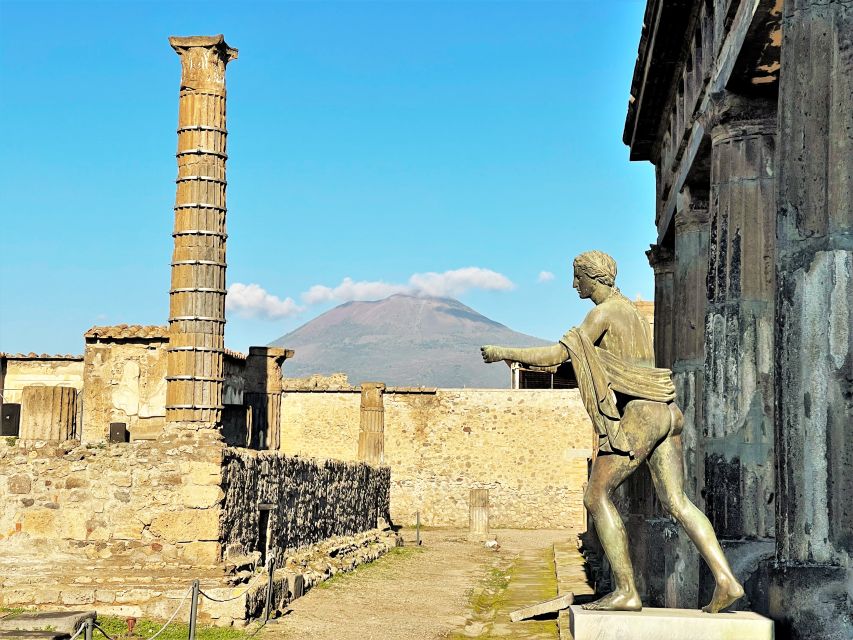
Yes, Mt. Vesuvius is the headline. But on this tour, the eruption becomes part of a larger cause-and-effect lesson.
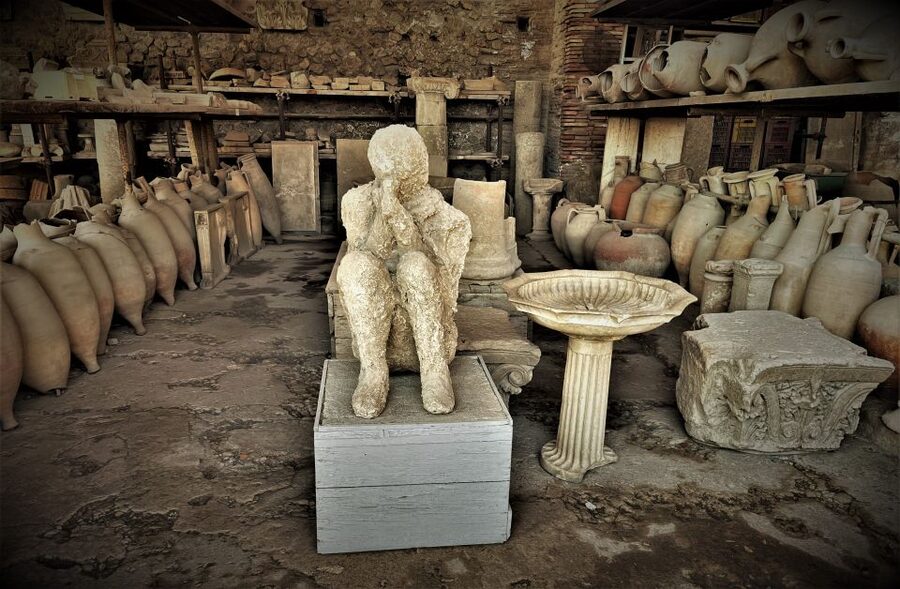
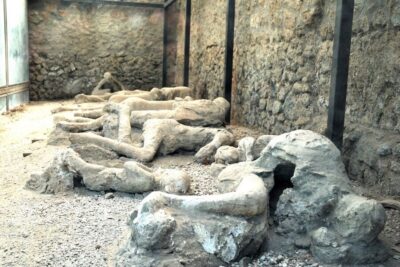
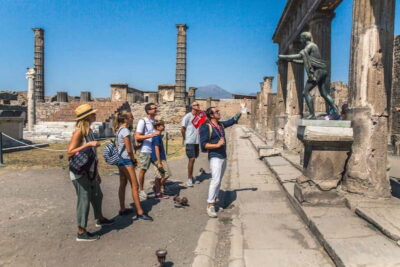
You’ll hear how the city was buried under volcanic ash after the catastrophic eruption in 79 AD, and that’s what preserved Pompeii in a way that lets you walk through the lived-in spaces rather than only admire fragments. The guide uses that backdrop to explain why the ruins look the way they do and why the details matter.
This part is valuable because it turns history into a reason for paying attention. You’re not just looking at old buildings. You’re looking at evidence—traces of daily life preserved under conditions that stopped change in its tracks.
Group size, guide style, and why it feels personal
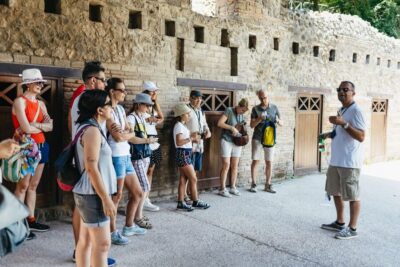
This is offered as a small group tour, which usually means you get more interaction than the big-bus model. In guide feedback, people liked how guides answered questions thoroughly and adjusted if the group needed a little help.
Some guides you might meet include Giulia, Gennaro, and Sasà. Feedback specifically praised guides for being proactive—contacting you before meeting time (Sasà) and starting promptly (Giulia started about 10 minutes ahead when the group was ready). There was also mention of guides helping with finding the meeting spot and even messaging/calling if you ran into trouble.
That personal tone matters. Pompeii is crowded and confusing if you don’t know what you’re seeing. A guide who can answer random questions keeps the experience from feeling like a rushed lecture.
Where the tour shines for different types of visitors
This guided, highlight-focused approach is a strong match if you want:
- A first-time Pompeii visit that doesn’t leave you lost in ruins
- A short, efficient plan with skip-the-line entry
- Strong explanation of Roman culture, daily life, and what the eruption changed
- A group setting where questions are welcome
It may be less ideal if you:
- Want to spend long stretches reading everything without time pressure
- Need wheelchair access or have mobility constraints (the tour isn’t suitable for wheelchair users)
- Get motion sick or have medical conditions that might be affected by travel or walking
If you’re traveling with kids, the tour can also work well—feedback mentioned that children, including those around 10–12 years old, were enthusiastic with guide-led storytelling.
Price and value: is $60 a fair deal?
At $60 per person for a roughly 2-hour guided visit, you’re paying for two main things: the guide and the skip-the-line ticket.
Here’s the value math that matters in real life:
- Skip-the-line reduces wasted time. With only a couple hours, time saved is sightseeing gained.
- A live guide turns scattered ruins into a connected story of Roman life and the Vesuvius preservation event. That’s harder to replicate on your own if you’re new to the site.
Food and drinks aren’t included, so you’re still responsible for your own snack/water plan. But the tour itself is set up as a concentrated experience: enter quickly, walk through key highlights, and leave with a stronger understanding than you’d likely get from a self-guided sprint.
If you’re the type who enjoys context and likes being guided to the best parts first, the price makes sense. If you’re already well-studied on Pompeii and you love wandering without structure, you might prefer a different approach. For most visitors, though, this is a practical way to get a lot of meaning in a short window.
Practical tips to get the best 2 hours
Pompeii isn’t a sit-and-look kind of site. For this tour, bring:
- Comfortable shoes
- Comfortable clothes
- Weather-appropriate layers
You’ll also want a passport or ID card (a copy is accepted). Small things like that can save you stress at check-in or entry points.
One more tip: plan your energy. This is a walking-heavy highlight tour, and the site is outdoors. If you’re visiting in extreme heat or rain, choose clothing accordingly and consider bringing water.
Should you book this Pompeii guided tour with skip-the-line tickets?
Yes, if your goal is a smart first visit. Book it when you want Pompeii organized for you: skip the waiting, see major highlights like the Forum, the House of the Tragic Poet, the House of the Golden Cupids, and the Stabian Bath, and leave knowing how Vesuvius in 79 AD preserved a whole Roman world.
You might skip this specific tour if you need accessibility support, have motion-sickness concerns, or you prefer long, independent wandering over a guided, timed route. But for most people—especially first-timers—this is a strong, value-minded way to experience Pompeii without losing your morning to queues.
FAQ
How long is the guided tour?
The tour duration is 2 hours.
What is included with the ticket?
You get a skip-the-line entry ticket and a 2-hour guided tour.
Where does the tour start?
The starting location is Ristorante Bar Sgambati.
What languages are the guides?
Guides are available in English and Italian.
Do I need to bring anything besides myself?
Bring comfortable shoes and comfortable, weather-appropriate clothing. You should also have a passport or ID card (a copy is accepted).
Is the tour suitable for wheelchair users?
No. The tour is not suitable for wheelchair users, and it’s also not suitable for people with motion sickness or pre-existing medical conditions.
More Tours in Pompei Campania




More Tour Reviews in Pompei Campania



More Pompeii Tours to Compare
More Pompei Campania tours, freshly reviewed


Pompeii Tours, compared.
 ★ 4.8Pompeii: Entry Ticket and Guided Tour with an ArchaeologistFrom $3519,459 reviews
 ★ 4.1Pompeii: Entry Ticket with Audio GuideFrom $4013,491 reviews
 ★ 4.8Pompeii: Small Group Tour with an ArchaeologistFrom $4012,264 reviews
 ★ 4.3Pompeii Ruins & Mount Vesuvius Day TourFrom $12011,459 reviews
★ 5.0Pompeii Small Group Tour with an ArchaeologistFrom $356,593 reviews
★ 4.3Pompeii Ruins & Mount Vesuvius Day TourFrom $12011,459 reviews
★ 5.0Pompeii Small Group Tour with an ArchaeologistFrom $356,593 reviews
 ★ 4.5Skip-the-line Pompeii – Small Group TourFrom $544,401 reviews
 ★ 4.6Naples or Sorrento: Full-Day Pompeii and Mount Vesuvius TourFrom $1044,235 reviews
 ★ 3.9Pompeii: Skip-the-line Entry Ticket with Audio Guide & MapFrom $433,153 reviews