
Review · POMPEII TOURS
Pompeii: Skip-the-Line Ticket with Audio Guide and Map
Pompeii deserves less waiting. This skip-the-line ticket plus an audio guide and updated map lets you wander in your own rhythm from 9:00 to 15:00. That time window matters because Pompeii is big, sun can be strong, and your feet will eventually file a complaint.
I like the freedom of a self-paced visit with an updated map. You can aim for the big, unforgettable moments like the amphitheater and the victims’ casts, but you’re not trapped in a strict group schedule.
One possible drawback: audio can be a bit hit-or-miss. In one situation, Pompeii’s internet connectivity was unpredictable, so downloading the audio became impossible, even though an audio-device option existed.
In This Review
- Key highlights you’ll care about
- Skip-the-line entry into Pompeii (9:00–15:00)
- The audio guide and map setup that helps you see more than stones
- What you’ll actually see: amphitheater, houses with frescoes, baths, shops, and theaters
- The amphitheater: see the spectacle, not just the stones
- Frescoed houses and everyday spaces
- Theaters, theaters, and more theaters
- Brothel area: uncomfortable, but important
- The casts of the victims and the Mount Vesuvius story
- How to plan your walk so you don’t feel rushed
- Go earlier if you can
- Use the map like a plan, not a route
- Keep the audio guide working in your favor
- Meeting point and on-the-ground flow near Pasticceria De Vivo
- Comfort notes that really matter in Pompeii
- Who this is not suitable for
- Price and value: does $44 make sense?
- Who should book this Pompeii audio-and-map experience?
- Should you book it?
Key highlights you’ll care about
- Skip-the-line entry so you lose less time standing in the sun.
- Audio guide in multiple languages for a smoother, more meaningful walk.
- Updated map to help you navigate Pompeii’s dense streets and landmarks.
- Roman daily life stops beyond the obvious sights: baths, shops, theaters, and brothel areas.
- Vesuvius proof in 3D through the casts of victims, plus context on the eruption.
- One of the best-preserved Roman amphitheaters to picture crowds and spectacle.
Which Pompeii ticket and guide? Compare a few more.
- Pompeii: Entry Ticket and Guided Tour with an Archaeologist★ 4.8 · 19,459 reviews
- Pompeii: Small Group Tour with an Archaeologist★ 4.8 · 12,264 reviews
- Pompeii: Skip-the-line Entry Ticket with Audio Guide & Map★ 3.9 · 3,153 reviews
- Naples: Pompeii and Mt. Vesuvius with Lunch and Wine Tasting★ 4.5 · 2,454 reviews
Skip-the-line entry into Pompeii (9:00–15:00)
Pompeii is one of those places where timing really affects the experience. You get entry starting at 9:00 am, and you can go in any time up to 3:00 pm. That flexibility is great because Pompeii isn’t a quick stop. It’s a whole city—streets, buildings, and daily details—so building in time for wandering pays off.
The skip-the-line part matters more here than you might think. Pompeii’s main entrances can turn into bottlenecks, especially in peak season. With a skip-the-line ticket, you start seeing ruins sooner, which also means you’re less likely to rush. Rushing is how you miss the little things, like the texture of a wall, the shape of a doorway, or the way spaces line up along a street.
Also, because your ticket is valid for 1 day, you can fit it into a longer Pompeii day that includes transport and a meal—without stressing about an exact timed tour start. Just pick an entry time that matches your energy and heat tolerance.
The audio guide and map setup that helps you see more than stones
The biggest upgrade in this experience is that you’re not just walking around ruins. You’re walking with an audio guide and a map that steer your attention.
The audio guide is included, and it’s available in several languages: English, Italian, French, German, Hebrew, Russian, Chinese, Portuguese, and Spanish. That variety is useful if you’re traveling with mixed-language companions. Instead of everyone craning over the same written sign, you can each get your own narration.
Here’s the practical bit: you need a valid ID document to rent the audio guide. That’s an easy step to overlook when you’re traveling with passports, tickets, and phone chargers on your mind. Bring the ID you plan to use, and keep it accessible. If you forget, you can end up with an inconvenient scramble.
One more real-world caution: the audio experience can depend on how you get the content. In at least one case, internet connectivity was unreliable, making it impossible to download and listen to audio. The good news is there was an audio-device option available. My advice: assume you might hit connectivity problems and choose the option that does not rely on a working signal.
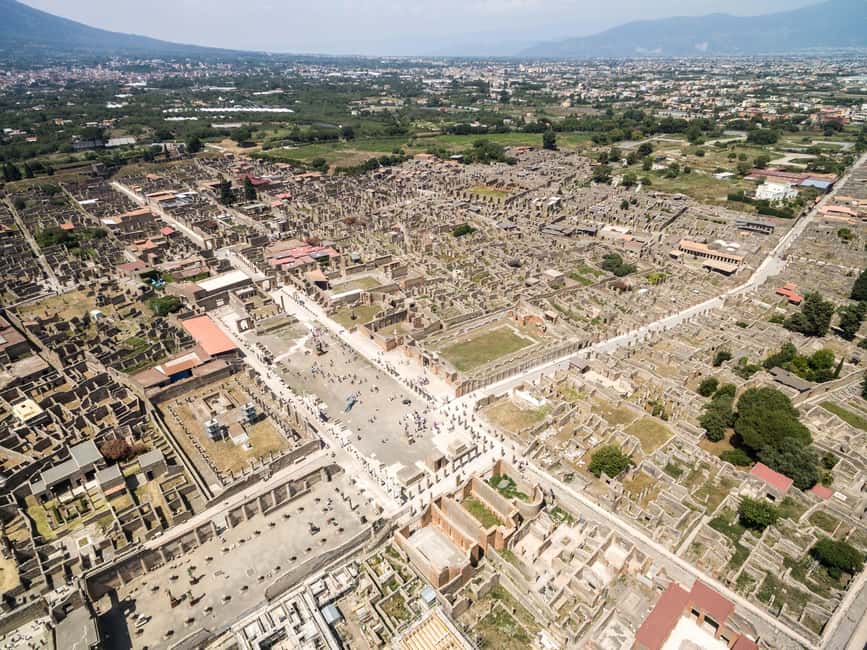
The map isn’t just decoration either. Pompeii can feel like a puzzle because streets and landmarks repeat in patterns. With a map in hand, you spend less time guessing and more time letting the city connect in your mind—where the commercial blocks sit, where civic spaces show up, and where major public venues like theaters and amphitheaters anchor everything.
What you’ll actually see: amphitheater, houses with frescoes, baths, shops, and theaters

Pompeii’s power comes from the fact that you’re not looking at ruins in isolation. You’re stepping into a place where Roman life is still readable. This visit is structured to highlight exactly that.
The amphitheater: see the spectacle, not just the stones
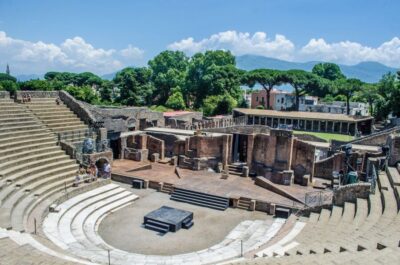
One of the anchors is the Roman amphitheater, described as one of the best-preserved from the era. When you stand inside it, you start to understand how crowds gathered, how the sound carried, and how performances worked. It’s the kind of stop where the audio can turn seating rows and stair shapes into something human.
Even if you’re not a history buff, the amphitheater is a huge visual payoff. It gives you a scale for the city. Pompeii wasn’t a sleepy village. It was a destination with public entertainment.
Other tickets and entries for Pompei Campania



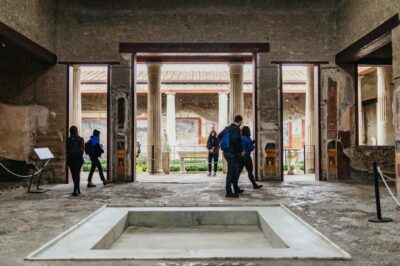

Frescoed houses and everyday spaces
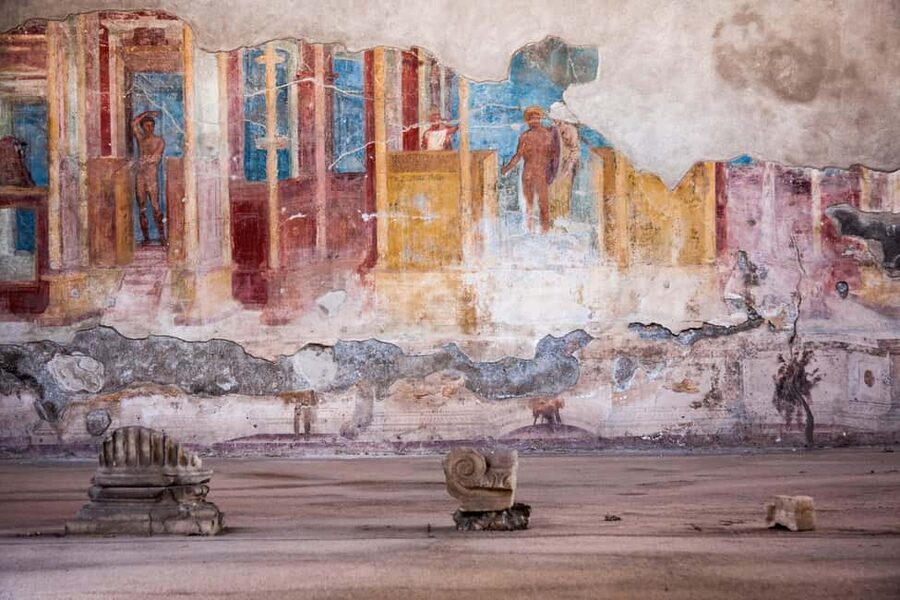
This experience also aims you at more than big monuments. Expect frescoed houses where decorative painting still clings to walls. Frescoes at Pompeii aren’t just pretty. They tell you what people wanted to see at home: myth themes, social cues, and color palettes that make the rooms feel lived-in.
You’ll also be pointed toward spas (baths) and other public or semi-public zones. In Pompeii, bath culture wasn’t only about hygiene. It was social time, gossip time, and a chance to be seen.
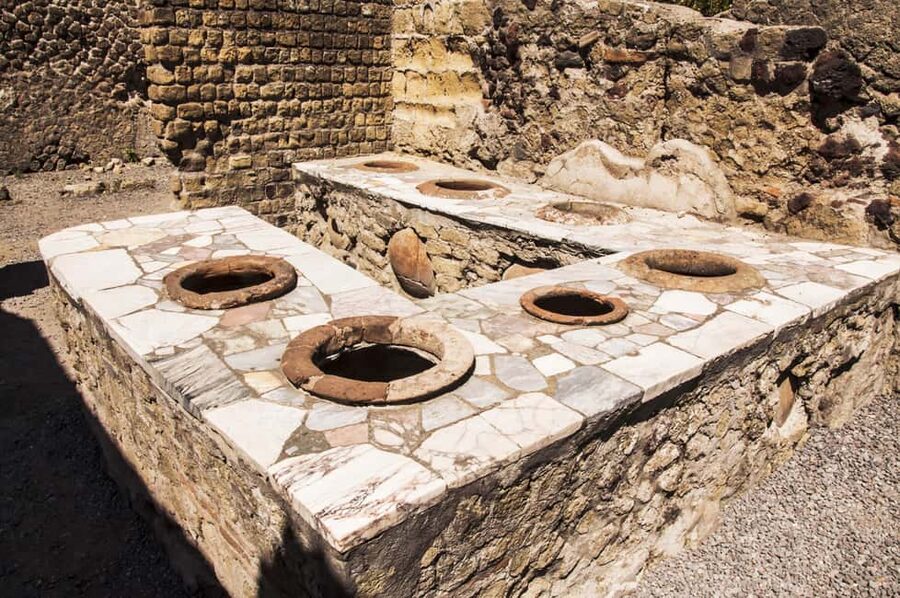
Then come the workday layers: temples, shops, and the thermopolis. The thermopolis is especially fun to picture because it was basically a Roman fast-food stop—hot drinks and quick meals for people on the move. When you see that space, you can almost feel the pace of a city that never fully stopped.
Theaters, theaters, and more theaters
You’ll also encounter theaters. Pompeii’s entertainment architecture helps you understand Roman priorities. Public life was loud and frequent, not occasional.
This part is where the audio guide earns its keep. Without context, you might read a theater as simply a building. With narration, you’ll grasp how performances, seating, and street access worked.
Brothel area: uncomfortable, but important
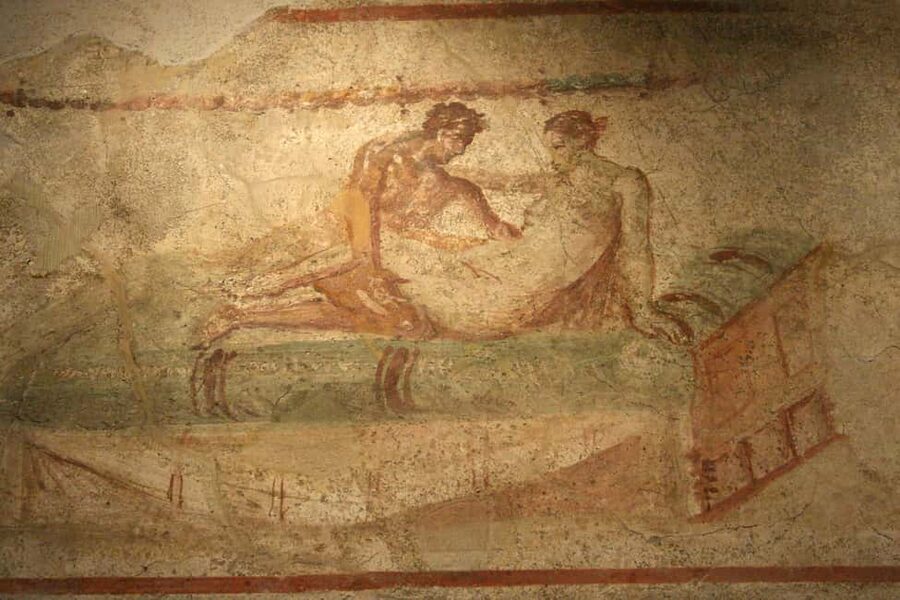
You can also see brothel areas. This is not everyone’s favorite topic, but it’s one of the reasons Pompeii feels real. Roman cities had sex work, and Pompeii preserves a sense of how those businesses functioned. If you’re sensitive to that kind of content, it helps to know it’s part of the experience so you can decide how you want to handle it.
The casts of the victims and the Mount Vesuvius story
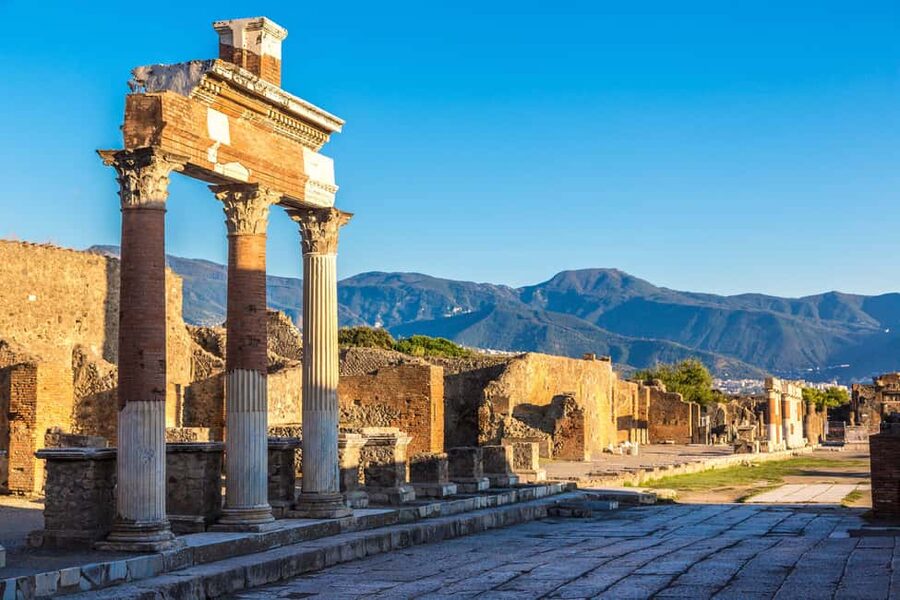
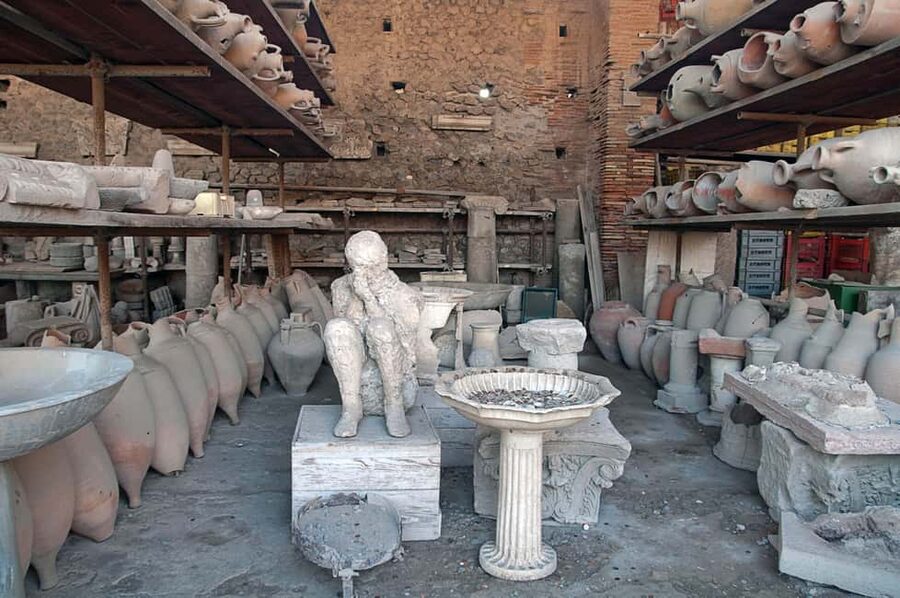
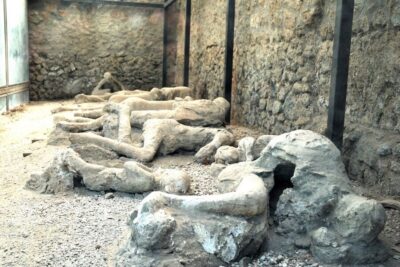
Pompeii’s most emotional chapter is the eruption—Mount Vesuvius—and how quickly normal life was interrupted. A key stop here is the casts of the victims. These figures make the tragedy immediately physical.
What makes this part valuable is not the shock alone. The audio guide’s historical context helps you connect the city’s layout to what happened during the eruption. You start to see the city as a network of movement and shelter, not just a collection of buildings.
If you’re trying to emotionally pace yourself, plan a little breathing room around this stop. Pompeii can move from fascinating to heavy fast. That doesn’t mean you should skip it. It means you should give yourself time to walk, look, and then step back out into the streets so you don’t feel trapped inside one mood.
How to plan your walk so you don’t feel rushed
The experience is at your own pace, so the best planning is about reducing friction. Pompeii is large, and you’ll want to make simple choices.
Go earlier if you can
One review note that stands out: when entry happened in the morning, there were fewer people around, and it felt easier to take your time. That matches what you’ll likely experience in real life. Earlier generally means you can slow down, linger by frescoes, and pause in open areas without constant shoulder-to-shoulder navigation.
So if you have flexibility, consider starting closer to the opening window. If you can only go later, still plan for pauses, especially in sunny sections.
Use the map like a plan, not a route
Your map helps you find major points quickly. But I suggest thinking of it as a menu, not a strict itinerary. Pick a handful of must-sees: amphitheater, a couple of houses, baths or shops, and the victims’ casts. Then fill in the rest by what catches your eye.
Pompeii rewards curiosity. You’ll often notice something only when you slow down at a doorway or stare at a painted pattern long enough for it to make sense.
Keep the audio guide working in your favor
Audio works best when you don’t treat it like homework. Let it guide your attention, then stop listening when you want to look. If the audio depends on connection, keep an eye on your phone’s behavior. If it feels unstable, switch to the audio-device option you can rent with your ID.
Meeting point and on-the-ground flow near Pasticceria De Vivo
Before you even enter Pompeii, you need one thing: an easy start. The meeting point is outside the office next to Pasticceria De Vivo, and the team is typically wearing blue and yellow jackets.
That detail sounds small, but it helps when you’re arriving in a new area with limited time. If you want to avoid stress, show up a bit early, confirm the jackets and location, and get your bearings before you step toward the entrance.
Also remember: this is a walking-focused day. Even with skip-the-line entry, your time gets spent on walking, not waiting.
Comfort notes that really matter in Pompeii
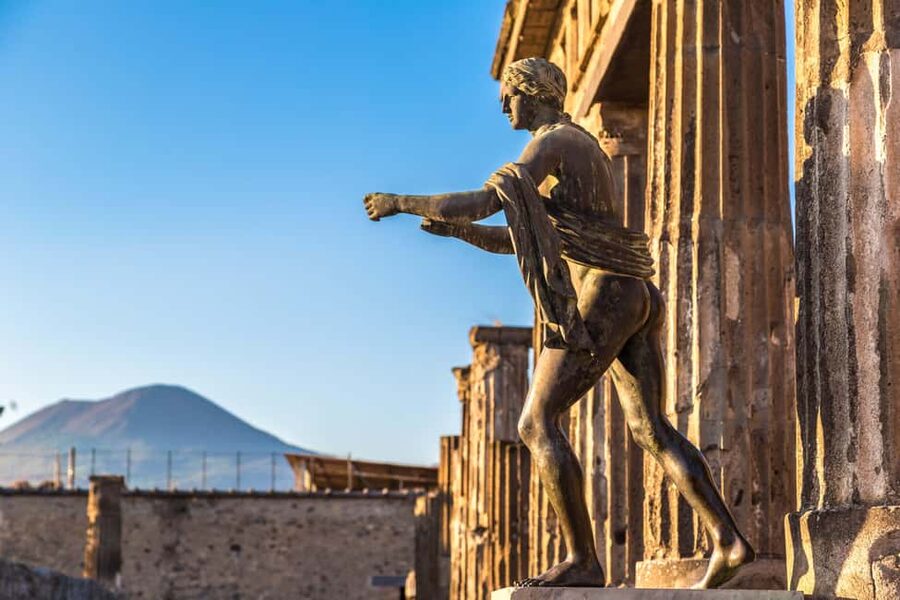
This is not a sit-and-watch attraction. You’ll be moving through uneven ground and ancient levels.
Bring comfortable shoes and comfortable clothes. Sandals might look charming; your feet will not agree. Also dress for sun and stop-you-in-your-tracks weather changes that can happen around the bay area.
There are restrictions on luggage: oversize luggage and large bags are not allowed. If you’re traveling with a lot of stuff, plan ahead and travel light for this day. You don’t want your bag to become a constant obstacle.
Who this is not suitable for
This experience is marked not suitable for:
- People with mobility impairments
- People with heart problems
- People with altitude sickness
Even if altitude sickness seems unrelated to a coastal area, you should follow the guidance as written. And for mobility needs, don’t assume Pompeii’s terrain will be workable just because you can walk some distance elsewhere.
Price and value: does $44 make sense?
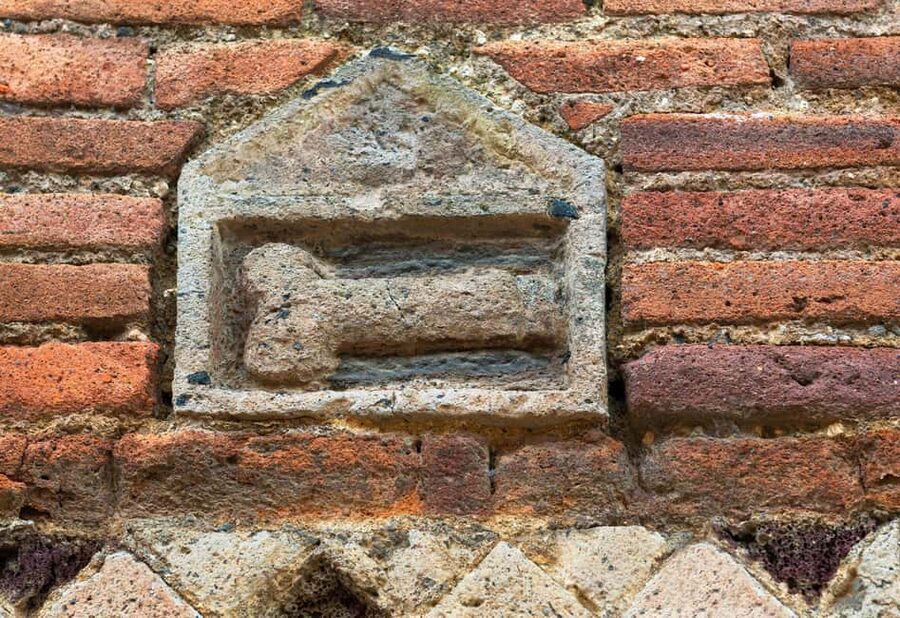
The price listed is $44 per person for a skip-the-line ticket plus an audio guide (the ticket portion is also noted as €20 within the included items). When you break it down, you’re paying for two things that save you time and meaning:
- Skip-the-line entry: That’s time you can spend on the ruins instead of in a line.
- Audio + map: That’s how Pompeii stops being “cool rocks” and becomes a city you can follow.
If you’re traveling with a group and you’d otherwise hire a guide or rely on basic signage, audio and map support can feel like real value. If you’re the kind of visitor who enjoys reading every sign and doesn’t want extra devices, the value may feel less dramatic. But Pompeii is big, and context helps you keep momentum.
Also consider that you get a full day window from 9:00 to 15:00, and your ticket is valid for 1 day. That flexibility lets you match the schedule to your itinerary instead of cramming Pompeii into an inconvenient slot.
Who should book this Pompeii audio-and-map experience?
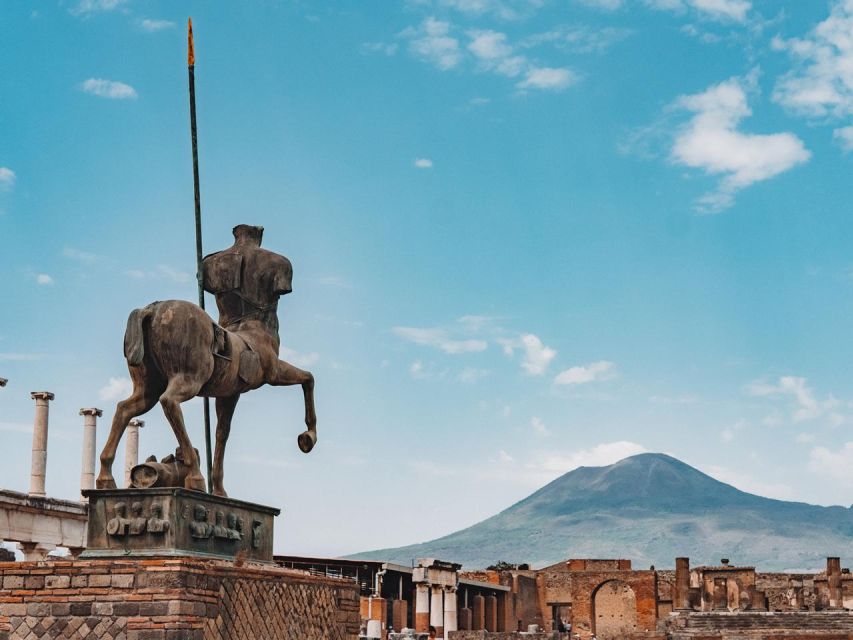
Book this if you want:
- Freedom to explore without a fixed group pace
- A meaningful narrative as you move through houses, baths, temples, shops, and theaters
- A structured way to hit key highlights like the amphitheater and victims’ casts
- An easy-to-follow start near Pasticceria De Vivo
It’s also a strong fit for travelers who like photo breaks, long pauses, and detours. Pompeii rewards that style of travel.
Consider a different option if:
- You need full accessibility support (this one is marked not suitable for mobility impairments)
- You’re sensitive to physically demanding walking days
- You know you’ll struggle to manage audio because you might forget your ID for the audio guide rental or you rely entirely on phone connectivity
Should you book it?
I’d book this if you want Pompeii to feel understandable and not just overwhelming. The combo of skip-the-line entry, audio in many languages, and a map gives you structure without stealing your freedom. That matters in a place this large.
If you’re on the fence, my decision tip is simple: if you’ll actually use the audio and you can keep your ID handy, this is a solid value. If you’d rather read on-site signs only, or you can’t manage a rented audio device, then you might not get your money’s worth.
In short: it’s a practical way to see Pompeii’s most memorable parts without wasting your day in a queue.
More Tickets and Entries in Pompei Campania





More Tour Reviews in Pompei Campania



More Pompeii Tours to Compare
More Pompei Campania tours, freshly reviewed




Pompeii Tours, compared.
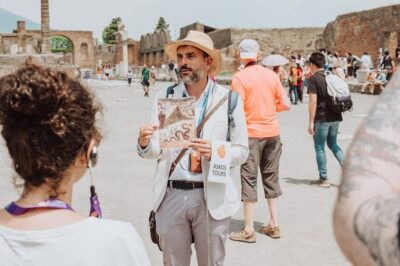 ★ 4.8Pompeii: Entry Ticket and Guided Tour with an ArchaeologistFrom $3519,459 reviews
 ★ 4.1Pompeii: Entry Ticket with Audio GuideFrom $4013,491 reviews
 ★ 4.8Pompeii: Small Group Tour with an ArchaeologistFrom $4012,264 reviews
 ★ 4.3Pompeii Ruins & Mount Vesuvius Day TourFrom $12011,459 reviews
★ 5.0Pompeii Small Group Tour with an ArchaeologistFrom $356,593 reviews
★ 4.3Pompeii Ruins & Mount Vesuvius Day TourFrom $12011,459 reviews
★ 5.0Pompeii Small Group Tour with an ArchaeologistFrom $356,593 reviews
 ★ 4.5Skip-the-line Pompeii – Small Group TourFrom $544,401 reviews
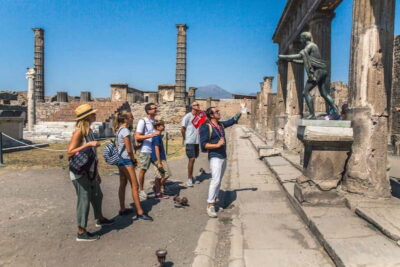 ★ 4.6Naples or Sorrento: Full-Day Pompeii and Mount Vesuvius TourFrom $1044,235 reviews
 ★ 3.9Pompeii: Skip-the-line Entry Ticket with Audio Guide & MapFrom $433,153 reviews
Browse the lists this tour appears in