
Review · POMPEII TOURS
Pompeii: Guided Tour and Skip-the-Line Ticket
A frozen city can still surprise you. This skip-the-line Pompeii tour is a focused, guide-led walk through everyday streets, grand houses, and the darker corners of Roman life, with priority access to start fast. I especially love how it turns the site into a story you can follow step-by-step, and how guides like Melania and Annarita seem to know exactly where to pause so the place makes sense. One thing to plan around: it is still a lot of walking in an exposed archaeological park, so comfy shoes and sun protection matter.
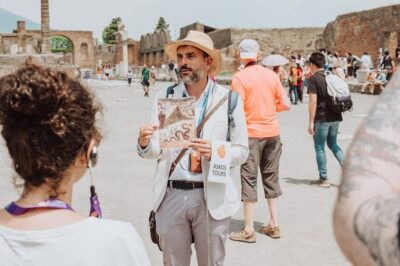
You get a licensed local guide plus audio headsets (for larger groups), which keeps you from guessing what you are looking at. In about 2 to 2.5 hours, you cover major highlights without the exhausting randomness that happens when you arrive on your own. The potential drawback is timing: the tour can be split into smaller parties due to site rules, so if you’re hoping for one perfect line of sight the whole time, flexibility helps.
I also appreciate the human scale of the stops. You see Roman public life (forums, baths, theaters), then private life (homes like the House of the Faun), and finally the plaster casts of Pompeii’s victims that hit hard because they are people-shaped, not just ruins. If you’re visiting with a strict mobility need, note that this tour is not suitable for wheelchair users.
In This Review
- Key Points You’ll Care About
- Entering Pompeii Fast at Porta Marina
- Civil Forum and Basilica: Where Politics and Business Lived
- Via dell’Abbondanza and the Theater District
- Forum Baths: Relaxation as a Roman Daily Ritual
- Thermopolium and Pistrinum: Street Food in Ancient Pompeii
- House of the Faun and the Alexander Mosaic
- Lupanare: The Brothel and Its Flashy, Small Rooms
- Macellum and the Plaster Casts: Everyday Trade and the Human Cost
- Audio Headsets and Group Sizes: How the Tour Stays Under Control
- Price and Value: What $43 Buys You in Real Terms
- What to Bring, How to Pace Yourself, and Heat Reality
- Who This Pompeii Tour Suits Best
- Should You Book This Skip-the-Line Pompeii Tour?
- FAQ
- How long is the Pompeii guided tour?
- Is there priority or skip-the-line access?
- Where do we meet the guide?
- What languages are available for the live guide?
- Do groups get audio headsets?
- What should I bring?
- Is the tour suitable for wheelchair users or unaccompanied minors?
Key Points You’ll Care About
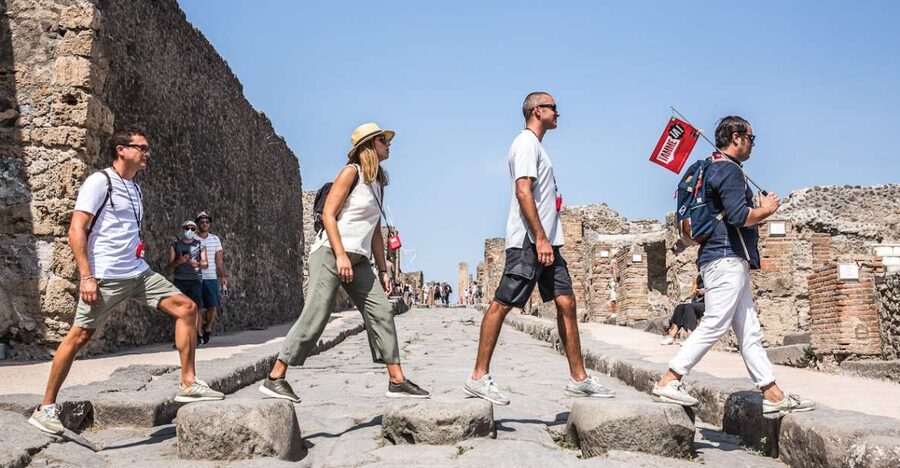
- Priority access helps you beat some of the worst queue time at the Pompeii ruins entrance.
- Local, licensed guide storytelling makes major monuments readable instead of just impressive rocks.
- Audio headsets for groups of 8+ make it easier to keep up and hear details.
- A tight 2–2.5 hour route hits the biggest emotional and architectural stops.
- You’ll see both everyday spaces (thermopolium, pistrinum/bakery stops) and the aftermath (plaster casts).
- Small-group options exist, and groups may be divided into smaller parties on-site.
Which Pompeii ticket and guide? Compare a few more.
- Pompeii: Entry Ticket and Guided Tour with an Archaeologist★ 4.8 · 19,459 reviews
- Pompeii: Small Group Tour with an Archaeologist★ 4.8 · 12,264 reviews
- Pompeii: Skip-the-line Entry Ticket with Audio Guide & Map★ 3.9 · 3,153 reviews
- Naples: Pompeii and Mt. Vesuvius with Lunch and Wine Tasting★ 4.5 · 2,454 reviews
Entering Pompeii Fast at Porta Marina
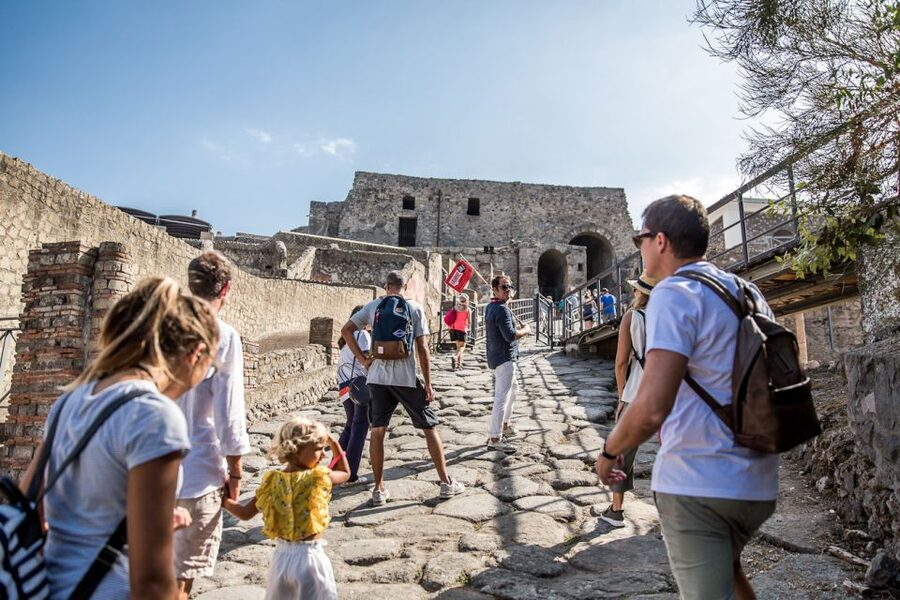
The biggest win with this tour is not just skipping a line. It’s skipping that early, swirling decision-making stress. You meet right at the Pompeii archaeological site entrance and go in with priority access, so you can start the walk while your energy is still high.
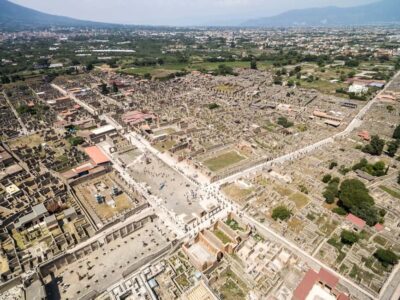
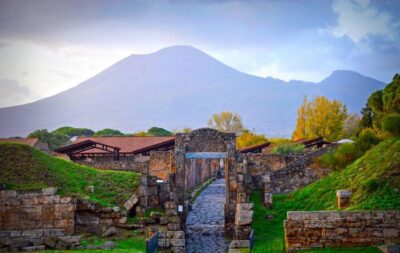
The tour begins at Porta Marina, one of Pompeii’s original gates. That matters because it sets the right orientation. Pompeii is huge, and without a path, it is easy to wander past the most important areas without realizing it. Starting at a gate also makes you feel like you are entering the city, not sightseeing in a museum-like loop.
From there, your guide’s job is to keep the site chronological and human. You’re not just seeing structures. You’re learning what those spaces were for and how people would have moved through them. I love that the tour is paced for understanding, not for speed. It’s the difference between hearing about Pompeii and actually picturing a day there.
Civil Forum and Basilica: Where Politics and Business Lived
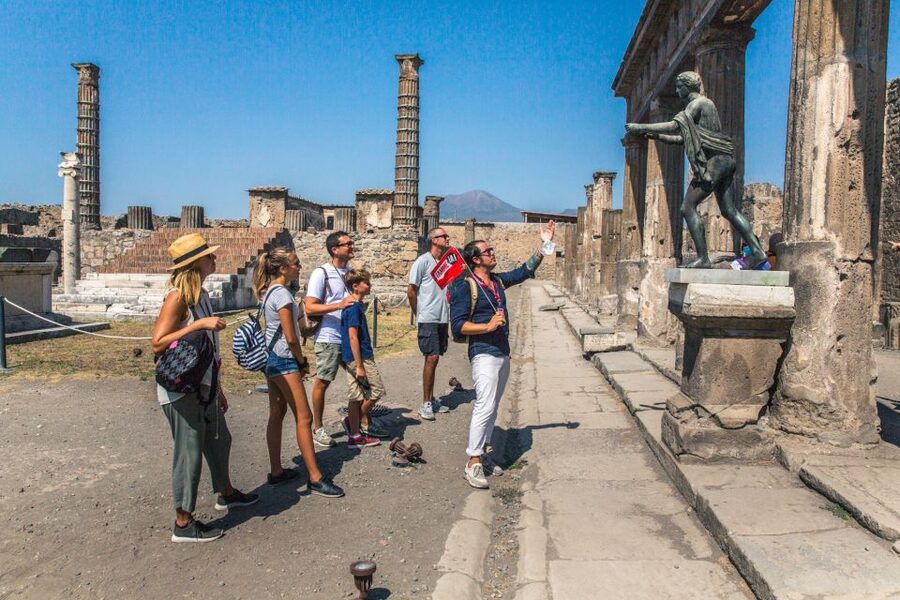
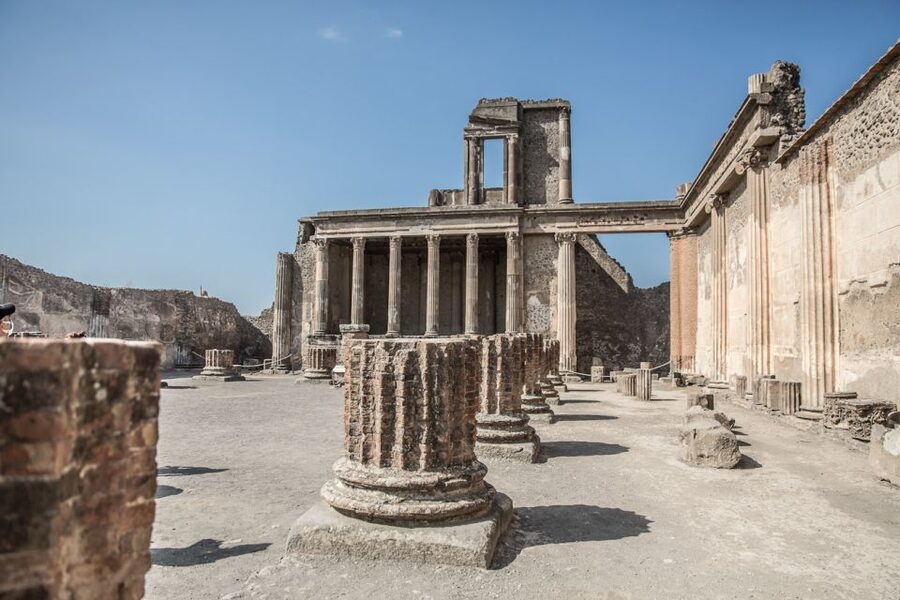
Your first major “wow, I get it” stretch is the Civil Forum (Foro Civile di Pompei). This was a busy center for political, religious, and commercial life. When you stand in the right spots with a guide, you start noticing patterns: where people gathered, where authority was displayed, and how public life worked in the open.
Nearby is the Basilica, once used for legal affairs and business dealings. It is one of those buildings that looks impressive even before someone explains it. With a guide, it becomes practical: you understand why people would have come here, what kinds of disputes or transactions took place, and why this space mattered daily.
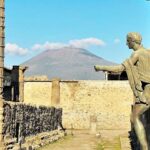
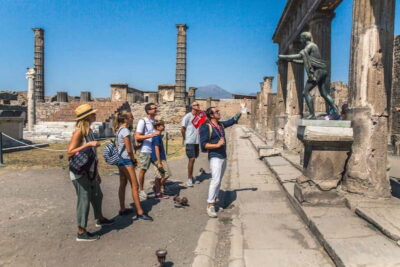
A guide also ties the whole setting to Mount Vesuvius, looming over the city. That connection is not just dramatic background. It helps you understand the eruption’s scale and why the city’s sudden end froze so much. You are essentially walking through a place where life was interrupted instantly enough to preserve details.
Via dell’Abbondanza and the Theater District
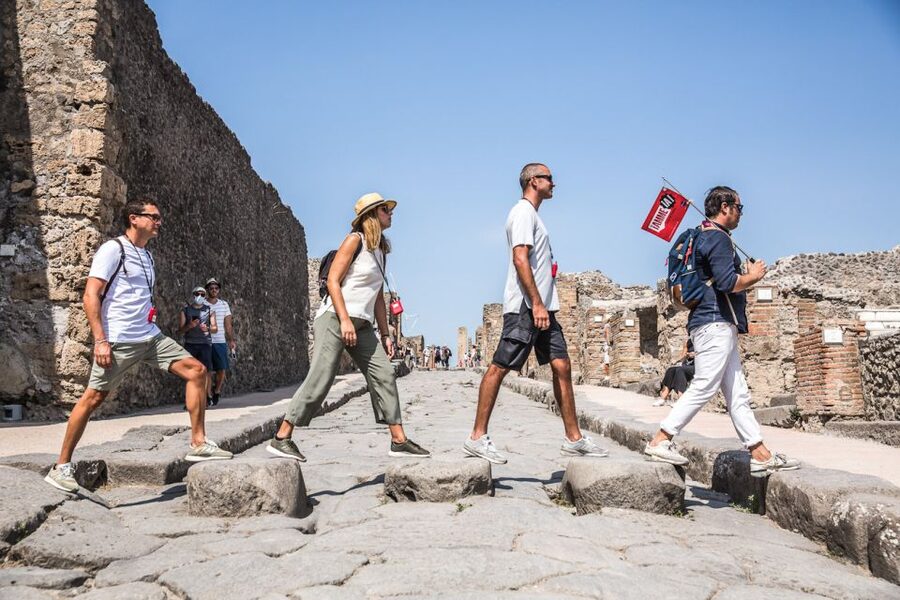
Next you head along Via dell’Abbondanza, Pompeii’s main street. This is a great segment for two reasons. First, you see the city as a street system, not a set of disconnected monuments. Second, your guide points out features you might otherwise miss, like the deep grooves worn into stone by chariot traffic.
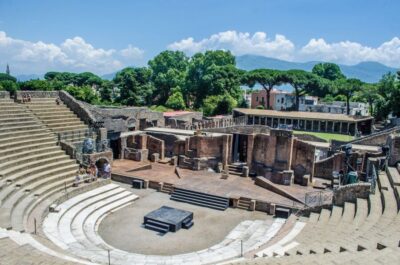
Then you reach the Theater District, where culture and social life were part of everyday rhythm. You’ll see the Large Theater area, an open-air venue where crowds gathered for comedies, dramas, and musical performances. Even if you have never been to a Roman theater before, the guide helps you imagine the sound and crowd energy in a place that still has those proportions.
This is also where Pompeii can feel most alive, because theaters and festivals are easy to picture. It’s not abstract. People came here to watch, react, and socialize. That’s an important balance to the heavier parts of the tour later.
Forum Baths: Relaxation as a Roman Daily Ritual
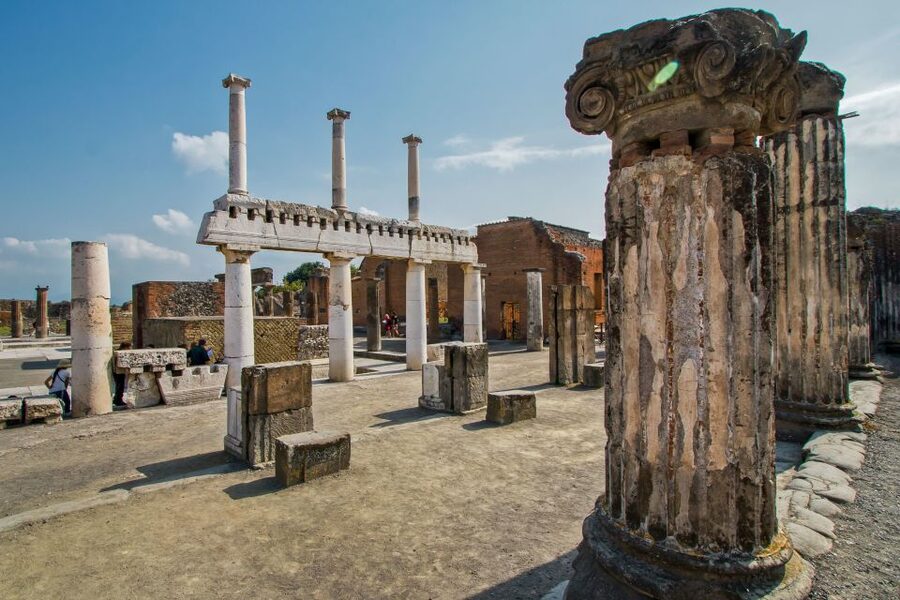
One of the best mid-tour stops is the Forum Baths. A lot of visitors think of baths as luxury, but in Rome they were a daily rhythm: socializing, cleansing, and cooling off in public.
The guide’s value here is timing. If you just walk through, baths can feel like a jumble of rooms. With commentary, each part starts to make sense: the logic of where people would enter, how spaces connected, and what activities likely happened where. It turns “ancient plumbing” into everyday life you can almost smell, hear, and picture.
In hot months, this is also a mental break. You’re still in sun and walking, but it is a different kind of space than the main streets. You’ll appreciate the chance to slow down for a bit.
Other tickets and entries for Pompei Campania

Thermopolium and Pistrinum: Street Food in Ancient Pompeii
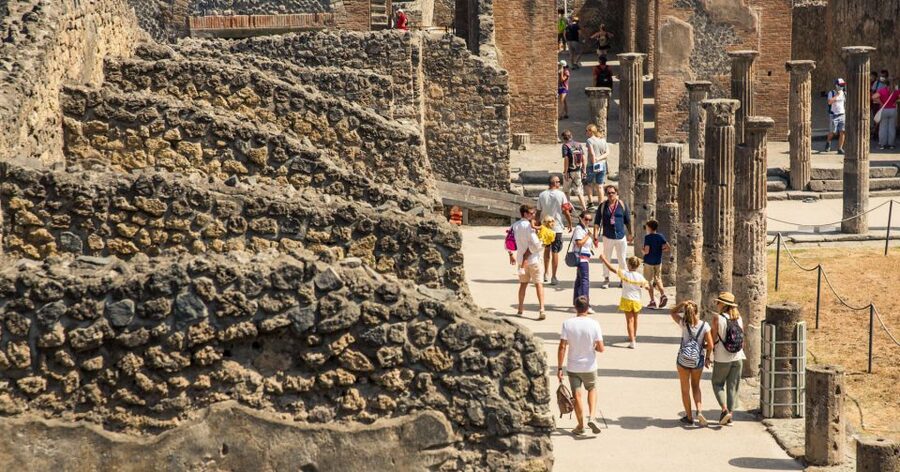
Then the tour moves into places that feel weirdly familiar: quick-service meals and grab-and-go routines. You’ll visit a thermopolium (ancient street food shop) and also see a pistrinum, a bakery area with millstones, ovens, and counters used to serve hot food.
This is one of my favorite categories in Pompeii because it punches holes in the stereotype that ancient life was only grand villas and official buildings. People needed food fast. They needed it daily. They ate on the move, just like you and I do.
If you are traveling with kids, this part usually lands well. It gives them a reason to connect Pompeii to real life. Even if you skip the Roman menu details, you’ll still come away with a clear sense of how meals worked inside the city’s flow.
Practical tip: these stops can involve moving between small areas. Keep your eye on where your guide gestures so you do not accidentally drift toward the edges of the route.
House of the Faun and the Alexander Mosaic
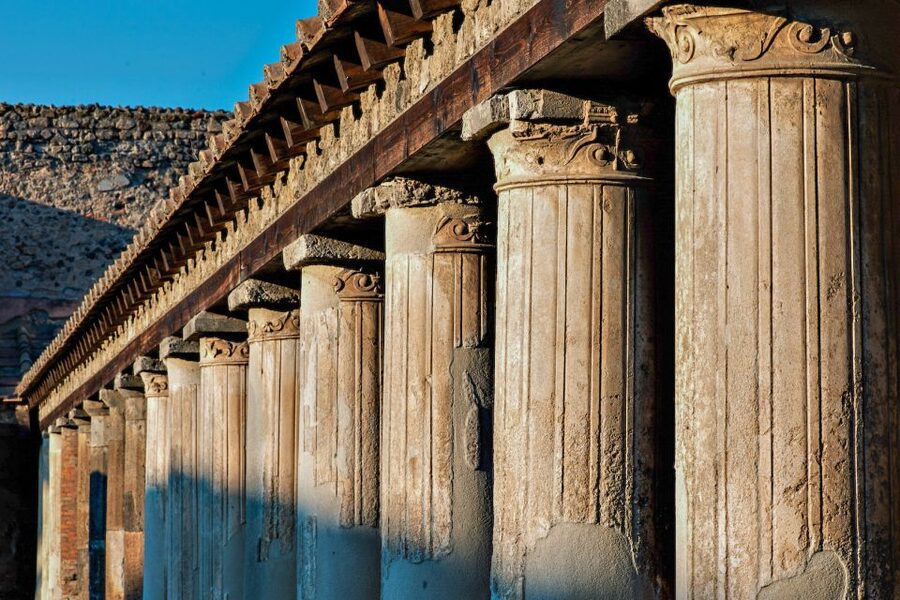
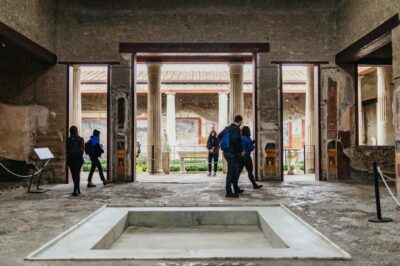
Now you get the shift from public to private. The House of the Faun is a grand Roman villa known for its mosaics, including the famed Alexander Mosaic. This is the moment where Pompeii stops being only about buildings and becomes about wealth, taste, and storytelling.
The mosaic is impressive on its own, but the guide’s commentary makes it more than decoration. You start noticing how art functioned like status branding and how imagery could communicate culture and power. You also get a sense of how big these homes were compared with typical street-level life.
This stop is valuable even if you have limited time. It gives you a real contrast to the forum and streets. In a short 2 to 2.5 hours, that contrast is what prevents Pompeii from feeling one-dimensional.
If you’re the type who loves details, pay attention to where the guide tells you to look. Mosaics can be visually loud, and without guidance you might miss the key element the tour is trying to highlight.
Lupanare: The Brothel and Its Flashy, Small Rooms
Next is the Lupanare, Pompeii’s ancient brothel. You’ll see compact stone rooms and frescoes that stand out even in ruins. It’s a difficult topic, but it’s also part of why Pompeii feels honest. The city isn’t only monuments and mosaics. It includes the parts people tried not to talk about.
A practical consideration: this stop can be time-sensitive depending on crowd flow. One small-group experience described avoiding longer queue time at this building so the guide could spend more time with the group elsewhere. That means you should treat the brothel as a highlight you might or might not get at your ideal pace, not as a guarantee to linger for a photo-fest.
Still, even seeing it briefly can be memorable because the space is tight and specific. You get a grounded understanding of how different Roman life was from modern assumptions.
Macellum and the Plaster Casts: Everyday Trade and the Human Cost
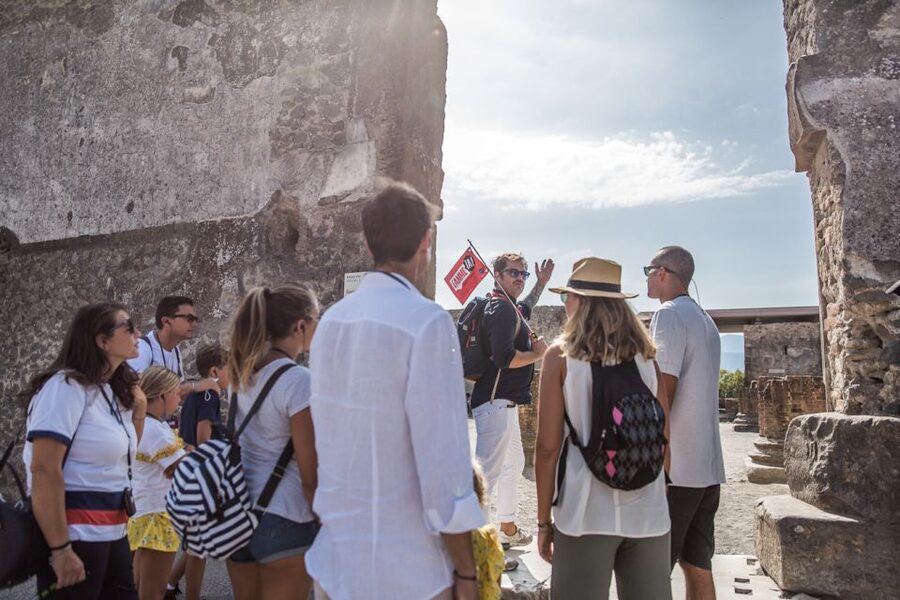
Later, you’ll visit the Macellum, Pompeii’s food market. This is where the city’s daily trade comes into focus. Your guide helps you imagine the soundscape of bargaining and the constant movement of people picking up supplies.
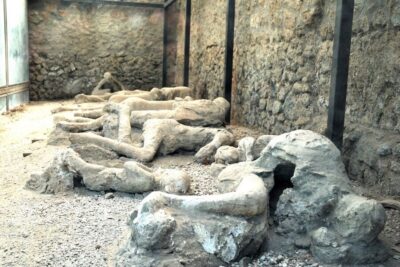
Then comes the most emotionally intense part: the plaster casts of Pompeii’s victims. These are human forms frozen in their final moments—men, women, and children. This is not a technical stop. It’s a stop that changes how you look at everything you just saw.
What makes this moment powerful on a guided tour is sequencing. You’ve already walked through streets and homes. So the casts don’t feel like an unrelated sad museum artifact. They feel like the ending to a story you can now picture.
Bring a quiet moment for yourself here. If you rush, it will feel like just another exhibit. If you slow down, you will feel the weight of what it means for a city to be stopped instantly.
Audio Headsets and Group Sizes: How the Tour Stays Under Control
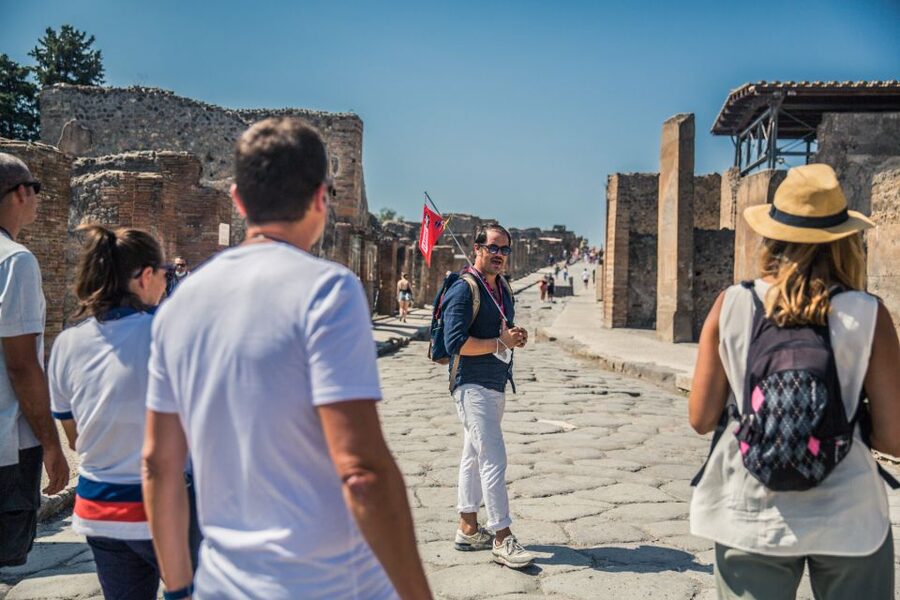
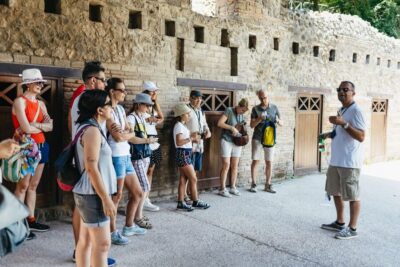
The format is designed to reduce stress. If you are in a group of 8 or more, you get audio headsets so you can hear your guide clearly. That’s a big deal at Pompeii, where people sometimes block sight lines and where noise can bounce off stone.
Group size also matters. The tour offers private or small groups, and it’s often easier to ask questions and keep pace when the group is smaller. One experience noted that a small group got more dedicated attention and even managed to see and understand more than a large group could.
There is one operational detail to keep in mind: due to site regulations, groups may be divided into smaller parties, each with its own licensed guide. This is normal and not something you should worry about, but it does mean your route could slightly vary depending on how the site is handling crowds.
Price and Value: What $43 Buys You in Real Terms
At $43 per person, this tour is not a bargain in the budget-sense. But it’s also not priced like a luxury add-on. The value comes from three things you cannot easily replace with self-guided wandering.
First is priority access. Time at Pompeii can be frustrating, and skipping some of that line helps you use your limited hours well. Second is the guide’s interpretive power. Pompeii is too large to understand quickly without someone pointing out what matters and why. Third is the route design: the tour is short enough to feel complete, but packed enough that you return from Pompeii with a real “I get it” feeling.
If you plan to visit with only morning or only a small slice of your day, this is where the money makes sense. You are paying to reduce wasted time and to get context that you’d likely miss.
If you are the kind of traveler who loves reading independently and you’re fine getting lost a bit, you could do Pompeii on your own. But if you want a fast, coherent experience without guessing, the $43 is easier to justify.
What to Bring, How to Pace Yourself, and Heat Reality
Pompeii is exposed. Even if your day starts cool, the sun can turn your legs into sandpaper. The simple list is your best friend: comfortable shoes and sunscreen.
Also plan for a walking-heavy couple of hours. The tour is 2 to 2.5 hours, but it includes stops, transitions, and brief time at each site. If you show up with brand-new sneakers or no plan for shade, you will feel it.
If you’re thinking about shade, keep in mind that some stops are in open courtyards and streets. An umbrella for shade can be helpful in extreme heat, and one experience specifically suggested extra shade planning for summer conditions.
Who This Pompeii Tour Suits Best
This is a strong fit if you want a guided overview that feels complete rather than scattered. I especially like it for families and first-timers because it mixes major monuments with daily-life stops like street food and baths.
It also works well if you want to see Pompeii again with fresh eyes. Even people who had visited before found new areas and walked away with a better sense of the city through the guide-led route.
On the other hand, it’s not suitable for wheelchair users. And unaccompanied minors are not allowed, so plan for supervision if you’re traveling with children.
Should You Book This Skip-the-Line Pompeii Tour?
I’d book it if you have limited time, dislike queue stress, and want Pompeii explained in a way that actually sticks. The combination of priority entry, a local guide who keeps the story readable, and a route that covers both public life and the emotional ending makes it a solid use of a half-day.
Skip it only if you have plenty of time to explore on your own and you’re happy piecing Pompeii together without a guide’s help. Also think twice if heat is your enemy and you know you cannot do a steady walk in sun.
If your goal is a confident first impression of Pompeii that doesn’t leave you wondering what you just saw, this tour is an easy yes.
FAQ
How long is the Pompeii guided tour?
The tour runs for about 2 to 2.5 hours.
Is there priority or skip-the-line access?
Yes. The tour includes priority access to the Pompeii archaeological site.
Where do we meet the guide?
The meeting point may vary depending on the option you book.
What languages are available for the live guide?
Live commentary is offered in English, Spanish, French, and German.
Do groups get audio headsets?
Audio headsets are provided for groups of 8+ to help you hear clearly.
What should I bring?
Bring comfortable shoes and sunscreen.
Is the tour suitable for wheelchair users or unaccompanied minors?
It is not suitable for wheelchair users. Unaccompanied minors are not allowed.
More Tours in Pompei Campania



More Tour Reviews in Pompei Campania


More Pompeii Tours to Compare
More Pompei Campania tours, freshly reviewed

Pompeii Tours, compared.
 ★ 4.8Pompeii: Entry Ticket and Guided Tour with an ArchaeologistFrom $3519,459 reviews
 ★ 4.1Pompeii: Entry Ticket with Audio GuideFrom $4013,491 reviews
 ★ 4.8Pompeii: Small Group Tour with an ArchaeologistFrom $4012,264 reviews
 ★ 4.3Pompeii Ruins & Mount Vesuvius Day TourFrom $12011,459 reviews
★ 5.0Pompeii Small Group Tour with an ArchaeologistFrom $356,593 reviews
★ 4.3Pompeii Ruins & Mount Vesuvius Day TourFrom $12011,459 reviews
★ 5.0Pompeii Small Group Tour with an ArchaeologistFrom $356,593 reviews
 ★ 4.5Skip-the-line Pompeii – Small Group TourFrom $544,401 reviews
 ★ 4.6Naples or Sorrento: Full-Day Pompeii and Mount Vesuvius TourFrom $1044,235 reviews
 ★ 3.9Pompeii: Skip-the-line Entry Ticket with Audio Guide & MapFrom $433,153 reviews