
Review · POMPEII TOURS
PompeiI Exclusive Tour with your Archaeologist in a Small Group
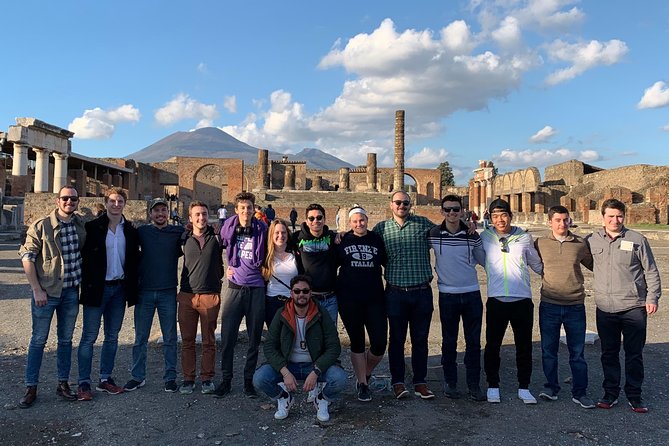
Pompeii clicks when you have a real guide. This small-group Pompeii tour is built for understanding, not just wandering, with an expert archaeologist leading you through the key places and how they worked in Roman daily life. I also like the practical touch: you enter through a priority line so you lose less time to the gate.
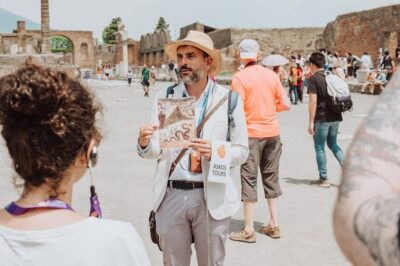
What I like most is the focus. In about two hours, you hit the Forum core, temple streets, food areas, baths, and major houses—so you leave with a mental map instead of random ruins. I also love that this tour is small (up to 15), which means you’re more likely to get your questions answered and keep a relaxed pace.
One consideration: the Pompeii park entry ticket isn’t included in the tour price. You’ll pay the site fee separately, and like any short route, you won’t see everything (for example, some big-ticket areas may fall outside the 2 hours).
In This Review
- Key highlights to know before you go
- A 2-hour Pompeii walk with an archaeologist guide
- Getting in fast at Porta Marina Superiore (and why it saves your day)
- Your stop-by-stop Pompeii route in priority order
- Stop 1: Porta Marina Superiore
- Stop 2: Tempio di Venere (Temple of Venus)
- Stop 3: Basilica (Forum’s major building)
- Stop 4: Sanctuary of Apollo
- Stop 5: Foro di Pompeya (Main Square / Forum)
- Stop 6: Tempio di Giove Capitolino (Temple of Jupiter)
- Stop 7: Macellum (Market building + plaster casts)
- Stop 8: Terme del Foro (Forum Baths)
- Stop 9: Termopolium di Vetuzio Placido (Thermopolium)
- Stop 10: Casa del Fauno and House of the Vettii (major houses with seasonal access)
- Stop 11: Via dell’Abbondanza (main street / decumanus maximus)
- Stop 12: Teatro Grande (Grand Theatre)
- Why the small group and archaeologist framing actually matter
- Tickets, price, and what you truly pay for
- Comfort tips for a smoother Pompeii day
- Who should book this Pompeii archaeologist tour
- Should you book this Pompeii tour?
- FAQ
- FAQ
- What language is the tour offered in?
- How long is the Pompeii tour?
- Is the Pompeii archaeological park entry ticket included in the price?
- Do I need a separate ticket for the tour vs the park entry?
- How do we enter the site to avoid long lines?
- Where does the tour start and end?
- How big is the group?
- Are there any online ticket help materials provided?
- What happens if weather is poor?
Key highlights to know before you go
- Priority entry via Porta Marina Superiore to reduce gate time and start smoothly
- Archaeologist-led interpretation that explains how people lived, worshiped, and traded
- A 2-hour “best of Pompeii” route with set stops across temples, baths, shops, and homes
- Small group limit (max 15) for a calmer walk and more direct interaction
- Extra “how it was found” context at sites tied to the famous plaster casts
- Frequent photo breaks are not the focus, so come ready to move between stops
Which Pompeii ticket and guide? Compare a few more.
- Pompeii Small Group Tour with an Archaeologist★ 5.0 · 6,593 reviews
- Discover the Ancient Ruins of Pompeii: Day Trip from Rome★ 3.5 · 2,247 reviews
- Pompeii and Herculaneum Small Group Tour with an Archaeologist★ 5.0 · 1,350 reviews
- Skip the Line Guided Tour of Pompeii led by an Archaeologist★ 5.0 · 703 reviews
A 2-hour Pompeii walk with an archaeologist guide
Pompeii is huge, and without a guide you can end up seeing “pretty old walls” instead of a living city. This tour is designed to fix that. You move with an archaeologist expert who helps you connect the dots: what each building was for, where people would have walked, and how everyday routines shaped the street plan.
The time frame matters. At roughly two hours, you’re not trying to conquer the entire site. Instead, you get a curated run through the parts that show Pompeii’s urban life: religion (temples), administration and justice (the Forum complex), public leisure (the baths), food and shopping (market and street life), and the grander side of Roman homes (houses you can visually “read” thanks to commentary).
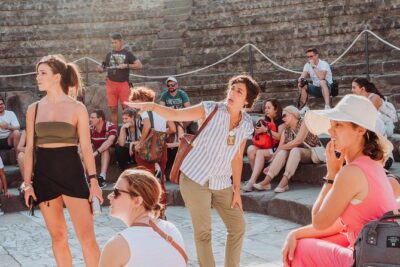
And because the tour is capped at 15 people, the pace stays human. You’re not constantly being squeezed through doorways or forced to keep up with a moving herd. It’s also a format where you can actually ask a question when something clicks—or when it doesn’t.
Getting in fast at Porta Marina Superiore (and why it saves your day)
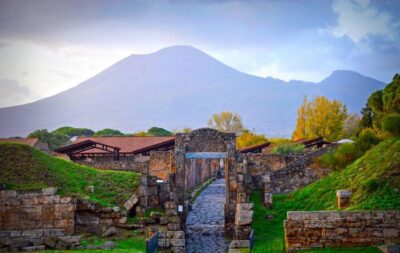
The first win is where you start and how you enter. You meet outside the Pompeii archaeological park at Porta Marina Superiore with a sign that you’ll recognize at the entrance area. Porta Marina Superiore is the western entrance, and “Marina” ties to the road leading out toward the sea, which helps you orient the city quickly.
Then you go in using a separate priority line. That sounds small, but at Pompeii it adds up. Gate lines can eat time you’d rather spend inside, especially if you only have a morning or afternoon.
Practical tip: even with priority entry, plan to arrive early enough to settle in and avoid stress. Comfortable shoes matter here more than people expect—your feet are doing most of the interpreting before your brain catches up.
Your stop-by-stop Pompeii route in priority order
This route is structured as a set sequence of stops (each one timed to keep the whole two-hour experience flowing). It means you won’t linger for an hour on a single mosaic, but you do get a guided overview you can then build on afterward.
Stop 1: Porta Marina Superiore
You kick off at Porta Marina Superiore, the western entrance. This is a smart first move because it frames Pompeii as a city you enter and circulate through, not a museum you hop between. Your guide starts setting location cues right away: where this road led, what kind of movement would have happened near the gate, and how that connects to what you see later in the Forum area.

Stop 2: Tempio di Venere (Temple of Venus)
Next is the Temple of Venus—Venus as Pompeii’s patron goddess. This stop works well because temples in Pompeii aren’t just religious set pieces; they anchor social identity. Your guide connects the temple to the broader city pattern: worship wasn’t separated from daily life, and it shows in how the sacred spaces sit along key routes.
If you’re the type who loves symbolism, this is where you start spotting it—where gods appear, what buildings imply about civic values, and how the street grid supports visibility.
Stop 3: Basilica (Forum’s major building)
The Basilica was one of the most prominent buildings in the Forum area. It served as a hub for business management and administration of justice. This is a big shift from “pretty ruins” to “this is how the city ran.”
I like this stop because it gives you context for the Forum. When you understand that the Forum wasn’t just a meeting square, the next buildings make more sense. Even if you don’t know Roman legal history, you’ll recognize the idea: people didn’t only trade—they also had decisions made, disputes handled, and official matters processed.
Stop 4: Sanctuary of Apollo
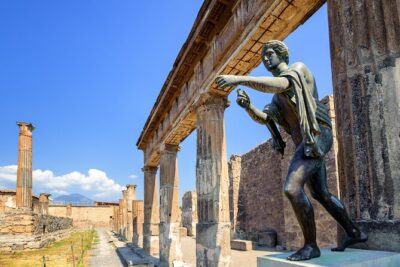
Then comes the Sanctuary of Apollo. It’s described as one of Pompeii’s oldest worship places, positioned strategically along the road from Porta Marina up toward the public heart of the city.
This is a good moment to grasp the city’s “spine.” Your guide helps you see why Apollo’s sanctuary sits where it does: the route itself becomes part of religious and social life. Even short stops like this can change how you look at the street layout.
Stop 5: Foro di Pompeya (Main Square / Forum)
Now you’re at the Forum as the center of daily life. This is the big square where commerce, civic events, and community routines would have overlapped.
The Forum can feel overwhelming on your own because it’s a dense area of structures and fragments. With a guide, you learn how to separate functions, read the relationships between buildings, and understand what the space would have felt like when it was active—not silent.
Stop 6: Tempio di Giove Capitolino (Temple of Jupiter)
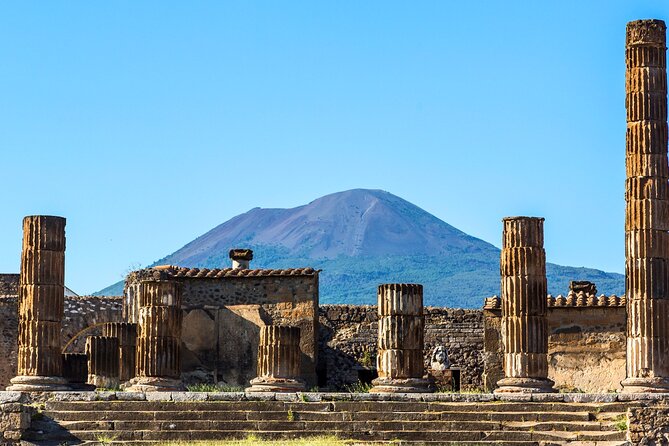
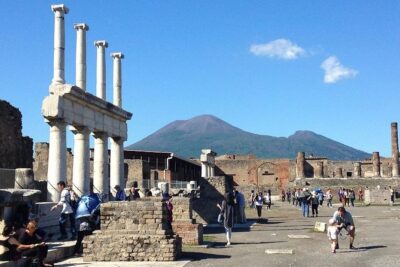
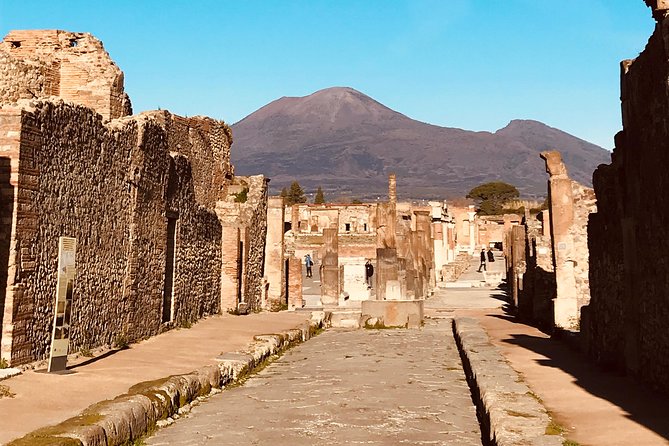
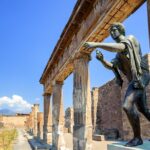
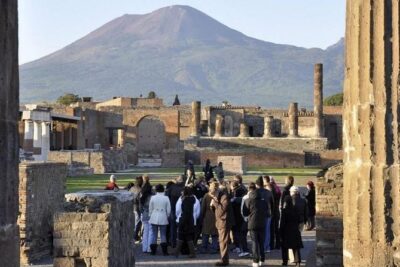
On the northern side of the Forum sits the Temple of Jupiter. Behind it rises Vesuvius, which is a dramatic visual reminder that Pompeii’s story includes both power and risk.
This stop adds a “big picture” layer. The guide typically frames Jupiter’s temple as part of civic identity, not only theology. And that Vesuvius backdrop makes it easier to understand why Pompeii is studied the way it is—because it’s a snapshot of a city caught in a single moment.
Stop 7: Macellum (Market building + plaster casts)
Then you reach the Macellum, a monumental market building used for selling food and everyday consumer products. This is one of the stops where Pompeii feels most human. You’re in the realm of daily needs, not grand ceremonies.
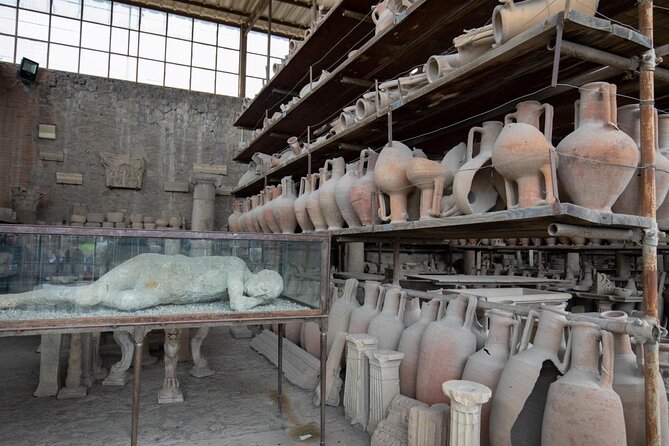
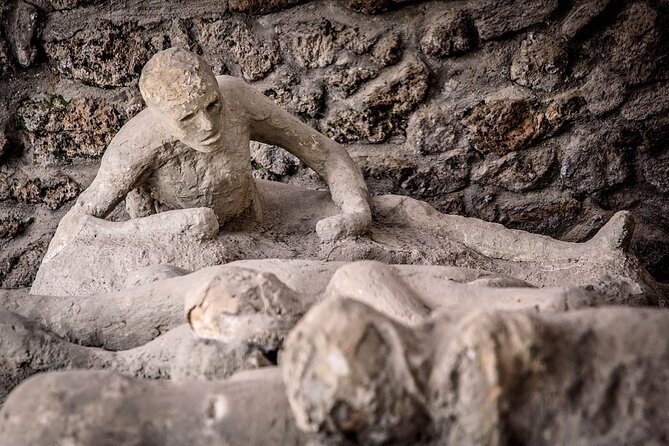
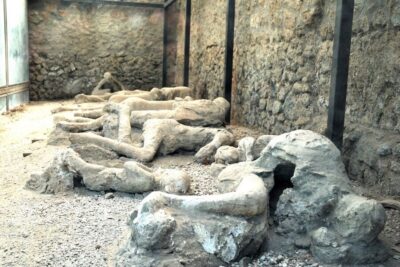
What makes this stop extra memorable is the reference to plaster casts, including the “BODIES” archaeological method used to understand what victims looked like at the time of the eruption. Standing in a market area and learning how archaeologists reconstruct tragedy can feel heavy—but it also clarifies why Pompeii is preserved in such a detailed way. The city’s story isn’t only about buildings; it’s about people.
Stop 8: Terme del Foro (Forum Baths)
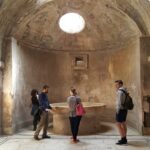
Next up: the Forum Baths, described as among the best-preserved pieces of Pompeii. You’ll see how the baths were arranged with separate areas for men and women, and that detail helps you understand Roman social habits and routines.
A bath complex is also a great place to connect architecture to behavior. It’s one thing to recognize walls; it’s another to understand traffic flow—where you’d go first, where you’d relax, and why different rooms mattered. This stop is ideal if you want to visualize everyday rhythms.
Stop 9: Termopolium di Vetuzio Placido (Thermopolium)
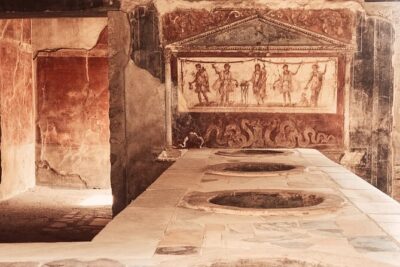
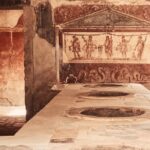
You then hit a thermopolium, essentially an old Roman diner or refreshment spot. This is where the tour turns toward street food and quick meals—an area of daily life many visitors miss if they only focus on temples and houses.
Even in a short visit, your guide can help you imagine the pacing of the meal: grab, eat, move on. Pompeii becomes less “dead city” and more “how people lived between work, errands, and leisure.”
Stop 10: Casa del Fauno and House of the Vettii (major houses with seasonal access)
This stop groups two rich residential highlights: the House of the Faun and the House of the Vettii. The House of the Faun is among Pompeii’s largest, and it’s noted for an inscription on the sidewalk that welcomes visitors in Latin. The House of the Vettii is tied to Priapus, the prosperity god.
One important reality check: these are subject to seasonal opening and closing. So on some days, you might see the exterior and approach areas more than the interior experience you might hope for. Still, the guided interpretation helps you “read” the differences between home scales, status signals, and how domestic space was organized.
Stop 11: Via dell’Abbondanza (main street / decumanus maximus)
Now you walk along Via dell’Abbondanza, Pompeii’s ancient main street (the decumanus maximus). This stop is the bridge between “sites” and “movement.” It’s where you start to feel the city as a network of routes, not a pile of attractions.
If you remember just one thing after the tour, make it this: street design in Pompeii controlled what people saw and where they went. The guide’s explanation helps you notice how buildings face the street and how the route supported commerce and social life.
Stop 12: Teatro Grande (Grand Theatre)
Finally, the Teatro Grande. Comedies and tragedies in the Greco-Roman tradition were performed here. This is a strong ending because it broadens Pompeii beyond business, worship, and baths.
You end with the idea that civic life also included entertainment and public culture. Even if you can’t “feel” a performance without sound, the structure and the purpose are easy to grasp with the guide’s framing. Two hours ends, but your mental map keeps expanding.
Why the small group and archaeologist framing actually matter
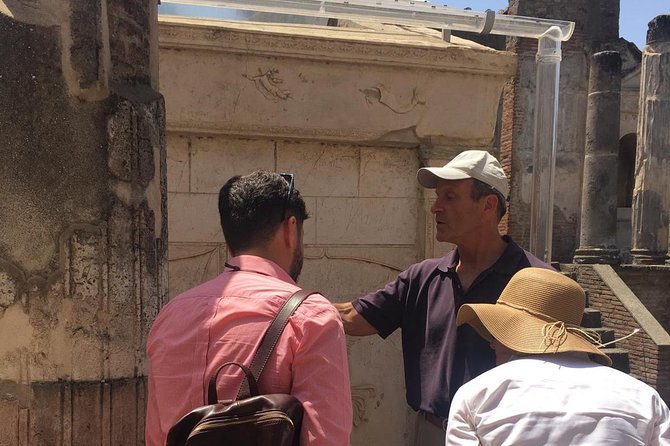
Pompeii tours often sound the same on paper: “see the highlights with a guide.” The difference here is that the tour is built around interpretation by an archaeology expert and a pace that fits real human attention spans.
In a small group, your guide can adapt. If you’re curious about how archaeologists know things (not just what things are), you’re more likely to get answers. In the tour experiences this style is known for, guides often explain how archaeologists figure out the story behind the ruins—how details turn into evidence.
Also, the guide’s job isn’t only to point. It’s to help you understand why the placement of buildings matters. That’s what turns “I saw a temple” into “I get how the city functioned.”
Tickets, price, and what you truly pay for
The tour price is listed at $30.25 per person, and it runs about two hours. The park entry ticket is not included. Pompeii park entry is €19 per adult (free under 18).
So what’s the real cost? Roughly speaking, you’re planning for about $30.25 plus the site fee if you’re an adult paying entry. The value equation usually comes down to three things:
- You’re buying real-time expert interpretation, not just a walk.
- You’re buying time savings at the gate via the priority entry approach.
- You’re paying for a timed route that keeps you from missing the most important parts.
If you already know Pompeii well and plan to do the site completely on your own, you might not need this format. But if you’re visiting for the first time and want meaning instead of guesswork, this kind of guide-led route is a solid deal.
One more clarity point: the tour ticket you buy is for the tour itself. The entry ticket is a separate purchase you’ll arrange with help (a link is provided ahead of time to buy online).
Comfort tips for a smoother Pompeii day
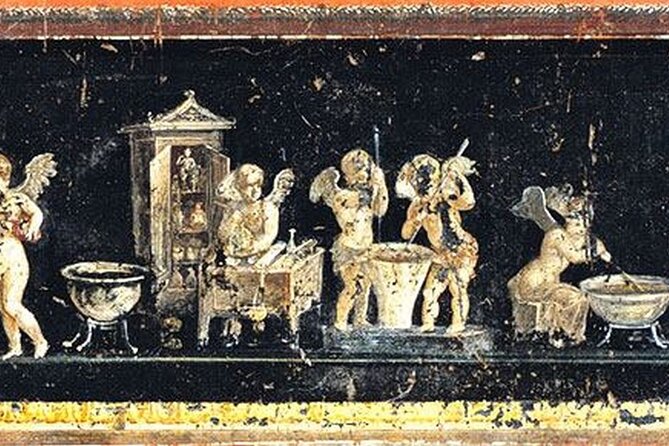
Pompeii is outdoor walking plus uneven surfaces. A “quick two hours” still adds up on your legs.
- Wear shoes with grip. Pompeii floors can be slick or irregular.
- If you’re given an earpiece, test it early and keep an eye on volume. One experience note from the past was that an earpiece issue can happen, and it’s better to catch it immediately.
- Bring a light layer if weather is changeable. This site can be wind-heavy, and one guide approach in wet or windy conditions is to use sheltered pockets when needed.
- Plan for a brisk pace between stops. You’ll have chances to look and photograph, but this isn’t a long “hang out here” tour.
Who should book this Pompeii archaeologist tour
You’ll likely love this tour if you:
- are visiting Pompeii for the first time and want a clear orientation fast
- want to understand why buildings are placed where they are, not only what they look like
- prefer smaller groups (max 15) and a guided pace that doesn’t feel rushed
- appreciate archaeology context, including how plaster casts help reconstruct what happened
It may be less ideal if you:
- want to spend extra time in one place like the theatre area or houses with interiors open every day
- plan to see every major attraction and don’t want a two-hour cap
Should you book this Pompeii tour?
I’d book it if you want the easiest path from ruins to understanding. The priority entry helps you start on time, and the timed route hits the Forum, baths, market life, street life, and major houses without turning your visit into a marathon.
If you’re the type who loves Pompeii so much you want to return for the full checklist, this tour is also a great first stop. You’ll know where to go next because the guide helps you build a map in your head.
If you’re deciding late: it’s often booked about 25 days in advance, so try not to wait too long.
FAQ
FAQ
What language is the tour offered in?
The tour is offered in English.
How long is the Pompeii tour?
The duration is about 2 hours.
Is the Pompeii archaeological park entry ticket included in the price?
No. Pompeii park admission is not included. The listed site fee is €19 per adult, and entry is free under 18.
Do I need a separate ticket for the tour vs the park entry?
Yes. The ticket you buy through the tour provider is for joining the tour, not the park admission. You’ll need to buy the entry ticket separately.
How do we enter the site to avoid long lines?
You enter through a separate priority line. The meeting point is at Porta Marina Superiore, and you go in via that priority access.
Where does the tour start and end?
It starts at Via Villa dei Misteri, 1, 80045 Pompei NA, Italy and ends back at the same meeting point.
How big is the group?
The tour has a maximum of 15 travelers.
Are there any online ticket help materials provided?
Yes. The afternoon before the tour, you receive a link to buy your Pompeii entrance tickets online.
What happens if weather is poor?
This experience requires good weather. If it’s canceled due to poor weather, you’re offered a different date or a full refund.
More Tours in Pompeii

More Tour Reviews in Pompeii

More Pompeii Tours to Compare
More Pompeii tours, freshly reviewed

Pompeii Tours, compared.
 ★ 4.8Pompeii: Entry Ticket and Guided Tour with an ArchaeologistFrom $3519,459 reviews
 ★ 4.1Pompeii: Entry Ticket with Audio GuideFrom $4013,491 reviews
 ★ 4.8Pompeii: Small Group Tour with an ArchaeologistFrom $4012,264 reviews
 ★ 4.3Pompeii Ruins & Mount Vesuvius Day TourFrom $12011,459 reviews
★ 5.0Pompeii Small Group Tour with an ArchaeologistFrom $356,593 reviews
★ 4.3Pompeii Ruins & Mount Vesuvius Day TourFrom $12011,459 reviews
★ 5.0Pompeii Small Group Tour with an ArchaeologistFrom $356,593 reviews
 ★ 4.5Skip-the-line Pompeii – Small Group TourFrom $544,401 reviews
 ★ 4.6Naples or Sorrento: Full-Day Pompeii and Mount Vesuvius TourFrom $1044,235 reviews
 ★ 3.9Pompeii: Skip-the-line Entry Ticket with Audio Guide & MapFrom $433,153 reviews