
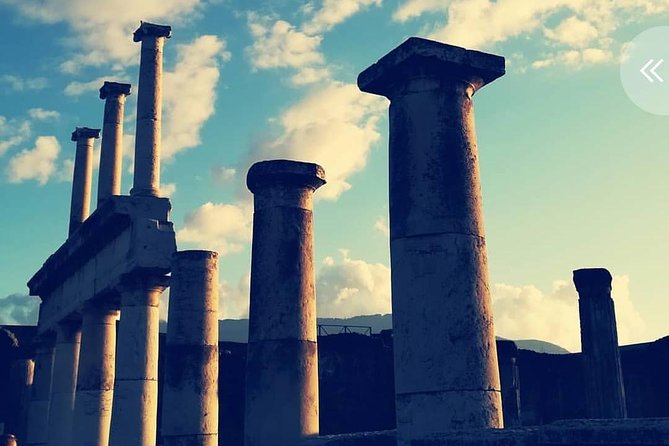
Review · POMPEII TOURS
Explore and Experience Pompeii
Pompeii hits you fast. In just about two hours, you get a guided walk that turns the Pompeii Archaeological Park into a living place, not a pile of stones. I especially like how the guide frames what you see around real daily questions—what people did for fun, where they gathered, and how homes and public spaces worked.
I also like that you’re not stuck staring at one spot. You’ll move through streets, squares, and houses, with time to look closely at things like graffiti and symbols that help explain Pompeian habits and beliefs. One consideration: park entrance tickets are not included, so you’ll need to handle that ahead of time before you meet up.
In This Review
- Key things to know before you go
- Your 2-hour Pompeii walk: pace, focus, and what you’ll actually remember
- Meeting at Piazza Esedra and starting with less friction
- Pompeii Archaeological Park: how the guide turns streets into stories
- Graffiti and symbols: why this is more than visual trivia
- Houses, squares, and everyday life you can picture
- Seeing faces and modern techniques: how the past gets human
- Skip-the-line style entry, but don’t forget the park ticket
- Price and value: is $240.28 per group worth it?
- Who should book this Pompeii private tour?
- A few practical tips to get more out of the tour
- Should you book? My honest take
- FAQ
- Is this Pompeii tour private?
- How long is the Pompeii experience?
- Is the Pompeii park entrance ticket included?
- What’s included in the price?
- Where do we meet for the tour?
- Is the tour offered in English?
- What is the cancellation policy?
- How far in advance should I book?
Key things to know before you go
- Private, up-to-10 group format means the guide can tailor the pace to your crew
- English-language tour keeps the story clear without translation delays
- A guided “walk the city” approach focuses on everyday life, not just big monuments
- Graffiti and symbols are treated like real evidence, not random scribbles
- Admission tickets aren’t included, so plan for that extra step
- Piazza Esedra is your meeting point, and the tour returns there
Which Pompeii ticket and guide? Compare a few more.
- Pompeii Small Group Tour with an Archaeologist★ 5.0 · 6,593 reviews
- Discover the Ancient Ruins of Pompeii: Day Trip from Rome★ 3.5 · 2,247 reviews
- Pompeii and Herculaneum Small Group Tour with an Archaeologist★ 5.0 · 1,350 reviews
- Skip the Line Guided Tour of Pompeii led by an Archaeologist★ 5.0 · 703 reviews
Your 2-hour Pompeii walk: pace, focus, and what you’ll actually remember
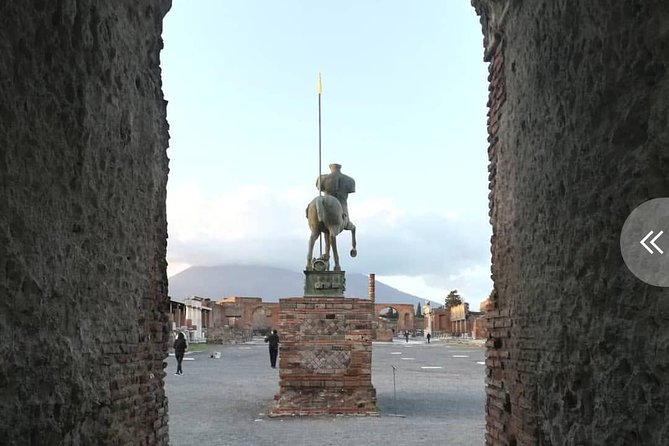
A Pompeii site is huge on maps, but tours usually feel either rushed or random. This one stays efficient. The plan is a structured walk through key areas of the archaeological park, guided so you understand what you’re looking at as you go. Expect a rhythm that’s made for seeing, processing, and then seeing again with better context.
The big value is how the guide connects the physical site to normal human stuff. You’re not only told what a building was. You’re guided to notice why it mattered: how people spent spare time, what places were popular, what kind of theater or performance culture existed, and how day-to-day life flowed through the streets. It’s a smart way to make the place feel less like history class and more like a city with habits.
And yes, two hours can feel short. But that’s exactly why this works. You’ll leave with a mental map and a set of questions that make self-exploration easier. If you like walking tours where you get the “keys” to the place—then you go unlock it on your own—this format fits.
Meeting at Piazza Esedra and starting with less friction
You meet at Piazza Esedra, 80045 Pompei NA, Italy and the tour ends back at the same point. That round-trip matters more than you’d think. Pompeii can be disorienting at first, and coming back to the same hub helps you reset your bearings fast.
The start is also described as near public transportation, which is practical if you’re arriving by train or using local buses/taxis for the last stretch. You won’t waste the early part of your day hunting for the group or trying to decode signage on your phone while everyone else is already in motion.
One more practical point: the tour includes a mobile ticket. That usually means less paperwork and fewer last-minute printing problems. Still, because the Archaeological Park entrance tickets aren’t included, treat that as separate. You’ll want your park entry sorted before your guided time begins, so you’re not losing the whole appointment window to ticketing.
Pompeii Archaeological Park: how the guide turns streets into stories
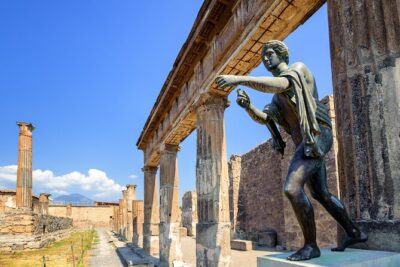
This is a single-stop tour focused on the Pompeii Archaeological Park, lasting about 2 hours. The value is in what the guide emphasizes while you walk—streets, squares, houses, and smaller details that many visitors miss when they’re just trying to check boxes.
Here’s what the route theme is built to answer:
- What people did in their spare time
- Where the most popular activity happened
- What kind of theatrical performances were part of public life
- How everyday routines played out in shared spaces
- What people ate and how that shaped daily life
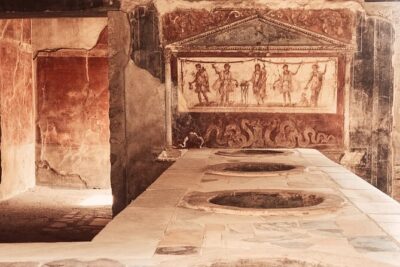
You also get a close look at things like graffiti and symbols. On your own, those can feel like background texture. With a guide, they become clues. The idea is that the city’s surfaces record attitudes, habits, and social signals—so you’re not just looking at ruins. You’re learning how Pompeians communicated and marked their world.
The guide also helps you read the site in layers: not only the obvious structures, but the human “signals” left behind. That’s where the experience becomes memorable. You’ll come away with explanations that make it easier to interpret other areas later.
Graffiti and symbols: why this is more than visual trivia
One of my favorite ways to understand an ancient place is to look for traces of real people. This tour does that directly. You’ll spend time looking at graffiti, interpreting symbols, and connecting those marks to life in Pompeii.
Why does that matter? Because Pompeii isn’t just about architecture. It’s about culture—how people expressed opinions, advertised beliefs, and used public space like a canvas. When a guide explains what you’re seeing, those marks stop being random and start feeling like messages from a city.
The same logic applies to symbols. Symbols can be easy to overlook because they’re often small or partial. A guide helps you notice them and explains what they might have meant in context. That turns your walking tour into something closer to reading a city like a text.
If you like tours where you’re actively learning how to look, you’ll probably enjoy the attention to these details. If you’re hoping for only large, iconic sights and zero time on small observations, you may want a more monument-heavy tour instead. This one is about reading Pompeii, not speed-running it.

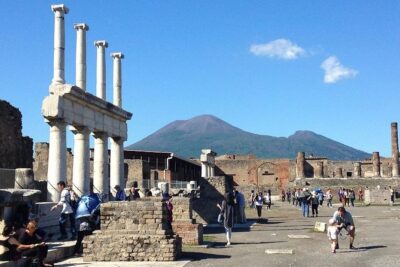
Houses, squares, and everyday life you can picture
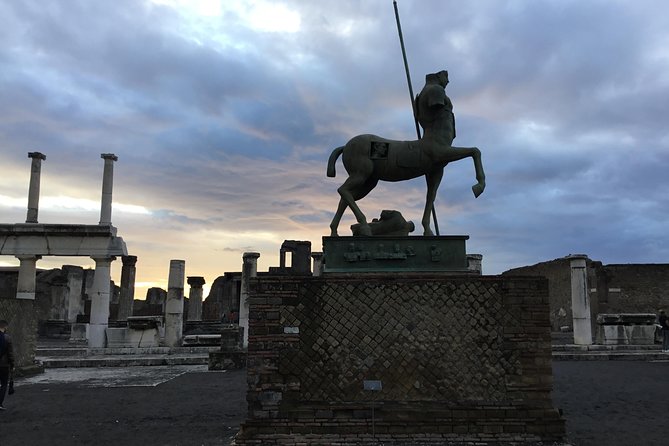
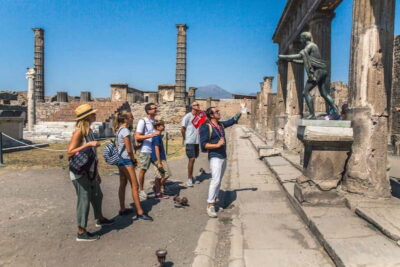
Pompeii’s power is how quickly you can imagine daily movement—shops opening, people crossing squares, families gathering, neighbors talking. The tour leans into that by guiding you through houses, squares, and streets with a focus on how people lived.
For me, the key advantage is that houses and public squares tell different stories. Houses can help explain private life and household routines. Squares and street corridors help explain social life and the public rhythm of the city. You’ll get explanations designed to connect those dots so you don’t end up treating Pompeii like separate isolated rooms.
You’ll also be guided to notice patterns in how spaces functioned. Even when the buildings are damaged, the layout can still make sense. With the guide framing your observations, it’s easier to understand where people would gather, where they’d pass through, and which spaces felt central to everyday life.
There’s also an emphasis on what people did for leisure and performance. Pompeii wasn’t silent. It had culture—public events, theater activity, and a social scene. When the guide brings that into the story, it helps the ruins feel less frozen and more like a lived-in city.
Seeing faces and modern techniques: how the past gets human
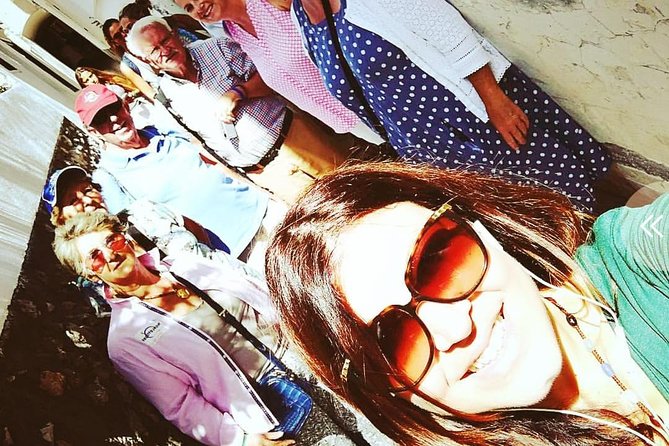
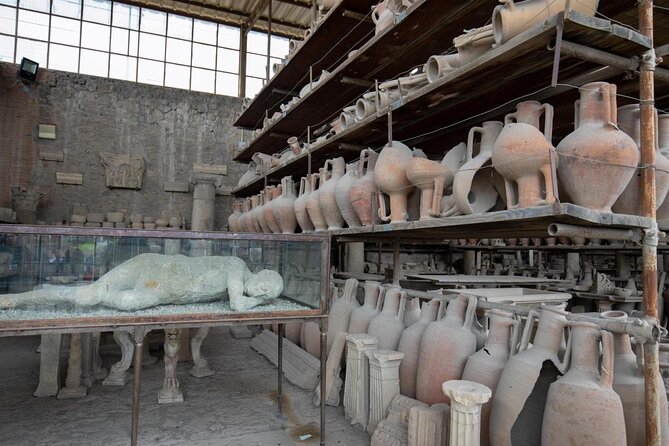
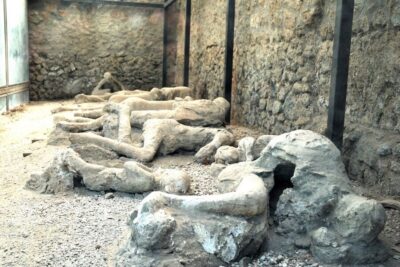
One theme in the walk is learning how modern methods have helped researchers understand human features—specifically, faces that advanced techniques have allowed experts to know. It’s a reminder that Pompeii isn’t just stonework. It’s people.
You’ll hear this kind of explanation while you’re moving through the site, which helps you connect the emotional weight of Pompeii to actual evidence. It’s not meant to be scary for the sake of drama. It’s meant to make the city feel personal—like you’re learning about real individuals, not abstract “Romans.”
This part works best if you’re open to small moments of realism while you walk. If you prefer only architectural explanation, you might tune this in lightly. But if you’re curious about how modern research shapes what we understand, it lands well inside a guided storytelling format.
Skip-the-line style entry, but don’t forget the park ticket
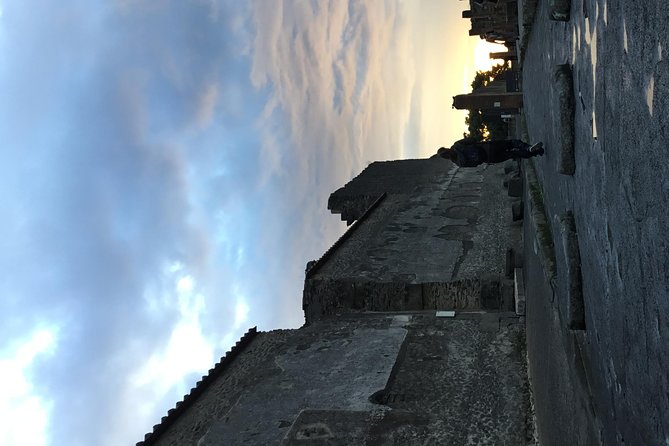
The tour is described as skipping the line, which suggests the experience is set up to reduce waiting. That matters a lot at popular sites where ticket lines can eat your time. But here’s the honest part: the listing clearly says admission tickets are not included.
So you should plan for two separate actions:
1) Arrange your Archaeological Park entrance ticket
2) Show up to the meeting point at Piazza Esedra
If you do that, the “less friction” approach is more likely to pay off. If you arrive without the park ticket sorted, you may lose time right when you most want to start walking.
If you’re the type who likes momentum—getting in, getting oriented, and hitting the site while energy is high—this structure can be a good match.
Price and value: is $240.28 per group worth it?

The price is listed as $240.28 per group (up to 10) for about 2 hours, and it includes the guide service. Park admission is extra. That matters because it affects how you judge value.
Here’s the real value logic: a guide can do more than narrate. At Pompeii, the biggest “currency” is attention. A good guide helps you focus on the details that make the site click—graffiti, symbols, household and public life, and the reasons behind what you see. Those are exactly the parts a self-guided visit often underplays unless you already know what to look for.
For a group, the price can be very reasonable. Up to 10 people means you’re not paying per person like some ticketed group tours. If you’re traveling with friends or family, the cost can look especially fair once you compare it to what you’d pay for multiple separate guided experiences.
So the question isn’t only, Is it $240.28? It’s: will your group use the guide well? If your crew likes conversation and wants clarity instead of wandering in the dark, this is a solid value. If your group prefers silent audio and self-paced strolling, you may not feel the guide adds enough.
Who should book this Pompeii private tour?
This is a good fit if you want a guided introduction and then freedom after. The emphasis on everyday life, how spaces worked, and how to interpret details is exactly what helps you enjoy the rest of your time in the park.
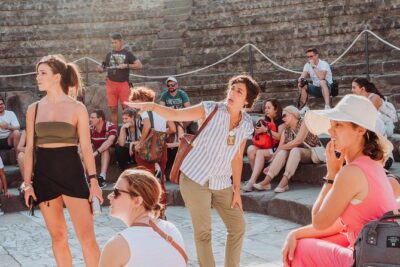
It also suits groups that want a calmer pace. Since it’s private and only your group participates, you’re not fighting for attention in a large crowd. That matters at Pompeii, where too many people can flatten your ability to see small clues.
Most travelers can participate, and it’s near public transportation. So it’s not an awkward niche experience. It’s more of a practical storytelling walk that works for a wide range of ages and interests—especially if you like history that explains people, not just dates.
A few practical tips to get more out of the tour
Because the park entry isn’t included, plan your ticket before meeting time. Then you can focus on the guide instead of ticket logistics.
Wear comfortable walking shoes. Pompeii is about walking through uneven terrain and long distances between points of interest.
Also, set expectations for the format. This is a guided theme walk, not a marathon of every major structure. The payoff is understanding what you’re seeing and how it connected to daily life.
Should you book? My honest take
I’d book this if you want a short, high-impact introduction to Pompeii that helps you see beyond ruins. The private group size, the English guide service, and the focus on streets, graffiti, symbols, houses, squares, and performance culture all point to an experience designed to help you understand the city quickly.
I’d skip it or consider another option if your priority is only the biggest set-piece monuments and you don’t want to spend time interpreting smaller details. Also, don’t forget the park ticket. This tour pays off most when your entry is already handled.
If you’re aiming for a Pompeii visit that feels human—and you want your time there to make sense—this is an easy yes.
FAQ
Is this Pompeii tour private?
Yes. It’s a private tour/activity, and only your group will participate.
How long is the Pompeii experience?
It lasts about 2 hours.
Is the Pompeii park entrance ticket included?
No. Admission tickets to the Archaeological Park are not included.
What’s included in the price?
The guide service is included. The tour also uses a mobile ticket feature.
Where do we meet for the tour?
The start is Piazza Esedra, 80045 Pompei NA, Italy. The activity ends back at the meeting point.
Is the tour offered in English?
Yes, it’s offered in English.
What is the cancellation policy?
You can cancel for a full refund up to 24 hours in advance of the experience’s start time.
How far in advance should I book?
On average, this tour is booked about 89 days in advance.
More Tour Reviews in Pompeii



More Pompeii Tours to Compare
More Pompeii tours, freshly reviewed





Pompeii Tours, compared.
 ★ 4.8Pompeii: Entry Ticket and Guided Tour with an ArchaeologistFrom $3519,459 reviews
 ★ 4.1Pompeii: Entry Ticket with Audio GuideFrom $4013,491 reviews
 ★ 4.8Pompeii: Small Group Tour with an ArchaeologistFrom $4012,264 reviews
 ★ 4.3Pompeii Ruins & Mount Vesuvius Day TourFrom $12011,459 reviews
★ 5.0Pompeii Small Group Tour with an ArchaeologistFrom $356,593 reviews
★ 4.3Pompeii Ruins & Mount Vesuvius Day TourFrom $12011,459 reviews
★ 5.0Pompeii Small Group Tour with an ArchaeologistFrom $356,593 reviews
 ★ 4.5Skip-the-line Pompeii – Small Group TourFrom $544,401 reviews
 ★ 4.6Naples or Sorrento: Full-Day Pompeii and Mount Vesuvius TourFrom $1044,235 reviews
 ★ 3.9Pompeii: Skip-the-line Entry Ticket with Audio Guide & MapFrom $433,153 reviews
Browse the lists this tour appears in