
Review · POMPEII TOURS
2-Hour Pompeii Child-Friendly Tour
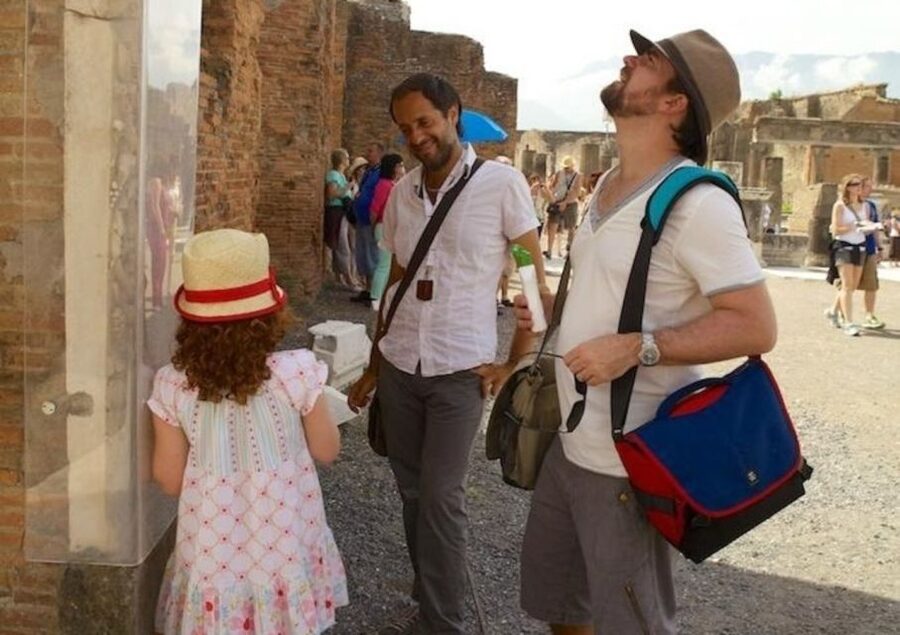
Pompeii becomes kid-sized in two hours. This private tour uses tablet-based storytelling plus reconstructions and multimedia so kids stay engaged and adults still learn. I also love the fact that you get skip-the-line entry, and the guide can handle ticket buying quickly for you.
You’ll start at the main gate, Porta Marina Superiore, and move through the ruins at a family-friendly pace. The guiding is set up for parents and children at the same time, with the guide adjusting attention to what your group needs in the moment.
One thing to plan for: it’s a walking tour with no transportation included. Expect to spend the full two hours on uneven stone and in areas with lots of stairs and surfaces that can feel tiring—especially with young kids.
In This Review
- Key highlights worth your attention
- Meeting Porta Marina Superiore: Easy start at the main entrance
- Getting inside quickly: Skip-the-line tickets without the stress
- From Porta Marina to the Temple of Apollo: Small stops, big atmosphere
- Foro Civile and Basilica: Where people actually spent their day
- House of Menander and the House of the Faun: Homes with stories to follow
- Forum Baths and Thermopolium: The city’s routine in two flavors
- Large Theatre and the House of the Vettii: Entertainment and status
- Tablets, reconstructions, and multimedia: Why kids actually follow along
- Walking for two hours: Pace, comfort, and what to bring
- Price and value: What $212.41 per person buys you
- The verdict: Should you book this Pompeii child-friendly tour?
- FAQ
- Where does the 2-hour tour start?
- How long is the tour?
- Is skip-the-line entry included?
- What language is the guide available in?
- What happens on the first Sunday of the month?
- Is transportation included?
Key highlights worth your attention
- Skip-the-line help handled in 5 to 10 minutes, so you don’t burn tour time waiting at ticket lines
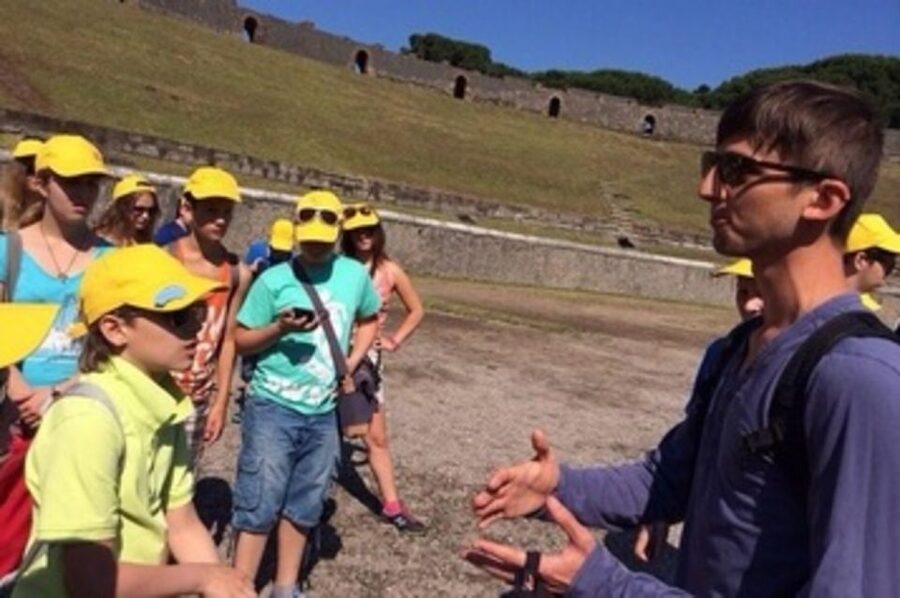
- Tablet + reconstructions + multimedia, designed to explain what you’re seeing in kid-friendly ways
- A tight 2-hour route with timed stops (mostly 10–20 minutes) so the pace stays manageable
- Hands-on Roman daily life stops, from forums and baths to homes, theaters, and food spots
- Private group format, which makes it easier for the guide to focus on your family’s questions
Which Pompeii ticket and guide? Compare a few more.
- Pompeii: Entry Ticket and Guided Tour with an Archaeologist★ 4.8 · 19,459 reviews
- Pompeii: Small Group Tour with an Archaeologist★ 4.8 · 12,264 reviews
- Pompeii: Skip-the-line Entry Ticket with Audio Guide & Map★ 3.9 · 3,153 reviews
- Naples: Pompeii and Mt. Vesuvius with Lunch and Wine Tasting★ 4.5 · 2,454 reviews
Meeting Porta Marina Superiore: Easy start at the main entrance
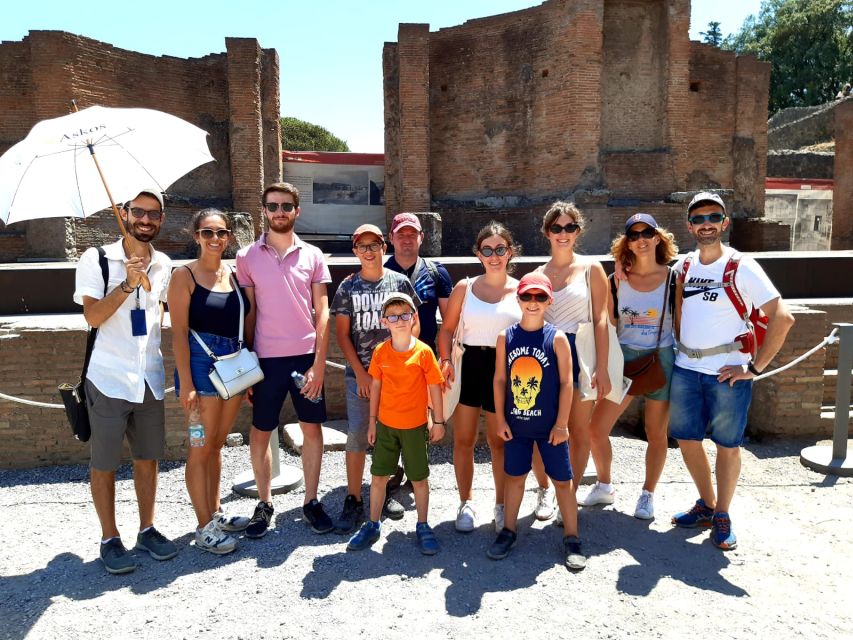
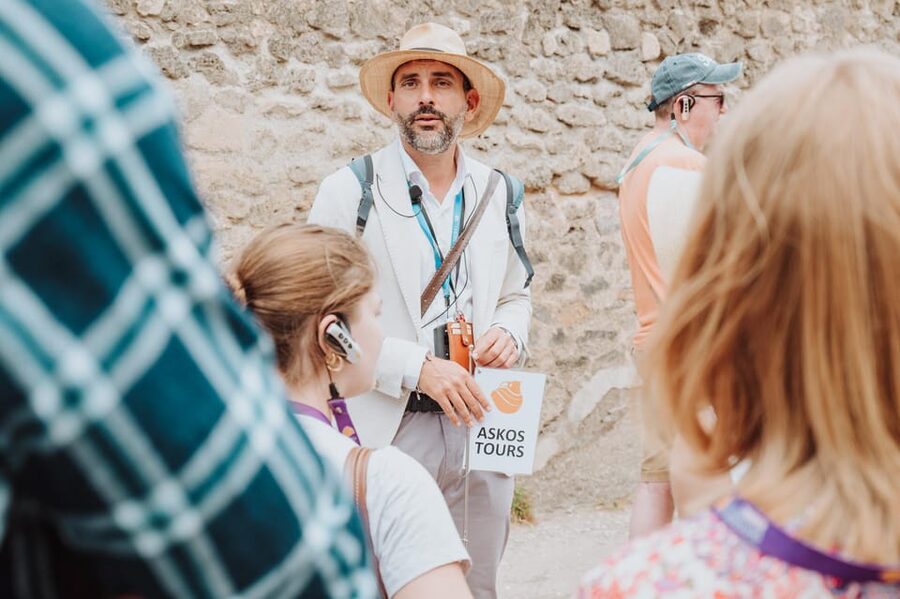
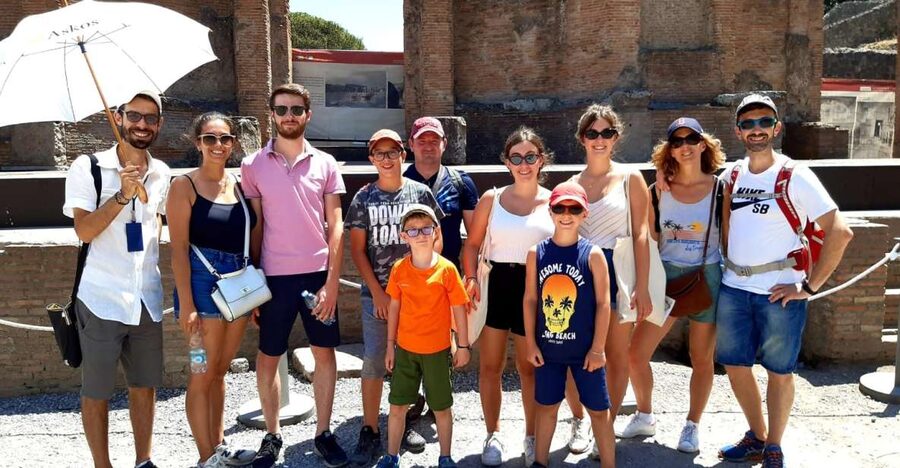
The tour begins at Via Villa dei Misteri, 2, at the Pompeii main entrance called Porta Marina Superiore. The meeting spot is on the opposite side of the bar-restaurant Hortus. Your guide will be waiting at the entrance gate holding a sign with your name.
This matters more than it sounds. Pompeii can make first-time visitors feel instantly “lost in the stones.” Starting at the main gate, with a guide who is easy to spot, helps you get your bearings fast and keeps your first few minutes calm—especially with kids.
You’re also saving mental energy from day one. Instead of figuring out which ticket window to use or where to queue, you roll right into the tour rhythm and start moving through the ruins.
Getting inside quickly: Skip-the-line tickets without the stress
Pompeii ticket lines can be a time sink. The big practical win here is that the guide can buy the tickets for you to skip-the-line, and everything is typically done in 5 to 10 minutes.
That short window changes the whole feel of a family tour. When you lose ten minutes to paperwork or queues, kids get squirmy and adults get impatient. With this format, you keep the energy headed toward the sites you came for.
If you’re planning around the first Sunday of the month: entrance is free then, but tickets can’t be reserved ahead of time, so entry isn’t guaranteed. On that day, the guide still can help you manage the situation, but you’ll want to be flexible.
From Porta Marina to the Temple of Apollo: Small stops, big atmosphere
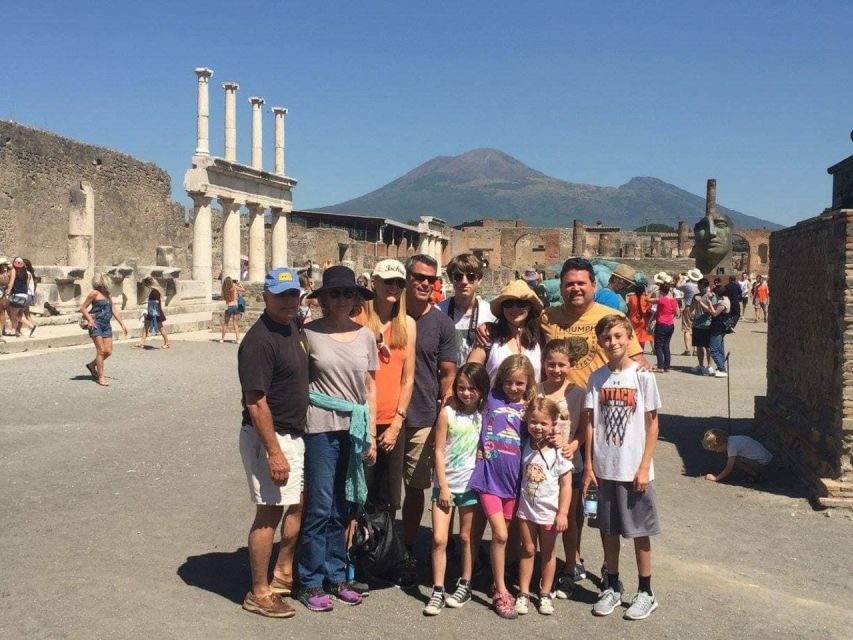
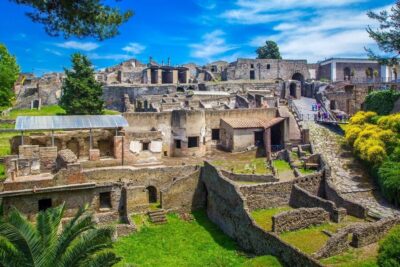
Your first guided stop is Porta Marina, Pompeii, with about 10 minutes for orientation and story. This gate isn’t just an entrance—it’s a reminder that Pompeii was a real, lived-in city. The guide’s job is to make the space understandable quickly: where you are, what kind of place this would have been, and why it matters as you walk deeper into the ruins.
Next is the Temple of Apollo, also around 10 minutes. Temples can be hard for kids because they look like columns and stones. The tour is built to fix that by using tablets, reconstructions, and multimedia to translate the site into something you can picture. You’re not just staring at remains—you’re connecting the dots to what religion and public space meant there.
The timing is important. Short stops keep kids from melting down mid-sentence, and it also prevents adults from getting bored waiting for the next “big moment.”
Foro Civile and Basilica: Where people actually spent their day
The heart of any Pompeii walk is learning how the city functioned. The tour’s Foro Civile di Pompei is a focused stop of about 20 minutes, which is a nice length—long enough to understand the layout without turning it into a lecture.
You’ll see the forum as the main square and marketplace area, with market temples and municipal buildings in the mix. For families, this is where Pompeii starts feeling real. Kids can grasp “this is where people came together” faster than they can grasp abstract Roman government. Adults get the satisfaction of seeing how civic life and commerce worked side by side.
Right after that is the Basilica, with about 10 minutes. Think of the basilica as a courtroom and administrative hub—public space for decisions, disputes, and official business. If you want kids to understand that the Romans weren’t living in temples only, this is the kind of stop that helps. It shows how rules and daily routines were built into the city’s center.
Drawback to be aware of: forums and basilicas can feel visually repetitive—stone surfaces, columns, open areas. The tablets and reconstructions help break the pattern, but if your group is tired, this is where a quick water break can save the rest of the tour.
Other Pompei Campania outings worth a look before you book
House of Menander and the House of the Faun: Homes with stories to follow
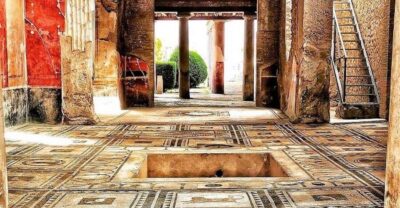
Pompeii is famous for its houses, and the tour hits two well-known domestic stops: the House of Menander (about 20 minutes) and the House of the Faun (about 20 minutes).
The House of Menander is where you start understanding domestic Pompeii—how people lived, moved through rooms, and organized everyday life around shared spaces like entrances and courtyards. Kids can struggle with long explanations inside quiet ruins. Here, the guide’s use of multimedia and reconstructions helps you connect house features to real-life routines, not just architectural trivia.
Then comes the House of the Faun. If you’re picturing a house as a “big building with walls,” you’ll likely be surprised by how much a home can tell you. Pompeii homes aren’t just shelter. They show wealth, taste, and how families structured their day around courtyards and rooms.
The value of these stops for families is that they feel like a walkthrough of a place. Even if kids can’t name every room, they can track the story of where you would enter, where you would gather, and what life might have looked like.
Forum Baths and Thermopolium: The city’s routine in two flavors
One of the most kid-friendly categories in Pompeii is routine spaces: places people used daily. You’ll visit the Forum Baths (about 10 minutes) and the Thermopolium (about 10 minutes).
The Forum Baths are where the Roman day shows up in a direct way. Baths weren’t only about cleanliness; they were social, practical, and part of public life. For kids, bath areas can feel more approachable than political spaces, because it’s easier to imagine water, comfort, and routine. For adults, it’s a reminder that Roman culture included public health habits on a city scale.
Next is the Thermopolium. This is a food-and-snack kind of stop—street counter culture. Even without a long lesson, you can see the idea of a place where people grabbed something to eat or drink while moving through the city. It’s a strong point for families because it connects Pompeii to universal experiences: food, errands, and stopping in for quick bites.
If your kids get the “I’m hungry” look during ruins (it happens), this section can rescue you. It gives you a tangible theme to point at: daily life, not just monuments.
Large Theatre and the House of the Vettii: Entertainment and status
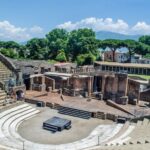
The tour includes the Large Theatre (about 10 minutes). Theatre spaces are powerful because they connect architecture to emotion—waiting for a show, reacting as a crowd, and seeing how public entertainment shaped community life.
A quick theatre visit also works with the tour’s format. You’re not stuck for an hour while a guide explains every detail. Instead, you get the key idea fast, supported by tablet-based material that helps you picture what would have been happening there.
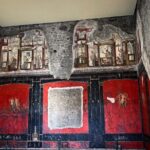
Finally, you’ll visit the House of the Vettii (about 20 minutes). This stop rounds out the tour by showing how wealth and identity could show up in private spaces. Even if your kids are more interested in the “cool rooms” than the social meaning, the guide’s reconstructions and multimedia help keep everyone on the same page.
The House of the Vettii also gives you that satisfying bookend effect. You started at civic space and temples, moved through homes, routine spots, and entertainment, and end with a domestic example that shows status and personal expression.
Tablets, reconstructions, and multimedia: Why kids actually follow along
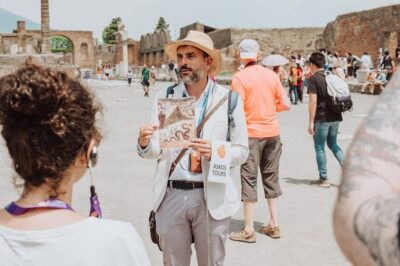
This tour’s secret weapon is not just that it’s family-friendly—it’s that the storytelling tools are built into the experience. You’ll use tablets plus reconstructions and multimedia material to discover the buried city.
What this means in practice: instead of reading plaques and hoping kids care, you get active prompts tied to what you’re standing in front of. Reconstructions and multimedia help translate “ruins” into “a place people used,” which is the difference between a stressful hour and a fun one.
Tablets also help pacing. A 2-hour tour has to move. If every stop required slow explanation, you’d miss too much. The tech format keeps explanations short, visual, and connected to the exact spot you’re viewing.
It’s also helpful for mixed-age groups. Parents often want context; kids often want action. This tour tries to satisfy both without turning the day into two separate tours.
Walking for two hours: Pace, comfort, and what to bring
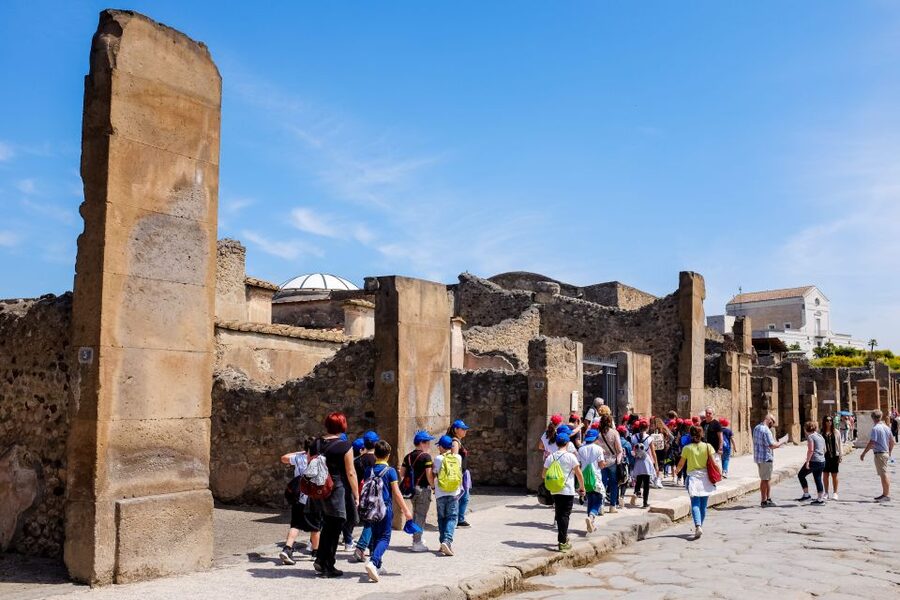
The schedule is built around a 2-hour walk with no transportation included. Most guided visits are 10 minutes, with a few longer ones (like about 20 minutes in the forum, House of Menander, and House of the Vettii). That’s a realistic compromise: enough time to feel the sites, not enough time to drain everyone.
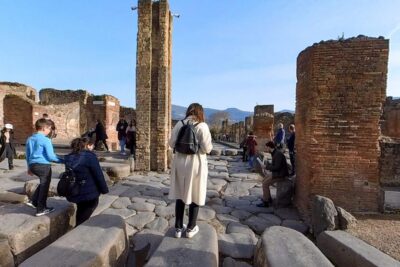
Still, Pompeii involves uneven stone, sun, and frequent looking up and down. If you go in expecting a casual stroller stroll, you’ll be disappointed. This tour works best when you treat it like a focused walking day with breaks.
Bring what keeps kids happy and adults comfortable:
- water for the whole crew
- hats and sunscreen for sun-exposed stretches
- shoes with grip (Pompeii stone can be slick)
On the plus side, the route is designed to keep momentum. You won’t be stuck far from the central areas for too long, and the guide’s tablet approach helps reduce the “stand and wait” feeling.
Price and value: What $212.41 per person buys you
At $212.41 per person, this is not a budget outing. You’re paying for a private group format, a certified guide, admission fees, and the work it takes to guide families through a complex site without losing attention.
Here’s where the value makes sense:
- You get guided time at multiple major sites, not just a short highlights loop
- Admission fees are included, which reduces surprise costs on the day
- The guide handles skip-the-line tickets quickly, protecting your tour time
- The family-focused format is built around tablets and kid-friendly explanation style
If you’re traveling as a family, you’ll likely feel this cost more fairly than solo travelers would. Four adults might feel it. One or two adults with kids often feel like the guide’s work is doing more than usual—keeping everyone engaged and steering you through a place that can overwhelm people without guidance.
The verdict: Should you book this Pompeii child-friendly tour?
If you want Pompeii without the usual awkward mix of bored kids and overwhelmed adults, this tour looks like a strong match. The best reason to book is the method: tablets, reconstructions, and multimedia used to explain what you’re seeing, paired with short, timed visits to key sites.
I’d book this if:
- you’re visiting Pompeii with children and want a tour that keeps them interested
- you like a structured plan that still feels walking-based and close to the ruins
- you want a guide to manage the key logistics of entry so you lose less time
I’d think twice if your group has very limited mobility or you expect transport-included convenience, because this is a straight walking tour with no transportation.
FAQ
Where does the 2-hour tour start?
Meet your guide at the Pompeii main gate called Porta Marina Superiore, on the opposite side of the bar-restaurant Hortus. The guide holds a sign with your name.
How long is the tour?
The tour is listed as 2 hours.
Is skip-the-line entry included?
Yes. The tour includes admission fees and the guide can buy the tickets so you can skip the ticket line.
What language is the guide available in?
The live tour guide is available in English and Italian.
What happens on the first Sunday of the month?
Entrance is free of charge on the first Sunday of each month, but tickets can’t be reserved ahead of time, so entry isn’t guaranteed.
Is transportation included?
No. It is a walking tour, and no transportation is included. It ends back at the meeting point (Via Villa dei Misteri, 2).
More Tours in Pompei Campania




More Tour Reviews in Pompei Campania



More Pompeii Tours to Compare
More Pompei Campania tours, freshly reviewed



Pompeii Tours, compared.
 ★ 4.8Pompeii: Entry Ticket and Guided Tour with an ArchaeologistFrom $3519,459 reviews
 ★ 4.1Pompeii: Entry Ticket with Audio GuideFrom $4013,491 reviews
 ★ 4.8Pompeii: Small Group Tour with an ArchaeologistFrom $4012,264 reviews
 ★ 4.3Pompeii Ruins & Mount Vesuvius Day TourFrom $12011,459 reviews
★ 5.0Pompeii Small Group Tour with an ArchaeologistFrom $356,593 reviews
★ 4.3Pompeii Ruins & Mount Vesuvius Day TourFrom $12011,459 reviews
★ 5.0Pompeii Small Group Tour with an ArchaeologistFrom $356,593 reviews
 ★ 4.5Skip-the-line Pompeii – Small Group TourFrom $544,401 reviews
 ★ 4.6Naples or Sorrento: Full-Day Pompeii and Mount Vesuvius TourFrom $1044,235 reviews
 ★ 3.9Pompeii: Skip-the-line Entry Ticket with Audio Guide & MapFrom $433,153 reviews
Browse the lists this tour appears in