
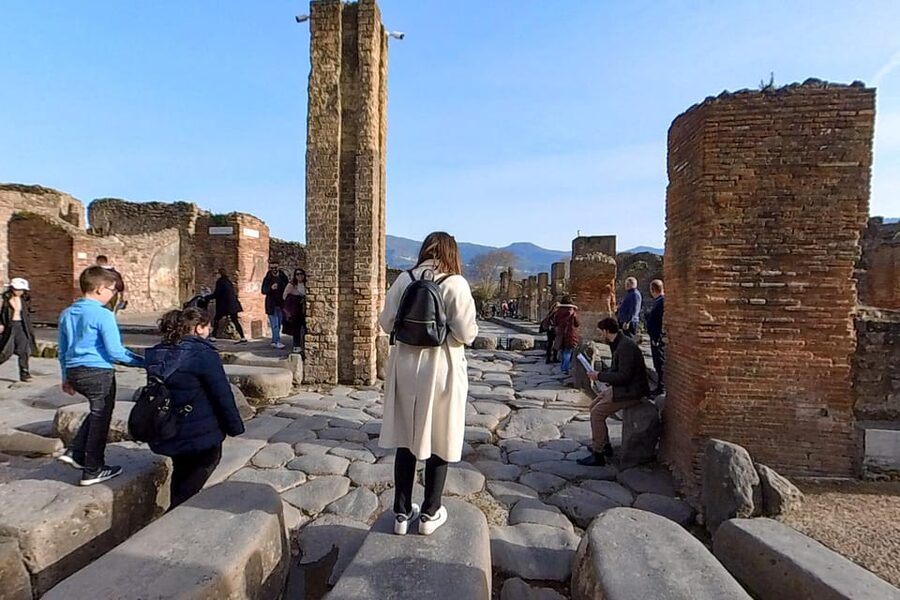
Review · POMPEII TOURS
Pompeii: 2 Hours Skip the Line Visit with a Licensed Guide
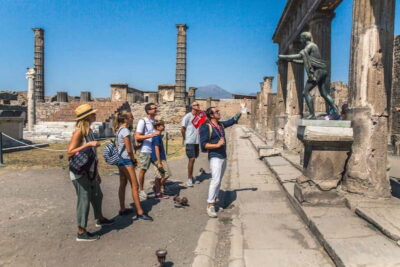
Pompeii grabs you fast. A tight 2-hour skip-the-line plan with a licensed guide turns scattered ruins into real daily life, especially at the Thermopolium and in the Stabian baths. I also like that you get headsets, so even a big group can still hear the story. One caution: timing can run shorter than advertised when schedules get tight.
I went in with the usual Pompeii question—how did people actually live here?—and came out with a clearer map of politics, food, and social life across the Roman Forum, markets/workshops, and the houses. Still, the “2 hours” promise doesn’t always land perfectly, so I’d plan your day with a little buffer.
In This Review
- Key Points Worth Knowing Up Front
- Pompeii in 2 Hours: What the Skip-the-Line Deal Really Buys You
- Meeting at Hotel Vittoria and Piazza Esedra: Easy Start, Fewer Headaches
- Licensed Guide + Headsets: How You Get Better Explanations Faster
- Roman Forum, Politics, and Commerce: Getting the Big Picture Before the Rooms
- A Roman House and Frescoes: Learning to See Daily Life
- Thermopolium: Pompeii’s Fast Food Stop That Feels Surprisingly Modern
- Lupanare: Pompeii’s Red-Light District, Explained With Context
- Stabian Baths: Where the Social Side of Rome Shows Up
- Markets, Artisan Workshops, and the Workday Pompeii
- Vesuvius and the Frozen-in-Time Effect: What You’ll Take Home
- Price and Logistics: Is $58 a Good Deal?
- Group Size, Pace, and When You Might Want More Time
- Who This Tour Suits Best (and Who Should Pass)
- Should You Book This Pompeii 2-Hour Tour?
- FAQ
- How long is this Pompeii tour?
- Is this a skip-the-line visit?
- Where do I meet the group?
- What’s included in the price?
- What languages are available?
- Do I need to bring identification?
- Are tickets handled through the provider?
- What if I qualify for a reduced or free ticket?
- Is free cancellation available?
Key Points Worth Knowing Up Front
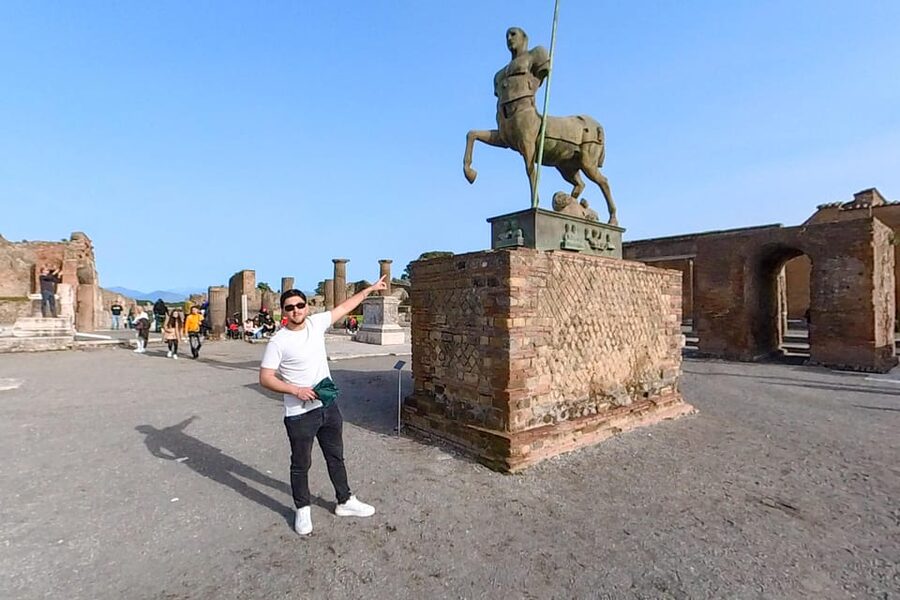
- Skip-the-line + headsets help you start fast and hear every stop without craning your neck
- Roman Forum and Forum-area life give you the big-picture of politics and commerce
- Thermopolium and Lupanare show Pompeii beyond temples—food and nightlife are part of the story
- Stabian baths make the social side of Roman culture feel personal
- Licensed guide explanations focus on how Pompeii froze in place after the eruption
- Group size can be larger, so listening is easier with the audio system
Which Pompeii ticket and guide? Compare a few more.
- Pompeii: Entry Ticket and Guided Tour with an Archaeologist★ 4.8 · 19,459 reviews
- Pompeii: Small Group Tour with an Archaeologist★ 4.8 · 12,264 reviews
- Pompeii: Skip-the-line Entry Ticket with Audio Guide & Map★ 3.9 · 3,153 reviews
- Naples: Pompeii and Mt. Vesuvius with Lunch and Wine Tasting★ 4.5 · 2,454 reviews
Pompeii in 2 Hours: What the Skip-the-Line Deal Really Buys You
Pompeii is huge. Even if you’re fast, you’ll burn time finding the right entrances and getting oriented. This tour is built around the practical idea that you should spend your limited hours inside the site, not stuck in a queue.
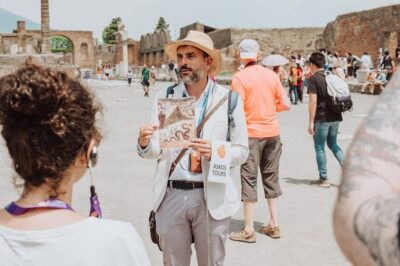
The big value here is the combination of skip-the-line entry plus headsets. Headsets sound like a small thing until you’re standing in a sun-drenched courtyard with everyone talking over each other. You can actually follow the guide’s thread—what you’re seeing and why it matters—without constantly asking your group to repeat themselves.
The downside is simple: 2 hours is tight. If your day is schedule-heavy, treat this like a focused highlights tour, not your only shot at Pompeii.
Meeting at Hotel Vittoria and Piazza Esedra: Easy Start, Fewer Headaches
Your start point is Hotel Vittoria, with the meeting at the ticket office near Piazza Esedra. That location choice matters. When you’re arriving in a new city, being close to a well-known landmark reduces stress, and it’s one less “Where do we meet?” moment.
If you’re running late, don’t panic—but do move quickly. Some bookings show that late arrivals can still be allowed to join, which is a relief when trains or connections misbehave.
Tip: arrive a few minutes early and take one minute to confirm you’re at the correct ticket office area. It’s the quickest way to prevent the kind of waiting that can shrink your time inside the ruins.
Licensed Guide + Headsets: How You Get Better Explanations Faster
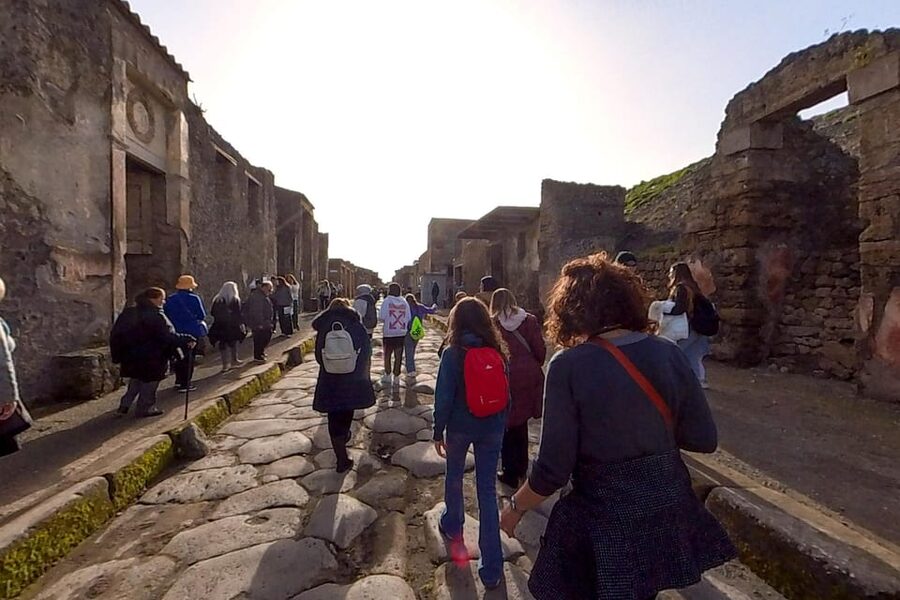
The tour includes a licensed guide and a helpdesk, and you’ll have live interpretation in English or Spanish. That means you’re not just walking past wall art and stone rooms—you’re getting the “how to read this place” layer.
Here’s what I’d look for in a good Pompeii guide, and what this format supports:
- Clear explanations tied to what you’re currently standing beside
- Practical orientation so you don’t feel lost halfway through
- Connections between everyday routines and the larger Roman world
The headsets are there for a reason. Pompeii ruins don’t provide quiet listening conditions. With audio, you can keep your eyes on the details instead of constantly checking for spoken instructions.
Roman Forum, Politics, and Commerce: Getting the Big Picture Before the Rooms
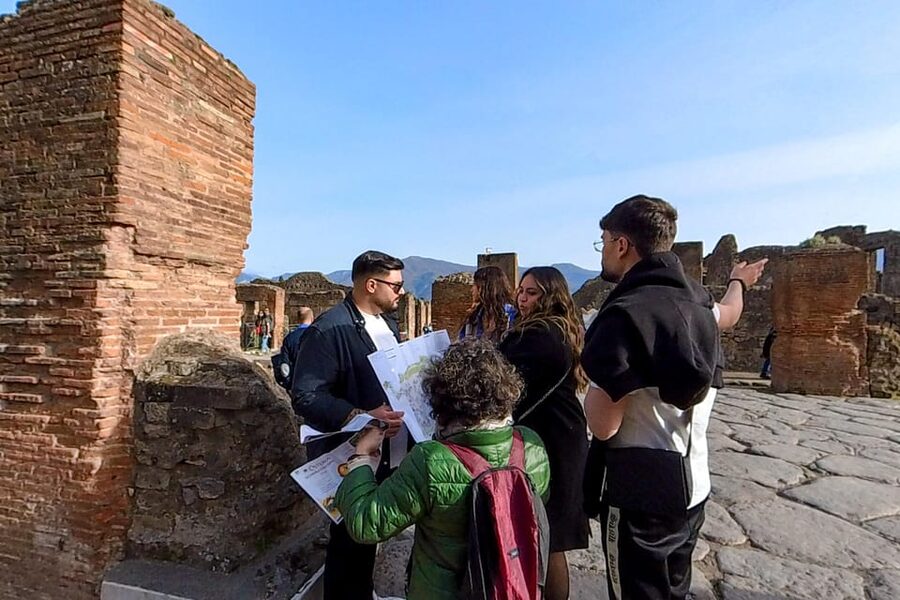
One of the first stops is the Roman Forum area, where public life and business overlapped. This matters because Pompeii isn’t just “pretty ruins.” It’s a functioning city layout—places where people made decisions, conducted trade, and gathered socially.
In a self-guided visit, it’s easy to misread the Forum because your brain wants to treat everything like a museum display. With a guide, you’re more likely to connect what you’re seeing to:
- public authority and civic rules
- marketplaces and day-to-day commercial activity
- the rhythm of street life
This is the part where the tour pays off most for first-timers. Even if you only retain a handful of names and functions, the Forum helps you understand the city’s logic.
More guided runs around Pompei Campania

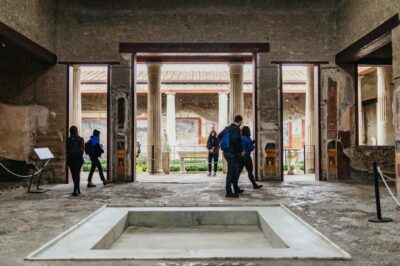
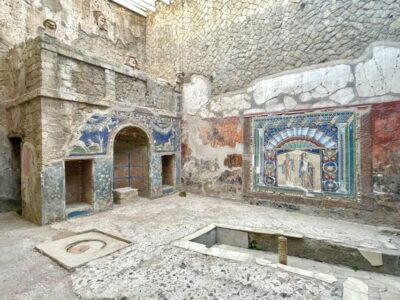
A Roman House and Frescoes: Learning to See Daily Life
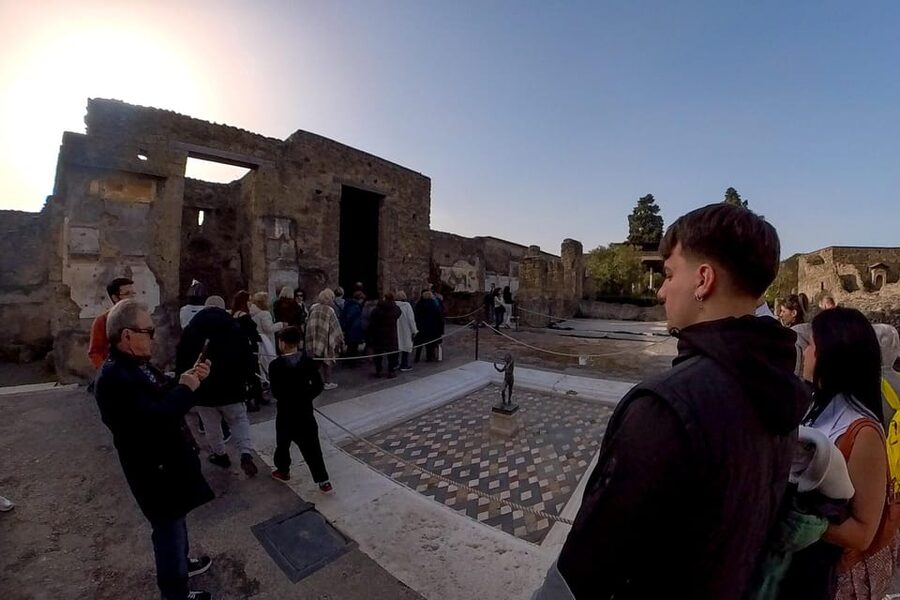
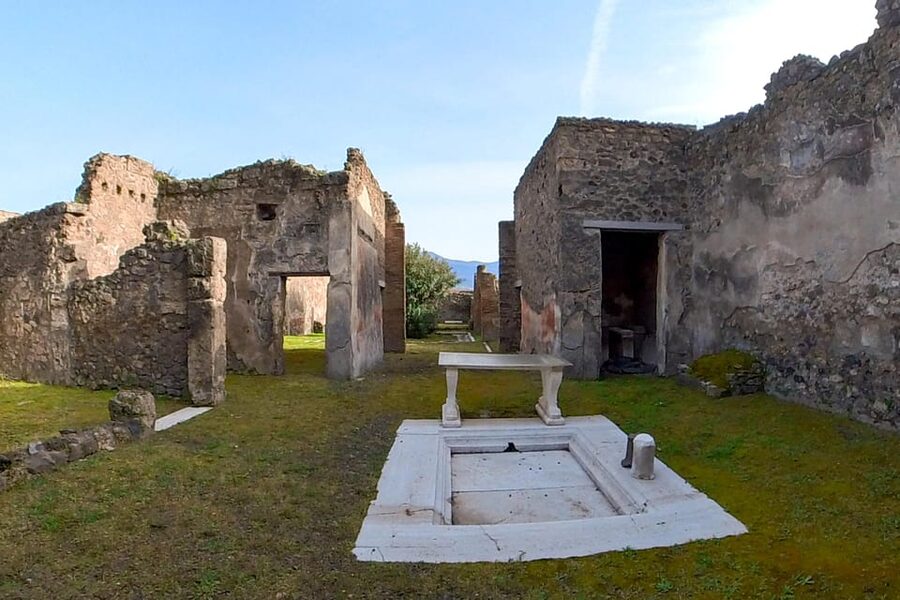
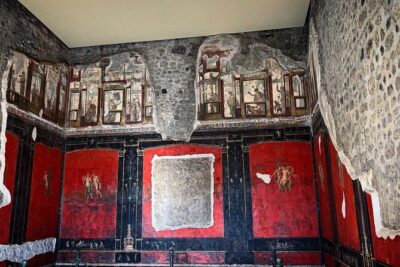
The highlight promise includes an ancient Roman house experience, and that’s exactly where Pompeii becomes personal. You’re not just looking at architecture—you’re looking at what people did in these spaces: receiving visitors, eating, working, and decorating.
Frescoes are the key here. Without context, you’ll notice paint. With a good explanation, you start noticing patterns: what was shown, what was valued, and how art blended into routine. The tour emphasizes visible evidence like preserved spaces and frescoes depicting daily life, so you’re not stuck with vague “Roman times” talk.
If you’ve visited other ruins before, you’ll appreciate the contrast. Pompeii isn’t only stone columns—it’s rooms with scale and surfaces that help you imagine a household actually using the space.
Thermopolium: Pompeii’s Fast Food Stop That Feels Surprisingly Modern
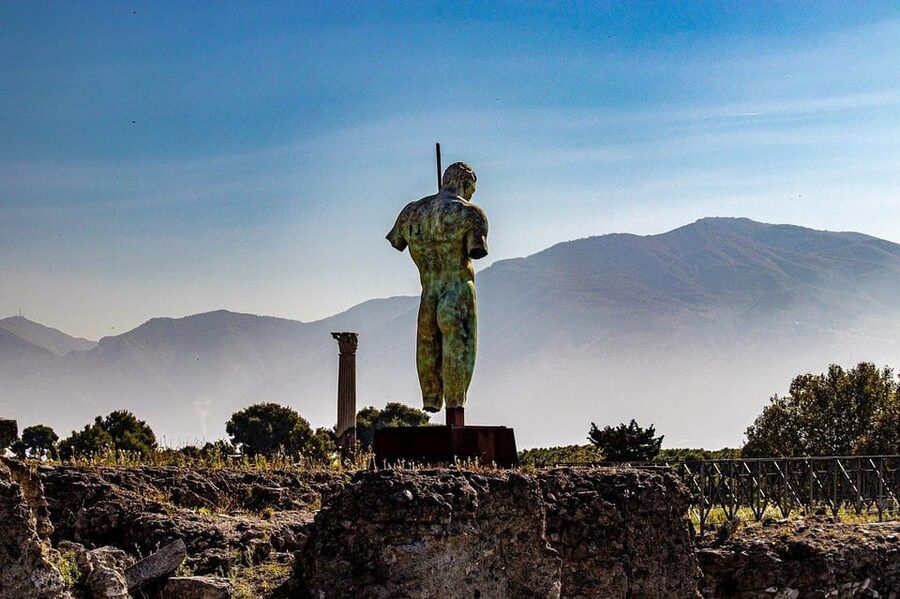
One planned stop is the Thermopolium, an ancient fast-food place where people grabbed quick meals. This is one of those visits that changes how you think about the city. You go in expecting solemn history, and you come out thinking about hunger, schedules, and what people ate on ordinary days.
The guide-focused format is useful here because the value isn’t just in seeing a counter. It’s in understanding what a place like this meant for daily life—how people ate without preparing everything at home, and how commerce worked at street level.
For you, that means a more relatable Pompeii. It’s a city of routines, not only big monuments.
Lupanare: Pompeii’s Red-Light District, Explained With Context
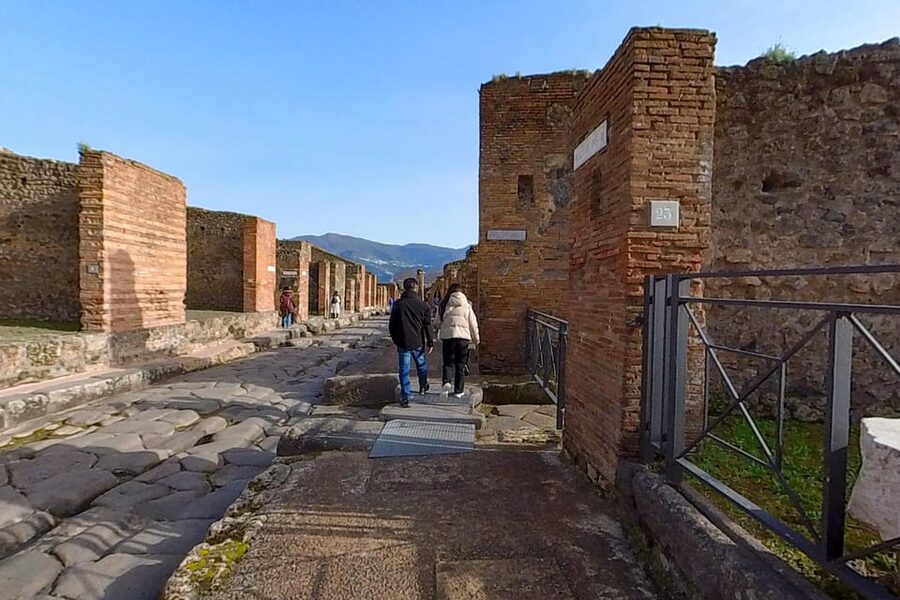
The tour also takes you to the Lupanare, Pompeii’s brothel. This is another stop that can be awkward if you’re expecting silence or judgment—but with a guide’s framing, it becomes part of the full social picture of the city.
What I like about including this in the route is that it refuses to sanitize Pompeii. Roman life included public spaces, private spaces, and everything in between. By pointing to visible evidence, the guide helps you connect the setting to what it functioned as.
If you’re sensitive to the topic, you don’t have to pretend it’s not there. I’d just make sure you’re mentally prepared for the subject and focus on the historical interpretation rather than the shock factor.
Stabian Baths: Where the Social Side of Rome Shows Up
Then you reach the Therme Stabiane—the Stabian baths. Baths are a great Pompeii stop because they show how people mixed. This wasn’t just hygiene. It was conversation, social time, and community.
In a quick visit, baths can become “more rooms.” In this tour style, you’re getting the explanation behind the spaces, so you’re more likely to understand flow: how people moved, where they relaxed, and how the setting supported social life.
If you want one stop that turns the ruins into lived-in realism, baths are it. You can almost feel the pause in the day, the chatter, the heat, the downtime.
Markets, Artisan Workshops, and the Workday Pompeii
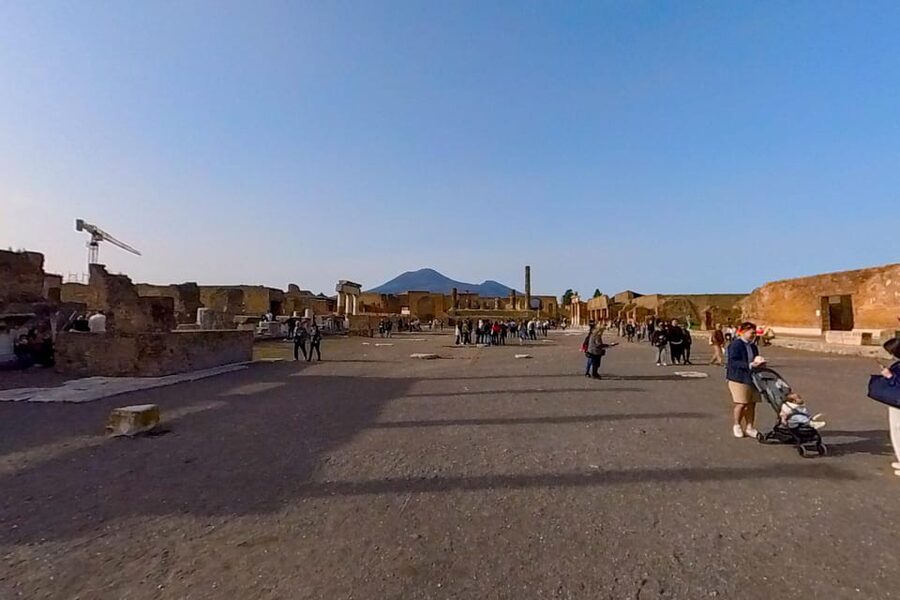
The tour highlights include Pompeii’s markets and artisan workshops, and that focus is more important than many people realize. When you only chase monuments, you miss the gears that made the city run.
The guide approach helps you connect storefront-like spaces and work areas to actual production and trade. You’re not just looking at walls—you’re looking at the context that explains why this city had power, money, and routines in the first place.
For readers, this is where the hour count starts to matter. If you only have a short window, the workday stops are high value because they show the city’s economic pulse.
Vesuvius and the Frozen-in-Time Effect: What You’ll Take Home
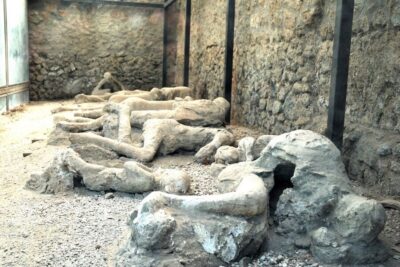
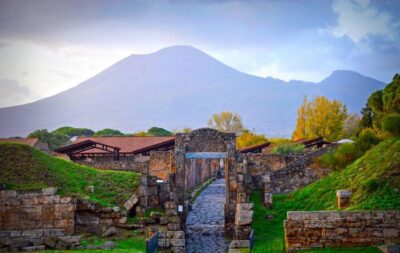
One of the promised themes is how Pompeii was frozen in time after the eruption. A good guide won’t treat that as a spooky poster slogan. Instead, they use what you see in the ruins—preserved spaces, visible evidence, and city structure—to explain how the disaster shaped what survived.
What I like about this approach is that it ties the science and tragedy to something you can actually visualize. You don’t just hear that a volcano erupted. You learn how that moment captured daily life in place, so your visit feels concrete, not abstract.
It also makes the tour emotionally different from a standard “photo stop.” You start seeing how fragile everyday routines are—how fast a city can change.
Price and Logistics: Is $58 a Good Deal?
At $58 per person for about 2 hours, the price lands in the “reasonable for Pompeii” zone—mainly because you’re paying for three things: a licensed guide, headsets, and Pompeii entry included in the package details.
That said, the value depends on whether you truly get the full running time and whether the entry ticket is handled the way you expect. One booking critique flagged that the tour felt expensive, and the entrance ticket wasn’t clearly felt as included. The package details state entry tickets are included, and the tour also notes that entrance tickets can be handled through the provider once you reserve to guarantee access—so I’d treat your confirmation as the truth source for your specific order.
Also watch for a scheduling reality: some experiences reported tours running closer to 1 to 1.5 hours. If that happens, you still get time to roam, but the paid “2 hours” feeling can sour. If you’re deciding between guided and self-guided, ask yourself:
- Do I want a structured plan and explanations?
- Can I accept that timing might slip under busy conditions?
If your schedule is tight and you hate uncertainty, you may want a different option that offers more time on-site.
Group Size, Pace, and When You Might Want More Time
Several bookings praised the guide quality and organization, but at least one note pointed to a larger group feel. In a bigger group, you’ll spend more time aligning yourself with the guide’s pace and less time wandering at will.
If you prefer to linger in chapels of detail—fresco close-ups, inscriptions, and quiet corners—this 2-hour plan may feel like a sprint. The structure helps you see the main story beats, but it won’t replace a longer visit when you want to slow down and absorb everything.
On the flip side, if you don’t want to spend your day piecing together Pompeii on your own, this format is a strong way to get oriented quickly.
Who This Tour Suits Best (and Who Should Pass)
This experience is a good fit if:
- You’re visiting Pompeii for the first time and want the city explained in an organized way
- You want stops like the Forum, baths, Thermopolium, and Lupanare without doing the planning
- You appreciate headsets because sound can be a challenge in outdoor ruins
It may not be your best match if:
- You already know Pompeii well and want deep, slow wandering
- You’re the type who needs a guaranteed exact duration with no surprises
- You want to spend lots of time re-reading frescoes and inscriptions on your own
Should You Book This Pompeii 2-Hour Tour?
My call: book it if you want structure and context and you can handle the chance that your guided portion might run a little short. It’s especially worth it for first-timers because it covers the key life-and-work parts of the city: politics at the Forum, daily domestic life in a house, street food at the Thermopolium, social culture in the baths, and the Lupanare as part of the broader city story.
If you’re the type who can’t tolerate schedule slippage, consider reserving a longer Pompeii visit instead. But if your goal is a smart “greatest hits” in limited time, this is a solid choice.
FAQ
How long is this Pompeii tour?
The tour duration is listed as 2 hours.
Is this a skip-the-line visit?
Yes. The tour is described as skip the ticket line.
Where do I meet the group?
The meeting point is at the ticket office near Hotel Vittoria, in Piazza Esedra.
What’s included in the price?
It includes headsets, a licensed guide, helpdesk support, and entry tickets to Pompeii.
What languages are available?
The live guide is offered in English and Spanish.
Do I need to bring identification?
Yes. You should bring a passport or ID card.
Are tickets handled through the provider?
The information says Pompeii entrance tickets can be purchased through them after you make the reservation to guarantee access.
What if I qualify for a reduced or free ticket?
The information states they provide a reduced or free ticket if you are eligible.
Is free cancellation available?
Yes, free cancellation is listed up to 24 hours in advance for a full refund.
If you tell me your travel dates and whether you’re traveling solo or with family, I can suggest the smartest time-of-day choice for Pompeii so you get the most out of your 2 hours.
More Guided Tours in Pompei Campania



More Tour Reviews in Pompei Campania



More Pompeii Tours to Compare
More Pompei Campania tours, freshly reviewed



Pompeii Tours, compared.
 ★ 4.8Pompeii: Entry Ticket and Guided Tour with an ArchaeologistFrom $3519,459 reviews
 ★ 4.1Pompeii: Entry Ticket with Audio GuideFrom $4013,491 reviews
 ★ 4.8Pompeii: Small Group Tour with an ArchaeologistFrom $4012,264 reviews
 ★ 4.3Pompeii Ruins & Mount Vesuvius Day TourFrom $12011,459 reviews
★ 5.0Pompeii Small Group Tour with an ArchaeologistFrom $356,593 reviews
★ 4.3Pompeii Ruins & Mount Vesuvius Day TourFrom $12011,459 reviews
★ 5.0Pompeii Small Group Tour with an ArchaeologistFrom $356,593 reviews
 ★ 4.5Skip-the-line Pompeii – Small Group TourFrom $544,401 reviews
 ★ 4.6Naples or Sorrento: Full-Day Pompeii and Mount Vesuvius TourFrom $1044,235 reviews
 ★ 3.9Pompeii: Skip-the-line Entry Ticket with Audio Guide & MapFrom $433,153 reviews
Browse the lists this tour appears in