
Review · POMPEII TOURS
Skip the Line Private Pompeii Guided Tour
Pompeii can feel endless—this keeps it focused. I like that you get skip-the-line priority admission so you waste less time queued up, and I like the private format that leaves room for questions. One thing to plan for: the guided visit is short (about two hours), so you’ll want to accept that you’re seeing the highlights, not every corner.
I also appreciate how the guide approach turns big ruins into something you can actually follow: Roman daily life, public buildings, and the human stories behind them. In at least one case, the experience is credited to Paolo, with people calling it complete and enriching. The trade-off is practical—admission fees for the Pompeii ruins aren’t included, so you’ll still need to budget for the entry ticket on top of the tour price.
If you’re trying to make Pompeii work on a tight schedule without losing the thread, this kind of private guided run-through is a smart choice—especially when you care more about understanding what you’re looking at than slowly wandering.
In This Review
- Key things to know before you go
- Skip the Line at Pompeii: What That Really Buys You in 2 Hours
- A Private Tour Where Your Questions Actually Matter
- Where You Start: Porta Marina and Getting Ready to Move
- Pompeii Archaeological Park: Your Main Orientation Stop
- Temple of Apollo: Religion You Can See in One Quick Look
- Foro de Pompeya: The City’s Main Square in Real Time
- Igor Mitoraj’s Monumental Sculptures: Modern Art Inside Ancient Space
- Granai del Foro: Grain Storage and the City’s Engine
- Terme del Foro: One of Pompeii’s Best-Preserved Bath Complexes
- Casa del Poeta Tragico: Mosaics That Tell a Story
- Casa del Cinghiale: Another Mosaic-Filled Home
- Teatro Grande: Performances, Space, and Crowd Energy
- Lupanar: The Ancient House With Erotic Wall Paintings
- Tempio di Venere and Tempio di Giove Capitolino: Quick Temple Stops That Add Meaning
- Pompeii Price and Value: $82.65 for a Guided Highlight Sprint
- Who This Tour Fits Best (And Who Might Prefer Something Else)
- Should You Book This Skip-the-Line Private Pompeii Tour?
- FAQ
- How long is the Skip the Line Private Pompeii Guided Tour?
- Is this tour private?
- What’s included in the tour price?
- Are Pompeii admission fees included?
- Where does the tour start?
- Is there free cancellation?
- Are service animals allowed?
Key things to know before you go
- Skip-the-line entry helps you start seeing things sooner, not later
- Private tour means only your group, with more time for questions
- Two-hour, highlight-focused pacing keeps Pompeii from becoming overwhelming
- A clear circuit of major sights covers temples, forum life, baths, homes, and the theatre
- Includes a modern-art stop with Igor Mitoraj sculptures for a different lens on the site
Which Pompeii ticket and guide? Compare a few more.
- Pompeii Small Group Tour with an Archaeologist★ 5.0 · 6,593 reviews
- Discover the Ancient Ruins of Pompeii: Day Trip from Rome★ 3.5 · 2,247 reviews
- Pompeii and Herculaneum Small Group Tour with an Archaeologist★ 5.0 · 1,350 reviews
- Skip the Line Guided Tour of Pompeii led by an Archaeologist★ 5.0 · 703 reviews
Skip the Line at Pompeii: What That Really Buys You in 2 Hours
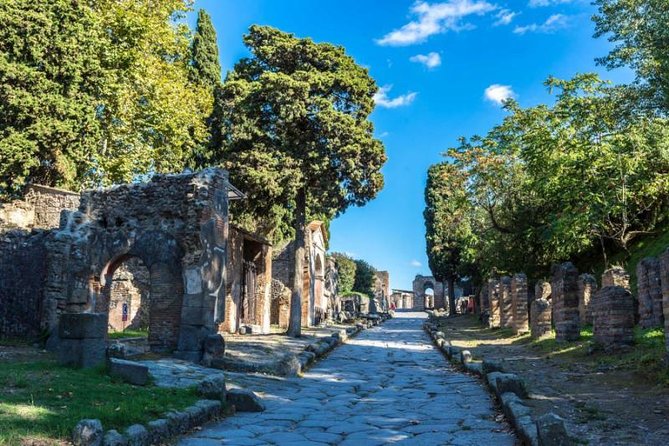
Pompeii is famous for a reason, but it can also be a time trap. The ruins are spread out, the paths are busy, and standing in line eats the best part of your day. This tour leans into the practical reality: it’s built to get you inside faster with skip-the-line priority admission, then use a guide to keep your attention on what matters most.
The most valuable part isn’t just speed. A guide helps you look at Pompeii with structure. Instead of random walls and columns, you get a sense of how the city functioned—public spaces versus private homes, religion versus everyday chores, entertainment versus scandal. In a short visit window, that kind of framing is what turns the stop into understanding.
The possible drawback is obvious once you think about it: about two hours means you can’t linger. You’ll see major highlights like the forum area, theatres, baths, and decorated homes—but you won’t get long solo time to wander off in every direction. If your ideal day is slow and flexible, this may feel a bit fast.
A Private Tour Where Your Questions Actually Matter
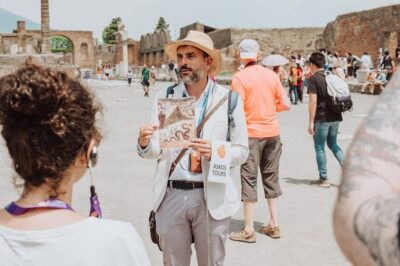
The big difference with a private tour isn’t just comfort. It’s conversation. Pompeii is not hard to enter, but it is hard to interpret on your own. With a private group, you can ask the questions that pop up as you’re standing in front of a temple front, a mosaic floor, or a theatre seating area.
One review specifically praises the guide Paolo for making the experience complete and enriching. That fits the pattern of why these tours work: you’re not just walking from place to place, you’re getting stories tied to what you see—so your brain isn’t constantly asking, What am I looking at?
Also, private means your group sets the pace within the time limit. You’re still on a schedule, but the guide can adjust how much time you spend on things you find interesting, as long as the circuit stays on track.
Where You Start: Porta Marina and Getting Ready to Move
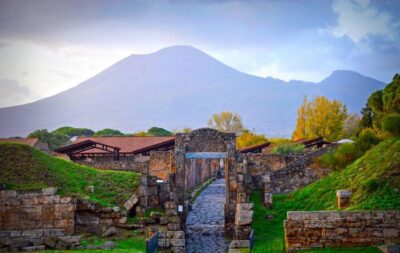
This tour meets at Pompei-porta Marina – scavi (80045 Pompeii). That’s useful because Pompeii’s entrances and routes matter. If you arrive without a plan, you can burn time just figuring out where to go. Starting at a specific meeting point makes it easier to show up, check in, and get moving.
The tour is also listed as near public transportation, which helps if you’re coming from elsewhere in the Naples area. And since it’s a private tour only for your group, you’re not playing catch-up with lots of strangers.
Practical tip before you go: Pompeii ruins mean lots of uneven ground and walking. Comfortable shoes are not optional. Bring water too, especially if you’re visiting during hotter months. (The tour time is short, but the walking is real.)
Pompeii Archaeological Park: Your Main Orientation Stop
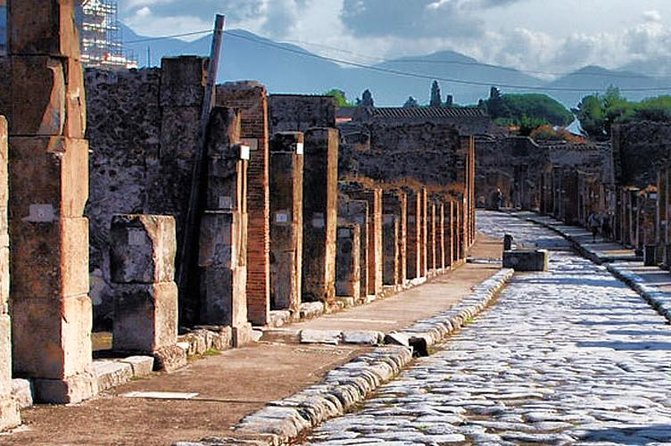
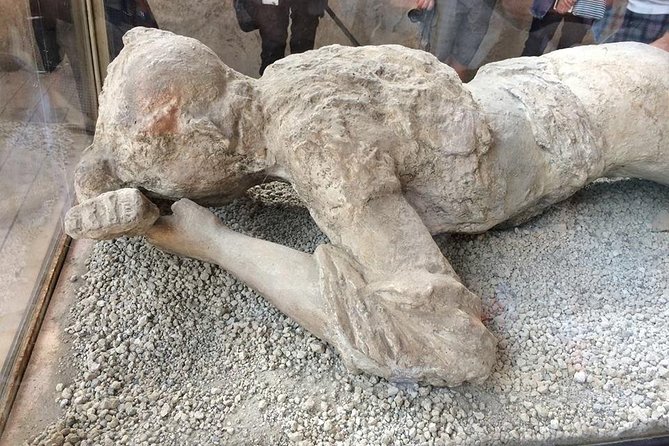
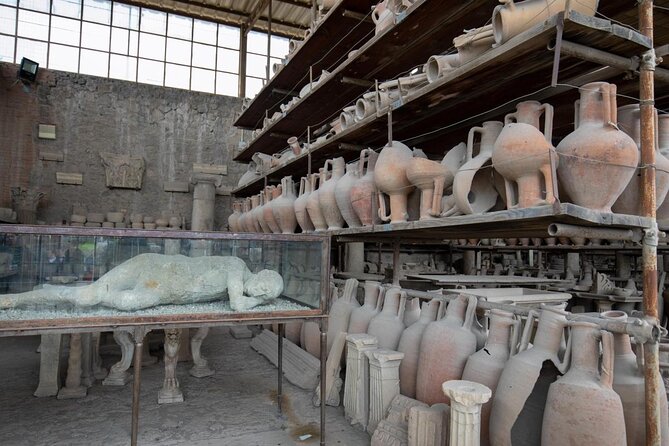
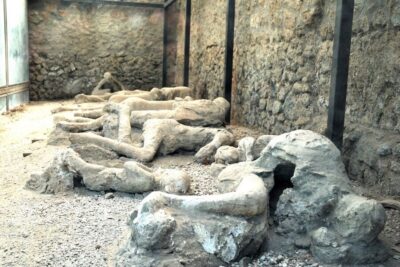
Your tour begins at the Pompeii Archaeological Park, which is where you’ll spend the bulk of your time. The highlight list here is broad: theatres, the forum, temples, plaster casts, spas, a brothel, Roman villas, and more. In a fast highlight tour, this is where the guide’s job becomes most important—turning a large site into a guided story you can follow.
What I like about this first phase is that it gives you a mental map. When you later stop at individual points like the Forum or the baths, the buildings make more sense because you already understand the role they played in daily Roman life.
A small caution: because admission fees for the Pompeii ruins are not included in the tour price, you should be ready for the site ticket step. The skip-the-line part helps with queue time, but you still need to pay for entry. Arriving without having sorted that can slow you down right when you’re trying to gain time.
More guided runs around Pompeii



Temple of Apollo: Religion You Can See in One Quick Look
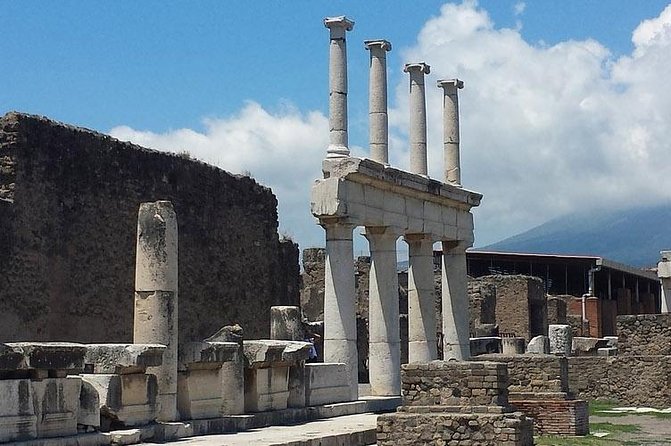
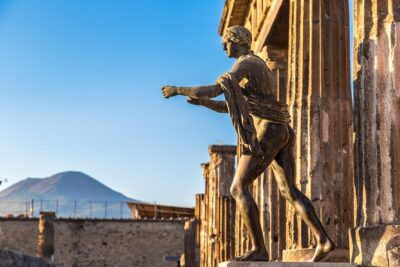
Next up is the Temple of Apollo (about 10 minutes). Temples in Pompeii are a great early check-in because they show how central religion was in the city’s public life. Even in a brief stop, the guide can point out the basic features that separate temple spaces from, say, residential areas or civic squares.
The drawback is also built-in: it’s short. Ten minutes isn’t for deep study. It’s for getting oriented and capturing key visual cues so you recognize the temple type when you see other religious structures later.
If you’re a first-time visitor, this is a good stop. It helps you shift from I’m looking at ruins to I’m looking at a functioning city layout.
Foro de Pompeya: The City’s Main Square in Real Time
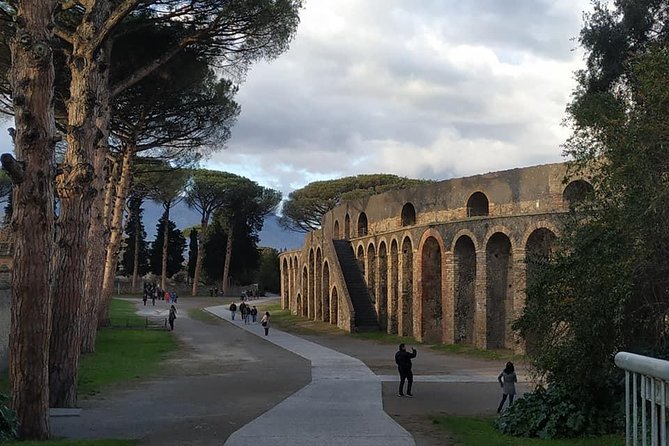
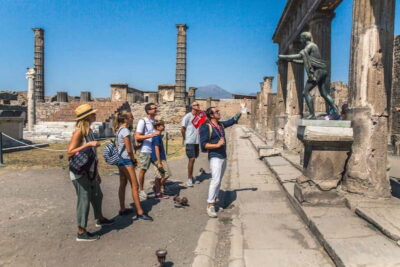
Then you’re in the Foro de Pompeya, described as the main square (around 20 minutes). This is one of the most important areas in any Pompeii visit because the forum is where public life happened—politics, business, community events, and everyday movement.
What’s useful here is the guided pacing. You’re not just standing in an open area and trying to imagine its purpose. The guide connects what you see—open space, civic architecture, and adjacent structures—to the idea of where people gathered.
This is also a place where you’ll spot why Pompeii feels so human. You can almost picture the flow of people moving from one civic corner to another.
Igor Mitoraj’s Monumental Sculptures: Modern Art Inside Ancient Space
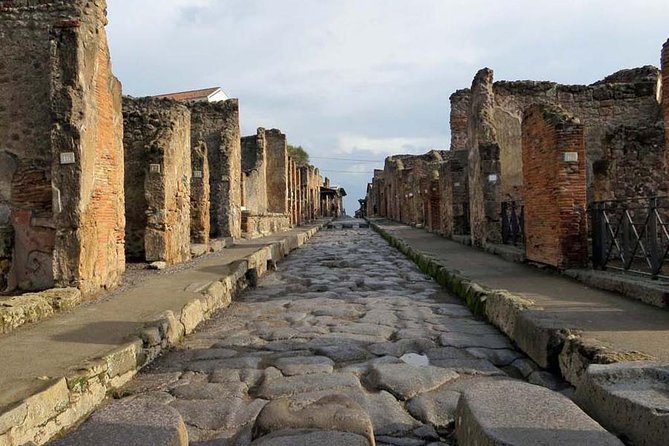
One of the more interesting curveballs on the route is the Sculture Monumentali di Igor Mitoraj (around 10 minutes). This is modern art placed within the Pompeii context, giving you a different way to look at the site.
Why it works: it forces you to stop treating Pompeii like a museum display. Instead, you see it as an ongoing cultural landscape—an archaeological site that still hosts contemporary interpretation. If you’re the type who gets bored on pure “ruin tours,” this break can make your brain reset without leaving the circuit.
Short stop length is the trade-off again. You’ll appreciate the concept more than you’ll have time for a slow read of the artwork.
Granai del Foro: Grain Storage and the City’s Engine
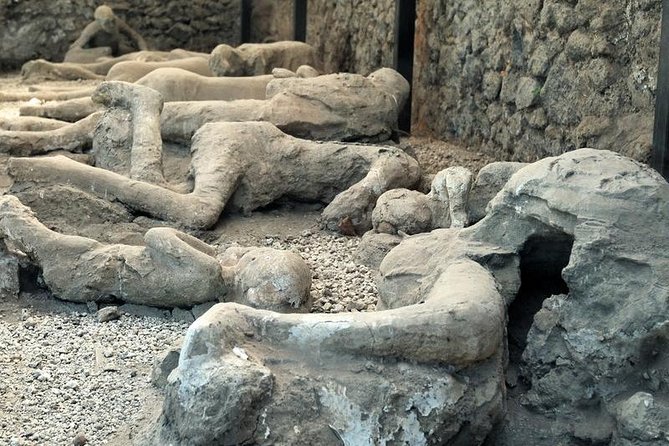
At the Granai del Foro (around 20 minutes), you get a look at structures tied to basic survival: food supply. Grain storage isn’t glamorous, but it’s essential. The value of this stop is that it broadens the visit beyond the biggest public monuments.
When you see storage spaces like this with a guide, you start connecting the dots: Pompeii wasn’t only temples and theatres. It needed systems to keep the city running, and that includes the food pipeline.
A potential drawback: if your interests are mostly decorative art or grand buildings, this may feel more functional than dramatic. Still, it’s one of those stops that makes the whole city feel real.
Terme del Foro: One of Pompeii’s Best-Preserved Bath Complexes
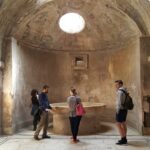
Next is the Terme del Foro (around 20 minutes), described as among the best preserved baths in Pompeii. Baths in Pompeii matter because they show how social life worked. People didn’t just come to clean; they came to meet, relax, and pass time.
This stop is often where visitors start to feel the daily rhythm. Even if you’ve never studied Roman life, bath architecture and layout are easier to understand than you might expect, especially with a guide pointing out the practical flow.
Downside: you’ll be moving through relatively quickly. Baths can reward slow looking, but the timing keeps you on track for the more famous homes and entertainment areas later in the tour.
Casa del Poeta Tragico: Mosaics That Tell a Story
The Casa del Poeta Tragico (about 10 minutes) is called out for its mosaics. A quick look here can still be powerful because mosaics are vivid, detailed, and specific. They give you a glimpse into taste and status, and they show that homes weren’t plain boxes—they were decorated living spaces.
What you can expect: a guided highlight view rather than a full interior walk. This is still useful because you’ll learn what to look for, so the mosaic becomes more than a pretty floor.
Casa del Cinghiale: Another Mosaic-Filled Home
The route then moves to the Casa del Cinghiale (around 10 minutes), also noted for mosaics. If you’re thinking, Wait, two houses with mosaics back-to-back—that’s exactly the point. This kind of sequence helps you compare how decoration works in different homes.
Also, the quick timing keeps the tour from getting stuck on one building. In Pompeii, that’s important because there’s always another sight that will grab your attention.
Teatro Grande: Performances, Space, and Crowd Energy
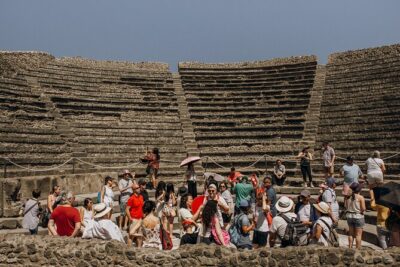
At Teatro Grande (around 20 minutes), you’re looking at the theatre space: the place for comedies and tragedies. The value here is scale and design. With a guide, you can connect seating layout and architectural choices to the idea of performance.
Even in ruins, a theatre gives you a sense of audience and anticipation. It’s one of those Pompeii stops where you can feel the social energy—different from the forum and different from private homes.
If you’re sensitive to the idea of crowds: this is still a controlled tour time, but Pompeii is an open-air site, so you may encounter other visitors. The guide and your schedule help you avoid the worst bottlenecks, thanks to the overall “priority entry” approach.
Lupanar: The Ancient House With Erotic Wall Paintings
The Lupanar (around 20 minutes) is the ancient house known for erotic wall paintings (and described on this tour in those terms). This stop can be uncomfortable for some people, which is exactly why it’s worth having a guide. A guide can frame the context so you’re not stuck staring at scandal without understanding the setting.
The practical side: it’s timed. You’re not forced to stay long. That’s good because this is one of the most intense stops on the route, and a short, focused look is often enough.
Tempio di Venere and Tempio di Giove Capitolino: Quick Temple Stops That Add Meaning
The tour finishes with two brief temple looks: Tempio di Venere (around 5 minutes) and the Tempio di Giove Capitolino (around 5 minutes). These are short by design. They work as quick anchors that reinforce the religious theme and the civic identity of the forum area.
In five minutes, you’re mainly getting recognition—seeing what the temple front looks like and learning what makes it part of the city’s major system.
Pompeii Price and Value: $82.65 for a Guided Highlight Sprint
At $82.65 per person, you’re paying for time savings and for a guide to interpret a complex site. In Pompeii, that can be a bargain if you’re first-timer and short on hours. If you just want a self-guided walk, it’s cheaper to go alone. But if you want meaning—not just walking—this price can make sense.
Here’s the important value math:
- You get priority entry (so you lose less time at the start)
- You get a private guide experience with time for questions
- The route is built for a short duration that still hits major highlights
What can reduce value: admission fees for Pompeii ruins are not included, so your total trip cost will be a bit higher. Still, the guided time can be worth more than the extra ticket expense if it helps you see more and understand more without burning your whole day.
Who This Tour Fits Best (And Who Might Prefer Something Else)
This tour is a strong match if you:
- want a structured highlights plan instead of getting lost in a huge site
- care about learning what you’re seeing, not just photos
- are traveling with a group that prefers fewer crowds and more focused attention
- have limited time and want the Pompeii essentials in about two hours
It may not be the best fit if you:
- want to spend a lot of time inside homes or linger for long stretches (this route is short and timed)
- dislike any part of the Lupanar topic and would rather choose a more family-neutral route
- are hoping for a full, unhurried walk-through of everything Pompeii offers
Should You Book This Skip-the-Line Private Pompeii Tour?
If you’re trying to balance time, understanding, and a guided flow, I’d say yes—book it. The biggest strength is the mix of skip-the-line access and a private guide that helps you interpret major parts of Pompeii without turning your day into queue management.
Just go in with the right expectation: you’re doing a highlights circuit. If that fits your travel style, this is a smart way to get meaning quickly and keep the visit from feeling like a blur.
FAQ
How long is the Skip the Line Private Pompeii Guided Tour?
It lasts about 2 hours.
Is this tour private?
Yes. It is a private tour/activity, and only your group participates.
What’s included in the tour price?
The tour includes a tour guide service and skip the line admission. Mobile ticket is also mentioned.
Are Pompeii admission fees included?
No. The admissions fees for the Pompeii ruins are not included.
Where does the tour start?
The meeting point is Pompei-porta Marina – scavi80045 Pompei, Metropolitan City of Naples, Italy.
Is there free cancellation?
Yes. You can cancel for a full refund up to 24 hours in advance of the experience start time.
Are service animals allowed?
Yes. Service animals are allowed.
More Tours in Pompeii



More Tour Reviews in Pompeii

More Pompeii Tours to Compare
More Pompeii tours, freshly reviewed



Pompeii Tours, compared.
 ★ 4.8Pompeii: Entry Ticket and Guided Tour with an ArchaeologistFrom $3519,459 reviews
 ★ 4.1Pompeii: Entry Ticket with Audio GuideFrom $4013,491 reviews
 ★ 4.8Pompeii: Small Group Tour with an ArchaeologistFrom $4012,264 reviews
 ★ 4.3Pompeii Ruins & Mount Vesuvius Day TourFrom $12011,459 reviews
★ 5.0Pompeii Small Group Tour with an ArchaeologistFrom $356,593 reviews
★ 4.3Pompeii Ruins & Mount Vesuvius Day TourFrom $12011,459 reviews
★ 5.0Pompeii Small Group Tour with an ArchaeologistFrom $356,593 reviews
 ★ 4.5Skip-the-line Pompeii – Small Group TourFrom $544,401 reviews
 ★ 4.6Naples or Sorrento: Full-Day Pompeii and Mount Vesuvius TourFrom $1044,235 reviews
 ★ 3.9Pompeii: Skip-the-line Entry Ticket with Audio Guide & MapFrom $433,153 reviews