
Review · POMPEII TOURS
Skip-the-Line Half-Day Private Tour Ancient Pompeii Highlights with Native Guide
Pompeii is huge—your time can vanish fast. This private skip-the-line half-day tour is built to save hours and keep you moving through the big highlights with a guide who explains what you’re actually looking at. I like that it’s not a one-size-fits-all stomp through ruins, and I like how it connects sites to daily Roman life, not just dates and facts.
Two things I especially appreciate: first, the guaranteed skip-the-long-lines setup means you spend more time inside Pompeii and less time waiting at entrances. Second, the tour leans on an art-historian style approach, with extra details like the way the Teatro Piccolo works acoustically (and why Teatro Grande matters). You also get real personality in the guide lineup—people rave about guides like Lello, Fabio, Rosanna, and Italo, and their approach tends to make the city feel alive.
One thing to consider: Pompeii requires a steady walking pace over uneven ground, and the tour is short—so if you want long photo breaks at every wall, this format may feel a bit time-tight.
In This Review
- Key things to know before you go
- Why this Pompeii tour format works (especially in peak season)
- Meeting point and how to get there without stress
- The skip-the-line benefit you actually feel
- Stop by stop: what you’ll see and why it matters
- 1) Pompeii with Lello & Co.: theaters, streets, Forum life
- 2) Via dell’Abbondanza: walking the main spine of the city
- 3) Stabian Baths (Terme Stabiane): thermal life, explained
- 4) Foro de Pompeya: Forum excavations you won’t ignore
- 5) Lupanar: the erotic frescoes, with context
- 6) Pompeii Archaeological Park: your private guiding time
- What makes the guides stand out (and why it matters for your experience)
- Value for money: what you’re buying for $83.48
- Practical tips so you enjoy it more
- Who this tour is best for
- Should you book this Pompeii private skip-the-line tour?
- FAQ
- How long is the tour?
- Is this tour private?
- What language is the tour offered in?
- Does the price include admission tickets?
- Where do we meet, and does the tour end there?
- Do I need hotel pickup?
- Is the tour suitable for kids?
- What should I bring for a summer visit?
- What happens if weather is poor?
Key things to know before you go
- Skip-the-line entry is guaranteed, so your morning (or afternoon) doesn’t get eaten by queues
- Private tour with only your group means you can ask questions without shouting over crowds
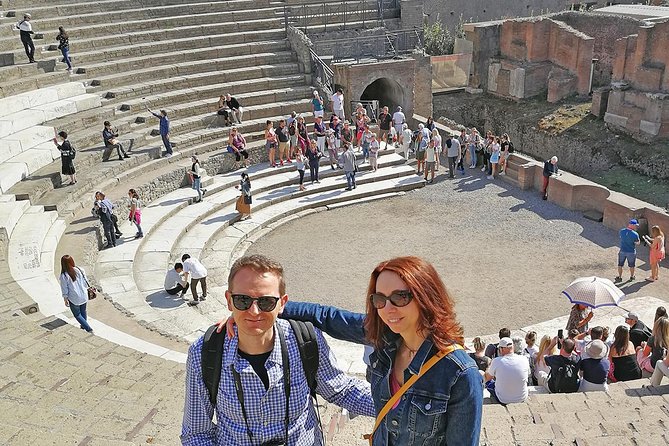
- Theater highlights include acoustic explanations, especially around Teatro Grande and Teatro Piccolo
- Roman street life is the thread, from Via dell’Abbondanza to the Forum markets
- Stabian Baths + thermal experience helps you understand daily routines beyond temples and homes
- The Lupanare focus brings you right to the famous erotic fresco context (tasteful, explained, and on point)
Which Pompeii ticket and guide? Compare a few more.
- Pompeii Small Group Tour with an Archaeologist★ 5.0 · 6,593 reviews
- Discover the Ancient Ruins of Pompeii: Day Trip from Rome★ 3.5 · 2,247 reviews
- Pompeii and Herculaneum Small Group Tour with an Archaeologist★ 5.0 · 1,350 reviews
- Skip the Line Guided Tour of Pompeii led by an Archaeologist★ 5.0 · 703 reviews
Why this Pompeii tour format works (especially in peak season)
Pompeii has a magic problem: it’s unbelievably important, and it’s also spread out. If you’re visiting for a limited time, the biggest value here is how the tour structure protects your hours—especially with skip-the-line entry baked in. That matters because the site isn’t just “large,” it’s the kind of place where you can feel rushed even when you’re trying not to.
This is also a private tour, not a bus-tour shuffle. That means you get a guided route through the main sights—without needing to play map detective—and you can move at a pace that fits your group. I like that your guide’s job isn’t just to point; it’s to make sense of what you’re seeing.
One practical note: the tour runs about 2 hours (approx.). That’s a sweet spot if you want core Pompeii highlights plus context, but it won’t cover everything. You’re choosing depth over everything.
Meeting point and how to get there without stress
You meet at Hotel Vittoria, Piazza Esedra, 80045 Pompei NA, Italy, and the tour ends back at the same meeting spot. There’s no hotel pickup or drop-off, so you’ll need to plan your own way to Pompeii and to the meeting location.
The good news: it’s near public transportation, so you’re not locked into a car. If you’re taking a train/bus into town, this makes the logistics simpler, because you don’t have to coordinate a driver at a specific time window.
Before you set out, take a minute to check the route to Piazza Esedra on your phone. Not because you’ll get lost during the tour, but because Pompeii’s streets can be confusing when you’re arriving with bags and no warm-up.
The skip-the-line benefit you actually feel
Skip-the-line isn’t a vague perk here—it’s the backbone of the experience. Pompeii’s entrances can be crowded, and once you’re inside, you want your energy for ruins, not waiting in the heat. With guaranteed line skipping, the tour starts with momentum, and you feel it immediately when other visitors are still stuck outside.
This also helps your guide manage time. A private tour only works well if the pacing stays intentional, and skipping delays makes that possible. You can spend the time you paid for on the things that need interpretation: theaters, bath systems, street layouts, and the Forum zone.
Stop by stop: what you’ll see and why it matters
More guided runs around Pompeii

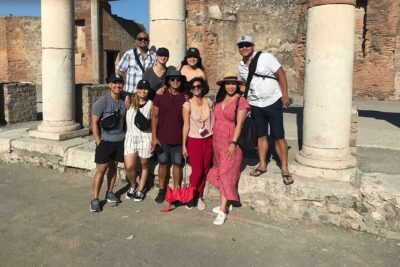

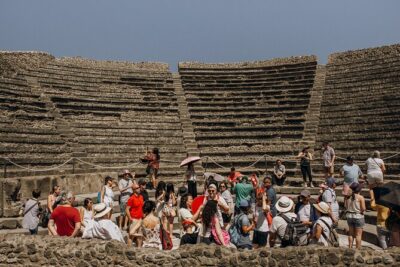

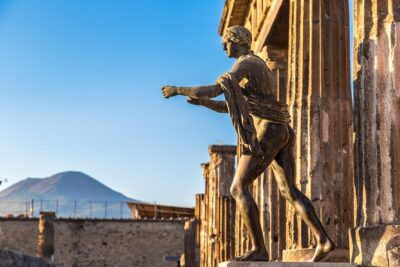
1) Pompeii with Lello & Co.: theaters, streets, Forum life
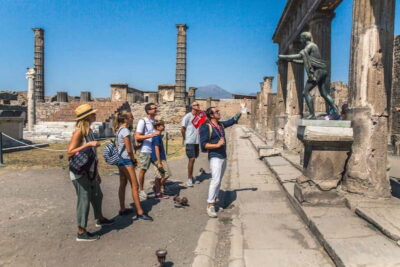
This is where the tour sets its tone—big stories, clear connections, and a route that follows how Romans moved through the city. Your guide brings Pompeii to life through strong remains and well-chosen details, and you’ll cover several of the most recognizable areas early so the city makes sense as a whole.
You’ll get time with the theater highlights, including Teatro Grande and the acoustic story tied to Teatro Piccolo. That acoustic element is a smart teaching moment: when someone explains how sound travels there, it stops being just “old stone” and becomes a functional performance space.
After the theaters, the walking shifts toward the experience of Roman daily life—main streets leading toward the Forum. The guide’s route aims to show you the city like a local would: through public spaces, commerce, and routines, not just sightseeing blocks.
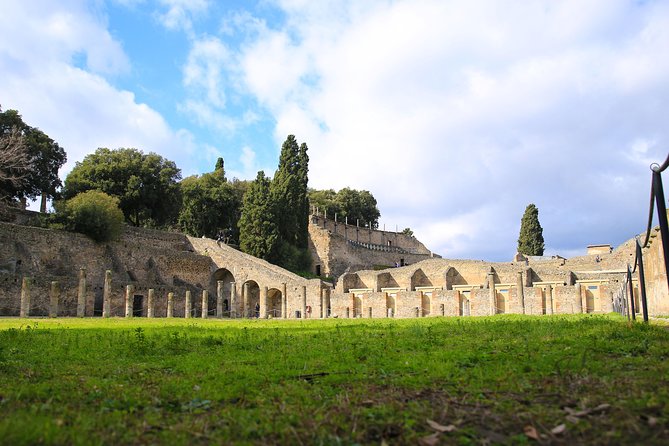
You’ll also touch key Pompeii “systems” and spaces, with emphasis that may include the thermal baths, domus (private houses), Gladiators’ Gym, mills, and the Lupanare area. These are the kinds of features that are easy to miss if you’re wandering alone, because they’re not always visually obvious at first glance.
Admission is included for the timed access portion at this stage, so you’re not paying twice or hunting for tickets.
2) Via dell’Abbondanza: walking the main spine of the city
Via dell’Abbondanza is one of those Pompeii streets that helps you reset your brain. It’s not just a walkway—it’s the main street experience, where you can start to grasp how the city’s layout supported movement and daily commerce.
In a guided format, the value isn’t in “seeing a street.” It’s in understanding what made it important. When you connect the street to the Forum and the public spaces, Pompeii feels less like random ruins and more like an organized city.
This stop is brief (about 20 minutes), so don’t expect a long break. Use the walking time to orient yourself.
3) Stabian Baths (Terme Stabiane): thermal life, explained
The Stabian Baths are a highlight for a reason. Baths weren’t just hygiene; they were social hubs and part of the city’s rhythm. Having a guide here helps you understand the layout—how space worked and why it mattered day to day.
This stop is also about 20 minutes, so again: you’re seeing key parts rather than touring every corner. Still, it’s a great use of time because baths teach you something street-level Roman culture often skips.
If you visit in summer, plan for heat and sun exposure around bath and outdoor stretches. Bring water, wear shoes with grip, and don’t treat this like museum floorwalking.
4) Foro de Pompeya: Forum excavations you won’t ignore
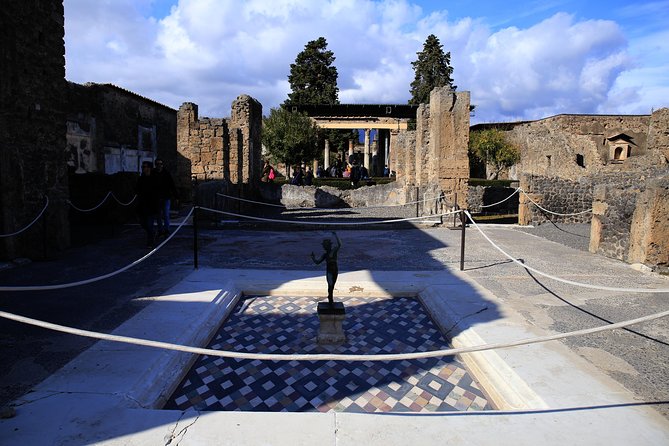
The Forum is where Pompeii starts feeling like a city instead of a collection of buildings. You’ll spend time at Foro de Pompeya and see the Forum area with context, including the way markets and public activity shaped everyday life.
One practical reason a guided pass helps: the Forum excavations can look dramatic, but they can also look confusing without a “what you’re looking at” map. With a guide, you get the story of what’s exposed and what it likely meant to people then.
Some groups also mention time for a lower-level view in the Forum excavation zone. If your route includes a chance to see parts of the excavations from below, take it—those angles can make the size and layout click quickly.
5) Lupanar: the erotic frescoes, with context
The Lupanar is famous, and it’s also easy to misunderstand if you only approach it as shock value. A good guide keeps it grounded: what this building was, how it functioned within the city, and why the frescoes matter historically.
This stop is about 20 minutes. That’s enough to see the space and learn the context without turning it into a long detour. If you’re sensitive to the subject, you’ll still get an informative, not sensational, presentation—focused on interpretation rather than gossip.
6) Pompeii Archaeological Park: your private guiding time
At the end of the flow, you spend your private time inside the Pompeii Archaeological Park (the tour runs about 2 hours total). This portion is where your guide stitches the sights together so Pompeii reads like a coherent story rather than separate photos.
In a short private tour, this “connective tissue” matters. Without it, Pompeii can feel like you’re collecting highlights. With it, you leave with a better understanding of how the city worked before Vesuvius changed everything.
What makes the guides stand out (and why it matters for your experience)
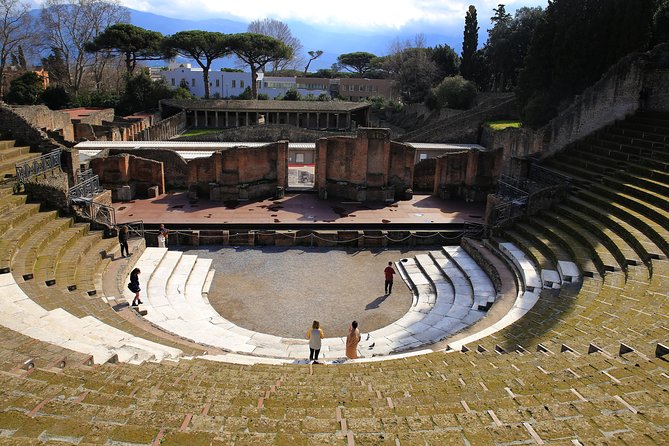
Guide personality isn’t fluff in Pompeii—it changes how you experience the ruins. The strongest praise patterns point to guides who are engaging, prompt, and able to adapt without turning the tour into chaos.
I saw names pop up repeatedly: Lello is described as warm, funny, and able to make Pompeii feel real. Fabio is often described like having a friendly professor with clear explanations. Rosanna stands out for navigating through crowds smoothly and keeping kids engaged with thoughtful questions. Italo is praised for high energy and making the city come alive for families.
That mix tells you something useful: this tour tends to work well for families, mixed-age groups, and first-timers who want stories along with structure. The downside is that, as with any private guide experience, tour quality can vary. One critical note in the overall feedback is that, on at least one occasion, the pacing felt rushed and the guide’s approach didn’t match expectations for historical framing. If you’re very specific about historical interpretations, ask questions early and see how the guide responds.
Value for money: what you’re buying for $83.48
The price is $83.48 per person, and the key value isn’t just the “private” label. You’re paying for three things that save you real travel stress:
- Time savings from skip-the-line entry
- Guided interpretation with an art-historian style approach
- Admission covered for the major stops
For a place like Pompeii, the hidden cost of DIY is often time. If you arrive and spend a chunk of your visit in queues or figuring things out, the ruin experience gets shorter even if your ticket time is longer.
Also, the tour is short enough that it fits into a broader travel plan (especially if you’re doing other stops around Naples and the Bay of Naples). In practical terms, this tour is a good “high-impact” Pompeii choice when you want the essentials with context.
If you’re a serious “see every room” person, you might prefer a longer visit or a different tour style. But if you want to leave feeling you understood the city’s main story, the value here is pretty strong.
Practical tips so you enjoy it more
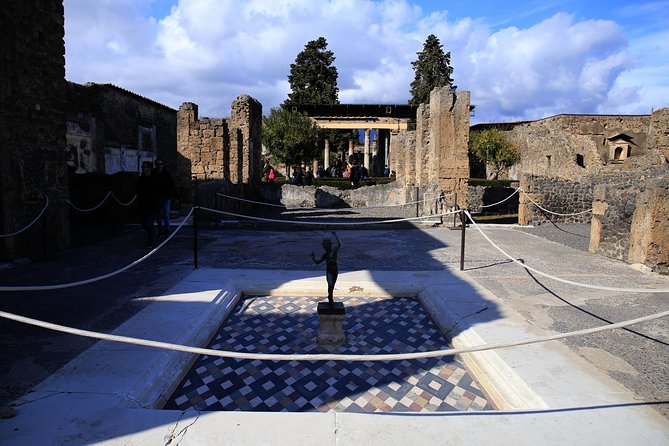
Wear comfortable shoes with grip. Pompeii surfaces can be uneven, and you’ll be walking through outdoor areas between stops.
Bring water, especially in summer. The tour includes time in sunny zones, and the overall feedback specifically recommends bringing water bottles in warm weather.
Also, set expectations: this is a highlight circuit. If you want slow wandering, treat this tour as the backbone and plan slower time on your own afterward (though in this case the tour ends back at the meeting point, so you’d need to manage your own extra hours).
Finally, come with curiosity. Pompeii rewards questions. If the guide mentions something like acoustic design in the theater or how a bath layout works, ask follow-ups—it’s the easiest way to turn a good tour into a memorable one.
Who this tour is best for
This works especially well for:
- First-time visitors who want core Pompeii highlights without getting lost
- Families (the tour is designed for groups with engaging guides, and children must be with an adult)
- Travelers who care about context—how people lived, not just what’s standing
- People with limited time who still want a meaningful experience
It may be less ideal if:
- You strongly dislike structured timing and prefer slow, independent wandering
- Your group has trouble with moderate physical fitness walking over uneven terrain
Should you book this Pompeii private skip-the-line tour?
I’d book it if your goal is clear: see Pompeii’s headline sites with context, without wasting your limited visit time in lines. The combination of private pacing, skip-the-line entry, and admission included for the key stops makes it a practical “best of Pompeii” choice.
I’d hesitate only if you’re the type who wants an unhurried, room-by-room exploration or you’re extremely particular about receiving a specific historical interpretation style. In that case, ask questions early or consider a longer format so you have more time to match the tour to your interests.
FAQ
How long is the tour?
It’s listed as about 2 hours.
Is this tour private?
Yes. It’s a private tour and only your group participates.
What language is the tour offered in?
The tour is offered in English.
Does the price include admission tickets?
Yes. Admission tickets are included for the stops listed.
Where do we meet, and does the tour end there?
You meet at Hotel Vittoria, Piazza Esedra, 80045 Pompei NA, Italy, and it ends back at the same meeting point.
Do I need hotel pickup?
No. Hotel pickup and drop-off aren’t included.
Is the tour suitable for kids?
Children must be accompanied by an adult.
What should I bring for a summer visit?
Bring water bottles, especially if you’re going in summer.
What happens if weather is poor?
The experience requires good weather. If it’s canceled due to poor weather, you’ll be offered a different date or a full refund.
More Tours in Pompeii



More Tour Reviews in Pompeii

More Pompeii Tours to Compare
More Pompeii tours, freshly reviewed



Pompeii Tours, compared.
 ★ 4.8Pompeii: Entry Ticket and Guided Tour with an ArchaeologistFrom $3519,459 reviews
 ★ 4.1Pompeii: Entry Ticket with Audio GuideFrom $4013,491 reviews
 ★ 4.8Pompeii: Small Group Tour with an ArchaeologistFrom $4012,264 reviews
 ★ 4.3Pompeii Ruins & Mount Vesuvius Day TourFrom $12011,459 reviews
★ 5.0Pompeii Small Group Tour with an ArchaeologistFrom $356,593 reviews
★ 4.3Pompeii Ruins & Mount Vesuvius Day TourFrom $12011,459 reviews
★ 5.0Pompeii Small Group Tour with an ArchaeologistFrom $356,593 reviews
 ★ 4.5Skip-the-line Pompeii – Small Group TourFrom $544,401 reviews
 ★ 4.6Naples or Sorrento: Full-Day Pompeii and Mount Vesuvius TourFrom $1044,235 reviews
 ★ 3.9Pompeii: Skip-the-line Entry Ticket with Audio Guide & MapFrom $433,153 reviews