
Review · POMPEII TOURS
Private Pompeii Tour with Fast-Entrance Tickets to the Ruins & Exclusive Guide
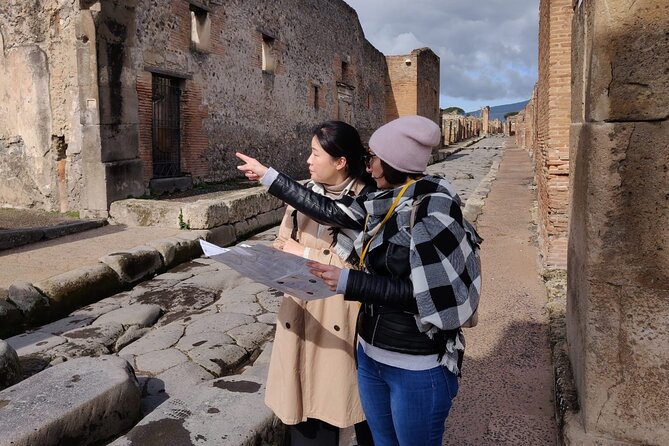
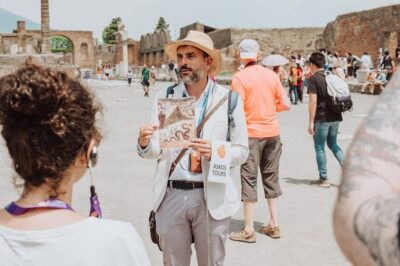
Pompeii can feel unreal fast. With skip-the-line access, this private outing gives you a smooth path into the ruins, plus a guided walkthrough that zeroes in on the big, memorable stops like the House of Menander. I also like that you get a real professional local guide to connect what you’re seeing with the city’s story, not just a list of names. One thing to consider: it’s about 2 hours, so you’ll see key highlights, not every corner of Pompeii.
You meet at Hotel Vittoria (Piazza Esedra) and spend the afternoon moving through sectors of the Archaeological Park in a way that’s easier than trying to plan it all yourself. If your group gets a guide like Italo, the delivery tends to be warm and engaging, with explanations that make the ruins click quickly. The format is private, so the pace can stay focused on your questions and interests.
In This Review
- Key things to know before you go
- Skip-the-line entry at Porta Marina Inferiore
- Gymnasium, Columns, and the Theatres with real acoustics
- Via dell’Abbondanza: shops, bakeries, and Temple of Isis energy
- House of Menander: when Pompeii turns personal
- Forum and the big landmarks that shape the story
- How the 2-hour private format keeps your day on track
- Price and value: what $208.28 buys you
- Meeting point and getting oriented fast
- Practical tips to make this tour feel easy
- Who should book this private Pompeii tour
- Should you book this private Pompeii tour?
- FAQ
- How long is the Pompeii private tour?
- Is admission included?
- Is this a private tour?
- Where do we meet and where does the tour end?
- What should I wear?
- Do you provide transportation?
Key things to know before you go
- Fast entrance means you spend more time inside, less time waiting at busy checkpoints
- Entry goes through Porta Marina Inferiore, then you follow a classic route through major public spaces
- You’ll hit big visual anchors like the Small and Big Theatres and their standout setting
- The route includes via dell’Abbondanza, with shops and everyday-life stops like bakeries and the Temple of Isis
- A highlight stop is the House of Menander, one of Pompeii’s most famous residences
- Expect a smart casual dress code and a moderate walking level through uneven ruins
Which Pompeii ticket and guide? Compare a few more.
- Pompeii Small Group Tour with an Archaeologist★ 5.0 · 6,593 reviews
- Discover the Ancient Ruins of Pompeii: Day Trip from Rome★ 3.5 · 2,247 reviews
- Pompeii and Herculaneum Small Group Tour with an Archaeologist★ 5.0 · 1,350 reviews
- Skip the Line Guided Tour of Pompeii led by an Archaeologist★ 5.0 · 703 reviews
Skip-the-line entry at Porta Marina Inferiore
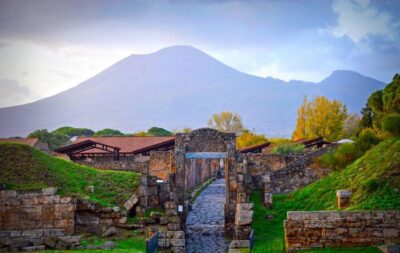
If you only have a few hours, skip-the-line matters in Pompeii. This tour is built around guaranteed fast entrance, so you can get moving early and keep your energy for the ruins instead of feeding time into ticket lines. You enter through the Porta Marina Inferiore gate, then start walking along a tree-lined boulevard that helps you get your bearings before the city gets intense.
The entry choice also helps the tour feel less like random wandering. You’re guided into a logical flow: public spaces first, then more detailed “you can almost picture it” areas as you go. That’s a big deal at Pompeii, where it’s easy to see a wall, a doorway, or a street and miss what it meant to people who lived there.
The other practical upside: you’re not solving logistics while you’re already in “ruins mode.” Admission is included, and the tour is designed to run at a steady pace around the sites named in the itinerary.
Gymnasium, Columns, and the Theatres with real acoustics
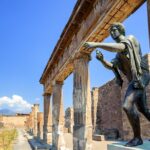
One of the first stops that makes Pompeii feel vivid is the gymnasium. You’ll walk through an area framed by columns and porches, which gives you a sense of where people gathered for physical training and social time. It’s not just archaeology-as-rock. A good guide turns shapes and space into human rhythms: where someone would have stood, how a portico would have offered shade, and why this kind of building mattered to daily life.
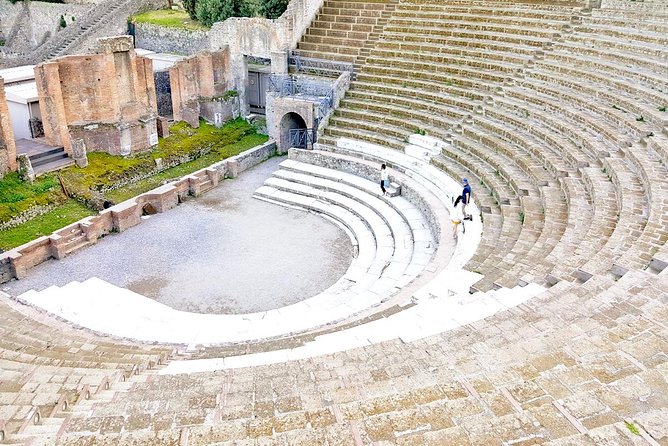
Then the route moves toward the Small and Big Theatres. What’s especially memorable here is how the tour points out their setting and acoustics. Even if you’re not doing a performance yourself, you can understand the engineering behind how these venues worked. Standing in that space, it’s easier to grasp how Romans used entertainment and public speeches to build community and influence.
A small caution: theatres and public buildings can attract the most foot traffic, and Pompeii’s surfaces aren’t always forgiving. Wear shoes you trust on uneven stone and keep an eye on where you place your step when you stop for photos.
Via dell’Abbondanza: shops, bakeries, and Temple of Isis energy
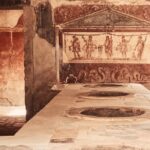
Next comes via dell’Abbondanza, a street that feels like Pompeii’s commercial spine. You’ll pass through an area with shops, then move toward stops that tie into everyday habits: bakeries and restaurants. It’s a powerful shift from the large public buildings to spaces that feel more intimate and routine.
This is also where the Temple of Isis enters the story. Seeing the Temple of Isis in this context—right on a lively street of commerce—helps you understand the city wasn’t only about politics and spectacles. It was also about religion, food, and people doing the same errands humans still do today.
Two things I like about how this portion is handled:
- You’re walking a named corridor rather than teleporting between random points. That makes the city’s layout feel more legible.
- The guide helps you connect the mix of uses—market life alongside ritual life—so Pompeii doesn’t come across as a single theme park of ruins.
The potential drawback is simple: this section can be busy and photo-heavy. If you’re the type who likes slow, lingering looking, plan to give the guide your focus first, then take photos during the natural pauses.
House of Menander: when Pompeii turns personal
The House of Menander is one of the most talked-about residential sites in Pompeii, and this tour makes it a featured stop. The name is well known all around the world, and the point of the visit on this tour is to help you see the house as more than a container of artifacts.
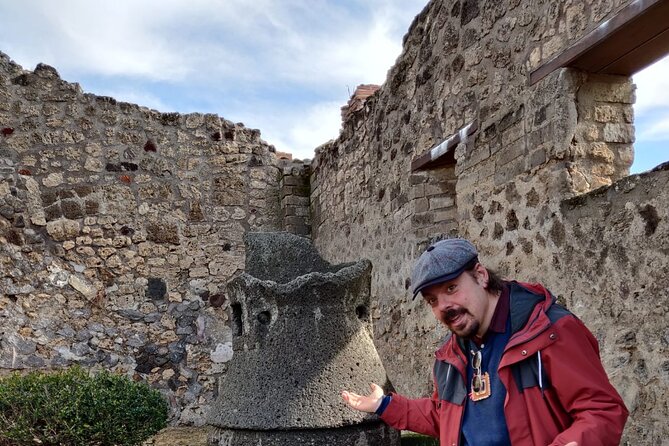
Even with limited time, a guided stop like this changes how you read what’s left. You start noticing the logic of a home: how space organizes daily movement, where people would gather, and how a household balanced work, relaxation, and social visibility. Your guide’s commentary is key here, because ruins of homes can look like broken walls unless someone helps you translate the shapes.
If you’re short on time, residential stops like this tend to be the most emotionally effective. It’s the difference between reading Pompeii as a city and understanding Pompeii as lived-in places.
One practical consideration: houses can involve more uneven ground and tighter navigating, depending on where you stop for explanation. Keep your pace steady, and don’t be afraid to ask where the easiest route is if you’re moving with a group.
Other tickets and entries for Pompeii

Forum and the big landmarks that shape the story
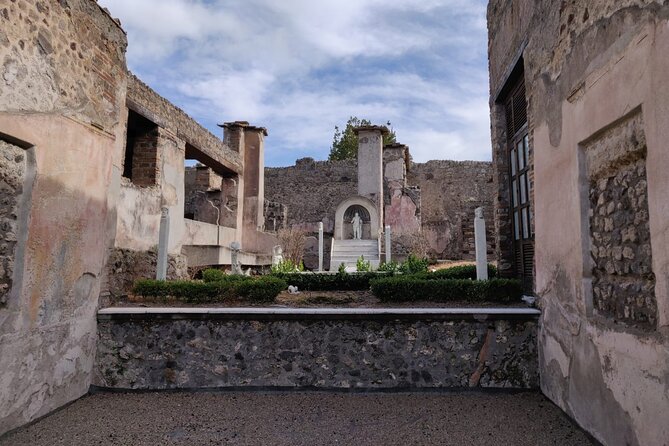
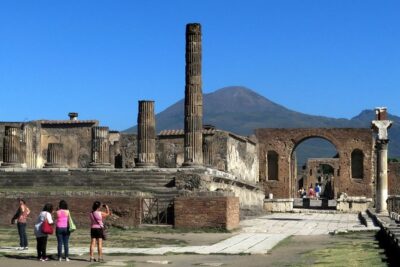
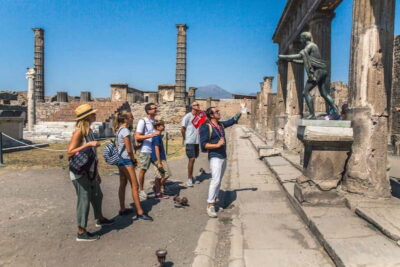
This tour is designed around key Pompeii landmarks, and it specifically calls out the Forum as one of the major stops covered by your guide. The Forum matters because it’s where a Roman city showed its priorities—public life, civic identity, and the spaces where decisions and displays played out.
Even if you’ve seen photos of the Forum, standing there with a guide changes what you notice. The guide helps you look at the Forum like a working place instead of a set of columns. You’ll connect what you’re seeing with why Pompeii’s layout is meaningful: it’s the skeleton of the society.
A useful way to get value from a Forum stop in a short tour is to listen for the city-wide connections. Ask yourself: what does this space say about how people organized their day? The Forum often answers that quicker than you’d expect when someone frames it in plain terms.
How the 2-hour private format keeps your day on track
This outing runs about 2 hours, and that timing is part of its value. If you’re visiting Pompeii as part of a broader itinerary—possibly combined with Naples, a coast stop, or another historic site—two hours is a realistic window that lets you return to your plans without feeling like the whole day evaporated inside the park.
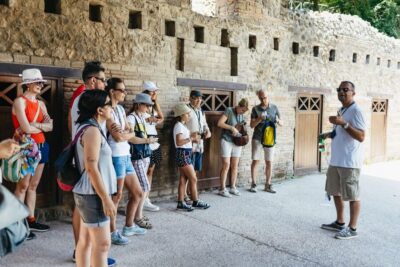
Because it’s a private tour, you’re also not “stuck in line behind everyone else’s questions.” Your group stays together, and the guide can keep momentum without waiting for larger crowds to regroup. For couples, families with teens, and friends who want a guided experience without a large group feel, that’s a strong match.
The flip side is that you can’t treat this as a “complete Pompeii” ticket. If your goal is to cover every site, you’ll need more time than this tour offers. Use this as your Pompeii foundation: the highlights and the storyline that gives you context for anything else you choose to see afterward.
Price and value: what $208.28 buys you
At $208.28 per person, this is not the cheapest way to do Pompeii. But value here comes from what’s included and what’s saved.
You’re paying for:
- A professional guide plus a local guide approach
- Guaranteed skip-the-line entrance
- A private group format
- Admission included
- A focused route through major highlights
In a place like Pompeii, waiting can quietly drain your experience. Fast entrance helps you keep the day moving, and a guide helps you avoid the most common trap: wandering with good intentions and ending up with a collection of photos that don’t add up to understanding.
So the question for your decision is simple: Do you want guidance and time saved, or do you want to manage the whole experience independently? If you want the ruins translated into a coherent story—especially in a tight time window—this price starts to make sense.
Also, the tour is booked in advance on average about 65 days ahead. That’s a signal that time slots can fill, especially in peak periods, so planning ahead protects your options.
Meeting point and getting oriented fast
You meet at Hotel Vittoria, Piazza Esedra, 80045 Pompei NA, Italy, and the tour ends back at the meeting point. That round-trip structure is helpful because it removes one layer of uncertainty. You don’t have to worry about arranging a second pickup or figuring out how to get from the ruins to your next stop.
The meeting point is also near public transportation, which is useful if you’re arriving by train or bus and want the easiest handoff into your guided time.
Dress code is smart casual, and you should have a moderate physical fitness level. In practice, that means: expect walking, some uneven surfaces, and time spent standing when the guide stops to explain.
Practical tips to make this tour feel easy
Here are a few ways to get the most out of a two-hour Pompeii experience like this one:
- Bring a small water bottle and take short breaks during natural pauses, especially during warmer parts of the day.
- Wear comfortable shoes with traction. The ruins look solid, but you’ll still want grip.
- Keep your questions ready. A private setting is your chance to ask what you actually care about—how the city worked, what the spaces were for, and how to read the remains.
- Use the route logic. When you notice streets, public buildings, and houses in sequence, the guide’s explanations become easier to follow.
- Use the mobile ticket if that’s how you’re issued entry. It’s designed to be simple, but always have your confirmation handy.
Who should book this private Pompeii tour
This is a strong fit if you:
- Have limited time and want a guided hit list of the most important highlights
- Prefer a private setting over a large group
- Want fast entrance to protect your schedule
- Like explanations that tie sites together into a story, from public spaces to a standout residence
It might be less ideal if you:
- Want to roam independently and see everything at your own speed
- Need a longer visit to cover more than the major highlights
Should you book this private Pompeii tour?
If your biggest fear is wasting time at the gate or leaving Pompeii feeling like you saw a lot but understood little, then yes—this tour is worth serious consideration. You get a focused route, fast entrance, and a guide setup designed to help the ruins make sense quickly.
I’d book it especially if two things are true: you want help interpreting what you’re seeing, and you only have a couple of hours. If you have a full day and you enjoy unguided exploring, you might choose differently. But for a short, high-impact Pompeii visit, this one is built to deliver.
FAQ
How long is the Pompeii private tour?
The tour is about 2 hours.
Is admission included?
Yes. Admission to Pompeii Archaeological Park is included.
Is this a private tour?
Yes. It’s private, and only your group participates.
Where do we meet and where does the tour end?
You start at Hotel Vittoria, Piazza Esedra, 80045 Pompei NA, Italy, and the tour ends back at the meeting point.
What should I wear?
The dress code is smart casual.
Do you provide transportation?
No. Transportation to and from attractions is not included.
More Tours in Pompeii



More Tour Reviews in Pompeii

More Pompeii Tours to Compare
More Pompeii tours, freshly reviewed



Pompeii Tours, compared.
 ★ 4.8Pompeii: Entry Ticket and Guided Tour with an ArchaeologistFrom $3519,459 reviews
 ★ 4.1Pompeii: Entry Ticket with Audio GuideFrom $4013,491 reviews
 ★ 4.8Pompeii: Small Group Tour with an ArchaeologistFrom $4012,264 reviews
 ★ 4.3Pompeii Ruins & Mount Vesuvius Day TourFrom $12011,459 reviews
★ 5.0Pompeii Small Group Tour with an ArchaeologistFrom $356,593 reviews
★ 4.3Pompeii Ruins & Mount Vesuvius Day TourFrom $12011,459 reviews
★ 5.0Pompeii Small Group Tour with an ArchaeologistFrom $356,593 reviews
 ★ 4.5Skip-the-line Pompeii – Small Group TourFrom $544,401 reviews
 ★ 4.6Naples or Sorrento: Full-Day Pompeii and Mount Vesuvius TourFrom $1044,235 reviews
 ★ 3.9Pompeii: Skip-the-line Entry Ticket with Audio Guide & MapFrom $433,153 reviews