
Review · POMPEII TOURS
Private Guided Tour of Pompeii. Sunset Tour
Sunset at Pompeii changes everything. This private Pompeii tour is built for the golden hour crowd-killers: less heat and fewer people than midday, plus an official guide to make the ruins feel readable fast. You’ll cover the big highlights—Forum streets, baths, villas, shops, mosaics, and frescoes—before the day fully cools down.
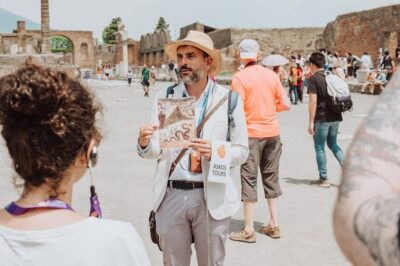
Two things I’d put at the top of your list: first, the storytelling quality. Guides like Romolo and Paolo are praised for detailed, enthusiastic explanations and clear English, with lively Pompeii anecdotes that connect the sites to how people actually lived. Second, the route is practical—you get a tight sampling of major zones and still have time to slow down when the mosaics and frescoes catch your eye.
One consideration: the Pompeii Archaeological Park entrance ticket isn’t included, so you’ll need to plan that add-on. Also, the stop-by-stop pacing is designed for 2 to 3 hours, so if you want long hangs in one house, you’ll need to treat this as a high-quality highlight reel.
In This Review
- Key things to know before you go
- Why the Sunset Timing Matters at Pompeii
- Meeting at Porta Marina: Getting Started Smoothly
- The 2 to 3 Hour Route: Pompeii’s Big Ideas, in Order
- Stop 1 Reminder: Entrance ticket
- Temple of Apollo: A Small Stop with Big Atmosphere
- Foro de Pompeya: The Main Square, Explained
- Granai del Foro and Terme del Foro: Storage and Spa Life
- Via dell’Abbondanza and Teatro Grande: Main Street Meets Main Stage
- Lupanar and the Poet’s House: When Pompeii Gets Personal
- Tempio di Venere and Tempio di Giove Capitolino: Two Forum Temples
- What Skip-the-Line and Private Format Really Buy You
- Price and Value: Is $95.31 Worth It?
- Who Should Book This Pompeii Sunset Tour
- Should You Book This Pompeii Sunset Private Tour?
- FAQ
- How long is the Pompeii Sunset Private Tour?
- Do I need an entrance ticket to Pompeii?
- Is this tour private or shared?
- What language is the tour offered in?
- Where does the tour start?
- Can I cancel for a full refund?
Key things to know before you go
- Sunset timing for comfort: designed to help you avoid the worst summer heat and peak crowd pressure
- Skip-the-line included: you’re not stuck waiting while the sun drops
- Official guide with strong English: you’ll get clear context at each stop
- A focused route (2 to 3 hours): many major areas without turning into an all-day trek
- Mosaics and frescoes are the payoff: expect repeated “stop, look, learn” moments
- Entrance tickets split across stops: Pompeii park admission not included, while some specific sites are included
Which Pompeii ticket and guide? Compare a few more.
- Pompeii Small Group Tour with an Archaeologist★ 5.0 · 6,593 reviews
- Discover the Ancient Ruins of Pompeii: Day Trip from Rome★ 3.5 · 2,247 reviews
- Pompeii and Herculaneum Small Group Tour with an Archaeologist★ 5.0 · 1,350 reviews
- Skip the Line Guided Tour of Pompeii led by an Archaeologist★ 5.0 · 703 reviews
Why the Sunset Timing Matters at Pompeii
Pompeii is at its best when you can actually focus. Midday can feel like an endurance event, and peak hours can turn the experience into a slow shuffle. This tour is made for the calmer window—sunset—so the ruins are easier on your body and easier on your eyes.
That timing also changes the mood of the Forum and streets. Stone stays warmer longer, shadows grow more dramatic, and it’s easier to spot details like worn steps, street ruts, and the layout of courtyards. The tour’s goal is simple: help you see the essentials without feeling rushed in a crowded grid.
And because it’s private, you’re not stuck listening over other groups’ audio. You can ask quick questions, and your guide can adjust the pace if you’re pausing for photos or leaning in for inscriptions.
Meeting at Porta Marina: Getting Started Smoothly
You meet at Pompei-porta Marina – scavi 80045 Pompei. Starting and ending back at the same meeting point keeps things low-stress, especially if you’re arriving by local transport and don’t want to guess where you’ll be dropped off later.
The real practical win is the skip-the-line feature. Pompeii queues can be long, and waiting in a line while other visitors drift past you is demoralizing. Skipping that friction means more daylight for photos and more time inside the site while you’re fresh.
Also, you’re not dealing with a giant, packed group. Since it’s a private tour for only your group, your guide can steer the walking route around the densest moments and keep your momentum going.
The 2 to 3 Hour Route: Pompeii’s Big Ideas, in Order
The heart of the tour is a smart walk through Pompeii’s core zones—built around the question: what did a Roman city feel like day-to-day?
Stop 1 is where most of the time goes. It’s about 2 hours, covering a wide sample of the city: the Forum, baths, Roman villas, the Lupanare, theaters, ancient shops, bakeries, plus the visual language Pompeii is famous for—mosaics and frescoes.
Here’s how to think about that first segment:
- You’ll get city layout context: where the “public life” happened, where people shopped, and how movement worked through main areas.
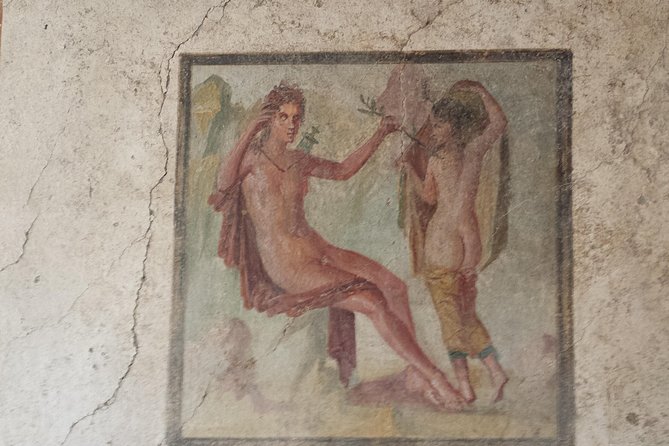
- You’ll see the kinds of decoration that weren’t just art; they were branding, status, and daily mood for households and businesses.
- You’ll also be learning the themes your guide is tracking: civic life, leisure, commerce, and the private world you glimpse through doorways and courtyards.
The catch is the pacing. Some parts of Pompeii feel best when you linger. This tour is designed to keep you moving—excellent if you want the highlights, not ideal if you want a slow, museum-style crawl.
Stop 1 Reminder: Entrance ticket
Admission for Pompeii Archaeological Park is not included, so budget for that separately. Everything else is then layered on top, including specific stops where entry is covered.
More guided runs around Pompeii



Temple of Apollo: A Small Stop with Big Atmosphere
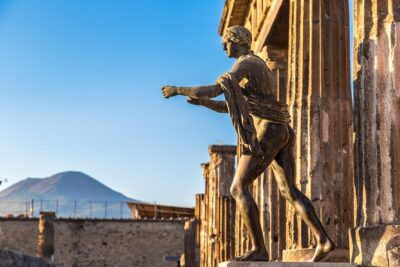
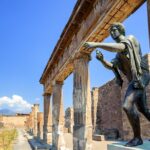
Then you head to the Temple of Apollo. This is a preserved temple stop, quick but meaningful—about 10 minutes, and in this tour, its admission is included.
Why is it worth the time? Because it shifts your focus from street-level daily life to the city’s spiritual and civic identity. Pompeii isn’t only houses and markets. Places like this help you understand what Romans used religious space for—community gatherings, symbolism, and the city’s sense of order.
Even in a short visit, you can spot how the temple’s position relates to the surrounding public spaces. Your guide’s job here is to connect the dots: how a temple fits into the bigger urban plan you just started learning.
Foro de Pompeya: The Main Square, Explained
Next comes the Foro de Pompeya (the main square) for about 20 minutes with admission included.
This is where you start seeing the city as a system. The Forum isn’t just one building; it’s an operating center for civic life—people meeting, moving, and conducting public business. The ground and surrounding architecture help you imagine the flow: where crowds would gather, how power would look “in space,” and how everyday decisions played out in a public place.
If you’ve ever visited an ancient city and felt lost, the Forum is the fix. It’s a natural anchor point. You’ll leave it with a mental map that makes the next stops click.
Granai del Foro and Terme del Foro: Storage and Spa Life
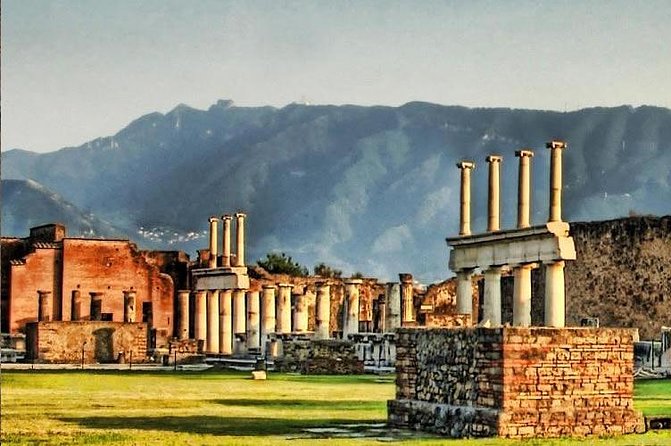
You’ll then visit Granai del Foro—a museum—about 15 minutes, with admission included. Grain storage sounds boring on paper, but in ancient cities, storage was power. It meant food stability. It affected politics, survival, and the confidence of a city that could keep going.
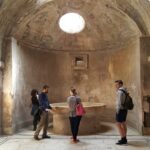
From storage, you pivot to Terme del Foro (the Forum Baths), about 20 minutes with admission included. Roman baths are a perfect Pompeii learning tool because they mix social life and architecture. You’re not only seeing rooms—you’re seeing how people interacted, rested, cleaned, and talked.
If you enjoy comparing different daily routines—work vs leisure—this pair of stops gives you that contrast fast:
- Granai del Foro: the city feeding itself
- Terme del Foro: the city socializing while keeping clean
And because you’re on a guided route, you’ll likely get the “why” behind the spaces, not just the “what.”
Via dell’Abbondanza and Teatro Grande: Main Street Meets Main Stage
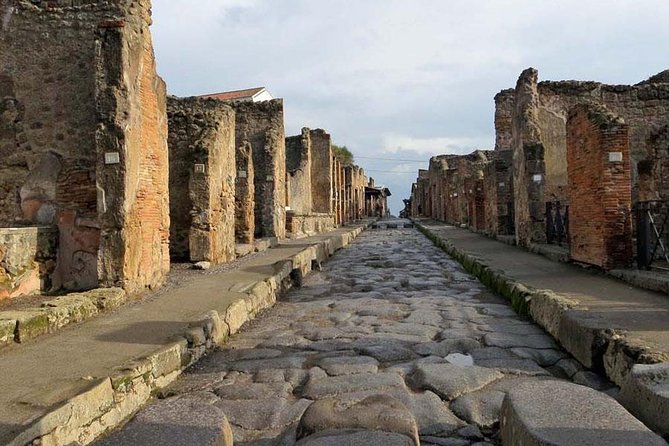
Then you walk Via dell’Abbondanza, the main road, for about 20 minutes with admission included.
This street is where Pompeii feels alive. You’ll see the rhythm of commerce and the way entrances and facades create a walking experience. Even when you’re not reading every detail, you can sense how people would browse, pause, and move from one function to another.
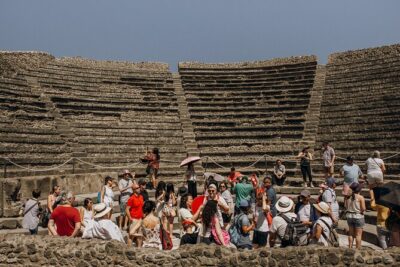
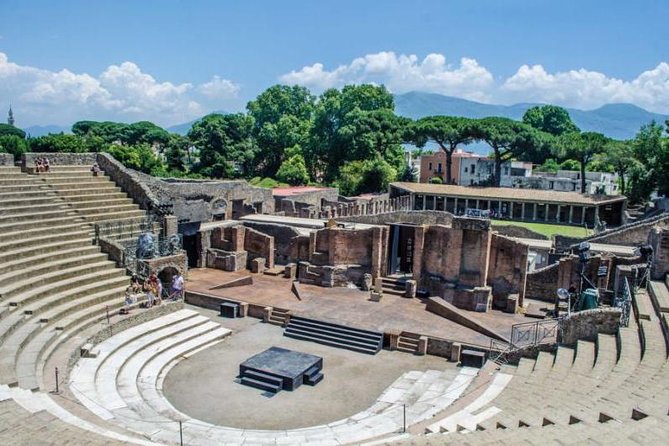
Next stop: Teatro Grande (about 20 minutes, admission included). This is where you shift into performance culture—comedies and tragedies. In Roman cities, theaters weren’t just entertainment. They were social settings and a public identity moment.
This is a good segment for anyone who likes understanding “how people spent free time.” Your guide can connect the theater to the Forum and street scenes you’ve already seen, so you don’t just treat it like a separate attraction.
Lupanar and the Poet’s House: When Pompeii Gets Personal
Now comes one of Pompeii’s most talked-about areas: the Lupanar, the ancient house of entertainment, for about 20 minutes with admission included.
This stop is not for everyone’s comfort level, and that’s okay. The upside is educational clarity. It gives you a direct, real look at a part of city life that ordinary “postcard Pompeii” tours often hand-wave. A good guide helps you keep it factual and avoids sensational storytelling.
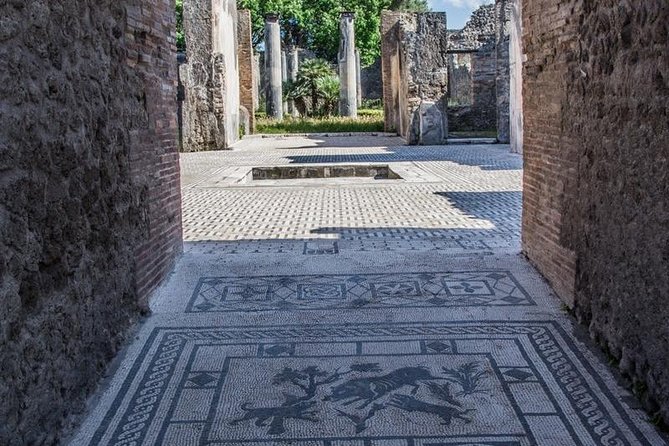
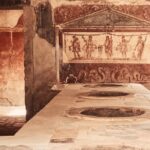
After that, you’ll see Casa del Poeta Tragico for about 10 minutes with admission included. This is a quick visit, but mosaics here are the point. When a home is famous for its floor designs, it tells you how identity was built into daily movement. People stepped over art. Visitors saw it. Owners used it to signal taste and status.
Then you’ll visit Casa del Cinghiale (about 10 minutes, admission included). Again, you’re here for mosaics and architecture, and you’ll likely notice how different homes used space differently. Short stop or not, you can start building a sense of variety: not all Pompeii houses felt the same.
These two “mosaic houses” are a smart pairing. They move you from the public and entertainment spaces back into the private sphere—where Pompeii becomes very human.
Tempio di Venere and Tempio di Giove Capitolino: Two Forum Temples
You’ll finish with more temple stops at the edges of the Forum world:
- Tempio di Venere (about 5 minutes, admission included)
- Tempio di Giove Capitolino (about 5 minutes, admission included)
These are fast visits, but they add the final layer: the city’s layered beliefs in the same public area. Think of it as Pompeii’s religious “headline news,” presented in brief stops so you don’t lose momentum before the tour ends back at the meeting point.
Because the time here is short, your best strategy is mental. Don’t rush your attention—pick one thing to focus on: placement, structure style, or how a temple relates to the main squares you’ve already seen. That’s the kind of guided attention that makes a 5-minute stop feel like it mattered.
What Skip-the-Line and Private Format Really Buy You
A lot of tours say they’re “skip-the-line.” Here, that matters because Pompeii has choke points. If you’re forced to wait in a queue at the start, the whole day’s rhythm changes—your photos get worse, your focus drops, and you might feel time pressure later.
With skip-the-line plus a private group, the tour feels structured. Your guide leads, you follow, and you don’t spend your energy negotiating with crowds.
Also, the tour is listed as offered in English, and the guides described in the experience are noted for strong English and clarity. That’s a big deal at Pompeii, where small details—inscriptions, architectural layout, and everyday-life context—are what turn ruins into understanding.
Price and Value: Is $95.31 Worth It?
At $95.31 per person, this tour positions itself as a mid-level cost for a high-focus experience. The value isn’t only in what you see—it’s in how you see it.
Here’s where the money goes:
- Official tourist guide
- Skip the line
- Mobile ticket
- A route timed to reduce heat and crowd pressure
- A private format for only your group
The main “value trade” is the one big missing piece: Pompeii Archaeological Park admission is not included. That means your total day cost will be higher once you add the entry ticket. If you were hoping the price covered everything, adjust expectations.
Still, if you hate wasting time figuring things out on your own—and you want your walking route to feel coherent—this is the kind of tour that pays off. Pompeii is huge. A good guide turns “I saw ruins” into “I understood a city.”
Who Should Book This Pompeii Sunset Tour
This tour fits you well if:
- You want the big highlights without an all-day schedule
- You’re visiting in hotter months and want comfort
- You prefer a guided route so you don’t have to constantly make decisions
- You like mosaics, frescoes, and everyday-life details explained clearly
- You’d rather pay for direction than spend energy planning
It might be less ideal if:
- You want long stays in one house or one museum space
- You’re hoping for a full, slow, stand-and-read experience at every single stop
- You dislike the Lupanar segment (it’s included and it’s part of Pompeii’s reality)
If you’re the type who likes structure but also wants to feel flexible, keep a few minutes of buffer in your expectations. With a private tour, you can often ask your guide to spend extra time at the most interesting stops—within reason.
Should You Book This Pompeii Sunset Private Tour?
If your priority is getting real value out of a limited time window, this is a strong choice. The sunset timing helps you enjoy Pompeii rather than endure it. The route hits major areas in a way that makes the city feel connected, not like disconnected photo spots. And the strongest selling point is the guide style—clear English, passion, and explanations that feel detailed without turning into a lecture.
Book it if you want a confident Pompeii overview with an official guide and less stress. Skip it only if you’re counting on the tour price to cover the Pompeii entrance ticket entirely or if you need hours and hours for each site.
FAQ
How long is the Pompeii Sunset Private Tour?
It runs about 2 to 3 hours.
Do I need an entrance ticket to Pompeii?
Yes. Entrance ticket to the Pompeii excavations is not included, though admission tickets are included for the Temple of Apollo and several other listed stops.
Is this tour private or shared?
It’s private. Only your group will participate.
What language is the tour offered in?
The tour is offered in English.
Where does the tour start?
The start point is Pompei-porta Marina – scavi (80045 Pompei, Metropolitan City of Naples, Italy), and it ends back at the meeting point.
Can I cancel for a full refund?
Yes. You can cancel up to 24 hours in advance for a full refund.
More Tours in Pompeii



More Tour Reviews in Pompeii

More Pompeii Tours to Compare
More Pompeii tours, freshly reviewed



Pompeii Tours, compared.
 ★ 4.8Pompeii: Entry Ticket and Guided Tour with an ArchaeologistFrom $3519,459 reviews
 ★ 4.1Pompeii: Entry Ticket with Audio GuideFrom $4013,491 reviews
 ★ 4.8Pompeii: Small Group Tour with an ArchaeologistFrom $4012,264 reviews
 ★ 4.3Pompeii Ruins & Mount Vesuvius Day TourFrom $12011,459 reviews
★ 5.0Pompeii Small Group Tour with an ArchaeologistFrom $356,593 reviews
★ 4.3Pompeii Ruins & Mount Vesuvius Day TourFrom $12011,459 reviews
★ 5.0Pompeii Small Group Tour with an ArchaeologistFrom $356,593 reviews
 ★ 4.5Skip-the-line Pompeii – Small Group TourFrom $544,401 reviews
 ★ 4.6Naples or Sorrento: Full-Day Pompeii and Mount Vesuvius TourFrom $1044,235 reviews
 ★ 3.9Pompeii: Skip-the-line Entry Ticket with Audio Guide & MapFrom $433,153 reviews
Browse the lists this tour appears in