
Review · POMPEII TOURS
Pompeii walking tour (2hrs)
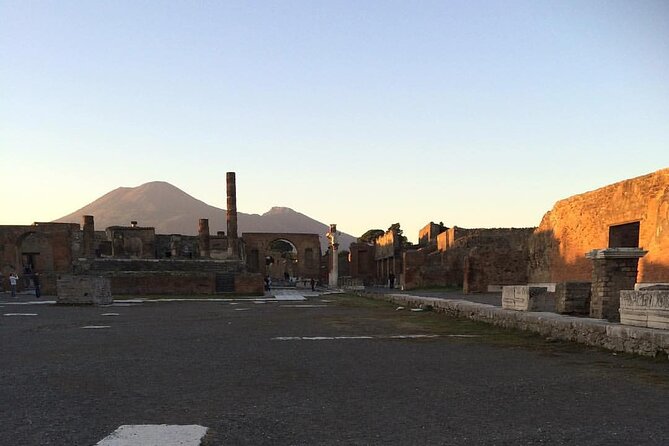
Pompeii hits fast, even on day one. This 2-hour private walk with a licensed guide helps you understand what you’re seeing across Pompeii’s streets, and I especially like the way the tour points out frescoed houses, marble, and daily life so it all feels real instead of random ruins. One consideration: park entry tickets aren’t included, so you’ll need to budget for admission on top of the tour price.
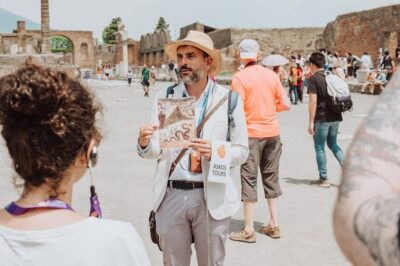
You meet at the Archaeological Park of Pompeii in Piazza Esedra, at the ticket-office area, and your tour ends back at the same meeting point. The experience is in English and run as a true private outing, meaning only your group participates.
At $60.08 per person, you’re paying for the guide time (not the site ticket), which can be a smart value if you want a focused route through a huge place. The tour also needs good weather to run, so keep an eye on forecasts.
In This Review
- Key Highlights You’ll Actually Feel on the Walk
- Entering Pompeii the Right Way: Piazza Esedra First
- The 2-Hour Route: A Roman City That Still Looks Used
- Frescoes and Marble: Why a Guide Changes Everything
- Theatres, Shops, and Houses: Daily Life Meets Big Emotion
- Thermal Baths and the Gladiator Gym: Body, Routine, and Entertainment
- “Having Fun” in Pompeii: How the Story Fits Together
- Price and Logistics: What $60.08 Buys (and What It Doesn’t)
- Who This Private Pompeii Tour Fits Best
- A Note on Weather and Timing
- Should You Book This Pompeii Walking Tour with Margherita?
- FAQ
- How long is the Pompeii walking tour?
- What’s included in the price?
- Where do we meet at Pompeii?
- Is this tour private?
- Is the tour in English?
- What if the tour can’t run due to poor weather?
Key Highlights You’ll Actually Feel on the Walk
- Private guide attention for a 2-hour Pompeii visit without feeling rushed by strangers
- Frescoes, marble, and original spaces explained in plain, human terms
- Thermal baths and gladiator training areas that turn legends into everyday life
- The “best preserved” city effect of Pompeii—what survives is the story
- Margherita’s style noted for being engaging, funny, and practical
- A clear meeting point in Piazza Esedra so you can start with confidence
Which Pompeii ticket and guide? Compare a few more.
- Pompeii Small Group Tour with an Archaeologist★ 5.0 · 6,593 reviews
- Discover the Ancient Ruins of Pompeii: Day Trip from Rome★ 3.5 · 2,247 reviews
- Pompeii and Herculaneum Small Group Tour with an Archaeologist★ 5.0 · 1,350 reviews
- Skip the Line Guided Tour of Pompeii led by an Archaeologist★ 5.0 · 703 reviews
Entering Pompeii the Right Way: Piazza Esedra First
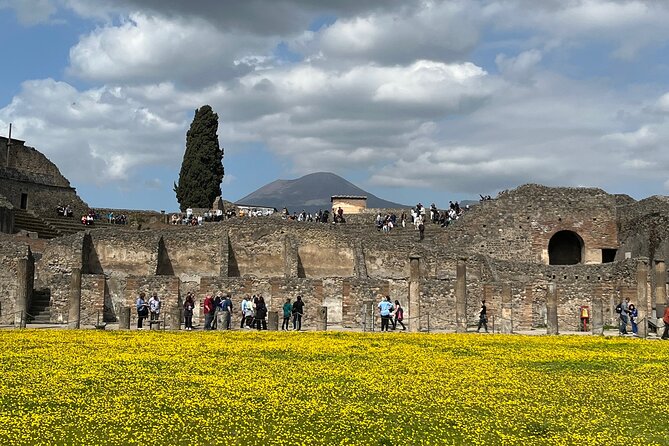
Pompeii is a big site. That sounds obvious, but it matters because your time shrinks the moment you’re walking with no plan. Meeting at Piazza Esedra’s ticket-office area helps you get started smoothly and stay oriented inside the park.
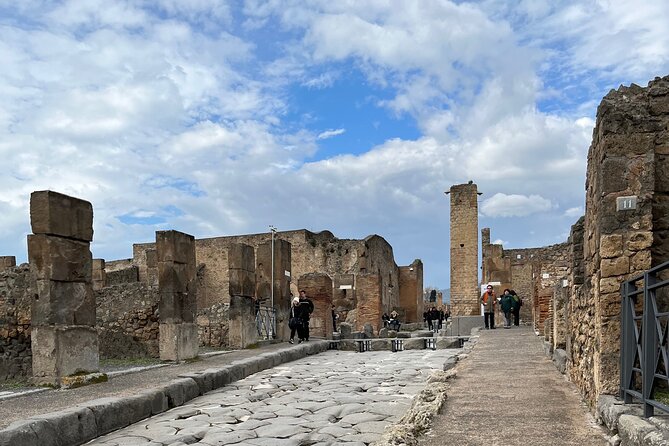
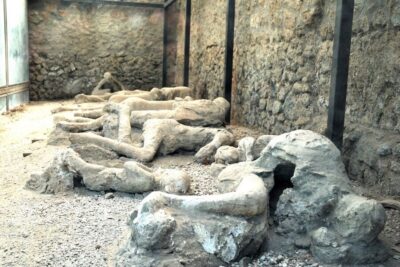
From there, the tour focuses on the parts that make Pompeii feel like a living city frozen in time. You’re walking through streets that were destroyed by Mount Vesuvius in 79 A.D., and what makes the place so powerful is how much survived through the centuries.
If you like structure—knowing where to look and what matters most—this is the kind of setup that keeps your visit from turning into a checklist.
The 2-Hour Route: A Roman City That Still Looks Used
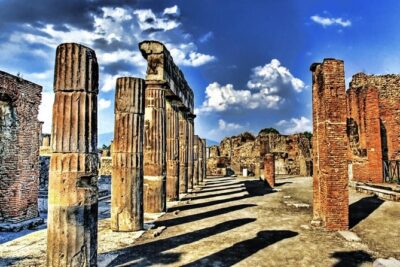
The core of the experience is a walking tour inside the Archaeological Park of Pompeii, paced for about two hours. You’ll cover the highlights that show how Romans lived, worked, shopped, bathed, trained, and went out for entertainment.
What I like most is that the tour doesn’t treat Pompeii like just a pile of stones. You’re shown recognizable parts of daily life, including original theatres, shops, and houses. And because many spaces still carry decoration like frescoes and marble, it’s easier to picture the city as it was—not as an outline.
One practical takeaway for you: in two hours, you won’t see everything. But you can still leave with a clear understanding of how Pompeii functioned, which is the difference between visiting ruins and understanding a city.
Frescoes and Marble: Why a Guide Changes Everything
Pompeii can trick you. You see a wall, a doorway, maybe a fragment of decoration—and it’s easy to assume you know what it was for. The guide’s job is to cut through that fog quickly.
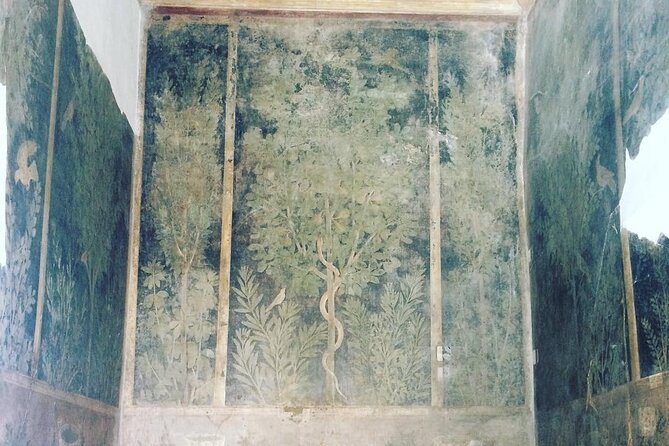
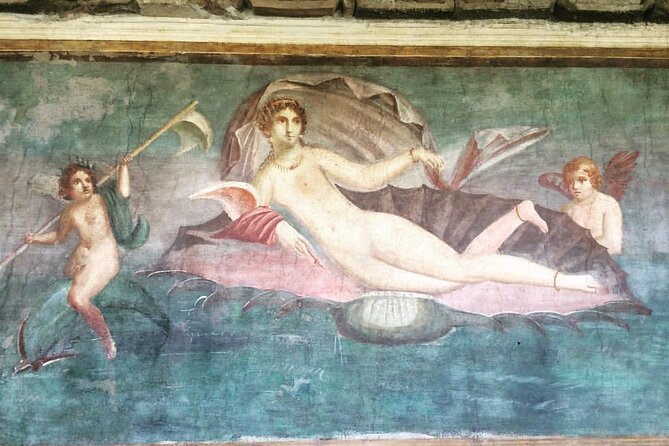
This is where the experience shines. The tour spotlights frescoes and marble and then explains what they signaled in Roman life. Whether it’s the look of a home interior or the feel of public spaces, those details start to connect into one story.
A strong theme in the feedback around Margherita is how she makes things feel alive. She’s described as engaging from start to finish, and that matters in a place where it’s easy to tune out if explanations stay vague.
Tip for you: if you’ve visited other ancient sites and felt like you were reading signs but missing the human story, a guide like this is exactly what you need.
Theatres, Shops, and Houses: Daily Life Meets Big Emotion
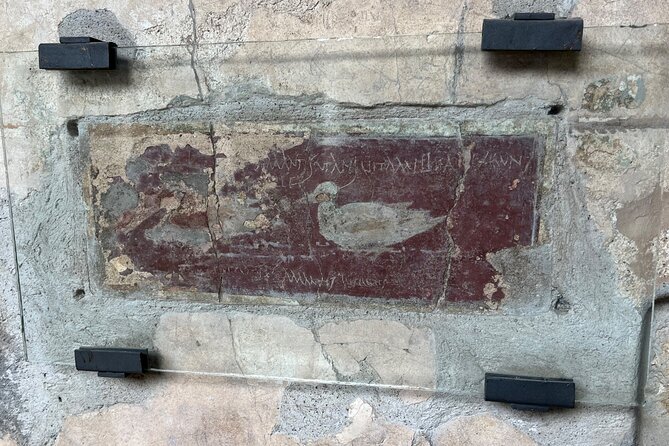
During your walk, you’ll pass through spaces tied to public life and private life—often close enough that your brain starts building relationships between them. That’s one of Pompeii’s superpowers: everyday scenes sit next to each other in a way modern cities rarely allow.
You’ll see original theatres, shops, and houses decorated with frescoes. The point isn’t just visual wow. It’s that you get a sense of routines: where people went for entertainment, where commerce happened, and what a well-furnished home meant in Roman society.
And because you’re moving with a plan, you spend less time wondering what each building is. You get the context as you walk, which keeps your attention on the right things.
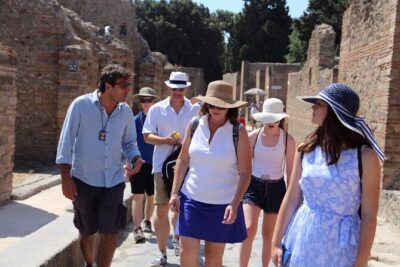
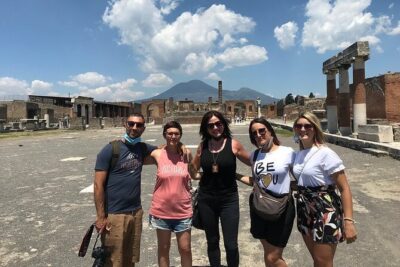
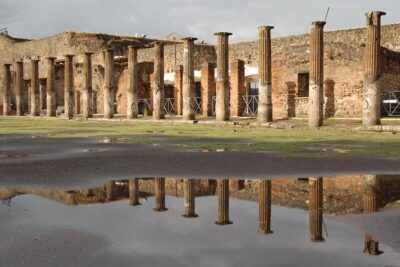
More of Pompeii at street pace

Thermal Baths and the Gladiator Gym: Body, Routine, and Entertainment
Pompeii is famous, but the details can still surprise you—especially around how Romans handled health, leisure, and performance.
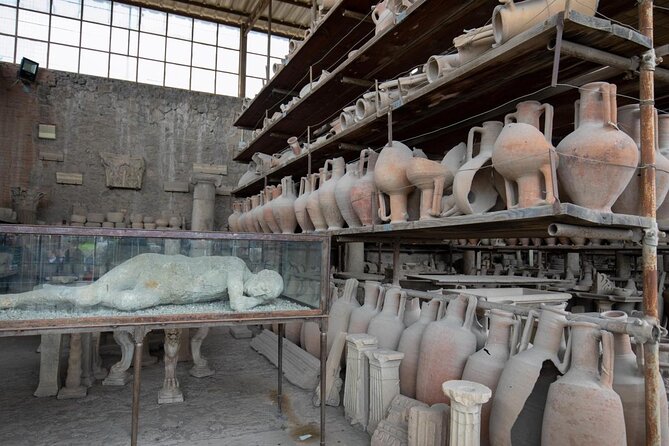
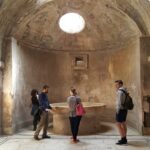
The tour specifically highlights the thermal baths and the gladiators’ gym. Those stops add variety and depth, because they’re not just about buildings; they’re about behavior. Baths show a culture of routine and social life. Gladiator training connects to spectacle, discipline, and the kind of public entertainment Romans craved.
Even if you think you know the basics of gladiators, the value here is in how the site makes the concept tangible. Instead of abstract history, you’re walking through real spaces designed for those activities.
If you love human-scale history—how people spent time, not just dates—this part of the tour is where Pompeii starts to click.
“Having Fun” in Pompeii: How the Story Fits Together

One of the best parts of Pompeii, in my opinion, is that it doesn’t only show tragedy. It also shows normal life, including ways people had fun.
The tour’s approach is to move you through those entertainment and social layers as part of one connected experience. Theatres fit with public gatherings. Shops fit with everyday needs. Houses and decoration give you the visual mood of the city.
The result is that Pompeii stops feeling like a one-scene museum. You start seeing the city as a place with rhythm—work and leisure side by side.
That’s also why a private guide helps. You can spend real time on the moments that catch your interest and still leave with a coherent picture of the whole city.
Price and Logistics: What $60.08 Buys (and What It Doesn’t)
Here’s the clean way to think about value.
You pay $60.08 per person for a licensed guide and about two hours of walking tour time. The admission ticket to the Archaeological Park is not included, so you’ll need to purchase that separately.
That sounds like an extra step, but it can also be a good setup. It lets you control your entry timing and helps you budget correctly from the start. Just don’t forget admission is separate, or you’ll lose time right when you want to begin.
In the feedback you shared, Margherita is praised for helping guests handle practical details—especially around getting tickets—so you may find the transition into the site easier than going it alone.
Also keep in mind: the experience runs in English, and it’s designed for most travelers. Service animals are allowed, and it’s near public transportation, which is helpful if you’re building a day around trains, buses, or a cruise stop.
Who This Private Pompeii Tour Fits Best
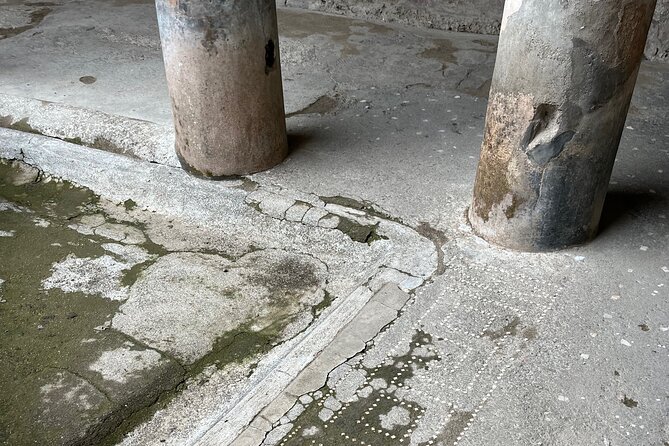
This is a great match if you want more than a self-guided walk. If you’re the type who likes to ask why something was built, what decoration meant, or what the rooms were really used for, you’ll get more from Pompeii with a guide than by wandering randomly.
It’s also a strong option for:
- Couples or small groups who want a quieter, private experience
- First-timers who need help getting oriented in a large site
- People who already visited Pompeii and want a different angle and better context
From the feedback, even repeat visitors found the guided format transformed their experience. That’s a sign the tour isn’t just repeating the obvious talking points—it’s built around making the site understandable at walking speed.
A Note on Weather and Timing
This tour requires good weather. If conditions aren’t right, you’ll be offered a different date or a full refund.
Because the entire experience is a walk inside an open-air archaeological site, it’s smart to dress for changing conditions and plan for flexibility if your dates are tight.
Should You Book This Pompeii Walking Tour with Margherita?
If your priority is understanding Pompeii—not just photographing it—then yes, I think you should book. For the price, you’re buying guided time in one of the most historically important sites in Europe, and the tour’s focus on Roman daily life makes that time count.
I’d especially recommend it if:
- You want a private guide rather than a larger group setting
- You care about how people lived—baths, theatres, houses, and training spaces
- You’d rather have someone point out what matters so you don’t miss the story
The only real reason to skip is if you’re comfortable self-guiding and you want to spend your time browsing at your own pace with no structured explanation. Also, remember the park admission is extra, so your total cost isn’t just the $60.08.
If you want Pompeii to feel like a city you can understand, not just ruins you pass through, this is a solid, practical choice.
FAQ
How long is the Pompeii walking tour?
It’s about 2 hours.
What’s included in the price?
The price includes a licensed tour guide for the 2-hour walking tour. The admission ticket to the Archaeological Park of Pompeii is not included.
Where do we meet at Pompeii?
You meet at the Archaeological Park of Pompeii, in front of the ticket office in Piazza Esedra.
Is this tour private?
Yes. It’s a private tour/activity, and only your group will participate.
Is the tour in English?
Yes, the tour is offered in English.
What if the tour can’t run due to poor weather?
If it’s canceled due to poor weather, you’ll be offered a different date or a full refund.
More Tours in Pompeii



More Tour Reviews in Pompeii

More Pompeii Tours to Compare
More Pompeii tours, freshly reviewed




Pompeii Tours, compared.
 ★ 4.8Pompeii: Entry Ticket and Guided Tour with an ArchaeologistFrom $3519,459 reviews
 ★ 4.1Pompeii: Entry Ticket with Audio GuideFrom $4013,491 reviews
 ★ 4.8Pompeii: Small Group Tour with an ArchaeologistFrom $4012,264 reviews
 ★ 4.3Pompeii Ruins & Mount Vesuvius Day TourFrom $12011,459 reviews
★ 5.0Pompeii Small Group Tour with an ArchaeologistFrom $356,593 reviews
★ 4.3Pompeii Ruins & Mount Vesuvius Day TourFrom $12011,459 reviews
★ 5.0Pompeii Small Group Tour with an ArchaeologistFrom $356,593 reviews
 ★ 4.5Skip-the-line Pompeii – Small Group TourFrom $544,401 reviews
 ★ 4.6Naples or Sorrento: Full-Day Pompeii and Mount Vesuvius TourFrom $1044,235 reviews
 ★ 3.9Pompeii: Skip-the-line Entry Ticket with Audio Guide & MapFrom $433,153 reviews
Browse the lists this tour appears in