
Review · POMPEII TOURS
Pompeii Tour with experienced guide
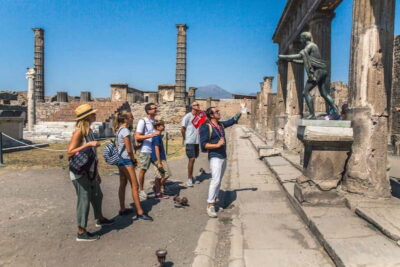
Pompeii feels bigger with the right guide. This 2-hour, English-language walk through the Archaeological Park of Pompeii is built around the big Roman landmarks—amphitheater, gladiator sites, everyday homes, and the Forum—so you get context fast without wandering in circles. You’ll meet at the entrance area in Pompeii and end at Piazza Esedra, which helps you finish with your bearings instead of stuck inside the ruins.
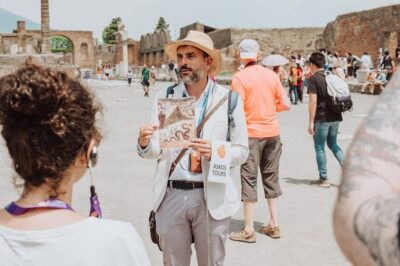
I especially like the way Roberta Avilia turns stone and street plans into daily life. The tour also has a practical rhythm: Roberta is quick to adapt to different interests and ages, and she’s the kind of guide who points out real archaeology details you might miss on your own.
One consideration: the entrance ticket is not included. You’ll need to pay the Archaeological Park admission fee (listed as €19 per person), and with only about 2 hours on-site, it’s best if you’re okay with highlights rather than a full-day walk.
In This Review
- Key points worth your time
- Pompeii in Two Hours: What This Guided Walk Really Means
- Meeting Point at Piazza Immacolata and Getting In Smoothly
- Archaeological Park Core Route: Amphitheater to Gladiator Gym
- Homes, Gardens, and the Main Street Shops: Seeing Everyday Pompeii
- The Forum and Public Buildings: How the City Organized Power
- Roberta Avilia’s Style: Storytelling That Fits Mixed Interests
- Price and Logistics: Value Breakdown With the €19 Admission Fee
- Who This Tour Fits Best (And Who Might Want Something Longer)
- Tips to Make Your Two Hours Count
- Should You Book This Pompeii Tour?
- FAQ
- Is the Pompeii entrance ticket included?
- How long is the tour?
- Where does the tour start and end?
- What language is the tour offered in?
- Is private transportation included?
- Is this a private tour?
- What are the tour hours?
- Is a mobile ticket used?
- Are service animals allowed?
- What is the cancellation policy?
Key points worth your time
- Roberta Avilia guide-led Pompeii highlights focused on the places that explain how the city worked
- Two hours, not a half-day marathon: you’ll see the main story without losing the plot
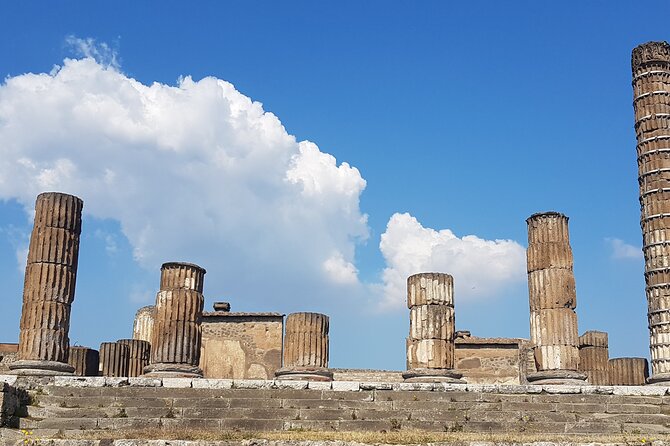
- Amphitheater + gladiator-related sites + homes + shops + Forum in one connected route
- English tour with an authorized guide for clear explanations (no guessing, no translation apps)
- Meet at Piazza Immacolata, end at Piazza Esedra for an easier start and finish
- Admission ticket separate from the tour price so budget for the €19 park fee
Which Pompeii ticket and guide? Compare a few more.
- Pompeii Small Group Tour with an Archaeologist★ 5.0 · 6,593 reviews
- Discover the Ancient Ruins of Pompeii: Day Trip from Rome★ 3.5 · 2,247 reviews
- Pompeii and Herculaneum Small Group Tour with an Archaeologist★ 5.0 · 1,350 reviews
- Skip the Line Guided Tour of Pompeii led by an Archaeologist★ 5.0 · 703 reviews
Pompeii in Two Hours: What This Guided Walk Really Means
A Pompeii tour can go two ways. Either you spend hours trying to map streets to buildings, or you get a guided thread that makes the whole city click. This one is designed for the second option. You’re looking at roughly 2 hours (approx.), which is long enough to hit the key zones and short enough to keep everyone engaged.
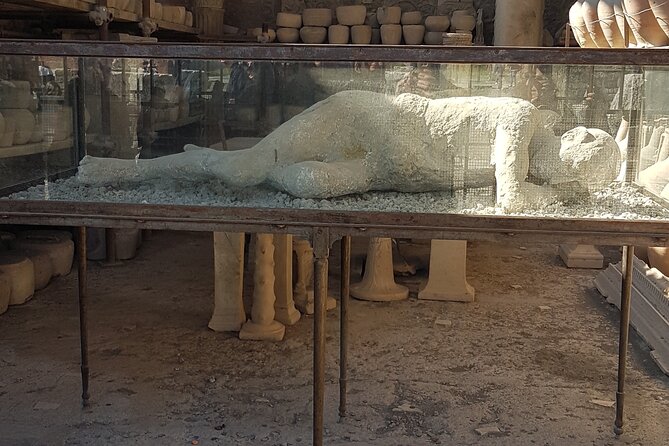
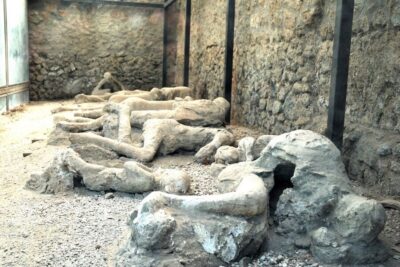
You’re also not just getting a list of sights. The guide’s job is to connect what you’re seeing to what happened in 79 A.D., when Mount Vesuvius buried the city. That context matters because Pompeii isn’t a museum with curated pieces—it’s a whole built environment. When the guide frames it as an active city at the moment of disaster, the amphitheater, homes, and public buildings stop feeling random.
If you’re traveling with mixed ages or you want more than a quick photo stop, this format is a good fit. You’ll move from the big public spaces toward everyday life, then back into the civic heartbeat of the town.
Meeting Point at Piazza Immacolata and Getting In Smoothly
The tour starts at Piazza Immacolata, 2, 80045 Pompei NA, Italy, and the guide meets you at the entrance to the ruins. That “meet at the entrance” detail is more important than it sounds. Pompeii can feel like a maze of gates and walkways, and arriving with a plan reduces that stressed-out wandering time.
The tour also runs within the park’s listed opening hours—Monday through Saturday from 9:00 AM to 2:00 PM (across the listed date range). So you’ll want to pick a time early enough to avoid feeling rushed inside the site.
Practical note: the tour doesn’t include private transportation. If you’re coming from Naples, Sorrento, or the Amalfi Coast, you’ll need to arrange your own ride or public transit. The upside is that the meeting area is described as near public transportation, so you’re not locked into a taxi.
Finally, you’ll receive confirmation at booking, and the experience uses a mobile ticket. That’s a small thing, but it helps when you’re juggling multiple stops in the Naples area.
Archaeological Park Core Route: Amphitheater to Gladiator Gym
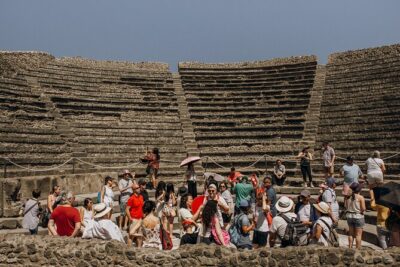
Once you’re inside, you’ll follow a route that makes sense historically and visually. One of the most memorable anchors is the Amphitheater. Even if you don’t know the technical Roman terms, the structure tells a story: this is where crowds gathered, where entertainment had civic weight, and where public life meant something.
From there, the tour heads toward the Gym of the Gladiators. This is one of those Pompeii sites that does a lot of explaining with very little “stuff.” The guide’s role is key here—turning an athletic/training space into a real human system: schedules, discipline, and the culture around gladiatorial combat.
I like that the tour doesn’t treat these places as isolated stops. You’ll get the sense of how entertainment and spectacle fit into a broader city routine. It’s the difference between seeing ruins and understanding a functioning town layout.
Homes, Gardens, and the Main Street Shops: Seeing Everyday Pompeii
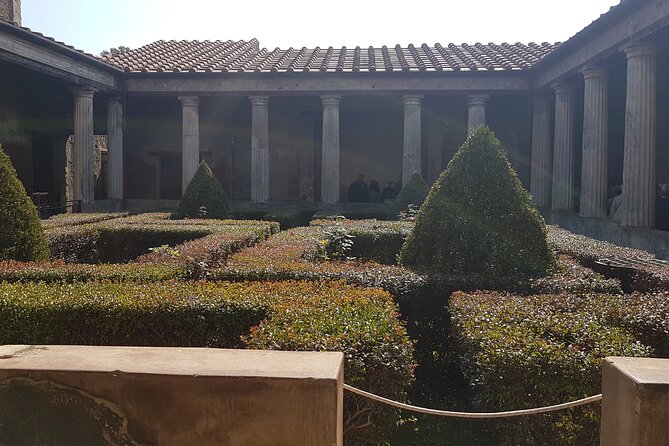
After the public spectacle zones, the tour shifts your attention to domestic life. You’ll visit houses with lush gardens and learn how private space worked in a city that also had intense civic activity. Pompeii’s homes can look like “just pretty rooms” if you’re not told what to look for. With a guide, you start noticing how space was used—where you’d gather, where daily routines played out, and how wealth and status showed up in architecture.
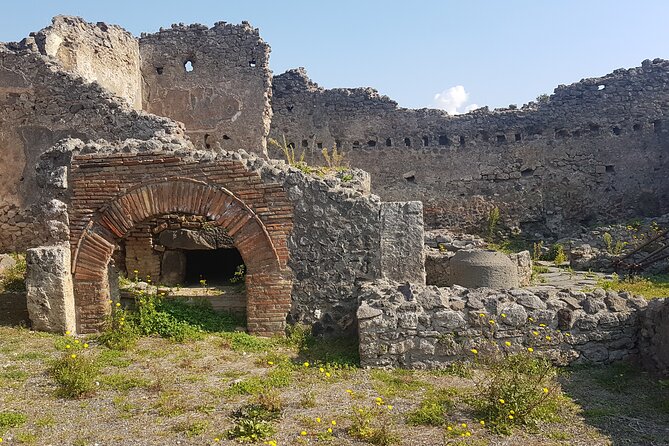
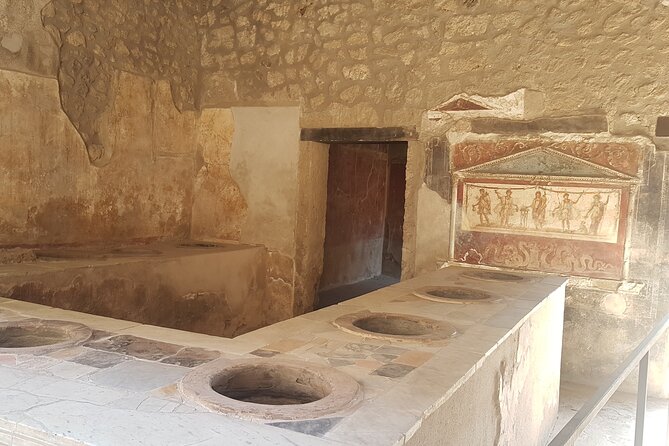
Next comes the commercial side: the shops along the main street, stretching toward the Forum area. This is where the city stops being only about big buildings and becomes about movement—people walking, trading, grabbing food, and living their day. The main street route is particularly helpful because it’s the connective tissue of the city. You’ll likely understand where you are in relation to everything else, which makes later stops easier to follow.
If you tend to enjoy travel that feels human-scale, this is a strong portion of the experience. You’re not just touring monuments—you’re watching (in your mind) how a normal day likely flowed.
More guided runs around Pompeii



The Forum and Public Buildings: How the City Organized Power
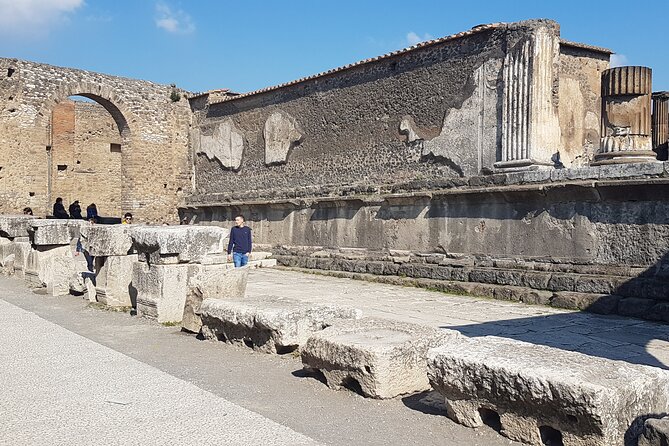
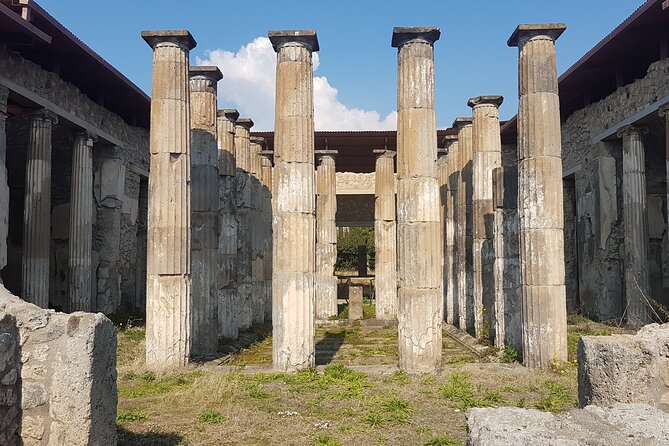
The Forum is where Pompeii’s civic story tightens. It’s the space for administration, public decisions, and the kind of social presence that made Roman cities feel like they ran on order. With a good guide, you don’t just see an open area with ruins; you see why it mattered.
The tour also includes public buildings in the city center. This matters because Pompeii wasn’t only about private wealth or entertainment venues. The city had a public face—laws, officials, community identity, and the spaces where authority showed up in architecture.
For me, the value of this section is that it gives you a clean “big picture” understanding before you leave. When the route ends, you won’t be thinking, I saw stuff, but what did it add up to? You’ll have a mental map: amphitheater and entertainment, domestic and daily life, then the civic engine that shaped the city.
Roberta Avilia’s Style: Storytelling That Fits Mixed Interests
A big reason this tour gets consistently high marks is the guide’s ability to keep things lively and readable. Roberta Avilia is repeatedly praised for being practical in how she explains what you’re seeing and for telling stories that don’t require you to be a Roman history expert.
From the feedback, you can expect a few strengths that are useful on-site:
- She keeps her English clear and easy to follow.
- She’s flexible with pacing and can adjust to the interests of the group.
- She’s the type to help you visualize how people actually lived, not just how buildings were designed.
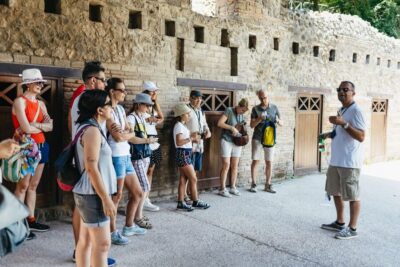
One standout pattern in the feedback is her focus on connecting sites so the experience feels like a real walk through a living system, not a checklist. Even if you’re not a “history person,” the tour is designed to be understandable. For family groups especially, that matters because kids and non-specialists need structure too. You want explanations that help you keep looking rather than get bored.
Price and Logistics: Value Breakdown With the €19 Admission Fee
The tour price is listed as $133.01 per person for about 2 hours. That can sound high until you separate what’s included from what you must pay separately.
What’s included:
- Authorized tour guide
What’s not included:
- Entrance ticket: €19.00 per person
- Private transportation
So your real all-in cost is the tour price plus the park admission. That doesn’t automatically make it a bad deal. It can still be strong value if you care about guided interpretation—especially in Pompeii, where the difference between wandering and understanding is huge.
Here’s how I’d judge value for you:
- If you’re the type who wants a narrative and a sense of how the city worked, paying for a guide is usually money well spent.
- If you’re mostly after photos and you like reading on your own, you might prefer a lower-cost self-guided visit.
- If your group includes non-experts, the guide usually pays off quickly because you won’t get stuck decoding what you’re looking at.
Also, the experience offers group discounts. If you’re booking for several people, it’s worth checking what pricing appears at checkout, since per-person deals can shift based on group size.
Who This Tour Fits Best (And Who Might Want Something Longer)
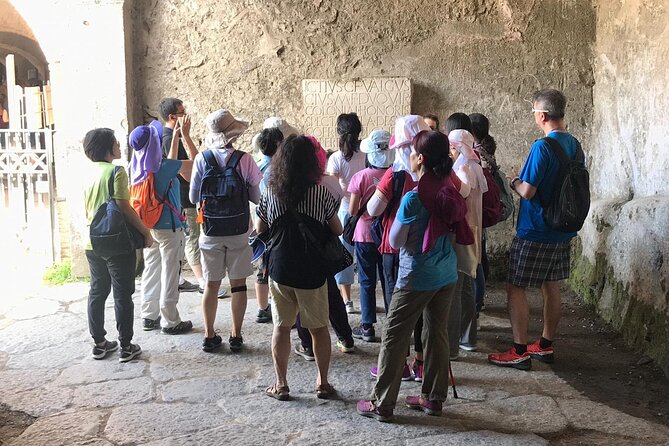
This experience is marked as suitable for most travelers and allows service animals. It’s also described as a private tour/activity, meaning only your group participates. That part is valuable because Pompeii can be overwhelming. A smaller, controlled experience helps keep the pace comfortable and the explanations tailored.
This tour fits best if you:
- Want the Pompeii highlights without spending an entire day
- Like guided storytelling more than self-reading
- Have mixed interests in your group (some want details, some just want the main story)
- Prefer a structured route that doesn’t leave you guessing where to go next
It might feel limiting if you:
- Want to linger for a long time in every neighborhood
- Plan to add museums, extra sites, and a slow lunch
- Need extra time because of mobility constraints not clearly addressed in the information provided
If your goal is breadth and clarity in a short window, this one works.
Tips to Make Your Two Hours Count
You can’t control Pompeii’s scale, but you can control how efficiently you use your time. Here are a few practical moves that pair well with this kind of guided highlights tour:
- Arrive with a mindset shift
Treat it like a story walk. When the guide explains why a place mattered, your job is to look for the features that support that explanation.
- Expect a route with major anchors
You’ll cover the amphitheater, gladiator gym area, houses/gardens, shops along the main street, and the Forum/public buildings. If you’re trying to see something outside the focus, you might not have time during this specific tour window.
- Bring basic comfort items
Even without being told what to bring, Pompeii involves time outdoors and walking on uneven ground. Comfortable shoes are a smart default.
- Ask questions early
If your group has specific interests—architecture, daily life, Roman culture—bring it up at the start so the guide can place emphasis where it matters to you.
- Plan your next stop using the end point
The tour ends at Piazza Esedra. That’s a helpful finish point if you want to keep exploring or connect to onward plans without retracing your route.
Should You Book This Pompeii Tour?
If you want Pompeii to make sense quickly—without spending hours figuring out the map—I’d book it. The strongest selling point here is the guide-led interpretation focused on the major sites, with a style that works for both history fans and people who just want to understand what they’re seeing.
Book it if:
- Your time is limited and you still want the city’s story
- You prefer a private-group feel so the pace stays comfortable
- You value clear English explanations and a guide who can adapt to the group
Think twice if:
- You’re set on a low-cost visit and don’t care much about interpretation
- You’re hoping for a full, slow exploration of every zone
Overall, it’s a smart choice for a first Pompeii visit when you want highlights with context—and a guide like Roberta Avilia who helps you see the city as more than ruins.
FAQ
Is the Pompeii entrance ticket included?
No. The tour includes the authorized guide, but the entrance fee is not included. The Archaeological Park admission ticket is listed as €19.00 per person.
How long is the tour?
It’s listed as approximately 2 hours.
Where does the tour start and end?
The start is Piazza Immacolata, 2, 80045 Pompei NA, Italy. The tour ends at Piazza Esedra, 80045 Pompei NA, Italy.
What language is the tour offered in?
The tour is offered in English.
Is private transportation included?
No. Private transportation is not included.
Is this a private tour?
Yes. It’s described as a private tour/activity, with only your group participating.
What are the tour hours?
The listed opening hours are Monday to Saturday, 9:00 AM to 2:00 PM (for the date range shown).
Is a mobile ticket used?
Yes. The tour features a mobile ticket.
Are service animals allowed?
Yes, service animals are allowed.
What is the cancellation policy?
Free cancellation is available. You can cancel up to 24 hours in advance for a full refund.
More Tours in Pompeii


More Tour Reviews in Pompeii

More Pompeii Tours to Compare
More Pompeii tours, freshly reviewed



Pompeii Tours, compared.
 ★ 4.8Pompeii: Entry Ticket and Guided Tour with an ArchaeologistFrom $3519,459 reviews
 ★ 4.1Pompeii: Entry Ticket with Audio GuideFrom $4013,491 reviews
 ★ 4.8Pompeii: Small Group Tour with an ArchaeologistFrom $4012,264 reviews
 ★ 4.3Pompeii Ruins & Mount Vesuvius Day TourFrom $12011,459 reviews
★ 5.0Pompeii Small Group Tour with an ArchaeologistFrom $356,593 reviews
★ 4.3Pompeii Ruins & Mount Vesuvius Day TourFrom $12011,459 reviews
★ 5.0Pompeii Small Group Tour with an ArchaeologistFrom $356,593 reviews
 ★ 4.5Skip-the-line Pompeii – Small Group TourFrom $544,401 reviews
 ★ 4.6Naples or Sorrento: Full-Day Pompeii and Mount Vesuvius TourFrom $1044,235 reviews
 ★ 3.9Pompeii: Skip-the-line Entry Ticket with Audio Guide & MapFrom $433,153 reviews