
Review · POMPEII TOURS
Pompeii: Tour with Archaeologist Guide & Skip-the-Line Entry
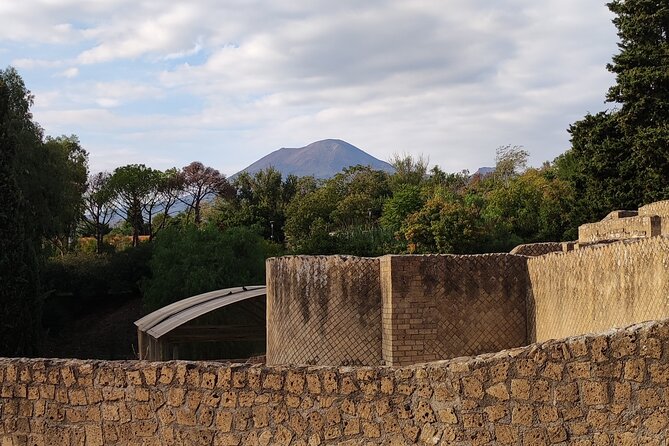
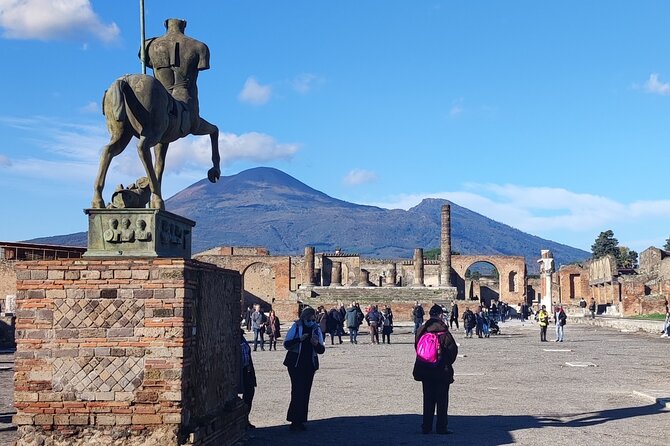
Pompeii hits hard, fast. This archaeologist-led visit uses skip-the-line entry so you can spend more time seeing the site and less time waiting. In just two hours, you’ll trace the city’s story up to the eruption of Vesuvius in 79 AD.
I especially liked how the guide connects monuments to real Roman daily life, pointing out places like the private Roman houses with frescoes and the street scenes along Via dell’Abbondanza. You also get the chance to see key themed stops such as the Stabian Baths and the ancient lupanare, then finish with the Forum and Basilica.
One thing to consider: this is a short walk. If you want to linger for photos and long reads in the quiet corners of Pompeii, the 2-hour format may feel a bit tight.
In This Review
- Key things you’ll notice on this Pompeii tour
- Skip-the-Line Entry and an Archaeologist Guide in Pompeii
- Meeting at Piazza Esedra and Getting Oriented Fast
- Teatro Grande to Via dell’Abbondanza: Seeing Pompeii’s Main Moves
- Domus, Frescoes, and the Focus on Everyday Objects
- Stabian Baths and the Lupanare: Public Life Meets the Uncomfortable Side
- Forum and Basilica: Where the City’s Identity Shows Through
- The 1863 Fiorelli Casts: Turning Tragedy Into a Stand-Here Moment
- Pace, Group Size, and Physical Fit
- Price and Value: What You Get for $57.84
- Who This Pompeii Tour Is Best For
- Should You Book This Pompeii Tour With an Archaeologist?
- FAQ
- How long is the Pompeii tour?
- Is skip-the-line entry included?
- What major sites are included in the route?
- Where does the tour start and end?
- Where do I redeem tickets?
- How big is the group?
- Is there an admission ticket included in the price?
- Is free cancellation available?
Key things you’ll notice on this Pompeii tour
- Skip-the-line entry, with the guide purchasing tickets for you
- Archaeologist-guided pacing, built around major Pompeii sights
- Frescoed domus and preserved everyday objects, not just big monuments
- Stabian Baths and the lupanare, including Pompeii’s more surprising side
- Forum and Basilica, plus the street flow toward the end point
- Fiorelli casts from 1863, where the tragedy becomes visible
Which Pompeii ticket and guide? Compare a few more.
- Pompeii Small Group Tour with an Archaeologist★ 5.0 · 6,593 reviews
- Discover the Ancient Ruins of Pompeii: Day Trip from Rome★ 3.5 · 2,247 reviews
- Pompeii and Herculaneum Small Group Tour with an Archaeologist★ 5.0 · 1,350 reviews
- Skip the Line Guided Tour of Pompeii led by an Archaeologist★ 5.0 · 703 reviews
Skip-the-Line Entry and an Archaeologist Guide in Pompeii
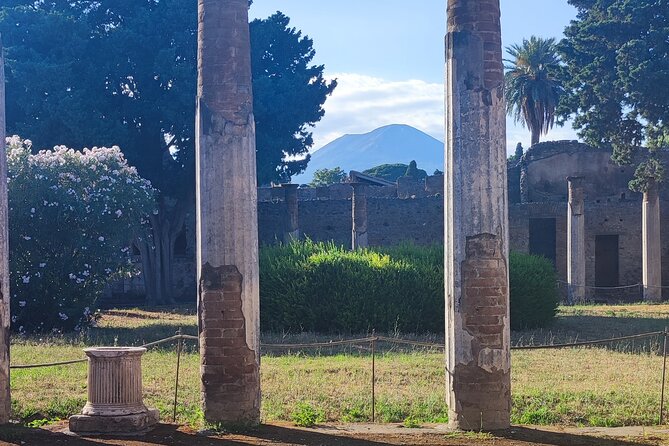
Pompeii is one of those places where you feel the weight of history the moment you step in. This tour earns its keep by pairing a friendly, knowledgeable archaeologist guide approach (based on what you’ll get on the ground) with skip-the-line entry, so you can start looking at the site quickly instead of burning time in queues.
At the center is a guide-led walk through the UNESCO-listed remains. You’ll cover the Amphitheater, private Roman houses with frescoes, Baths, the lupanare (ancient brothels), the Forum, the Basilica, and the casts tied to Arch. Giuseppe Fiorelli. The tour also includes time for the guide to explain the city’s last moments—how Pompeii ends in 79 AD because of Vesuvius.
Here’s the smart part: an archaeologist guide doesn’t just point. They help you see patterns—how everyday spaces, public buildings, and even darker corners connect into one city story. And because the tour is only about two hours, the content is focused enough to stay digestible.
Meeting at Piazza Esedra and Getting Oriented Fast
You meet near Piazza Esedra, specifically close to the Coffee Shop Vittoria bar. If you’re coming in on public transportation, this area makes the start relatively straightforward, and the operator provides clear meeting and redemption points tied to the tour.
The key logistics win is that the guide uses the skip-the-line service to buy your entrance tickets. In practice, that means less hassle right at the start and more time inside the archaeological park.
You’ll also appreciate the group size limit: it’s capped at 25 travelers. That doesn’t guarantee silence, but it usually makes it easier to keep up with your guide and spot the highlights as you move.
If you’re the type who likes to get your bearings quickly, this start location is a plus. You’re stepping into the site’s main action without needing to plan every turn yourself.
Teatro Grande to Via dell’Abbondanza: Seeing Pompeii’s Main Moves
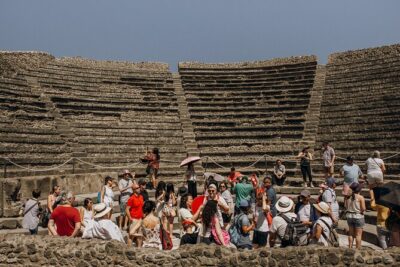
The tour begins with a stop centered on Teatro Grande. Even if you already know Pompeii is full of big public buildings, this opening works as a way to set the stage. You get early context on the UNESCO site and the main areas you’ll be visiting as the walk continues.
From there, the guide takes you toward Via dell’Abbondanza, which is one of Pompeii’s best-known streets. The value here isn’t that it’s famous; it’s that the guide uses it to help you connect spaces as a traveler would experience them—walking along the route people would have used.
This is where your tour turns into something more than a list of sights. You’re not just seeing a theatre or a street. You’re learning how a Roman city layout shows up in what survives.
Practical tip: wear shoes that can handle uneven ancient stone. This tour is marked as having a moderate physical fitness level, so you’ll want to be comfortable with walking in the park conditions.
Domus, Frescoes, and the Focus on Everyday Objects
One of my favorite parts of this Pompeii experience is how it goes beyond big-picture ruins. You’re shown the private houses (domus) and the frescoes inside them. That matters because it shifts you from spectacle to routine. You start noticing the human scale of the place.
The tour also highlights perfectly preserved everyday objects. That’s the difference between seeing Pompeii as a single dramatic moment and understanding it as a lived-in city. Instead of treating the eruption as the only story, the guide helps you see the normal, ordinary side of life right next to the tragedy.
If you like small details, you’ll enjoy the way frescoes and household remnants pull your attention in. Don’t rush these moments just to check them off. The tour is short, but it’s still long enough for you to slow down for a few close looks if you stay aware of where the group is heading next.
This stop is also a good moment to reset mentally. Pompeii can feel overwhelming. Frescoes, room layouts, and preserved objects give you anchors you can hold onto while the rest of the site blurs.
More guided runs around Pompeii



Stabian Baths and the Lupanare: Public Life Meets the Uncomfortable Side
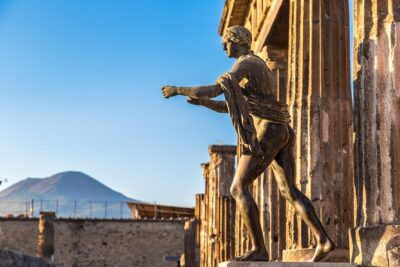
Pompeii doesn’t play it safe. This tour includes both the Stabian baths and the lupanare (ancient brothels). Some tours avoid content like this. This one doesn’t, and that’s part of why it can feel more real.
In a two-hour format, adding these stops is a deliberate move by the guide. It changes the tone from all “hero monuments” to a more balanced picture of what people did in the city. You see spaces tied to leisure and routine, and then you see the lupanare—an uncomfortable reminder that daily life includes everything, not just the polished parts.
How you’ll experience it: the guide points out the remains and gives you context so you understand why these sites matter in a complete city portrait. You’re not left staring at stones without a thread to follow.
Possible drawback: if you’re coming to Pompeii with a strictly family-friendly focus, the lupanare stop may feel awkward. The good news is that the tour is only two hours, so you’re not stuck there for long. But it’s still part of the experience.
Forum and Basilica: Where the City’s Identity Shows Through
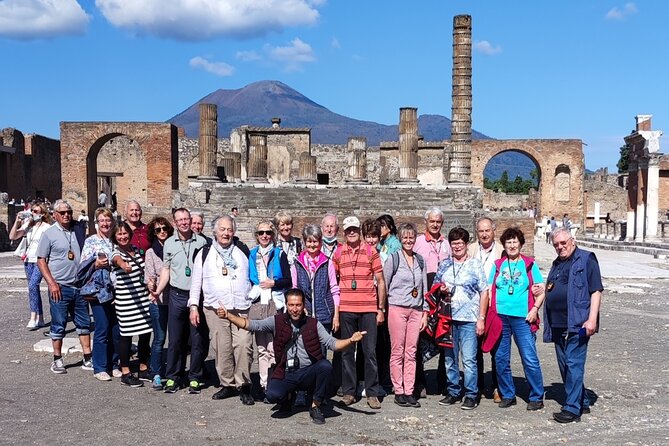
As you move toward the end of the walk, you’ll visit the Forum and the Basilica. These are high-importance areas in Pompeii’s layout, and even without long stops, they tend to make you feel the city’s structure in a new way.
I like how this portion of the tour helps you connect earlier sights to the places where community life and authority would have been visibly expressed. The guide’s job here is to keep you oriented—so the ruins don’t feel like random stops.
The Forum and Basilica also help shift from “rooms and streets” to “city center.” That matters because your brain starts to organize Pompeii into categories: private life, public life, and the spaces where the city likely gathered and performed identity.
When the tour ends, it ends at the Foro di Pompei area (Via Villa dei Misteri, 2). If you want, you can stay inside the park afterward. That’s a useful option if you want to walk around at your own pace after your guide drops you off.
The 1863 Fiorelli Casts: Turning Tragedy Into a Stand-Here Moment
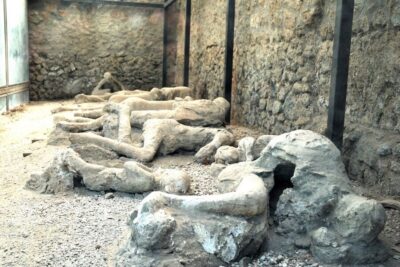
One of the most memorable segments in this tour is the visit to the first casts from 1863 made by Arch. Giuseppe Fiorelli. The guide includes this as part of your route, not as an afterthought, which tells you the tour is aiming for emotional and historical clarity.
The value of the Fiorelli casts is how they make the human side of the eruption hard to ignore. Standing near them changes how you interpret the rest of Pompeii. You stop thinking only in timelines and start thinking in real people—what it means to have an entire city stop in an instant.
This is also where your guide’s explanation of the eruption of Vesuvius in 79 AD really clicks. Instead of a “history lesson,” it becomes a story with a visible consequence.
If you’re sensitive to tragic content, plan for it. This tour includes the last-moments narrative, and the casts are one of the most direct ways Pompeii communicates that story.
Pace, Group Size, and Physical Fit

This is a 2-hour walk, and that short time is both a strength and a limitation. It’s great if you want to see the essentials—amphitheater, houses with frescoes, baths, lupanare, Forum, Basilica, and the Fiorelli casts—without spending an entire half day inside the park.
It can feel fast if you stop for many photos. The best strategy is to listen first, then photograph what the guide points out. That keeps you from missing key context because you’re stuck shooting for five minutes.
The tour asks for moderate physical fitness. Pompeii’s ground is historic and uneven by nature, so you’ll want stable footwear and a willingness to walk and stop repeatedly.
The cap of 25 travelers also affects comfort. Larger groups can make it harder to hear the guide. A smaller cap generally keeps the tour from feeling like cattle. In a place where the details matter, that’s important.
Price and Value: What You Get for $57.84
At $57.84 per person, this tour lands in the mid-range for Pompeii guided experiences. What makes it worth considering is that the price includes an admission ticket and uses skip-the-line help, with the guide purchasing entry as part of the service.
Also, this isn’t just a generic walk. You’re getting an archaeologist guide, plus a route that hits both the famous public monuments and the more specific themed stops like the lupanare and the Fiorelli casts. For many visitors, that mix is exactly what turns Pompeii from impressive to memorable.
Is it the cheapest way in? Probably not. But you are paying for saved time at the start and for interpretation that helps you connect what you’re seeing. If you’ve ever tried to tour Pompeii solo and felt like you were staring at random corners, the guide value becomes clear fast.
One planning note from real-world road-trip thinking: if you’re driving from Rome, one review notes tolls around $40. That’s not part of the tour price, but it’s useful context if you’re budgeting for how you’ll reach Pompeii.
Who This Pompeii Tour Is Best For
This tour fits best if you want:
- A tight, guided overview in about two hours
- The big-name sites plus specific stops like the lupanare and Fiorelli casts
- An archaeologist to explain the story of Pompeii up to 79 AD in a way you can actually follow
You’ll probably enjoy it most if you don’t want to spend the entire day navigating the park alone. It’s also a good choice if your time in the area is limited and you’d rather lock in the highlights with a plan.
If you’re the kind of traveler who loves long, slow wandering and reading everything in detail, you might feel rushed here. But you can balance that by booking this tour first to get the structure, then staying in the park after the guide ends the walk to explore on your own.
Should You Book This Pompeii Tour With an Archaeologist?
I think this one is worth booking if you want your Pompeii visit to feel organized and human. The skip-the-line entry plus archaeologist guidance makes it a practical choice, especially when you’re working with limited time.
Book it if:
- You want the core Pompeii hits and the story of 79 AD
- You like learning from a guide rather than doing everything alone
- You’re okay with a two-hour pace and a moderate walking level
Skip it (or pair it differently) if:
- You want long stays in each area with lots of quiet time
- You strongly prefer to avoid the lupanare stop in your itinerary
If you’re trying to make the most of a short day in the Bay of Naples region, this tour gives you a focused route through Pompeii’s most unforgettable layers—public life, private rooms, and the evidence of the eruption—without making you wait in line.
FAQ
How long is the Pompeii tour?
It’s about 2 hours.
Is skip-the-line entry included?
Yes. The guide uses skip-the-line service and purchases entrance tickets for the group.
What major sites are included in the route?
You’ll see the Amphitheater, private Roman houses with frescoes, Baths, the lupanare, the Forum, the Basilica, and the first casts made in 1863 by Arch. Giuseppe Fiorelli, plus Via dell’Abbondanza.
Where does the tour start and end?
The meeting point is Travelcampania, Via Plinio, 107, 80045 Pompei NA, Italy. The tour ends at Foro di Pompei, Via Villa dei Misteri, 2, 80045 Pompei NA, Italy.
Where do I redeem tickets?
Ticket redemption is listed at Tour & Audio Guide, Piazza Esedra, 2, 80045 Pompei NA, Italy.
How big is the group?
The maximum group size is 25 travelers.
Is there an admission ticket included in the price?
Yes. Admission is included as part of the experience.
Is free cancellation available?
Yes. You can cancel for a full refund up to 24 hours in advance.
More Tours in Pompeii



More Tour Reviews in Pompeii

More Pompeii Tours to Compare
More Pompeii tours, freshly reviewed




Pompeii Tours, compared.
 ★ 4.8Pompeii: Entry Ticket and Guided Tour with an ArchaeologistFrom $3519,459 reviews
 ★ 4.1Pompeii: Entry Ticket with Audio GuideFrom $4013,491 reviews
 ★ 4.8Pompeii: Small Group Tour with an ArchaeologistFrom $4012,264 reviews
 ★ 4.3Pompeii Ruins & Mount Vesuvius Day TourFrom $12011,459 reviews
★ 5.0Pompeii Small Group Tour with an ArchaeologistFrom $356,593 reviews
★ 4.3Pompeii Ruins & Mount Vesuvius Day TourFrom $12011,459 reviews
★ 5.0Pompeii Small Group Tour with an ArchaeologistFrom $356,593 reviews
 ★ 4.5Skip-the-line Pompeii – Small Group TourFrom $544,401 reviews
 ★ 4.6Naples or Sorrento: Full-Day Pompeii and Mount Vesuvius TourFrom $1044,235 reviews
 ★ 3.9Pompeii: Skip-the-line Entry Ticket with Audio Guide & MapFrom $433,153 reviews