
Review · POMPEII TOURS
Pompeii Small Group Guided Tour with Skip-the-line Admission
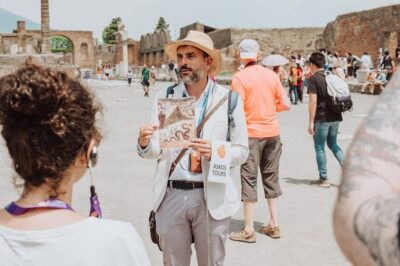
Pompeii can feel huge and overwhelming fast, but this tour keeps it on track. With a small group (up to 15) and skip-the-line admission, you get inside and start seeing the best parts without wasting your morning in lines. I especially like the way the route mixes the big public sites with lived-in city streets and homes.
One possible drawback: since the experience is about 2 hours, you’ll see major highlights rather than everything in the park. Also, ticket details can be confusing in practice, so it’s smart to double-check what your booking confirmation includes.
In This Review
- Key things to know before you go
- Pompeii in 2 hours: why this small-group plan is good value
- Skip-the-line admission: how it affects your first hour
- Stop 1 at Pompeii Archaeological Park: the route’s “big picture” order
- The public buildings: theatres, temples, and thermal baths
- Thermopolia and the pistrinum: street food you can actually picture
- Via dell’Abbondanza and the Forum: Pompeii’s main-street energy
- Houses of Pompeii’s famous residents: Menander, Faun, Vettii, and more
- The “red-light district” walls: art, rumor, and what you should do with it
- Petrified victims: the eruption’s human story (and why timing matters)
- Crowds, pacing, and the guide: why Roberta’s style gets praise
- Price and logistics: what $82.91 buys, and what to double-check
- Getting there: near public transportation helps
- Who should book this Pompeii small-group tour?
- Should you book it?
- FAQ
- How long is the Pompeii Small Group Guided Tour?
- Is skip-the-line admission included?
- Is admission to Pompeii included in the price?
- How big is the group?
- What language is the tour offered in?
- Do I get a mobile ticket?
- Are service animals allowed?
- What is the cancellation policy?
Key things to know before you go
- Up to 15 people means less shoulder-to-shoulder time and more chance to hear your guide.
- Skip-the-line admission helps you start faster once you arrive at the Pompeii Archaeological Park.
- A focused route covers public buildings, the main streets, key residences, and the victims of the eruption.
- Roman street-food context includes stops at the thermopolia and the pistrinum, so you see daily life, not just monuments.
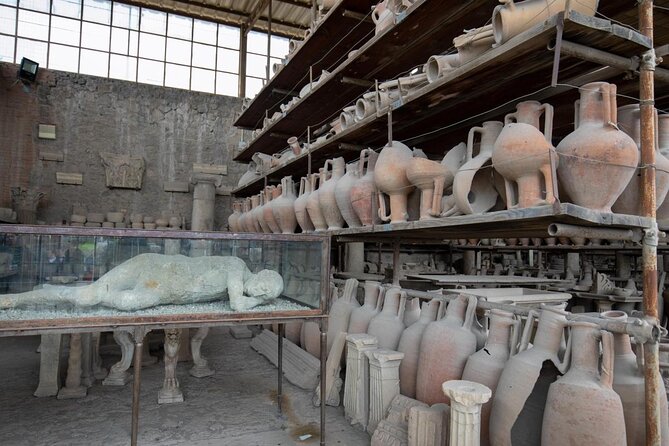
- Emotional centerpiece includes the petrified bodies, handled as a specific focus in the tour.
- English small-group guiding with a named guide experience in the style of Roberta, who is praised for making history feel clear and manageable.
Which Pompeii ticket and guide? Compare a few more.
- Pompeii Small Group Tour with an Archaeologist★ 5.0 · 6,593 reviews
- Discover the Ancient Ruins of Pompeii: Day Trip from Rome★ 3.5 · 2,247 reviews
- Pompeii and Herculaneum Small Group Tour with an Archaeologist★ 5.0 · 1,350 reviews
- Skip the Line Guided Tour of Pompeii led by an Archaeologist★ 5.0 · 703 reviews
Pompeii in 2 hours: why this small-group plan is good value
For $82.91 per person, you’re buying time, focus, and smoother entry. Pompeii is one of those places where the map looks simple until you’re walking it. Then you realize: every corner pulls you in. A guided plan with skip-the-line admission is a practical way to make your two-hour window actually count.
I like that the tour is capped at 15 travelers. That size is big enough to feel lively, but small enough that your guide can keep things moving. And you’re not just sprinting from landmark to landmark. The itinerary is built around a readable story of city life—public spaces, everyday businesses, then the famous residences, and finally the eruption’s human toll.
Here’s the trade-off. Two hours is tight. You’re not going to walk every street or see every building. If you want a long, slow wander with optional sidetracks, you might prefer a longer private option or a self-guided visit. But if you want the highlights with context, this is a strong fit.
Skip-the-line admission: how it affects your first hour
“Skip-the-line” matters most at the start. Pompeii entrance lines can eat up your energy before you’ve even seen a stone wall. With this tour, you get skip-the-line admission included, and you also receive a mobile ticket, which keeps the start less fussy.
The tour runs about 2 hours, so the main goal is to get you into the park early enough to feel like you’re doing something real, not just waiting. Since you’ll be in a guided route format, the first portion is where you get your bearings: where you are in Pompeii’s layout and which buildings matter most for understanding the city.
One practical tip: if you’re sensitive to crowds, remember that even with a small group, popular points can get busy. The good news is that a guided route helps you reach key spots with momentum rather than drifting into peak times.
Stop 1 at Pompeii Archaeological Park: the route’s “big picture” order
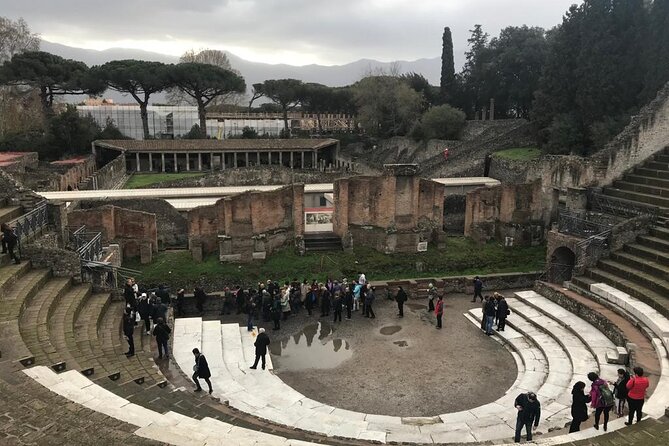
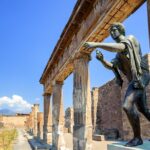
This tour’s backbone is a tour of the Pompeii Archaeological Park, covering the most important public buildings first: theatres, temples, thermal baths, and more. I like the ordering because it gives you context before you zoom in on everyday life.
Here’s what that means for you on the ground:
- You start with places that show how Pompeii worked as a city—entertainment, religion, and daily routines.
- Then you shift toward street-level commerce, where you can picture how normal people ate, bought, and lived.
- After that, you move into the grander side of Pompeii through famous residences.
- Finally, you finish with a deliberate focus on the eruption victims—those petrified bodies—so the tragedy doesn’t get lost behind the spectacle.
That last part matters. Pompeii is famous for the wow-factor, but it’s also a mass tragedy. Building the emotional center into the route keeps the experience from turning into just photo stops.
The public buildings: theatres, temples, and thermal baths
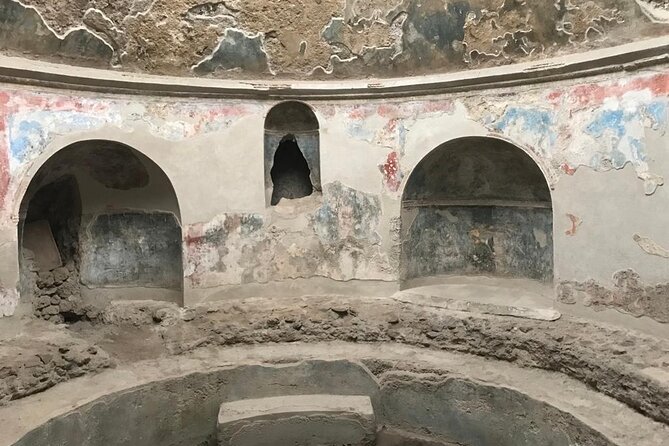
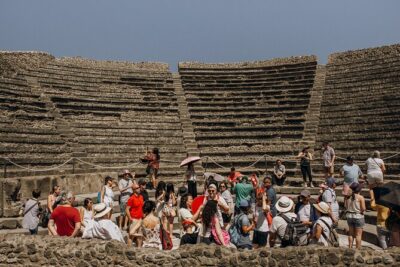
The tour highlights key public buildings like theatres, temples, and the thermal baths. Even if you’re not a “Roman ruins expert,” this sequence helps you understand what Pompeii valued—community gathering, public worship, and health or leisure routines.
A drawback to note: because this is a short tour, you’ll get interpretive highlights rather than long explanations at every doorway. That’s not bad; it’s just how you should think about it. You’re here to build a map in your head. Later, if you want more detail, you can return and slow down with your own pace.
If you’re visiting for the first time, this approach is especially helpful. You’ll leave knowing what you just saw and why it matters, rather than feeling like you memorized names without context.
More guided runs around Pompeii




Thermopolia and the pistrinum: street food you can actually picture
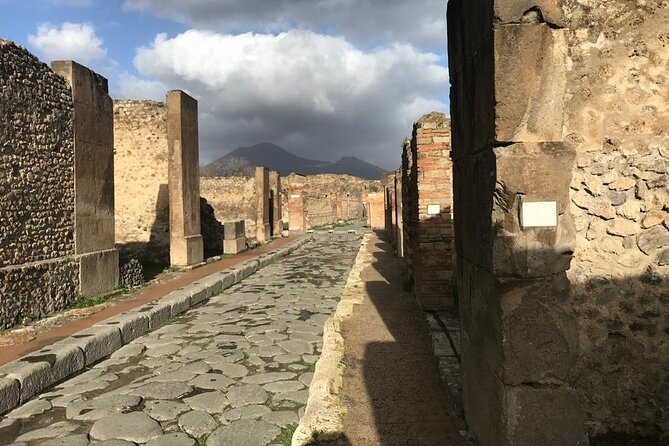
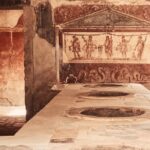
One of my favorite parts of this tour concept is that it doesn’t treat Pompeii like a museum of temples only. It brings you to traditional Roman shop types: thermopolia and the pistrinum.
You should think of these as the ancestors of modern street-eating and quick bites:
- Thermopolia were places where people could grab hot food and drinks.
- Pistrina were bakery-style stops—an everyday support for feeding a city.
This is where Pompeii becomes less distant. You start picturing the smell of food, the quick service, the rhythm of customers moving through a neighborhood. In ruins, that’s hard to do on your own unless you have a guide translating the layout into daily life.
If you like travel that connects the past to normal human routines, you’ll appreciate this stop structure.
Via dell’Abbondanza and the Forum: Pompeii’s main-street energy
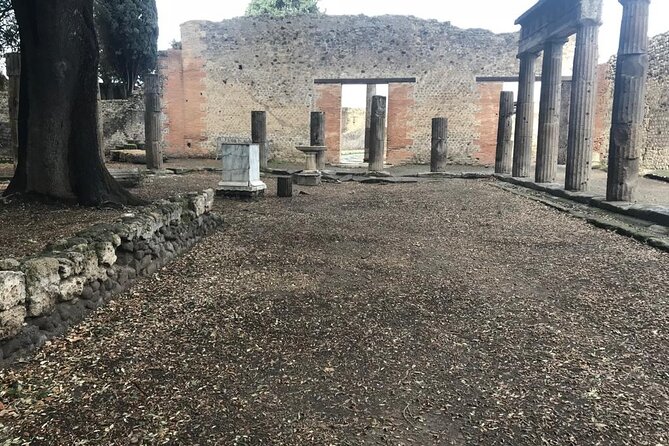
You’ll walk down Via dell’abbondanza, the main street, and you’ll also visit the Forum, the main town square. This is a smart pairing because it gives you both the flow of street life and the idea of civic life in one loop.
Here’s what you can look for as you walk:
- On the main street, notice how storefront-style spaces line up with the idea of movement and trade.
- At the Forum, look for how public buildings and civic spaces create a sense of order and gathering.
This part also helps you understand the city’s “shape.” Even in ruins, main streets and squares tell you where the daily energy was.
Houses of Pompeii’s famous residents: Menander, Faun, Vettii, and more
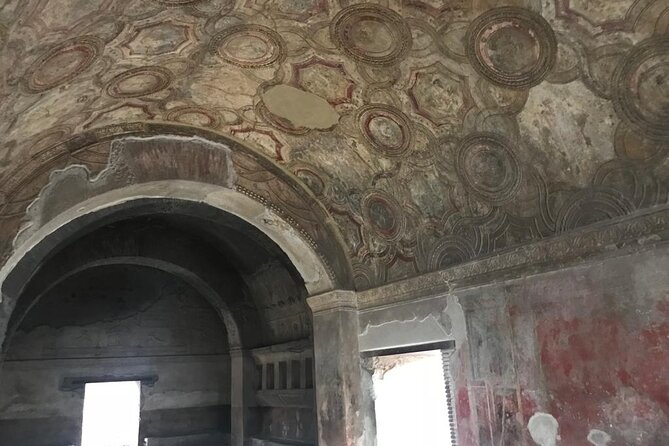
A big draw of the tour is its selection of well-known residences, including the House of Menander, the House of the Faun, the House of the Vettii, and the House of Caecilius Iucundus, plus others. You’ll spend time inside some of these dwellings and see how Pompeii’s wealthy lived.
Even without getting lost in architectural trivia, these stops help you compare two Pompeii worlds:
- the public city you saw first (theatrical and civic spaces)
- and the private world of homes, family life, and status
Since this is a guided highlight tour, you won’t be “slow-walking” every corridor. But you’ll leave with recognizable names and a sense for the range of living styles inside the same city.
If you’re the kind of traveler who likes to come away with anchor points—specific houses you can talk about later—this part pays off.
The “red-light district” walls: art, rumor, and what you should do with it
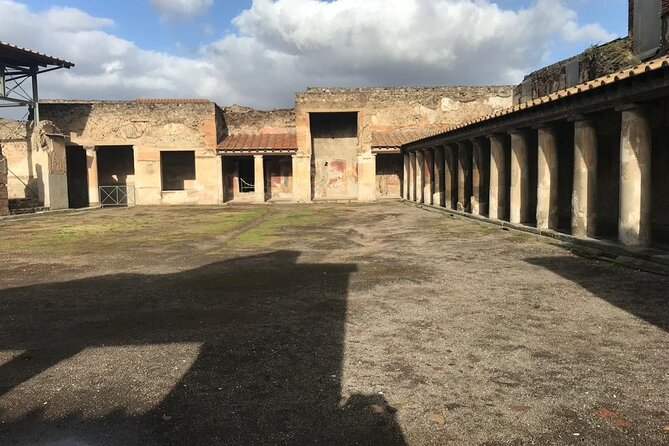
The tour includes a special focus on the famous “red-light district” and its suggestive wall paintings. This is one of those Pompeii moments that can feel both historically valuable and a bit awkward, depending on your own comfort level.
My advice: treat it like context, not entertainment. These paintings are part of how the city functioned and advertised services. Pompeii didn’t politely avoid adult themes—it recorded them in the same visual language it used elsewhere.
Also, keep in mind the emotional tone of the rest of the tour. If you’re bringing kids, or you’re traveling with anyone who prefers a more family-friendly approach, consider whether this portion will feel right. The tour is still geared to most travelers, but this is still a specific content stop.
Petrified victims: the eruption’s human story (and why timing matters)
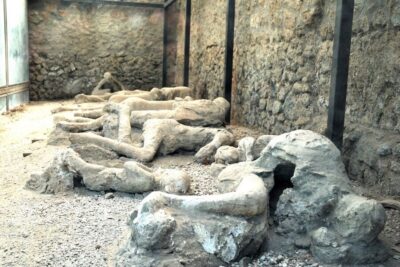
The tour puts a special focus on the poor victims of the eruption, appearing as petrified bodies. This is the moment where Pompeii stops being just a historical puzzle and becomes a tragedy you can’t ignore.
I appreciate that this isn’t left as an optional side stop. When it’s part of the planned route, you get the right framing—why those remains are there, what they represent, and how to think about the disaster instead of just photographing it quickly.
A small practical note: these areas can be heavy. If you need a break, you’ll often find a moment to reset after you move on. The fact that the tour is structured (not an open-ended wander) helps you pace yourself.
Crowds, pacing, and the guide: why Roberta’s style gets praise
The strongest feedback for this tour centers on the guide’s ability to make Pompeii feel organized and understandable, while also helping avoid crowd bottlenecks. One example you’ll see in guide highlights is Roberta, praised for being able to make the story interesting and for helping navigate around the most packed areas.
That’s not a small thing. Pompeii can be crowded in a way that turns ruins into traffic. A good guide keeps the group moving, chooses timing, and offers enough explanation that you don’t end up staring at stone wondering what you’re looking at.
This also helps you get more from limited time. With up to 15 people, your guide can steer the group without constantly rushing.
Price and logistics: what $82.91 buys, and what to double-check
At $82.91 per person, you’re paying for:
- a 2-hour guided route
- skip-the-line admission
- an English-speaking guide experience
- a group size limited to 15
- a mobile ticket
That sounds like solid value for first-timers, especially if you’re trying to cover Pompeii efficiently.
Still, there’s one consideration worth flagging. In a real-world scenario, a traveler reported being asked to switch to a private tour because the minimum participant count wasn’t met, with an additional payment and mention of entry-ticket handling. The operator’s reply emphasized that entry tickets are handled according to what’s listed and agreed at booking, and that a refund solution was offered.
So here’s the smart move: before you go, double-check your confirmation for exactly what’s included with admission, and read the fine print about what happens if the minimum group size isn’t reached. You don’t need to panic. You just want fewer surprises.
Getting there: near public transportation helps
The tour is described as being near public transportation, which is practical in Pompeii. You won’t be relying solely on a private car or expensive last-mile taxis. If you’re planning your day around a few stops, the location flexibility helps.
Also, since you’ll have a mobile ticket, you’re less likely to lose time figuring out ticketing on arrival.
Who should book this Pompeii small-group tour?
This is a great match if you:
- have limited time and want the big highlights in about 2 hours
- prefer a guided route over self-guided wandering
- like learning how everyday life worked, not just the famous buildings
- want a group small enough to stay conversational, with a max of 15
- need the tour to run in English and be understandable
It may be less ideal if you:
- want to spend half a day or more exploring slowly
- want to avoid any adult-themed wall-painting stop
- hate the idea of a route that prioritizes highlights over total coverage
Should you book it?
I’d book this tour if you’re entering Pompeii for the first time and want a guided plan that makes the site feel coherent quickly. The combination of skip-the-line admission, a small group, and a route that includes public buildings, daily-life shop types, major residences, and the eruption victims is exactly the kind of structure that turns ruins into a story.
Just do one thing before you lock it in: verify your booking details on admission inclusion and what happens if the group doesn’t reach the minimum number. If that checks out, this is a high-value way to see Pompeii without wasting your precious time.
FAQ
How long is the Pompeii Small Group Guided Tour?
The tour is about 2 hours.
Is skip-the-line admission included?
Yes. Skip-the-line admission is included as part of the tour.
Is admission to Pompeii included in the price?
The tour description says an admission ticket is included, but it’s wise to confirm what your booking confirmation states.
How big is the group?
The tour has a maximum of 15 travelers.
What language is the tour offered in?
The tour is offered in English.
Do I get a mobile ticket?
Yes, the tour includes a mobile ticket.
Are service animals allowed?
Yes, service animals are allowed.
What is the cancellation policy?
You can cancel up to 24 hours in advance for a full refund.
More Tours in Pompeii


More Tour Reviews in Pompeii

More Pompeii Tours to Compare
More Pompeii tours, freshly reviewed



Pompeii Tours, compared.
 ★ 4.8Pompeii: Entry Ticket and Guided Tour with an ArchaeologistFrom $3519,459 reviews
 ★ 4.1Pompeii: Entry Ticket with Audio GuideFrom $4013,491 reviews
 ★ 4.8Pompeii: Small Group Tour with an ArchaeologistFrom $4012,264 reviews
 ★ 4.3Pompeii Ruins & Mount Vesuvius Day TourFrom $12011,459 reviews
★ 5.0Pompeii Small Group Tour with an ArchaeologistFrom $356,593 reviews
★ 4.3Pompeii Ruins & Mount Vesuvius Day TourFrom $12011,459 reviews
★ 5.0Pompeii Small Group Tour with an ArchaeologistFrom $356,593 reviews
 ★ 4.5Skip-the-line Pompeii – Small Group TourFrom $544,401 reviews
 ★ 4.6Naples or Sorrento: Full-Day Pompeii and Mount Vesuvius TourFrom $1044,235 reviews
 ★ 3.9Pompeii: Skip-the-line Entry Ticket with Audio Guide & MapFrom $433,153 reviews