
Review · POMPEII TOURS
Pompeii Skip-the-Line Entry & Guided Tour with a certified guide
Pompeii hits harder with a guide. This tour gives you express entry plus headset-led commentary, so you can connect the dots fast. I especially like how it focuses on key spots inside the main Forum area and nearby domus, not random detours. One thing to watch: the meeting point can be confusing if you rely on Google maps—use the station/address cues and arrive early.
You’re set up for a smooth start: meet at the Circumvesuviana Pompei Scavi Villa dei Misteri station, then walk straight into the archaeological site with your guided route. The group stays manageable (up to 35), and if you’re in a larger crowd you’ll get listening headsets. You’ll spend about 2 hours moving through Pompeii’s most readable highlights, with brief stops to look, listen, and photograph.
The ruins are big and the terrain is steep in places. In summer, expect brutal sun—one review even calls out the need for an umbrella—so plan for heat, wear grippy shoes, and bring water.
In This Review
- Key things to know before you go
- Price and value for a timed Pompeii experience
- Meeting at Via Villa dei Misteri: the red-station detail that prevents headaches
- Skip-the-line: what it likely does for your day
- Why Pompeii feels confusing without context
- Foro de Pompeya: the city’s political and religious center
- Macellum on the Forum: where Pompeians ate and traded
- Terme del Foro: baths with separate men’s and women’s areas
- Casa del Fauno: big Roman luxury, plus a very famous mosaic
- Casa dei Vettii: aristocratic living, Roman art, and an erotic room
- Via dell’Abbondanza: the street that ties the city together
- Thermopolium Regio VI, Insula VIII, 8: Pompeii’s fast food window
- The guide experience: where the tour earns its money
- Timing, pace, and what to bring (especially in summer)
- Who this Pompeii tour is best for
- Should you book this Skip-the-Line Pompeii tour?
- FAQ
- FAQ
- How long is the Pompeii skip-the-line guided tour?
- What does the ticket price include?
- Is the tour offered in English?
- Where do I meet the group?
- What time should I arrive at the meeting point?
- Does the tour include Villa of Mysteries entrance?
- Is there a group size limit?
- Are there headsets for listening to the guide?
- Is free cancellation available?
Key things to know before you go
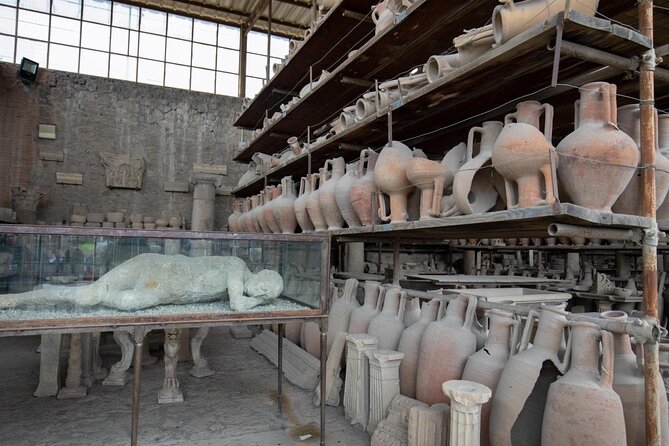
- Skip-the-line express admission saves time at the main entrance
- Certified guide + headsets (when the group is larger) keeps the story clear
- Forum-focused route hits political, religious, and everyday life in one pass
- Homes with standout art like the Alexander Mosaic (a copy) and Pompeii’s famed wall paintings
- Stop at an ancient takeaway spot (a thermopolium) for a real feel of daily routines
- Max 35 people means you’ll generally stay together without constant regrouping
Which Pompeii ticket and guide? Compare a few more.
- Pompeii Small Group Tour with an Archaeologist★ 5.0 · 6,593 reviews
- Discover the Ancient Ruins of Pompeii: Day Trip from Rome★ 3.5 · 2,247 reviews
- Pompeii and Herculaneum Small Group Tour with an Archaeologist★ 5.0 · 1,350 reviews
- Skip the Line Guided Tour of Pompeii led by an Archaeologist★ 5.0 · 703 reviews
Price and value for a timed Pompeii experience
At $58.87 per person for an about-2-hour tour, the value is mostly about what’s included. You’re not just paying for someone to talk while you walk—you’re also getting express entrance tickets to the archaeological site bundled into the price. That matters in Pompeii, where lines can eat up your limited time.
This is also a smart format if you’re not planning a full-day trip. The route is concentrated: you hit the Forum, then move into a cluster of markets, baths, and notable houses nearby. If your goal is to walk away understanding Pompeii—why the city was laid out the way it was and what daily life looked like—this guided, ticket-included approach makes sense.
One tradeoff: the tour does not include entrance to the Villa of Mysteries (the “plus” ticket). If you care most about frescoes from that site, you may want a different option or add it separately.
Meeting at Via Villa dei Misteri: the red-station detail that prevents headaches
This is the part that can trip people up. The meeting point is Via Villa dei Misteri, 1 at the Pompei Scavi Villa dei Misteri stop of the Circumvesuviana. The key detail is the building: the office is inside a red station building, and you’re told you’ll be on the first floor.
You’ll need to show up 15 minutes before your voucher time at the office called Tempio Travel / Pompeii Tickets. The start is about 100 meters from the Porta Marina Superiore entrance, so the plan is basically: get there, find the office, then enter the site with the group.
My practical advice: don’t trust a random Google pin. Instead, aim for the train station and then look for the red building + first-floor office. If you arrive early, you have time to straighten it out before the group departs.
Skip-the-line: what it likely does for your day
“Skip-the-line” can mean different things in different places, but here the core idea is straightforward: express entrance tickets are included. That means your group entry is set up to avoid the slowest queue options at the archaeological site entrance.
Still, don’t expect the entire morning to be effortless. You’ll still be arriving at the start time window, and you’ll likely wait a few minutes for everyone to assemble. The win is that you’re less dependent on luck and line length—and you can spend more of your limited time inside seeing Pompeii’s best-preserved areas.
Why Pompeii feels confusing without context
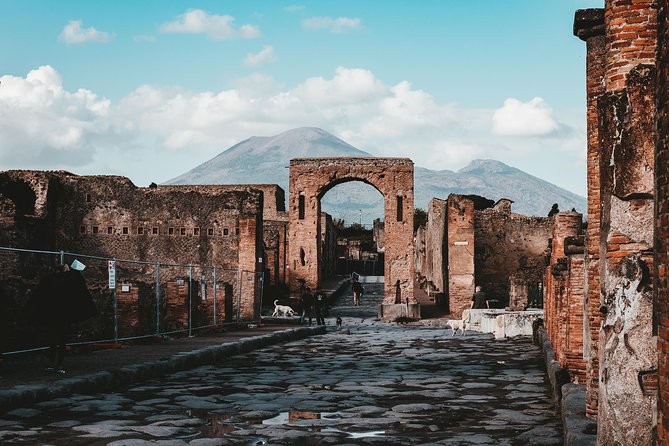
Pompeii is not laid out like a museum gallery. It’s a city you walk through, with streets, building footprints, and scattered rooms that can look similar if you’re left to figure everything out alone. That’s where the guide earns their keep.
You’re getting a route that highlights areas with strong “readability.” The Forum is a great example: it’s the main political, economic, and religious center, so the guide can explain why the city organized power and daily business there. Then the tour keeps moving into neighboring spaces where you can see how people ate, bathed, shopped, and lived—without needing a background degree in Roman civic life.
I also like that the guide’s talk is timed to the walk. The stops are short and purposeful. You’re not stuck listening for ages at one location while other people drift away.
More guided runs around Pompeii



Foro de Pompeya: the city’s political and religious center
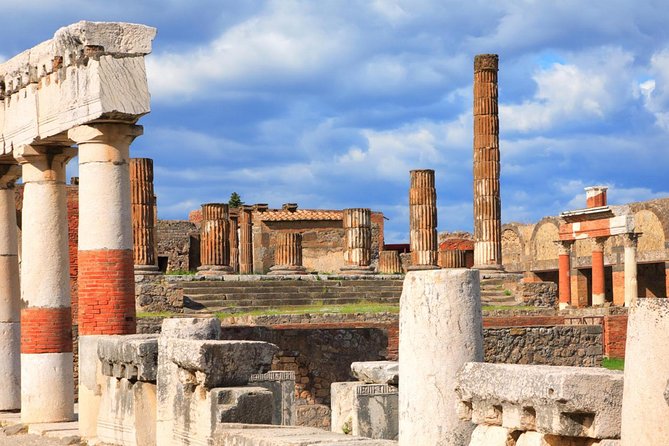
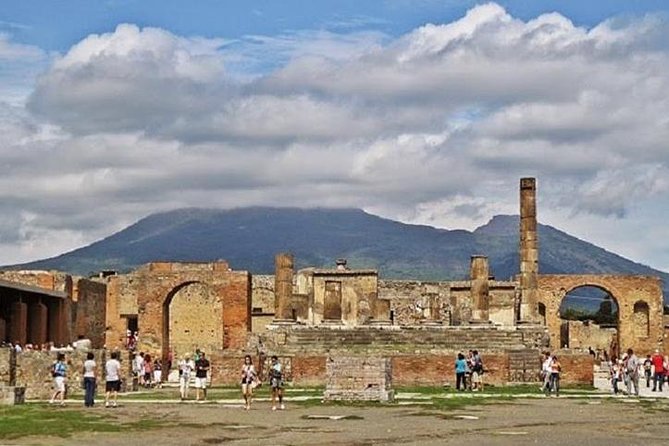
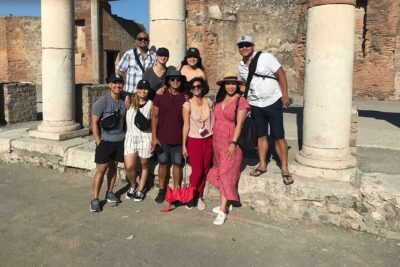
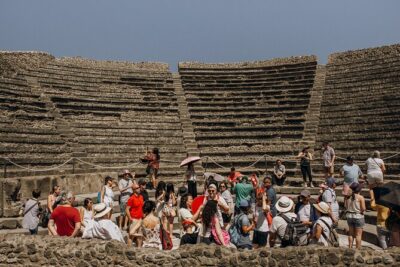
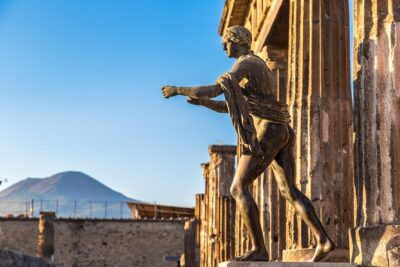
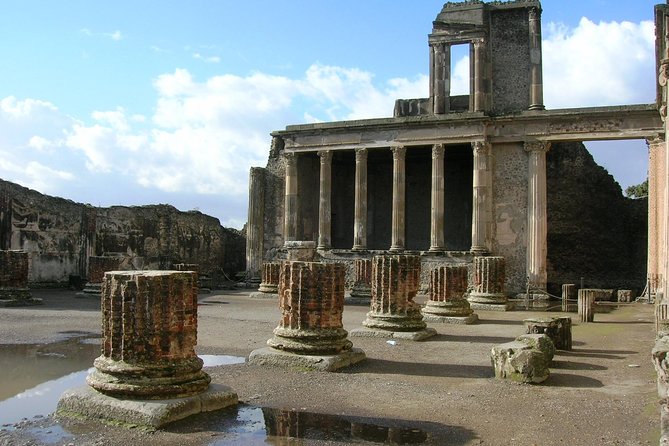
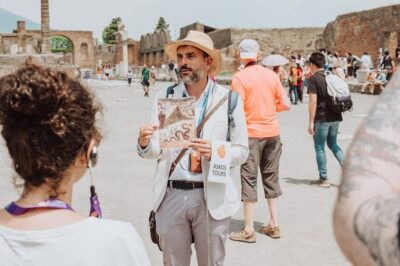
The first big stop is the Foro de Pompeya (Forum of Pompeii), the city’s main public square. Expect to get the “why” behind the stone layout: this wasn’t just a nice plaza. It served as the center for political life, economic activity, and religion.
Even if you’ve seen photos before, the Forum often lands differently in person because it shows you how central public spaces were in Roman cities. It’s also an efficient starting point because you’re close to several other highlight buildings you’ll see next.
Possible drawback? The Forum is popular and open to sun exposure, so if you’re sensitive to heat, you may feel it right away. Plan to pace yourself and save your biggest photo pauses for when the guide gives you a moment to look.
Macellum on the Forum: where Pompeians ate and traded
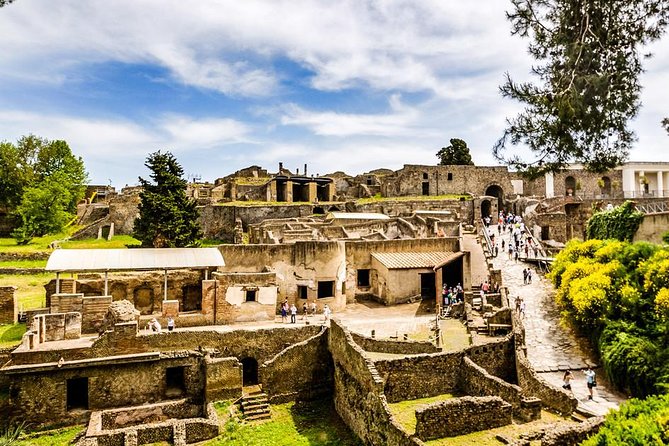
Next comes the Macellum, a market on the Forum linked to meat and fish. This is where Pompeii gets more personal. It’s easy to talk about temples and civic buildings; it’s harder to picture meals. The market helps.
You’ll also get details tied to what the Romans actually ate. The tour points out frescoes that show foods consumed in the 1st century AD. That’s the kind of detail that makes ruins feel less like a history lecture and more like a snapshot of real routine.
The time here is brief (about 10 minutes on the plan), so don’t expect a slow museum-style study of every surface. Instead, treat it as a “spot the story” stop: listen for the food context, then look up at the walls and imagine daily shopping and cooking.
Terme del Foro: baths with separate men’s and women’s areas
After the Forum, you head to the Terme del Foro (Forum Baths) behind the Temple of Jupiter. Baths are one of my favorite Pompeii topics because they combine architecture, engineering, and social habits.
Here’s what the tour covers that you can actually visualize on-site:
- The bath sector was spread across about 410 square meters
- There were separate male and female areas, each with its own entrance
- Water came from the Serino aqueduct, with a well available as backup if water was short
- The ceiling in areas is described as original, keeping stucco details
- The calidarium (hot area) includes a marble tub, and the floor features mosaic work
This stop is around 15 minutes. You’ll get enough time to understand the layout, and you won’t feel lost trying to decode wet-room plumbing on your own.
If there’s one “consideration,” it’s that some bath areas can be visually subtle compared to fresher-looking rooms. The guide helps you see what you’re looking at, especially the gendered layout and the water system.
Casa del Fauno: big Roman luxury, plus a very famous mosaic
Then you move into domestic life at the Casa del Fauno—one of the grand aristocratic homes of Roman Pompeii. The big draw here is art: the stop highlights the Mosaic of Alexander.
Important detail: what you’ll see during the tour is a copy. The original is kept at the MANN (Museo Archeologico Nazionale di Napoli). So if you’re the type who loves originals, take that in stride and enjoy the way the copy still communicates how impressive the household wanted to look.
This stop gives you a sense of status. You’re not just walking through a room—you’re reading a message in stone and floor design. A rich house in Pompeii is basically a social network made physical.
Time is short (about 10 minutes), so use the guide’s framing to decide what to focus on—mosaic details versus overall scale versus how the rooms connect.
Casa dei Vettii: aristocratic living, Roman art, and an erotic room
The tour next stops at the Casa dei Vettii, a domus associated with the Vettii family. It’s known for being one of the major examples of Roman art from the 1st century, uncovered through excavations after the eruption of 79 AD.
The home’s name comes from two owners:
- Aulo Vettio Restituto
- Aulo Vettio Conviva
The visit also includes a particularly talked-about room with erotic paintings. The description on the tour is that this room was used by a prostitute who lived with the owner. That’s not gentle subject matter, but it does show you something real: Roman sexuality and commerce weren’t separate worlds. They often overlapped in everyday spaces.
One thing to remember: erotic imagery can be uncomfortable for some people. If you’d rather avoid it, you may want to ask the guide where that room fits into the route so you can decide how you want to handle it in person.
Via dell’Abbondanza: the street that ties the city together
Between indoor stops, the route includes a walk along Via dell’Abbondanza. This street links major parts of the city between the Forum and Porta Sarno. On the plan, you’ll see how this corridor connects to big-ticket landmarks like the Stabian Baths, the Theaters, Temple of Isis, and the Anfiteatro.
Even when you’re not stopping at each building, walking the street helps your brain “map” Pompeii. It’s a practical way to understand the city’s shape, not just a collection of separate sights.
This stretch is also where you’ll appreciate having headsets. If the guide points out what you’re passing, you start to read Pompeii like a plan, not random ruins.
Thermopolium Regio VI, Insula VIII, 8: Pompeii’s fast food window
One of the most fun stops on the itinerary is the Thermopolium (Regio VI, Insula VIII, 8). The name translates to a place where things are sold hot. The tour frames it as the era’s fast food—food you can buy for quick eating and takeaway.
This is the kind of stop that changes how you think about Pompeii. Instead of only imagining banquets and formal dinners, you see evidence of daily snacking and convenient meals.
Time here is short (around 10 minutes), but it’s designed to leave you with a vivid “everyday life” memory: where people grabbed food, how commerce worked at street level, and why street-front spaces mattered.
The guide experience: where the tour earns its money
In a good Pompeii tour, the guide does two jobs:
1) explains what you’re seeing
2) keeps you from wasting time trying to figure it out alone
This one is set up for that with professional guidance and headsets for listening when the group is over 15 people. That makes a difference, especially in ruins where voices don’t travel well and where you might be standing on uneven ground.
I also pay attention to communication style. The names Alfonso and Annaliza show up in the guide feedback for clear explanations and engaging delivery, and Eraldo is noted for making the main sights feel like a story instead of a checklist. If your guide leans into humor and practical descriptions, you’ll likely enjoy the pace more than you expect.
Timing, pace, and what to bring (especially in summer)
The planned duration is about 2 hours, which is short enough that every stop matters. The pace can feel brisk if you like long wandering sessions. Also, Pompeii involves stairways and slopes. One review calls out a steep hill to get into Pompeii, so factor in extra effort before you even start the official walking.
What to pack based on what you’ll actually feel:
- Comfortable, grippy shoes
- Water
- Sunscreen
- In very sunny months, consider an umbrella (heat can be relentless, and shade helps)
And if you’re traveling with kids, keep expectations realistic: the stops are meaningful, but there isn’t time for prolonged play or deep museum-style study.
Who this Pompeii tour is best for
This is a strong choice if:
- you want skip-the-line entry and hate spending your limited time in lines
- you want a short, guided overview that still covers major categories: public life, markets, baths, and elite homes
- you like your history with specific details (foods shown in frescoes, bath water sources, the Alexander Mosaic copy, and the thermopolium food takeaway idea)
It may not be ideal if:
- you want a slow, photo-dominant walk with lots of free time
- you want Villa of Mysteries included without extra cost (it’s not included here)
Should you book this Skip-the-Line Pompeii tour?
I’d book it if you’re trying to make Pompeii feel understandable without spending a full day on the site. The biggest reasons are express entry included in the price and a route that focuses on places where explanations actually pay off: the Forum, baths, major houses, and a street food stop.
I’d hesitate only if meeting-point confusion would stress you out. If you’re the type to panic when GPS fails, show up early and use the red station building + first-floor office cues.
FAQ
FAQ
How long is the Pompeii skip-the-line guided tour?
It’s listed at about 2 hours.
What does the ticket price include?
The price includes a guide and entrance tickets labeled express for the Pompeii archaeological site. Headsets are also included for larger groups.
Is the tour offered in English?
Yes, it’s offered in English.
Where do I meet the group?
Meet at Via Villa dei Misteri, 1, 80045 Pompei NA, Italy, at the first floor of the Circumvesuviana station building for Pompei Scavi Villa dei Misteri, at the Tempio Travel / Pompeii Tickets office.
What time should I arrive at the meeting point?
Arrive 15 minutes before the time shown on your voucher.
Does the tour include Villa of Mysteries entrance?
No. Entrance tickets for the Villa of Mysteries are not included.
Is there a group size limit?
Yes. The tour has a maximum of 35 travelers.
Are there headsets for listening to the guide?
Yes. Headsets are provided for groups with more than 15 people.
Is free cancellation available?
Yes, you can cancel up to 24 hours in advance for a full refund.
More Tours in Pompeii



More Tour Reviews in Pompeii

More Pompeii Tours to Compare
More Pompeii tours, freshly reviewed



Pompeii Tours, compared.
 ★ 4.8Pompeii: Entry Ticket and Guided Tour with an ArchaeologistFrom $3519,459 reviews
 ★ 4.1Pompeii: Entry Ticket with Audio GuideFrom $4013,491 reviews
 ★ 4.8Pompeii: Small Group Tour with an ArchaeologistFrom $4012,264 reviews
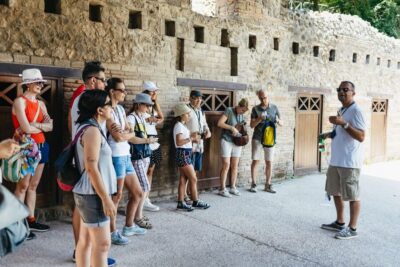 ★ 4.3Pompeii Ruins & Mount Vesuvius Day TourFrom $12011,459 reviews
★ 5.0Pompeii Small Group Tour with an ArchaeologistFrom $356,593 reviews
★ 4.3Pompeii Ruins & Mount Vesuvius Day TourFrom $12011,459 reviews
★ 5.0Pompeii Small Group Tour with an ArchaeologistFrom $356,593 reviews
 ★ 4.5Skip-the-line Pompeii – Small Group TourFrom $544,401 reviews
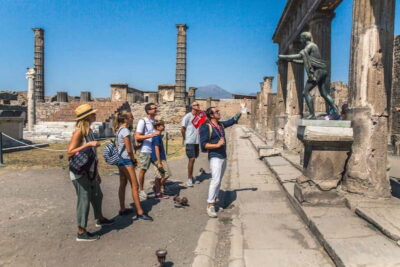 ★ 4.6Naples or Sorrento: Full-Day Pompeii and Mount Vesuvius TourFrom $1044,235 reviews
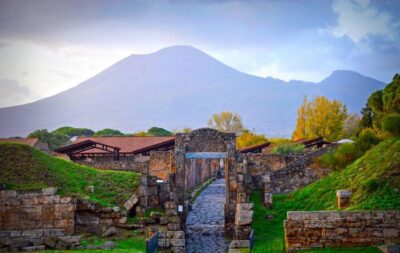 ★ 3.9Pompeii: Skip-the-line Entry Ticket with Audio Guide & MapFrom $433,153 reviews