
Review · POMPEII TOURS
Pompeii: Skip-the-Line Entry & Audioguide
Pompeii makes the past feel close. With skip-the-line entry and a multi-language audioguide, you can start walking fast and learn as you go. The ruins are spread out, so this setup helps you see more without spending your holiday time stuck in a crush of people.
I especially like two things about this experience: first, you get moving right away thanks to skip-the-line entry. Second, the audioguide lets you follow the city’s layout at your own pace, in a long list of languages.
One drawback to think about: the whole value depends on what you’re actually paying for. Some people have reported confusion around add-ons or totals, and at least one booking involved an ID/passport deposit that felt uncomfortable.
In This Review
- Key highlights you’ll care about
- Skip-the-line entry: the real time-saver at Pompeii
- Meeting point at IBT Center by Chalet Donna Lucia
- Audioguide + paper map: learn at your pace without feeling lost
- Entering the Roman heart: the central forum and Mount Vesuvius backdrop
- Streets of Pompeii: aqueducts, fountains, baths, and daily commerce
- Roman homes and fresco fragments: what you’ll actually be able to notice
- Amphitheater and theater: places for crowds, drama, and noise
- What’s not included: Villa dei Misteri and your own food plan
- Timing and the 2-hour to 1-day format
- Price and value: what $53 buys you (and what to double-check)
- Who this experience fits best
- Should you book this Pompeii skip-the-line & audioguide ticket?
- FAQ
- FAQ
- How long is the Pompeii skip-the-line entry with audioguide?
- Where is the meeting point?
- What is included with the ticket?
- Are you able to visit Villa dei Misteri with this experience?
- What languages are available for the audioguide?
- What do I need to bring?
- Are pets allowed?
- What items are not allowed at Pompeii?
- Is the price per person?
Key highlights you’ll care about
- Skip-the-line entry helps you get into the archaeological park faster
- Audioguide in many languages (including English and several others) for self-paced learning
- Forum + streets + Roman water system so you see more than just big-ticket ruins
- Roman homes and businesses with surviving fresco fragments and everyday details
- Amphitheater and theater where drama and crowds once ruled the day
Which Pompeii ticket and guide? Compare a few more.
- Pompeii: Entry Ticket and Guided Tour with an Archaeologist★ 4.8 · 19,459 reviews
- Pompeii: Small Group Tour with an Archaeologist★ 4.8 · 12,264 reviews
- Pompeii: Skip-the-line Entry Ticket with Audio Guide & Map★ 3.9 · 3,153 reviews
- Naples: Pompeii and Mt. Vesuvius with Lunch and Wine Tasting★ 4.5 · 2,454 reviews
Skip-the-line entry: the real time-saver at Pompeii
Pompeii is famous, which means it’s crowded. Even when you’re moving with a group, the bottleneck is usually the same: getting through the park entrance. This ticket’s main practical value is that it helps you avoid long lineups, so your time goes into walking the streets instead of waiting at a gate.
Because Pompeii is outdoors and spread out, time matters in a very physical way. If you arrive late in the day, the best ruins can feel like a sprint. With faster entry, you’re more likely to hit the central areas with energy left in your legs and patience in your head.
Another thing I like: this is built for independent exploring. Instead of being locked to a strict pace for the whole visit, you can slow down where something catches your eye, then speed up when you need to cover ground.
Meeting point at IBT Center by Chalet Donna Lucia
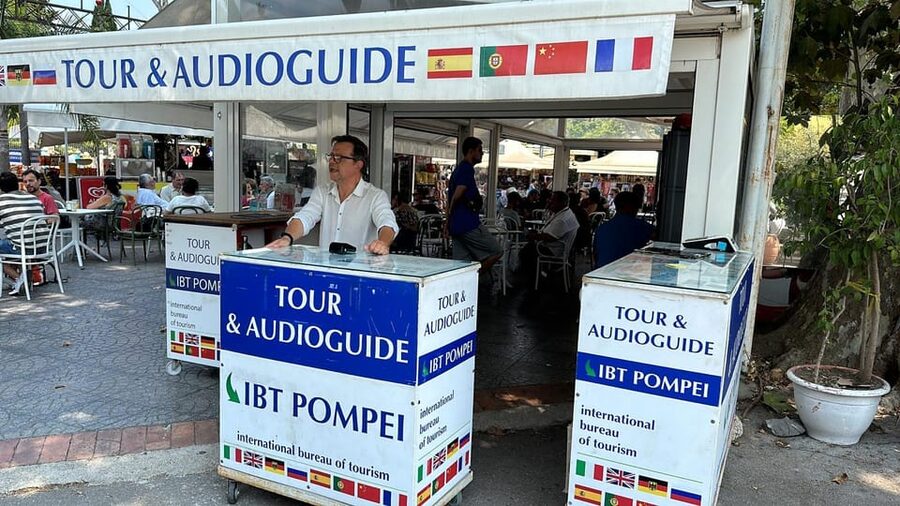
Meet at the IBT Center/Touristation next to Chalet Donna Lucia. That kind of detail matters here, because Pompeii day plans often attract multiple operators, and it’s easy to waste the first 20 minutes simply finding the right place.
Plan to arrive a few minutes early with your ID ready. The rules are clear that ID is required for all participants, so don’t show up with just a phone screenshot.
If you’re wondering about the “feel” of the start: one guide name (Daniel) has been mentioned for a helpful introduction that gets people oriented. Still, you should treat the meeting as a checkpoint, not a sightseeing moment—be ready to move.
Audioguide + paper map: learn at your pace without feeling lost
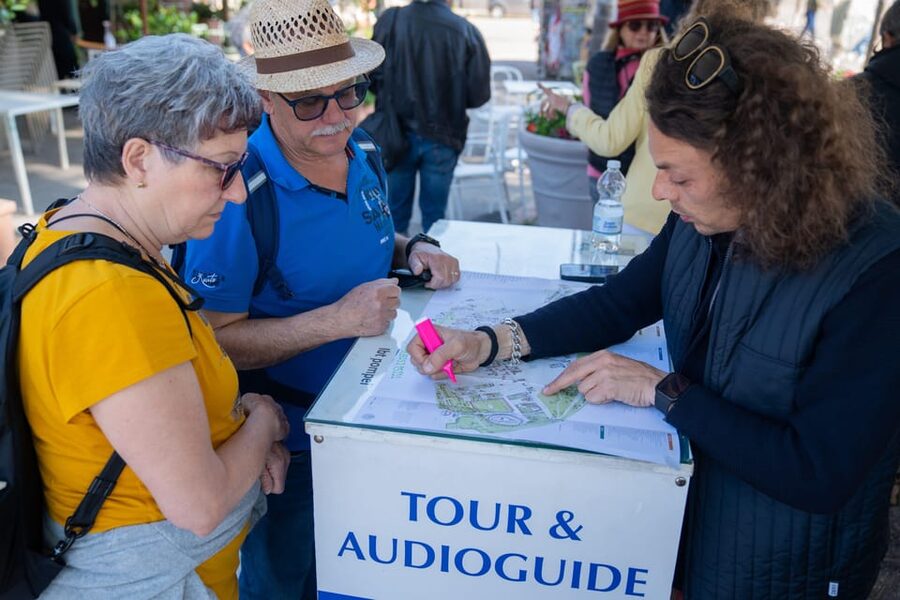
What makes this experience work is the pairing of an audioguide and a paper city map. Pompeii’s ruins can look like random stones until someone explains what you’re seeing and where you are in the layout. With the audio playing, you’re not just reading stone labels—you’re getting context while you walk.
The audioguide comes with multiple language options: Italian, English, French, Spanish, German, Portuguese, Chinese, and Japanese. That’s a big deal if you’re traveling with family or friends who don’t want to rely on group chatter or subtitles.
And yes, the audio approach has a downside: you have to manage it. You’ll want to keep your headphones/headset working, pay attention to directions in real time, and avoid stopping so often that you burn through your time slot.
Also, one traveler raised a concern about an ID/passport deposit for their booking. The data doesn’t spell out the policy, so you should confirm what your operator requires. If you’re uncomfortable, it’s smart to ask before you hand over documents.
Entering the Roman heart: the central forum and Mount Vesuvius backdrop
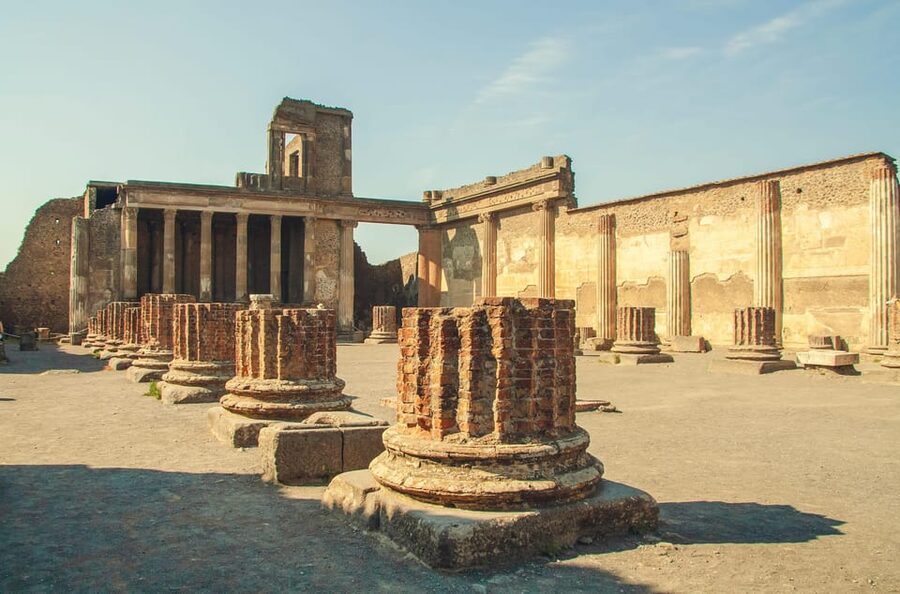
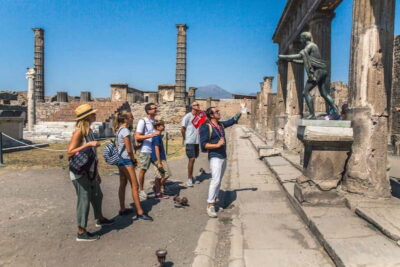
The visit begins with Pompeii’s central forum area. This is where the city’s power, religion, and public life intersected. Even with time-worn columns and doorways, the space still communicates scale—this wasn’t a sleepy village.
What helps your understanding is the visual contrast: as you look around, Mount Vesuvius looms in the background. That detail anchors the story. You’re not just seeing buildings—you’re standing inside a place with a looming threat that changed everything in 79 AD.
In the forum area, you’ll get a feel for how Romans moved through daily life: public decisions, commerce, and civic gatherings all happening in one network. The audio guide is meant to connect the dots as you walk past remnants of structures that once defined the city’s center.
If you’re short on time, focus your attention here first. The forum gives you a framework for everything else you’ll see—streets, water, homes—because you start to recognize how the city was organized.
More skip-the-line entries around Pompei Campania



Streets of Pompeii: aqueducts, fountains, baths, and daily commerce
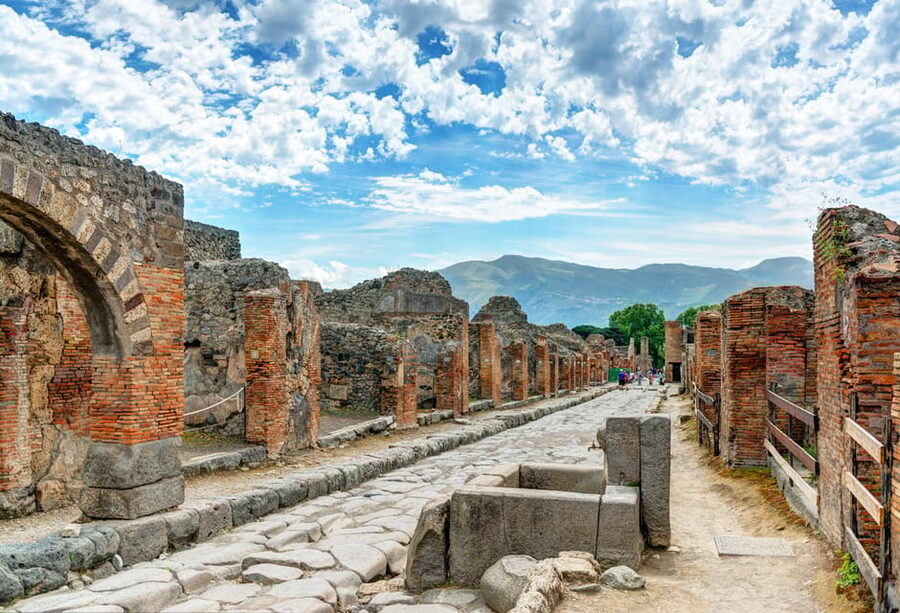
After the forum, the best part is the slow wander. Pompeii’s appeal isn’t only dramatic buildings—it’s the texture of ordinary life that survived. You’ll spend time walking through the streets and seeing the remains of the city’s aqueducts, fountains, and public baths.
Roman water infrastructure is one of those topics that sounds technical until you stand in the right spot. When you see how water was carried and where it flowed, the whole city makes more sense. It explains why public baths mattered, why fountains weren’t just decoration, and how everyday routines connected back to engineering.
You’ll also encounter remnants of private houses, businesses, and statues. That mix is important: Pompeii isn’t just a museum display. It’s a snapshot of a functioning town, including where people lived and where they worked.
A practical note: walking Pompeii means reading the ruins with your eyes. Some details are subtle, so don’t expect everything to look like a photo. The audioguide is the difference between seeing stone and understanding stone.
Roman homes and fresco fragments: what you’ll actually be able to notice
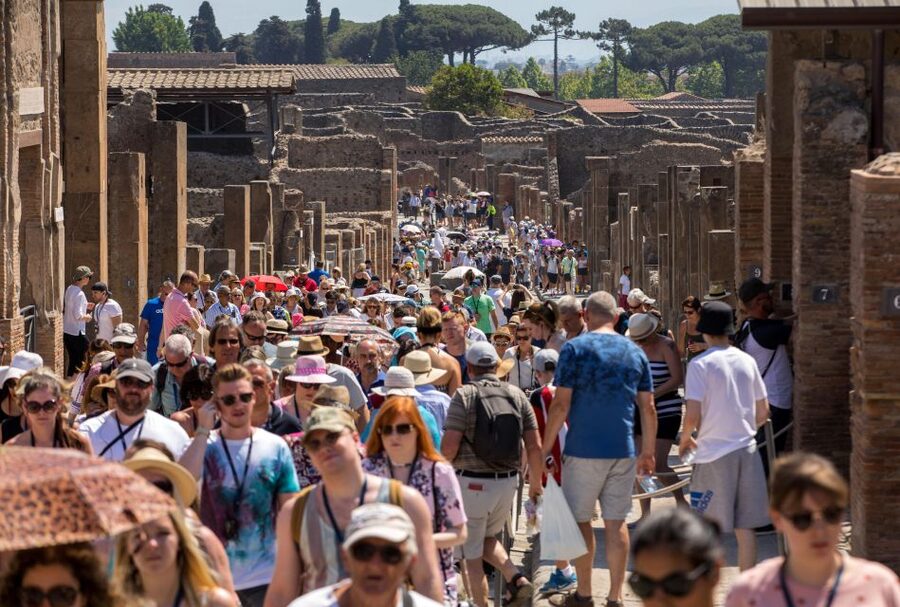
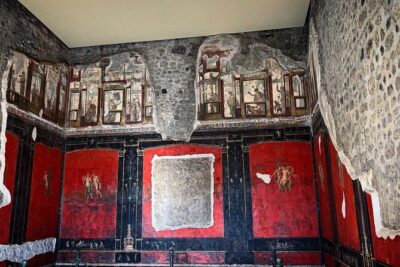
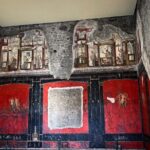
One of the tour’s promises is that you’ll see Roman homes and businesses and learn about what you’re looking at. That includes the remains of colorful frescoes—often fragments rather than fully intact scenes.
Here’s how to make it rewarding: slow down at each doorway or room entrance. Think about how you’d move through the space. If you listen to the audio while you observe the floor plan remnants, the architecture starts to feel logical.
The experience is also designed to help you interpret buildings and the site’s background. Pompeii can feel overwhelming because there’s so much to see. The audioguide approach helps you avoid the common problem: walking past something interesting because you don’t know what it is.
If you’re traveling with kids or teens, this is where you can make it interactive. Ask what they think the room was used for, then play the next audio segment. You get that teachable moment without needing to be an expert.
Amphitheater and theater: places for crowds, drama, and noise
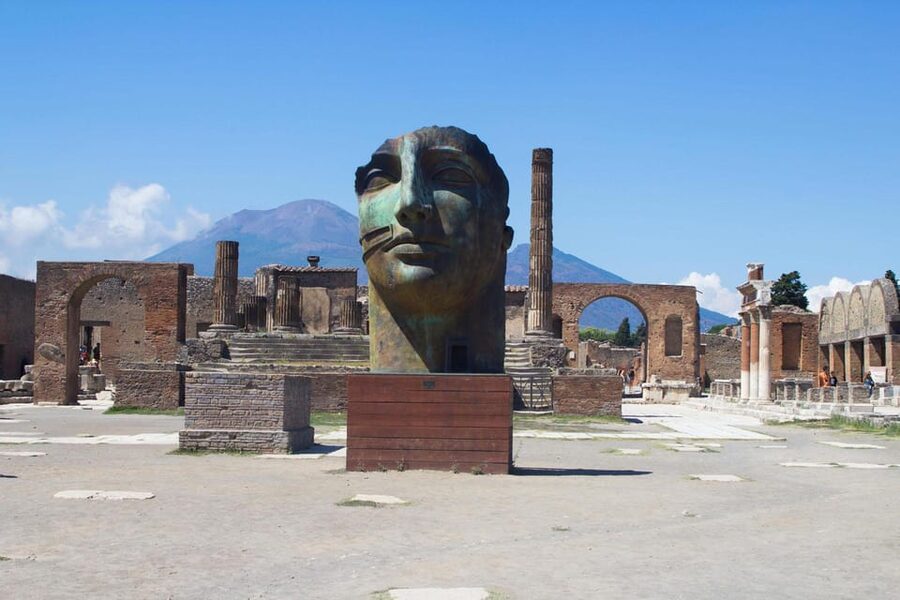
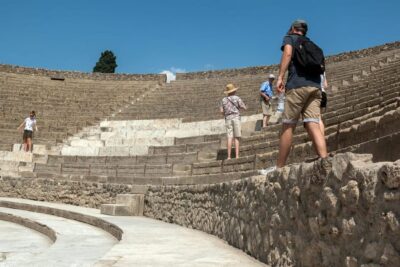
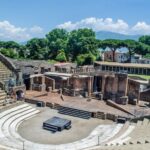
Pompeii doesn’t only have quiet streets. The amphitheater and the theater are major stops for the simple reason that they show how entertainment shaped daily life.
It’s easy to think of ruins as static, but these spaces once held crowds. When you stand in (or near) these performance areas, the acoustics and the layout give you a strong sense of movement—where people sat, how the crowd faced the action, and how events would have drawn the city together.
The experience notes that these were once packed with spectators. The audioguide helps translate what you see into what the spaces likely felt like on a busy day.
Don’t underestimate how emotional theater and amphitheater areas can be. They turn the story from “earth history” into “people lived here, laughed here, watched here.” That’s where Pompeii hits hardest.
What’s not included: Villa dei Misteri and your own food plan
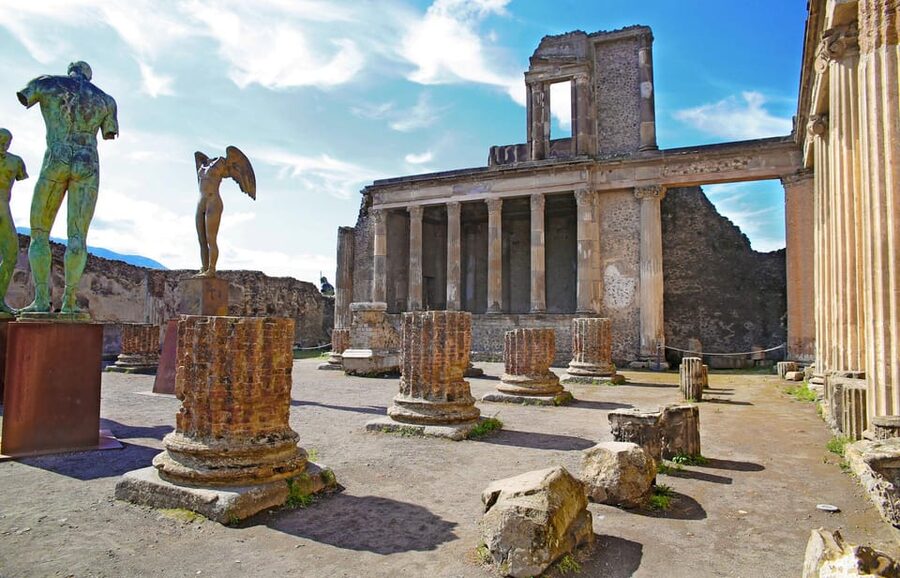
This ticket includes entry to Pompeii Archaeological Park, but Villa dei Misteri is not included. So if that’s a must-see for you, you’ll need a separate plan.
Also, drink and food aren’t included. Pompeii is outdoors, and you’re likely to do a lot of walking on uneven ground. Bring your own water (within the park rules) and plan a simple snack strategy. If you rely on buying food in the park, you can end up paying more and waiting longer than you expect.
And yes, there are rules about what you can bring inside. Luggage or large bags are not allowed, and smoking is not allowed. You also can’t bring alcohol and drugs.
If you’re the type who hates carrying anything, this is a day to travel light.
Timing and the 2-hour to 1-day format
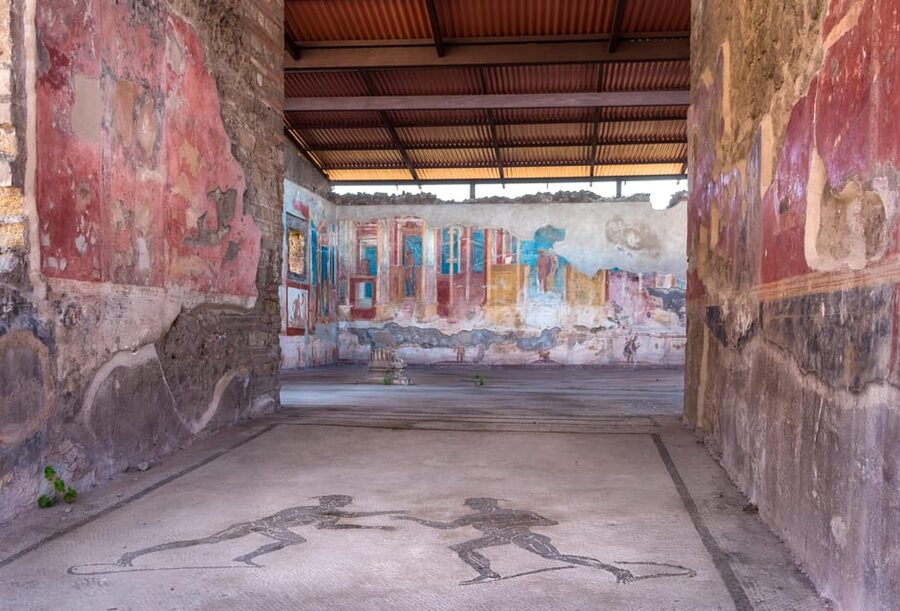
The duration is listed as 2 hours – 1 day, depending on starting times. That wide range matters because Pompeii isn’t “one size fits all.”
If you’re working with about two hours, prioritize the forum area and the most connected street route—think forum first, then walk through the water and central daily-life areas, and end with one or two big public spaces like the amphitheater/theater.
If your ticket window gives you more time, you can linger longer at homes/businesses and spend extra listening time on the audioguide. The ruins reward patience. But they also punish aimlessness, so keep the audio segments guiding you even when you slow down.
Either way, build in time to stop. Pompeii is not a place you can truly “power walk” without missing meaning.
Price and value: what $53 buys you (and what to double-check)
The listed price is $53 per person. On paper, that sounds straightforward: skip-the-line entry plus an audioguide plus a paper map. For a major site like Pompeii, that’s often a fair deal if you’re arriving during peak hours.
But value isn’t just the base number. A few practical questions you should ask yourself:
- Is the audioguide definitely included in your booking total?
- Are there any extra costs tied to the equipment or ticket type?
- Does your booking require an ID/passport deposit, and how is it handled?
One person described paying more than the on-site rate and then questioned whether the audioguide was truly included. Another said they didn’t find where to be clearly at the start. Those are red flags for the decision process, not the ruins themselves.
So my advice is simple: before you pay, confirm the exact final price and what’s included. If you get a clear package for skip entry + audio + map, $53 can feel like a good “buy back your time” move.
Who this experience fits best
This works well if you:
- Want skip-the-line entry so you can start walking sooner
- Prefer learning through an audioguide rather than a fully guided lecture
- Like self-paced sightseeing where you can pause and look closely
It’s also a decent option for mixed groups. You can all agree to a route, then adjust your pace based on who’s into fresco fragments versus architecture versus performance spaces.
If you want an extremely hands-on, tightly structured guided tour, you might need the guided tour option (only if selected). Otherwise, the audioguide format means you’re the director of your day.
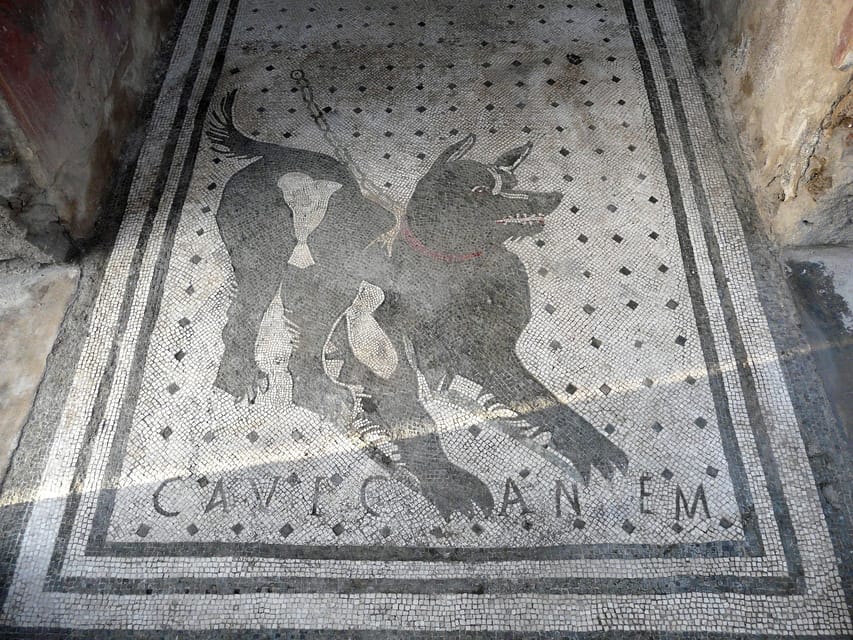
And if you’re traveling with a dog: small dogs are permitted inside the archaeological area, but they must be kept on a leash and carried when inside buildings. Pets are not allowed generally, so treat this as a small-dog exception with strict behavior rules.
Should you book this Pompeii skip-the-line & audioguide ticket?
I’d book it if you’re going during busy hours and you want your Pompeii day to feel like walking through a city, not waiting for tickets. The combo of skip-the-line entry + audioguide + paper map is the strongest reason to choose this over a basic entry ticket.
Skip it or at least re-check the details if you tend to dislike ID deposits, or if you’ve seen pricing confusion tied to whether the audioguide is truly included. Pompeii is too good to waste money—or time—on unclear add-ons.
If you’re on the fence, the best tie-breaker is this: do you want to learn on your own while you walk? If yes, this format makes that easy.
FAQ
FAQ
How long is the Pompeii skip-the-line entry with audioguide?
The duration is listed as 2 hours to 1 day, depending on available starting times.
Where is the meeting point?
Go to the IBT Center/Touristation next to Chalet Donna Lucia.
What is included with the ticket?
It includes skip-the-line entry to Pompeii Archaeological Park, an audioguide, and a paper city map. A guided tour is included if that option is selected.
Are you able to visit Villa dei Misteri with this experience?
No. Entrance to Villa dei Misteri is not included.
What languages are available for the audioguide?
The audioguide is available in Italian, English, French, Spanish, German, Portuguese, Chinese, and Japanese.
What do I need to bring?
Bring your passport or ID card.
Are pets allowed?
Pets are not allowed. Small dogs are permitted inside the archaeological area, but they must be on a leash and carried when inside buildings.
What items are not allowed at Pompeii?
Luggage or large bags are not allowed, and smoking is not allowed. Alcohol and drugs are not allowed.
Is the price per person?
Yes, the price is listed per person at $53.
More Skip-the-Line Tickets in Pompei Campania



More Tour Reviews in Pompei Campania




More Pompeii Tours to Compare
More Pompei Campania tours, freshly reviewed




Pompeii Tours, compared.
 ★ 4.8Pompeii: Entry Ticket and Guided Tour with an ArchaeologistFrom $3519,459 reviews
 ★ 4.1Pompeii: Entry Ticket with Audio GuideFrom $4013,491 reviews
 ★ 4.8Pompeii: Small Group Tour with an ArchaeologistFrom $4012,264 reviews
 ★ 4.3Pompeii Ruins & Mount Vesuvius Day TourFrom $12011,459 reviews
★ 5.0Pompeii Small Group Tour with an ArchaeologistFrom $356,593 reviews
★ 4.3Pompeii Ruins & Mount Vesuvius Day TourFrom $12011,459 reviews
★ 5.0Pompeii Small Group Tour with an ArchaeologistFrom $356,593 reviews
 ★ 4.5Skip-the-line Pompeii – Small Group TourFrom $544,401 reviews
 ★ 4.6Naples or Sorrento: Full-Day Pompeii and Mount Vesuvius TourFrom $1044,235 reviews
 ★ 3.9Pompeii: Skip-the-line Entry Ticket with Audio Guide & MapFrom $433,153 reviews