
Review · POMPEII TOURS
Pompeii Private Tour with an Archaeologist Guide
Pompeii makes more sense with a real guide. A private tour led by an archaeologist guide gives you explanations you can actually use, starting right at Porta Marina Superiore so you get oriented fast. Guides listed with this company (like Rossana, Mena, Mimma, and Paolo) are often praised for turning ruins into real lived-in places.
I also like that you can slow down, speed up, and ask questions at every stop, from the Casa dei Vettii to the Stabian Baths. One possible drawback: the Pompeii entrance ticket is not consistently bundled, so you should be ready to pay park admission on site.
In This Review
- Key points to know before you go
- The real payoff: archaeologist-led Pompeii in a private 2-hour visit
- What about those “Vesuvius, fire, and ruins” basics?
- Meeting at Porta Marina Superiore: how to start smoothly
- Admission note before you commit
- Casa dei Vettii: residential life you can actually picture
- The Lupanar stop: why it belongs in a highlights tour
- Termopolium of Vetutius Placidus: street-level Pompeii and quick comparisons
- Teatro Grande: why theatres change your sense of the city
- House of Faun: a highlight for architecture fans
- Stabian Baths (Terme Stabiane): public routine in one stop
- Via dell’Abbondanza: walking the street makes Pompeii feel real
- Forum Baths and the Forum area: where the city shows its priorities
- Macellum and Granaries: the city as a working machine
- House of Menander and a final Forum moment: closing with perspective
- Two hours is short: here’s how to make it feel like more
- Price and value: what $178.45 buys you (and what it doesn’t)
- Comfort and logistics that make the tour easier
- Who this Pompeii private tour suits best
- Should you book it?
- FAQ
- FAQ
- How long is the Pompeii Private Tour with an Archaeologist Guide?
- Where do we meet the guide?
- Is the tour private?
- Is the tour in English?
- Do I need to buy my own Pompeii entrance ticket?
- What stops are included in the tour?
- What should I wear for Pompeii?
- Is transportation included?
- Are service animals allowed?
- Is free cancellation available?
- How far in advance is this tour commonly booked?
Key points to know before you go
- Private group attention: only your party, so you’re not stuck listening from the back.
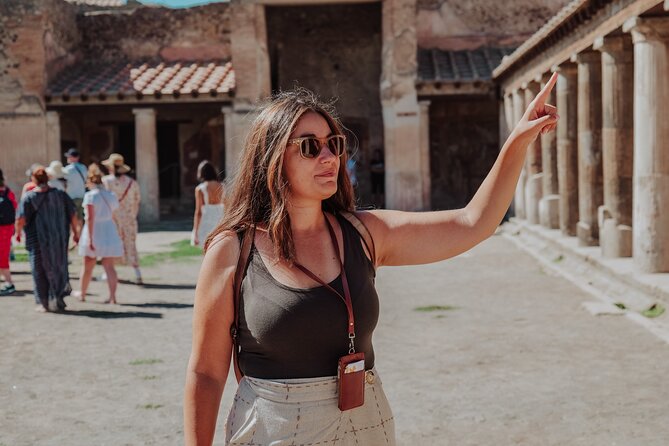
- Archaeologist-style explanations: you’ll get context for how people lived, not just what a building is called.
- Stops built around key areas: public spaces, street life, and standout houses in a tight route.
- Flexible pace within a 2-hour window: you control how long you linger at each photo stop.
- Crowd navigation matters: your guide can help you keep moving without losing the plot.
- Bring closed shoes: flip-flops are a bad idea on uneven ancient stone.
Which Pompeii ticket and guide? Compare a few more.
- Pompeii Small Group Tour with an Archaeologist★ 5.0 · 6,593 reviews
- Discover the Ancient Ruins of Pompeii: Day Trip from Rome★ 3.5 · 2,247 reviews
- Pompeii and Herculaneum Small Group Tour with an Archaeologist★ 5.0 · 1,350 reviews
- Skip the Line Guided Tour of Pompeii led by an Archaeologist★ 5.0 · 703 reviews
The real payoff: archaeologist-led Pompeii in a private 2-hour visit
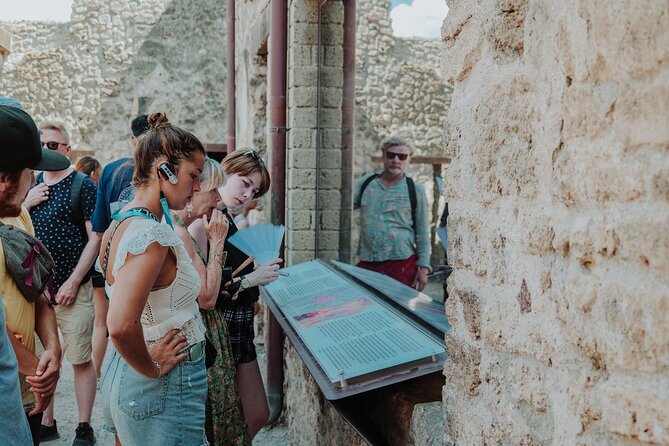
Pompeii is huge, and it’s not the kind of place where you can just wander and magically understand it. What makes this tour work is simple: you get a guide who can explain what you’re looking at as you look at it. That matters in Pompeii, because the same corner can feel like a street, a home, a workplace, and a political statement, all within a few steps.
Since it’s private, you’re also not stuck following a one-size-fits-all lecture. If you care more about daily life, the guide can push you toward the right rooms and street-level details. If you’re more into public buildings, you’ll get those too. And you’ll have time for follow-up questions without that awkward rush that comes with group tours.
If you’ve ever felt overwhelmed at Pompeii—too much to read, too many people, not enough time—this format is built for you. It’s short enough to fit a busy day, but structured enough that you don’t walk in circles.
What about those “Vesuvius, fire, and ruins” basics?
You’ll almost certainly hear the big story at some point because Pompeii is famous for a sudden end. But the stronger value here is how your guide helps you interpret everyday details: how spaces functioned, what different locations suggest about routines, and how people moved through the city. One theme that shows up in guide styles tied to this operator is the idea of using your imagination—while also being clear about what’s known versus what’s reconstructed.
Meeting at Porta Marina Superiore: how to start smoothly
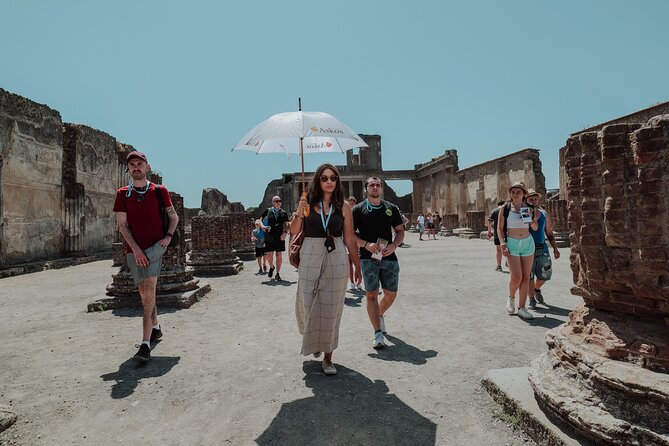
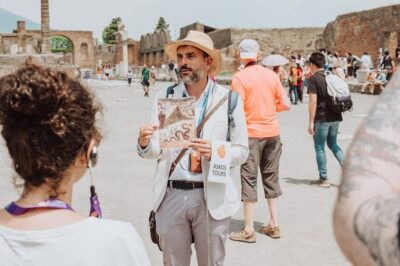
The meeting point is at Via Villa dei Misteri, 1, 80045 Pompei NA. From there, you’ll meet your guide at the archaeological site entrance called Porta Marina Superiore. Your guide holds a sign with Askos Tours at the top, so you don’t have to play hide-and-seek.
This first moment is more important than it sounds. Pompeii signage can be confusing if you’re not used to archaeological sites, and the entrances can feel like chaos when crowds swell. Starting with a guide keeps you from losing the first hour just getting your bearings.
Admission note before you commit
At the first stop, admission is marked as included for the archaeological park. But real-world reports tied to this experience also mention that you may need to pay an additional entrance fee on site (around 20 euro per person in one case). So I’d plan as if you might pay park admission anyway. Bring a card just in case, and don’t let surprises steal your momentum.
More guided runs around Pompeii


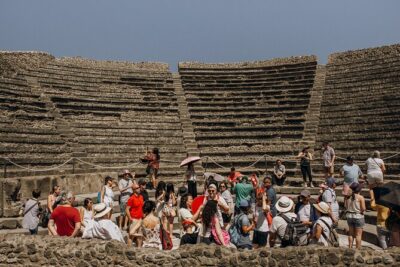


Casa dei Vettii: residential life you can actually picture
Casa dei Vettii is one of the residential stops, and it’s a strong early anchor. Homes in Pompeii help you see the city as more than public monuments. With an archaeologist guiding the conversation, you’re more likely to notice the layout and understand how people would have used different parts of the home.
What I like about starting with a house is that it sets the tone. Once you see domestic spaces, the later public stops feel more connected. Instead of treating Pompeii like disconnected sights, you begin to sense how daily movement from home to street to public areas might have worked.
The Lupanar stop: why it belongs in a highlights tour
Next up is the Lupanar. It’s on the list because it’s one of Pompeii’s more distinctive locations, and a good guide can use that to explain how the city’s social and commercial sides showed up in built form.
This is also where private pacing helps. If you’re curious and want to ask questions, this stop gives you that chance. If you’d rather keep it moving, you’re not forced to stay at the same point while a big group crowds around.
Termopolium of Vetutius Placidus: street-level Pompeii and quick comparisons
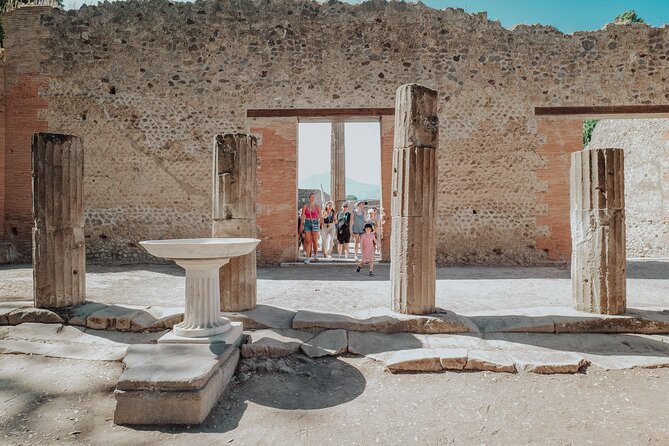
The tour also includes the House and Thermopolium of Vetutius Placidus, with the focus on the Termopolium—basically a kind of street-level food-and-drink stop. One of the most practical takeaways that comes up with guides on this route is how they compare Roman street food culture to modern quick service. It helps your brain stop treating Pompeii like a museum display and start treating it like a place with habits you recognize.
Even if you don’t care about the food angle, Termopolium-style stops work well because they’re visual. You can often stand there and reason through how people might have used the space, which is exactly the kind of thinking a guide encourages.
Teatro Grande: why theatres change your sense of the city
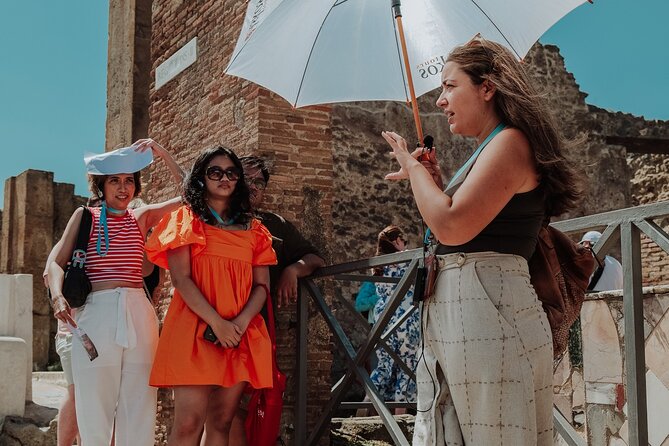
Theatres aren’t just for drama. They’re where crowds gathered, and they signal what a society valued in public life. The Teatro Grande stop is short, but it gives you a chance to connect the city’s “public stage” with what you’ve already seen in homes and street spaces.
In a 2-hour route, theatres are a smart choice: they’re big, recognizable, and easy to understand with the right explanations. If you like your sights placed in context, this is one of the stops that delivers.
House of Faun: a highlight for architecture fans
You’ll also see the House of Faun. Houses like this one help you understand how Pompeii’s wealth and taste showed up in building design. Even if you’re not an architecture nerd, a guide can point out what changes as you move through more elaborate residential areas.
This is a great stop if you enjoy comparing spaces: what feels private, what feels ceremonial, and what feels built for receiving visitors. The payoff comes when you can ask, so don’t be shy about asking how a room would have been used.
Stabian Baths (Terme Stabiane): public routine in one stop
The Stabian Baths give you a full-on public setting. Baths are a key part of Roman city life, and Pompeii keeps the structure readable enough that you can get the general idea with help from your guide.
The value here isn’t just that you see a major complex—it’s that your guide can help you imagine routine. How people would arrive, move through the space, and interact with others is exactly the kind of “life in the city” framing people love from these guides.
Via dell’Abbondanza: walking the street makes Pompeii feel real
A big part of what makes Pompeii click is movement, not just standing still. The tour includes a walk on Via dell’Abbondanza, one of the city’s main streets. Even a short walk changes the experience. You feel the scale, you notice how blocks relate, and you stop thinking of Pompeii as one big pile of ruins.
This street segment is also useful for spotting what a guide means when they talk about where daily life happened. It’s easier to follow the story when you’re physically moving through the city’s spine.
Forum Baths and the Forum area: where the city shows its priorities
You’ll also see the Baths of the Forum, then head to the Forum itself. Put simply: if you want to understand power, public routine, and community space, the Forum area is where you focus.
With a private guide, you can spend a bit more time where your interest is highest. If you want public buildings, you can lean in here. If you’d rather focus on how the city operated day to day, your guide can steer your attention to what supports that idea.
One helpful style you might encounter with guides on this route is honest caution about what’s certain and what’s inferred. That makes the experience feel grounded rather than “scripted tourism.”
Macellum and Granaries: the city as a working machine
The route includes the Macellum and the Granaries of the Forum. Together, these stops help you think about Pompeii not just as a place people lived, but as a place that ran on food, storage, and supply.
In other words, this is where Pompeii starts to feel like an active economy instead of a frozen snapshot. The guide’s job here is to explain how these areas fit into the broader city system you’ve been building in your head from stop to stop.
House of Menander and a final Forum moment: closing with perspective
The House of Menander rounds out the residential side, then you finish in the Forum area. This order matters. Houses early on teach you how domestic life works. Then public stops show you how the city scaled up those routines for community life.
By the end, you should feel like Pompeii has a logic. You’ll be able to connect what you saw earlier with what you’re seeing now, instead of treating everything as a separate postcard.
Two hours is short: here’s how to make it feel like more
This tour runs about 2 hours. That’s a good length for a highlights pass, but Pompeii is enormous, and it takes real time to wander beyond the main stops.
If you tend to linger—reading inscriptions, taking photos slowly, or asking lots of questions—2 hours can feel like the fast lane. One regret that comes up with a similar route is wishing there was more time to see additional areas without rushing.
My practical advice:
- If you’re visiting Pompeii as your main event, plan extra time after the tour.
- If you only have a slice of a day, this kind of private, guided route gives you the strongest payoff per hour.
Price and value: what $178.45 buys you (and what it doesn’t)
At $178.45 per person for an archaeologist-led private tour, the value comes from two things: the guide’s time and the private format. You’re paying for someone to interpret the site for you and help you keep moving efficiently, not just to escort you around.
What’s not included: Pompeii entrance ticket and any transportation. And here’s the real-world catch to plan for—some booking details mention admission at the main entrance, but you may still need to pay park admission on site. That can change the final total.
So, I’d treat this as a “guide cost” first. If you budget for park admission separately, you won’t feel surprised.
Comfort and logistics that make the tour easier
Pompeii ruins are uneven and sometimes steep. The simplest recommendation from the tour details: use closed shoes. Avoid flip-flops; they can be risky and annoying on ancient stone.
If it’s hot, a guided route is easier than DIY because you’re not constantly deciding where to go next. Some guide styles for this operator are described as navigating around crowds and keeping kids engaged too, which is a big deal if you’re bringing family.
Also: service animals are allowed, and the tour is near public transportation. If you don’t have a car, that matters.
Who this Pompeii private tour suits best
This is a strong fit if:
- You want private attention and time for questions.
- You want Pompeii highlights without spending hours figuring things out.
- You’re traveling in English and want explanations that connect the dots.
- Your group includes kids, teens, or anyone who benefits from a guided pace.
- You prefer a route that helps you avoid crowd standstills and keeps you oriented.
If you’re the type who loves unstructured walking for hours, you might still book this as your “starter session,” then head out on your own with a clearer sense of what to target next.
Should you book it?
Yes—if you want Pompeii to make sense quickly. This tour is priced as a private-guide experience, and that’s exactly how it feels: someone’s helping you read the site instead of just walking past it.
I’d say skip (or add planning) if:
- You hate paying separate park admissions or surprises.
- You want a long, wandering day with no structure. In that case, consider adding more time after the tour so the 2-hour window doesn’t leave you wanting.
FAQ
FAQ
How long is the Pompeii Private Tour with an Archaeologist Guide?
It’s approximately 2 hours.
Where do we meet the guide?
You meet at the archaeological site entrance called Porta Marina Superiore, and the guide holds a sign with Askos Tours on top. The meeting area is Via Villa dei Misteri, 1, 80045 Pompei NA, Italy.
Is the tour private?
Yes. It’s a private tour, and only your group participates.
Is the tour in English?
Yes, it’s offered in English.
Do I need to buy my own Pompeii entrance ticket?
The Pompeii entrance ticket is not listed as included. Some tour details and on-site experiences can vary, so it’s smart to plan for possible admission fees at the park.
What stops are included in the tour?
The route includes the Archaeological Park of Pompeii, Casa dei Vettii, Lupanar, the House and Thermopolium of Vetutius Placidus, Teatro Grande, the House of Faun, Stabian Baths, Via dell’Abbondanza, Forum Baths, Macellum, House of Menander, Granaries of the Forum, and the Forum.
What should I wear for Pompeii?
Closed shoes are recommended. Flip-flops can be difficult to deal with on the ruins.
Is transportation included?
No. Any transportation is not included.
Are service animals allowed?
Yes, service animals are allowed.
Is free cancellation available?
Yes. Free cancellation is available if you cancel up to 24 hours in advance for a full refund.
How far in advance is this tour commonly booked?
On average, it’s booked about 27 days in advance.
More Tours in Pompeii



More Tour Reviews in Pompeii

More Pompeii Tours to Compare
More Pompeii tours, freshly reviewed



Pompeii Tours, compared.
 ★ 4.8Pompeii: Entry Ticket and Guided Tour with an ArchaeologistFrom $3519,459 reviews
 ★ 4.1Pompeii: Entry Ticket with Audio GuideFrom $4013,491 reviews
 ★ 4.8Pompeii: Small Group Tour with an ArchaeologistFrom $4012,264 reviews
 ★ 4.3Pompeii Ruins & Mount Vesuvius Day TourFrom $12011,459 reviews
★ 5.0Pompeii Small Group Tour with an ArchaeologistFrom $356,593 reviews
★ 4.3Pompeii Ruins & Mount Vesuvius Day TourFrom $12011,459 reviews
★ 5.0Pompeii Small Group Tour with an ArchaeologistFrom $356,593 reviews
 ★ 4.5Skip-the-line Pompeii – Small Group TourFrom $544,401 reviews
 ★ 4.6Naples or Sorrento: Full-Day Pompeii and Mount Vesuvius TourFrom $1044,235 reviews
 ★ 3.9Pompeii: Skip-the-line Entry Ticket with Audio Guide & MapFrom $433,153 reviews